
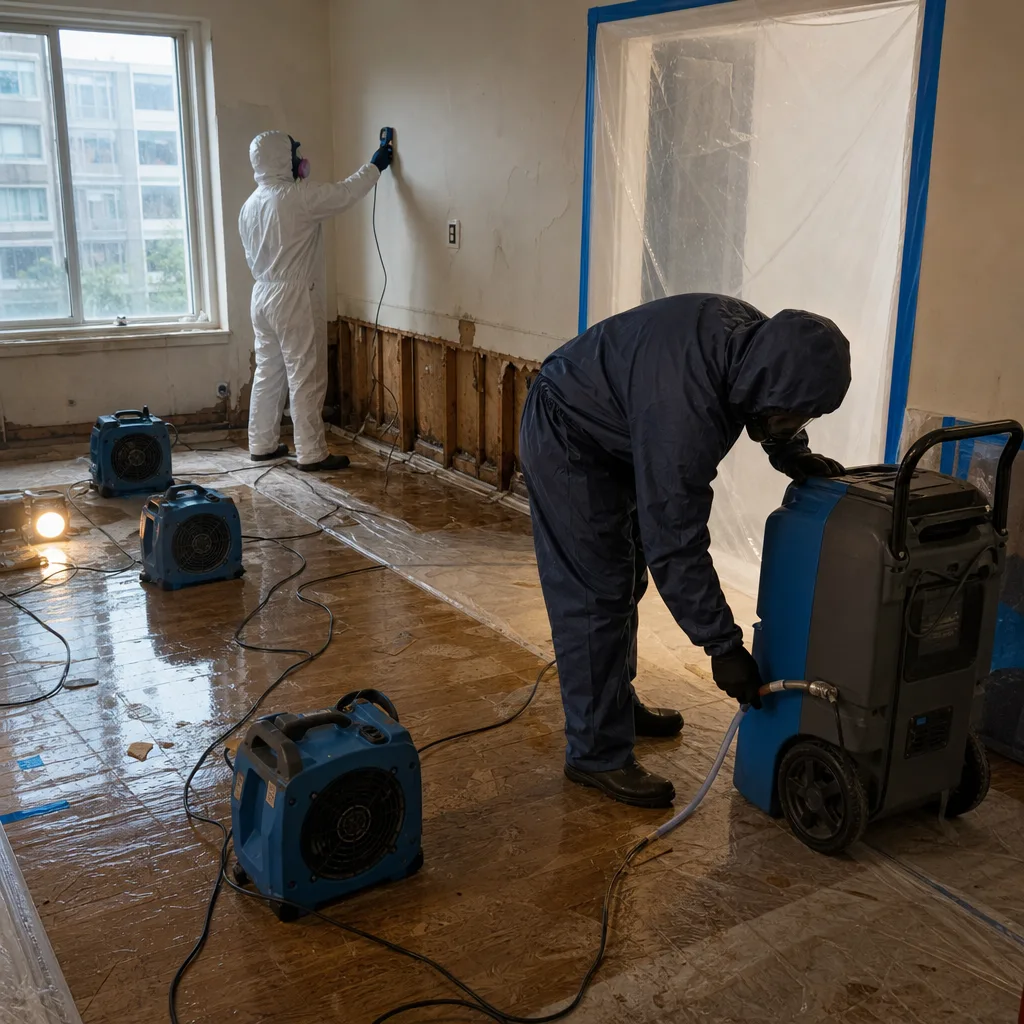
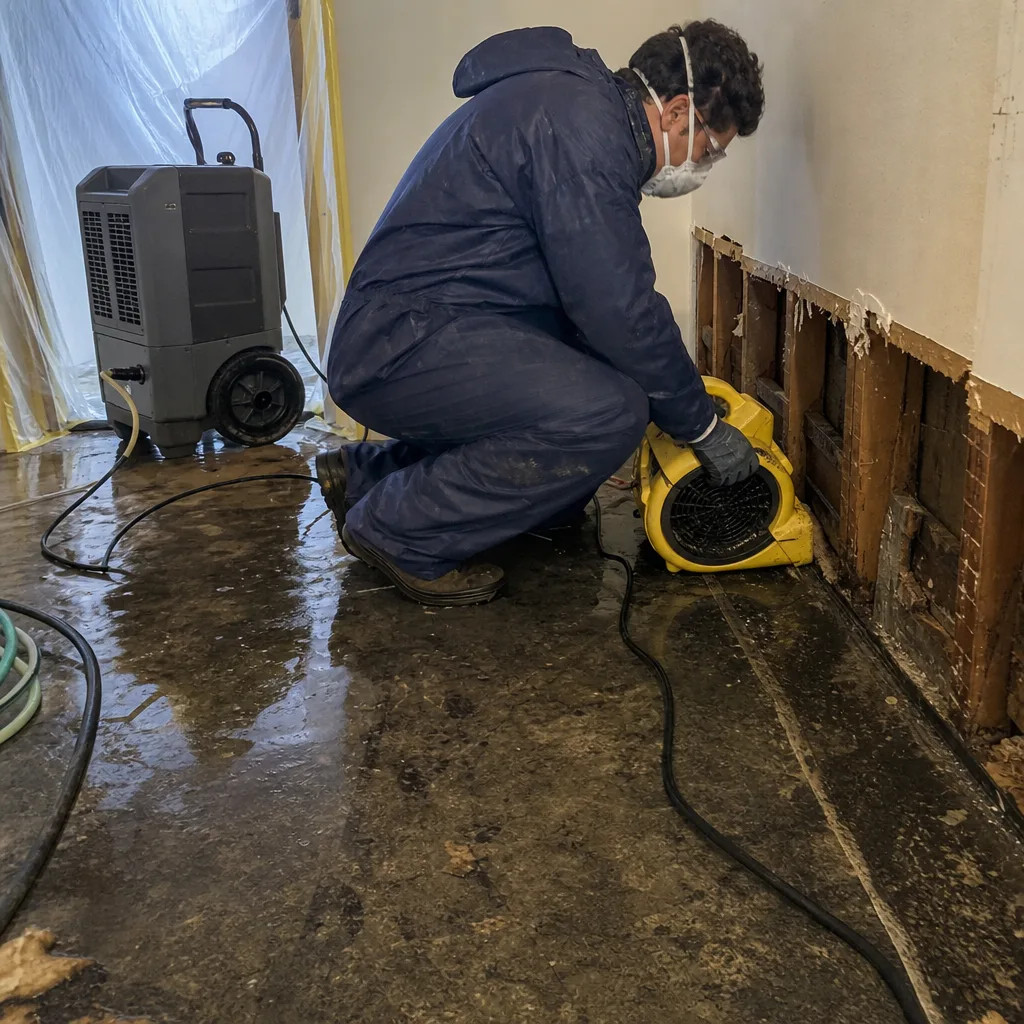
Free visual inspection and a written scope of work before any mitigation begins - photos, moisture readings, and drying logs go in your claim file
The scope we write is the scope we bill. Anything new gets shown to you, in writing, before we touch it.
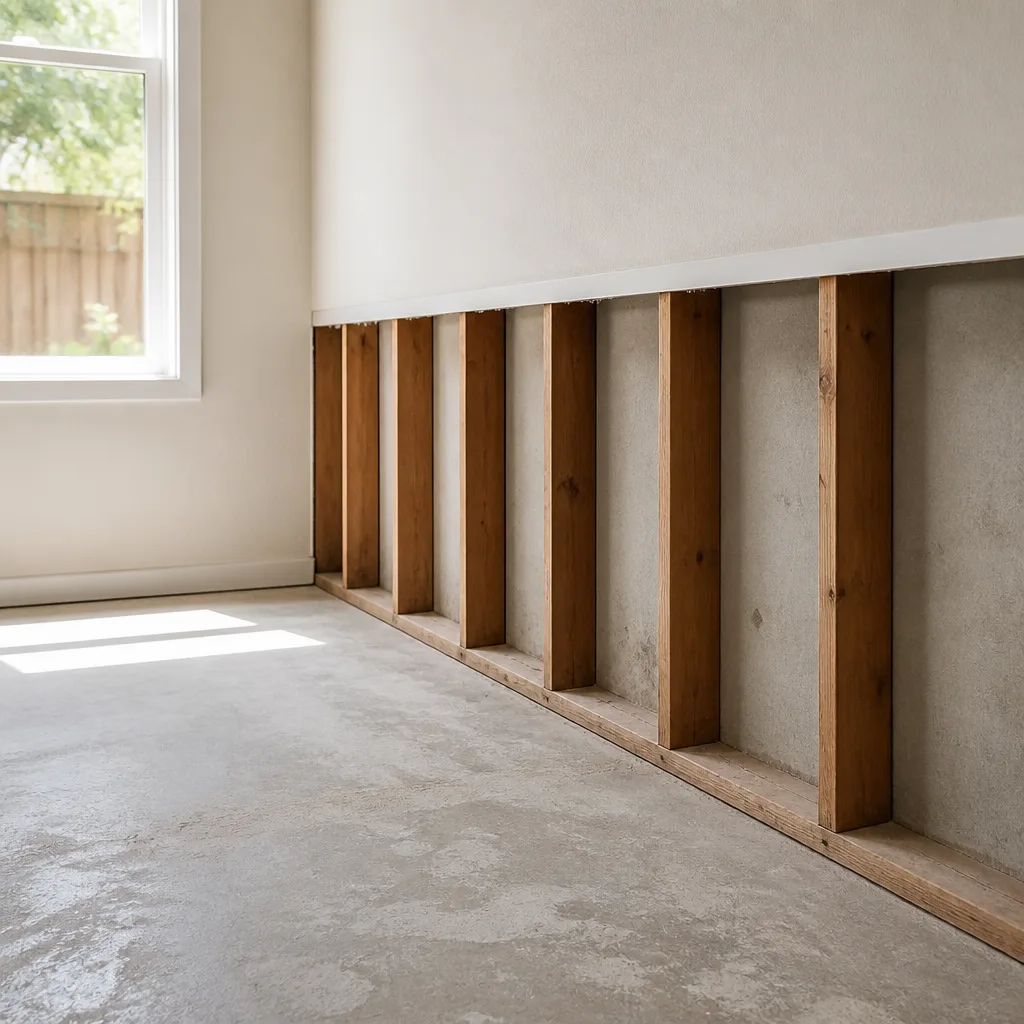
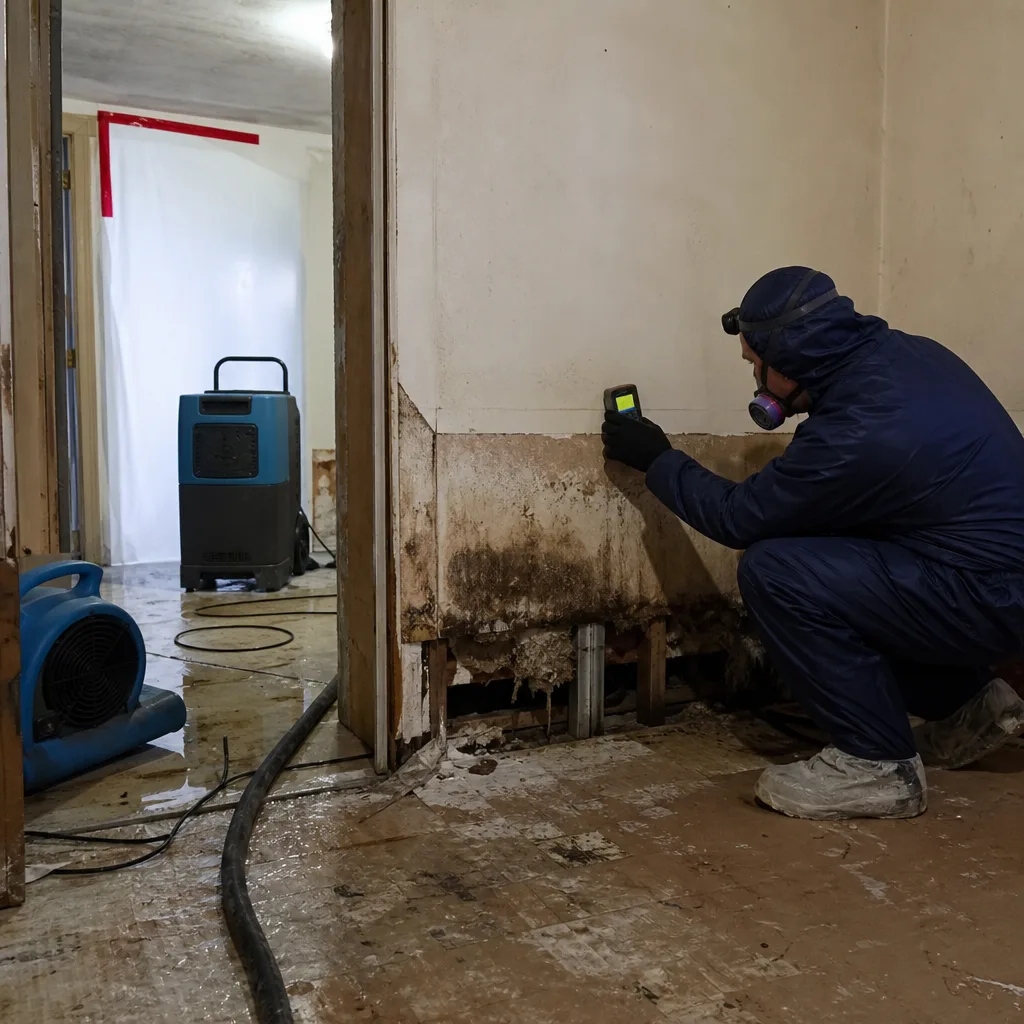 Before
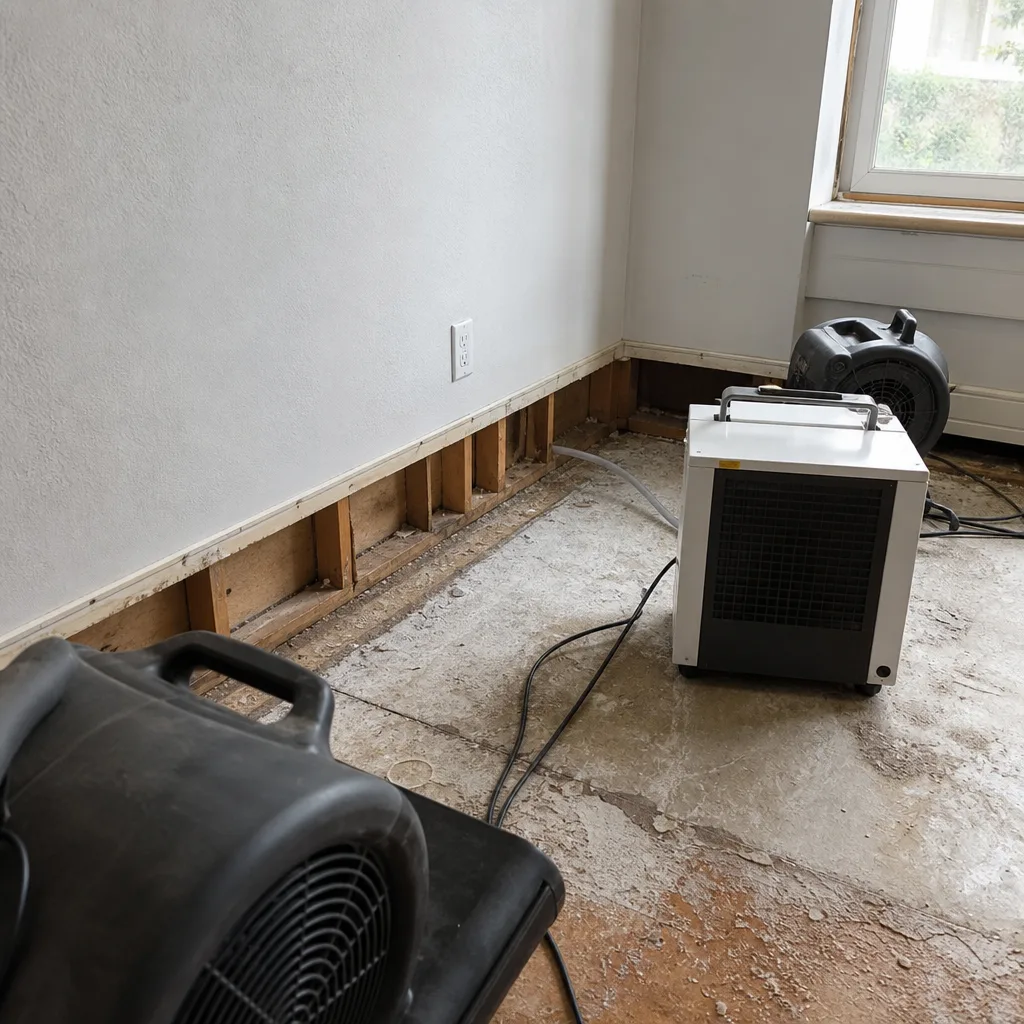 After
After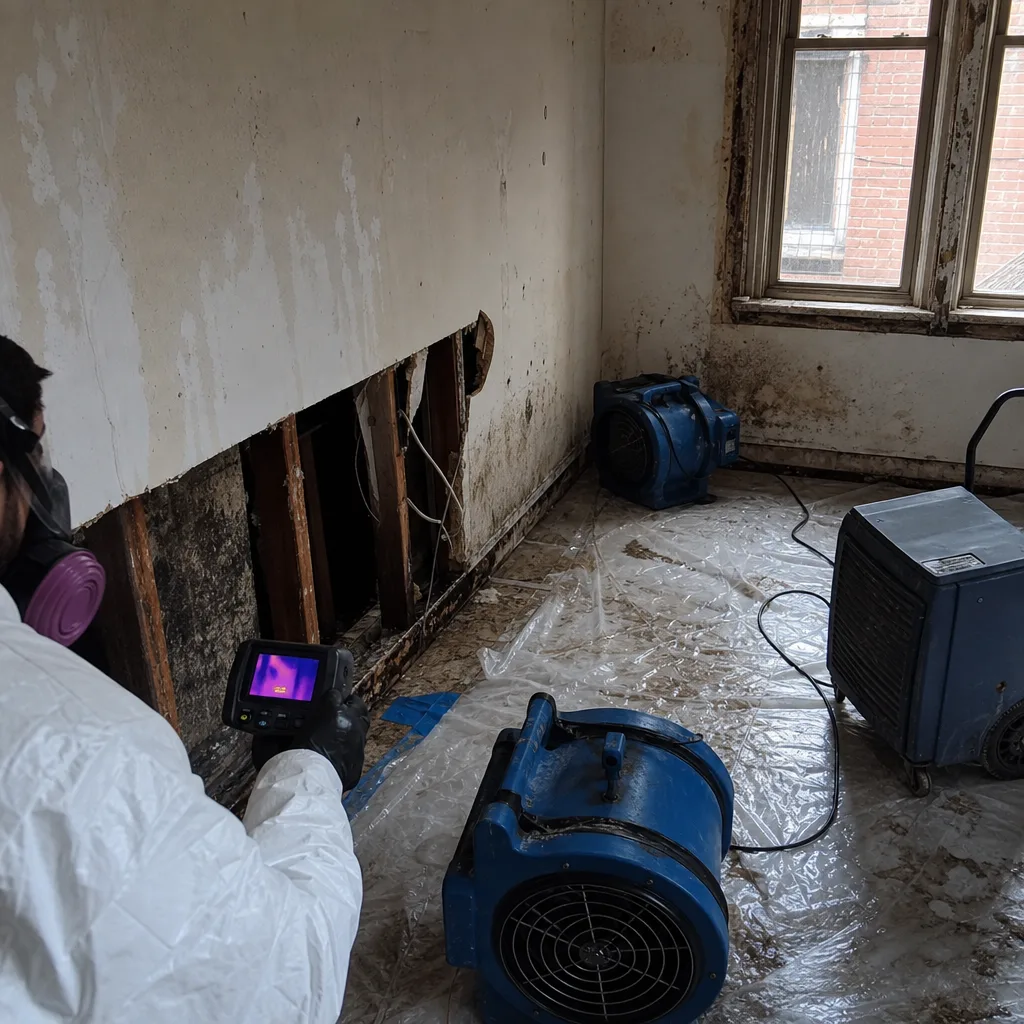 Before
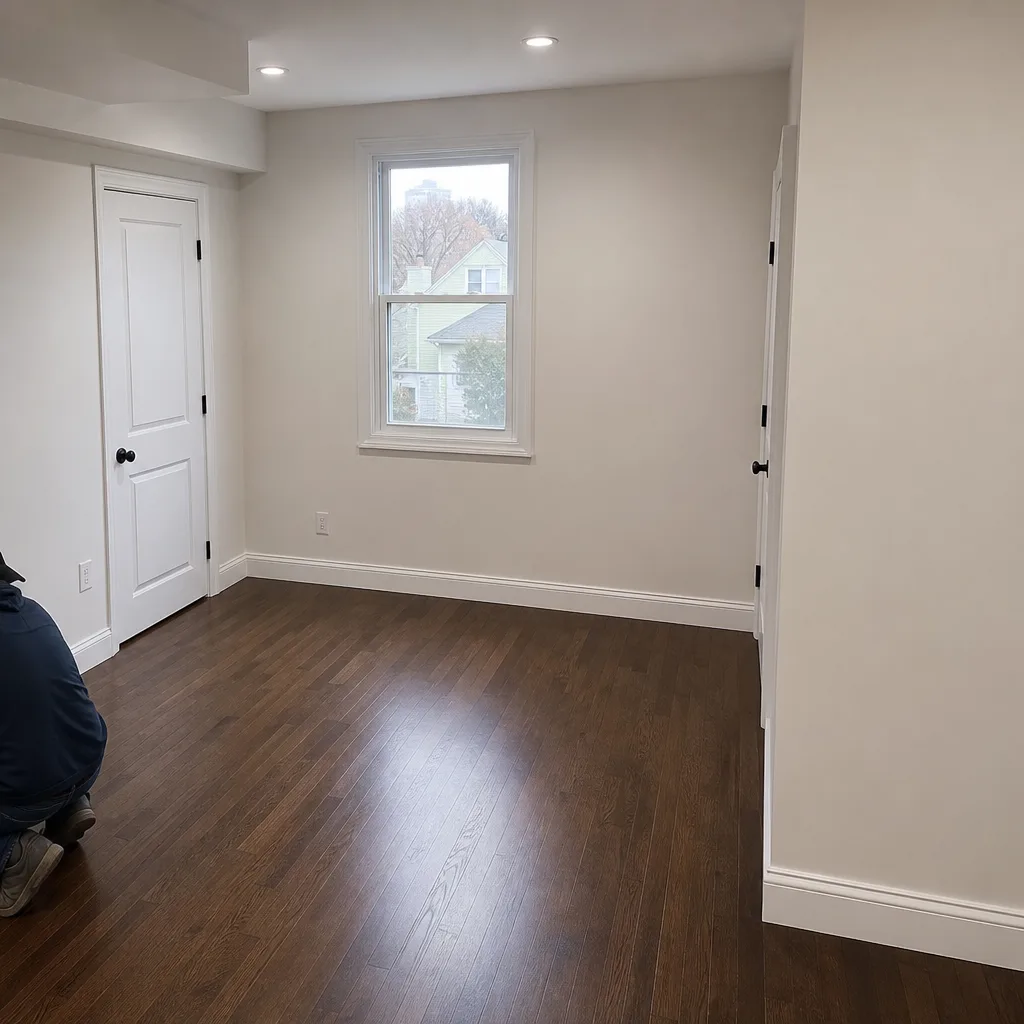 After
After24/7 Emergency Commercial Restoration in Hunts Point
Commercial water damage in Hunts Point rarely stays Category 1 for long. Because the peninsula’s combined sewer system back-pressurizes into building drain lines during heavy rain, what starts as a roof leak or appliance overflow frequently becomes Category 3 black water contamination before anyone opens a wall. That’s why our crews answer live at (518) 800-3751 around the clock, every day of the year. When you call, a dispatcher picks up. Not a recording. We get a certified crew moving toward your address while you’re still on the phone.
The first hour matters more here than almost anywhere else in New York City. Sewage-laced water wicks into plaster-over-masonry walls, below-grade slabs, and aging floor assemblies fast. Every hour it sits, the contamination radius grows, inventory absorbs more moisture, and structural drying extends by days. We offer a free visual inspection and a written scope before any work begins. No pressure. Just a straight answer about what you’re facing and what it will take to put the building back in pre-loss condition. The line the water left is where we start.
Understanding Commercial Restoration Severity in Hunts Point Properties
Hunts Point’s commercial buildings span pre-war brick tenements converted to mixed-use, mid-century warehouse stock along the Food Distribution Center corridors, and NYCHA-adjacent retail spaces with below-grade storage. Most have original plaster-over-masonry walls, not modern gypsum board. Plaster holds moisture differently. It absorbs slowly, releases even more slowly, and hides mold growth in the cavity behind it long after surface readings look dry. That’s why we moisture-map every job from day one using thermal imaging and penetrating hygrometers, not just surface meters. A surface meter says “dry.” The wall says otherwise.
Category 1 water is clean: a supply line break, a tub overflow. Category 2 carries soil or detergent. Category 3 is the serious one: sewage, floodwater from the East River or Bronx River, or any water that has contacted drainage lines. In Hunts Point, combined sewer overflows during rainfall mean Category 3 is the default assumption on any commercial loss where a floor drain exists. We treat it that way from the first hour. That means containment, air scrubbing with HEPA filtration, antimicrobial treatment, and disposal protocols that account for contaminated building materials. If a contractor prices Category 1 in this neighborhood, they’re either inexperienced with the peninsula or they’re planning to cut corners you’ll pay for later. The scope changes the moment a wall cavity opens. We have seen it too many times to pretend otherwise.
Why Hunts Point Property Owners Choose Floodline Restoration Co.
- 45-minute response commitment. Our Hunts Point crews are staged to reach the peninsula fast. When we say we’ll be there, we mean it. The crew shows up with equipment on the truck, ready to start extraction that same visit.
- 24/7 live answer, no automated system. At 2 a.m. on a Sunday, a real person picks up the phone at (518) 800-3751. Not a menu tree. Not a callback request. A dispatcher who can send help.
- IICRC-certified crews, trained to RIA and IFA standards. Our techs hold current certifications in water damage restoration, applied structural drying, and fire/smoke restoration. That means the moisture log you’re handed will hold up to carrier scrutiny.
- Free visual inspection. We walk the damage with you, explain what we’re seeing in plain language, and give you a written scope before work starts. You approve it. Then we move.
- Direct insurance billing. We bill the carrier directly and talk to the adjuster ourselves. You are not the messenger between two parties. We handle the documentation, the calls, and the follow-up.
- One team from extraction to reconstruction. The same certified crew that reads the moisture map on day one handles daily readings, removes damaged materials, dries the structure, and rebuilds what needs rebuilding. No mid-job handoff to a different company with different standards.
Our Commercial Restoration Process
Inspection & Assessment
We arrive, walk every affected area, and take baseline moisture readings across floors, walls, and cavities. Using thermal imaging, we map hidden water migration that surface meters miss. You get a written scope with clear line-item costs before any work begins.
Extraction & Stabilization
Commercial-grade Dri-Eaz extraction units remove standing water fast. If the job is Category 3, we erect full containment with HEPA air scrubbers running negative pressure before we do anything else. Cross-contamination stops here.
Drying & Dehumidification
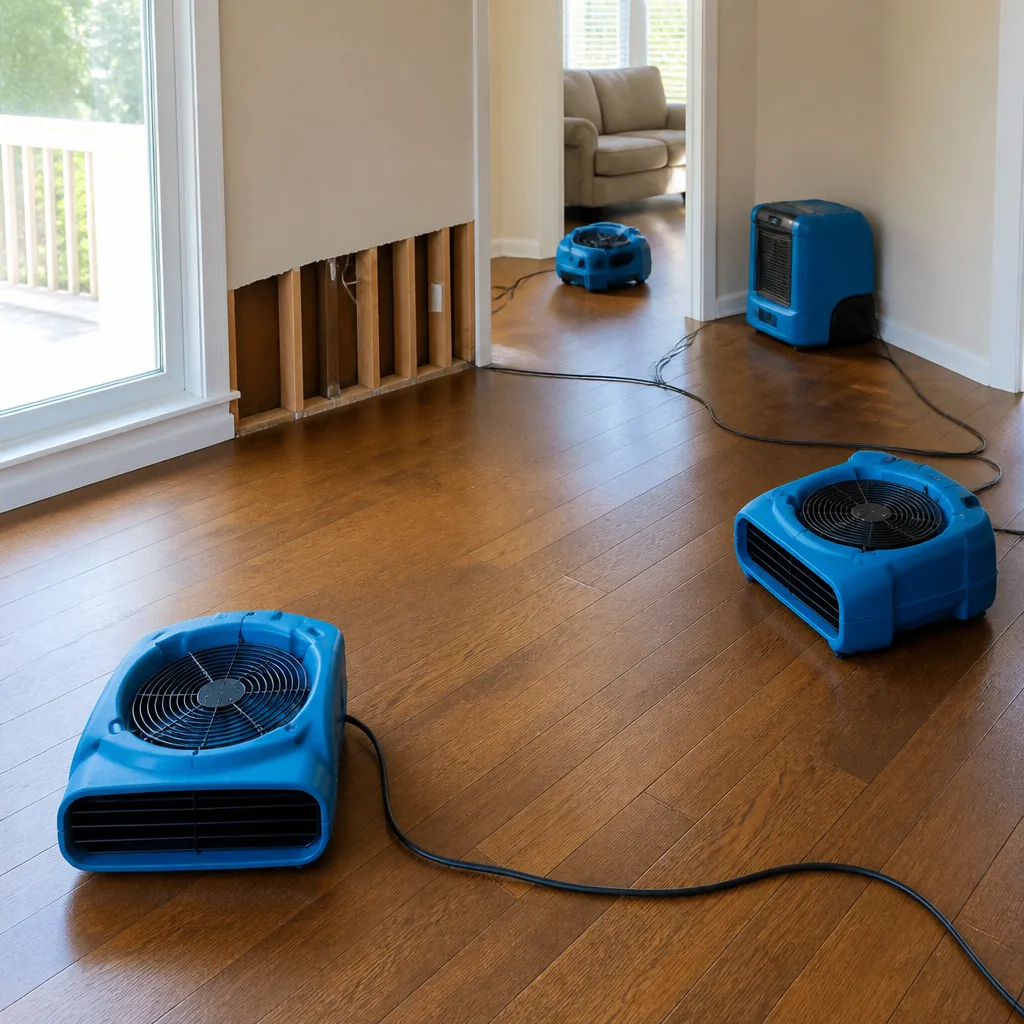
We place Phoenix and B-Air high-capacity air movers and desiccant dehumidifiers in a calculated drying chamber. Daily hygrometer readings track progress against the dry standard. On Hunts Point legacy masonry, we expect extended drying timelines and plan equipment placement accordingly.
Cleaning & Sanitization
All affected surfaces get antimicrobial treatment appropriate to the contamination category. Porous materials that cannot be fully dried or decontaminated are removed and documented. We don’t treat over mold we’re going to strip out, and we don’t strip out material we can clean.
Document & Inventory Recovery
For offices and retail spaces, we inventory damaged contents, coordinate off-site document drying or freeze-drying for critical records, and photograph everything for the carrier. Recoverable is documented as recoverable. Non-salvageable is documented as non-salvageable with line-item justification.
Repairs & Restoration
The same Floodline crew handles reconstruction: framing repairs, electrical and plumbing reinspection, drywall or plaster restoration, flooring, paint, and finishing. We hand you a completed moisture log and the 90-Day Done Right Promise in writing. Done right, every time.
Need Emergency Commercial Restoration in Hunts Point Now?
Crews minutes away, answering live 24 hours a day. The sooner we start, the less it costs.
Working With Your Insurance Company
Commercial restoration claims live or die on documentation. The adjuster doesn’t see what our techs see. They see what we record. So we record everything, from the first hour. Photos of every affected room, moisture readings before and after drying, log entries with time stamps and equipment placement, and a detailed line-item scope that matches industry-standard estimating software your carrier already recognizes. When the adjuster calls, we talk to them directly. You don’t relay information between two other parties. We do the follow-up, the clarifications, and the documentation requests. After 42 years in restoration, we know what a carrier needs to approve a claim, and we build the file that way from the first visit.
What We Provide Your Insurer
- Thorough documentation of the loss
- Photos of all damage, room by room
- Moisture readings and drying logs
- A detailed, line-item scope of work
- Direct coordination with your carrier
Built for Hunts Point’s Loss Calendar
Hunts Point has a rhythm, and it’s tied to water. Winter brings deep freezes that burst supply lines in unheated warehouse sections and vacant retail spaces. When that water sits over a weekend, it soaks into concrete slabs and original wood framing. Spring thaw and perigean high tides produce nuisance flooding along the low-lying streets near the East River and Bronx Kill shorelines. Summer thunderstorms overwhelm the peninsula’s combined sewers in minutes. That’s when we get the calls that started as “a little water in the basement” and turned into Category 3 overnight. Nor’easters in the fall push storm surge into ground-level commercial spaces, the same pattern Sandy delivered in 2012. Buildings here aren’t strangers to repeated events. Many commercial property owners on the peninsula are managing their third or fourth water intrusion in a decade. Each event leaves behind hidden moisture if it isn’t fully dried, and that moisture feeds what we call the recurrence-mold cycle: surface looks fine, cavity behind the wall is growing mycotoxins, and the next event makes it worse. Breaking that cycle requires aggressive drying, honest moisture logs, and no shortcuts on the first response. That’s what we do here.
Commercial Restoration Across Hunts Point’s Neighborhoods
The Hunts Point Food Distribution Center corridor along Halleck Street and Food Center Drive is one of the largest wholesale food hubs in the country, and its warehouse stock carries a specific restoration profile. These are big-box structures with flat roofs, loading docks, and decades of layered use. Water travels along rooflines, through old expansion joints, and into freezer and cold-storage rooms where condensation and ice melt create chronic moisture. Large-loss response here means coordinating with facility managers, food safety inspectors, and multiple tenants simultaneously. We have done it. The broad rooftop drains and below-grade truck tunnels back up during heavy rain the same way residential drains do, and drainage problems in a 200,000-square-foot refrigerated facility become Category 3 fast.
Along Hunts Point Avenue and Southern Boulevard, mixed-use buildings put retail on the ground floor and residential or storage above. A restaurant flood at street level wicks upward through common walls and affects the apartments above. A retail space next to a basement utility room shares a floor assembly that holds moisture for weeks if it isn’t dried correctly. We route crews through Bruckner Boulevard, Edgewater Road, and Tiffany Street depending on the address and the call time. Each corridor has its own traffic pattern at 2 a.m., and our dispatchers know the fastest approach. The area around Barretto Point Park sees more storm surge impact than the inland blocks. The residential side streets off Spofford Avenue, particularly the older tenement blocks, communicate moisture through party walls that were built before modern vapor barriers existed. Below-grade units in those buildings need extended drying, full containment, and repeated readings before we sign off on the dry standard. There is no such thing as a quick dry in pre-war masonry, and anyone who promises one doesn’t understand the building science.
Specialized Commercial Restoration Services We Offer in Hunts Point
Office & Retail Restoration
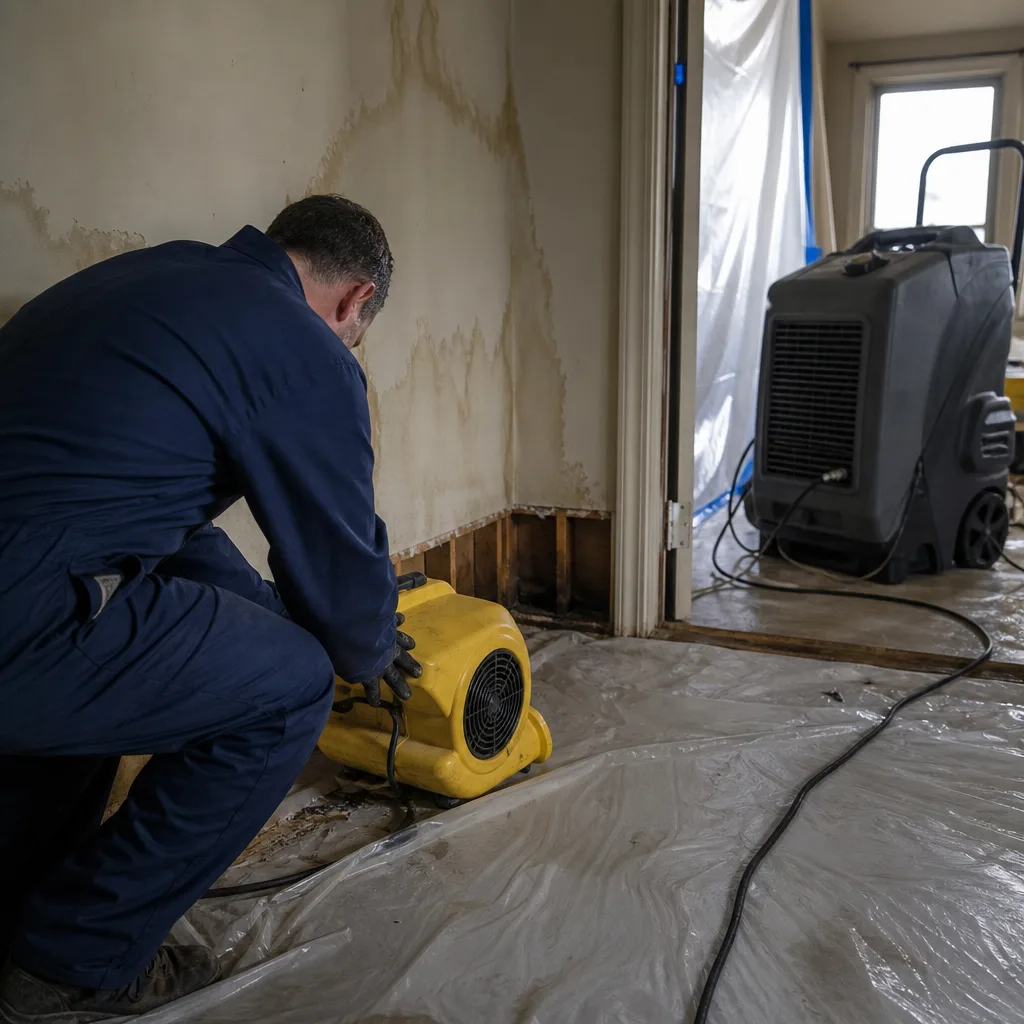
Office spaces on Hunts Point Avenue and Southern Boulevard face unique downtime pressure. Tenants can’t operate in a space with active drying equipment and containment barriers for weeks. We sequence the work to get essential areas back online first, isolate the wet zones, and keep business running where it’s safe to do so. During a routine office restoration on Hunts Point Avenue, our techs opened a wall cavity near a floor drain and immediately smelled sewage. The combined sewer system had back-pressurized into the building’s drain line. We reclassified the job from Category 1 to Category 3, erected containment, and switched from standard water extraction to full hazmat-level remediation with antimicrobial treatment. That extended drying time by three days but protected the pre-loss condition of the tenant’s inventory. That’s the call you make when you know Hunts Point. A crew unfamiliar with the area might have kept drying Category 1 and left contaminated material in place.
Industrial Facility Cleanup
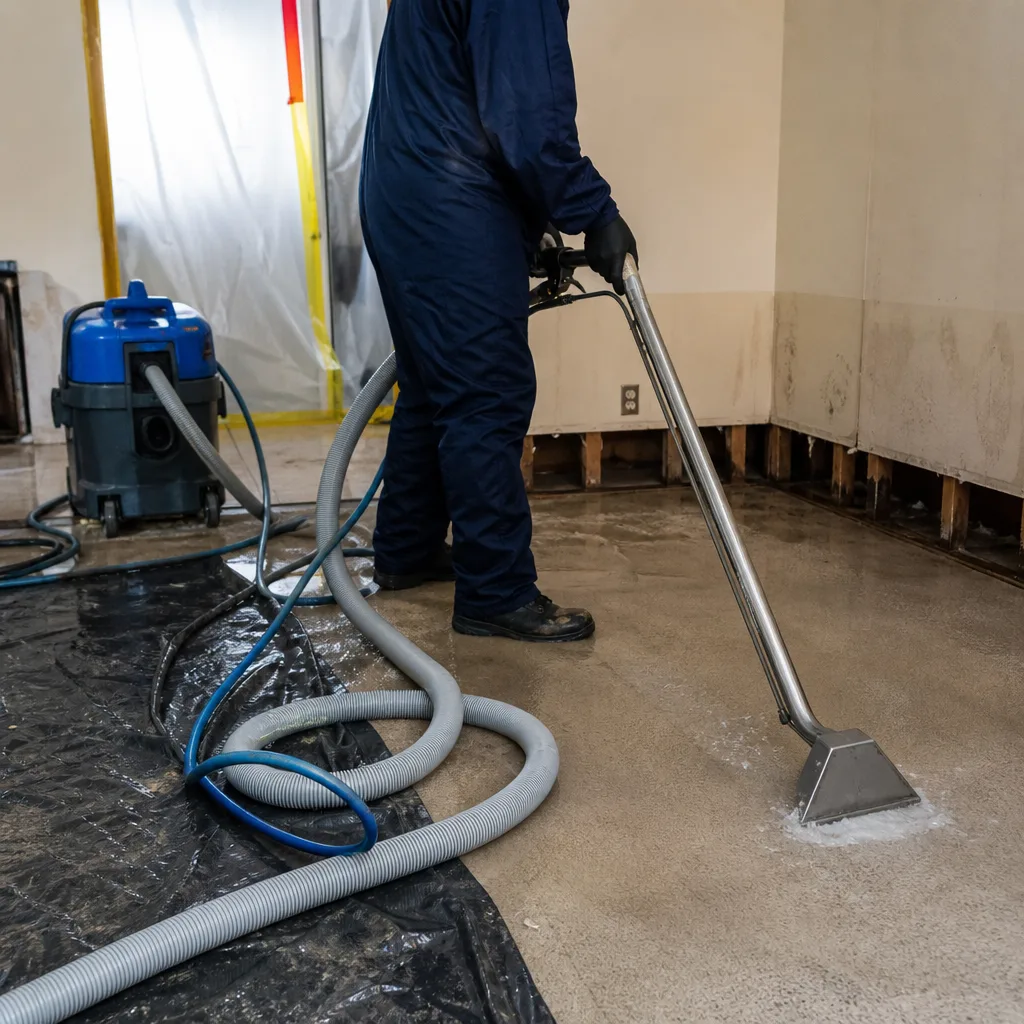
Warehouse and industrial buildings in the Food Distribution Center carry legacy contamination in their slabs and walls: years of oils, fuel residue from truck bays, refrigerant leaks, and heavy metals from old mechanical systems. When floodwater moves through those buildings, the contamination profile blends. It isn’t just Category 3 sewage water anymore. It’s sewage water carrying industrial residues. Demolition and disposal scopes have to account for that. If legacy contamination isn’t identified before demo starts, the carrier may deny the disposal line item later, and the owner gets stuck with a bill. We include industrial contamination testing and documentation in scopes where the building history calls for it. The building tells you what it’s been used for. The walls and slabs tell us what we’re cutting into.
Large-Loss Response
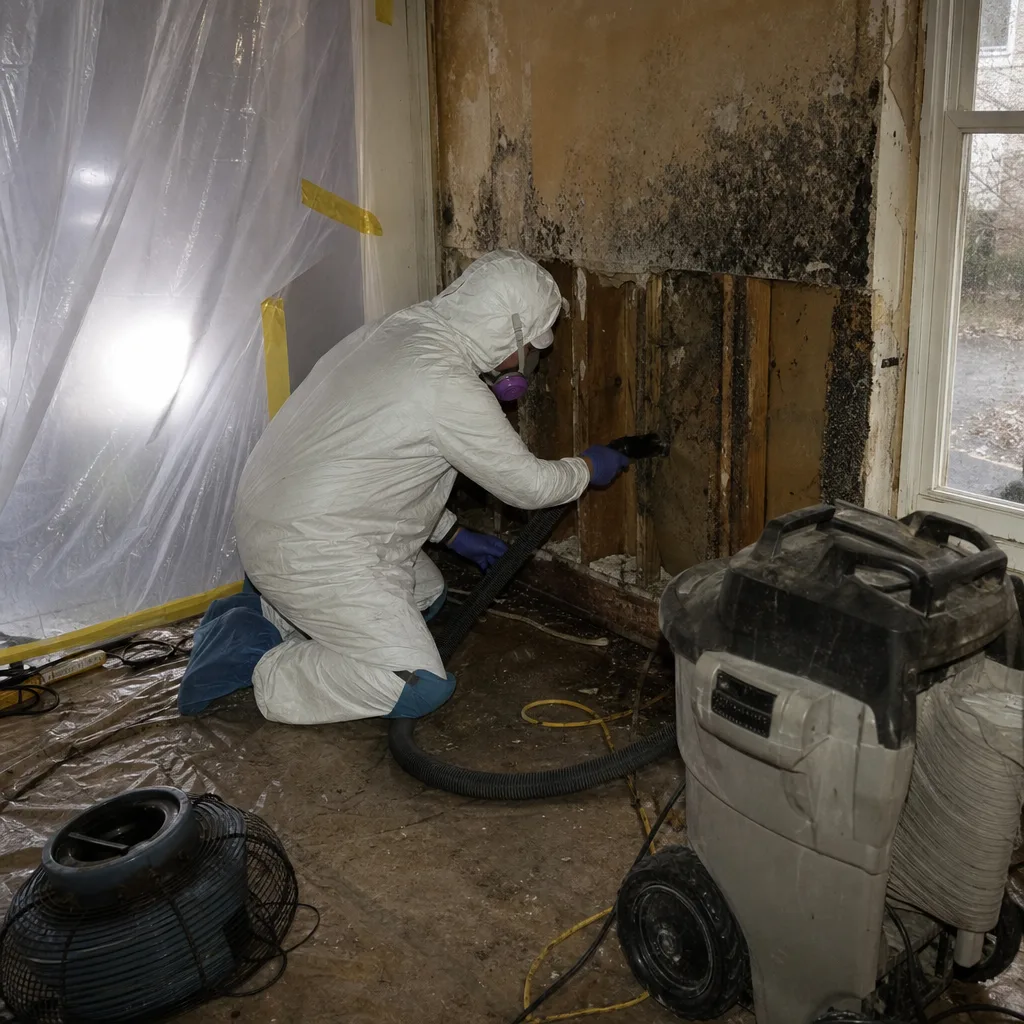
A flooded refrigerated warehouse, a multi-tenant retail strip with every storefront compromised, a NYCHA-adjacent commercial building with a broken 6-inch supply line: these are the jobs that require more than a truck and two techs. Large-loss response means staging multiple crews, ordering temporary power and desiccant drying capacity, coordinating with building engineers, and producing daily documentation for the carrier throughout. In Hunts Point, large-loss jobs also mean planning around the sewer system. If the drainage infrastructure is overwhelmed during a storm, we stage portable extraction and containment contingencies before we even arrive. The time it takes to get additional pumps and drying capacity on site is the difference between a week of downtime and a month. We run that math before the first crew leaves the shop.
Business Interruption Minimization
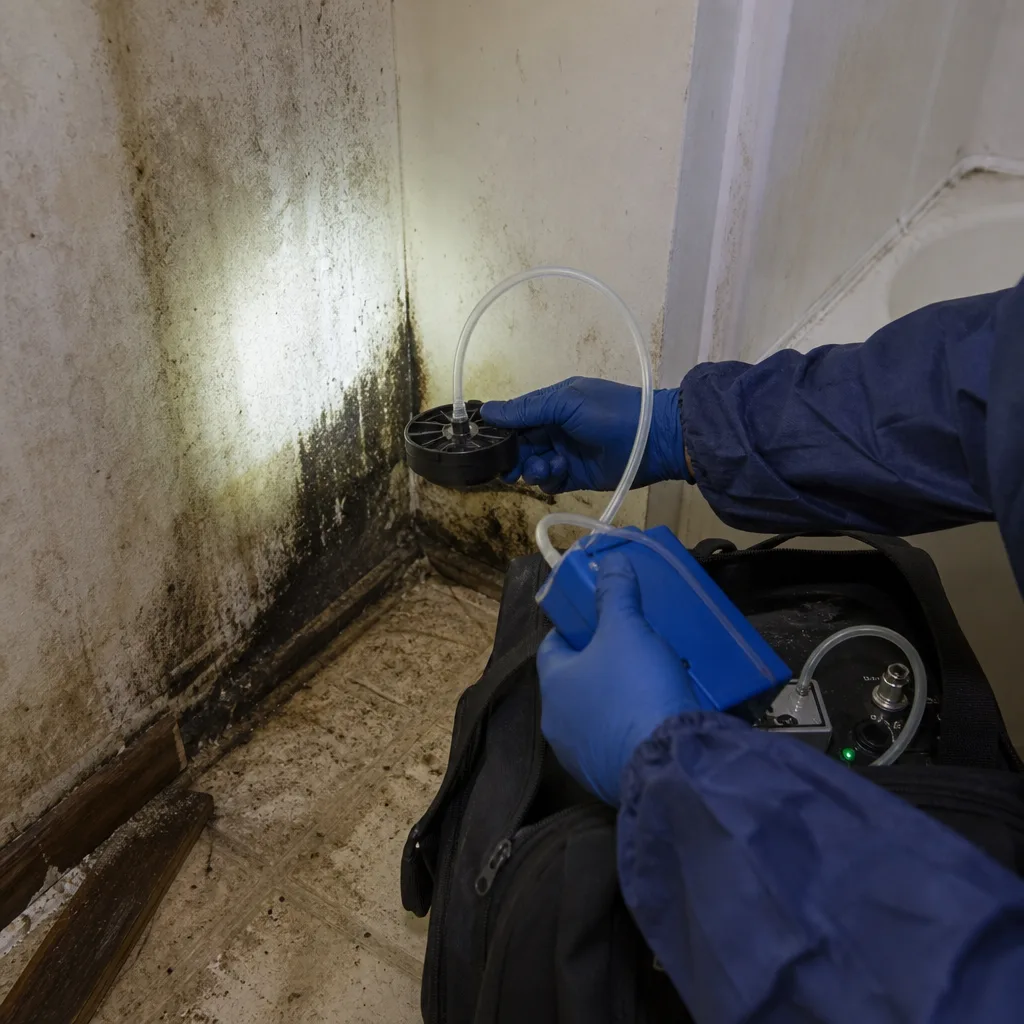
Business interruption coverage is a separate bucket in the policy, and it depends on how fast the restoration timeline moves. What does the carrier see? Daily logs showing progress against a defined dry standard. What does the owner see? Employees standing idle and revenue bleeding. We build realistic timelines on day one and communicate them clearly. If the project requires phased re-opening, we plan for it. The quicker the building dries and passes clearance testing, the shorter the interruption period. On Category 3 jobs on the peninsula, extended drying is a reality, but it’s a controlled number. We’ll tell you the timeline and then beat it when the building allows.
Multi-Unit & HOA Restoration
Hunts Point’s housing stock includes pre-war co-ops, rental tenements, and blocks where a single water event crosses multiple units through party walls and shared plumbing chases. HOA restoration work requires two scopes: one for the building common areas and envelope, another for the individual units affected. Coordination with property managers, board members, and individual owners matters. We have handled multi-unit losses where the first floor flooded and the moisture migrated into the basement mechanical room, affecting the building’s boiler and electrical panels. One team means one accountable scope. No finger-pointing between a water extraction company and a rebuild contractor. We handle both because the line the water left is where we start, and we don’t hand it off until the site is closed.
What happens when you call
- 1
A real person answersNo phone trees - you reach a local pro.
- 2
You get an upfront price rangeHonest numbers before anyone is dispatched.
- 3
A background-checked tech heads outLicensed & insured, dispatched right away.
- 4
You approve before work beginsNothing starts until you say go.
Commercial Restoration Costs in Hunts Point, NY
Here are straight numbers for the Hunts Point market. A small office Category 1 cleanup, no demolition, with drying equipment for 3 to 4 days: typically $2,800 to $5,200. A Category 3 commercial job with containment, antimicrobial treatment, and disposal of contaminated materials: $7,500 to $18,000 depending on square footage and the amount of plaster or slab work. A Category 3 large-loss warehouse response with multiple crews and desiccant drying: $35,000 to $90,000 or more, driven by building size and the complexity of the contamination profile. Industrial cleanup where legacy contamination is present adds cost for testing, specialized disposal, and longer drying. What moves the price: square footage, water category, how long water sat before response, number of rooms, whether below-grade slabs are involved, and whether the building has masonry or drywall construction. Insurance usually covers these losses, and we bill the carrier directly. The free inspection is the fast way to a firm number. Call (518) 800-3751 and we’ll walk you through exactly what the scope looks like in writing.
We Also Serve Cities Near Hunts Point
Floodline Restoration Co. handles commercial restoration across the wider metro area. We dispatch to Astoria, Ditmars Steinway, Upper Manhattan, and the Upper East Side with the same live-answer commitment and certified crews. If your building is on the peninsula or a few miles out, the process is the same. You call. A person answers. We show up with equipment on the truck. Commercial restoration is what we do, and we do it for buildings across the Bronx and nearby boroughs.
Hunts Point Commercial Restoration Questions, Answered
Why do Hunts Point commercial jobs get reclassified as Category 3 water after starting as a minor roof leak?
The combined sewer system on the peninsula back-pressurizes into building drain lines during heavy rain. Water that starts as a roof leak moves through wall cavities and floor assemblies, then contacts drain lines that are carrying sewage. The moment that water touches sewage, it’s Category 3 by definition. We assume that risk on every Hunts Point job where a floor drain exists and price the scope accordingly. It is cheaper to plan for Category 3 once than to pay for re-remediation later.
How does the Hunts Point Wastewater Treatment Plant affect commercial restoration timelines?
The plant sits on the same peninsula as the commercial district, and combined sewer overflows are routine during any significant rain event. That means the wastewater infrastructure around us is part of the contamination equation. During heavy rain, sewage enters drain lines faster than the system can carry it away. Restoration timelines extend because Category 3 work requires containment, air scrubbing, antimicrobial treatment, and controlled demolition of contaminated materials. A job that might dry in 3 days in a Category 1 scenario takes 5 to 8 days or more here. Anyone who promises a 2-day dry on a peninsula commercial job during the rainy season is selling something they can’t deliver.
What makes structural drying in Hunts Point’s older commercial buildings take longer than a newer office outside the peninsula?
The building stock. Pre-war and mid-century brick tenements and older industrial buildings have plaster-over-masonry walls, below-grade slabs, and original framing that absorbed moisture for decades before you owned it. Plaster holds water differently than gypsum board. It wicks slowly, releases slowly, and creates hidden reservoirs inside wall cavities. Below-grade floor slabs sit against soil that stays damp year-round. You can’t rush dry out of those materials without damaging them. We set daily hygrometer readings and run equipment until the dry standard is met. Not before. The carrier sees the log, the owner sees the log, and the dry standard doesn’t lie.
During a large-loss response at a Hunts Point warehouse, why are drying logs and moisture mapping critical for insurance approval?
Because the carrier’s adjuster isn’t standing in your warehouse. They’re reviewing documentation from a desk. Moisture mapping with thermal imaging shows the water migration path. Daily hygrometer readings show drying progress against the dry standard. Without those logs, the carrier can argue the building wasn’t properly dried, or that the claim covered damage that predated the loss, or that the timeline was inflated. A complete moisture log is the difference between a paid claim and a contested one. We build the documentation file from minute one because we’ve seen what happens when a contractor hands the carrier a one-page summary and a hope.
Can a Hunts Point commercial tenant minimize business interruption when a flood job becomes Category 3?
Yes, but only if the response is fast and the scope is honest. Category 3 work requires containment, and containment means you can’t run normal operations in the affected area. But if we know the contamination classification quickly, we can isolate the wet zone, run negative-pressure air scrubbers, and allow safe work in adjacent areas. Phasing matters. A retail store might keep the street-level sales floor open while we dry the basement. An office can route staff through a secondary entrance while the main lobby is in containment. The key is getting a written scope early so you and your carrier understand the timeline. Call (518) 800-3751 within the first hour and we’ll tell you whether phased re-occupancy is realistic for your building. Most of the time, it is.
How fast can Floodline actually reach a commercial building in Hunts Point?
We commit to a 45-minute response on emergency calls inside the peninsula. That means a live dispatcher answers the phone, a certified crew is dispatched from the closest staging area, and equipment travels on the truck. We don’t send a salesperson first. We send the crew with extraction equipment ready to run. Traffic on Bruckner Boulevard and Edgewater Road changes by the hour, and our dispatchers know the routes. At 2 a.m., they’re faster. You call (518) 800-3751. A person answers. The crew is moving before the call ends.