
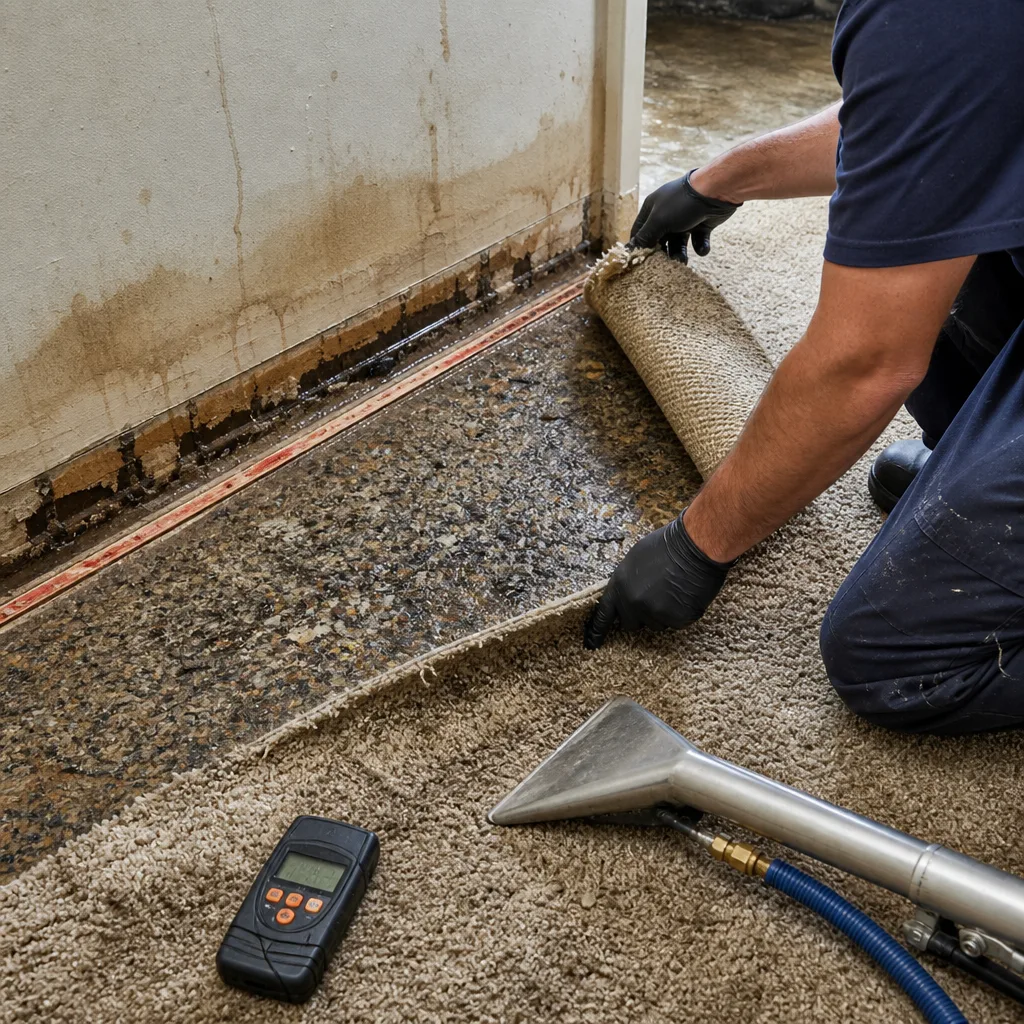
Free visual inspection and a written scope of work before any mitigation begins - photos, moisture readings, and drying logs go in your claim file
The scope we write is the scope we bill. Anything new gets shown to you, in writing, before we touch it.
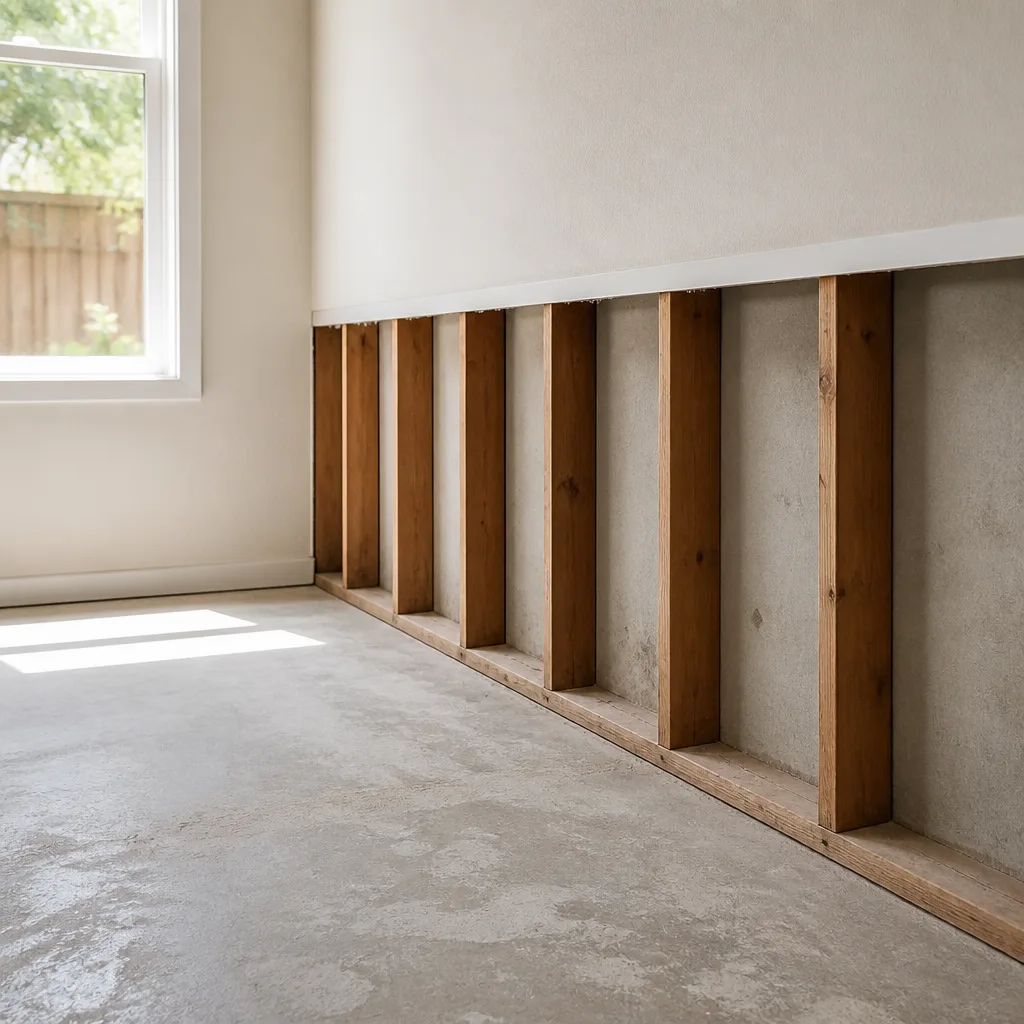
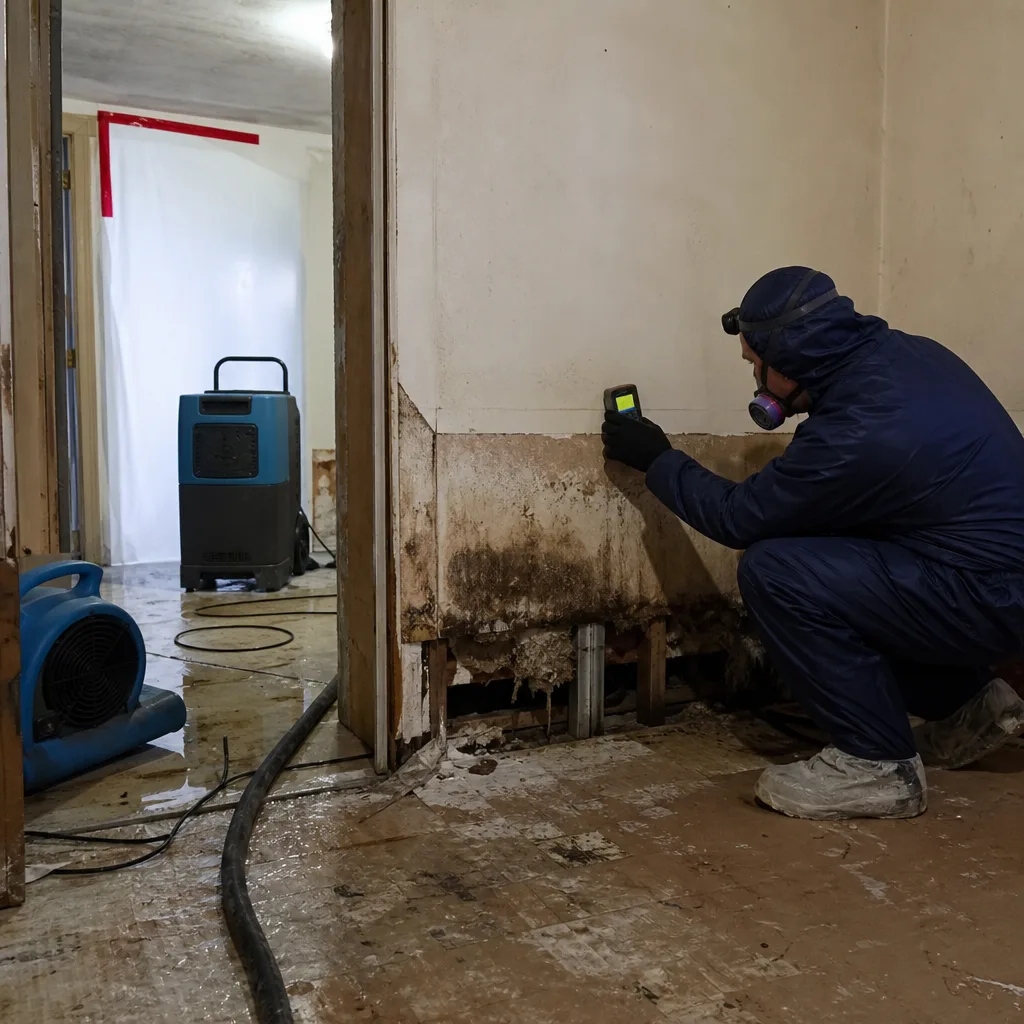 Before
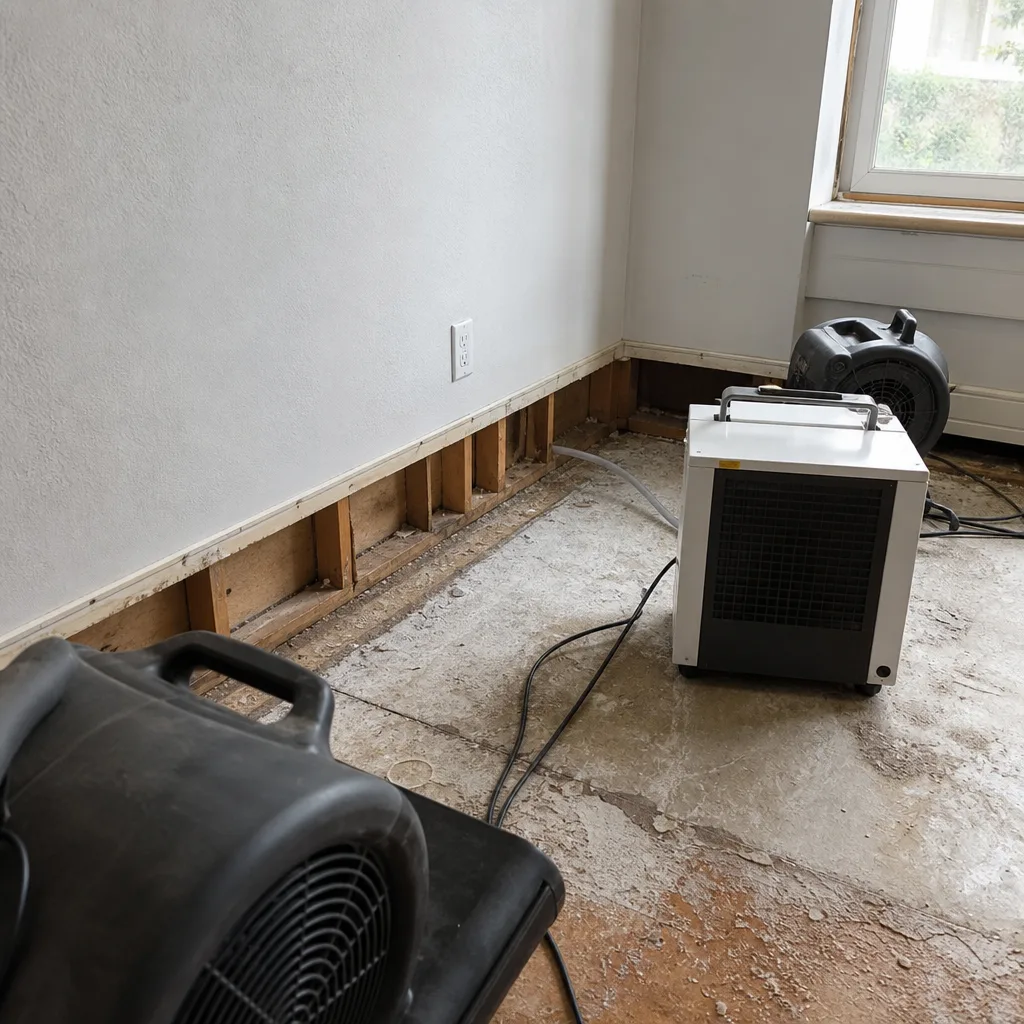 After
After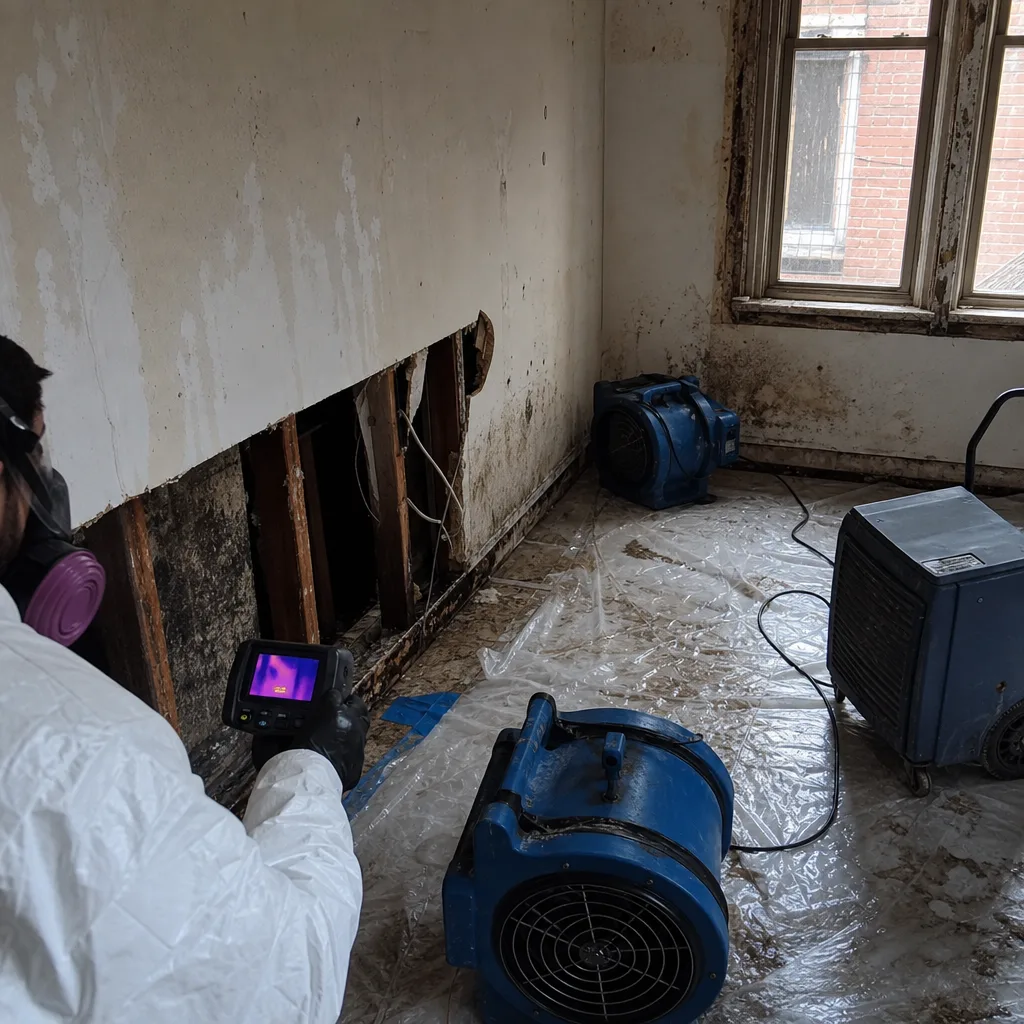 Before
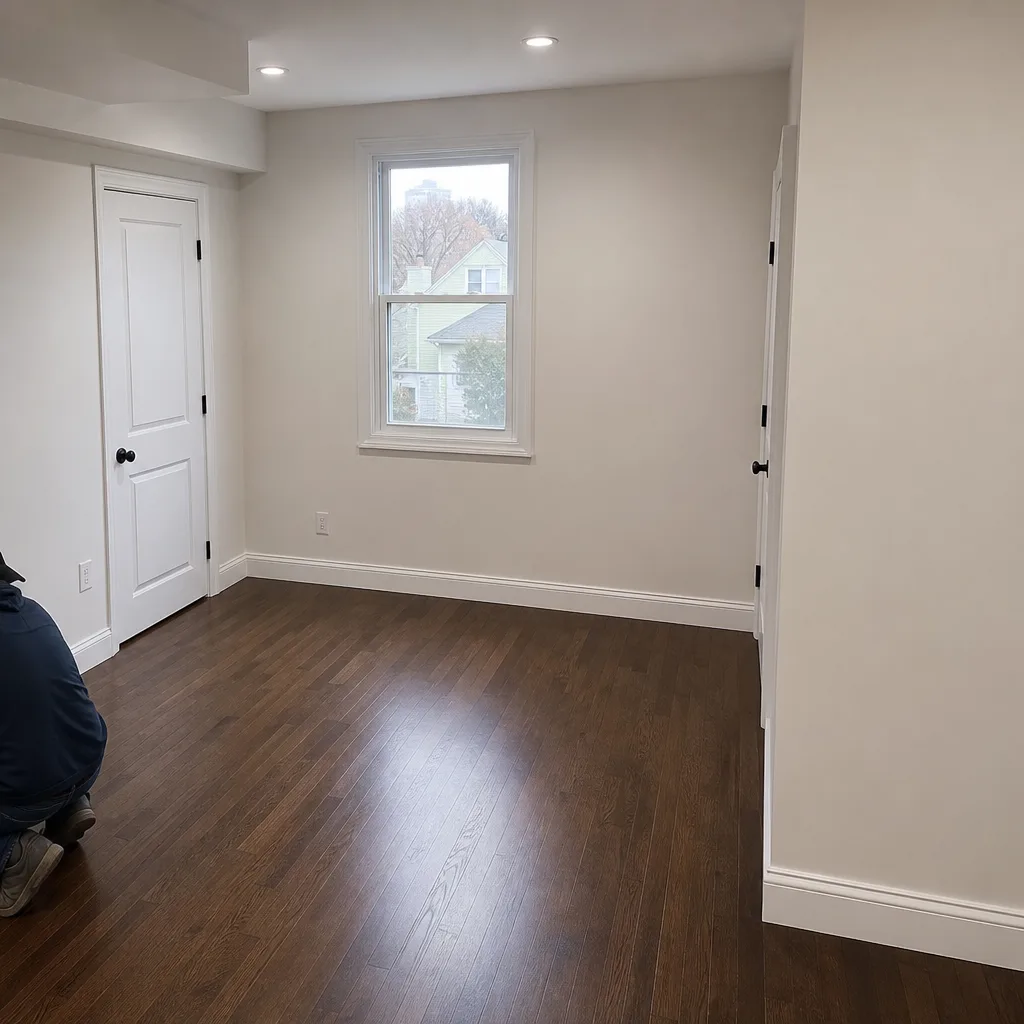 After
After24/7 Emergency Mold Remediation in Upper West Side
Mold doesn’t wait for co-op board meetings, and neither do we. When you find black staining spreading behind a baseboard on West End Avenue or catch that musty smell in a Riverside Drive pre-war apartment, our crews are already moving. Call (518) 800-3751 any hour, any day, and a live dispatcher answers. Not a recording. Not a call center. A person who can put a certified mold remediation crew on the move into the Upper West Side within 45 minutes. The first hour matters because mold colonies double every 24 to 48 hours under the right conditions, and in Upper West Side co-ops, the damage is rarely confined to one unit. We do a free visual inspection, and if there’s a real problem, we tell you straight what needs to happen, what it will cost, and who needs to approve what before we start.
Understanding Mold Remediation Severity in Upper West Side Properties
In newer construction, mold is usually a drywall-and-paint problem. In Upper West Side pre-war buildings, it’s a building-anatomy problem. Walls are plaster and lath, not gypsum board. Floors are original herringbone oak over diagonal subfloor. Heat comes from steam pipes running through wall cavities, and water supply comes from cast-iron stacks that have been in place since the Hoover administration. When mold appears in this housing stock, it usually means water has been traveling through cavities and chases for weeks or months beforse anyone saw anything. We classify the damage by water category (Category 1, 2, or 3) and by the extent of Mold Remediation needed, from localized contamination behind a single plaster wall to full containment and air scrubbing across multiple units. In a Belnord-style courtyard building, a Category 2 leak in one apartment can wick laterally through a pipe chase and show up as Category 3 growth in the unit next door. That’s why we don’t do “spot treatment” here. We map moisture and trace building anatomy first.
Why Upper West Side Property Owners Choose Floodline Restoration Co.
- 45-minute response commitment: When you call from Upper West Side, our crews are already close. We commit to being on-site within 45 minutes for emergency calls, and we have the dispatch log to prove we do it.
- 24/7 live answer, no phone tree: The person who answers at 2 a.m. works here. They know the difference between a roof-drain overflow and a supply-stack leak, and they start the right crew rolling immediately.
- IICRC-certified crews with the right codes: Our mold technicians carry IICRC AMRT (Applied Microbial Remediation Technician) and WRT (Water Damage Restoration Technician) certifications, not generic training. They know how to set containment and run HEPA air scrubbers in occupied pre-war buildings.
- Free visual inspection with honest findings: We’ll come look, tell you what’s happening, and write it down. If you don’t need remediation, we’ll tell you that. If you do, you’ll know exactly why.
- Direct insurance billing: We bill your carrier directly, and we document everything from the first hour so the claim doesn’t stall later. No homeowner should be playing messenger between a co-op board, a managing agent, and an adjuster.
- One team from first containment to final coat: The same certified, background-checked, uniformed crew that sets up the drying equipment also handles the rebuild. No mid-job handoff to a subcontractor who hasn’t seen the moisture map.
Our Mold Remediation Process
Inspection & Assessment
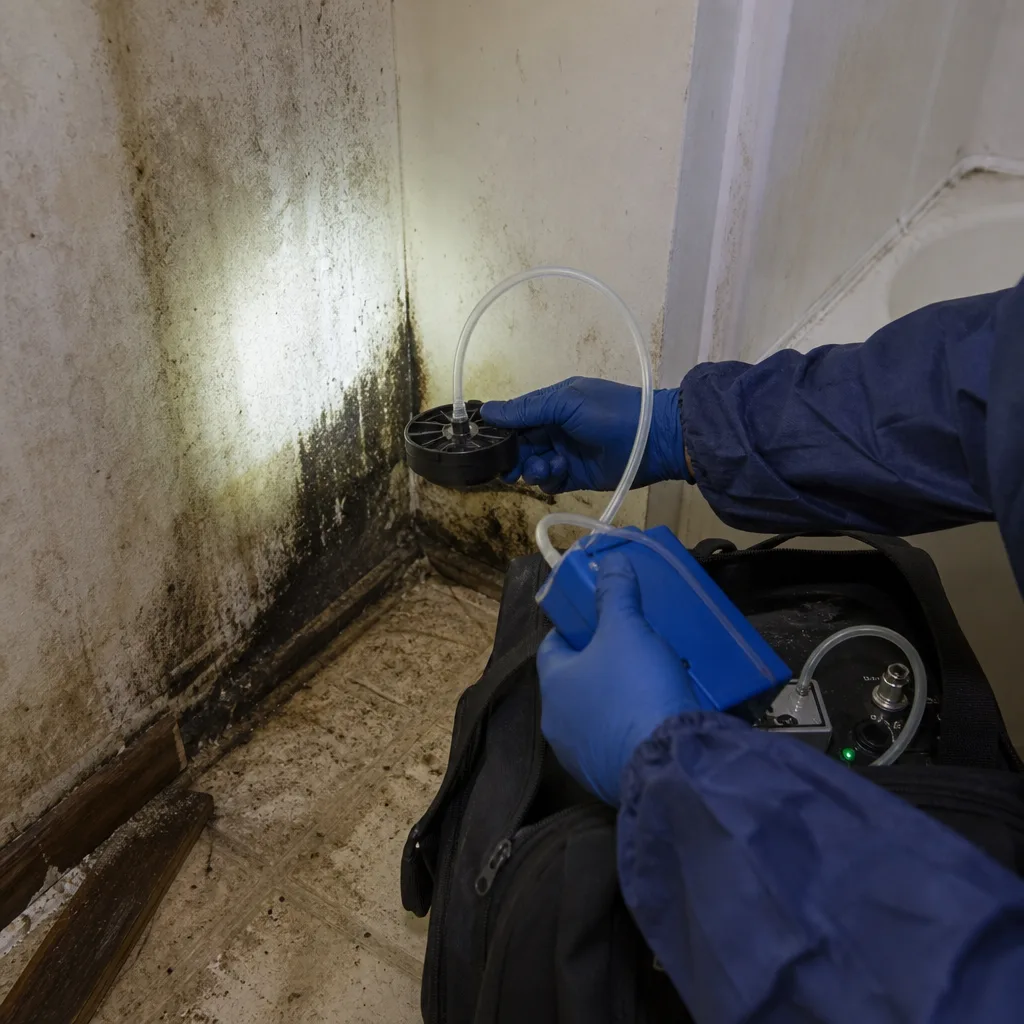
We start with thermal imaging and moisture mapping through walls, floors, and pipe chases. In Upper West Side pre-war buildings, that means checking the cavity behind lath and plaster and the shared shaft walls before we open a single surface. We test air quality where needed and document pre-loss conditions in writing.
Containment & Stabilization
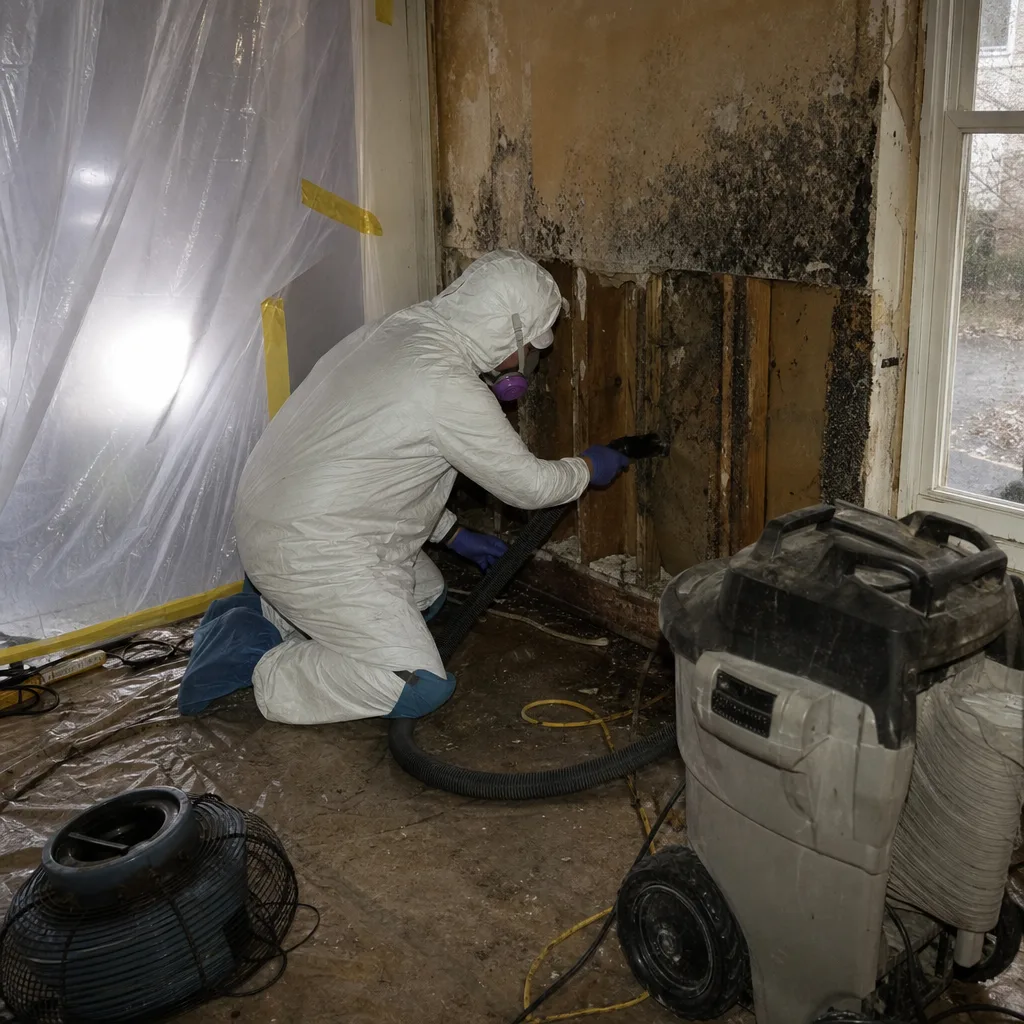
Before any mold-disturbing work begins, we set up full containment with negative air pressure and HEPA air scrubbers. In occupied co-ops and condos, that keeps spores from traveling through hallways and elevator cores into neighboring units.
Drying & Dehumidification
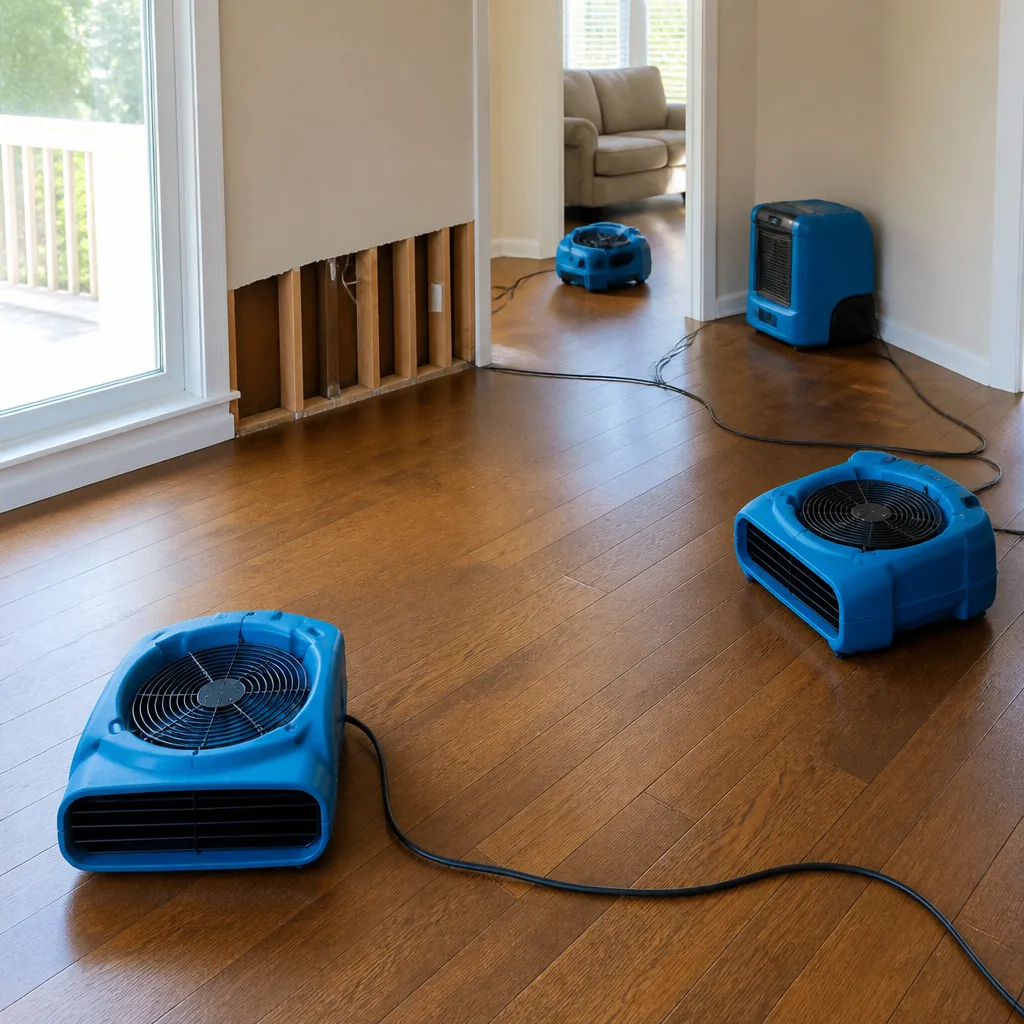
We dry the cavity, not just the surface. Using Dri-Eaz and Phoenix dehumidifiers and air movers, we bring moisture levels down to a documented dry standard, with hygrometer readings logged daily until every chamber and chase reads dry. Plaster holds water longer than drywall ever will.
Cleaning & Antimicrobial Treatment
We remove contaminated plaster, insulation, and wood where necessary, then treat remaining surfaces with EPA-registered antimicrobials. In pre-war apartments, that means preserving what can be saved (original moldings, rosettes, period millwork) and replacing what cannot.
Air Quality Restoration
After the physical work is done, we run air scrubbers and conduct post-remediation air sampling. You want clearance results that will satisfy a co-op board, a managing agent, and a nervous neighbor, not just a visual once-over.
Repairs & Restoration
We rebuild plaster to match surrounding texture, refinish or replace matched flooring, and restore period details where needed. The same crew that set up the containment handles the finish work, so the moisture history of every repair is known, not guessed at.
Need Emergency Mold Remediation in Upper West Side Now?
Crews minutes away, answering live 24 hours a day. The sooner we start, the less it costs.
Working With Your Insurance Company
In Upper West Side co-ops and condos, the insurance picture is more complicated than anywhere else. There’s the shareholder’s policy, the building’s master policy, the managing agent’s documentation requirements, and the co-op board’s liability concerns. We handle the documentation side so you don’t have to. From the first hour on-site, we photograph every affected surface, log every moisture reading, and write up a scope of work in the industry-standard format your adjuster expects. We know how to describe a Category 2 supply-stack weep so an adjuster sees it as covered water damage, not “maintenance.” We talk directly to your carrier, submit the documentation, and answer the adjusting questions so the claim keeps moving. Done right, and backed in writing.
What We Provide Your Insurer
- Thorough documentation of the loss
- Photos of all damage, room by room
- Moisture readings and drying logs
- A detailed, line-item scope of work
- Direct coordination with your carrier
Built for Upper West Side’s Loss Calendar
Upper West Side mold problems follow the building’s steam cycle, not the calendar year anyone else uses. In January and February, freeze-thaw cycles stress the rooftop water tanks and steam distribution lines common to the pre-war stock along West End Avenue, Riverside Drive, and Broadway, and indoor humidity from hot radiators against cold exterior walls drives condensation inside wall cavities all winter long. A stretch of single-digit nights is exactly when we see condensation-driven mold bloom behind plaster walls in heated apartments. Spring brings rain and roof-drain overflows, and in the big courtyard buildings, a single clogged drain can send Category 3 water into pipe chases that distribute it several floors below. Summer thunderstorms send wind-driven rain against the aging limestone and mortar joints on the Riverside Drive corridor, and August humidity slows drying in unventilated kitchens and baths. Every season has a signature loss here; we’ve seen them all, and we dispatch accordingly. When you call with a wet baseboard or a spreading stain, the person on the phone knows what the weather has been doing to Upper West Side buildings this month.
Mold Remediation Across Upper West Side’s Neighborhoods
The Upper West Side isn’t one housing type. It’s a patchwork of architectural eras, and each one fails differently. Along West End Avenue, the big pre-war co-ops with their courtyard footprints and light shafts move water laterally through shared chases; a stack leak on the third floor shows up as mold in a first-floor apartment that shares no plumbing. Along Riverside Drive, the limestone facades and steam-heated grand apartments face wind-driven rain off the Hudson, and condensation behind exterior walls is a constant winter issue. In the West 70s and 80s off Broadway, the mix of brownstones and smaller pre-war elevators means narrower service access, street-level vestibules that trap humidity, and gardens on the south side that hold water against foundation walls. Across Amsterdam Avenue and Columbus Avenue, we’re often in older pre-war walk-ups where bathrooms and kitchens share a single cast-iron stack that’s been patched for decades and finally gave out. And around Central Park West, the grand co-ops with their original plaster crowns and rosettes need remediation that saves what’s historic and replaces only what’s truly lost. We route crews by neighborhood because response time depends on knowing the difference between Columbus and Amsterdam at 7 a.m.
Last winter we traced a Category 2 supply-stack weep in a West End Avenue courtyard building where steam-pipe condensation had been hidden inside a plaster chase. Our technician used thermal imaging and moisture mapping through the shaft wall to locate the source before opening a single unit, then set up full containment with HEPA air scrubbers and drying logs tied to the board-mandated milestone inspections. That’s the kind of job you can’t do from a national franchise playbook.
Specialized Mold Remediation Services We Offer in Upper West Side
Mold Inspection & Testing
In co-op and condo buildings, the board wants testing before they’ll authorize anything. We do visual inspection, moisture mapping, air sampling, and surface sampling with third-party lab analysis. The report is written to satisfy a managing agent and a board’s insurance carrier, not just to confirm what you already saw. We’ll tell you if it’s mold, what species, how extensive, and where the moisture came from.
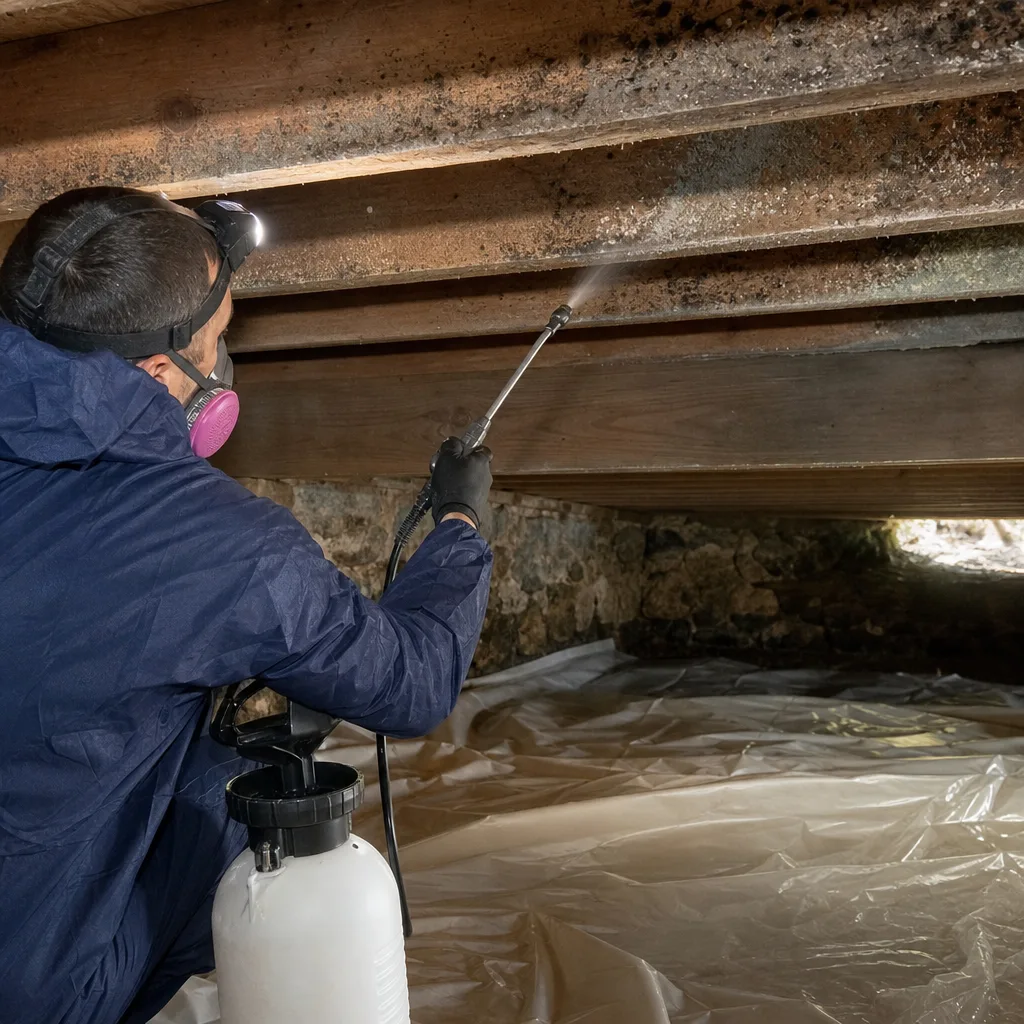
Mold Removal
Full containment removal of contaminated plaster, lath, insulation, and finishes, with HEPA air scrubbing throughout. We don’t clean over mold in Upper West Side pre-war walls; we remove the affected material and treat the cavity. The work is done to a standard that survives a co-op board’s building-wide mold assessment, not just a homeowner’s visual check.
Black Mold Remediation
Stachybotrys is the scary word here, and in the older Upper West Side stock it shows up where water has been sitting a long time behind an exterior wall or under a flooded basement floor. We test to confirm, then remediate under full containment with negative air pressure and clearance air sampling at the end. No shortcuts. No spraying something and calling it done.
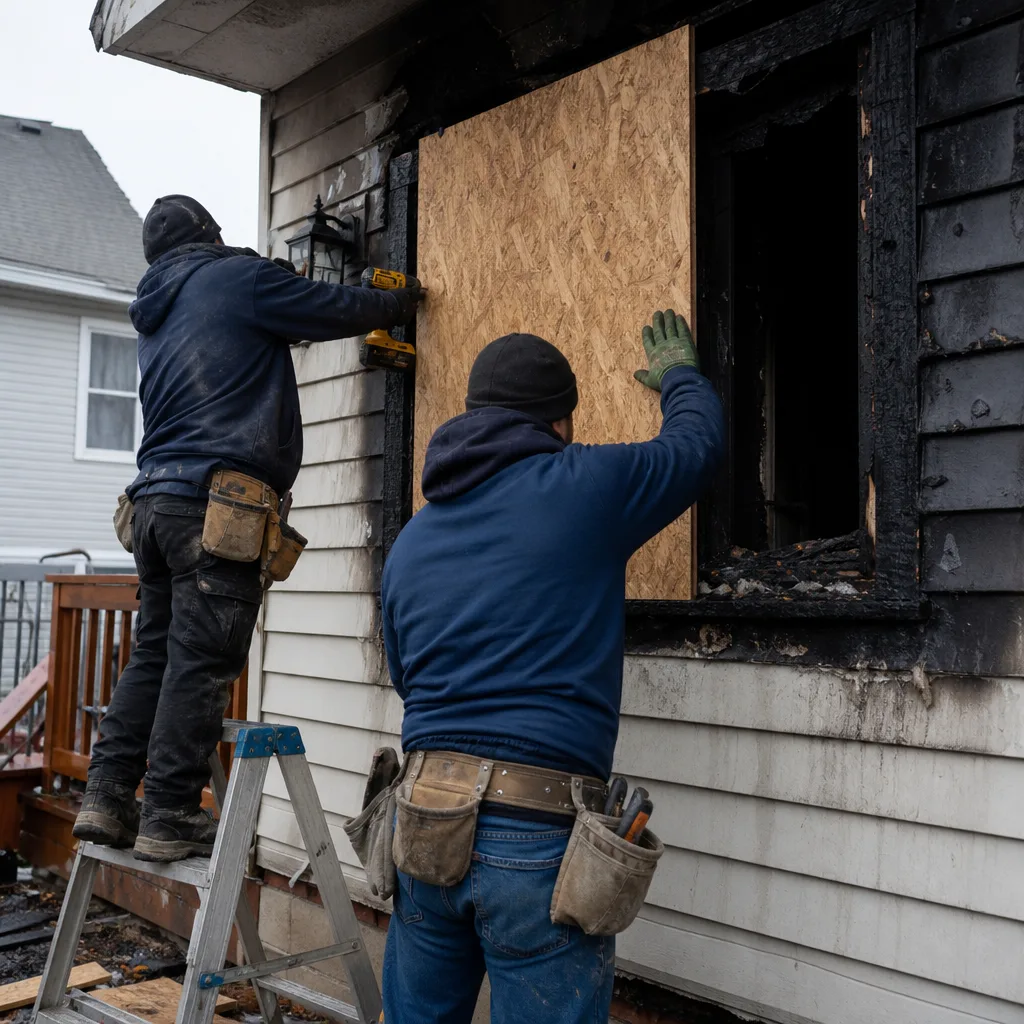
Air Quality Restoration
Even after the mold is gone, the air tells the story. We run HEPA air scrubbers during the entire remediation, then sample post-remediation air to demonstrate that spore counts have returned to background levels. In an occupied co-op where a neighbor’s claim is pending, that clearance report is worth its weight.
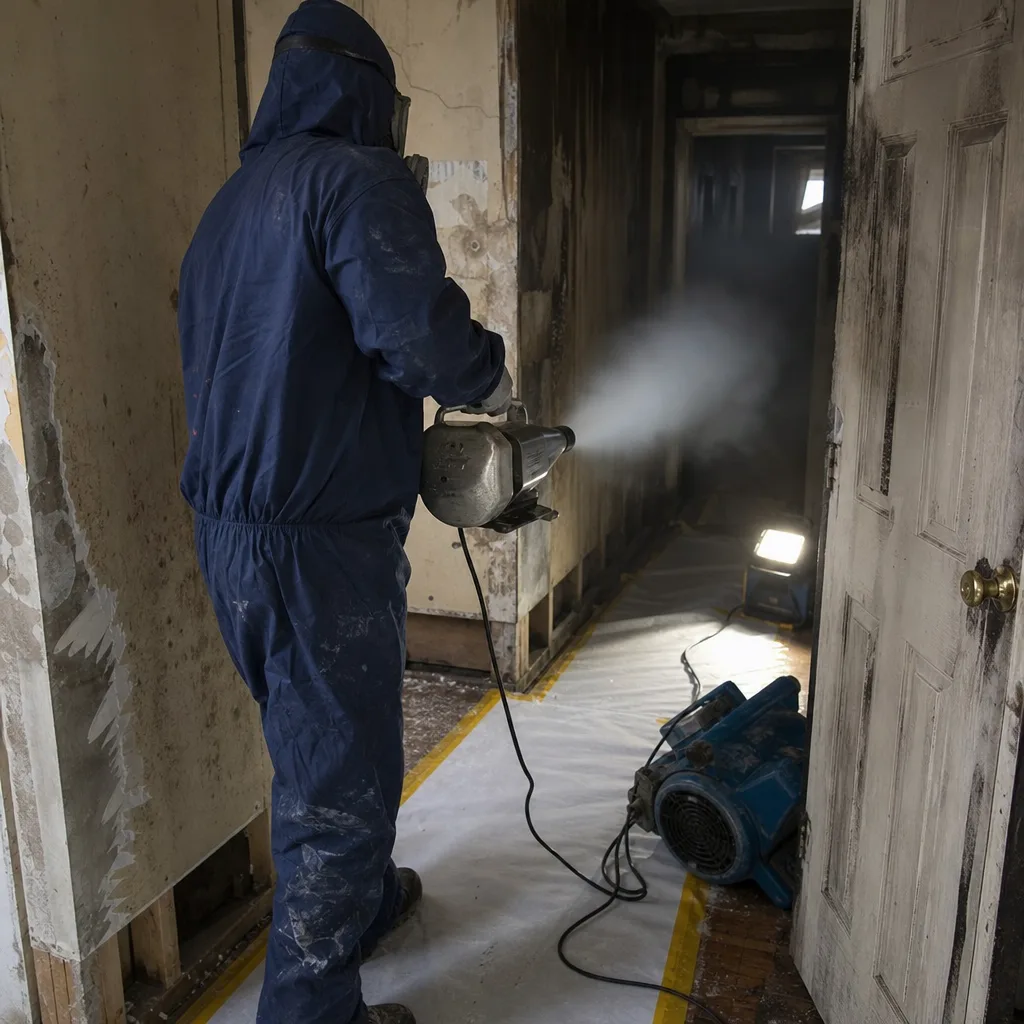
Crawl Space Treatment
Older Upper West Side buildings, especially the brownstones and smaller pre-wars, have crawl spaces that hold moisture all year. We treat the space with EPA-registered antimicrobials, install vapor barriers where appropriate, and set up drying equipment to bring the relative humidity down to a level that doesn’t feed mold. The goal is a crawl space that stays dry enough that mold can’t return.
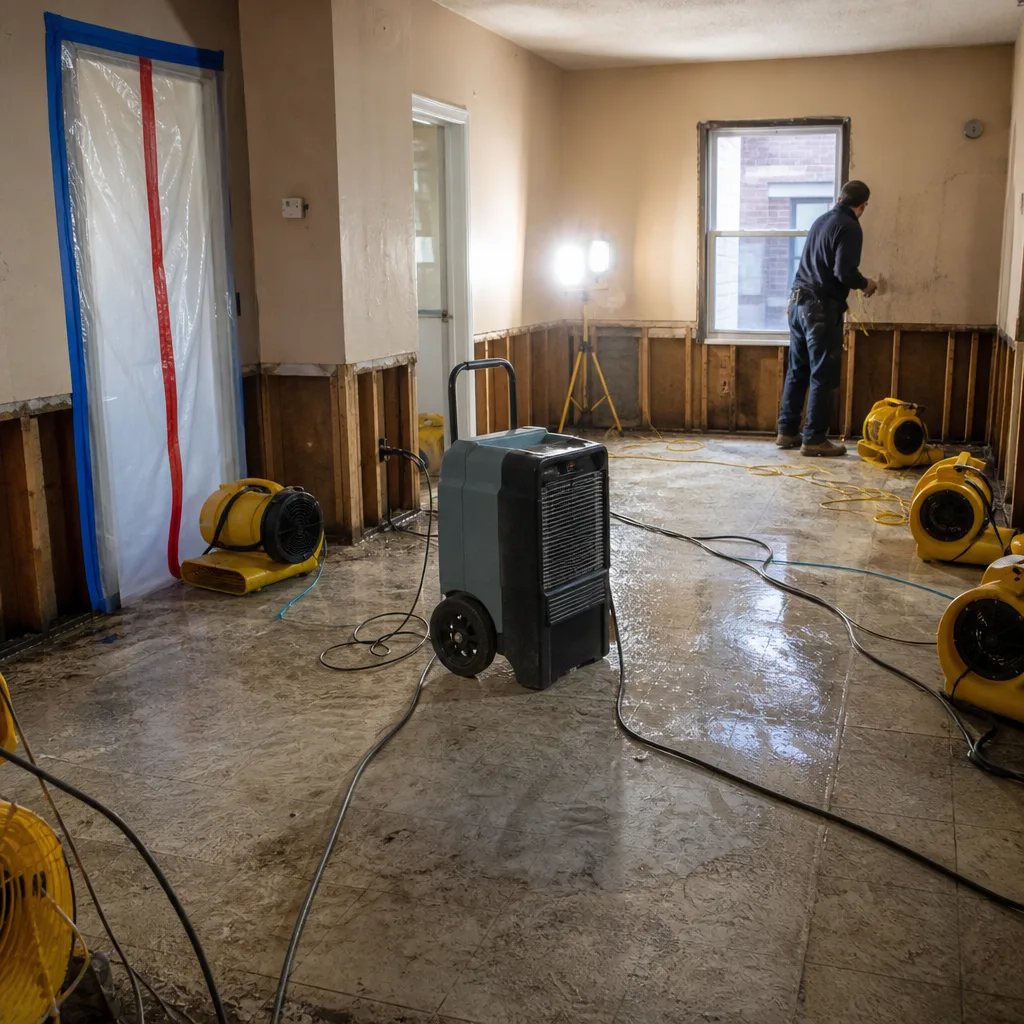
Moisture & Humidity Control
In steam-heated pre-war apartments, the humidity problem is built into the heating system. We diagnose where the moisture is coming from: radiator condensation wicking into walls, failed stack gaskets, missing pipe insulation, exterior wall condensation. Then we propose fixes that are realistic for a pre-war building and a co-op board’s willingness to approve them.
What happens when you call
- 1
A real person answersNo phone trees - you reach a local pro.
- 2
You get an upfront price rangeHonest numbers before anyone is dispatched.
- 3
A background-checked tech heads outLicensed & insured, dispatched right away.
- 4
You approve before work beginsNothing starts until you say go.
Mold Remediation Costs in Upper West Side, NY
In the Upper West Side market, a standard contained mold remediation job typically runs $3,500 to $9,500 for a single affected room. A multi-room loss involving a shared pipe chase and two or three units can run $12,000 to $30,000, and full-building mold events in a pre-war co-op sometimes reach $60,000 or more. What moves the number: whether the source is a slow stack weep (less surface area, more drying time) or a roof-drain overflow (more contaminated material, faster demolition); whether the building requires board-mandated clearance testing (often adds $800 to $1,500); and whether original plaster crowns, rosettes, or herringbone flooring must be matched rather than replaced. A mold inspection with air sampling in the Upper West Side runs $450 to $850, and standalone mold removal (containment, demolition, cleaning, and antimicrobial treatment, no rebuild) usually falls between $3,000 and $8,000. We always start with a free visual inspection and a written scope before any work begins, so there are no surprises on the bill. Call (518) 800-3751 for an exact quote. Estimates are free.
We Also Serve Cities Near Upper West Side
We also run crews into Astoria, Ditmars Steinway, Upper Manhattan, and Upper East Side for the same emergency mold response and full Upper West Side standard of work. If you live near the neighborhood but not in it, call and we’ll route the nearest crew.
Upper West Side Mold Remediation Questions, Answered
How long can a co-op board legally delay mold remediation in an Upper West Side pre-war building?
There is no single legal deadline that applies to every co-op, but courts in New York have made clear that boards have a duty to address conditions affecting habitability and health. A board’s proprietary-lease repair obligations and the implied warranty of habitability mean that a delay measured in months, not days, is usually unreasonable. In our experience, boards move fastest when the shareholder provides a professional mold assessment, a written scope of work, and direct adjuster contact from a restoration company. We prepare that documentation for you. Call (518) 800-3751 and we’ll help you get it in front of the board this week.
Can mold spread from one apartment to another through the original pipe chases in a West End Avenue building?
Yes, and it does. The original pipe chases in West End Avenue pre-war buildings run vertically through multiple floors and often connect to horizontal wall cavities on the same floor. Moisture from a stack leak in one unit routinely wicks through the plaster and lath into the adjacent unit, carrying mold spores and creating growth behind walls no one has opened. That’s why we always inspect and moisture-map the shared chase before concluding the containment zone. Call (518) 800-3751 if you suspect your neighbor’s leak is now your mold.
What is the right drying method for plaster-and-lath walls with mold behind original crown moldings?
Plaster holds water for weeks and dries from the inside out, so standard drywall drying won’t work. We use low-humidity, long-duration drying with Dri-Eaz and Phoenix dehumidifiers placed inside wall cavities or through controlled openings, with daily hygrometer readings until the plaster reaches the dry standard for its thickness and composition. Crown moldings and rosettes are dried in place whenever possible and matched by our finish carpenters only when removal is unavoidable. For a property-specific drying plan, call (518) 800-3751.
Does a roof-drain overflow require full mold remediation if the wet baseboard is in a third-floor unit above no ceiling?
Often yes, because the water didn’t come from above. In courtyard buildings along West End Avenue and Broadway, a roof-drain overflow travels down through shared light shafts and pipe chases and migrates laterally into third-floor units that share no ceiling with the drain. By the time the baseboard is wet, the wall cavity has been wet long enough for mold to establish. We use thermal imaging through shaft walls to confirm the actual path before recommending remediation scope. For an honest assessment, call (518) 800-3751.
How do building agents typically require drying logs after a steam-pipe condensation mold event?
Managing agents in Upper West Side pre-war buildings usually require dated, equipment-specific drying logs showing daily moisture readings, ambient humidity, and the dry standard achieved, with equipment placement and daily technician sign-off. Many also require post-remediation air sampling results from a third-party lab before they’ll close out the board’s file. We provide all of that as standard practice, because we know the board is going to ask for it. Call (518) 800-3751 and we’ll handle the paperwork end to end.
How fast can you actually get to an Upper West Side apartment for a mold emergency?
Our local crews are dispatched from the New York City office and are usually on-site within 45 minutes of your call, any hour, any day. For confirmed active water intrusions that are feeding mold, we start containment and mitigation the same visit. The faster we get air scrubbers running and drying started, the less demolition is required. Call (518) 800-3751 now if you need someone there tonight.
Does my insurance cover mold remediation in a co-op or condo building?
Insurance coverage for mold in a New York co-op or condo depends on the source of the water and the terms of both the shareholder’s policy and the building’s master policy. We document every loss from the first hour with photos, moisture readings, and a line-item scope written in insurance-industry language, and we communicate directly with your adjuster and the building’s carrier. In our experience, well-documented mold losses from sudden, covered water events get paid. Undocumented neglect does not. Call (518) 800-3751 and we’ll help you build the claim correctly from day one.
What should a homeowner do in the first 30 minutes after discovering mold behind a wall?
Don’t disturb it. Don’t poke it, scrape it, or spray bleach on it; disturbing mold releases spores into the air and can spread them through the apartment and into neighboring units. Turn off any fans or HVAC circulation, shut the door to that room, and call a certified mold remediation crew. If there’s active water, shut the supply valve if you can locate it safely. Then call (518) 800-3751. We’ll talk you through the next steps and get a crew rolling.
Serving Upper West Side, NY - Our Local Coverage Area
We’re based in the Upper West Side area and know this community well. Use the map below to see our service coverage - if you’re nearby, we can almost certainly help.
Get a Free Estimate for Mold Remediation in Upper West Side
If you’re in the Upper West Side and you’re seeing stains, smelling must, or worried about what’s behind a plaster wall, call us. We’ll inspect it, tell you honestly what’s happening, and if work is needed, we’ll put the scope and the price in writing before we start. No sales pressure. No hedging. A live person answers. (518) 800-3751. We stand behind the result in writing.
Written by Curt Bowman, Owner at Floodline Restoration Co., serving New York City since 2010.