
Free visual inspection and a written scope of work before any mitigation begins - photos, moisture readings, and drying logs go in your claim file
The scope we write is the scope we bill. Anything new gets shown to you, in writing, before we touch it.
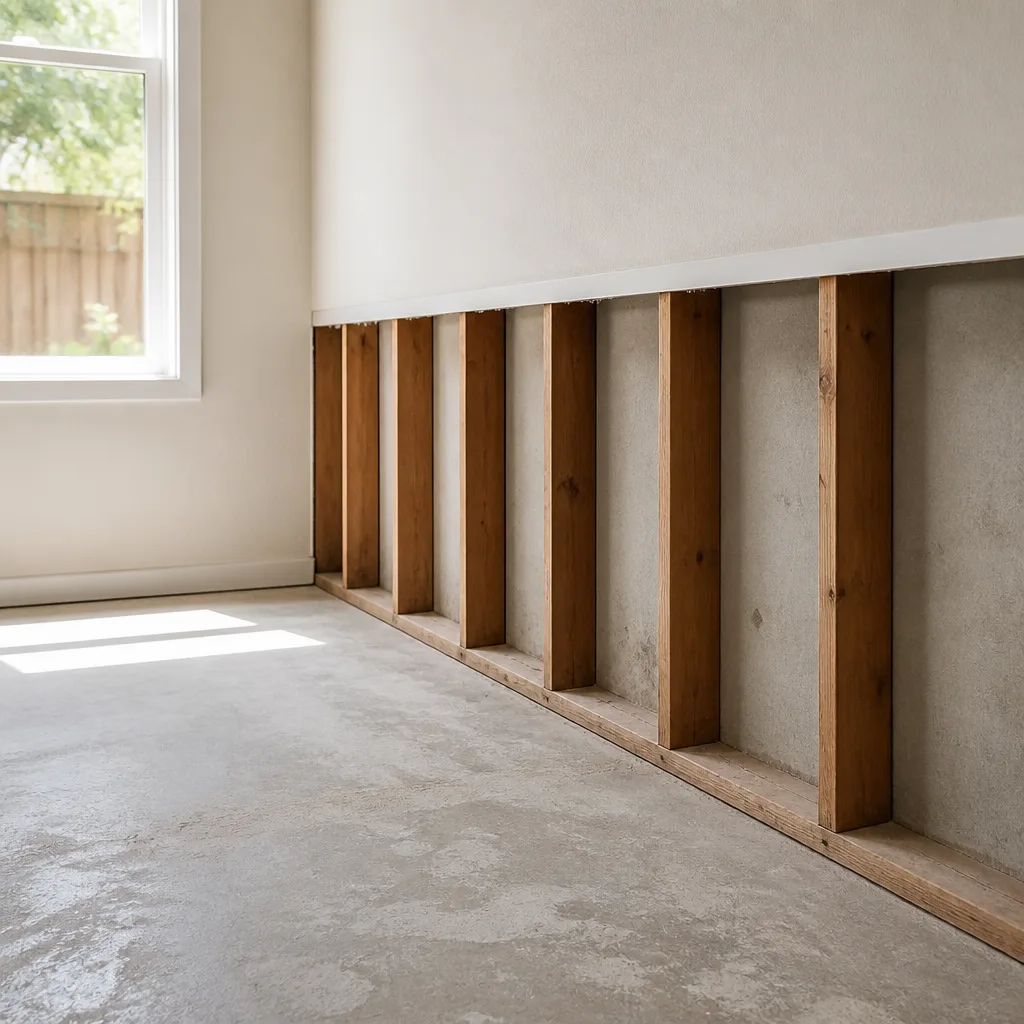
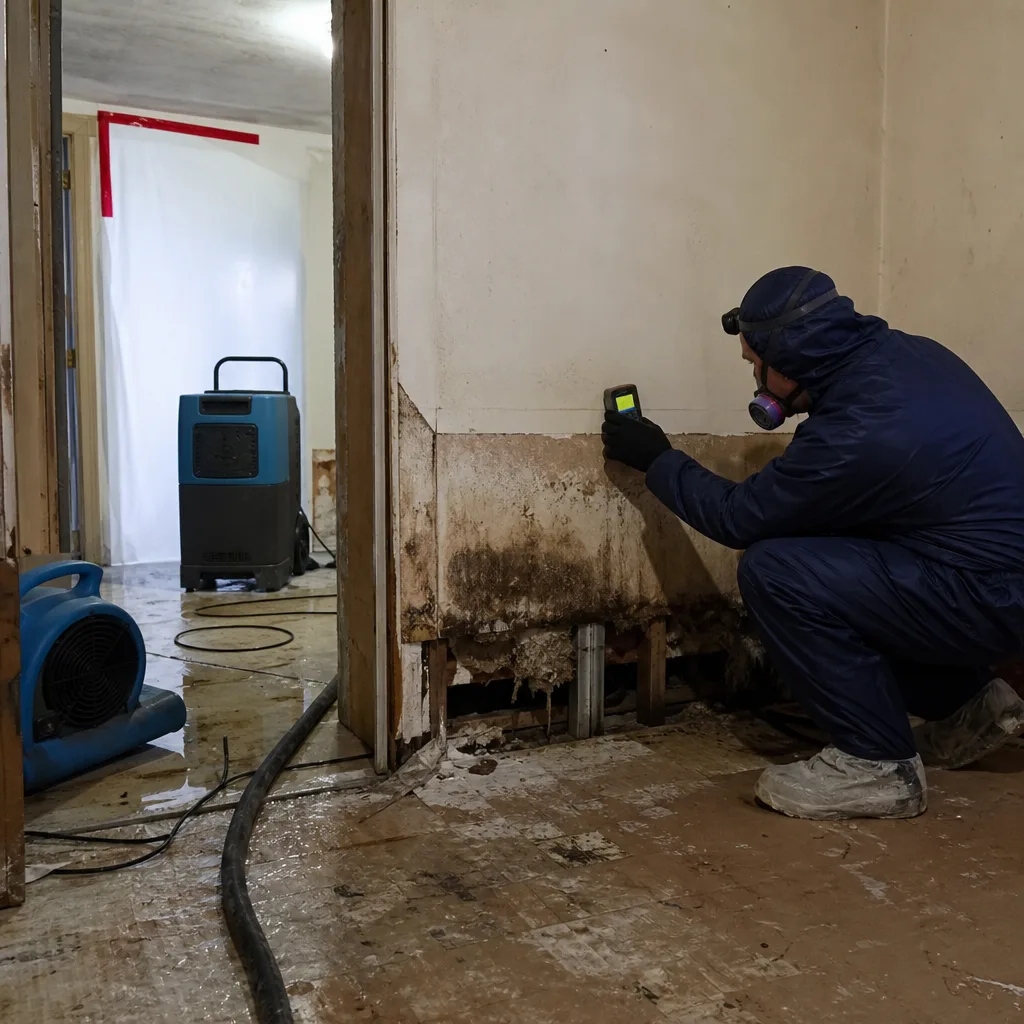 Before
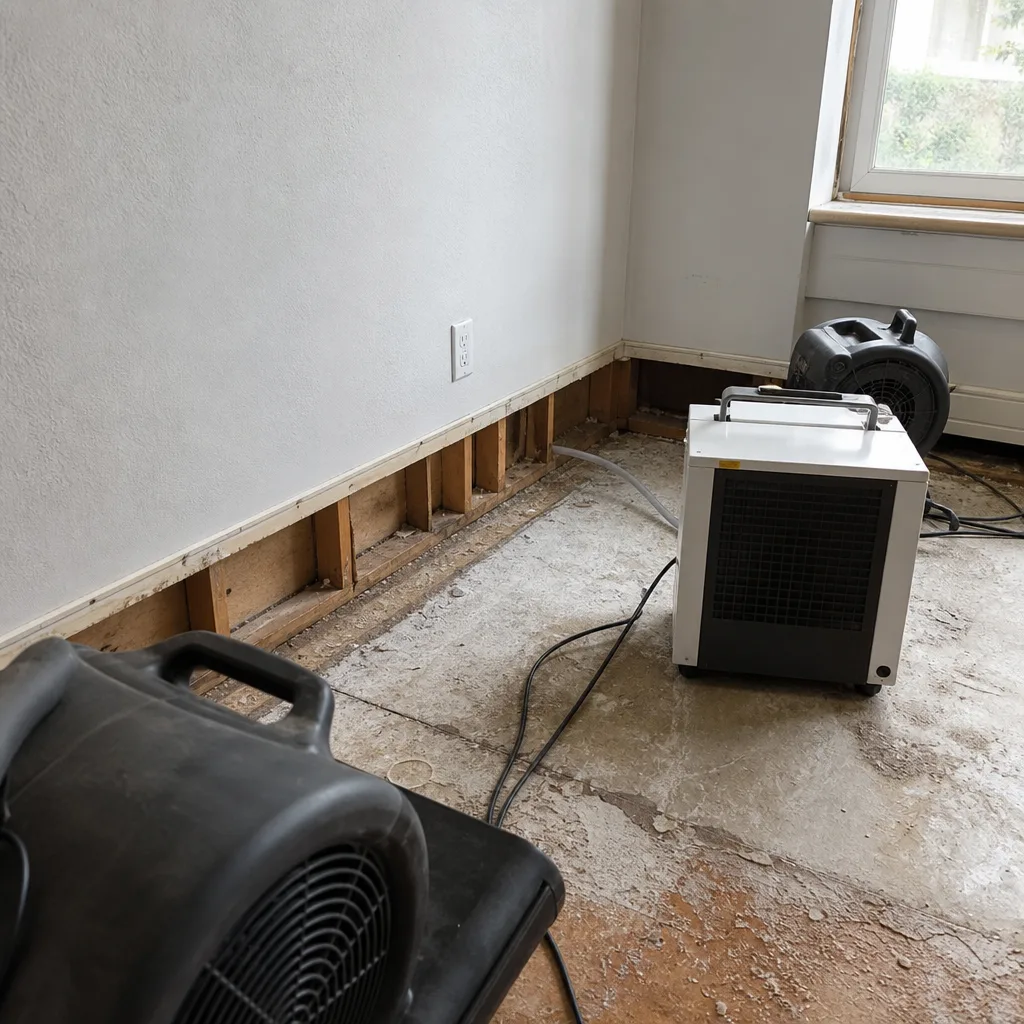 After
After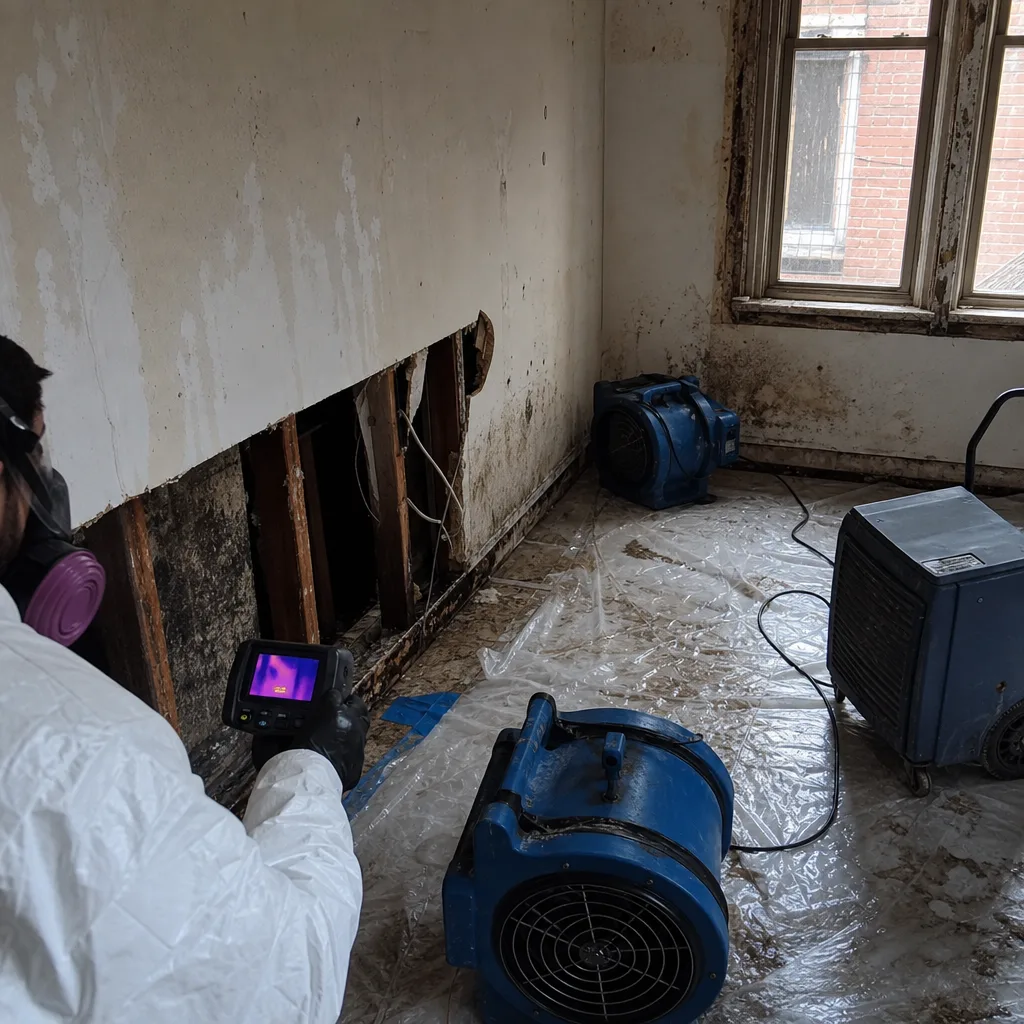 Before
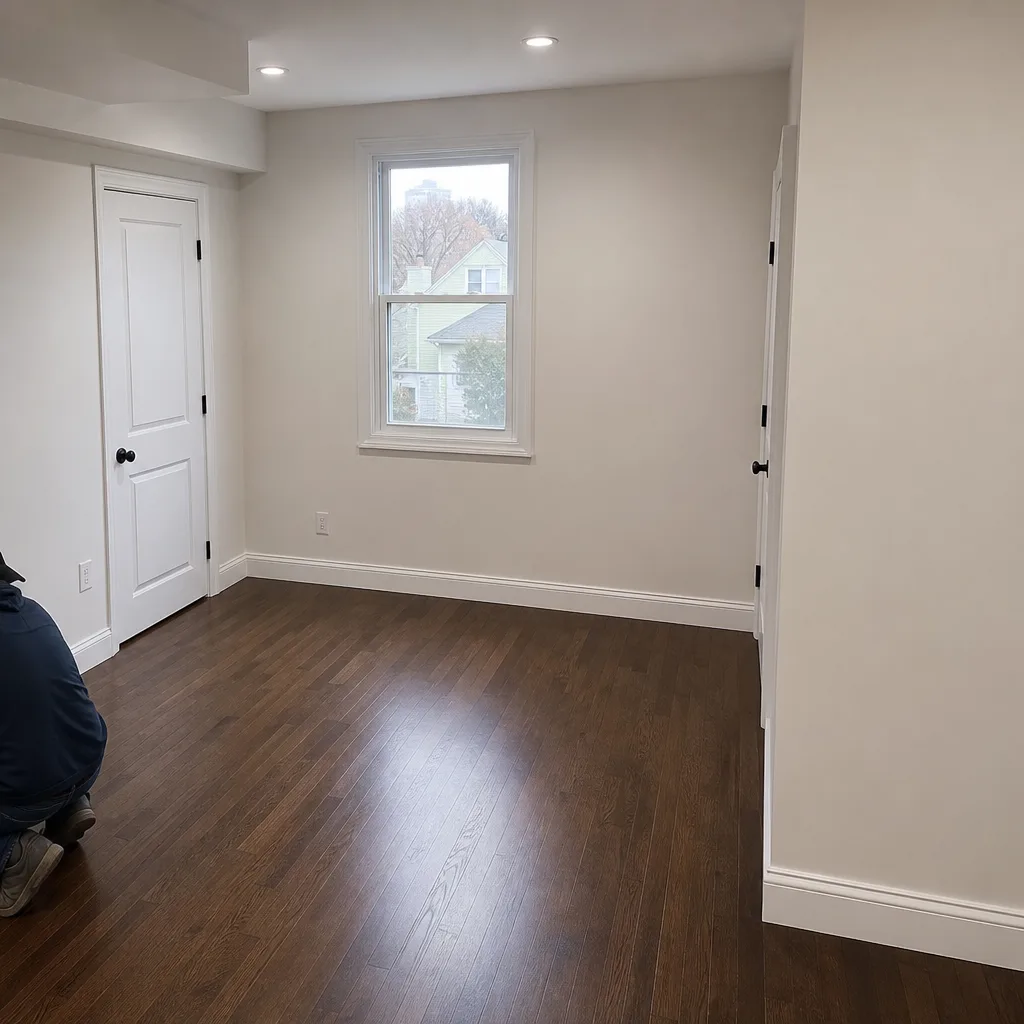 After
After24/7 Emergency Storm & Disaster Restoration in East Harlem
Storm and disaster restoration in East Harlem works like this: call (518) 800-3751, a live dispatcher answers, and a certified crew is on the way. We respond across East Harlem around the clock, every day of the year. Whether a nor’easter peeled back a flat roof on East 116th Street or a freeze burst a riser line in Wagner Houses, the first hour determines how much gets saved and how much gets replaced. Call as soon as you see water, smell mold, or hear water moving where it shouldn’t be. A free visual inspection tells us exactly what we’re dealing with before any work starts, and our team gets extraction running the same visit.
Understanding Storm & Disaster Restoration Severity in East Harlem Properties
Storm damage in East Harlem spans three distinct categories, and the distinction matters because it dictates the approach. Category 1 water comes from a clean source like a supply line or roof leak before it touches building materials. Category 2 carries contaminants from washing machines or sump failures. Category 3 is the serious one: sewage, street flooding, or anything that picked up pathogens on the way in. East Harlem’s building stock complicates all three. Pre-1930 tenements with lathe-and-plaster walls hold water differently than a modern sheetrock wall, and moisture wicks up behind original plaster long after the surface feels dry. That’s why our crews use thermal imaging and hygrometers to map moisture inside wall cavities, not just on the surface. In the NYCHA towers like Jefferson and Carver Houses, a single failed riser pipe sends Category 1 water cascading down multiple floors, but by the time it passes through aging cast-iron stacks and decades of settled building materials, we treat it with Category 3 protocols. The severity isn’t just about the water source. It’s about what the water traveled through.
Why East Harlem Property Owners Choose Floodline Restoration Co.
- 45-minute response commitment - we’re already in East Harlem, not driving in from Westchester or Jersey. Our dispatch boards are built around this neighborhood’s streets.
- A live person answers, 24/7/365 - no automated system, no callback queue. At 2 a.m. you get a dispatcher who knows East Harlem and can send a crew to your block.
- IICRC-certified crews - our technicians hold WRT, FSRT, and AMRT certifications, plus EPA RRP lead-safe credentials for pre-1930 wall openings. The certifications match the building stock here.
- Free visual inspection - we assess the damage, map the moisture, and put a written scope in your hands before any charge is discussed.
- Direct insurance billing - we document everything from the first hour, send it to your carrier, and handle the adjuster conversation. You’re not the messenger.
- One team, start to finish - Storm & Disaster Restoration here means the same crew that extracts is the crew that rebuilds. No handoff to a sub we don’t know.
Our Storm & Disaster Restoration Process
Inspection & Assessment
We start with thermal imaging, moisture meters, and a thorough walk of the damaged area. For pre-1930 tenements, we identify lathe-and-plaster scope before any wall is opened, because lead-paint and asbestos protocols run first in East Harlem.
Extraction & Stabilization
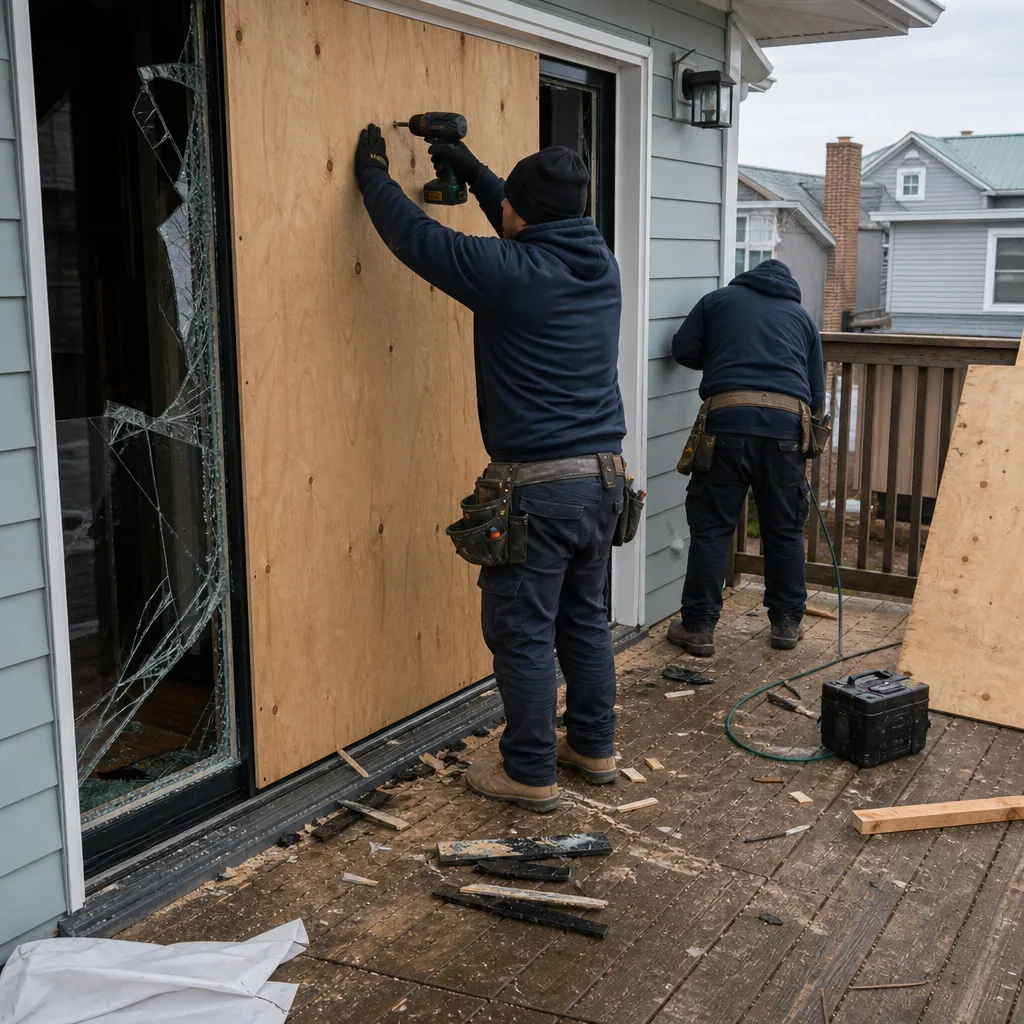
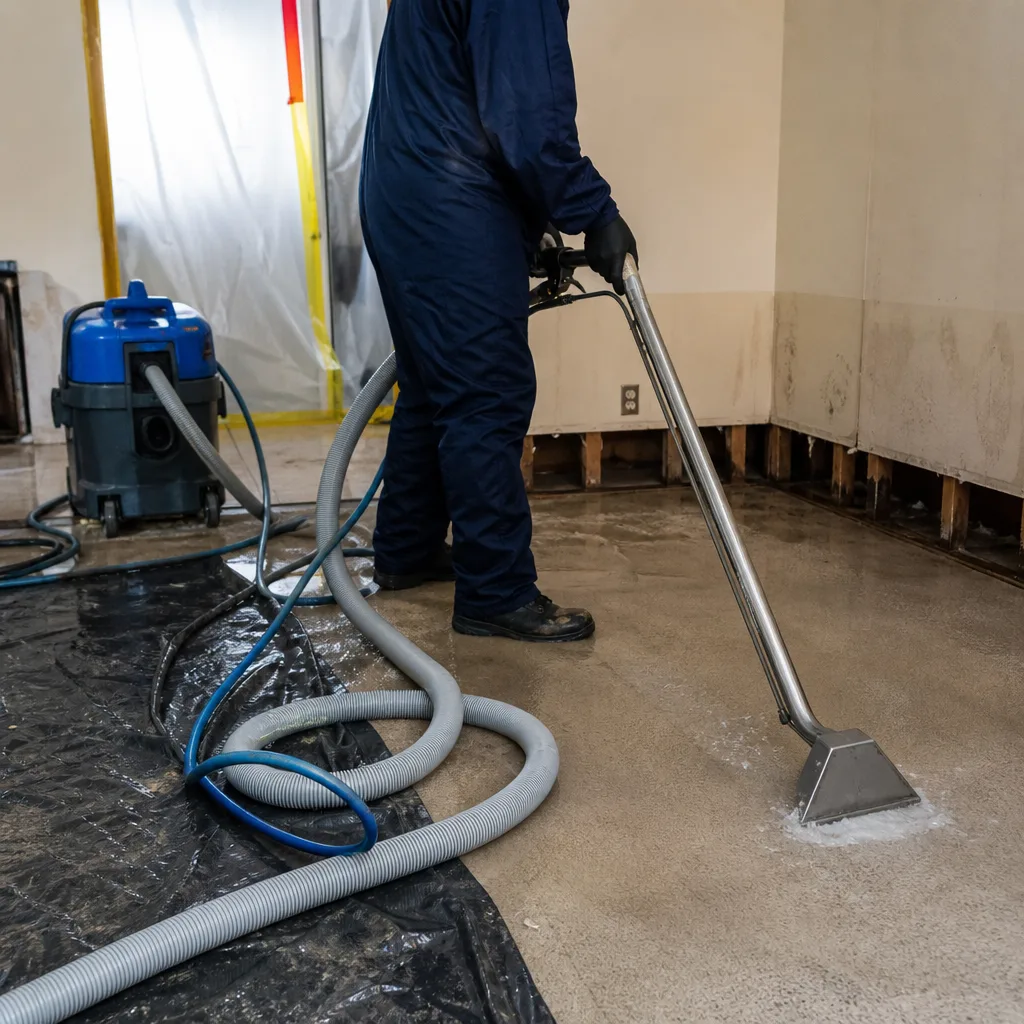
Standing water comes out immediately using professional-grade extraction units. If a roof or window opening is exposed, we tarp or board up same-day so the damage stops compounding.
Drying & Dehumidification
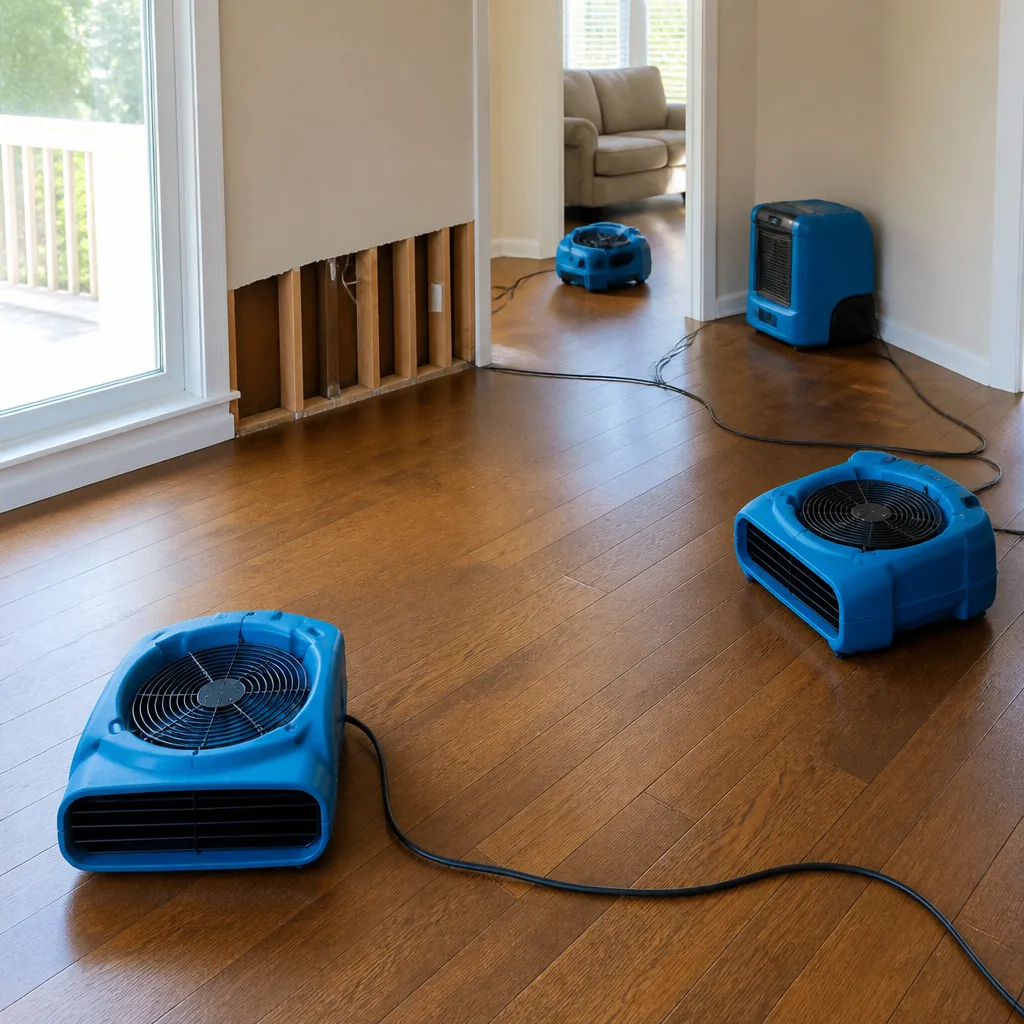
Dri-Eaz LGR dehumidifiers and XPOWER air movers go in, positioned for airflow through wall cavities and under floors. We log moisture readings daily until the dry standard is met, not a day sooner.
Cleaning & Sanitization
Affected surfaces get cleaned with appropriate antimicrobial treatments. For Category 3 water, this includes full sanitization of all contact surfaces and porous material removal where required.
Specialty Treatment for Storm Damage
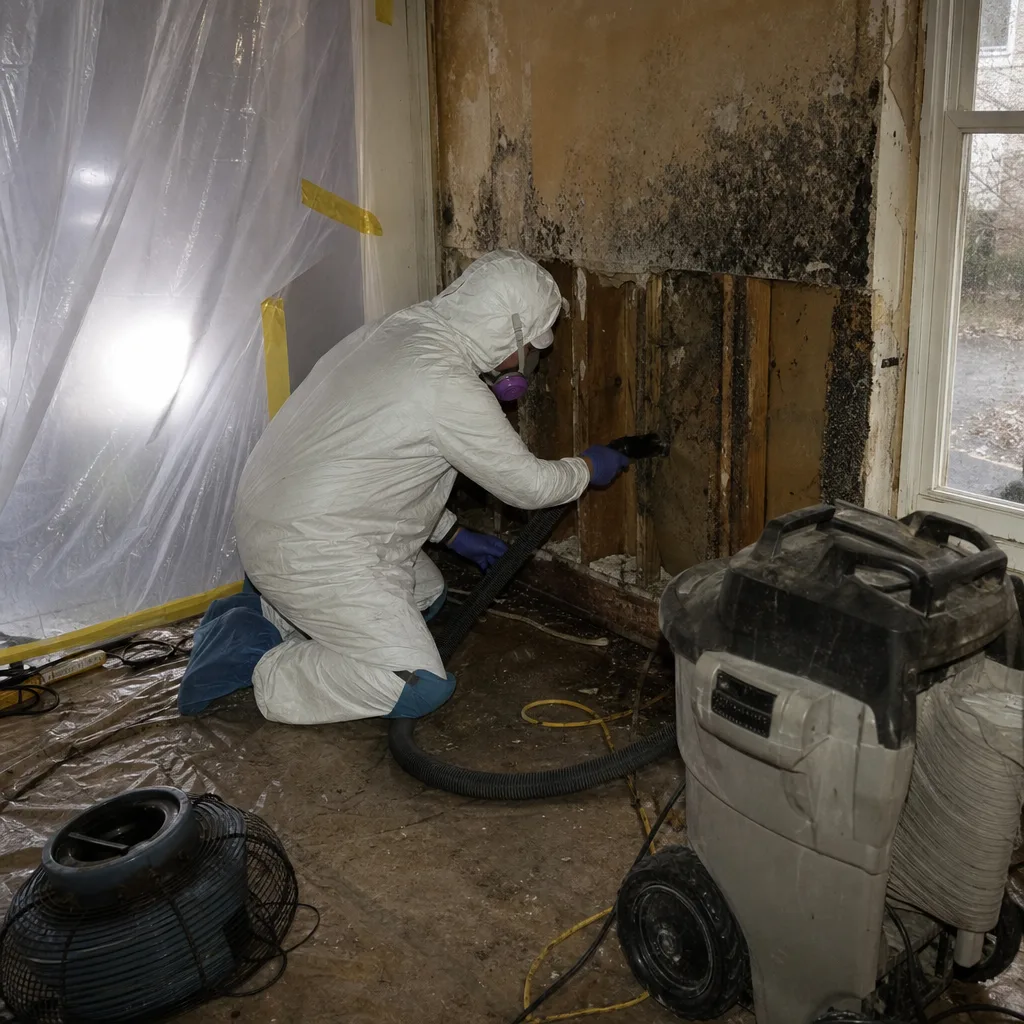
This is where East Harlem’s building types demand different approaches. NYCHA units often need mold containment and air scrubbing while we wait for access authorization. Tenement jobs need HEPA dust containment once walls open.
Repairs & Restoration
The same crew that did the drying rebuilds the walls, replaces the flooring, and restores the space. It’s full-cycle reconstruction and cleanup in East Harlem with one accountable team, backed by the 90-Day Done Right Promise in writing.
Need Emergency Storm & Disaster Restoration in East Harlem Now?
Crews minutes away, answering live 24 hours a day. The sooner we start, the less it costs.
Working With Your Insurance Company
Insurance claims after storm damage in East Harlem are documents, photos, and a line-item scope. We produce all three from the first walk-through. Curt Bowman built East Harlem storm restoration around the reality that NYCHA, condo boards, and carriers all want the same thing: proof of what happened, what it will cost, and that the work is being done to standard. We photograph every affected room before, during, and after. We log daily moisture readings with equipment serial numbers tied to each reading. We write scopes in the carrier’s language, submit directly, and speak to your adjuster on your behalf. You’re not translating trade work into insurance-speak. You already have enough to handle.
What We Provide Your Insurer
- Thorough documentation of the loss
- Photos of all damage, room by room
- Moisture readings and drying logs
- A detailed, line-item scope of work
- Direct coordination with your carrier
Built for East Harlem’s Loss Calendar
The Storm and disaster restoration calls in East Harlem follow a pattern that hasn’t changed much in forty years. January and February bring deep freezes that crack supply lines in uninsulated tenement walls and test NYCHA riser systems past their breaking point. March and April are roof season: Manhattan’s 20 to 40 freeze-thaw cycles per winter have worked over the flat parapeted roofs on every pre-war building, and the thaw sends water through cracked flashing into top-floor ceilings. Summer thunderstorms hit the low-lying blocks near the East River hardest, with flash flooding that finds every basement stairwell and ground-floor entrance. Nor’easters in the fall bring wind-driven rain against parapets and cornices already weakened from the previous winter. East Harlem’s older housing stock means each season’s failure lands differently than it would in a newer neighborhood. That’s why we keep crews positioned here year-round, with the equipment staged for what the calendar says is coming.
Storm & Disaster Restoration Across East Harlem’s Neighborhoods
The geography of East Harlem shapes how restoration work gets done. Around the Wagner Houses on the northern edge near 120th Street, we’re navigating NYCHA’s vendor-access system and working in high-rise units where equipment comes up in freight elevators on a schedule. Down near East 96th Street and the Upper East Side border, the building stock shifts to smaller tenements where fifth-floor walk-ups mean every dehumidifier and air mover gets hand-carried up narrow stairs. Along East 116th Street, the commercial strip near the 116th Street station brings a mix of old-law tenements with original cast-iron plumbing that’s been patched for decades. Over by Pleasant Avenue, the pre-1930 walk-ups have narrow doorways and tight interior stairwells that demand smaller equipment footprints and careful staging from the street. The Jefferson Houses around 112th Street and the Carver Houses near 102nd Street both have their own access protocols and maintenance histories that our crews know from years of working those buildings. Park parking is always a consideration. We plan every equipment load for East Harlem’s reality: double-parked cars, narrow one-way streets, and loading zones that aren’t where you’d like them to be.
Specialized Storm & Disaster Restoration Services We Offer in East Harlem
Roof Tarping
Flat built-up tar roofs cap nearly every pre-war building in East Harlem, and parapet failures are the single most common source of top-floor water damage in the neighborhood. We tarp the failed flashing or parapet base same-day using weighted systems rated for Manhattan wind exposure. Tarps stop the active leak while the permanent repair gets scheduled and insurance approved, and our crews understand parapet structure well enough to secure tarps that hold through a nor’easter.
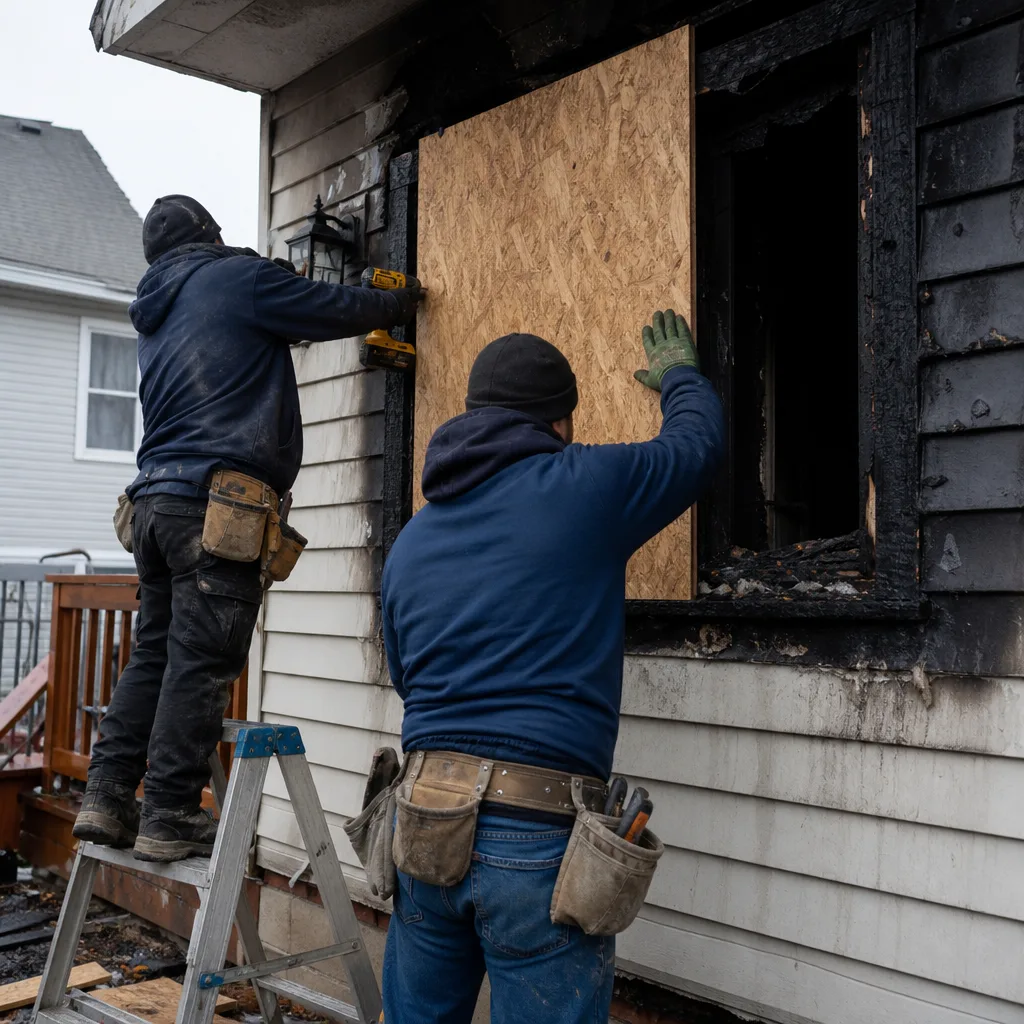
Emergency Board-Up
Storm-blown windows and compromised entry doors in East Harlem need to be secured fast, both for safety and to keep weather and people out. We board up with moisture-rated plywood or polycarbonate panels, cut to fit the neighborhood’s unusual window sizes. Old tenement bays and NYCHA standard units each get their own template, and we work with building management when access requires it.
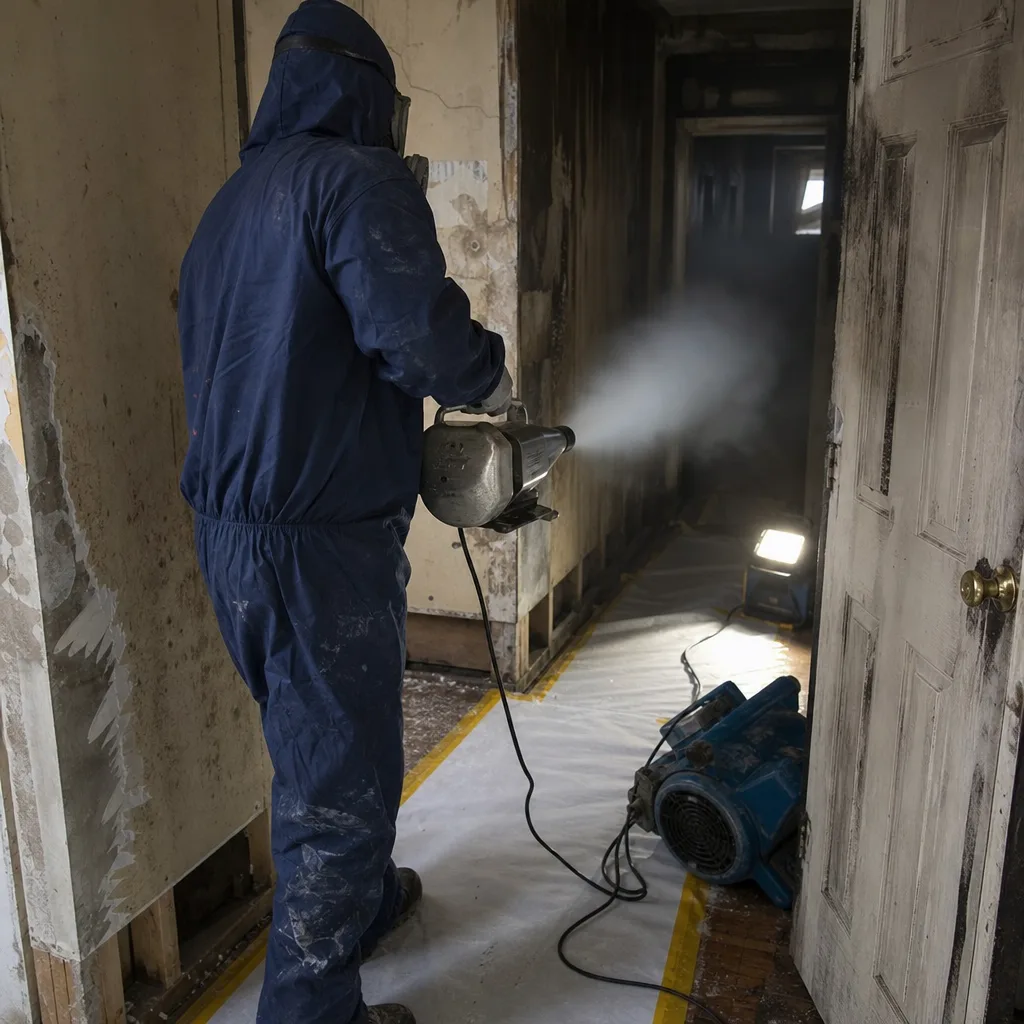
Storm Damage Cleanup
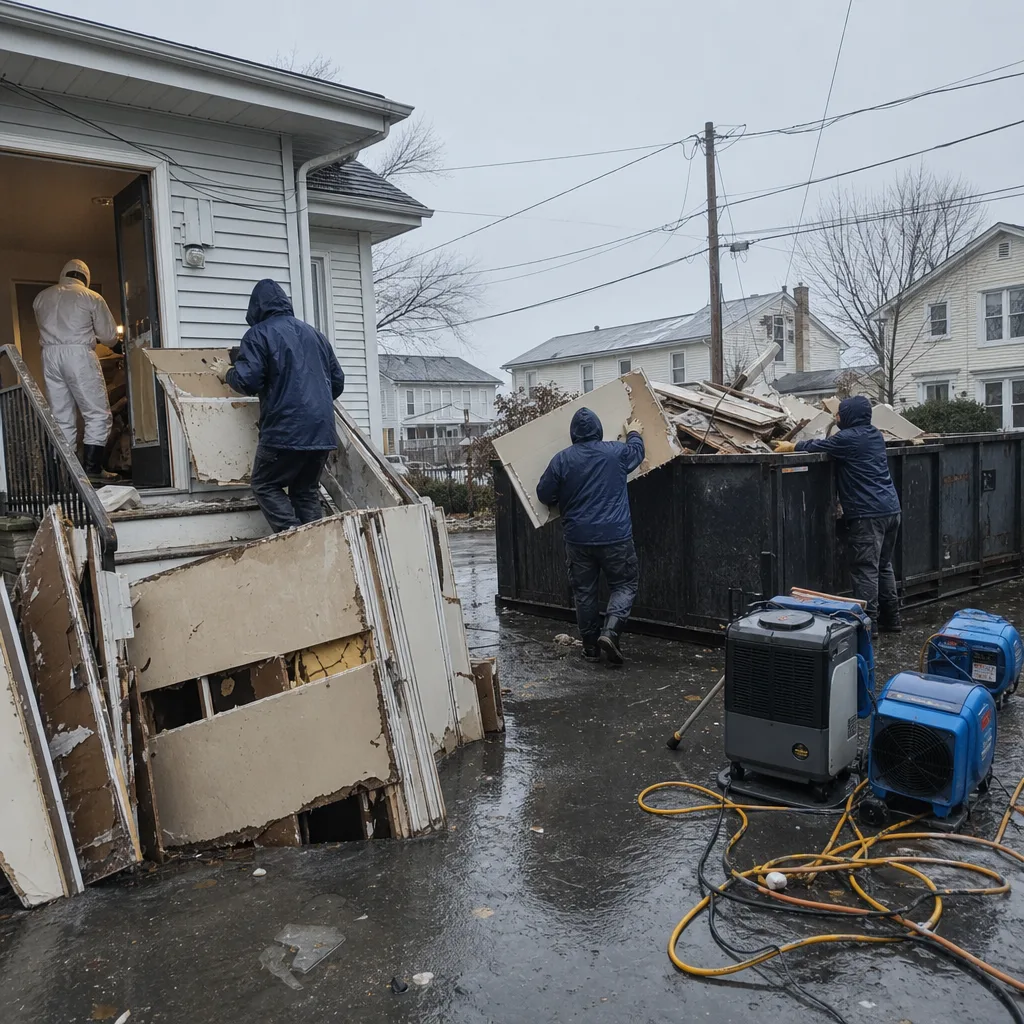
Debris, standing water, and wet materials come out the same visit. In East Harlem’s tight units, that means careful haul-out through narrow hallways and down flights of stairs, with debris staged for proper disposal without blocking building entrances or fire corridors. We clean, sanitize, and dry before the mold window opens.
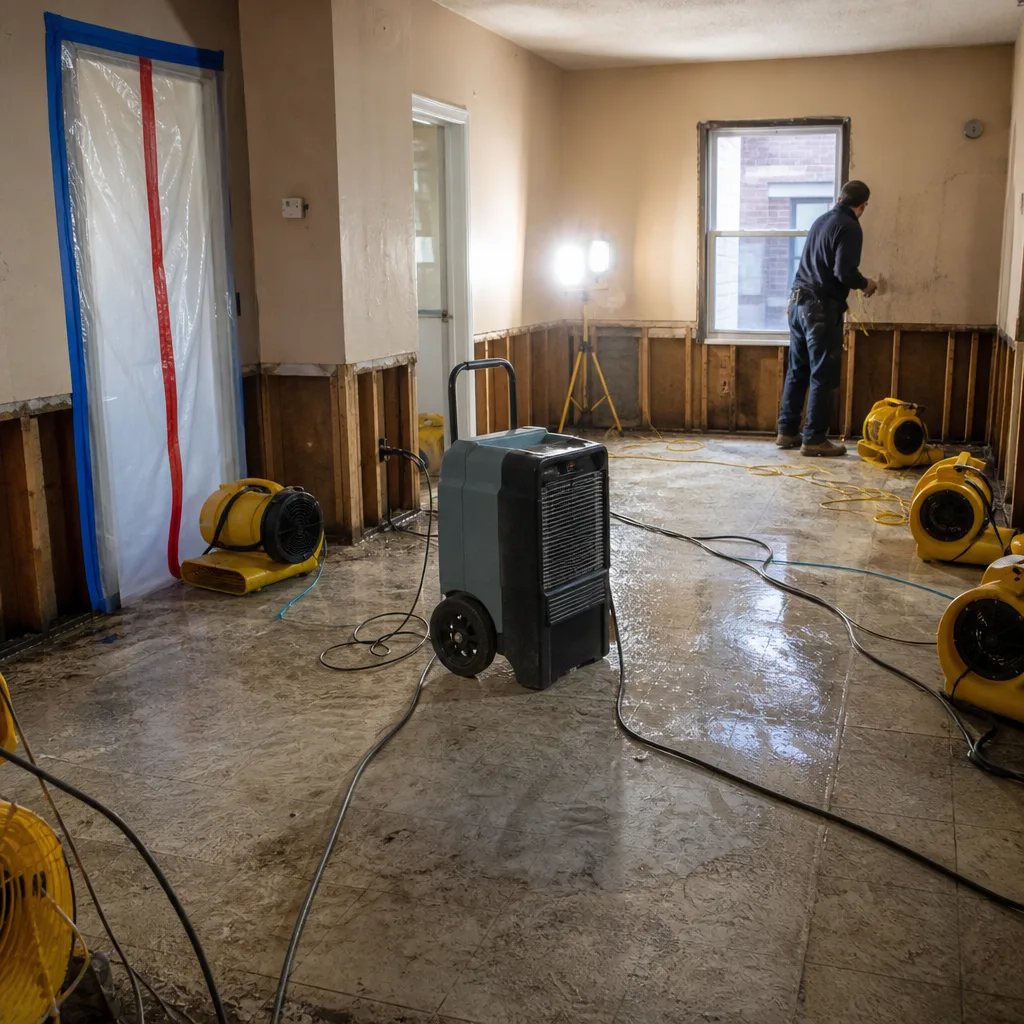
Flood Damage Restoration
East Harlem’s position near the East River put low-lying blocks under water during Sandy in 2012, and below-grade moisture problems linger in some of those buildings to this day. We handle full flood restoration from extraction to structural drying to rebuild, with moisture mapping that documents the full extent of water migration through walls and under flooring.
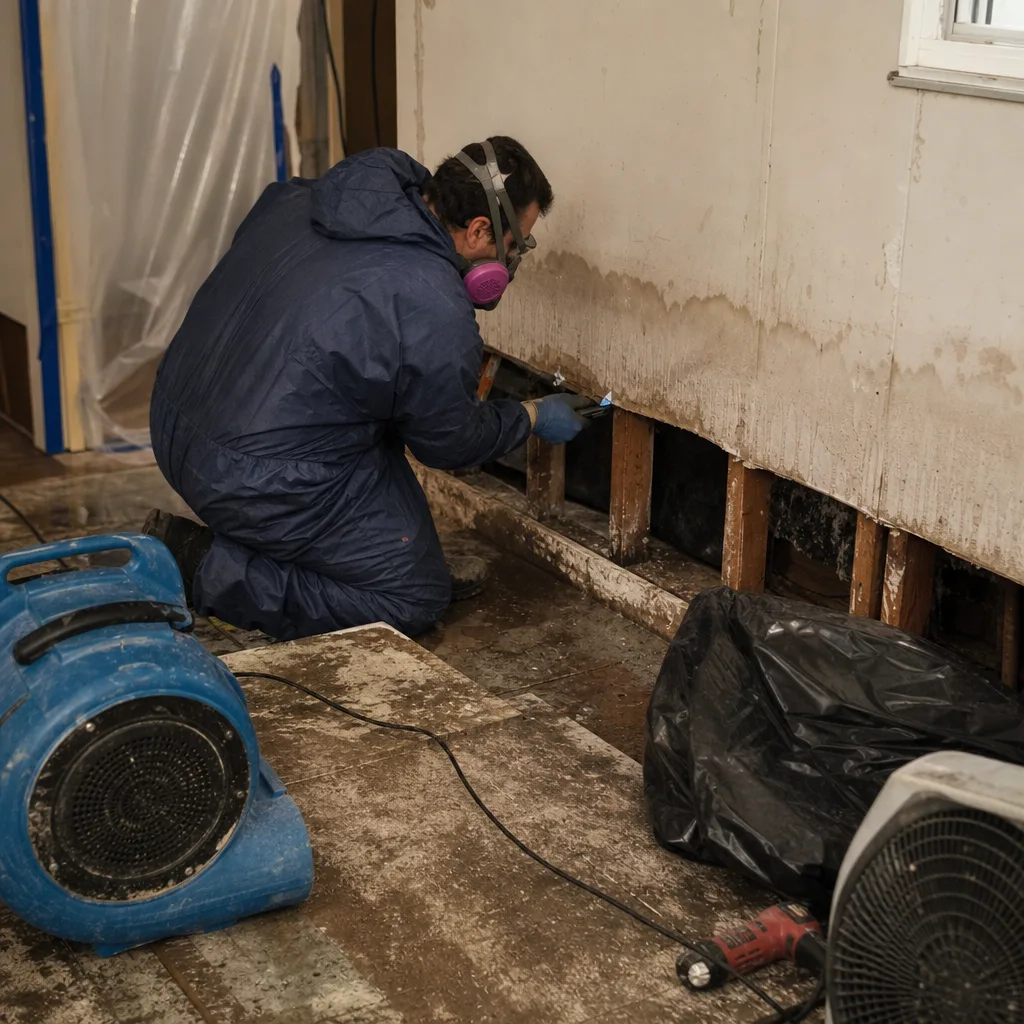
Debris Removal
Storm debris in East Harlem isn’t just tree limbs. It’s parapet fragments, roofing gravel, broken glass from old fire escapes, and waterlogged building material from collapsed ceilings. We haul it out and dispose of it properly, coordinating with building management and the City’s sanitation schedule where large volumes apply.
Wind Damage Repair
East Harlem’s tenement cornices and parapets catch wind off the East River and the Harlem River, and decades of deferred repairs mean pieces come loose in big storms. We stabilize what’s loose, secure what’s salvageable, and rebuild what isn’t. The structural repair gets done by our own crew, not handed off to some contractor you’ve never met.
What happens when you call
- 1
A real person answersNo phone trees - you reach a local pro.
- 2
You get an upfront price rangeHonest numbers before anyone is dispatched.
- 3
A background-checked tech heads outLicensed & insured, dispatched right away.
- 4
You approve before work beginsNothing starts until you say go.
Storm & Disaster Restoration Costs in East Harlem, NY
Storm and disaster restoration in East Harlem runs anywhere from $350 to $4,000 for a typical residential job. Roof tarping over a parapet failure on a five-story tenement usually lands between $400 and $900. Emergency board-up for two or three windows sits in the $250 to $600 range. Water extraction and three to five days of drying in a typical one-bedroom apartment runs $1,200 to $3,000. Full flood restoration with wall removal, structural drying, and rebuild starts around $4,000 and goes up based on square footage and the amount of wall cavity that needs to be opened. The free inspection path is the honest way to a firm number. We walk the damage, write the scope, and give you a line-item estimate before any work is authorized. If you carry homeowners insurance or renter’s insurance, we bill your carrier directly and handle the scope negotiation. Out-of-pocket jobs get the same written, no-argument pricing. Call (518) 800-3751 for a free visual inspection and a specific number for your building.
We Also Serve Cities Near East Harlem
We’re in East Harlem every day, but our crews also cover the surrounding area. We respond to storm damage in Astoria, Ditmars Steinway, Upper Manhattan, and the Upper East Side. Same live dispatch, same equipment, same written guarantee.
East Harlem Storm & Disaster Restoration Questions, Answered
How does NYCHA vendor approval affect emergency storm restoration in East Harlem?
NYCHA’s central property management must authorize access and approve any vendor working on building systems before mitigation can start. That approval routinely takes 24 to 48 hours. During that window, affected units sit wet and mold colonization starts inside wall cavities. We document the damage immediately with photos and moisture readings, then stage equipment so the minute approval comes through, extraction and drying begin. We know the process, and we’ve worked Wagner, Jefferson, and Carver Houses enough to move quickly once the green light lands.
Do East Harlem’s pre-1930 tenements require lead or asbestos work during storm restoration?
Opening any wall or ceiling in a pre-1930 tenement triggers NYC’s lead-paint disturbance and asbestos abatement protocols. That means EPA RRP lead-safe work practices, HEPA dust containment, and in many buildings, an asbestos survey before demolition begins. Our crews hold the EPA RRP credential and coordinate the abatement work so a straightforward storm restoration job doesn’t become a stop-work order. We don’t cut the wall first and ask questions later.
Why do East Harlem flat roofs cause so many March and April water damage calls?
East Harlem’s pre-war tenements and even many mid-century buildings have flat built-up tar roofs with raised parapets. Manhattan sees 20 to 40 freeze-thaw cycles each winter, and every cycle thermally stresses the mortar and flashing at the parapet base. By March, those flashing joints are cracked wide open, and spring rain goes straight into the top-floor ceiling and upper wall cavities. We see this wave every year, and we tarp the same parapets across the neighborhood each spring until permanent repairs get approved and scheduled.
What are the access constraints for restoration equipment in East Harlem townhomes and walk-ups?
East Harlem’s five- and six-story walk-ups aren’t built for dehumidifier-sized equipment. Narrow stairwells, tight landings, and doorways under 30 inches mean our crews hand-carry every Dri-Eaz LGR and XPOWER air mover up several flights. We pre-plan parking and loading zones so equipment doesn’t sit double-parked on narrow one-way streets like parts of 111th or 119th. For NYCHA towers, freight elevators run on schedules, so we need to book access in advance and time our equipment drops accordingly. This is routine for us. It’s what the neighborhood requires, and we plan for it before the first call.
How quickly does mold start after a storm leak in an East Harlem apartment?
Mold colonization typically begins 24 to 48 hours after the leak starts in a warm, enclosed wall cavity. In East Harlem’s pre-war tenements with plaster walls, that timeline can be even faster because the wall cavities hold humidity and moisture wicks deep into the lathe. The 24 to 48 hour NYCHA approval window is the worst-case scenario: affected units sit wet through the full colonization window. If you can start mitigation sooner, do it. If you can’t, call us and we’ll document everything so the delay is on record.
How fast can Floodline Restoration Co. actually get to an East Harlem emergency?
We commit to a 45-minute response in East Harlem because our crews are already here, not dispatching from another borough or county. Most storm and flood calls get a technician on site within the hour, and extraction equipment running the same visit. Call (518) 800-3751 and a live dispatcher confirms your address and sends the closest available crew.
Will my insurance cover storm damage restoration in East Harlem?
Most homeowners policies cover sudden and accidental storm damage, including roof leaks, burst pipes, and wind damage. Renter’s policies cover your belongings and sometimes mitigation costs. The key is documentation from hour one, which is what we provide. We photograph everything, log moisture readings daily, and submit directly to your carrier. NYCHA and condo damage often involves the building’s master policy plus your unit policy, and we coordinate the scopes so each carrier gets what it needs.
What should I do in the first 30 minutes after storm damage in East Harlem?
Call (518) 800-3751. Then, if it’s safe, move valuables off the floor and away from the wet area. Shut off the water if a pipe burst. Don’t open walls or ceilings yourself, especially in a pre-1930 tenement. Don’t run household fans on the wet area, because that can spread contaminated material. Take photos on your phone of everything you can see. Then wait for our crew. The first 30 minutes are about calling and documenting, not about getting hurt or making it worse.
Serving East Harlem, NY - Our Local Coverage Area
We’re based in the East Harlem area and know this community well. Use the map below to see our service coverage - if you’re nearby, we can almost certainly help.
Storm Damage in East Harlem? We’ve Been Here.
Floodline Restoration Co. has worked East Harlem’s NYCHA towers, tenements, and commercial strips long enough to know the difference between a routine drying job and a building that needs structural attention. Led by Curt Bowman, we’ve built our reputation on showing up when we say we will, documenting everything, and standing behind the work in writing with the 90-Day Done Right Promise. Our techs carry IICRC, RIA, and IFA certifications, plus EPA RRP lead-safe credentials for the pre-war building stock that defines this neighborhood. Current standing offers: $50 Off Any Repair Over $250, $89 Seasonal Tune-Up, and a Senior & Veteran 5% Discount, always. Call (518) 800-3751 for a free visual inspection. A real person answers, any hour, any day.
Written by Curt Bowman, Owner at Floodline Restoration Co., serving East Harlem with storm and disaster restoration since 2010.