
Last updated August 25, 2026
Free visual inspection and a written scope of work before any mitigation begins - photos, moisture readings, and drying logs go in your claim file
The scope we write is the scope we bill. Anything new gets shown to you, in writing, before we touch it.
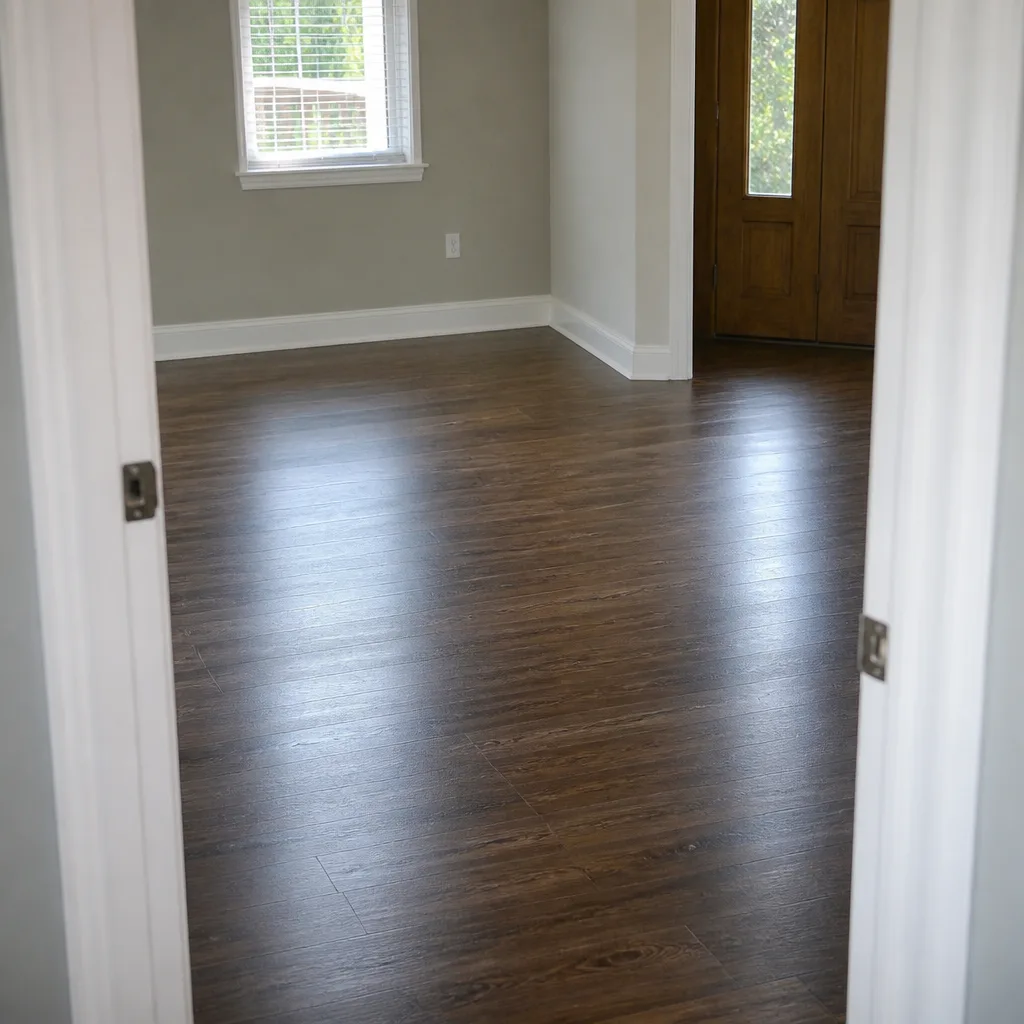
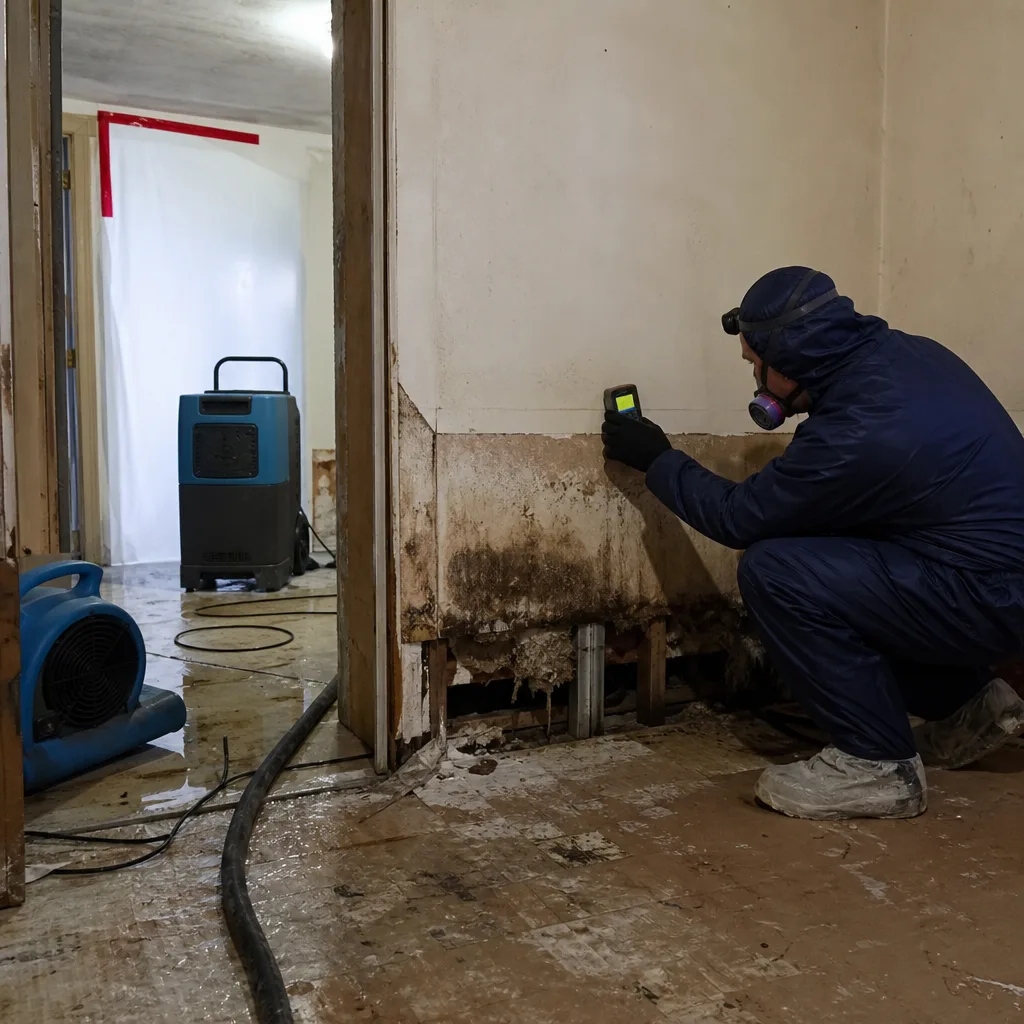 Before
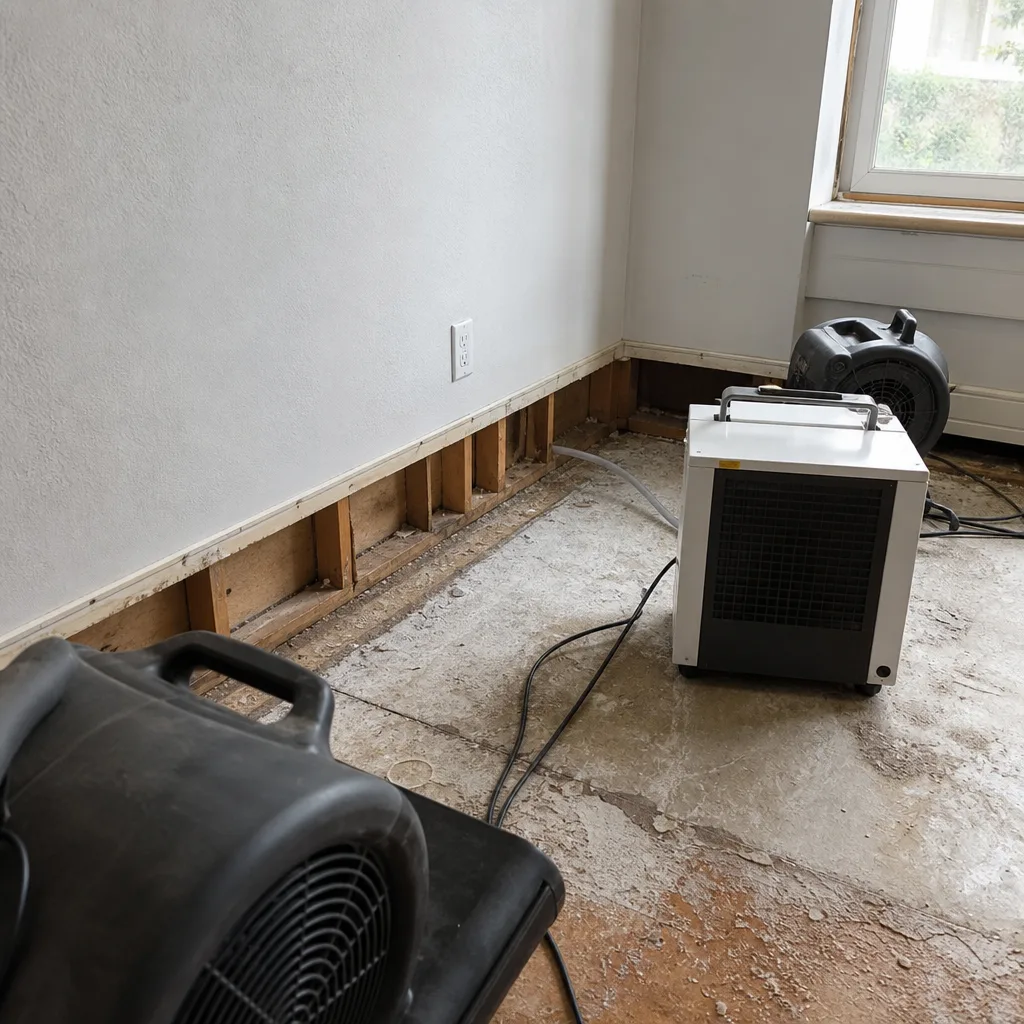 After
After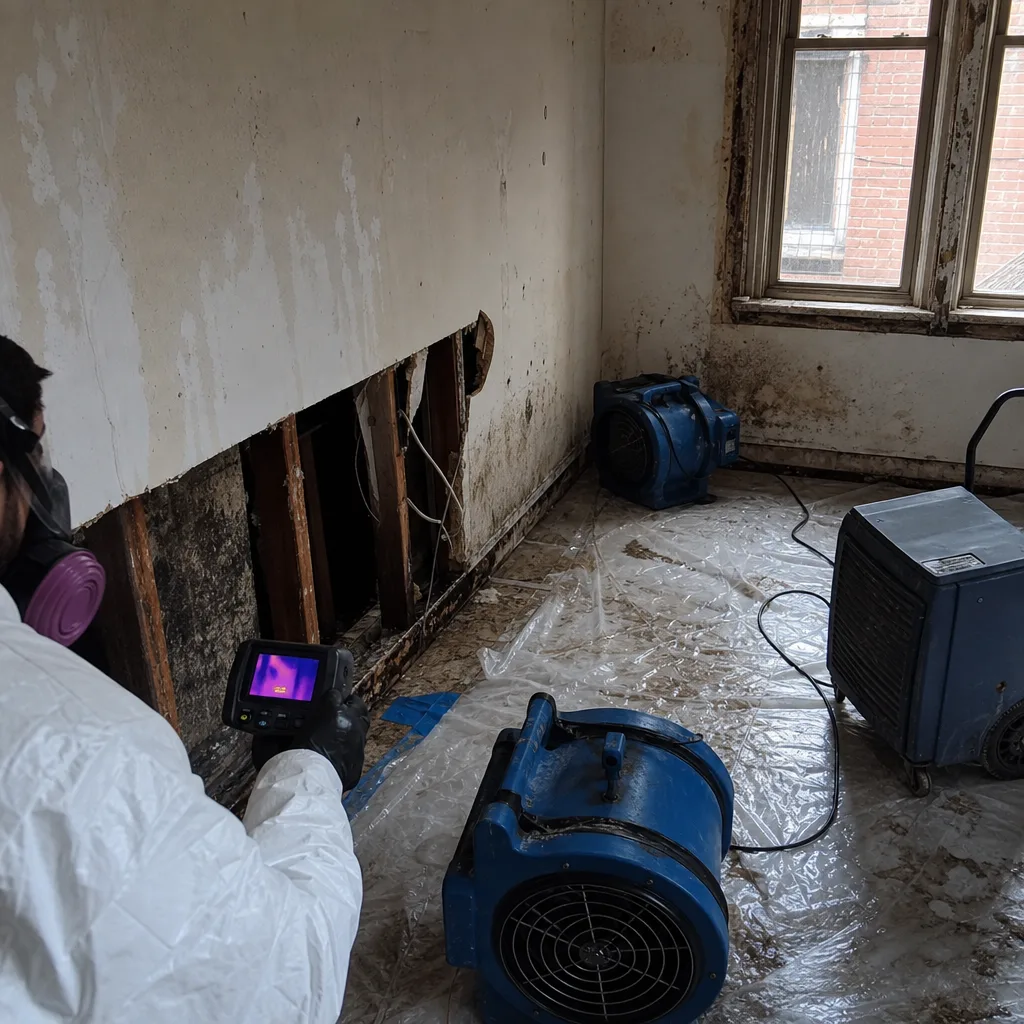 Before
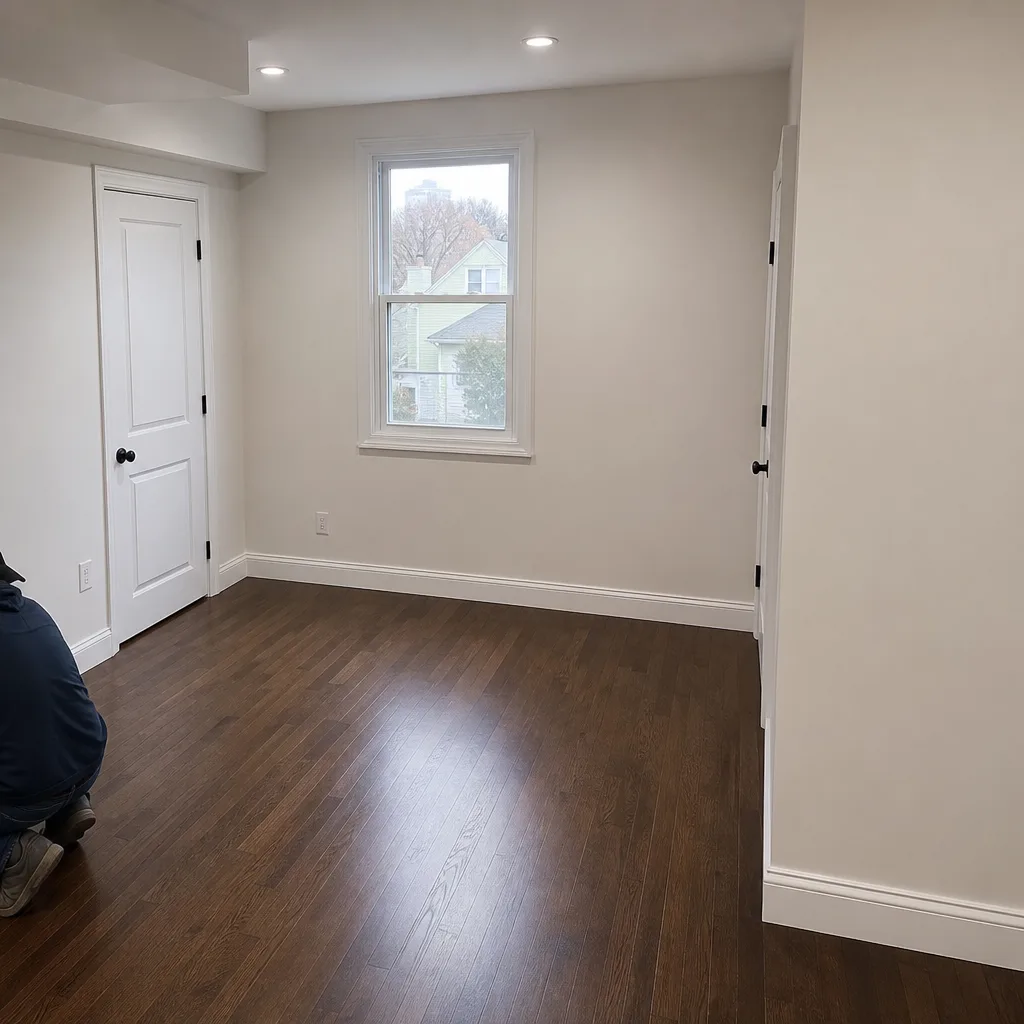 After
AfterThe Complete Guide to Damage Restoration in Astoria
Water moves through a Queens row house differently than it moves through a suburban split-level. In Astoria, the housing stock is older, the basements sit below the water table on the western edge near the East River, and a burst pipe on a third floor rarely stays on the third floor for long. Most homeowners in Astoria discover damage the same way: a ceiling stain appears near a radiator riser, a basement drain backs up after heavy rain, or a bathroom leak that seemed small three weeks ago has quietly soaked the subfloor. This guide explains what actually happens during restoration, what it costs in this market, how long it takes, and where homeowners get into trouble trying to manage it themselves. We’ll cover water, mold, fire, sewage, and the rebuild that follows, with specifics for Astoria’s buildings, codes, and insurance realities.
Quick Answer
Damage restoration in Astoria means removing water or contaminants, drying the structure to a measurable standard, treating or removing affected materials, and rebuilding what was torn out, all while documenting every step for the insurance carrier. A typical water damage job in a Astoria brownstone or brick rowhouse costs between $2,200 and $6,800 depending on the category of water and how far it traveled, and full fire restoration with reconstruction commonly runs $30,000 to $90,000. The job should be handled by a certified restoration contractor who carries IICRC-trained crews, documents moisture readings daily, and bills the carrier directly so the homeowner never plays messenger.
Table of Contents
- What Is Damage Restoration, Exactly?
- Why Astoria Homes Have a Specific Risk Profile
- Water Damage Restoration in Astoria
- Mold Remediation: When Drying Isn’t Enough
- Fire and Smoke Damage: The Long Cleanup
- Sewage Cleanup and Backup: The Category 3 Problem
- Reconstruction After Damage: The Same Crew, Start to Finish
- What Damage Restoration Costs in Astoria
- How Insurance Works on a Restoration Claim
- Common Mistakes to Avoid
- When to Call a Professional
- Frequently Asked Questions
What Is Damage Restoration, Exactly?
Restoration is not the same as repair. Repair fixes a visible problem: patch the drywall, swap the damaged baseboard, paint over the stain. Restoration addresses what you cannot see, because what you cannot see is where the real damage lives. A half-inch of standing water in a finished basement in Astoria will wick up the drywall, saturate the sill plate, and raise the humidity inside wall cavities to levels that feed mold within 48 to 72 hours. Restoration means finding the full extent of moisture, removing the water, drying the structure with commercial equipment until the moisture content of every stud and slab reads below the dry standard, and then rebuilding only what actually needs replacement.
The industry follows a standard sequence, and any legitimate contractor in Astoria works through it in order:
- Assessment and containment. The affected area is mapped, photographed, and sealed off from the rest of the house so contamination does not spread.
- Water extraction. Standing water is removed with truck-mounted or portable extraction units, not a shop vac.
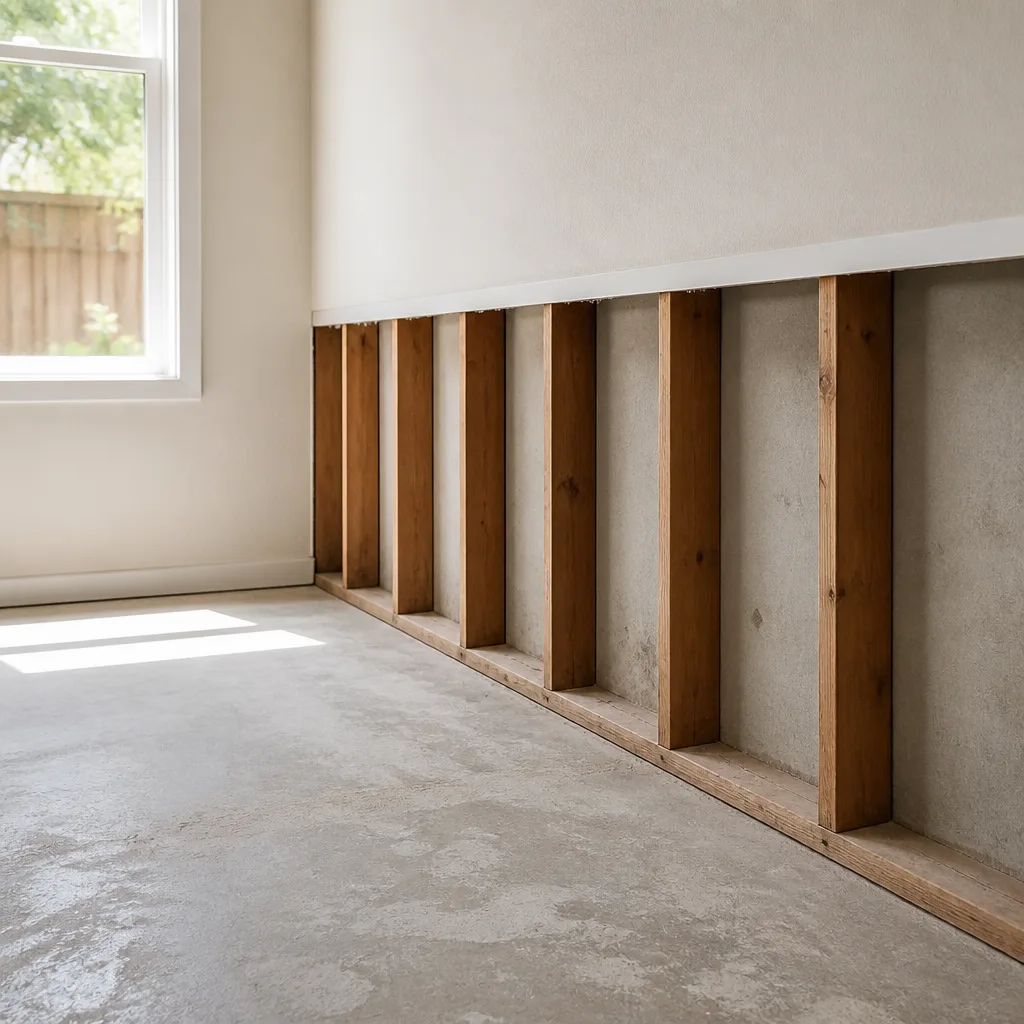
- Controlled demolition. Unsalvageable materials are removed. This includes saturated drywall, wet insulation, carpet and pad that has absorbed Category 2 or 3 water, and any material with visible mold growth beyond surface staining.
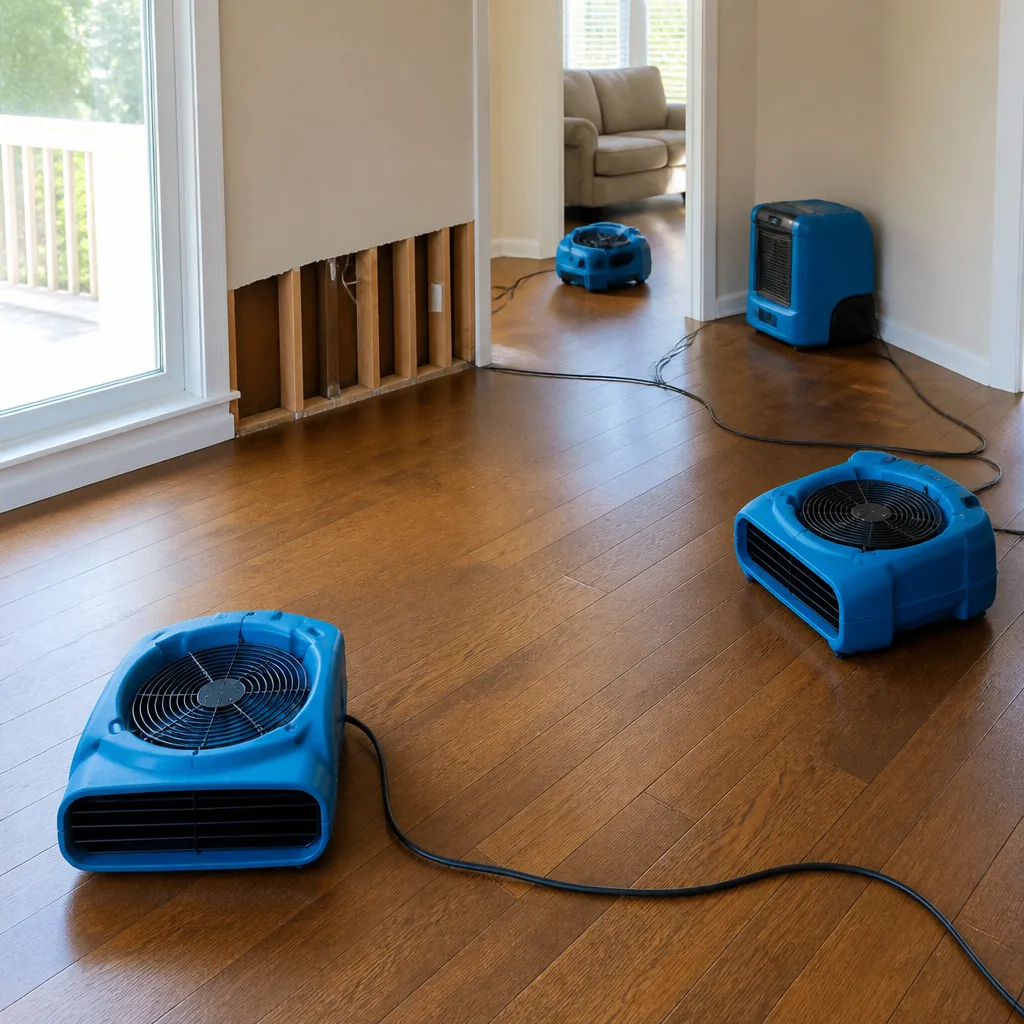
- Structural drying. Professional-grade air movers and dehumidifiers run for days, not hours. Dri-Eaz and Phoenix equipment is the standard for this work. Daily moisture readings are logged until the structure meets the dry standard.
- Cleaning and antimicrobial treatment. Surfaces that remain are cleaned, sanitized, and treated to prevent microbial growth.
- Reconstruction. Drywall, flooring, paint, trim, and fixtures are restored to pre-loss condition.
The critical distinction: a company that only does steps one through five and then hands you a list of contractors for step six has just handed you a second project and a second set of phone calls. In our experience in Astoria, that handoff is where timelines slip and costs balloon. The Floodline Restoration Co. home page explains why we keep the whole job under one roof, one crew, one moisture log, one warranty.
Why Astoria Homes Have a Specific Risk Profile
Astoria’s building stock shapes its restoration needs. The neighborhood runs on a mix of prewar brick rowhouses, attached brick and frame two-families, and post-1960s apartment buildings, plus a growing number of renovated condos in converted industrial buildings near the waterfront. Each type fails differently when water gets involved.
Pre-war rowhouses share party walls. A leak in one unit often travels horizontally through floor joists that run continuously across the wall line. We regularly see water from a neighbor’s failed bathroom supply line presenting as a ceiling stain two rooms away in the adjacent house. That means any water loss in a attached Astoria rowhouse needs a moisture map that extends beyond the obvious wet spot, because the joists do not stop at the wall.
The western blocks near the East River and the low-lying streets around Newtown Creek deal with groundwater pressure during heavy rain events. Sump pumps fail, floor drains back up, and the water table itself pushes through hairline cracks in basement slabs. Astoria sits close enough to the river that the water table is a real variable, not an abstract one. A basement waterproofed in the 1990s may have been adequate then and insufficient now.
Older Astoria buildings also have cast iron drain pipes and galvanized supply lines that are decades past their service life. We have pulled sections of cast iron drain from below basement slabs in Astoria that crumbled in our hands. When those fail, the result is a slow sewage seep that saturates the slab from below, and by the time the smell becomes obvious, the contamination has spread wider than the homeowner expects. A licensed plumber should always evaluate the cause before restoration begins, otherwise you will dry the space and then refill it with the same leak.
Water Damage Restoration in Astoria
Water damage is the most common emergency call in Astoria, and the first 24 hours determine whether the job is a three-day dry-out or a three-week rebuild. Water is categorized by the industry into three classes of contamination, and the category dictates the scope of work and the cost.
- Category 1: Clean water. Supply line breaks, tub overflows, radiator leaks. This water comes from a sanitary source. If extracted and dried quickly, most materials can be saved.
- Category 2: Gray water. Washing machine discharge, dishwasher overflow, sump pump failure. This water contains significant contamination. Carpet and pad go, drywall below the waterline gets cut, and everything is disinfected.
- Category 3: Black water. Sewage backup, toilet overflow beyond the bowl, river flooding, groundwater. This is the most dangerous category. Anything porous that the water touched is removed. Full PPE, containment, and antimicrobial treatment are mandatory.
The drying phase is where homeowners in Astoria see the biggest difference between a serious restoration company and a guy with a fan. A Astoria basement with a finished ceiling, insulation, and drywall walls cannot be dried with household fans in any meaningful time frame. It requires calculated placement of high-velocity air movers and an appropriately sized dehumidifier, with the intake and exhaust arranged so moisture is actually pulled from the wall cavities, not just from the air in the room. We use Dri-Eaz and Phoenix equipment exclusively because the build quality holds up on long residential jobs where the equipment runs for five or six days without interruption.
Daily moisture readings are non-negotiable. Every day, we check the moisture content of studs, slab, subfloor, and wall cavities with penetrating and non-penetrating meters. Those readings go into a written log. The log goes to you and to your carrier. When the numbers hit the dry standard, the drying stops, and not before. That log is your proof that the job was done correctly, and it is the document that protects you if a dispute arises later about whether the space was properly dried before rebuild.
Mold Remediation: When Drying Isn’t Enough
Mold remediation in Astoria is the job that follows two situations: either a water loss sat too long before it was addressed, or a slow leak behind a wall or ceiling went unnoticed for months. New York State does not license mold remediation contractors separately the way it licenses asbestos abatement, which means homeowners in Astoria have to rely on certification and reputation rather than a state license number. The certifications that matter for mold work are IICRC and RIA. A company that carries both has demonstrated the training to handle fungal contamination without cross-contaminating the rest of the house.
Mold is a moisture problem, not a chemical problem. The correct approach is always to identify and fix the moisture source, remove the contaminated materials, clean the remaining surfaces, and dry the space. Spraying bleach on a moldy wall in a Astoria basement does not solve the problem. It bleaches the color out of the surface growth while the mycelium remains active inside the drywall, and within weeks it grows back through. Worse, the moisture that fed the first bloom is untouched.
Here is the remediation sequence, in order:
- Containment. The affected area is sealed with poly sheeting and tape. Negative air pressure is established so mold spores cannot drift into the rest of the house during demolition.
- Source removal. Contaminated drywall, insulation, carpet, and any organic material with visible growth is removed and bagged inside the containment area.
- HEPA cleaning. Every surface inside the containment area is vacuumed with a HEPA-filtered unit, then wiped down with an antimicrobial treatment.
- Air scrubbing. HEPA-filtered air scrubbers run during the entire process and for a period after to capture airborne spores.
- Clearance sampling. If desired, air and surface samples are taken by a third-party indoor environmental professional. The results are compared against outdoor baseline samples. We do not perform our own clearance testing - that should always be an independent company, so no one is grading their own homework.
Most Astoria mold jobs of a typical bathroom or under-sink scale run between $1,800 and $4,500. The cost depends on how far the contamination extends, not just on how much visible mold exists. We have opened walls in Astoria where a six-inch patch of visible mold led to six feet of hidden growth behind the baseboard.
Fire and Smoke Damage: The Long Cleanup
Fire restoration in Astoria presents a different problem set than water. The water used to extinguish the fire becomes the secondary issue, and the smoke is the primary contaminant that must be removed from every surface in the affected rooms and often beyond them. Soot in a Astoria rowhouse travels through shared crawlspaces, up stairwells, and through HVAC ductwork. A kitchen fire contained to a small area can leave smoke residue in bedrooms on the floor above, deposited by the same air currents that carried the smoke.
The work breaks down into several phases. Structural demolition removes the burned materials and anything charred beyond salvage. Then the smoke begins: dry sponges on flat surfaces, HEPA vacuuming on every horizontal and vertical plane, and chemical sponges for the oily residue left by protein fires. Hard surfaces like tile and hardwood can often be cleaned. Soft goods - furniture, curtains, some clothing - require either professional cleaning or disposal, depending on the material and the depth of contamination. Electronics exposed to soot are a particular problem, because soot is acidic and corrosive. A computer that works the day after a fire may fail three months later when corrosion reaches a trace on the board.
Smoke odor is the hardest problem to solve permanently, because the odor molecules are embedded in porous surfaces throughout the affected area. Ozone treatments are effective but must be sized correctly, and no one can be in the home during the treatment. Thermal fogging neutralizes odor in wall cavities and behind trim. The sequence is not optional: clean first, then deodorize. Deodorizer over soot just makes the soot smell like soot plus fragrance.
A fire restoration job in a Astoria multi-family building adds the complication of the shared smoke spread. The Fire Department, the building’s management, and the neighboring units’ insurance carriers may all be involved. In an attached building, the extent of smoke intrusion into the adjacent unit determines whether that unit requires cleaning as well. Documenting the pre-existing condition of the neighbor’s unit before you start work in the fire unit protects everyone.
Sewage Cleanup and Backup: The Category 3 Problem
Sewage is the one category where the instinct to save money by waiting is genuinely dangerous. Sewage backup in a Astoria basement or ground-floor bathroom carries bacteria, viruses, parasites, and the byproducts of decomposition. The EPA and the CDC both treat sewage as a biohazard requiring full PPE, containment, and disposal of contaminated porous materials. This is not a situation where a weekend of drying and a coat of paint is the answer.
The health risk is real. E. coli, salmonella, hepatitis A, and norovirus are all documented in sewage, and the aerosolized particles from a sewage flood can spread disease through the air during cleanup if proper controls are not used. Children, elderly residents, and anyone with a compromised immune system should not be in the affected area until it is fully cleaned and sanitized.
A sewage backup in Astoria almost always traces to one of three causes: a collapsed or blocked cast iron drain line below the slab, a failed check valve on a below-grade drain, or municipal surcharge during heavy rain when the combined sewer system backs up. Combined sewers are still the norm in many parts of Queens, which means stormwater and sanitary waste share the same pipe. During a hard rain, the system can overwhelm itself and push sewage back through the lowest floor drains in the neighborhood. A backwater valve installed by a licensed plumber is the only real protection against that scenario.
Cleanup follows a strict order: extract the waste, remove the affected materials (carpet, pad, drywall, insulation, and any upholstered items within the contaminated zone), disinfect every remaining surface with a registered antimicrobial, dry the structure, and test the air quality. The floor slab itself often needs to be cleaned and sealed, and if the sewage sat for more than a day, the contamination may have wicked up into wall cavities well above the visible waterline.
Reconstruction After Damage: The Same Crew, Start to Finish
Reconstruction is where the restoration industry in Astoria splits into two business models. Most companies do the emergency work - extract the water, pull out the wet drywall, set up fans - and then refer the rebuild to a general contractor. The homeowner becomes the general contractor’s project manager, coordinating schedules between two companies, relaying questions between two crews, and explaining to the insurance adjuster why the emergency company and the rebuild company do not agree on the scope.
We built Floodline Restoration Co. specifically to avoid that handoff. The same crew that reads the moisture map on day one handles the daily readings through the drying phase, hands the moisture log to the homeowner and the carrier, and then rebuilds the walls, floors, ceilings, and finishes. By the time a homeowner in Astoria sees a finished wall, there is no question about who is responsible for the seam between drying and rebuilding.
Reconstruction after water damage typically includes drywall replacement, insulation, baseboard and trim, painting, and flooring. After fire, it typically includes framing repairs, electrical, plumbing, insulation, drywall, painting, and finish carpentry. The scope is driven by the moisture log and the adjuster’s estimate, and it should be agreed upon in writing before any lumber is ordered. A written scope is the only way to prevent the situation where the insurance payout covers drying but not the rebuild, and the homeowner discovers the gap two weeks in.
Curt Bowman founded the company with a dispatch board, not a sales desk. The difference shows. When you call at any hour, a live person answers. When the crew arrives, they are background-checked, uniformed, and trained to IICRC, RIA, and IFA standards. When the job is done, the 90-Day Done Right Promise means anything we missed gets made right, in writing, with no arguing. No paperwork battles. That is the entire point.
What Damage Restoration Costs in Astoria
Pricing in the Astoria market is driven by labor rates, which are higher than the national average, and by the age and configuration of the buildings, which add time. A standard water damage job that takes three days of drying in a suburban single-family home may take five in a Astoria attached rowhouse because the party wall changes the airflow pattern and the equipment layout. Here are realistic ranges for common restoration jobs in this neighborhood as of 2025 pricing:
- Water extraction and drying, Category 1, single room: $1,800 to $3,500
- Water damage with demo and rebuild, basement, Category 2: $4,500 to $9,000
- Sewage cleanup, Category 3, finished basement: $5,000 to $12,000, depending on the size of the contaminated footprint
- Mold remediation, bathroom or kitchen from slow leak: $1,800 to $4,500
- Mold remediation, full basement or multiple rooms: $5,000 to $15,000
- Kitchen fire restoration, soot cleanup, rebuild: $15,000 to $40,000
- Full floor fire restoration plus structural rebuild: $35,000 to $90,000
These ranges assume the affected area is part of the living space. Unfinished basement cleanouts run lower; finished spaces with hardwood, millwork, and custom finishes run higher. The three standing offers apply to every job we do: $50 off any repair over $250, the $89 seasonal tune-up (a check of sump pumps, basement humidity, and potential leak points before the rainy season), and the senior and veteran 5% discount, always.
Direct insurance billing changes the math for most Astoria homeowners. When the carrier pays us directly, you are not fronting a five-figure rebuild cost and waiting for reimbursement. You pay your deductible, and the billing runs between us and the adjuster. That means the price discussion is between us and the carrier as much as it is between us and you. A square deal, no surprises on the bill.
How Insurance Works on a Restoration Claim
Every restoration claim in Astoria starts with the same document: the adjuster’s scope of work. The insurance carrier sends an adjuster to inspect the damage and write an estimate of what the restoration will cost. That estimate is then negotiated, and the restoration contractor works from the agreed scope. The homeowner’s role should be signing documents and choosing the contractor, not acting as the messenger between two companies and a claims department.
Here is the sequence that works best for homeowners in Astoria:
- Call your carrier immediately. Most policies have a duty to mitigate, meaning you are required to begin protecting the property from further damage as soon as reasonably possible. The carrier will want photos and a description of what happened.
- Call a restoration contractor at the same time. The contractor should arrive, assess the damage, and begin the emergency mitigation. Photos are taken before anything is moved or removed. The carrier gets a written scope and the photo documentation directly from the contractor.
- The moisture log gets shared with the adjuster. Daily readings build the evidence that the drying is being done correctly, and that the equipment ran for the number of days billed.
- The rebuild is scoped from the adjuster’s approved estimate. If the initial estimate is too low, a good contractor submits a supplement with photo documentation. Supplements are normal. They are not a sign of trouble.
- The rebuild is performed, and the final invoice goes to the carrier. You pay your deductible, and the 90-Day Done Right Promise covers the workmanship.
Photo documentation is the unsung hero of every smooth insurance claim. We photograph every affected area from multiple angles, every moisture reading, every piece of equipment running, and every stage of the rebuild. When the carrier asks a question, the answer is in the photo file. When a dispute arises about whether an item was damaged before or after the loss, the photo file settles it. This documentation is included on every job at no cost.
In Astoria, where many buildings are older and some have pre-existing conditions (previous water stains, old leaks, deferred maintenance), the pre-existing condition question comes up regularly. The photos taken at the first visit establish what was there before we started. That protects the homeowner from a carrier claiming the damage predated the loss, and it protects the carrier from claims that pre-existing issues were caused by the current event.
Common Mistakes to Avoid
- Waiting a day to see if it dries on its own. In a Astoria basement in the humid months, water does not dry on its own. It migrates, wicks, and feeds mold. Every hour of delay extends the drying time and increases the removal scope.
- Using a shop vac and household fans. A shop vac can pull surface water, but it cannot pull water from behind baseboards, under flooring, or inside wall cavities. Household fans move humid air around without removing the moisture. The equipment for this work is commercial-grade for a reason.
- Letting the insurance company choose the contractor. The carrier can recommend a contractor, but New York State law gives you the right to choose your own. A contractor beholden to the carrier’s preferred network may be more interested in keeping the carrier happy than in rebuilding your house correctly.
- Rebuilding before the moisture log shows the dry standard. Drywall over a damp stud in Astoria means mold inside the wall cavity within months. The log is the proof of dryness. No log, no rebuild.
- Trying to clean sewage yourself. Sewage is a biohazard. The PPE alone is specialized, and the disposal requirements are strict. The health risk to you and your family is not worth the savings.
- Accepting a verbal estimate. A written scope, agreed before work starts, is the only protection against a ballooning bill. If a contractor will not put the scope in writing, find another contractor.
When to Call a Professional
Call immediately if you have standing water that covers more than a few square feet, water that has been present for more than 24 hours, water from a sewage source, any visible mold growth larger than a sheet of printer paper, smoke or soot from a fire of any size, or a strong musty odor that appears after a leak. These scenarios require professional equipment, professional training, and professional documentation.
For anything involving sewage, a gas line, or fire-damaged structure, do not attempt the cleanup yourself. The safety risk on Category 3 water and the structural risk from fire damage are exactly the reasons those categories exist in the standard. Floodline Restoration Co. offers free estimates in Astoria - call (518) 800-3751 and a live person answers, day or night.
Frequently Asked Questions
A certified crew typically reaches a Astoria address within 60 to 90 minutes of your call, 24 hours a day, 7 days a week. Our dispatch desk is staffed around the clock, and a live person answers the phone, not a recording. The sooner extraction starts, the less material ends up in the dumpster.
Standard homeowner’s policies cover sudden and accidental water damage, such as a burst pipe or a supply line failure, but they do not cover flooding from groundwater or river overflow, and they may not cover slow leaks that occurred over weeks or months. The exact answer depends on your policy language and the cause of the loss. We work directly with your adjuster to determine the covered scope and document everything the carrier needs. Call (518) 800-3751 and we can explain what to expect before anyone shows up.
If the water was clean and the drying was complete within 48 hours, a simple clean-and-paint may be sufficient. If the water was gray or black, or if the moisture sat longer than two days, the porous materials are contaminated and the only correct answer is removal and replacement. Painting over a damp or contaminated wall in a Astoria home is telling yourself the waterline never existed, until the mold proves it did.
We do. The estimate, the moisture log, the photo documentation, the supplement if needed, and the final invoice all go directly from our office to the carrier. You pay your deductible, and we handle the billing. You are never the messenger between us and the claims department.
It is exactly what it sounds like: if something we did is not right within 90 days of completion, we make it right. No arguing, no paperwork battles. It is given in writing on every job, and it is backed by the K.E.Y.S. values code: Krafted right, Every time, Your home first, Standing behind it.
That is most of what we do in this neighborhood. Prewar construction has its own moisture behavior: lath and plaster, balloon framing, shared party walls, and original cast iron drains. Our crews train specifically on older New York City housing stock, and our daily moisture mapping accounts for the way those buildings move water.
The Bottom Line
Damage restoration in Astoria succeeds or fails on three things: speed of response, quality of drying, and continuity of the rebuild. Water and contamination do not respect property lines or floor plates. A local crew that knows how Astoria’s older buildings fail, that documents every moisture reading, that bills your carrier directly, and that rebuilds with the same hands that did the drying gives you the only thing that matters: the job done correctly the first time. When the waterline appears on the wall, that line is where the work starts. And it does not end until the wall is dry, rebuilt, and standing behind a written warranty.
Written by Curt Bowman, Owner at Floodline Restoration Co., serving Astoria since 2010.
For a free estimate in Astoria, call (518) 800-3751 any time. A live person answers, day or night.