
Quick Summary
Addressing water damage restoration in Central Harlem requires specialized techniques because historic pre-war brownstones and walk-ups feature dense lath-and-plaster assemblies and continuous timber joists that rapidly trap moisture. Floodline Restoration Co. provides rapid 24/7 emergency care using industrial desiccant drying and thermal moisture mapping to stop structural decay across porous brick party walls and multi-unit flooring systems. Property owners can protect their investments and streamline insurance claims by calling Floodline Restoration Co.'s dispatch line for immediate emergency water extraction and a free on-site inspection.
Water Damage Restoration in Central Harlem: Fast Emergency Care
When you face an unexpected leak or flooding event, getting rapid water damage restoration in Central Harlem is the difference between a simple dryout and tens of thousands of dollars in structural repairs. Historic brownstones, rowhouses, and multi-unit walk-ups across Harlem present unique structural risks during a flood. Standard drying methods designed for modern drywall cannot properly dry the dense lath-and-plaster assemblies, continuous timber floor joists, and porous brick party walls common in these pre-war buildings.
According to the team at Floodline Restoration Co., when an overhead radiator pipe splits or a supply line fails, water moves quickly through floorboards and collects inside hidden structural cavities. Without fast intervention, wood rot and mold colonization can start within 24 to 48 hours. Our emergency crews typically arrive on-site within an estimated 45 minutes across Central Harlem, bringing specialized moisture meters, thermal cameras, and commercial desiccant systems to stabilize the building and protect your investment. See also Water Damage Restoration in Astoria | Call Now-10% Off | Same-Day Service | Free Estimate.
Quick Answer
Professional water damage restoration in Central Harlem requires immediate water extraction, thermal moisture mapping, deep-cavity structural drying, and antimicrobial treatment. Because local brownstones and pre-war apartments feature continuous timber framing and multi-wythe brick party walls, mitigation must begin within 24 to 48 hours. Fast action halts moisture migration across property lines, stops hazardous mold growth, and provides the detailed documentation required for insurance claim reimbursement.
How Water Damage Impacts Central Harlem Pre-War Architecture
Pre-war buildings in Central Harlem were built to last, but their interconnected, dense materials make water migration particularly tricky. Water does not sit passively on the surface. Instead, it wicks deep into multi-layered assemblies, traveling through shared walls and hidden ceiling spaces.
Subfloor Assemblies and Continuous Wood Joists
Harlem brownstones and walk-ups rely on heavy timber joists spanning long subfloor bays. When water pools in one room, it follows these continuous joist channels horizontally, often leaking into adjacent apartments or across shared property lines. Cupping hardwood boards, buckled parquet, and lingering musty smells indicate that water is trapped beneath the finish flooring, where basic surface fans cannot reach it.
Lath-and-Plaster Ceilings vs. Modern Drywall
Unlike modern sheetrock, historical ceilings consist of three-coat plaster reinforced with horsehair over rough wood lath. This assembly absorbs hundreds of pounds of water before showing visible surface sagging. Once the plaster “keys” (the parts locking the plaster through the lath) soften from prolonged water contact, entire ceiling sections can collapse without warning.
| Feature | Lath-and-Plaster Assemblies | Modern Gypsum Drywall |
|---|---|---|
| Moisture Absorption | Dense; holds gallons of water and creates severe dead-weight load | Saturates fast; paper backing weakens quickly |
| Failure Risk | Sudden keyway failure and large ceiling collapses | Visible sagging, softening core, and surface mold spots |
| Drying Method | Cavity injection drying and heat-assisted desiccant systems | Controlled flood cuts and standard directional airflow |
Shared Masonry Party Walls and Hidden Moisture Migration
Shared brick party walls act like dense sponges. According to the IICRC S500 Standard for Professional Water Damage Restoration, water trapped inside porous structural materials can trigger active mold growth within 24 to 48 hours. Peeling paint, powdery efflorescence, and damp baseboards along interior brick walls indicate that water has migrated into the masonry. As specialists at Floodline Restoration Co. emphasize, drying these assemblies requires specialized cavity-drying setups and industrial dehumidification before structural timbers embedded in the brick begin to decay.
What Does Water Damage Restoration Cost in Central Harlem?
Need water damage restoration in Central Harlem?
We’re available now - call for a fast, free estimate.
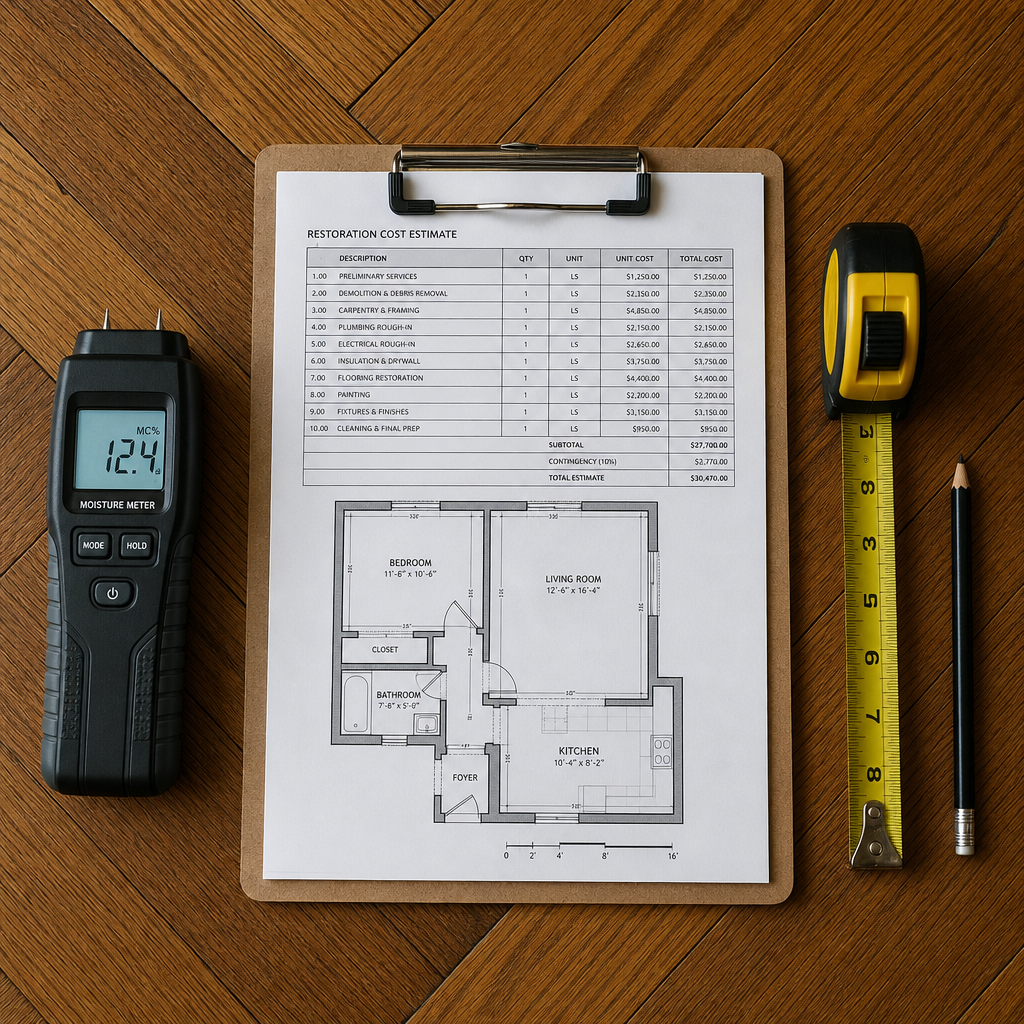
Professional water mitigation in Central Harlem typically costs between $3,000 and $15,000 for a standard multi-room incident. Minor cleanups involving clean water and a single room start around $1,200, while severe sewage backups or multi-floor structural drying projects can exceed $25,000. Final pricing depends on the water category (clean, gray, or black water), the square footage affected, material density, and any required mold containment.
Average Cost Breakdown by Service
According to industry data, water damage and freezing account for nearly one in four property insurance claims every year. NYC restoration pricing reflects the labor, access, and disposal protocols required in dense urban neighborhoods:
| Restoration Service Category | Average Cost Range |
|---|---|
| Moisture Inspection & Thermal Assessment | $150 – $500 |
| Water Extraction & Structural Drying (Per Room) | $1,200 – $4,500 |
| Mold Remediation & Containment | $1,500 – $6,000 |
| Sewage Cleanup & Sanitization | $2,000 – $10,000 |
| Complete Structural Reconstruction & Repair | $3,000 – $25,000+ |
| Typical Full Water Claim (Mitigation + Drying) | $3,000 – $15,000 |
Key Factors Driving Local Restoration Costs
Restoring historic properties demands specialized equipment and expertise. Where modern construction allows contractors to quickly cut away drywall and replace it, preserving historic moldings, plasterwork, and parquet floors requires controlled, non-destructive drying techniques.
| Feature | DIY Extraction | Standard Drywall Methods | Specialized Historic Assembly Drying |
|---|---|---|---|
| Lath-and-Plaster Preservation | No | Partial | High |
| Masonry Cavity Moisture Removal | No | Slow | Deep desiccant extraction |
| Insurance Claim Documentation | No | Basic | Itemized Xactimate reporting |
Managing NYC Insurance Claims and Deductibles
Navigating an insurance claim while dealing with an active flood is stressful. Professional restoration teams like Floodline Restoration Co. work directly with your insurance adjuster, using standardized line-item software, daily moisture logs, and thermal imagery to document the entire scope of loss. This detailed documentation ensures your claim reflects the true extent of hidden moisture and prevents unexpected out-of-pocket costs.
What Immediate Steps Should Property Owners Take After a Water Loss?
If you discover an active leak or standing water, taking quick action before technicians arrive will significantly reduce secondary damage.
Step 1: Shut Off the Main Water Supply and Address Electrical Risks
Locate and shut off the main water valve immediately. In older Harlem walk-ups, water pooling near baseboards or dripping through ceilings can come into direct contact with aging electrical wiring. If you cannot reach your electrical panel from a completely dry location, do not enter the flooded area. Wait for emergency responders or mitigation technicians to isolate the power.
Step 2: Document All Damage with Photos and Video
Before moving soaked furniture or wiping up puddles, record clear photos and videos of the affected rooms. Capture close-up shots of water lines on baseboards, warped flooring, and dripping ceilings. Clear visual documentation gathered prior to cleanup gives your insurance adjuster the proof needed to validate the claim.
Step 3: Call an Emergency Water Mitigation Team
Contact a certified local restoration company such as Floodline Restoration Co. with 24/7 dispatch. Request a dedicated crew equipped with industrial extractors, commercial desiccant dehumidifiers, and thermal imaging cameras designed for multi-family and pre-war buildings.
Step 4: Avoid Relying on Household Fans for Historic Materials
Standard household shop vacuums and box fans only dry surface moisture. They do not generate the static pressure or heat required to pull moisture out of dense horsehair plaster, subfloor cavities, or brick walls. Leaving damp pockets behind almost always leads to hidden mold colonies within 48 hours.
Frequently Asked Questions About Water Damage in Central Harlem
How quickly can an emergency water damage crew arrive in Central Harlem?
Local emergency crews typically arrive within an estimated 45 minutes of your call. Rapid response is critical in multi-family settings to stop water from traveling through shared subfloor bays into neighboring units below.
How long does the structural drying process take in pre-war buildings?
Drying a pre-war brownstone or walk-up usually takes 3 to 5 days. Dense building materials like brick party walls, tongue-and-groove subfloors, and thick plaster hold moisture longer than modern drywall, requiring steady dehumidification and monitored air movement to reach dry standards.
Does property insurance cover burst pipes and indoor flooding in NYC?
Most standard homeowners, commercial, and renters insurance policies cover sudden and accidental water discharges, such as split supply lines, frozen pipes, and failed heating valves. Gradual leaks caused by deferred maintenance are generally excluded. Street flooding or sewer backups typically require specific policy endorsements or separate flood insurance policies.
What are the signs of hidden water damage behind plaster walls?
Common indicators include bubbling or peeling paint, white mineral buildup (efflorescence) on exposed brick, soft or crumbly baseboards, warped floor planks, and persistent musty smells. Thermal cameras can pinpoint trapped moisture pockets behind walls without cutting into historical plaster.
If your property has suffered water damage, contact Floodline Restoration Co. on their 24/7 emergency dispatch line right away for rapid extraction, structural drying, and a free on-site assessment.
Need water damage restoration in Central Harlem?
We’re available now - call for a fast, free estimate.
Frequently Asked Questions
Can water-damaged hardwood floors and historic plaster in Harlem brownstones be saved without demolition?
Yes, specialized non-invasive techniques can preserve historic materials if structural drying begins within 24 to 48 hours. Floodline Restoration Co. utilizes commercial desiccant dehumidifiers and high-pressure cavity-drying systems to extract moisture from dense lath-and-plaster assemblies and hardwood subfloors without destructive tear-outs.
What should property owners do if water migrates into an adjacent unit through shared brick party walls?
You should alert the neighboring occupant immediately and call Floodline Restoration Co.'s 24/7 dispatch to perform thermal moisture mapping across both sides of the party wall. Our certified crews isolate moisture spread along continuous joist channels, deploy targeted structural drying, and properly document multi-unit damage for joint insurance claims.
How does professional documentation help ensure insurance coverage for pre-war water damage claims in Harlem?
Historic assemblies require specialized drying procedures that standard insurance adjusters may miss without comprehensive proof. Floodline Restoration Co. provides detailed Xactimate billing, psychrometric moisture logs, and infrared thermal scans to demonstrate hidden saturation inside masonry and joists, facilitating seamless claim approval.
About the author
 |
Christopher Vance Christopher Vance is a certified structural drying specialist with over nine years of experience in property damage restoration. He holds an associate degree in Construction Management from Pratt Institute and focuses on rapid-response water mitigation. Christopher writes to help Astoria property owners navigate the complexities of emergency restoration and insurance claims. |
Water damage, flood, or mold emergency?
We’re available now - call for a fast, free estimate.
Call Now - Free Estimate