
Quick Summary
Water intrusion across Elmhurst, Queens rapidly migrates through continuous joist systems and dense pre-war plaster assemblies, posing urgent risks of mold colonization and structural destabilization. Floodline Restoration Co. provides specialized water damage restoration in Elmhurst using industrial extraction, targeted cavity drying, and full insurance claim documentation to stop progressive moisture damage. Readers can call Floodline Restoration Co.'s 24/7 dispatch line to secure immediate emergency water extraction and a comprehensive on-site structural inspection for their property.
Water Damage Restoration in Elmhurst, Queens: 24/7 Emergency Response
When clean supply lines burst or flash flooding forces water into your property, you need emergency water damage restoration in Elmhurst, Queens. Floodline Restoration Co. offers 24/7 emergency response across Queens to stop structural damage, dry out framing, and assist with the insurance documentation process.[3]
Elmhurst, Queens features a dense mix of multi-family walk-ups, detached homes, and pre-war apartment buildings. In these properties, water does not stay confined to one spot. It travels along continuous floor joists and wicks upward through plaster walls, settling deep into cavities where standard floor fans cannot reach. Mold risk rises quickly after water intrusion, threatening to degrade structural wood if trapped moisture is left unaddressed.[5] See also Water Damage Restoration in Astoria | Call Now-10% Off | Same-Day Service | Free Estimate.
Restoration technicians track moisture across wall assemblies, subflooring, and crawl spaces. Emergency response is available 24/7 to arrange water extraction and an on-site structural inspection.
Rapid Water Extraction and Structural Drying in Elmhurst, Queens
Professional water mitigation in Elmhurst, Queens focuses on stopping moisture migration before secondary damage sets in. Extracting bulk water and deploying industrial dehumidification equipment help return materials to dry standards quickly.
Queens has documented recurring flood events, including 167 recorded flood events and $64.1 million in property damage from 1996 through 2024. Addressing these events requires fast response, accurate structural assessment, and thorough documentation so repairs move forward without delay.[2]
Emergency Restoration Response in Elmhurst, Queens
Emergency response is available 24/7 throughout Elmhurst and surrounding Queens neighborhoods. A prompt response helps prevent water from running down utility chases, soaking party walls, or destabilizing ceiling assemblies in lower units.
When dealing with an active pipe burst or sewer backup, every minute counts. Floodline Restoration Co. technicians utilize commercial extraction systems, high-velocity air movers, and specialized drying equipment to begin stabilization upon arrival.
What to Do While Waiting for Dispatch
- Shut off the main water valve: Stop the flow at the main shutoff to prevent additional gallons from entering wall and floor cavities.
- Turn off affected electrical circuits: Trip breakers connected to flooded rooms, basements, or areas with wet ceilings to eliminate shock hazards.
- Protect your furniture: Slip aluminum foil or plastic blocks under wooden furniture legs to prevent staining and stop wood from drawing in standing water.
- Stay clear of sagging plaster ceilings: Saturated lath and plaster becomes extremely heavy. Avoid poking or standing beneath bulging ceiling sections, as they can collapse without warning.
The Mold and Moisture Risk Window
Wood framing, subfloors, and wall cavities absorb moisture rapidly. Mold risk rises quickly after water intrusion, especially in warm indoor environments. Professional mitigation relies on high-capacity dehumidification systems running continuously to pull deep moisture out of structural elements before mold colonizes hidden spaces.[4]
What Does Water Damage Restoration Cost in Elmhurst, Queens?
Need water damage restoration in Elmhurst?
We’re available now - call for a fast, free estimate.
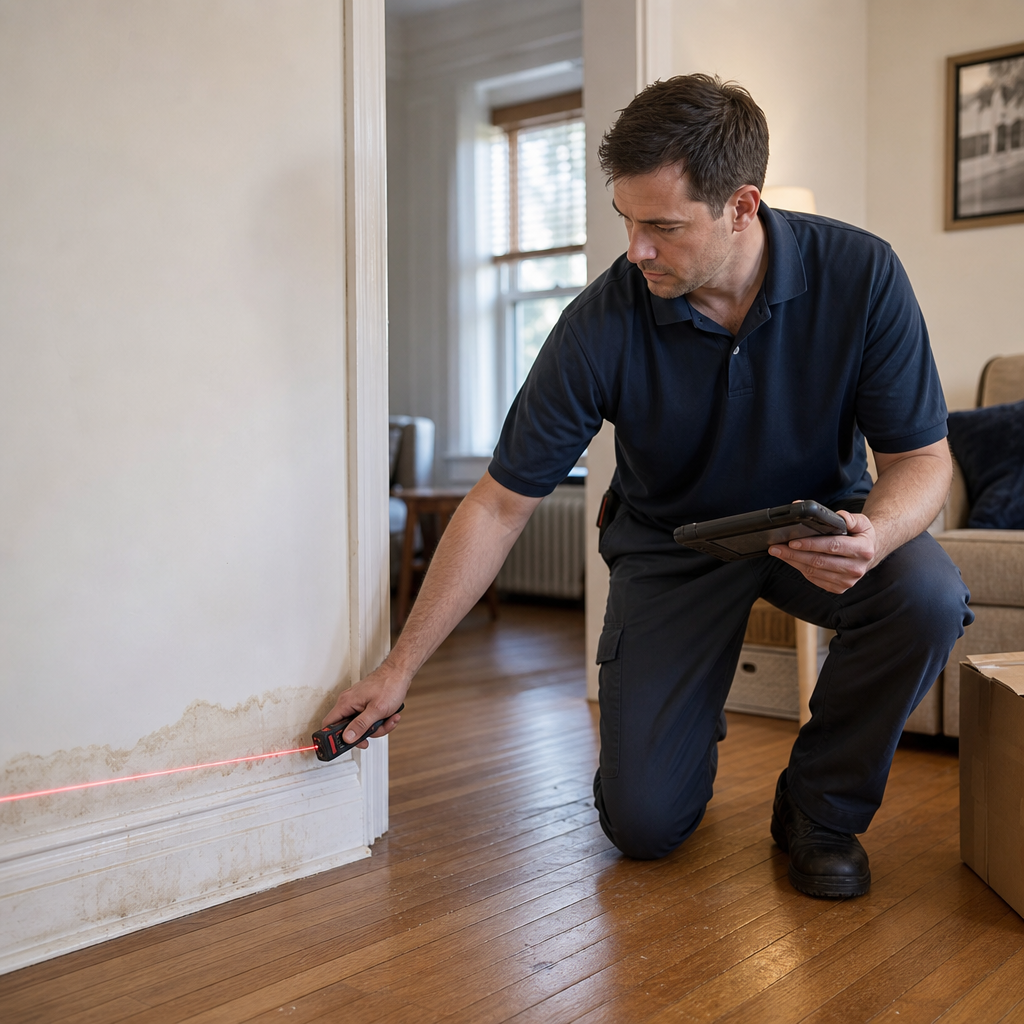
The cost of water mitigation depends on the category of water involved, the square footage of the affected area, the types of building materials, and whether structural demolition is required.
Cost Factors by Water Category
Mitigation procedures are dictated by the contamination level of the water source and whether porous materials can be dried in place or must be safely removed.
| Restoration Factor | Category 1 (Clean Water) | Category 2 (Greywater) | Category 3 (Blackwater) |
|---|---|---|---|
| Common Sources | Broken supply pipes, sink overflows, water heater leaks | Washing machine discharge, dishwasher backup, sump failure | Sewage backups, storm surge, street runoff |
| Porous Material Handling | Dried in place when structurally sound | Selective removal depending on saturation depth | Mandatory removal and safe disposal |
| Antimicrobial Application | Applied preventatively as needed | Required on all exposed surfaces | Extensive application with complete containment |
| Structural Drying Method | Standard air movement and dehumidification | Targeted cavity drying with sanitization | Controlled negative-pressure containment and filtration |
Navigating Insurance Claims in Queens
As a general rule, standard property policies often cover sudden and accidental internal water damage, such as a frozen pipe rupture or failed supply fitting, though actual coverage depends on specific policy terms and exclusions. Ground-level street flooding or surface runoff generally requires a distinct policy backed by the National Flood Insurance Program (NFIP). Local flood hazard designations in New York City are based on FEMA Flood Insurance Rate Maps, which define high-risk and moderate-risk flood zones across the boroughs.[1]
To assist during the claims process, detailed records such as line-item estimates and moisture tracking documentation can be provided to adjusters to help them evaluate structural drying, material removal, and sanitization.
How Water Affects Elmhurst Walls, Floors, and Joists
Older Queens properties present distinct structural dynamics during a water loss. Rather than dealing strictly with standard modern drywall on metal studs, many Elmhurst buildings feature solid masonry exterior walls, continuous wood floor joists, and traditional lath-and-plaster wall construction.
Lath and Plaster vs. Modern Drywall
Plaster behaves very differently from drywall when exposed to water. While drywall softens and falls apart quickly, lath and plaster acts like a dense sponge, drawing water upward through capillary action. Water can travel several feet up a plaster wall cavity without showing immediate surface staining. If left unaddressed, the wet wood lath behind the plaster remains damp for weeks, causing key structural bonds to fail and encouraging hidden fungal growth. Technicians from Floodline Restoration Co. use specialized moisture meters and deep cavity injection systems to dry plaster assemblies thoroughly.
Continuous Joist Bays and Subfloor Buckling
In attached rowhouses and multi-family buildings, wood joists often run continuously through shared walls and across large floor spans. Water entering one section can follow these joist channels horizontally, damaging rooms far from the original leak site. Hardwood laid over tongue-and-groove subfloors will cup or crown as moisture accumulates underneath. Targeted floor-mat extraction systems can draw moisture directly out of hardwood and subfloor layers to minimize the need for complete floor replacement.
| Building Material | Moisture Impact | Mitigation Method |
|---|---|---|
| Lath and Plaster | High capillary draw, trapped moisture, bond failure | Moisture inspection and targeted cavity airflow systems |
| Hardwood and Subflooring | Cupping, crowning, lateral expansion | Negative-pressure drying mats and dehumidification |
| Continuous Wood Joists | Horizontal moisture travel, fungal decay risk | Dehumidification and structural moisture tracking |
| Basement Masonry | Hydrostatic absorption, efflorescence | Deep structural drying and commercial sump extraction |
Basement Foundations and Heavy Runoff
Elmhurst basements face heavy hydrostatic pressure during cloudburst storms when municipal storm sewers become overburdened. Water pushing through foundation cracks or rising up through floor drains requires rapid pump-out, deep sanitation, and specialized equipment to draw retained moisture out of concrete slabs and brick foundations. Floodline Restoration Co. provides the heavy-duty extraction and structural stabilization needed to protect lower levels from lasting foundational decay.
Frequently Asked Questions About Water Restoration
How much does water damage restoration cost in Elmhurst, Queens?
Total restoration costs depend on the water source, how far the moisture traveled, the materials affected, and the drying time required. Clean water pipe breaks caught early cost significantly less to mitigate than category 3 sewage backups or heavy basement flooding that require selective demolition, antimicrobial treatments, and biohazard sanitization.
Does property insurance cover basement water damage?
As a general rule, internal plumbing breaks, failed water heaters, and broken supply lines are often covered under standard property insurance policies, subject to individual policy limits and exclusions. Water entering from outdoor street flooding, storm surge, or rising surface water generally requires coverage under a specific flood insurance policy. Detailed line-item documentation and drying records can be supplied directly to your adjuster to streamline the claims review process.
How long does structural drying usually take?
Standard structural drying typically takes between 3 and 5 days under balanced temperature and airflow conditions. Denser materials like plaster walls, continuous hardwood flooring, and concrete basement foundations can require additional drying time to reach target equilibrium moisture levels.
How do you prevent mold growth after a flood?
Preventing mold requires rapid physical water extraction, aggressive industrial dehumidification, proper air circulation, and the application of EPA-registered antimicrobial treatments. Technicians monitor relative humidity, ambient temperature, and material moisture content until structures meet baseline dry standards.
For 24/7 emergency response, structural drying, and a thorough moisture inspection in Elmhurst, Queens, contact Floodline Restoration Co. today.
Need water damage restoration in Elmhurst?
We’re available now - call for a fast, free estimate.
Sources
- New York City's Flood Vulnerability Index – Dataset – Catalog – catalog.data.gov (2026)
- NYCEM Copy to Edit_Ida Damage Analysis Report [SHAREDwithJP] – nyc.gov
- What is My Flood Risk – floodsmart.gov
- Overview – Flood Maps – nyc.gov
- Flooded with questions: East Elmhurst faces a decade-long … – epicenter-nyc.com (2032)
Related reading: Water Damage Restoration in East Harlem – 10% Off & Free Estimate – Same-Day Service
Related reading: Water Damage Restoration in East Elmhurst – Call Now-10% Off – Same-Day Service – Free Estimate
Related reading: Water Damage Restoration in Ditmars Steinway | Call Now-10% Off | Same-Day Service | Free Estimate
Frequently Asked Questions
How is trapped moisture detected in Elmhurst pre-war plaster walls without tearing them down?
Floodline Restoration Co. utilizes specialized non-invasive moisture meters and thermal imaging cameras to map dampness trapped deep inside historic lath-and-plaster assemblies. By deploying targeted cavity drying systems, technicians can often extract moisture from the structural framing without requiring full wall demolition.
What happens if water spreads across continuous floor joists into an adjacent Elmhurst apartment?
Because Elmhurst multi-family buildings share continuous joist bays, water frequently travels horizontally to damage neighboring units and lower ceilings. Floodline Restoration Co. deploys negative-pressure drying mats and high-volume dehumidifiers across shared party walls to halt horizontal moisture migration and protect neighboring properties.
How does Floodline Restoration Co. assist with the insurance claim process for Elmhurst properties?
Technicians record comprehensive baseline moisture readings, thermal imaging scans, and detailed line-item repair scopes that conform directly to standard insurance estimating platforms. Homeowners can contact the 24/7 dispatch line to schedule an immediate emergency extraction and a free on-site structural inspection to document initial damages before mold develops.
About the author
 |
Christopher Vance Christopher Vance is a certified structural drying specialist with over nine years of experience in property damage restoration. He holds an associate degree in Construction Management from Pratt Institute and focuses on rapid-response water mitigation. Christopher writes to help Astoria property owners navigate the complexities of emergency restoration and insurance claims. |
Water damage, flood, or mold emergency?
We’re available now - call for a fast, free estimate.
Call Now - Free Estimate