
Quick Summary
Property owners facing water emergencies in Queens need immediate flood damage restoration in Corona to prevent long-term structural degradation and hidden mold growth. Floodline Restoration Co. serves as a responsive, local single-source provider handling emergency water extraction, thorough structural drying, and full rebuilds. After reviewing the restoration process and safety protocols, readers can call 24/7 emergency dispatch for an immediate on-site response and a free visual inspection.
Flood Damage Restoration in Corona: Emergency Cleanup Services
When severe weather strikes or a main line breaks, getting standing water out of your building is a race against the clock. Professional flood damage restoration in Corona requires fast action. Saturated subfloors and basements react differently to water intrusion, and handling them incorrectly can turn a short-term cleanup into months of hidden mold growth.[2]
According to First Street Foundation data, roughly 713 properties in Corona (about 9.2% of the neighborhood) face flood risk over the next 30 years. First Street’s modeled neighborhood risk and FEMA’s flood-hazard information are independent assessments and may produce different results. Documented flooding and flood risk affect Corona and nearby Queens communities.[3]
Emergency Flood Mitigation vs. Complete Restoration
Property owners dealing with an active flood often hear the terms mitigation and restoration used interchangeably, but they represent two distinct phases of recovery:[4]
- Water mitigation focuses on immediate damage control. This phase includes pumping out standing water, removing contaminated debris, setting up containment barriers, and stabilizing moisture levels using industrial dehumidifiers.
- Property restoration takes place after structural materials are completely dry and sanitized. This involves repairing framing, hanging new drywall, reinstalling flooring, repainting, and returning the living or working space to its pre-loss condition.
What Does Flood Damage Restoration Cost in Corona?
Because no two flood events are identical, accurate pricing requires a hands-on structural inspection. An estimate depends heavily on the volume of water, how long it sat, and the specific materials affected.
Key Factors That Shape Your Estimate
- Water Contamination Level: Clean supply line leaks (Category 1) require straightforward drying. Ground runoff (Category 2) or street flooding mixed with municipal sewage (Category 3) may require containment barriers, personal protective equipment, and appropriate cleaning and remediation methods selected for the contamination and materials involved.
- Building Materials Involved: Porous materials, subfloors, and structural framing retain moisture and require thorough drying.
- Rebuilding Scope: Costs will depend on whether you only need emergency water extraction and structural drying, or if your property requires complete reconstruction of subfloors, framing, and interior finishes.
How Flood Water Affects Corona Basements and Building Structures
Need flood damage restoration in Corona?
We’re available now - call for a fast, free estimate.
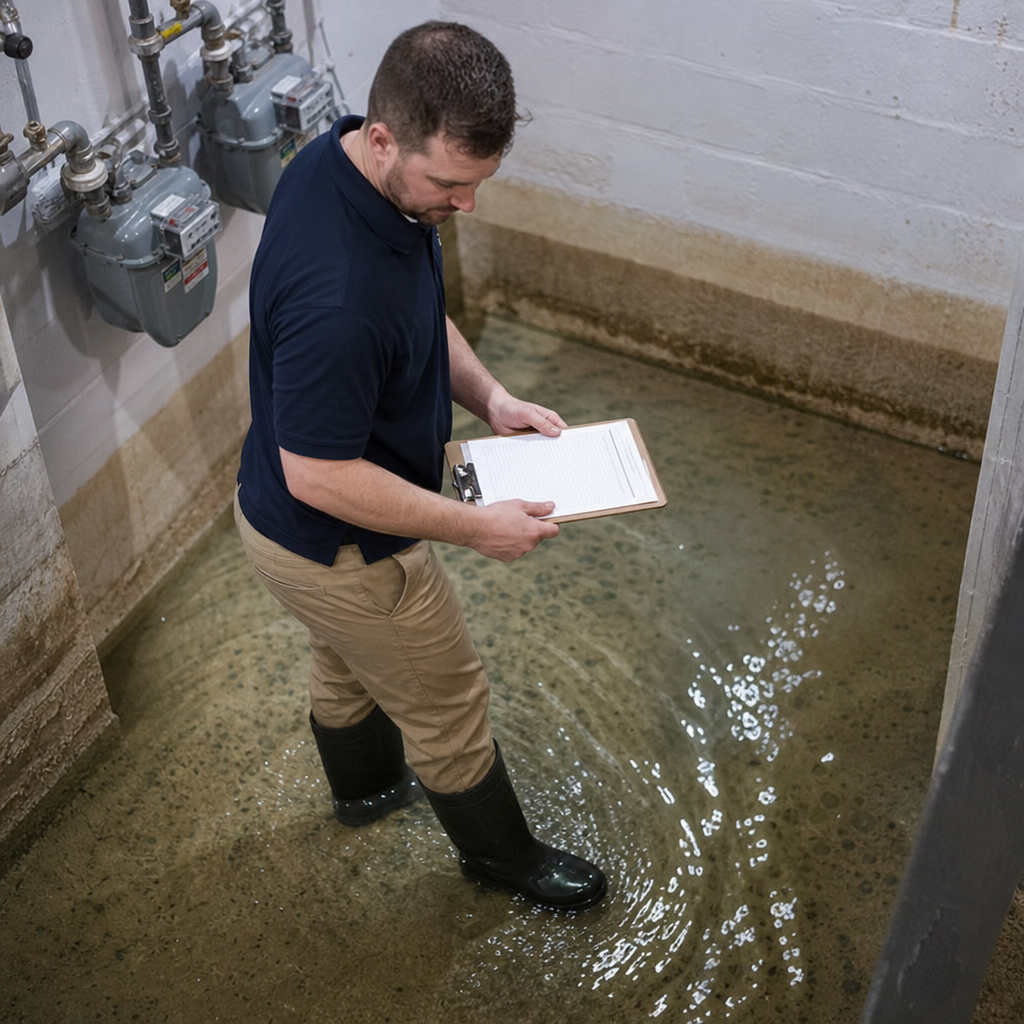
In low-elevation areas, storm runoff can overwhelm municipal storm drains and back up through floor drains or seep through foundation walls.
To help track these events, New York City installed its 200th municipal flood sensor in Corona as part of a citywide initiative to deploy 500 sensors by 2027. Real-time sensor data helps city planners compare hyperlocal street flooding against historical patterns. The planned Corona East Cloudburst project is designed to reduce flood extents during a 10-year, one-hour storm by 14.2 acres, or about 30 percent, using porous pavement, surface storage, and subsurface detention.[1]
Warning Signs of Hidden Structural Moisture
Water always takes the path of least resistance, pooling in floor cavities and creeping up wall studs:
- Cupping or Crowning Subfloors: Hardwood and plywood expand as they absorb water from below, creating uneven edges or bowed planks.
- Dark Staining Along Baseboards: Discoloration on baseboards or lower walls indicates water has wicked upward behind the walls.
- Persistent Musty Odors: If a basement or utility room smells damp days after the standing water is gone, microbial growth may be developing within unvented wall or ceiling cavities.
The Step-by-Step Restoration Process
Below are examples of services that some restoration contractors may provide during a project:
- Inspection and Assessment: Technicians may use tools such as moisture meters to help assess the extent of moisture in building materials.
- Bulk Extraction and Debris Removal: Extractors pump out standing water, and non-salvageable porous items or damaged drywall are removed.
- Cleaning and Remediation: Cleanup may involve appropriate cleaning and remediation methods selected for the contamination and materials involved.
- Structural Drying: Dehumidifiers and air movers may be used to reduce indoor humidity and dry materials promptly.
- Reconstruction: Once materials are verified dry, contractors replace damaged structural framing, drywall, insulation, and finished flooring as needed.
Frequently Asked Questions
How quickly can an emergency crew arrive on-site in Corona?
No authoritative source establishes a guaranteed arrival time in Corona. Actual response depends on crew availability, distance, road conditions, weather, and incident severity. Confirm availability directly with the provider.
Does standard homeowners insurance cover flood and water damage?
Flood damage is generally not covered by standard homeowners insurance, and coverage depends on the policy, water source, exclusions, and applicable flood insurance. Standard policies may cover certain sudden, internal water events, but external flooding typically requires dedicated flood insurance through the National Flood Insurance Program (NFIP) or private carriers. Coverage for sewer backups varies by policy and endorsement.[5]
How do contractors prevent mold growth after a flood?
As emphasized by Floodline Restoration Co., mold can develop quickly after flooding, so prompt extraction, drying, documentation, and safe cleanup are important. Cleanup may involve appropriate cleaning and remediation methods selected for the contamination and materials involved, and contractors work to reduce indoor humidity and dry materials promptly.
What should I do while waiting for a restoration crew to arrive?
If it is safe to do so, shut off the main water valve and turn off electricity to flooded areas from your breaker panel. Take detailed photos and videos of all standing water and damaged belongings for your insurance claim. Avoid walking through standing water that may contain sewage or electrical hazards.
Need flood damage restoration in Corona?
We’re available now - call for a fast, free estimate.
Sources
- Mayor Adams Announces Next Generation of New York … – nyc.gov (2027)
- Mayor Adams Announces Next Generation of New York … – nyc.gov (2025)
- Burning Down the House: How Inadequate Climate Risk … – econ.duke.edu (2050)
- Safeguarding Our Shores – New York City Comptroller – comptroller.nyc.gov (2020)
- Flood Risk and the U.S. Mortgage Market – files.consumerfinance.gov
Frequently Asked Questions
How does Floodline Restoration Co. assist with flood insurance claims in Corona?
Floodline Restoration Co. works directly with your insurance adjuster, providing detailed moisture mapping, thermal imaging data, and itemized loss documentation. This comprehensive reporting ensures all emergency water extraction, structural drying, and rebuild costs are accurately filed to streamline your claim.
What special protocols are required for Category 3 sewage backups in Corona basements?
Category 3 water contains harmful pathogens and requires containment barriers, HEPA air filtration, and the removal of porous building materials like saturated drywall and insulation. Floodline Restoration Co. applies EPA-registered antimicrobial treatments to fully sanitize affected framing and concrete before structural drying proceeds.
How long does professional structural drying take after a flood in Queens?
Industrial structural drying typically takes between three to five days depending on the flood category, volume of water, and building materials involved. Floodline Restoration Co. uses calibrated moisture meters to monitor subfloors and wall cavities daily, ensuring structural materials reach safe equilibrium moisture content before reconstruction begins.
About the author
 |
Christopher Vance Christopher Vance is a certified structural drying specialist with over nine years of experience in property damage restoration. He holds an associate degree in Construction Management from Pratt Institute and focuses on rapid-response water mitigation. Christopher writes to help Astoria property owners navigate the complexities of emergency restoration and insurance claims. |
Water damage, flood, or mold emergency?
We’re available now - call for a fast, free estimate.
Call Now - Free Estimate