
Free visual inspection and a written scope of work before any mitigation begins - photos, moisture readings, and drying logs go in your claim file
The scope we write is the scope we bill. Anything new gets shown to you, in writing, before we touch it.
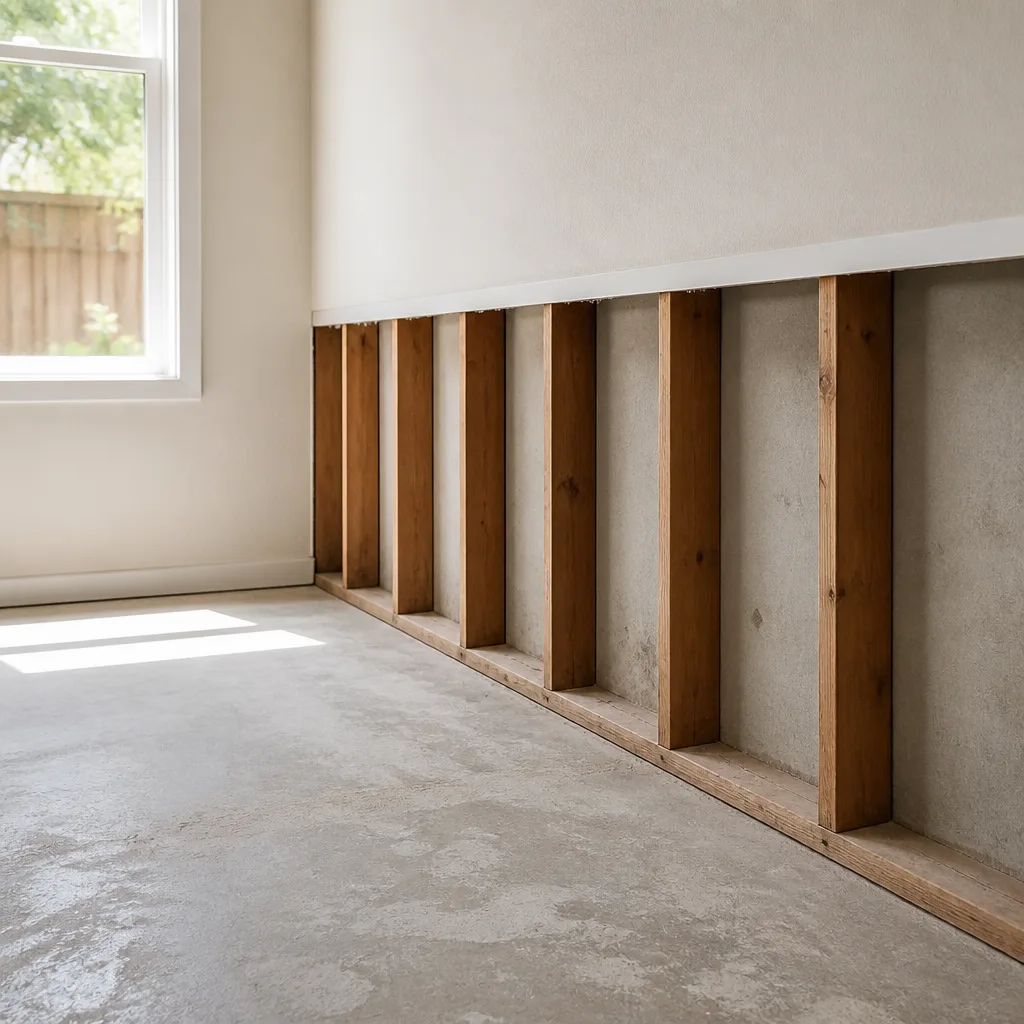
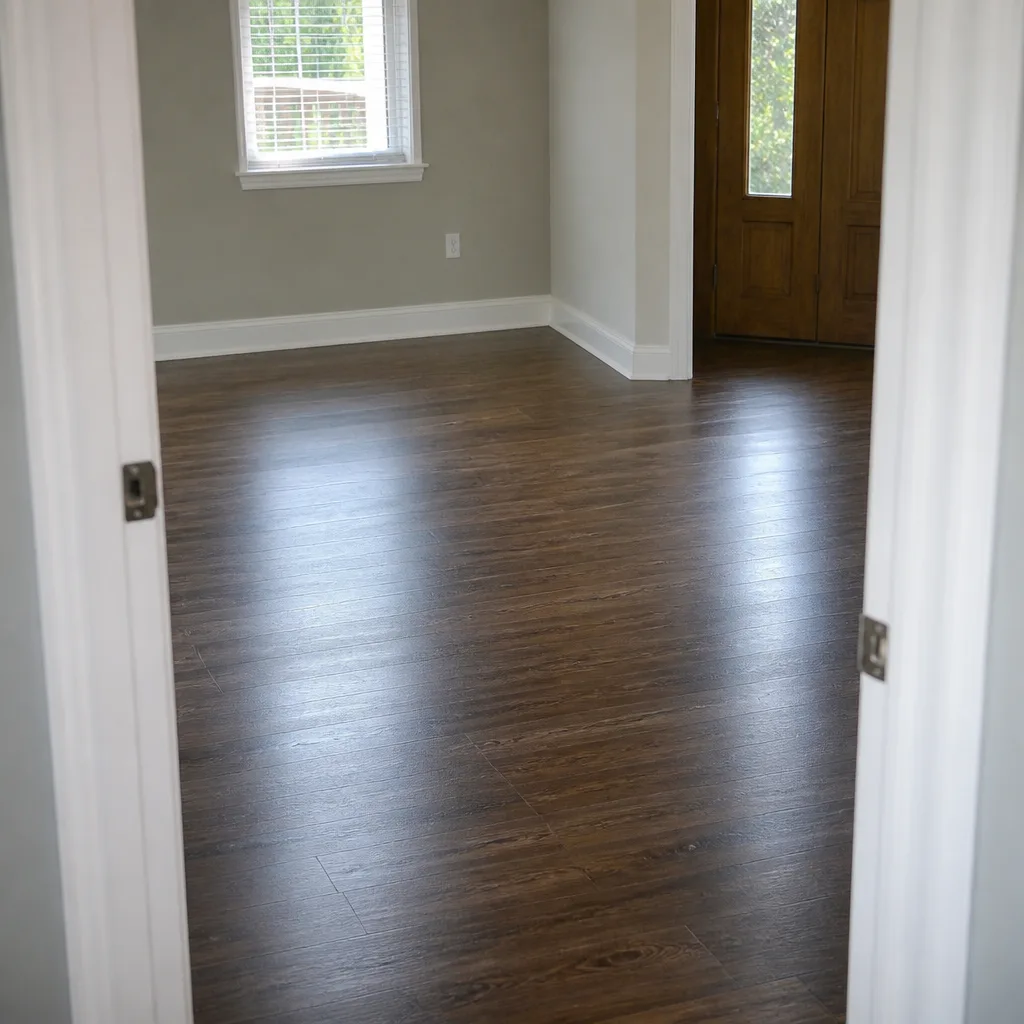
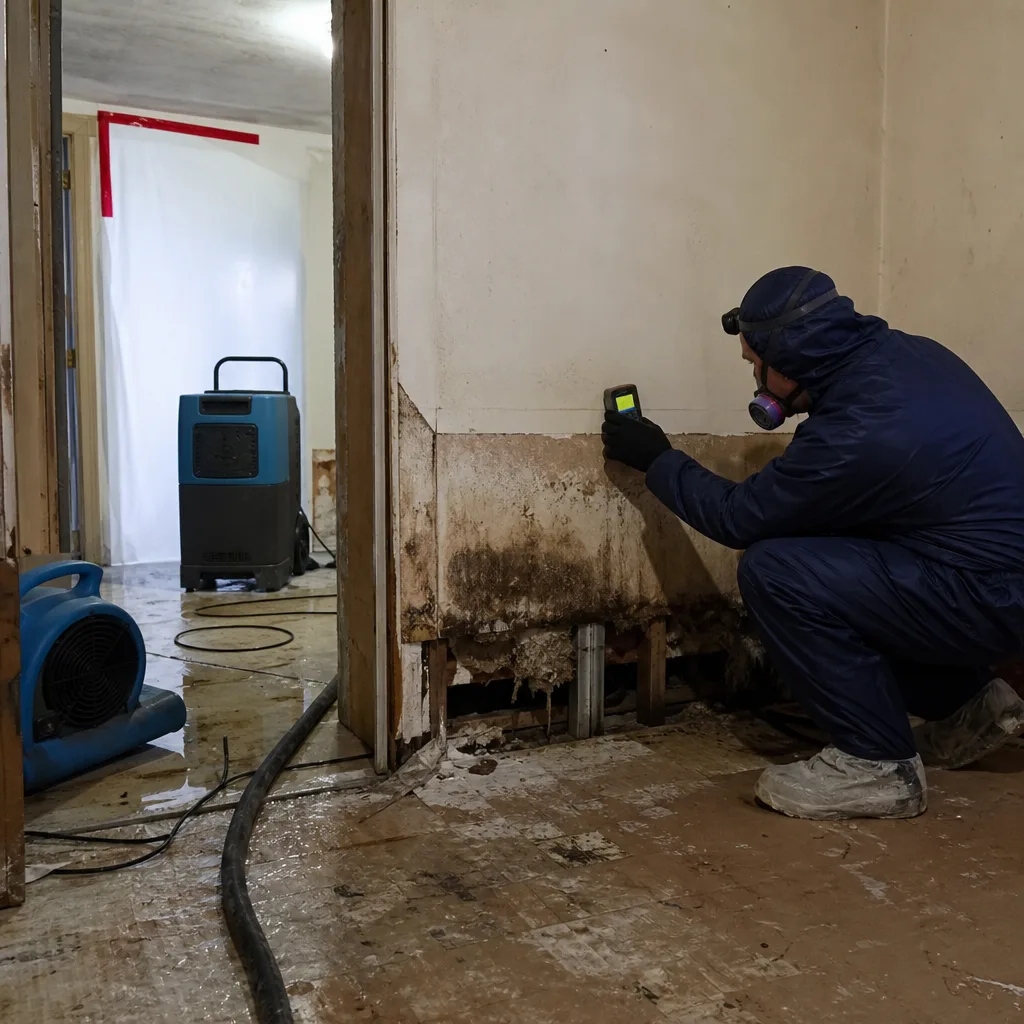 Before
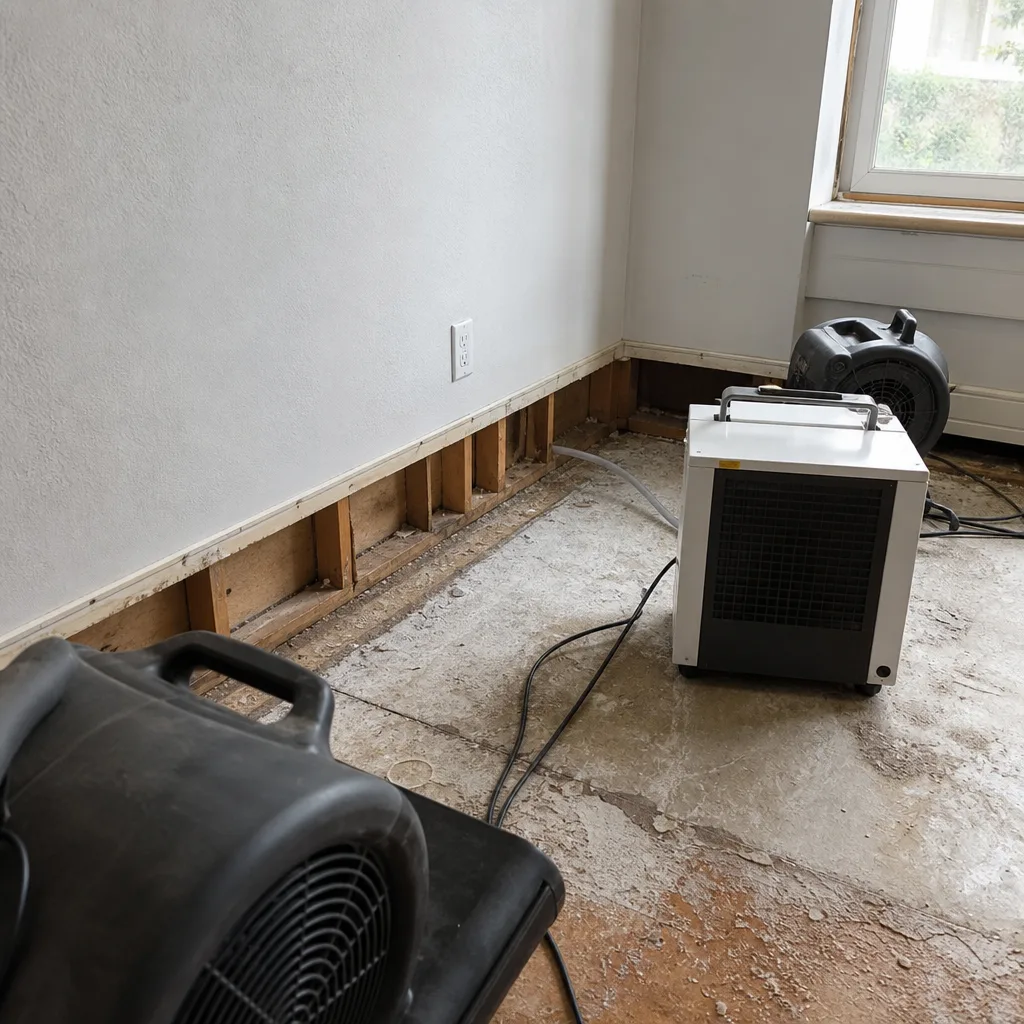 After
After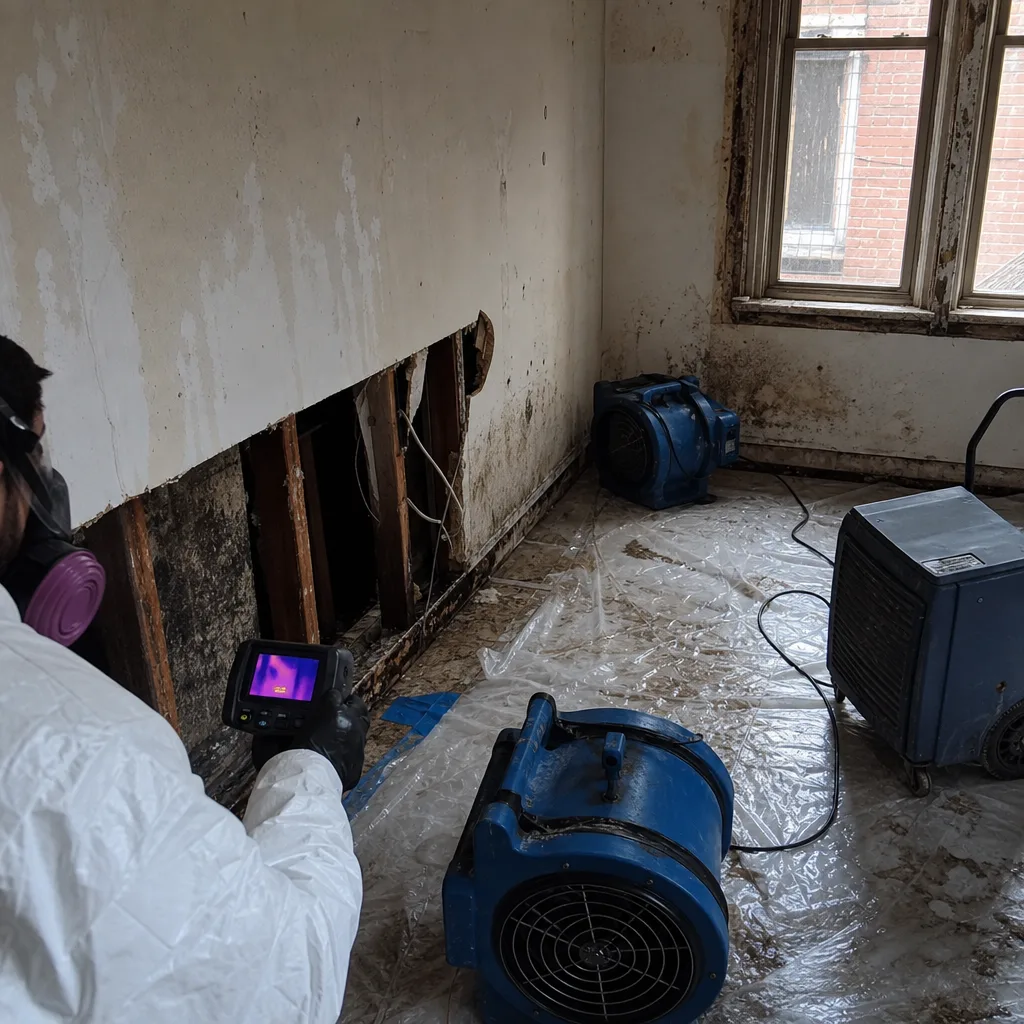 Before
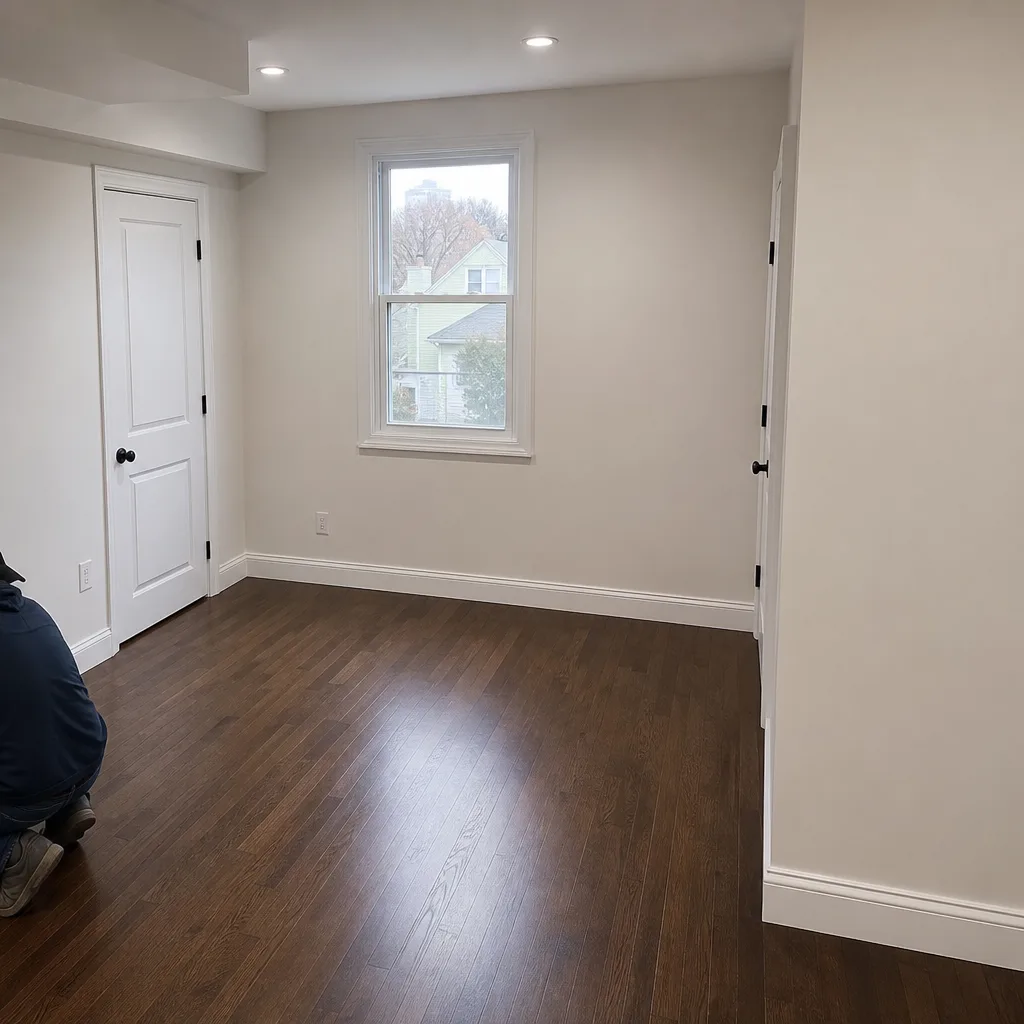 After
After24/7 Emergency Fire & Smoke Damage Restoration in Corona
Fire and smoke damage in Corona moves fast. Soot etches into surfaces within hours, and smoke odor buries itself in plaster, wood, and fabric. We answer the phone live at 2 a.m., not with a recording. Call (518) 800-3751 and a dispatcher starts a crew toward your block while you’re still on the line. The first hour determines what gets salvaged and what gets torn out, so we don’t wait until morning.
Our Fire & Smoke Damage Restoration teams run background-checked and uniformed, trained to IICRC, RIA, and IFA standards. They arrive with HEPA air scrubbers, thermal foggers, and the moisture-mapping gear needed to read what the fire left behind. In Corona’s attached and semi-detached row houses, that reading matters more than in a detached home. We’ll cover why below.
Understanding Fire & Smoke Damage Restoration Severity in Corona Properties
Every fire leaves a fingerprint. Dry soot from paper or wood burns sits loose on surfaces and responds to dry-sponge cleaning. Oily soot from kitchen grease fires bonds to paint, tile, and plaster, and needs chemical action to release. Protein soot from food fires is nearly invisible but ranks among the most stubborn odors in restoration, clinging to every porous surface. Corona’s housing stock compounds the problem. The overwhelming majority of residential buildings here are attached and semi-detached brick row houses built between roughly 1920 and 1950, most converted to two- or three-family use. Original plaster and lath walls, shared masonry party walls, and original joist pockets give smoke pathways that a modern drywall house never offers.
Smoke migration through wall cavities and floor bays is the rule in Corona, not the exception. We routinely find soot in the neighboring unit when only one apartment had flames. The containment challenge starts at the stairwell and extends through every chase, chase, and pocket the building’s original carpenters left open. Severity assessment here means opening wall cavities far from the visible burn, checking the original cast-iron drain stacks, and reading humidity after suppression water has soaked into old-growth framing. A surface wipe-down is never enough.
Why Corona Property Owners Choose Floodline Restoration Co.
- 45-minute response commitment - crews staged near Corona reach 104th Street, Northern Boulevard, and Roosevelt Avenue fast. Water from suppression does more damage every hour it sits.
- 24/7 live answer, every time - a real person picks up at 2 a.m. Not a phone tree. Not a callback service. You talk to someone who can dispatch.
- IICRC-certified crews - technicians certified in fire and smoke restoration (FSRT) and water damage restoration (WRT), trained on the equipment we actually run.
- Free visual inspection - we walk the scene, map the smoke path, and tell you what needs doing. No charge. No obligation.
- Direct insurance billing - we document everything, send the scope to your carrier, and deal with the adjuster so you don’t have to.
- One team, start to finish - the same crew that boards up the windows is the crew that rebuilds the wall. No handoff. No inherited strangers.
Floodline Restoration Co. has been doing this work for over 42 years across Queens and the wider metro. We’re led by Curt Bowman, and we back every job with the 90-Day Done Right Promise in writing. If it’s not done right, we make it right. No arguing. That’s the Keystone Standard.
Our Fire & Smoke Damage Restoration Process
Inspection & Assessment
We map the burn zone, then follow the smoke. Thermal imaging finds heat still hiding in wall cavities. Hygrometers read what suppression water left in framing and subfloor. The scope is written from this walk, with photos and a line-item plan.
Extraction & Stabilization
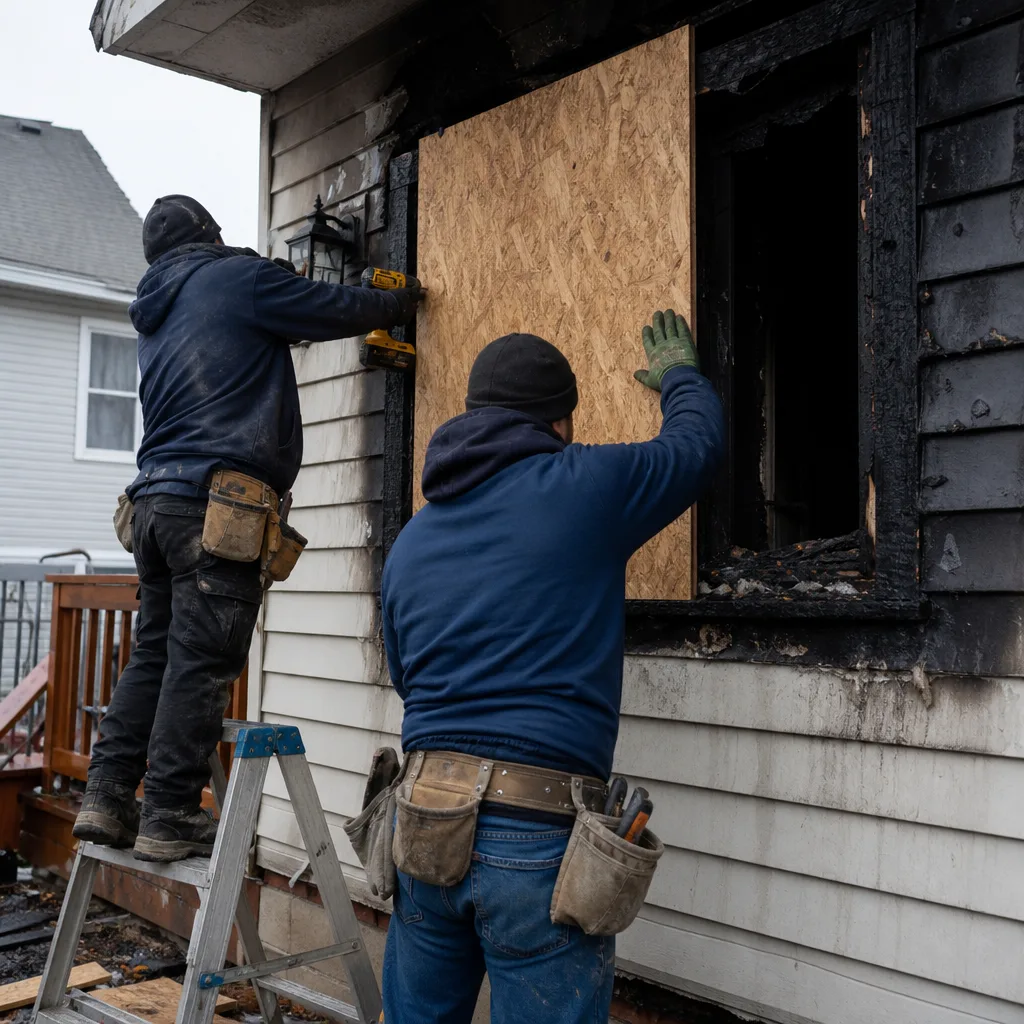
Standing water from firefighting gets extracted first. We stabilize with emergency board-up and tarping, secure the structure, and cut power to compromised circuits. Salvageable contents get triaged on site.
Structural Drying
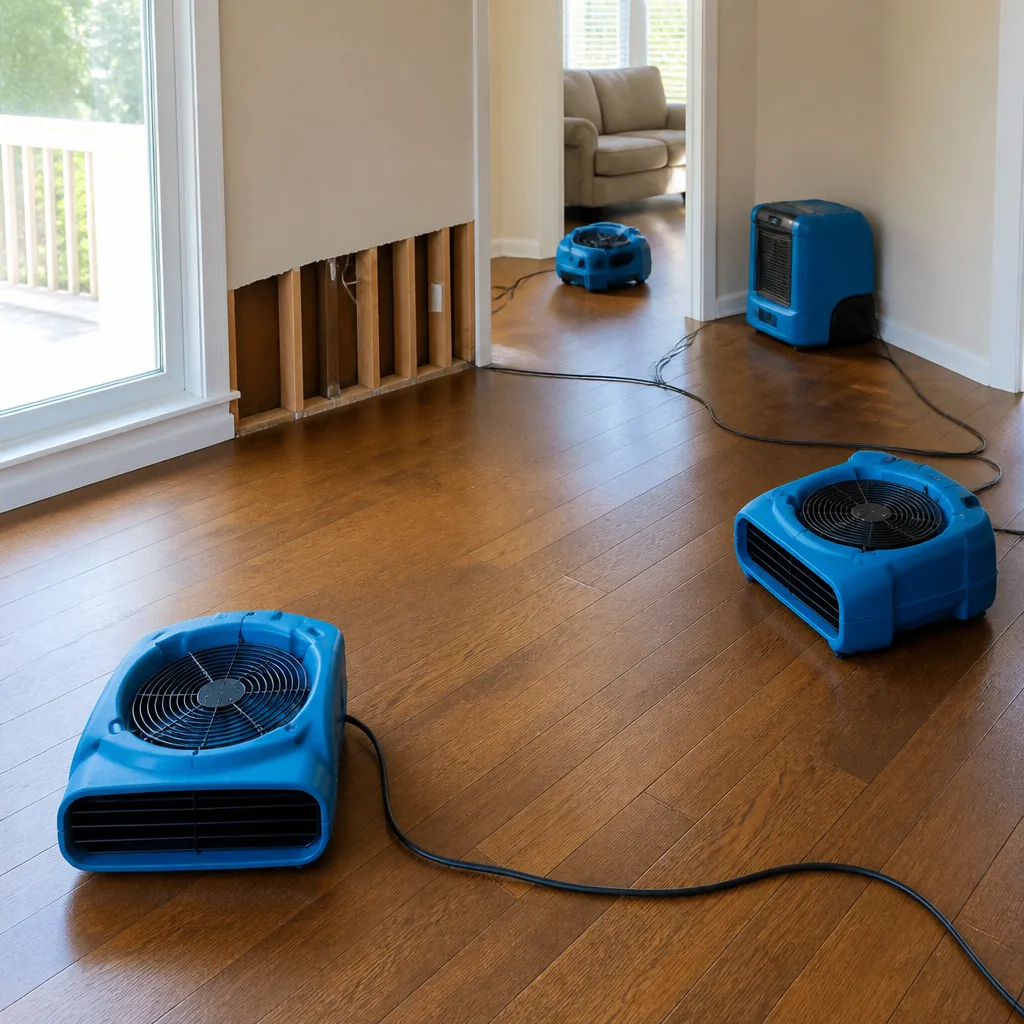
Dri-Eaz and Phoenix air movers and dehumidifiers pull moisture from the old-growth framing typical of Corona’s rowhouses. Daily readings get logged until we hit the dry standard, and that log goes to you and your carrier.
Cleaning & Sanitization
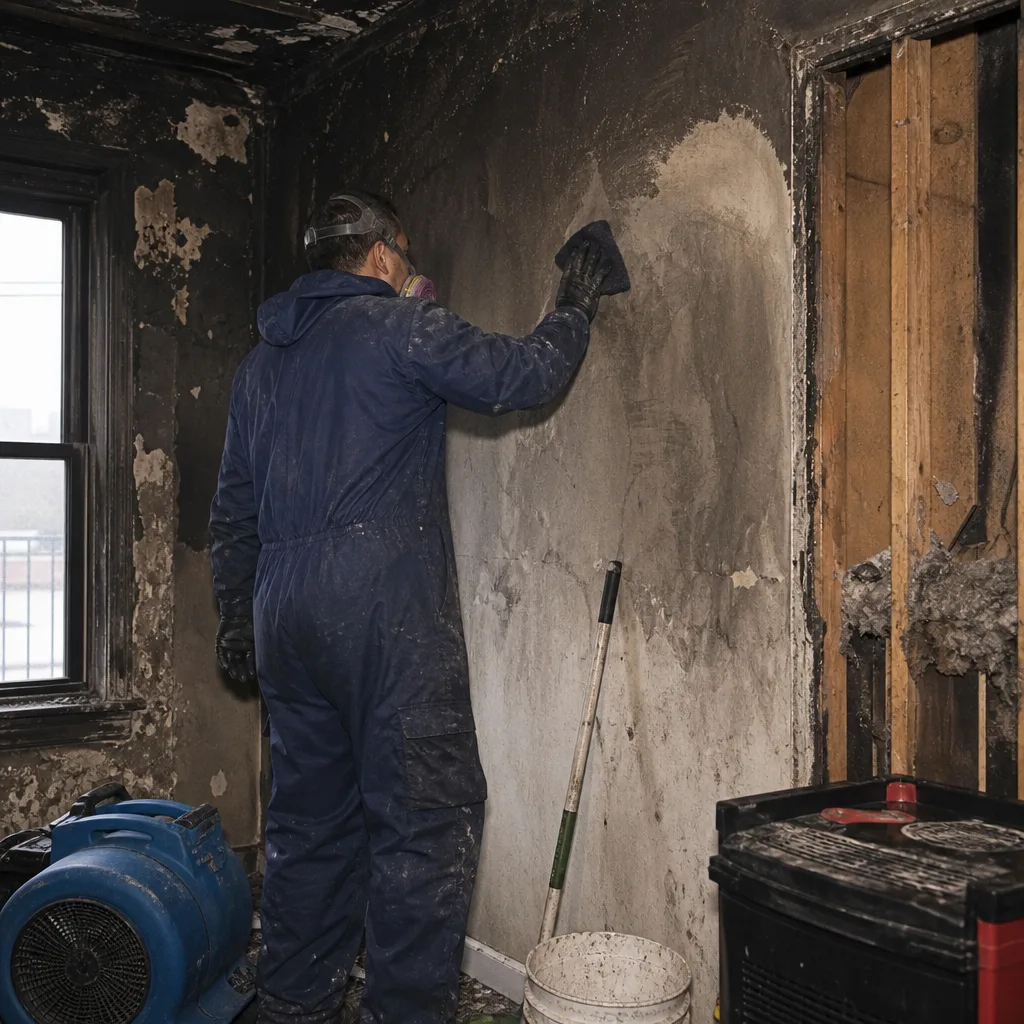
We remove soot residue from every surface, using dry sponge methods for loose soot and chemical action for oily deposits. HEPA vacuuming captures particles before they re-settle. Porous materials too far gone get documented for replacement.
Odor Removal & Deodorization
Thermal fogging and hydroxyl generators break down odor molecules that have moved through wall cavities and joist pockets. We treat the smoke path, not just the burn room, because in shared-party-wall buildings the path crosses into the neighbor’s unit.
Repairs & Restoration
The same crew that started the job rebuilds it. Plaster repair, trim replacement, paint, flooring. We bring the unit back to pre-loss condition and hand you the written 90-Day Done Right Promise before we leave.
Need Emergency Fire & Smoke Damage Restoration in Corona Now?
Crews minutes away, answering live 24 hours a day. The sooner we start, the less it costs.
Working With Your Insurance Company
We’ve spent 42 years learning what adjusters need and what stalls claims. The biggest stall in Corona involves unpermitted basement apartments and tenants without formal leases. When a fire damages a below-grade unit with no certificate of occupancy, the carrier wants to know whether the space was a legal living area before they approve a dollar of scope. We handle that by documenting the unit’s use, its finishes, and its contents honestly, and by coordinating directly with your carrier from the first inspection. You don’t play messenger.
Every estimate leaves our office in line-item form, built from industry-standard pricing, with photos room by room. We send it to your insurer, talk to the adjuster, and adjust the scope when the claim review finds something new. That’s been our way since Curt Bowman founded Floodline in 2010, and it’s why adjusters in Queens know our name.
What We Provide Your Insurer
- Thorough documentation of the loss
- Photos of all damage, room by room
- Moisture readings and drying logs
- A detailed, line-item scope of work
- Direct coordination with your carrier
Built for Corona’s Loss Calendar
Corona’s fire and smoke losses follow the calendar in ways that would look foreign in a suburban cul-de-sac. The deep freezes of January and February push aging boilers and overloaded space heaters in Corona’s 1920s-era row houses past their limits. Radiators that have run since before the war give out, and the resulting water release pools through original floor assemblies into the units below. Spring brings thaw and crawl-space seepage, when the low-pitch and flat roofs over these pre-war buildings start leaking through aging tar and felt membrane. A roof leak that runs down through shared wall cavities for a week before anyone notices can soak the framing and feed mold before smoke ever touches the scene. Summer thunderstorms overwhelm the combined sewer system, and backwash into basement units on a near-annual basis. Then comes nor’easter season, when wind-driven rain finds every open joint in the facade. The common thread is that Corona’s housing stock routes water, smoke, and fire through the same shared cavities, so what starts as one unit’s problem becomes a building problem within hours.
For fire specifically, the winter months bring space-heater fires in subdivided apartments, and kitchen fires run year-round in multi-family conversions where kitchens sit directly above finished basement units. The building’s original construction doesn’t change the fire’s intensity. It changes how far the smoke travels and how long the odor lasts.
Fire & Smoke Damage Restoration Across Corona’s Neighborhoods
Corona is compact but not uniform, and the response routes matter. Around 104th Street and Roosevelt Avenue, we’re in and out through the elevated train corridor, where narrow frontages and shared entrances force our crews to run containment from the stairwell inward. Northern Boulevard separates the older brick blocks to the south from the commercial frontage to the north, and response time there shifts with the traffic signal timing along the corridor. Near Corona Avenue and Junction Boulevard, the pre-war brick flats sit shoulder to shoulder, and shared party walls mean a kitchen fire on the second floor shows up as a charcoal smell in the unit next door within the hour. Over by Flushing Meadows Corona Park, the blocks west of 111th Street hold more semi-detached frame construction than the brick rows to the east. Smoke travels differently through frame walls with balloon-framed cavities than through masonry, and our containment setup changes accordingly. In the 11368 zip code, from the elevated tracks north to the Grand Central Parkway service road, every block has its own rhythm. We know the parking constraints, the alley access, and which buildings share drain stacks.
What holds across all of these blocks is the density. Attached buildings mean your fire is your neighbor’s smoke problem. Our job is to keep that problem from becoming a claim fight between two households who share a wall.
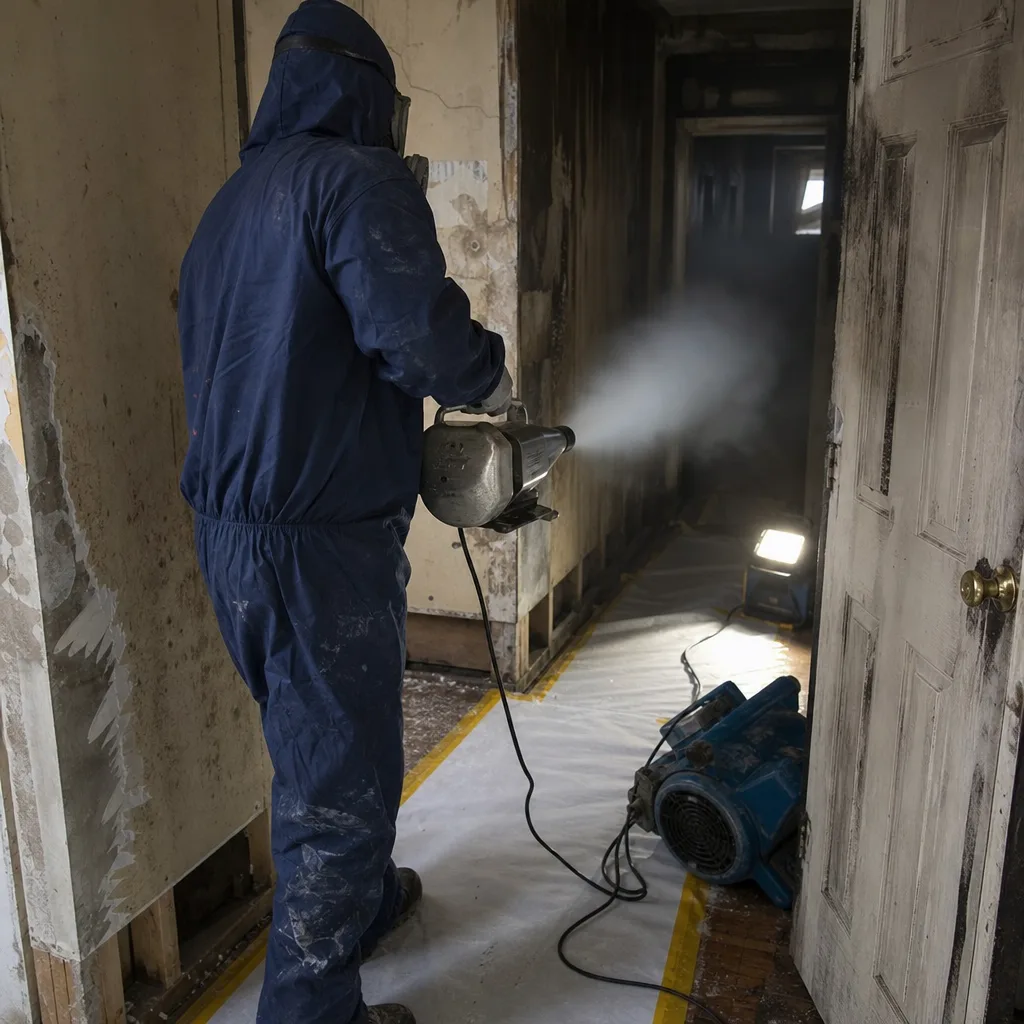
Specialized Fire & Smoke Damage Restoration Services We Offer in Corona
Fire Damage Cleanup
Burned structural material gets cut out and carted off. Charred framing gets evaluated for reuse or replacement. Corona’s old-growth lumber often survives fire better than modern dimensional lumber, but the char layer has to come off before anything gets rebuilt. We clean, stabilize, and prepare the area for restoration.
Smoke & Soot Removal
Soot from a grease fire in a Corona kitchen spreads beyond the kitchen. It lands on every horizontal surface and works into painted woodwork, tile grout, and plaster. We use dry sponges for loose residue and chemical action for the oily film that bonds to surfaces. Shared party walls mean we check the neighbor’s side before we call the fire area isolated.
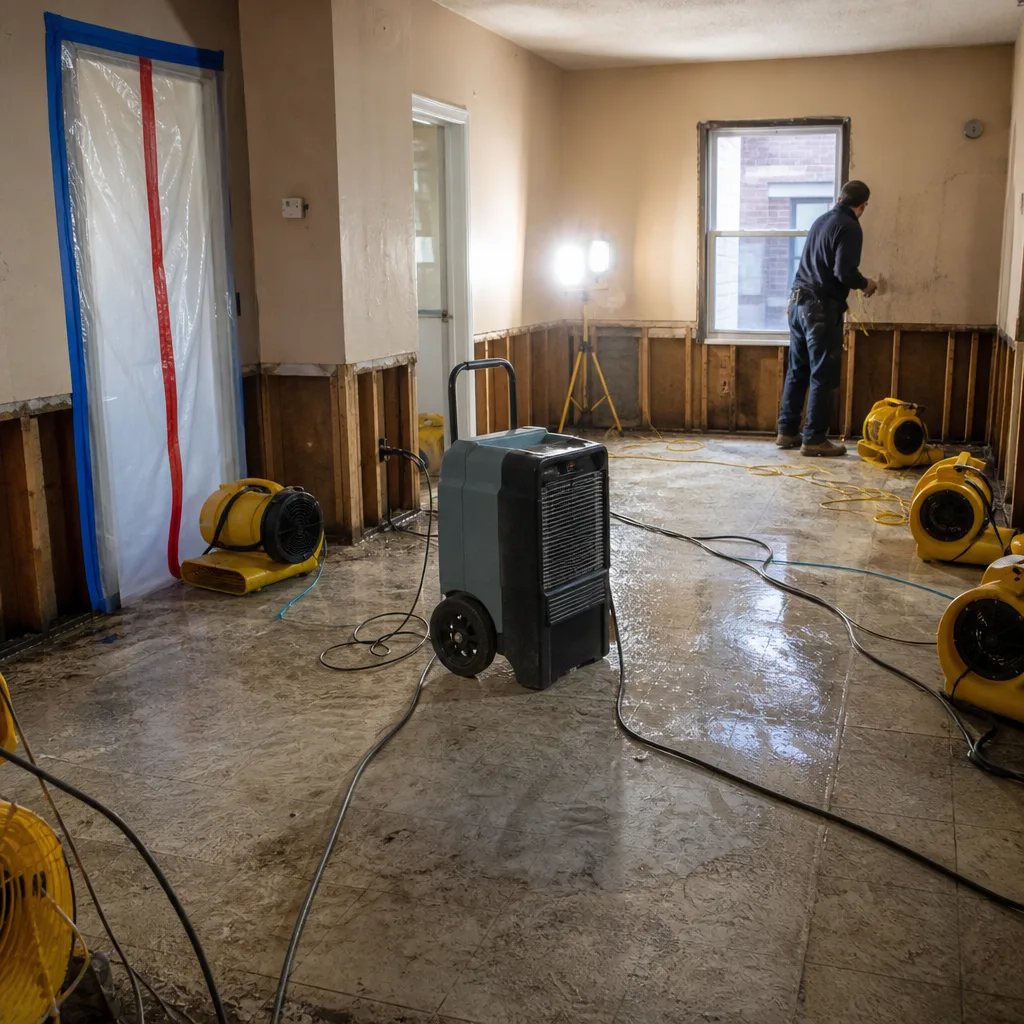
Odor Removal & Deodorization
Smoke odor in a 1930s row house lives in the plaster, the lath, the joist pockets, and the drain chases. Painting over it seals it in for a few weeks, then it comes back. We run thermal fogging and hydroxyl generators along the full smoke path, including wall cavities we open for inspection. The odor doesn’t come back when the source is treated.
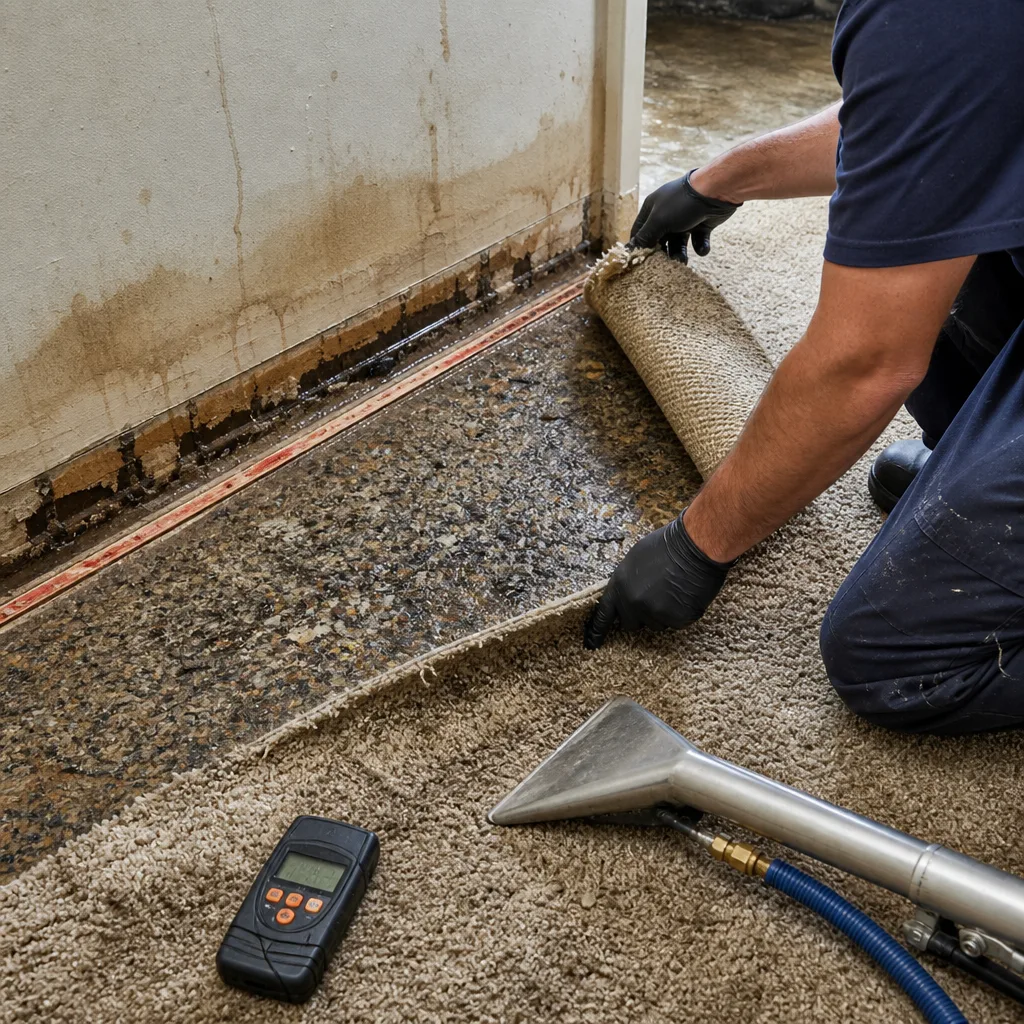
Contents Cleaning & Pack-Out
Salvageable contents in Corona fire jobs are often tenant belongings in units with no formal lease. We pack out what’s worth saving, document everything with photos, inventory it, and clean it off-site in our facility. Soot-covered clothing, cookware, and furniture get treated with the same process we’d use in a single-family home. Nothing gets thrown away without your say-so.
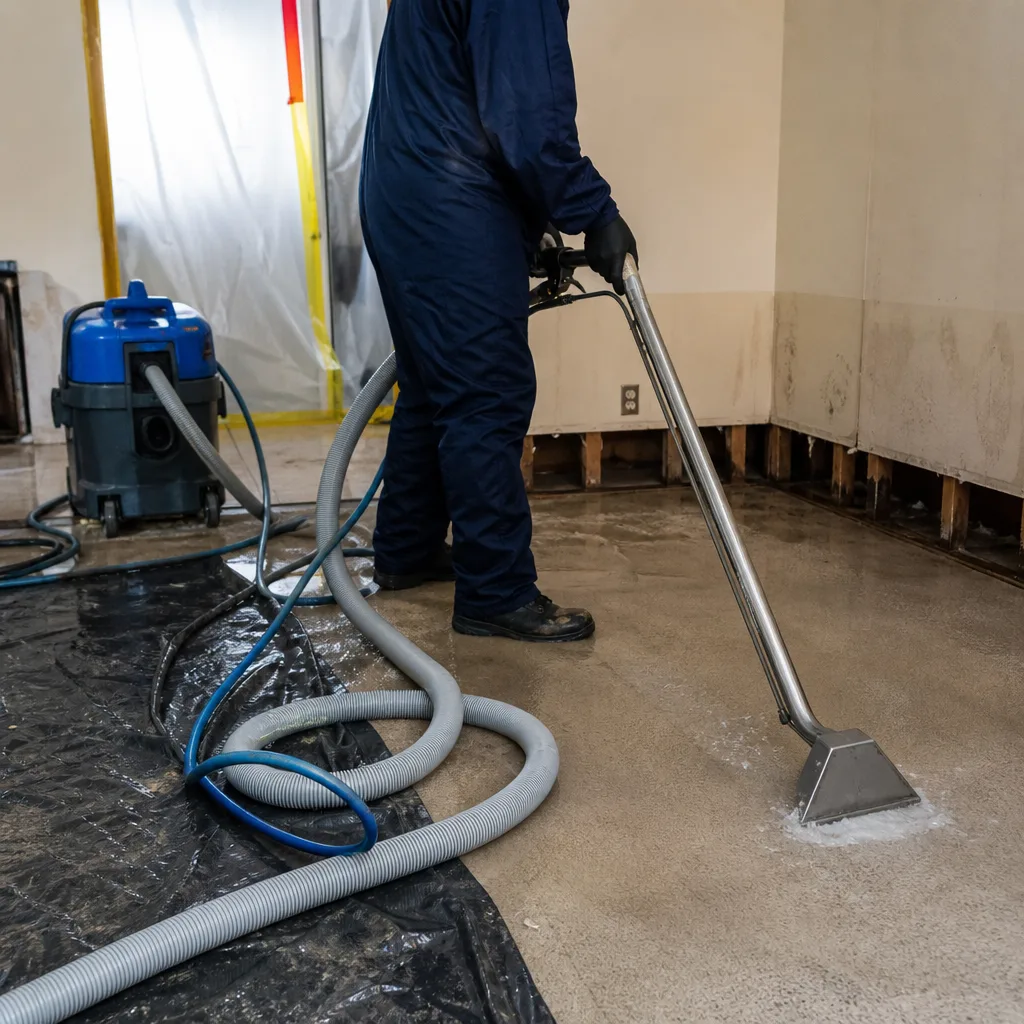
Emergency Board-Up & Tarping
A burned-out window on the first floor of a Corona rowhouse is an invitation. We board up with plywood cut to fit the opening and tarp exposed roof sections the same day. The building gets secured before we leave, and the board-up stays in place until the structural repair begins.
What happens when you call
- 1
A real person answersNo phone trees - you reach a local pro.
- 2
You get an upfront price rangeHonest numbers before anyone is dispatched.
- 3
A background-checked tech heads outLicensed & insured, dispatched right away.
- 4
You approve before work beginsNothing starts until you say go.
Fire & Smoke Damage Restoration Costs in Corona, NY
What you’ll pay depends on how far the smoke traveled and what got wet from suppression. A small kitchen fire confined to one room with moderate soot removal in a Corona apartment typically runs $1,800 to $4,200. A full smoke migration job through shared wall cavities, with odor treatment in both units and structural drying after firefighting, lands between $6,500 and $14,000. When a basement apartment with no certificate of occupancy is involved, the scope gets more expensive because the carrier may challenge the living-area designation, and we may need to document finishes, egress, and use before demolition begins. Contents pack-out and cleaning adds $1,500 to $5,000 depending on volume. A full structural rebuild after a serious fire runs $30,000 and up in this market. The fastest way to a firm number is a free visual inspection. Call (518) 800-3751 and we’ll walk the scene, map the smoke, and put the scope in writing before any work begins. Estimates are free, and the 90-Day Done Right Promise applies to every dollar of the final bill.
We Also Serve Cities Near Corona
Floodline Restoration Co. runs crews through Elmhurst, Jackson Heights, East Elmhurst, and Maspeth daily. If your property sits just outside the 11368 zip code, call anyway. Dispatch is coordinated from our New York City office, and a Corona crew may already be minutes from your block. Check our Corona service area page for more.
Serving Corona, NY - Our Local Coverage Area
We’re based in the Corona area and know this community well. Use the map below to see our service coverage - if you’re nearby, we can almost certainly help.
Corona Fire & Smoke Damage Restoration Questions, Answered
How do you handle smoke damage that has spread through the shared party wall into the neighboring row house in Corona?
We open the wall cavity on the affected side, inspect the joist pockets and chase, and run containment across both units before demolition begins. The neighboring unit gets treated with HEPA air scrubbing and thermal fogging along the full smoke path, and we document everything for both carriers. Call (518) 800-3751 for a free inspection if you suspect smoke crossed into the adjacent property.
Do you work with tenants who have no lease in a fire-damaged basement apartment in Corona?
Yes. We’ve done it many times in the 11368 zip code, where below-grade units without certificates of occupancy are common. We document the tenant’s belongings, their use of the space, and the unit’s finishes, then work with a public adjuster to build the insurance documentation from scratch when no lease exists. The tenant’s property gets treated with the same care as the owner’s structure.
After a kitchen fire in a 1930s Corona row house, how do you remove smoke odor from the original plaster walls without gutting them?
We don’t paint over odor. We inspect the plaster for structural integrity, drill small access points into the wall cavity, and run hydroxyl generators and thermal fogging through the joist pockets and behind the lath. When the plaster is solid, we clean it in place with chemical sponges and seal it with a shellac-based primer before repainting. When it’s not solid, we tell you that too.
What does ‘pack-out’ involve for a Corona family after a fire, and how do you handle contents that are heavily soot-covered?
We inventory every item with photos, pack it in clean boxes, and transport it to our cleaning facility. Soot-covered textiles get dry-cleaned or laundered. Hard goods get HEPA-vacuumed and chemically cleaned. Fragile items get wrapped individually. You receive a full itemized inventory, and nothing is discarded without your written approval. The cost runs $1,500 to $5,000 depending on volume.
Why did my neighbor’s contractor say the entire basement ceiling had to come out after smoke damage, but your estimate only calls for cleaning?
Some contractors default to demolition because it’s faster to bill. We default to what the material actually needs. In many Corona basements, the ceiling framing is old-growth lumber that can be cleaned, sealed, and retained after smoke exposure. We’ll show you the moisture readings and the char evaluation that supports the decision. If demolition is necessary, you’ll see the reason in the line-item scope before we start.
How fast can you actually get to a fire scene in Corona?
We commit to a 45-minute response in the Corona area. Crews stage near major corridors like Roosevelt Avenue and Northern Boulevard, so a live dispatcher can have someone at your door quickly. Call (518) 800-3751 and you’ll talk to a person who can dispatch immediately.
Are your technicians certified for fire and smoke restoration work?
Yes. Our crews are certified to IICRC standards, including Fire and Smoke Restoration Technician (FSRT) and Water Damage Restoration Technician (WRT) credentials, and trained to RIA and IFA standards. Every technician is background-checked and uniformed.
What should I do in the first 30 minutes after a fire in my Corona home?
Call us at (518) 800-3751, then stay out of the structure until it’s checked. Don’t turn on electrical systems, don’t wipe soot off walls, and don’t run your HVAC. The first hour determines what can be saved. Our dispatcher will walk you through the immediate steps while the crew is on the way.
One thing we’ve learned in Corona that we didn’t learn anywhere else
Corona’s 1920s to 1940s attached brick row houses often share masonry party walls, so fire and smoke damage in one unit routinely migrates through wall cavities into neighboring apartments. This is a containment challenge that doesn’t exist in detached suburban homes, and it’s caught us readier than most. We responded to a basement apartment fire on 104th Street near Roosevelt Avenue, where smoke had traveled through an original cast-iron drain chase into the adjacent unit. Our crew set containment at the stairwell, used HEPA air scrubbers and thermal fogging to cut odor in both units, then packed out salvaged contents, mostly tenant belongings with no formal lease, while a public adjuster worked the unpermitted-space paperwork for the owner. The neighbor’s unit never smelled smoke again. That’s the Keystone Standard working in a building type where corners get cut daily.
Call (518) 800-3751 for a free estimate. A live person answers, day or night, and a crew can be on your Corona block in under an hour. We’re Floodline Restoration Co., and we stand behind the work in writing.
Written by Curt Bowman, Owner at Floodline Restoration Co., serving Corona and the surrounding communities for over 42 years.