
Free visual inspection and a written scope of work before any mitigation begins - photos, moisture readings, and drying logs go in your claim file
The scope we write is the scope we bill. Anything new gets shown to you, in writing, before we touch it.
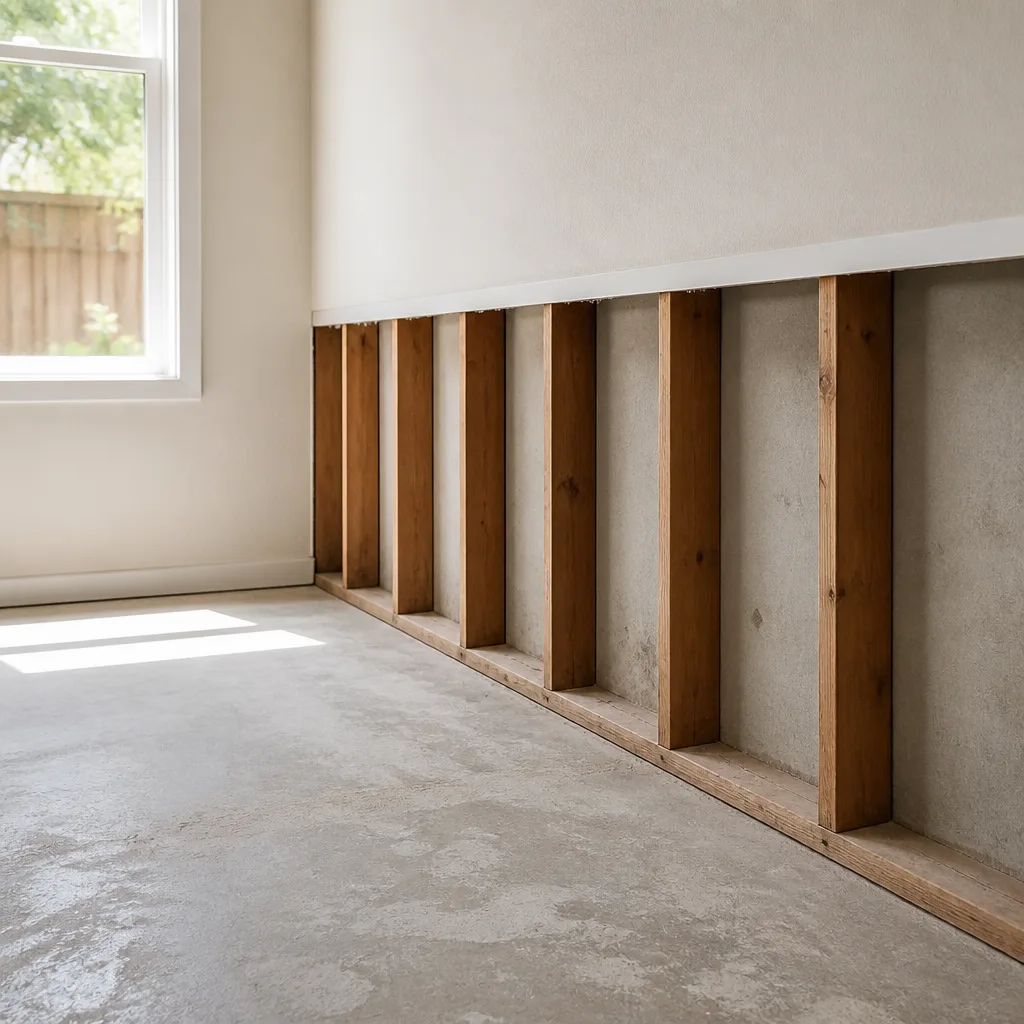
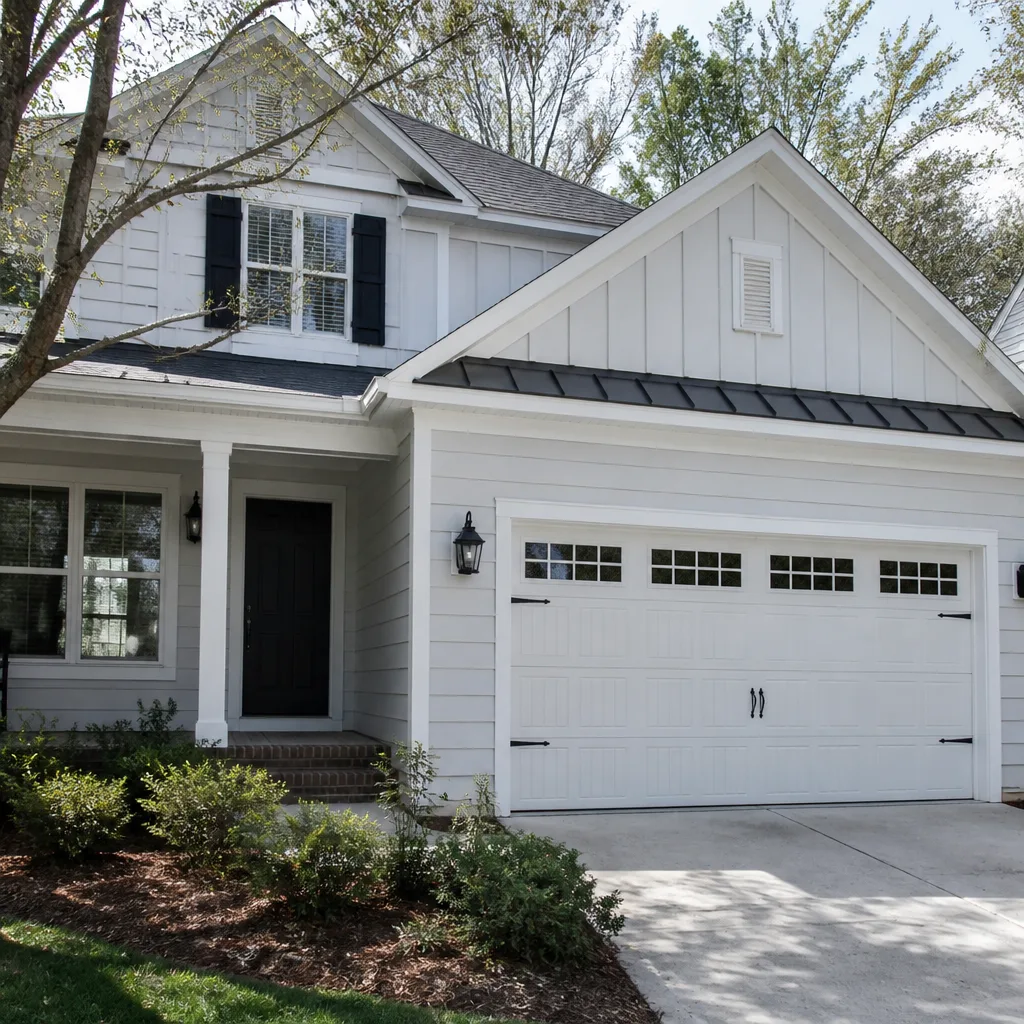
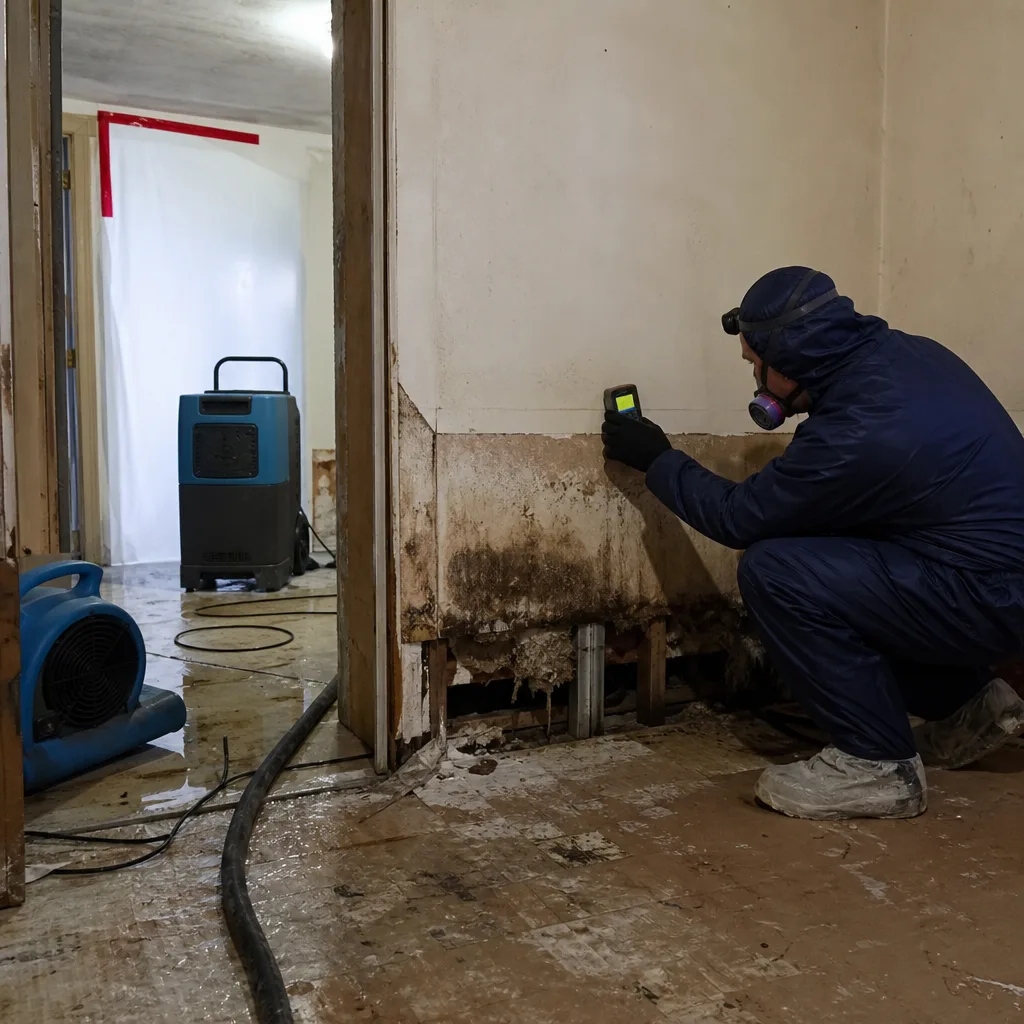 Before
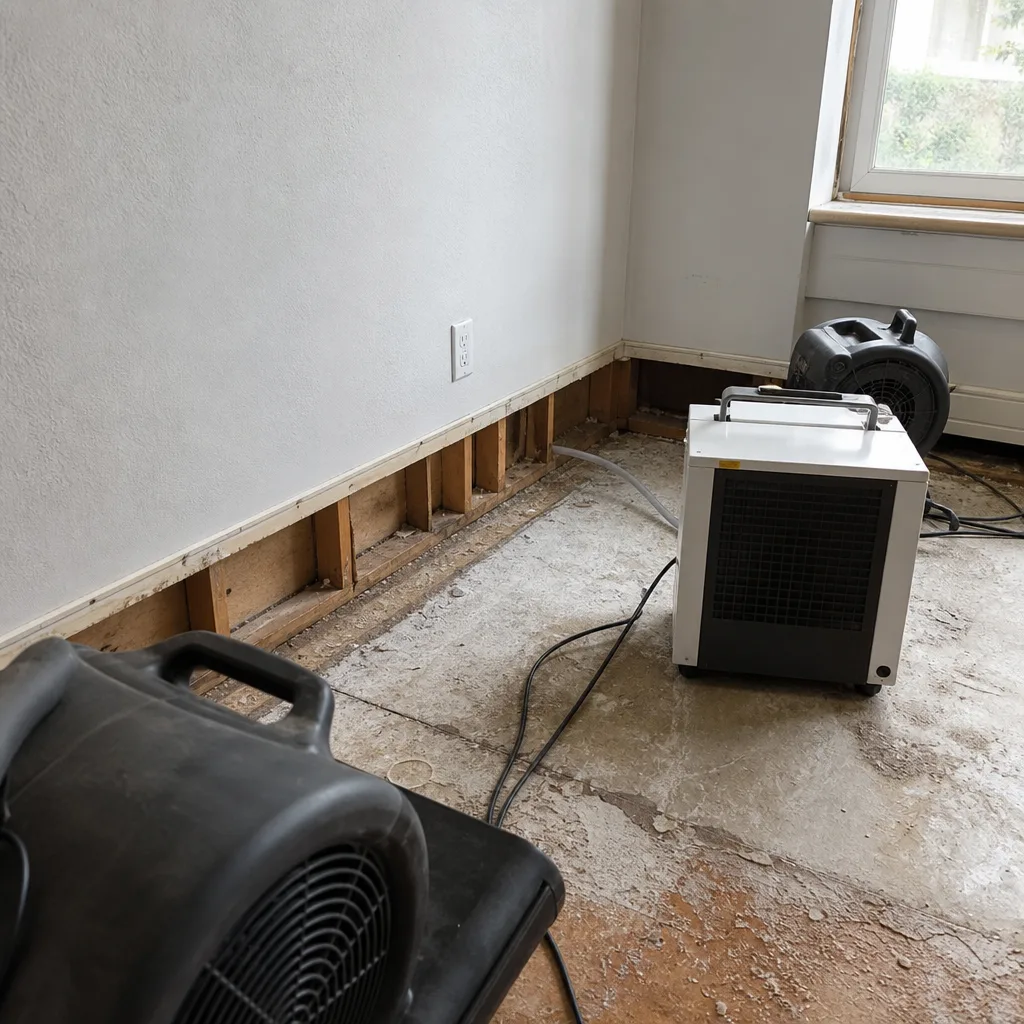 After
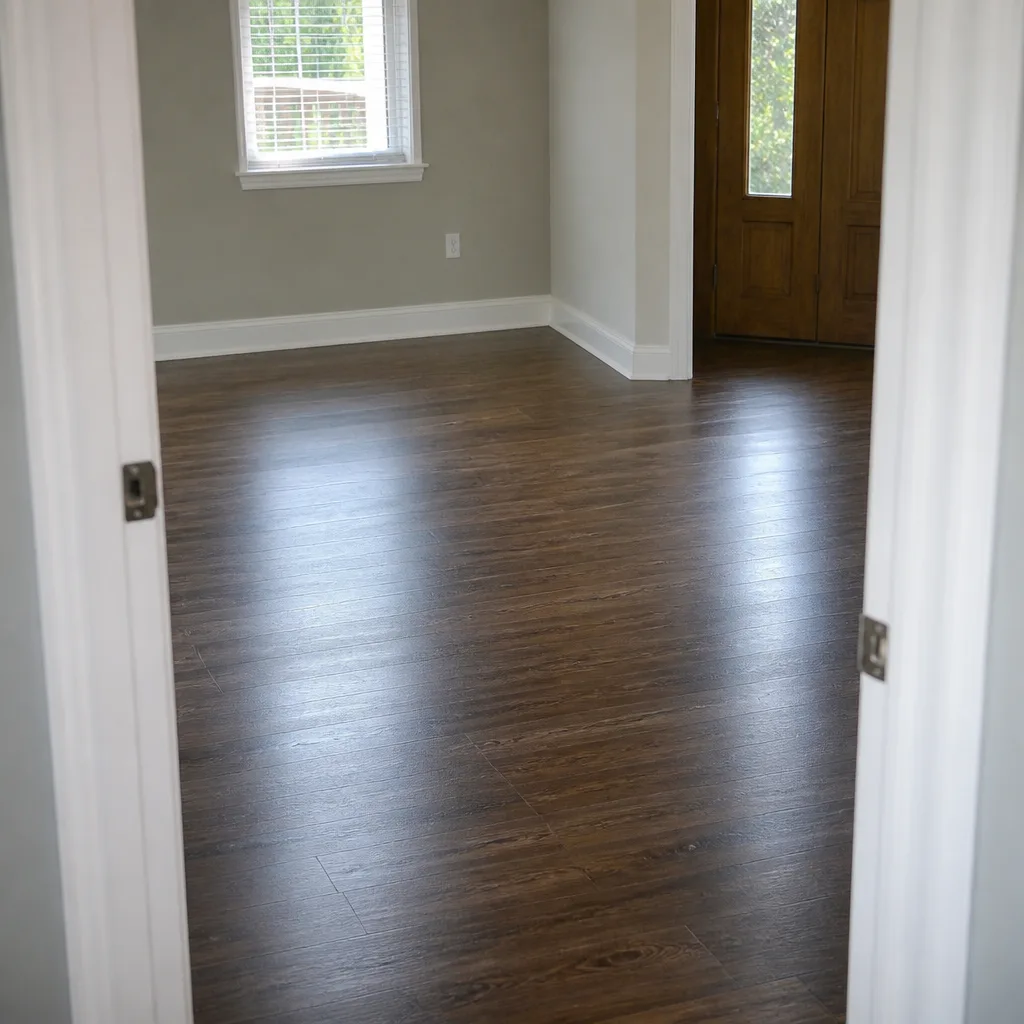
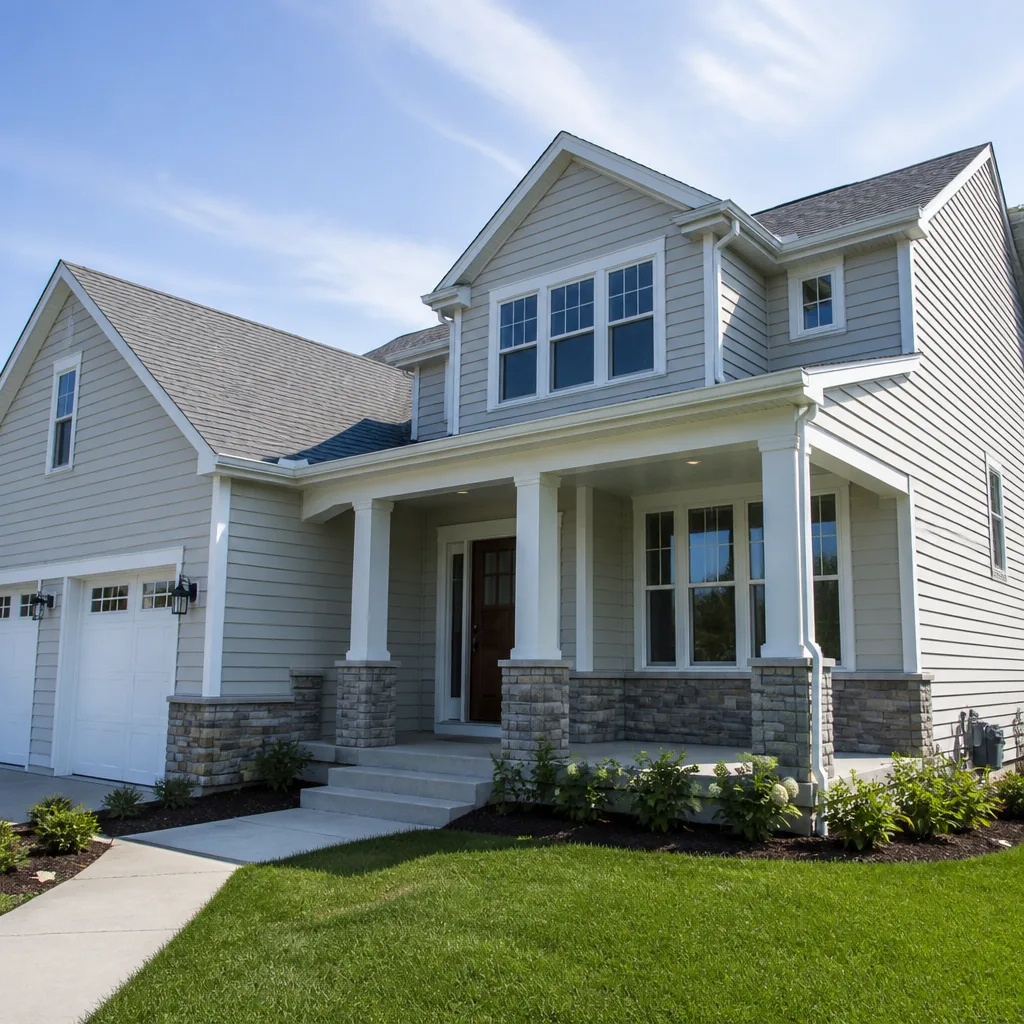
After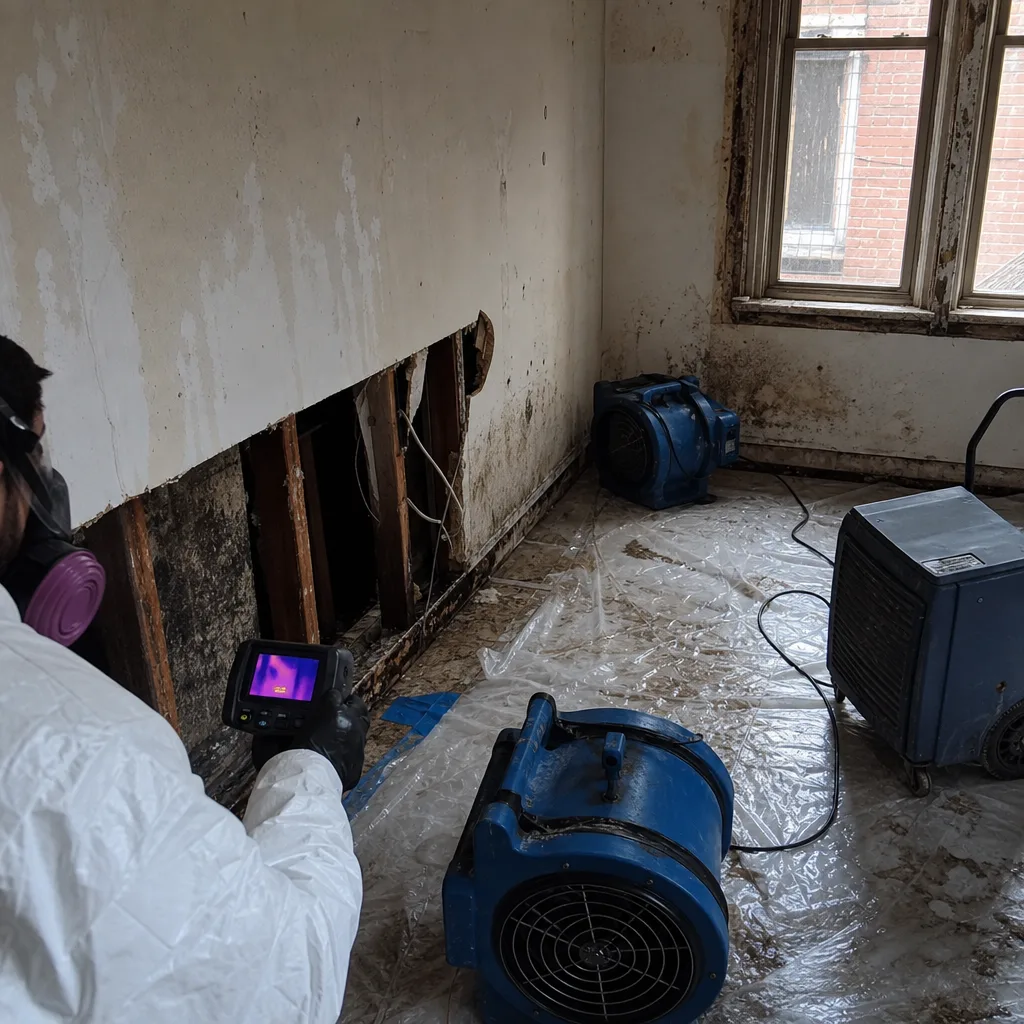 Before
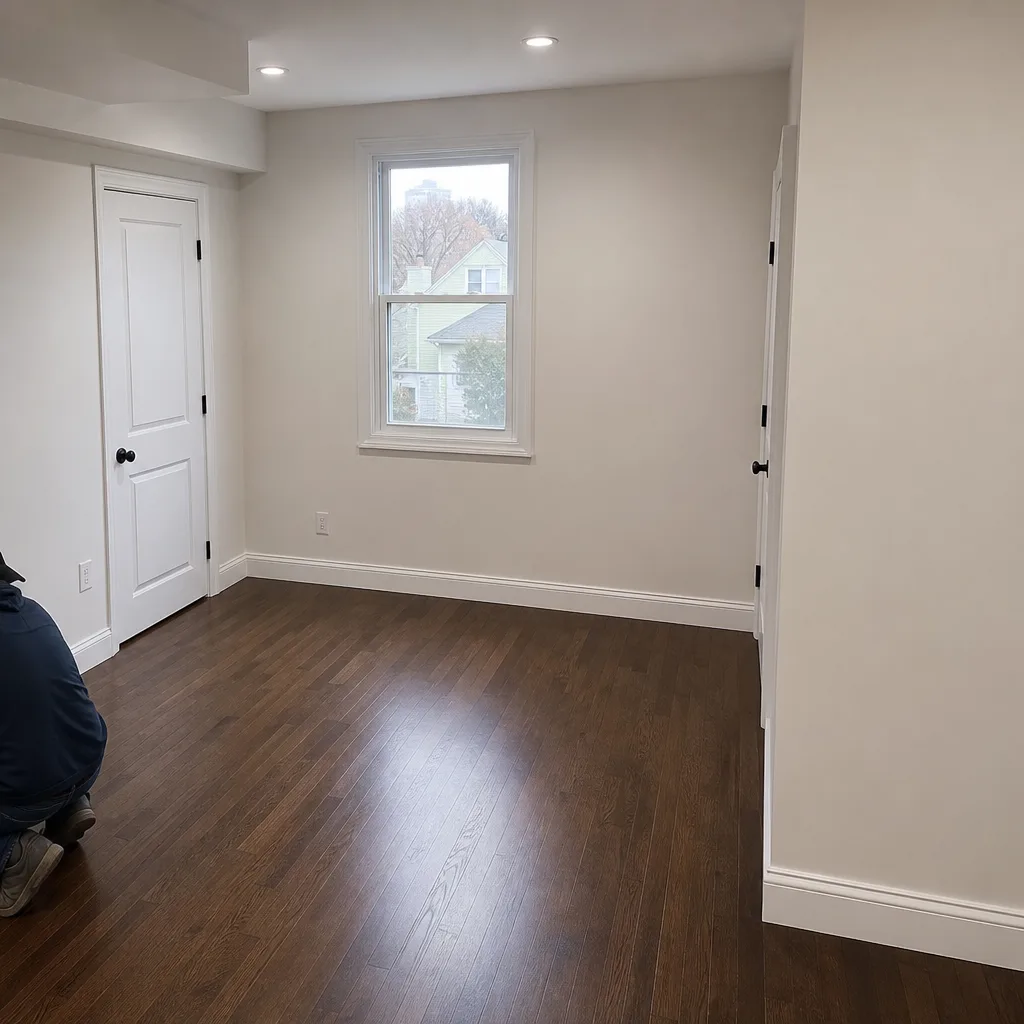 After
After24/7 Emergency Storm & Disaster Restoration in Jackson Heights
When a nor’easter rips a courtyard door off its hinges or sewage backs into a pre-war basement off 37th Avenue, Jackson Heights property owners need a crew that answers live and moves fast. Floodline Restoration Co. dispatches certified storm damage teams to Jackson Heights around the clock, every day of the year. Call (518) 800-3751 and a real person picks up, not a recording. The first hour after a storm event determines whether water stays contained or migrates through plaster walls, shared corridors, and into neighboring units. Our crew reaches most Jackson Heights addresses within 45 minutes, performs a free visual inspection, and starts extraction the same visit when conditions allow.
Storm damage in Jackson Heights rarely stays one unit’s problem. A torn door on a 1920s courtyard co-op can expose a shared stairwell. A clogged courtyard drainage sump can push Category 3 water into laundry and mechanical rooms serving 40 to 80 units. We understand the buildings here because we work in them every week. Same certified crew handles emergency board-up, drying, and the rebuild that follows. No mid-job handoff. No passing the file to someone who has never seen your building.
Key Takeaways:
- Live dispatch 24/7 to Jackson Heights, with crews typically on-site within 45 minutes
- Free visual inspection and written scope before any work begins
- One crew handles board-up, drying, and reconstruction from start to finish
- Direct insurance billing, including coordination with co-op master policies and HO-6 carriers
- Every job backed by the 90-Day Done Right Promise, in writing
Understanding Storm & Disaster Restoration Severity in Jackson Heights Properties
Storm water hitting Jackson Heights is rarely clean rain. When the combined sewer system under Roosevelt Avenue surcharges during a heavy summer downpour, basement-level apartments and mechanical rooms can take on Category 3 black water, the most hazardous classification. That water carries sewage, bacteria, and whatever the street washed in. It requires full PPE protocols, antimicrobial treatment, and disposal of saturated porous materials. Category 2 gray water, common when storm drains overflow into laundry areas, still demands thorough sanitization. Category 1 clean water from a wind-broken window letting rain onto a hardwood floor is the least severe but can still wick into the plaster-and-lath assembly within hours.
The pre-war construction throughout the Jackson Heights Historic District changes how we approach every category. Thick plaster over lath hides moisture migration. Original cast-iron supply lines and steam heat systems slow structural drying. Our IICRC-certified technicians use moisture mapping with thermal imaging and hygrometers to find water that is not visible to the eye. We log daily readings until the dry standard is met, then hand that log to you and your carrier. No guessing. No “it feels dry to me.”
Why Jackson Heights Property Owners Choose Floodline Restoration Co.
- 45-minute response commitment: Our Jackson Heights dispatch prioritizes storm emergencies with crews staged across Queens so board-up and extraction start fast.
- 24/7 live answer: A dispatcher answers at 2 a.m., not a voicemail. If a nor’easter hits at night, we are already moving.
- IICRC-certified crews: Technicians hold WRT, FSRT, and AMRT certifications and train to RIA and IFA standards. They read the building, not just the damage.
- Free visual inspection: We assess the loss, check for hidden moisture, and give you a written scope before any work is authorized.
- Direct insurance billing: We bill the carrier directly and coordinate with both the co-op master policy and individual HO-6 policies when a loss spans common areas and unit interiors.
- One team, start to finish: The same background-checked, uniformed crew that boards up the window handles the drying and the rebuild. No inherited crews, no finger-pointing.
Every job carries the 90-Day Done Right Promise, what we call the Keystone Standard. If something is not done right, we make it right. In writing. No arguing. That promise has been in place since Curt Bowman founded Floodline Restoration Co. in 2010, and it applies to every storm loss we handle in Jackson Heights.
Our Storm & Disaster Restoration Process
Inspection & Assessment
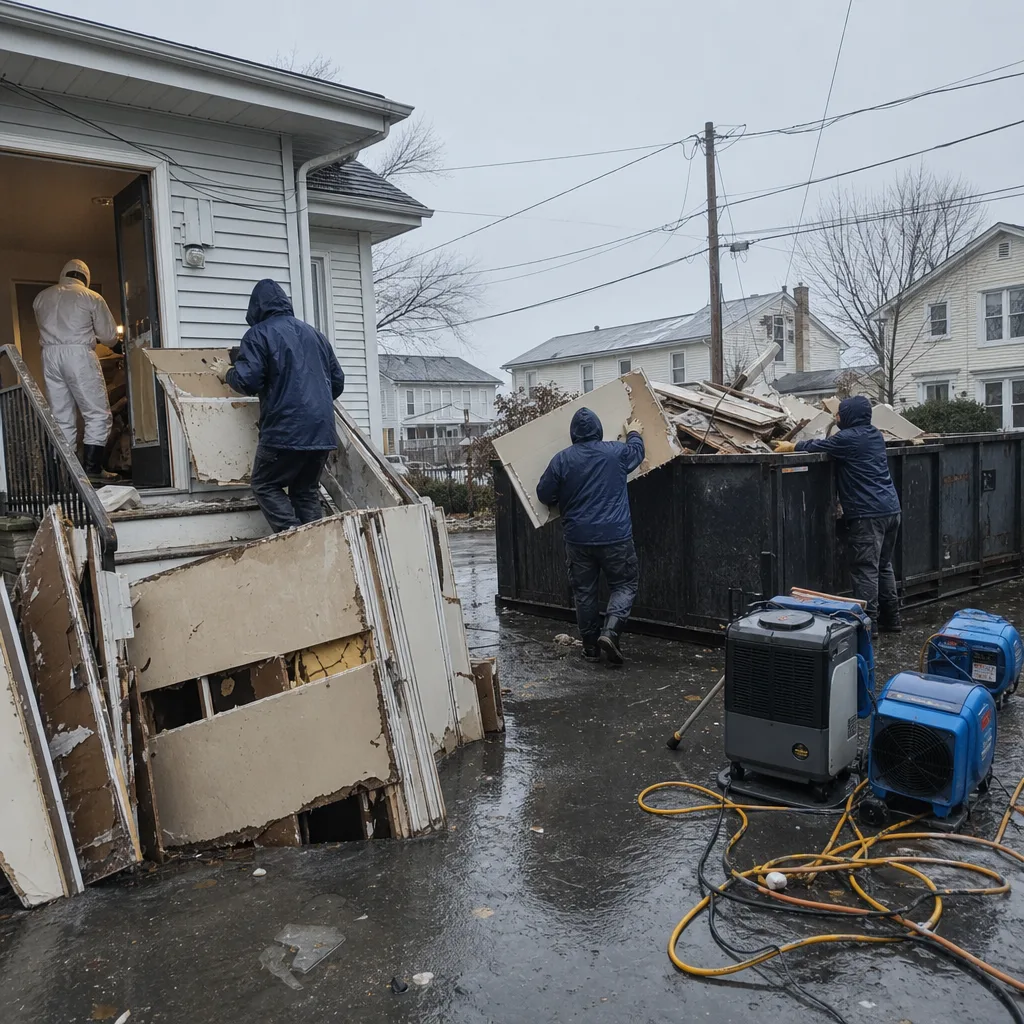
We arrive, walk the damage with you, and use thermal imaging and moisture meters to map water migration. In Jackson Heights co-ops, this includes checking shared corridors, stairwells, and the basement mechanical room, not just the unit where the leak appeared.
Extraction & Stabilization
Water is extracted using truck-mounted and portable units. Wind-damaged openings are secured with emergency board-up or roof tarping the same visit. We stop the loss from spreading before anything else.
Drying & Dehumidification
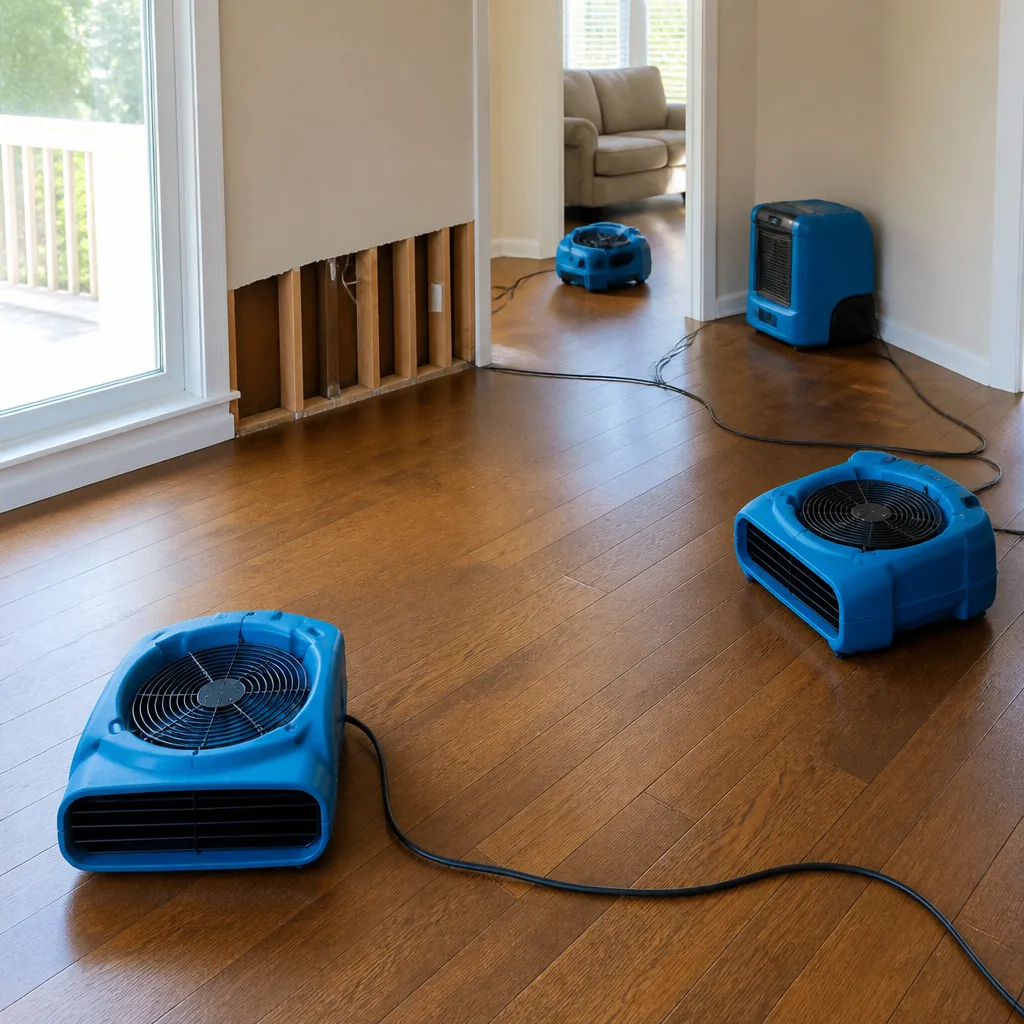
Dri-Eaz and Phoenix air movers and dehumidifiers are placed based on the moisture map, not the visible puddle. In pre-war buildings, we account for thick plaster assemblies that release moisture slowly. Daily readings are logged until dry standard.
Cleaning & Sanitization
Category 3 water gets full antimicrobial treatment. HEPA air scrubbers run where contamination is present. We treat the hidden surfaces: behind baseboards, inside wall cavities, under the stair treads.
Landmark & Permit Coordination
For exterior work within the Jackson Heights Historic District, we coordinate with the NYC Landmarks Preservation Commission for facade, door, and window approvals before restoration proceeds. Interior work continues while approval moves.
Repairs & Restoration
The same crew handles reconstruction: drywall, plaster repair, flooring, trim, paint. Wind-rated door and window replacements are spec’d to meet LPC requirements and the co-op’s master insurance standards. Done right, and backed in writing.
Need Emergency Storm & Disaster Restoration in Jackson Heights Now?
Crews minutes away, answering live 24 hours a day. The sooner we start, the less it costs.
Working With Your Insurance Company
Storm claims in Jackson Heights are not simple. When water moves through a shared wall, two insurance policies are in play: the co-op’s master policy and the unit owner’s HO-6. Our team documents everything from the first hour so both carriers get what they need without you playing messenger. We take photos room by room, log moisture readings daily, and produce a line-item scope that matches industry-standard estimating software your adjuster recognizes. We talk directly with the adjuster, the property manager, and the board when needed. You get a square deal: no surprises on the bill, and no paperwork battles. That is how direct insurance billing should work.
What We Provide Your Insurer
- Thorough documentation of the loss
- Photos of all damage, room by room
- Moisture readings and drying logs
- A detailed, line-item scope of work
- Direct coordination with your carrier
Built for Jackson Heights’s Loss Calendar
Storm damage in Jackson Heights follows a seasonal rhythm, and knowing it helps property owners prepare.
January and February bring freeze-thaw cycles that stress the original 1920s-era flat-roof parapets and courtyard drainage systems. Ice builds, water backs up, and intrusion claims follow. March and April turn snowmelt and spring rain into basement seepage. The aging courtyard sumps, originally designed for a lighter rain load, clog with decades of sediment and back water into shared basements.
Summer thunderstorms hit fast and hard. The combined sewer system that serves the Roosevelt Avenue corridor regularly surcharges under intense downpours, pushing Category 3 black water into below-grade spaces. August and September are nor’easter season, when wind-driven rain and torn doors expose stairwells and corridors. Each season has one thing in common: the faster the response, the less the damage spreads, and the less it costs to make right.
Jackson Heights experiences all of it on buildings that predate modern flood-resistant design by seventy years. That is why our crews keep thermal imaging and moisture meters on every truck and why we answer the phone like the next storm is already on its way.
Storm & Disaster Restoration Across Jackson Heights’s Neighborhoods
The Jackson Heights Historic District, bounded roughly by Roosevelt Avenue, 37th Avenue, 76th Street, and 88th Street, is where we see the most LPC-sensitive work. A storm-damaged exterior door on a 35th Avenue co-op cannot simply be swapped for a modern off-the-shelf unit. The Landmarks Preservation Commission must approve the replacement, and that approval can take time. Meanwhile, the building is exposed. That is why emergency board-up matters so much here: it secures the opening while the LPC process moves.
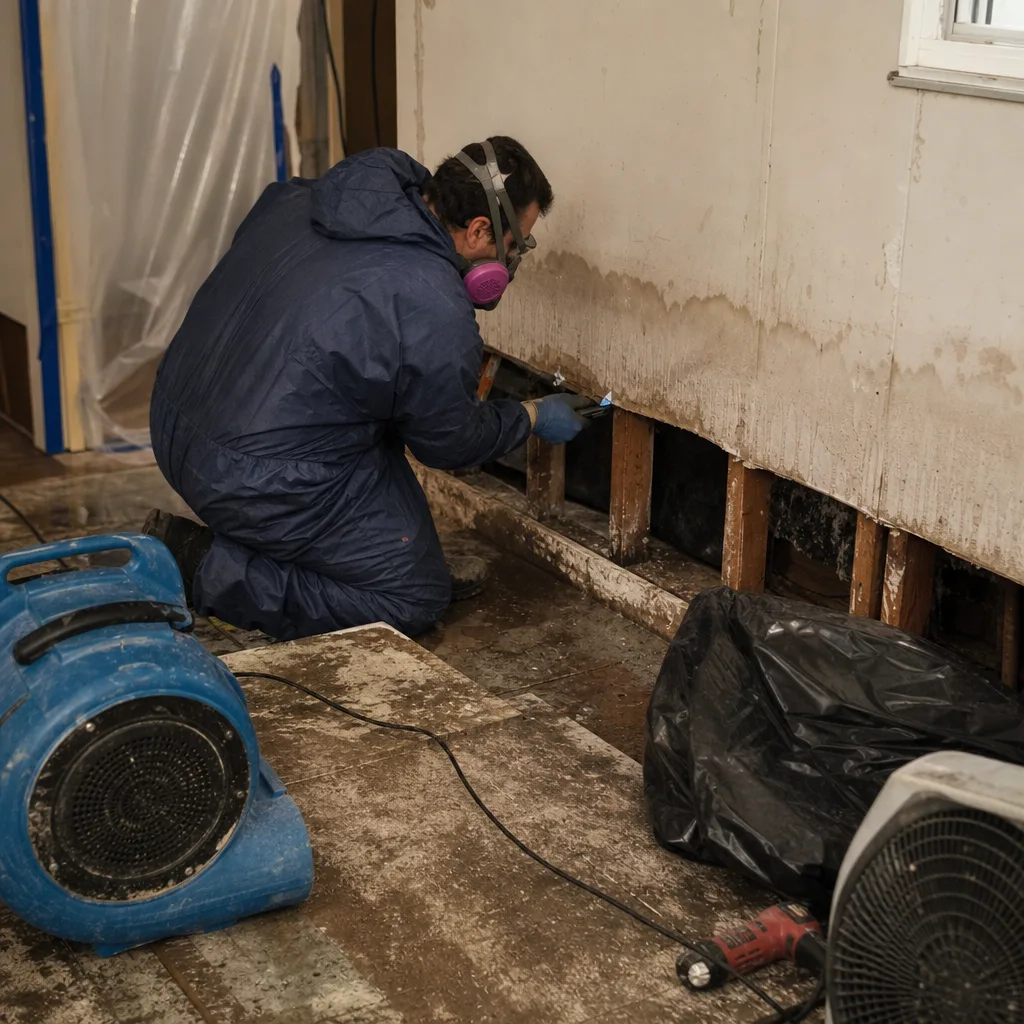
Along the Northern Boulevard corridor, we work on larger pre-war apartment buildings with shared mechanical rooms. A single basement flood here can knock out heat and hot water for dozens of units. Near Junction Boulevard and the 7 train line, ground-floor commercial spaces face a different set of wind and water exposures, with storefront glass that fails under wind load and basement stockrooms that flood when the sewers back up. The Elmhurst border, where building stock shifts younger and rooflines change, presents its own repair patterns. We know the blocks. We know the buildings. We know where the sumps are.
Specialized Storm & Disaster Restoration Services We Offer in Jackson Heights
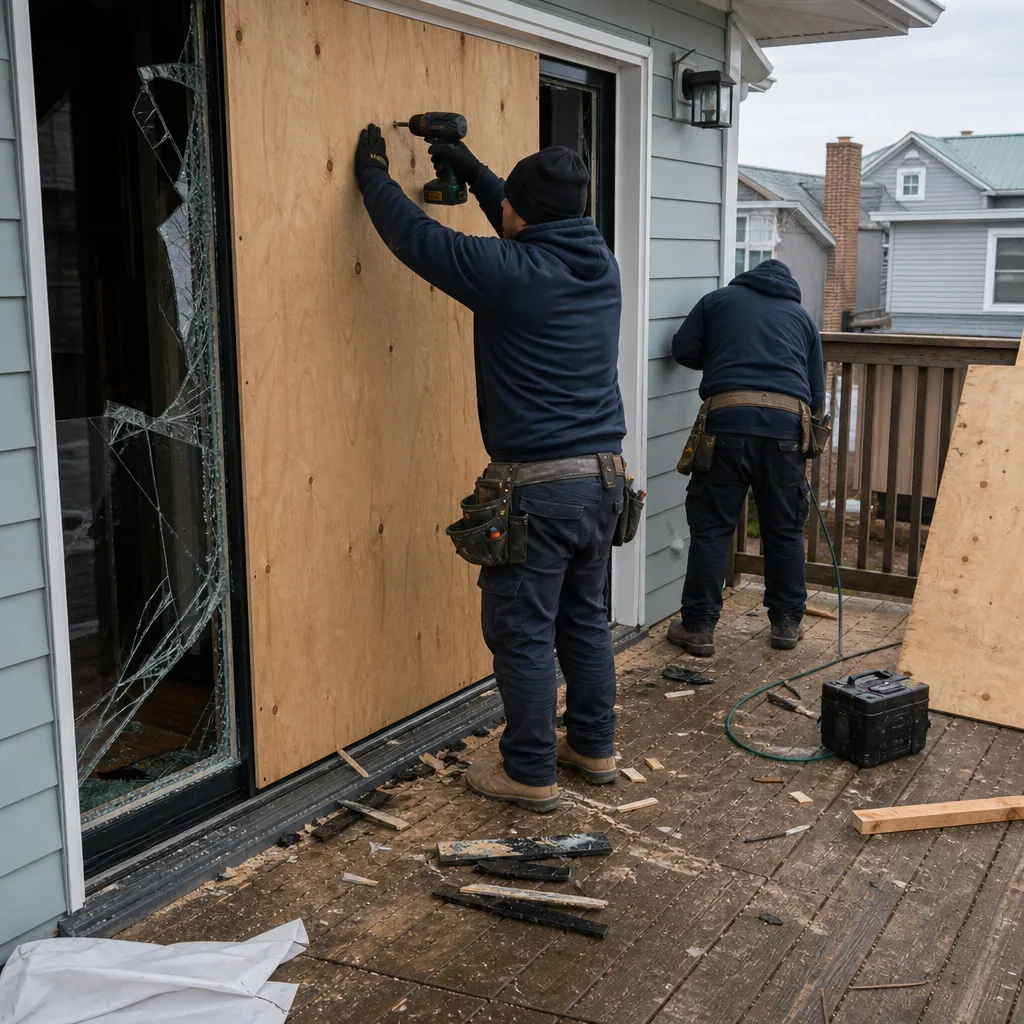
Emergency Board-Up
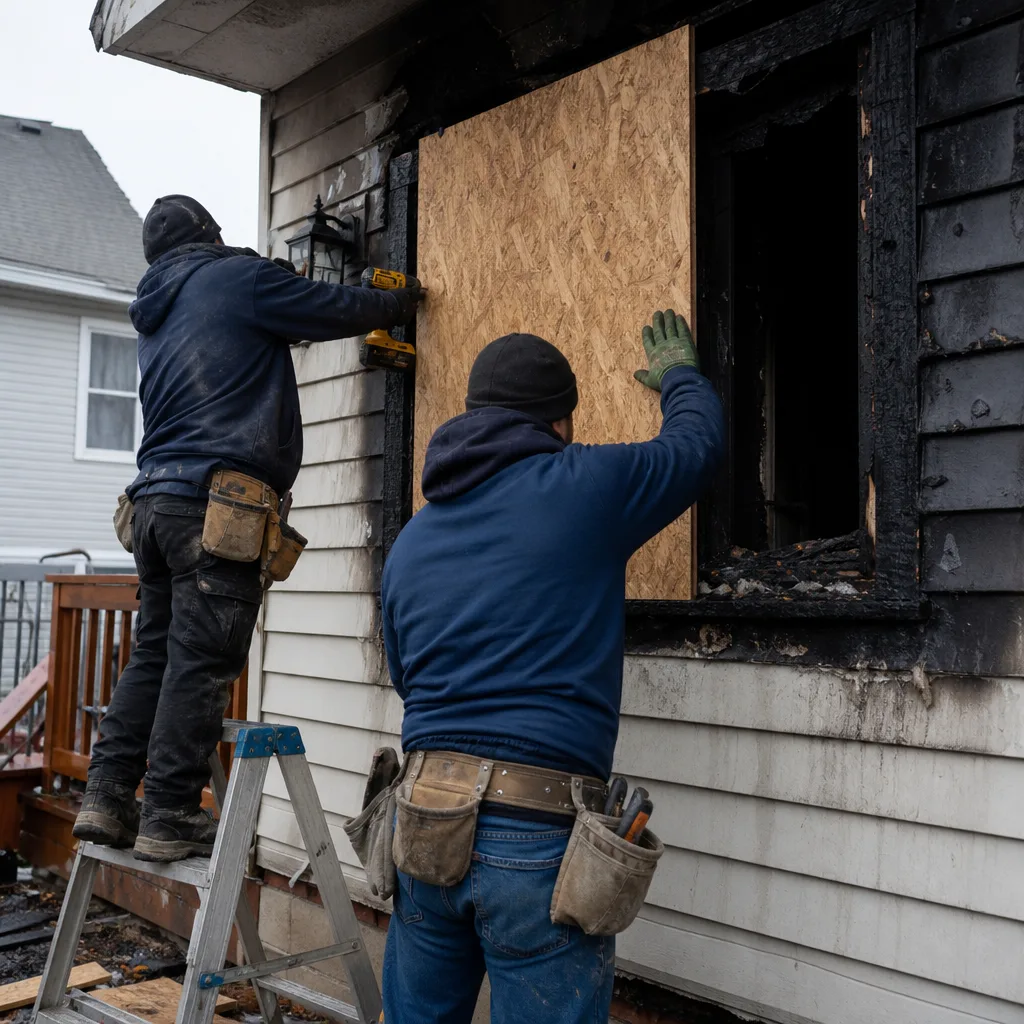
When wind tears a door off or shatters a window in a Jackson Heights co-op, the opening has to be secured immediately. Rain gets in, animals get in, and unsecured buildings attract problems. Our crew arrives with plywood, fasteners, and the equipment to board up any opening same-day. For Historic District buildings, we document the existing condition before boarding so the LPC application has a complete record. We board it the right way the first time, so the building stays secure while approvals move.
Wind Damage Repair
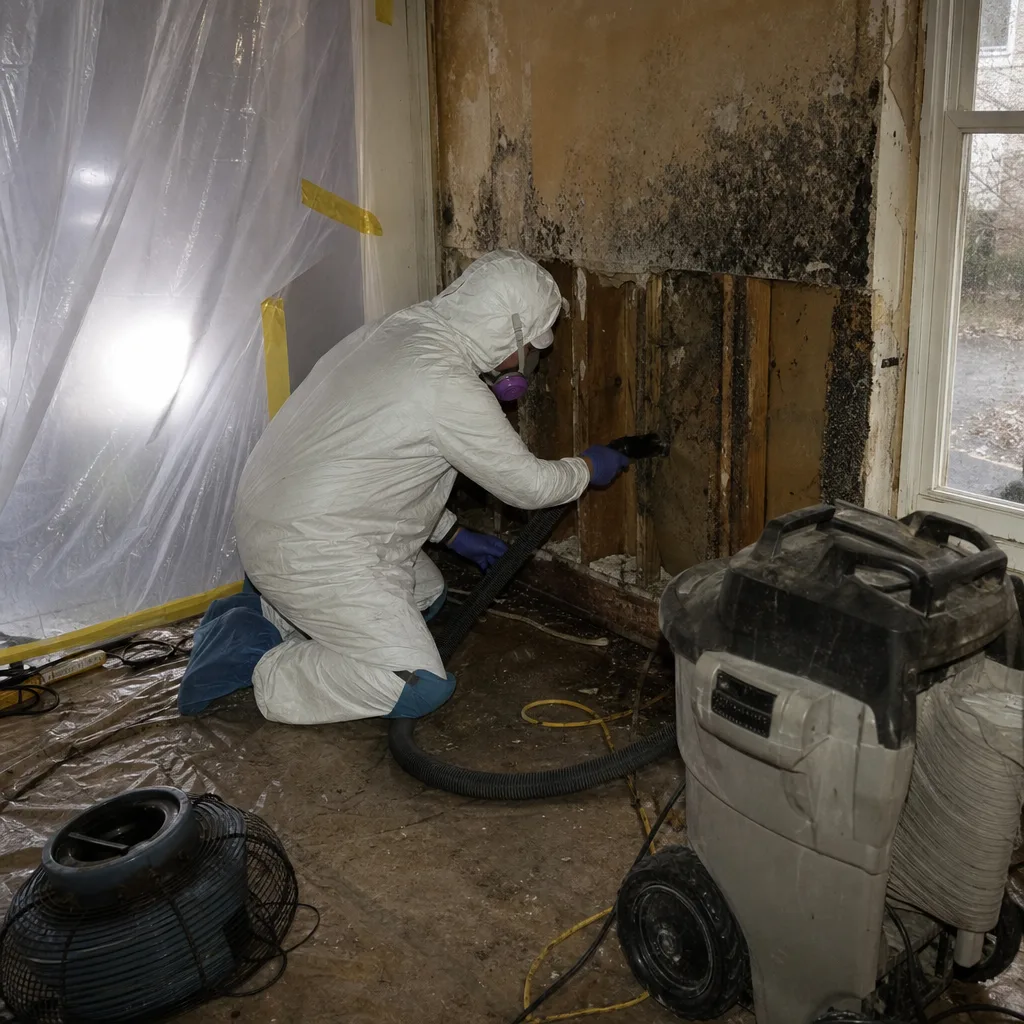
Wind load on 1920s brick garden apartments concentrates on courtyard doors, parapet copings, and original wood window frames. We repair what can be saved and replace what cannot, spec’ing wind-rated products that meet LPC requirements where the district applies. Steam heat and thick plaster complicate repairs inside, so our moisture mapping confirms what is actually wet before we open walls. No unnecessary demolition. No hidden moisture left behind.
Roof Tarping
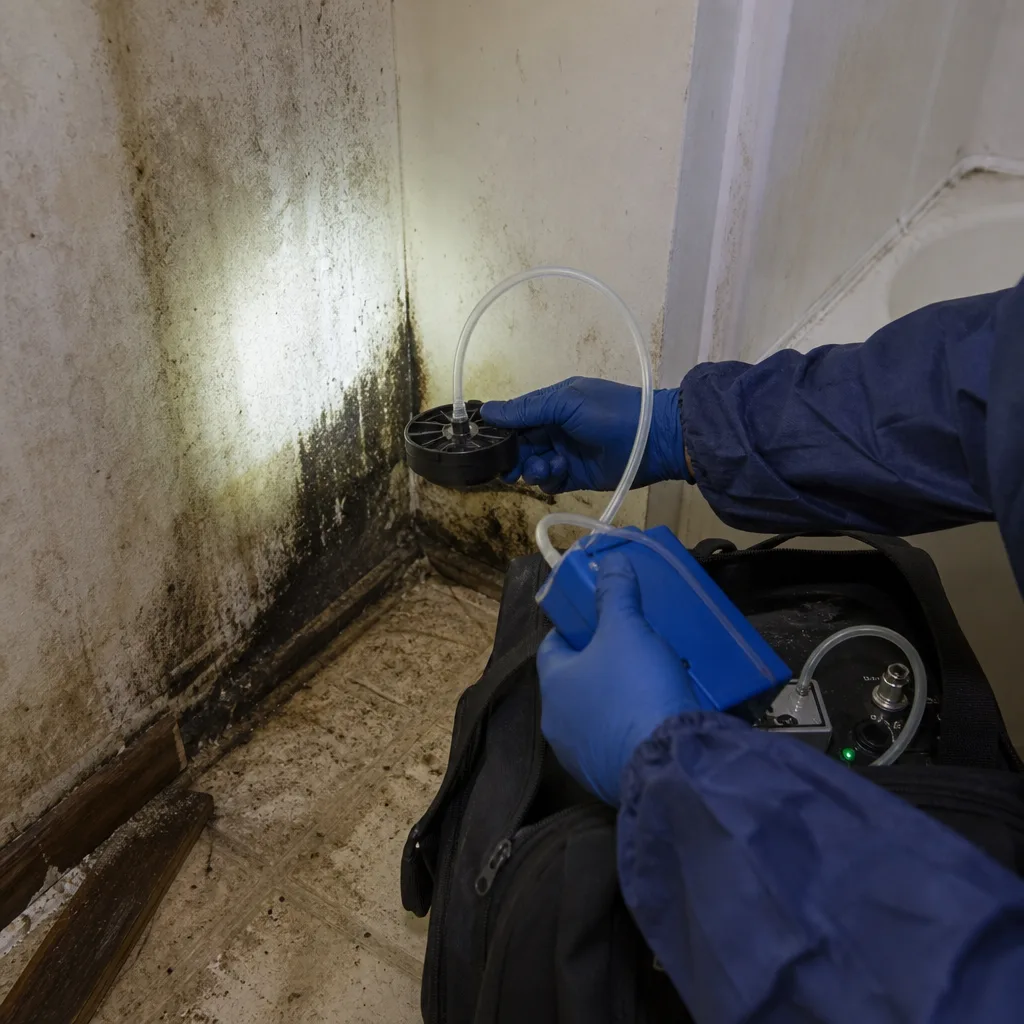
Flat roofs are the norm across Jackson Heights, and wind can peel membrane at the parapet in a single storm. We tarp damaged roof sections the same visit, using weighted and fastened systems that hold through the next storm. The tarp buys time for a permanent repair while keeping the units below dry. We coordinate with the co-op board and their master-policy carrier on the repair scope.
Storm Damage Cleanup
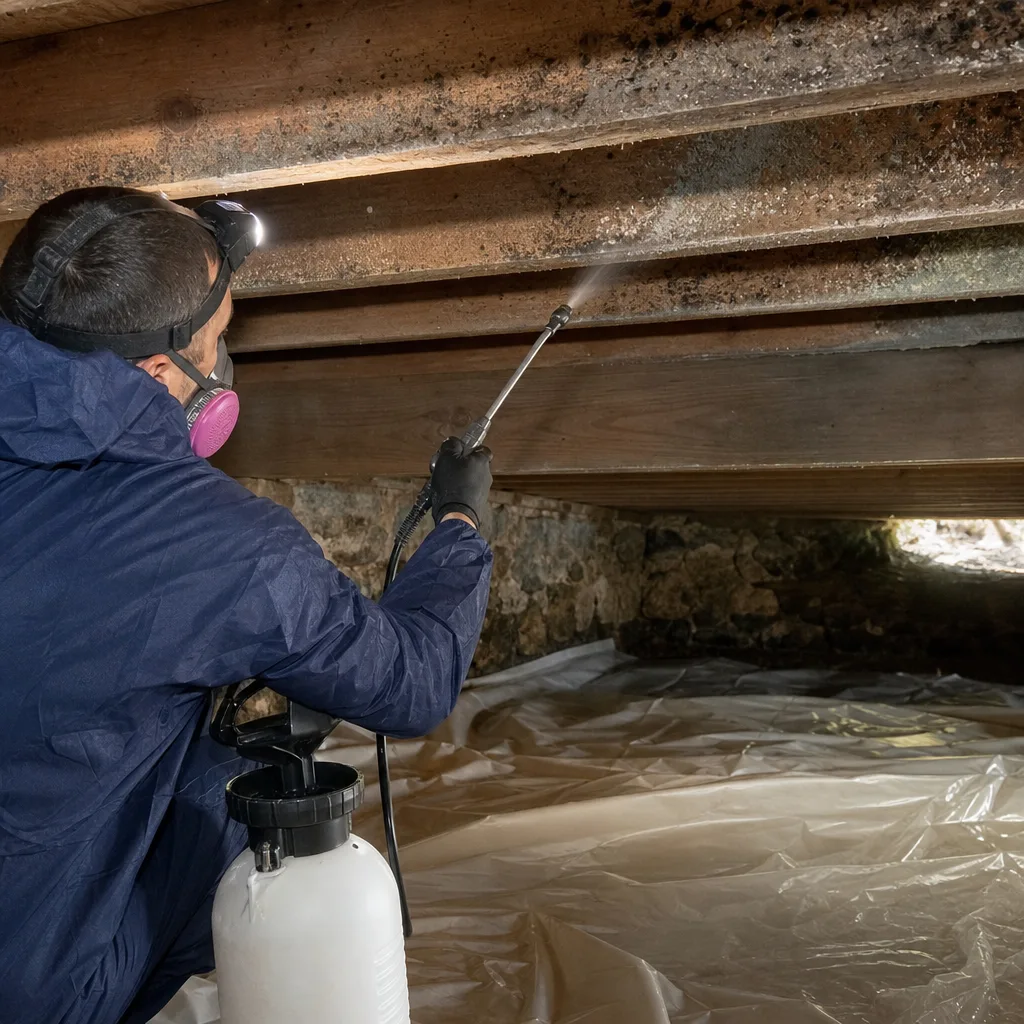
After the water is out and the opening is sealed, the debris remains. Wet drywall, ruined carpet, and storm debris get removed, bagged, and disposed of properly. In pre-war buildings, we watch for lead paint and asbestos in older materials; testing happens before invasive demolition.
Flood Damage Restoration
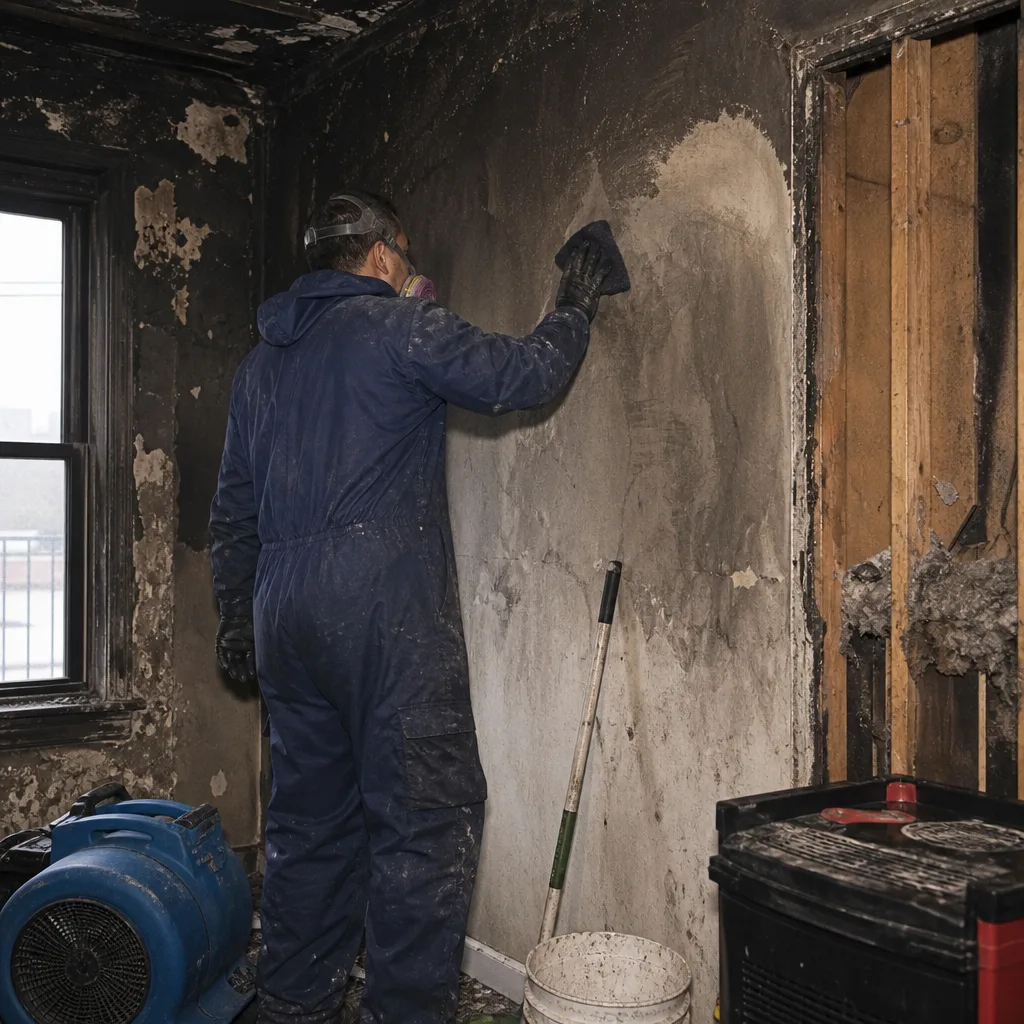
Basement flooding in Jackson Heights is frequently Category 3 black water from sewer surcharge. Full PPE, antimicrobial treatment, and material disposal are not optional. We dry what can be saved and remove what cannot, then rebuild with materials suited to a building that may flood again. This is not a rug-cleaning job.
What happens when you call
- 1
A real person answersNo phone trees - you reach a local pro.
- 2
You get an upfront price rangeHonest numbers before anyone is dispatched.
- 3
A background-checked tech heads outLicensed & insured, dispatched right away.
- 4
You approve before work beginsNothing starts until you say go.
Storm & Disaster Restoration Costs in Jackson Heights, NY
Storm restoration in Jackson Heights runs on a wide range because the building stock varies from single-family homes to multi-unit co-ops with shared systems. A straight emergency board-up of a single window or door typically runs $350 to $650. Roof tarping on a flat pre-war roof starts around $700 to $1,200 for a standard section. Sewage backup extraction and full Category 3 sanitization for a single basement room runs $2,000 to $5,000, depending on how much drywall and flooring must be removed. Full storm restoration involving multiple rooms, structural drying, and rebuild work runs $8,000 to $25,000 or more when LPC approvals and co-op coordination extend the scope.
What moves the price: the water category, whether plaster assemblies must be opened, how many rooms are involved, and whether the loss spans common areas that trigger co-op master policy work. Insurance covers most storm losses, minus your deductible. The free visual inspection gives you a written scope and firm numbers before you authorize anything. Call (518) 800-3751 and get a real number, not a guess.
We Also Serve Cities Near Jackson Heights
Floodline Restoration Co. runs storm damage crews to Jackson Heights and the surrounding Queens neighborhoods every day. We answer live in East Elmhurst, Elmhurst, Corona, and Maspeth, with the same 45-minute response commitment and the same written 90-Day Done Right Promise. Storm water does not respect city lines, and neither do our dispatch routes.
Serving Jackson Heights, NY - Our Local Coverage Area
We’re based in the Jackson Heights area and know this community well. Use the map below to see our service coverage - if you’re nearby, we can almost certainly help.
Jackson Heights Storm & Disaster Restoration Questions, Answered
Do I need Landmarks Preservation Commission approval to replace a storm-damaged exterior door on my Jackson Heights co-op?
Yes, if your building is within the Jackson Heights Historic District, any exterior door, window, or facade work requires LPC approval before permanent replacement can proceed. Emergency board-up can go in immediately to secure the opening. We document the pre-existing condition, coordinate the LPC application, and spec a replacement that meets both LPC standards and the co-op master insurance requirements. The board-up holds while approval moves.
How does the co-op insurance structure affect my Jackson Heights storm damage restoration?
When a storm loss affects your unit interior, your HO-6 policy responds. When water or wind damage extends to shared corridors, stairwells, the roof, or mechanical rooms, the co-op’s master policy comes into play. Both carriers need documentation from the first hour. Floodline Restoration Co. coordinates with both sides, provides photos and drying logs to each, and bills directly so you do not carry paperwork between insurers.
What makes storm water in Jackson Heights basements more dangerous than ordinary rain flooding?
The combined sewer system underlying the Roosevelt Avenue and Junction Boulevard corridors surcharges during heavy rain, meaning sewage backs up into basement drains. That is Category 3 black water, not clean rainwater. It requires full PPE, antimicrobial treatment, and disposal of saturated materials. Anyone entering that water without proper protection risks serious infection. Call a certified crew before going in.
Why is emergency board-up so critical for the 1920s courtyard buildings here after a wind event?
A torn courtyard door or broken window in a 1920s Jackson Heights garden apartment exposes not just the unit but the shared stairwell or corridor behind it. Rain gets in, and wind pressure worsens the damage. Because LPC approval is required before permanent replacement in the Historic District, the board-up may hold for weeks. It has to be done properly, with documentation, so the building stays secure and the claim stays clean.
Can your crew dry out a Jackson Heights co-op basement without ripping out the original plaster walls?
Often, yes. Our moisture mapping shows exactly where water has migrated inside the plaster-and-lath assembly. If the plaster is still sound and readings show drying is achievable, we use Injectidry systems and targeted dehumidification to dry in place. If the plaster has delaminated or is contaminated with Category 3 water, it must come out. The point is we open only what the moisture map says needs opening.
How fast can you actually reach a Jackson Heights address after a storm?
Most Jackson Heights addresses are reached within 45 minutes of the first call, around the clock. We stage crews across Queens so a nor’easter at 3 a.m. gets the same response as a summer thunderstorm at noon. Call (518) 800-3751, and a live dispatcher gives you a real arrival window.
Will insurance cover my Jackson Heights storm damage restoration?
Most storm losses are covered under either your HO-6 policy or the co-op master policy, depending on where the damage occurred. We document everything from the first hour and bill the carrier directly. You pay the deductible; we handle the adjuster. Ask for our free inspection, and we will walk you through what your policy covers before any work begins.
What should I do in the first 30 minutes after storm damage in Jackson Heights?
Call (518) 800-3751. Then, if it is safe, shut off power to wet areas. Do not enter standing water in a basement or mechanical room, especially after a sewer surcharge. Do not open walls or try to dry things yourself; improper drying hides problems that turn into mold within 48 hours. Take photos from a safe distance, then let the crew do the rest.
When a nor’easter tore a second-floor courtyard door off its hinges at a co-op on 35th Avenue, our crew arrived within the hour. We performed emergency board-up that held through the next storm, then worked with the building’s property manager to spec a wind-rated replacement that met both LPC and the co-op master insurance requirements. Our moisture mapping confirmed no water had migrated into the shared stairwell, and the drying logs we produced kept the board and unit owners’ carriers aligned. That is the job done right, with no loose ends.
If storm damage has found your Jackson Heights apartment, co-op, or commercial space, call Floodline Restoration Co. at (518) 800-3751. A live person answers, a certified crew responds, and the work is backed by the 90-Day Done Right Promise, in writing. We stand behind it.
Written by Curt Bowman, Owner at Floodline Restoration Co., serving Jackson Heights and the surrounding Queens communities.