
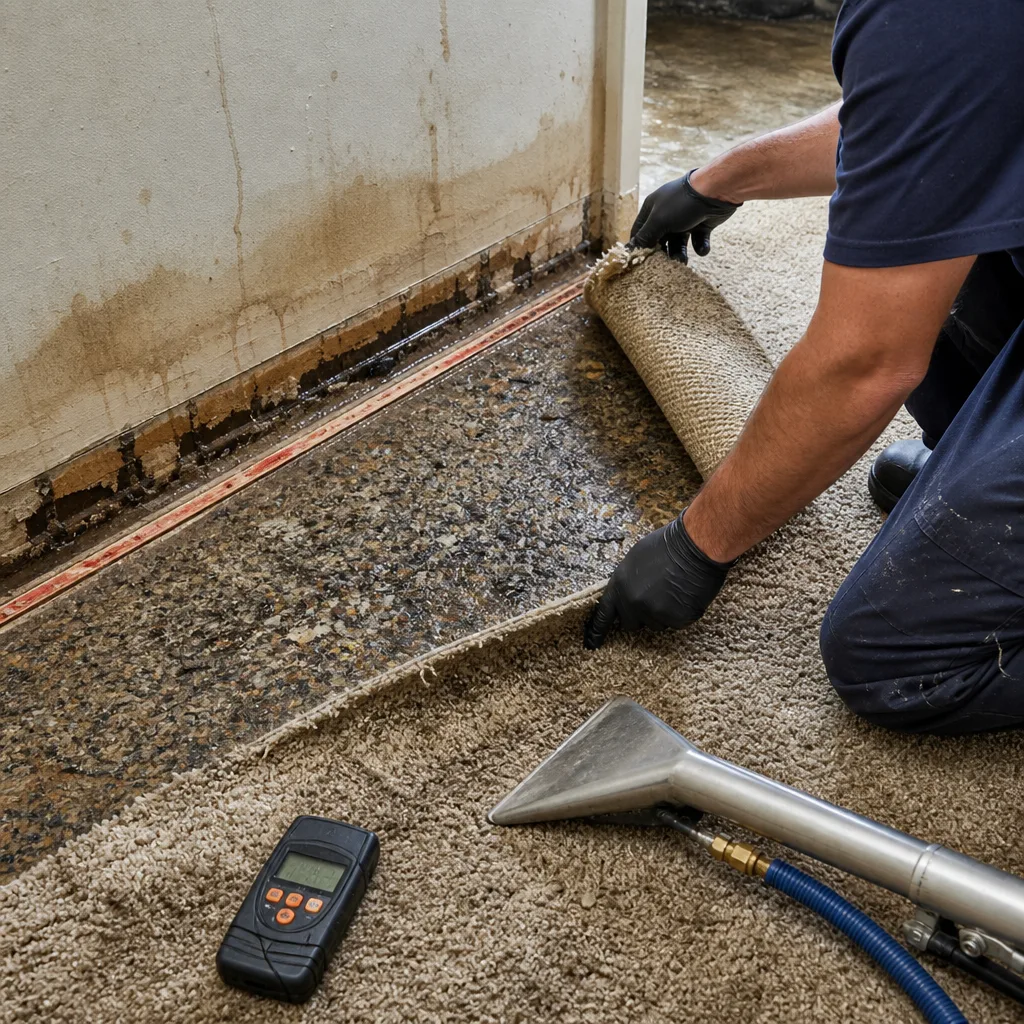
Free visual inspection and a written scope of work before any mitigation begins - photos, moisture readings, and drying logs go in your claim file
The scope we write is the scope we bill. Anything new gets shown to you, in writing, before we touch it.
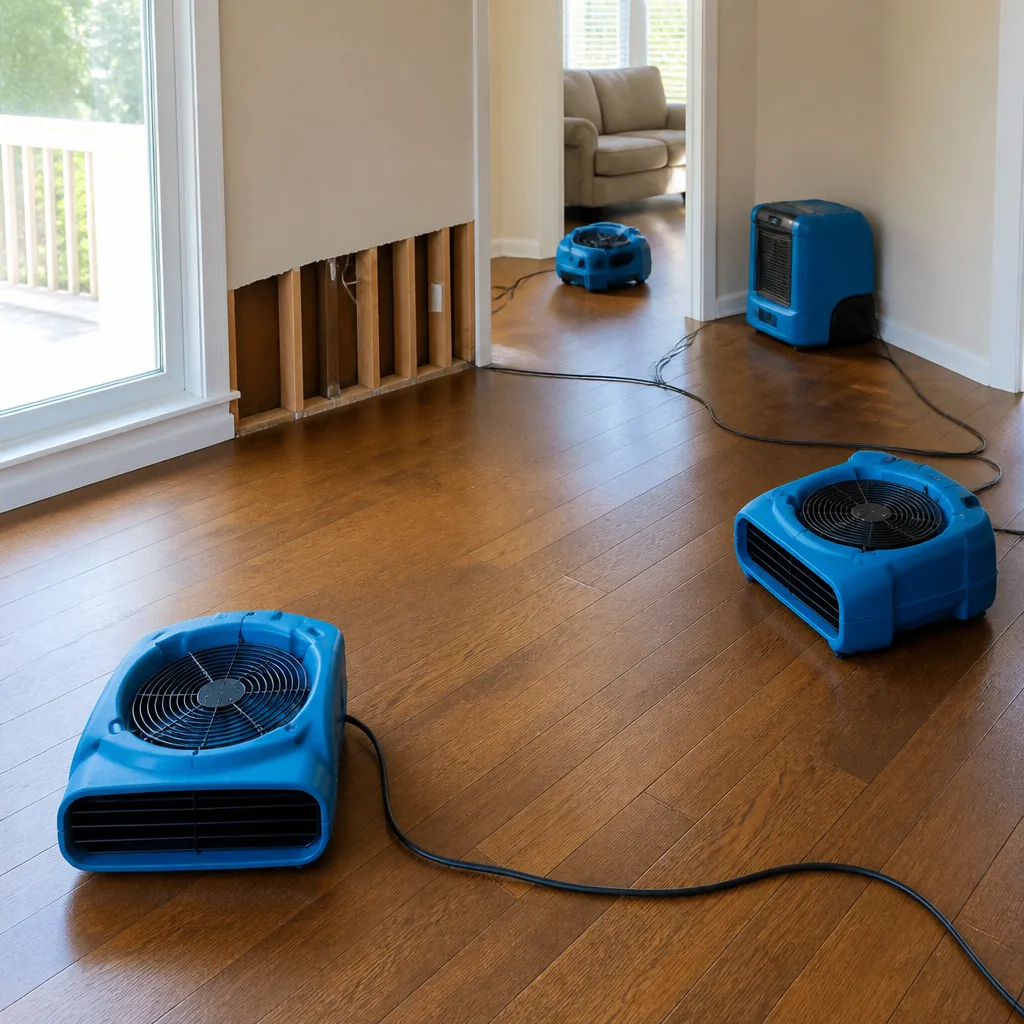
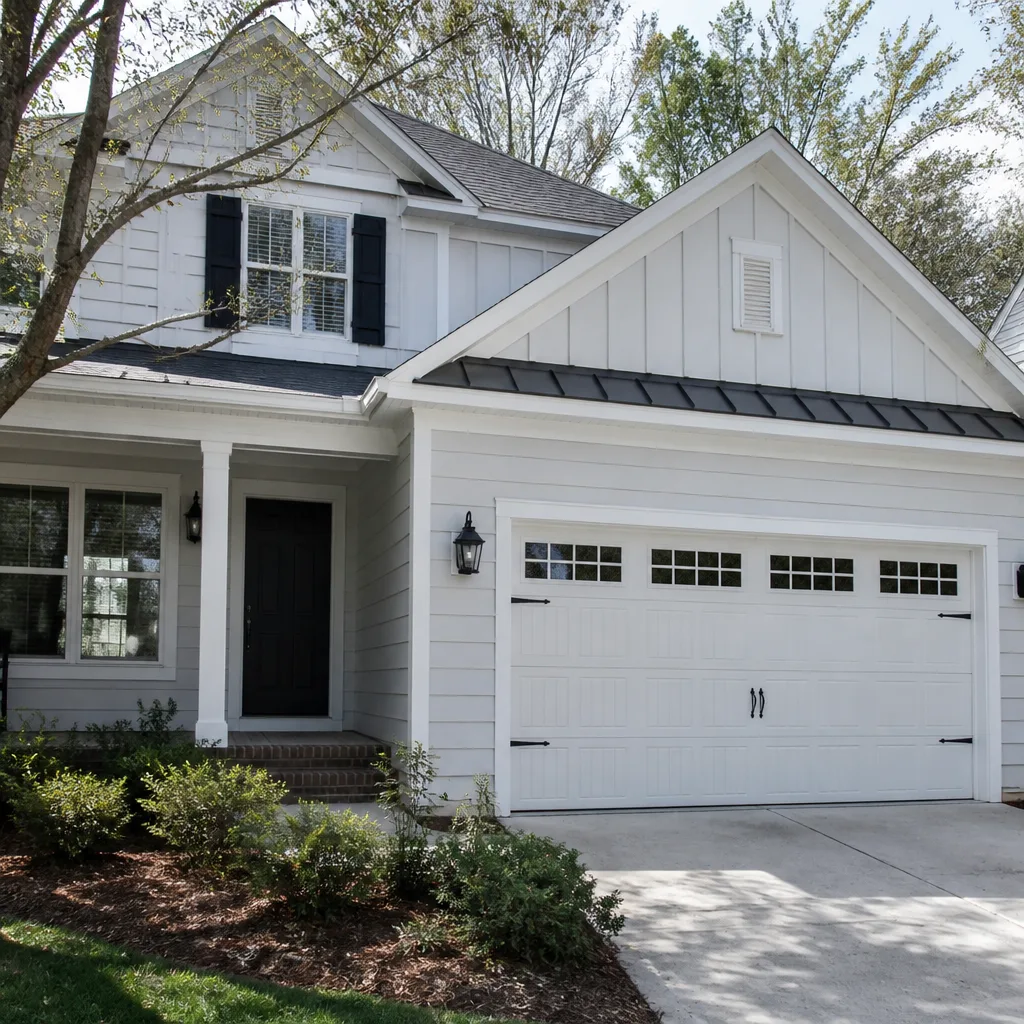
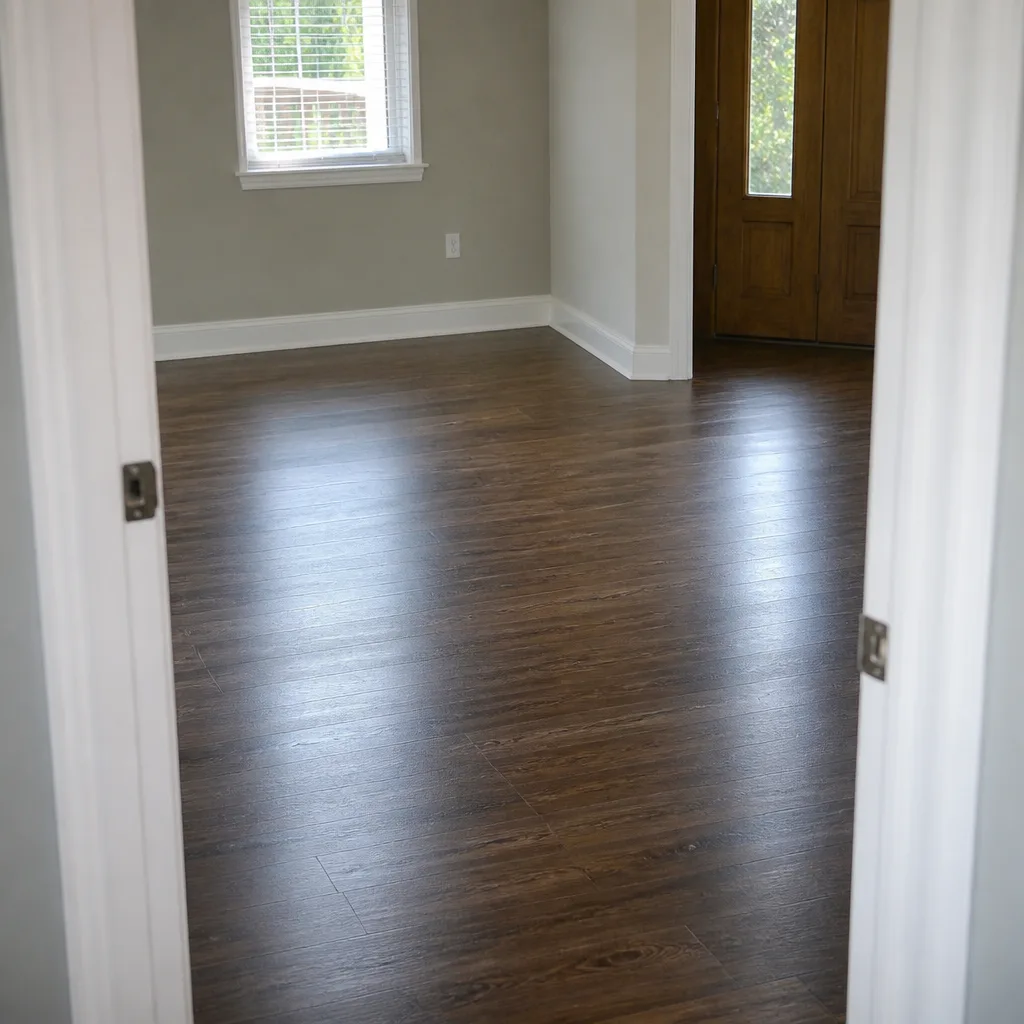
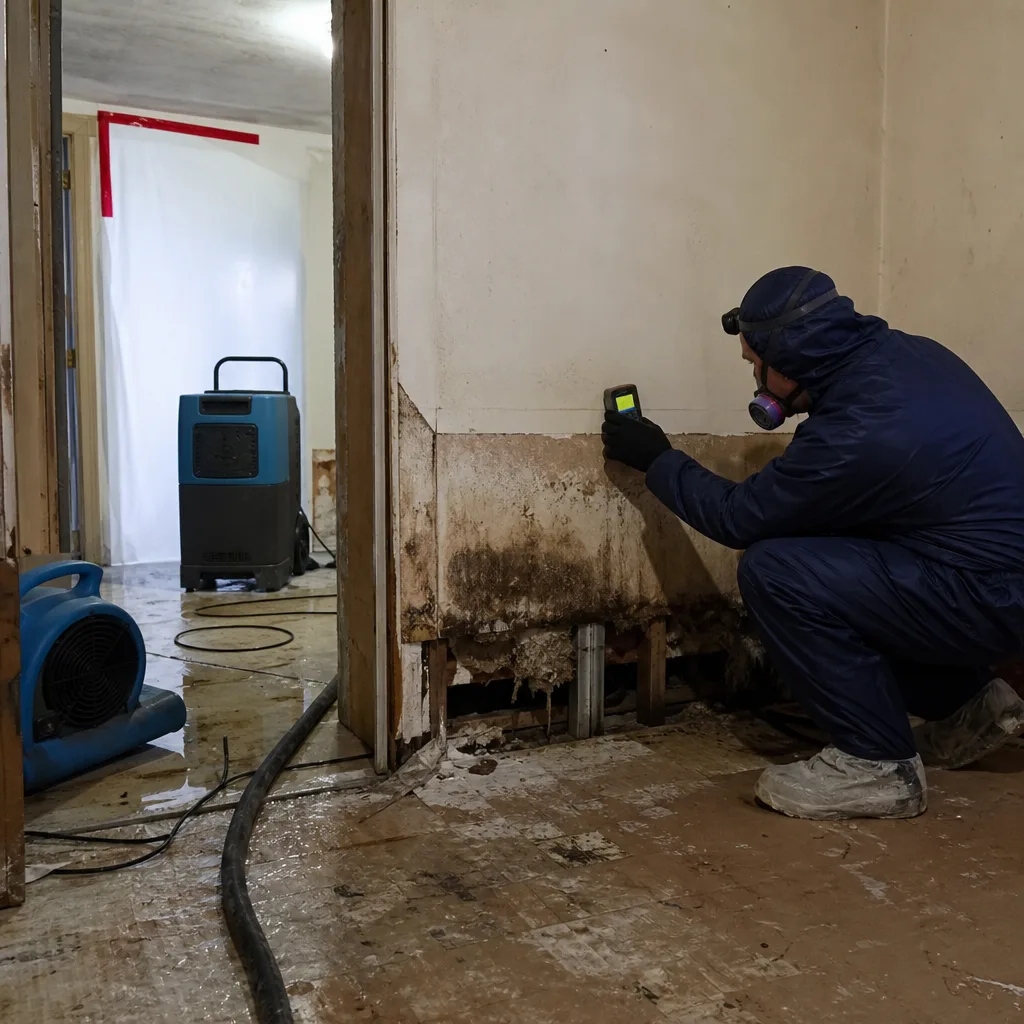 Before
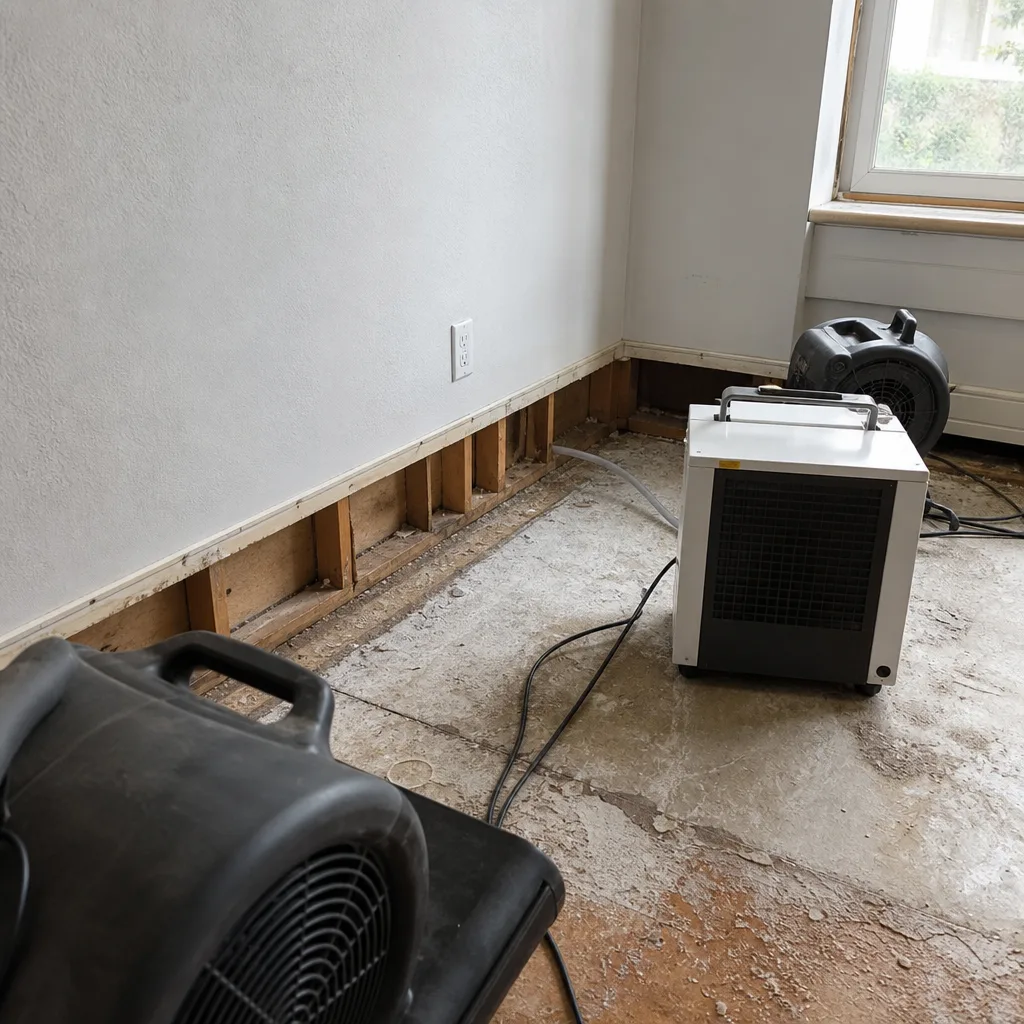 After
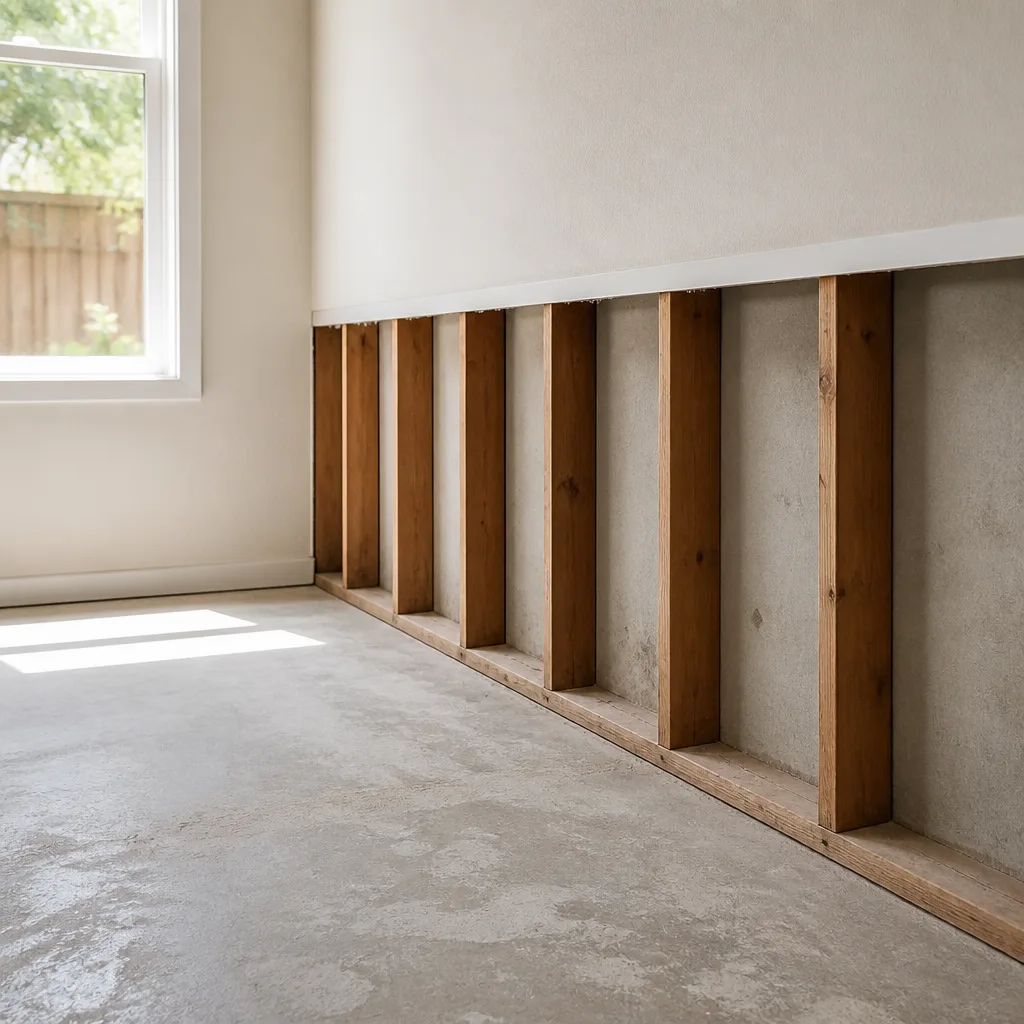
After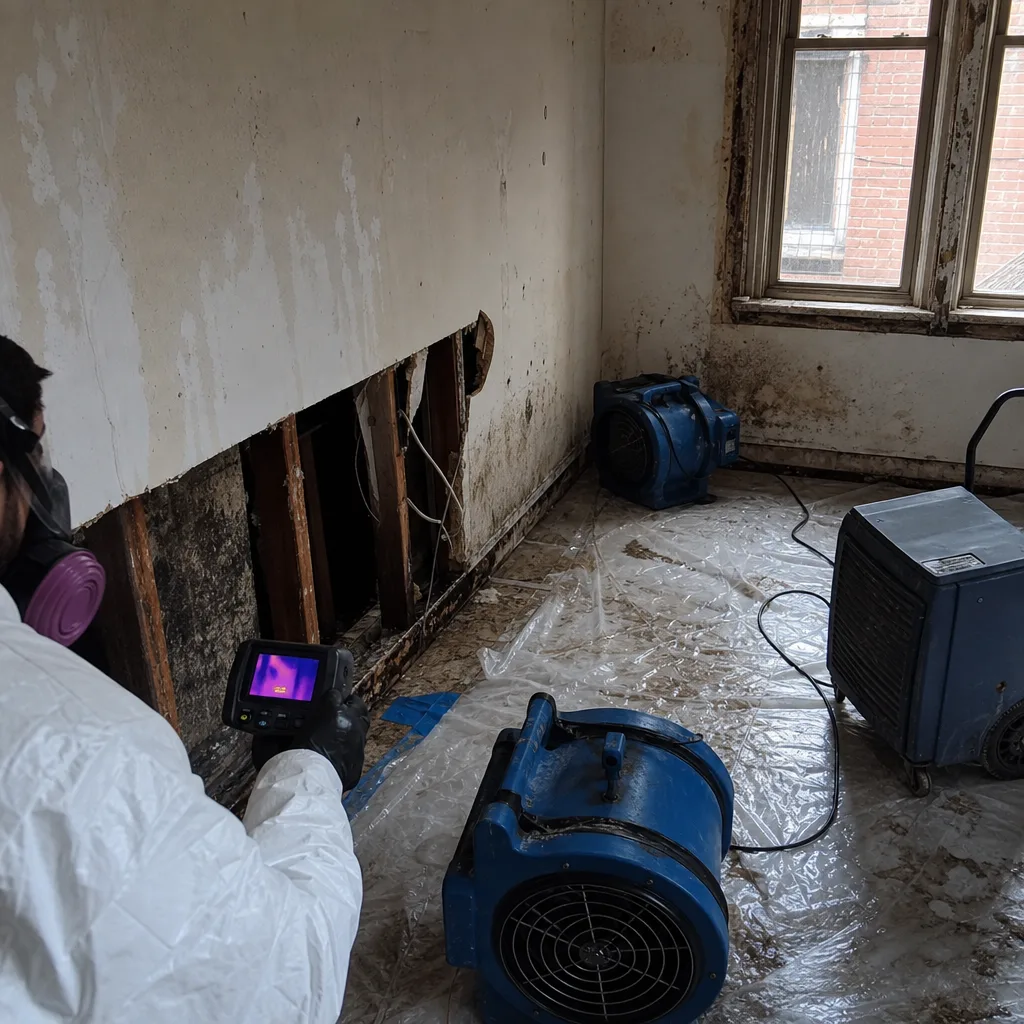 Before
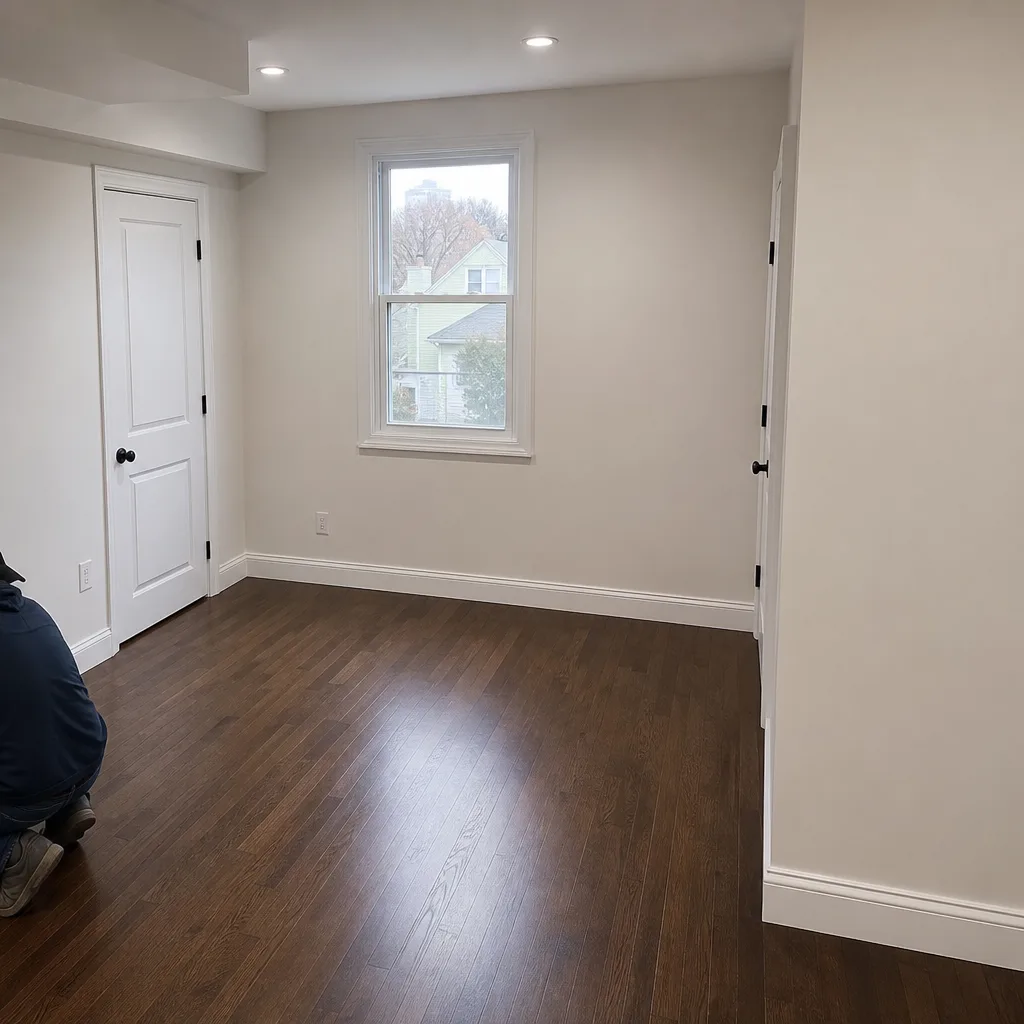 After
After24/7 Emergency Water Damage Restoration in Elmhurst
Water damage restoration in Elmhurst starts with one call to (518) 800-3751. Our crews are dispatched from within the Queens metro and reach most Elmhurst blocks within 45 minutes, any hour, any day. The first hour matters because water moves fast through 1920s brick row construction: through plaster, under baseboards, across shared party walls into the neighboring unit. We answer live, not with a recording. A certified technician arrives the same visit, runs a free visual inspection, and gets extraction running before the water has time to do permanent work on your framing. If you’re standing in a basement in ZIP code 11373 watching a sewer line back up through a floor drain, that call is the only thing between you and a Category 3 loss that crosses into your neighbor’s foundation.
Understanding Water Damage Restoration Severity in Elmhurst Properties
The IICRC classifies water by contamination level. Category 1 is clean supply water, like a burst copper line under a kitchen sink. Category 2 carries significant contamination; think washing machine discharge or sump pump overflow. Category 3, often called black water, is grossly contaminated: raw sewage, floodwater from the street, anything the combined sewer system just pushed back into your basement. Elmhurst sees more Category 3 than almost any other loss type. The neighborhood’s combined sewer mains, designed for a pre-WWII population, surcharge under modern rainfall intensity. When that happens, floor drains in older attached and semi-detached brick homes reverse. The water coming up isn’t just wet. It’s biohazardous. Restoration for Category 3 requires containment, antimicrobial treatment, and disposal of affected porous materials. Our crews carry hygrometers and thermal imaging cameras on every job. We don’t guess at moisture. We map it, including inside the wall cavities where cast-iron drains from the 1920s sit hidden behind lath and plaster.
Why Elmhurst Property Owners Choose Floodline Restoration Co.
- 45-minute response commitment. Live dispatch sends the nearest certified crew to Elmhurst immediately, not after a call-back.
- A real person answers, 24/7. No phone tree. A dispatcher who knows the Queens grid picks up at 2 a.m. and starts the job.
- IICRC-certified crews. Technicians trained to WRT and ASD standards handle the water side; AMRT-certified techs handle the mold that follows sewage.
- Free visual inspection. A technician walks the loss with you, shows you the moisture map, and explains the scope before any work is authorized.
- Direct insurance billing. We send the documentation, photos, and line items to your carrier and deal with the adjuster. You don’t play messenger.
- One team from extraction to reconstruction. The same crew that pulls water on day one handles drying logs and, if needed, rebuilds the wall they opened.
Our Water Damage Restoration Process
Inspection & Assessment
We locate the water source, classify it (Category 1, 2, or 3), and run thermal imaging across the affected interior, including shared party walls on attached and semi-detached Elmhurst homes.
Extraction & Stabilization
Submersible pumps and truck-mounted extraction units pull standing water. We prioritize basements and below-grade spaces, where finished and semi-finished legal units add square footage to the loss.
Drying & Dehumidification
Professional-grade Dri-Eaz and Phoenix air movers and dehumidifiers are placed to create airflow through cavities, not just across visible surfaces. Daily readings are logged until the dry standard is met.
Cleaning & Sanitization
For Category 3 losses, containment is set before contaminated drywall and flooring are removed. Antimicrobial treatments stop pathogen spread and prep surfaces for drying.
Moisture Verification
Final hygrometer readings and thermal scans confirm the structure meets the dry standard. We hand you and your carrier a written moisture log.
Repairs & Restoration
Our own crews rebuild what was removed: drywall, insulation, flooring, trim, paint. Done right, and backed in writing by the 90-Day Done Right Promise.
Need Emergency Water Damage Restoration in Elmhurst Now?
Crews minutes away, answering live 24 hours a day. The sooner we start, the less it costs.
Working With Your Insurance Company
Most Elmhurst homeowner policies cover sudden and accidental water damage, including burst pipes and sewer backup if the rider is present. The carrier’s adjuster decides what’s covered. Our job is to make sure they’re deciding with full information. From the first hour, we photograph every room, log moisture readings throughout the drying cycle, and write a line-item scope that follows industry-standard estimating formats. We talk to adjusters directly. When a claim is disputed, the documentation we built from day one is what supports your position. Water Damage Restoration claims in Queens get scrutinized for pre-existing conditions; our daily drying logs and photo records answer those questions with evidence, not argument.
What We Provide Your Insurer
- Thorough documentation of the loss
- Photos of all damage, room by room
- Moisture readings and drying logs
- A detailed, line-item scope of work
- Direct coordination with your carrier
Built for Elmhurst’s Loss Calendar
Elmhurst has three active loss seasons, and a different failure mode leads each one. January and February: deep freezes burst original galvanized supply lines in uninsulated 1920s exterior walls. The break often happens inside the shared wall cavity, so the first sign is water bleeding through a neighbor’s ceiling, not your own. March and April: snowmelt and spring rain saturate the flat, low-drainage terrain, and basement seepage through original brick foundations picks up after every thaw. July through September: convective summer storms overwhelm the combined sewer mains, and raw sewage backs up into basement units across ZIP codes 11373 and 11380. Add a nor’easter any month and you get the same result. If you own a two- or three-family brick row home here, the question isn’t whether water will find a way in. It’s whether the response is fast enough to keep it from crossing a party wall. Our dispatch board is built around exactly this calendar. We know when Elmhurst gets hit, because we’re already getting the calls from Corona, Jackson Heights, Maspeth, and East Elmhurst.
Water Damage Restoration Across Elmhurst’s Neighborhoods
The blocks around Grand Avenue and Queens Boulevard carry the densest concentration of attached brick two-family homes in the neighborhood. When a sewer line backs up near Grand Avenue, the loss typically involves two finished basements, not one. East of Broadway, the semi-detached stock is slightly wider, but the original cast-iron drain stacks usually run through shared foundations, so a backup in one side still threatens the other. Around the Elmhurst Hospital complex and down toward the Long Island Expressway, newer infill construction mixes with pre-war rows; we adjust drying strategies for different wall assemblies, but the party-wall moisture check stays standard on every attached structure. The blocks between Roosevelt Avenue and 45th Avenue include a high percentage of informal basement units. That’s not a code judgment; it’s a damage square footage reality. A Category 3 backup in one of those basements means pack-out, containment, and drying of occupied living space, not just a crawlspace.
Specialized Water Damage Restoration Services We Offer in Elmhurst
Emergency Water Extraction
Standing water in a 1920s brick row basement doesn’t wait. We run truck-mounted extraction on arrival and submersible pumps for deeper flooding. The goal in the first hour is simple: remove water faster than it can migrate through plaster, mortar, and the shared party wall.
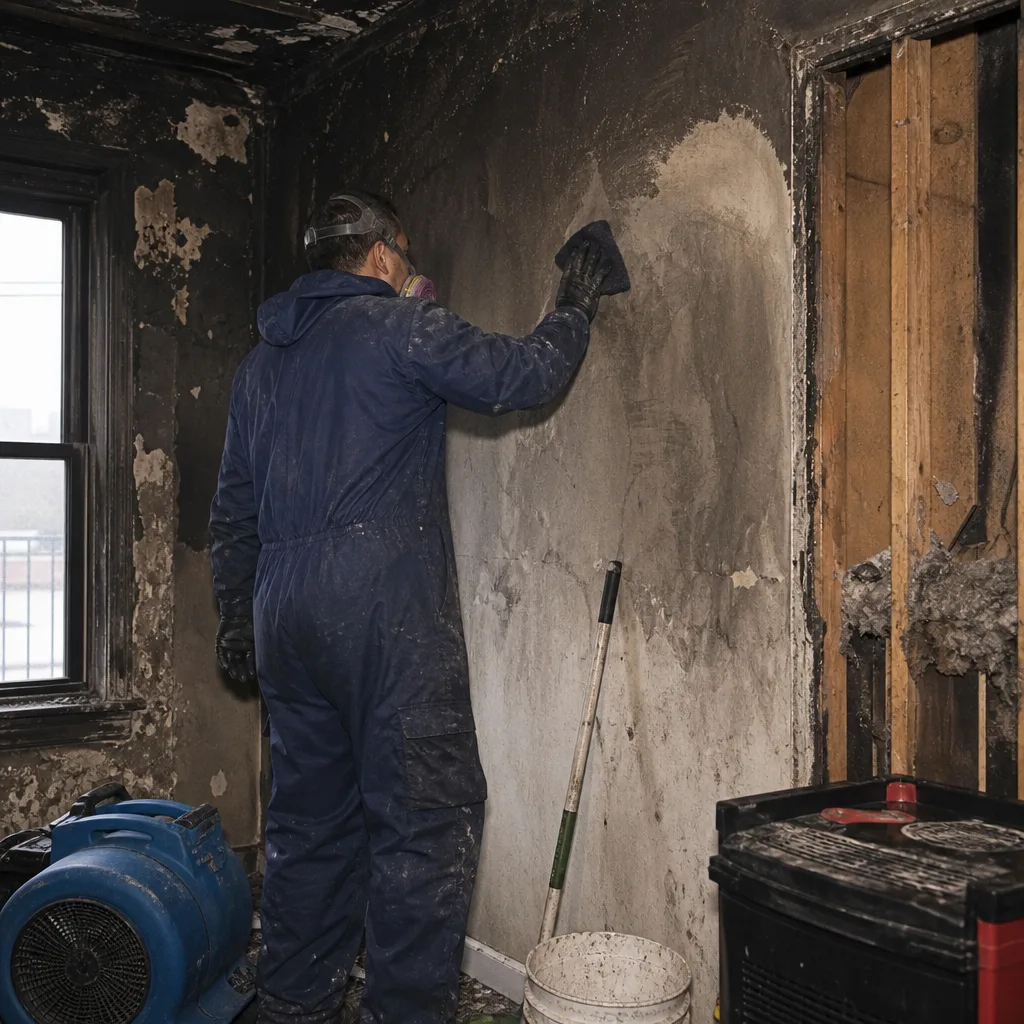
Structural Drying & Dehumidification
Drying an Elmhurst basement means drying cavities you can’t see. We place Dri-Eaz and B-Air air movers to force airflow into wall cavities, behind base cabinets, and under finished flooring. Daily hygrometer readings establish the dry standard. We don’t declare a structure dry because the visible surface feels dry. We prove it with a log.
Flood Cleanup
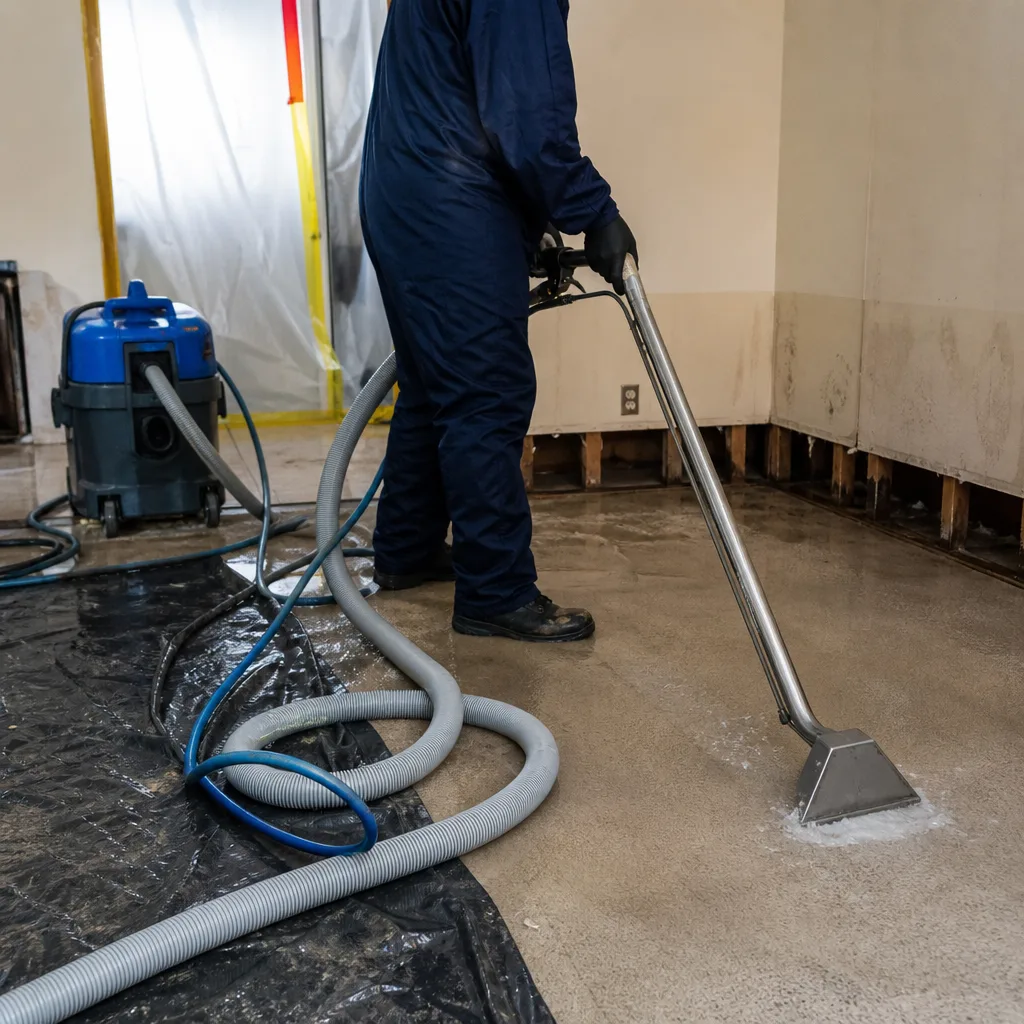
Street-level floodwater in Elmhurst is Category 3 by definition, contaminated with whatever the combined sewer system just released. Flood cleanup here includes containment, antimicrobial treatment, removal of affected drywall and flooring, and drying to an IICRC dry standard. This is not a mop-and-bucket job.
Burst Pipe Restoration
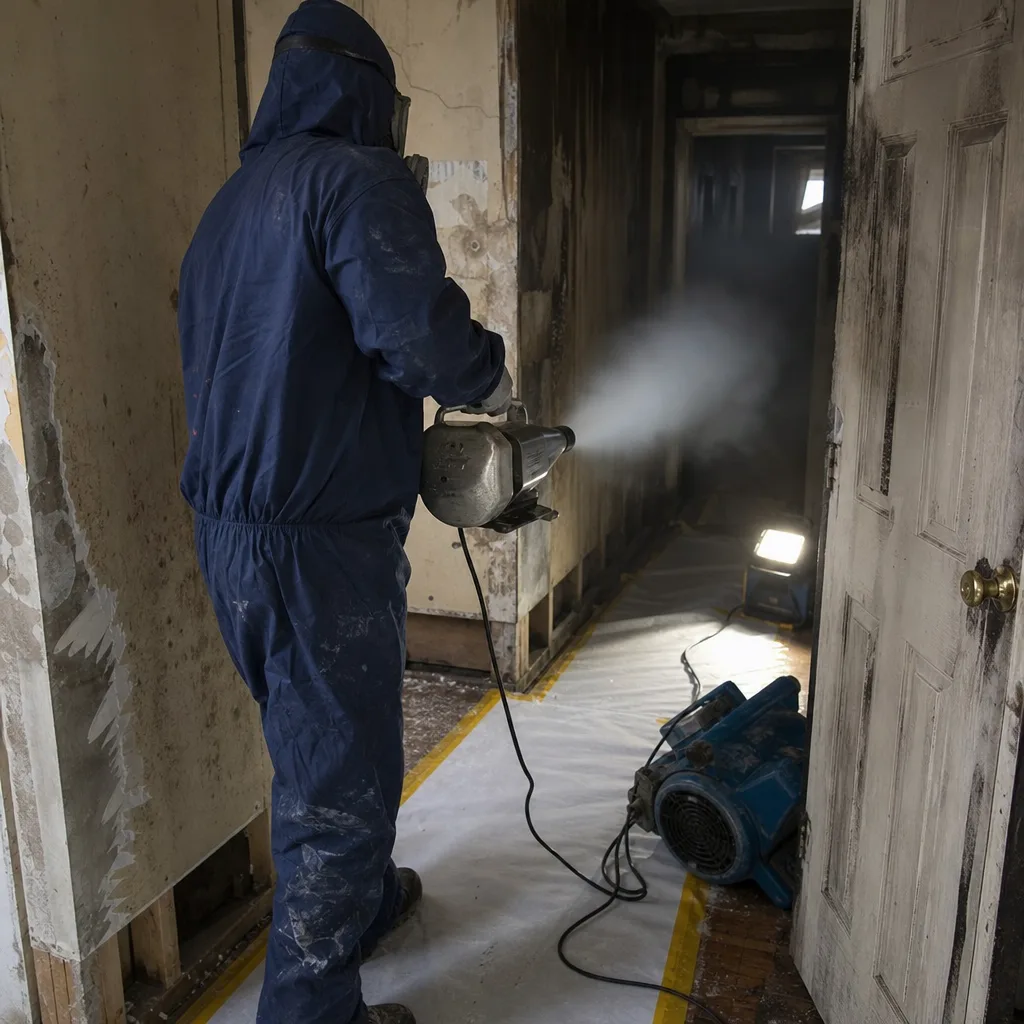
A frozen supply line in an uninsulated 1920s exterior wall can soak two units before the first drop is visible. Our crews locate the break, cut water, and dry the entire affected assembly, including the other side of the party wall. We coordinate directly with your plumber if the pipe repair requires one.
Basement Water Removal
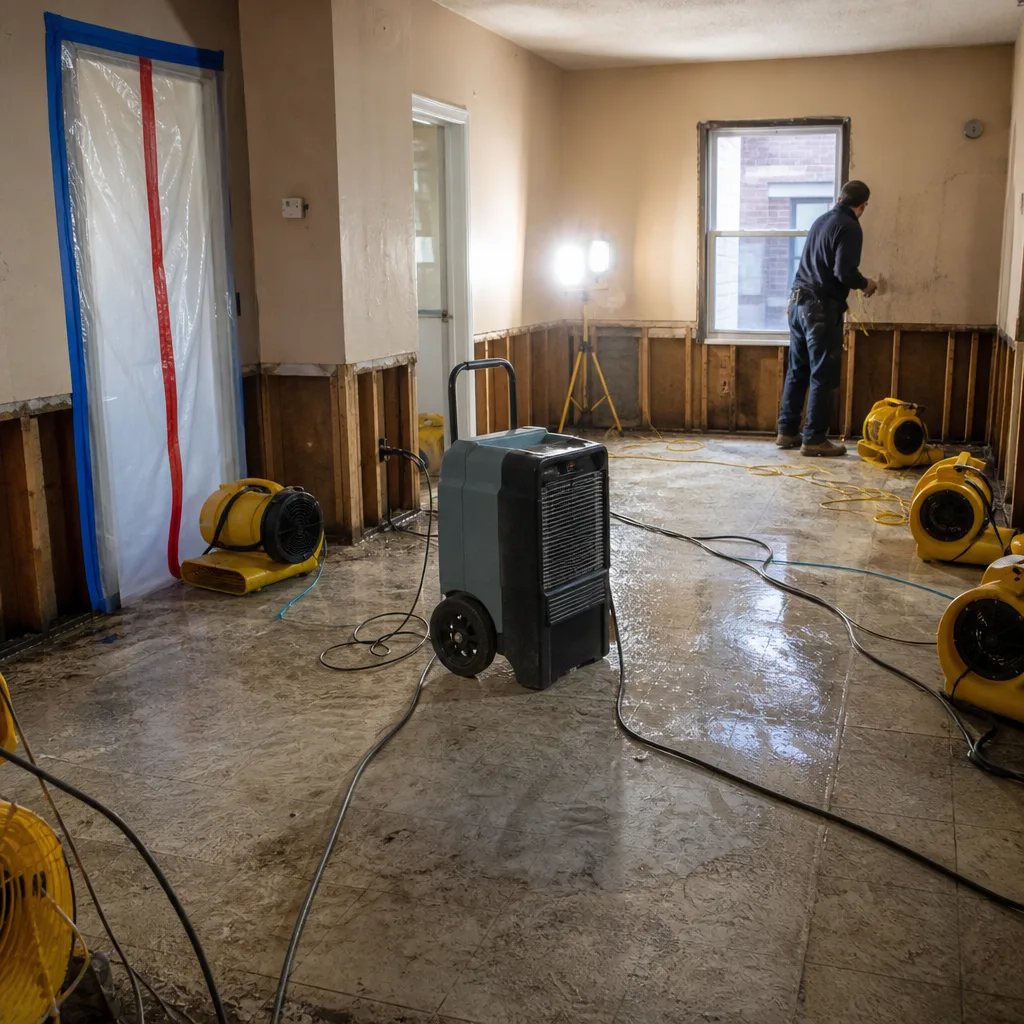
Finished and semi-finished basement units are the single most vulnerable space in Elmhurst’s housing stock. We remove water, salvage what can be saved, and document what cannot for your carrier. Where a finished basement was soaked in Category 3 water, the pack-out and tear-out scope is written before work starts.
Ceiling & Roof Leak Water Damage
Flat and low-slope roofs on 1920s brick rows leak differently than pitched suburban roofs. Water travels along joist bays and appears on a ceiling far from the penetration point. We trace the path with thermal imaging, dry the affected bay, and prevent the hidden mold growth that starts within 48 hours on damp drywall.
What happens when you call
- 1
A real person answersNo phone trees - you reach a local pro.
- 2
You get an upfront price rangeHonest numbers before anyone is dispatched.
- 3
A background-checked tech heads outLicensed & insured, dispatched right away.
- 4
You approve before work beginsNothing starts until you say go.
Water Damage Restoration Costs in Elmhurst, NY
What you pay depends on the water category, the square footage, and whether we catch the moisture before it crosses a party wall. A typical Category 1 or 2 basement extraction in Elmhurst runs $2,100 to $4,800. A Category 3 sewage backup with full containment and pack-out starts around $4,500 and commonly reaches $9,000 to $15,000 when two finished basement units and shared wall cavities are involved. Structural drying-only scopes on a visible burst pipe job often land between $1,800 and $3,400. If the damage is extensive enough to require reconstruction, that portion is a separate line-item scope, priced in writing before work begins. Homeowner policies usually cover the mitigation portion when the loss is sudden and accidental; sewer backup coverage depends on your specific rider. We inspect free, write the scope, bill your carrier directly, and give you the 90-Day Done Right Promise in writing. Call (518) 800-3751 and a tech will give you an exact quote, not a range.
We Also Serve Cities Near Elmhurst
Our crews respond to water damage in Elmhurst and the surrounding Queens neighborhoods every day. That includes Corona, Jackson Heights, Maspeth, and East Elmhurst. Same 45-minute response, same certified crews, same 90-Day Done Right Promise.
Serving Elmhurst, NY - Our Local Coverage Area
We’re based in the Elmhurst area and know this community well. Use the map below to see our service coverage - if you’re nearby, we can almost certainly help.
Elmhurst Water Damage Restoration Questions, Answered
How fast can mold grow on wet drywall in an Elmhurst basement after a sewer backup?
Mold can begin growing on wet drywall within 48 hours when Category 3 water has saturated the material and the basement sits at typical Elmhurst summer humidity levels. In winter, the timeline extends slightly but only where temperatures stay low. Since sewage water introduces both moisture and organic material, we treat the 48-hour window as a hard deadline, not a guideline. That’s why our crews run extraction and begin containment on the first visit. If you wait four days, the drywall almost certainly needs replacement. Call (518) 800-3751 and we’ll start the clock in your favor.
Why do Elmhurst water damage jobs often involve the neighbor’s house too?
Because the 1920s brick party walls that divide attached and semi-detached homes have no vapor barrier and no fire stop. Moisture from one unit passes directly through the masonry and into the next structure. A crew that only dries the visible loss side leaves the neighbor’s wall cavity saturated. That’s why our inspection step always includes thermal imaging on both sides of the shared wall when accessible. In Elmhurst, a single-unit water loss is often physically a two-unit drying job.
What is the difference between Category 1, 2, and 3 water in an Elmhurst flood?
Category 1 is clean supply water from a burst pipe or faucet. Category 2 is significantly contaminated, like washing machine overflow or sump pump discharge. Category 3 is grossly contaminated and includes raw sewage and street-level floodwater. In Elmhurst, combined sewer surcharging during heavy rain pushes Category 3 water directly into basements through floor drains. Category 3 requires containment, antimicrobial treatment, and a more aggressive tear-out scope.
Do Elmhurst row homes require special containment for basement water extraction?
Yes, when the water is Category 3 or when mold growth is already present. We set plastic containment and negative air pressure before disturbing sewage-soaked drywall or flooring. This keeps airborne contaminants from spreading through the rest of the house and, critically, into the shared cavities that connect to the adjoining unit. Standard Category 1 extractions do not need full containment, but every job gets a moisture-mapped drying plan.
What does a typical Elmhurst sewage backup mitigation include?
Extraction of standing Category 3 water, containment setup, removal of affected drywall and flooring, antimicrobial application, structural drying with daily moisture readings, and final documentation to your insurance carrier. If the backup crossed into an attached neighbor’s wall cavity, the scope expands to include that side. We write the full scope and price before work begins. You sign the scope; the carrier sees the same line items.
How long does drying and remediation take after an Elmhurst water loss?
Most Category 1 and 2 extractions dry within 3 to 5 days. Category 3 losses with full containment and pack-out usually run 7 to 14 days. The variable is the party wall. If moisture crossed into the neighbor’s assembly, the drying cycle extends. We’ll give you a written dry standard and update the daily log until it’s met.
Can we stay in the house during water damage restoration in Elmhurst?
For a Category 1 kitchen or bathroom loss, usually yes. For a Category 3 sewage backup in a finished basement, we recommend no one occupy the affected floor until containment is up and contaminated material is removed. If the loss affects the only legal unit in a two-family and that unit is where you sleep, we’ll tell you plainly if you need to relocate. We also document everything for the carrier’s loss-of-use coverage when applicable.
What should I do in the first 30 minutes after discovering water damage in Elmhurst?
Shut off the water source if it’s safe and you know where the valve is. Do not enter standing Category 3 water with bare skin. If you suspect sewage, keep children and pets away completely. Cut power to the affected level if the breaker panel is dry and accessible. Call (518) 800-3751. A live dispatcher answers and gets a certified crew moving toward your block. Kill the water input, call us, and document with your phone camera. Skip the home-remedy drying attempts. A box fan is not structural drying.
Written by Curt Bowman, Owner at Floodline Restoration Co., providing water damage restoration to Elmhurst and Queens property owners since 2010.