
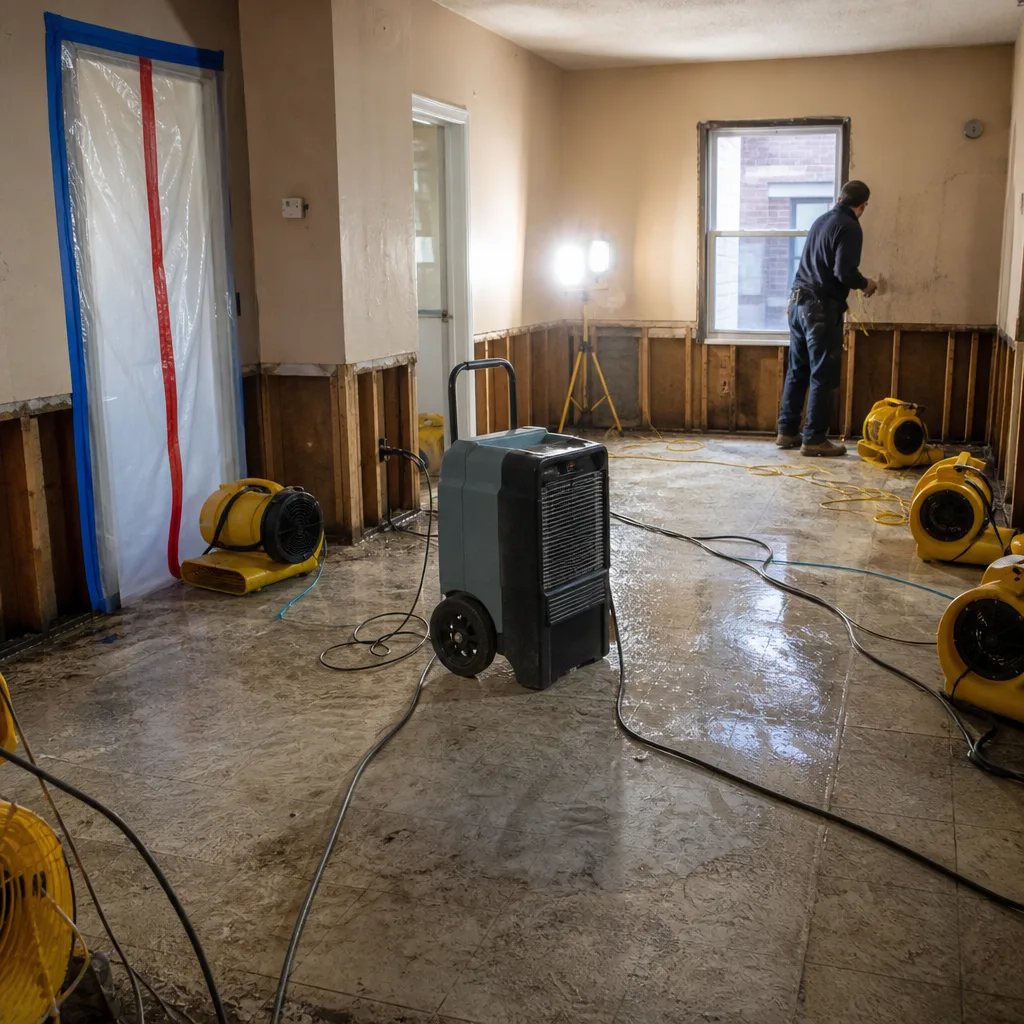
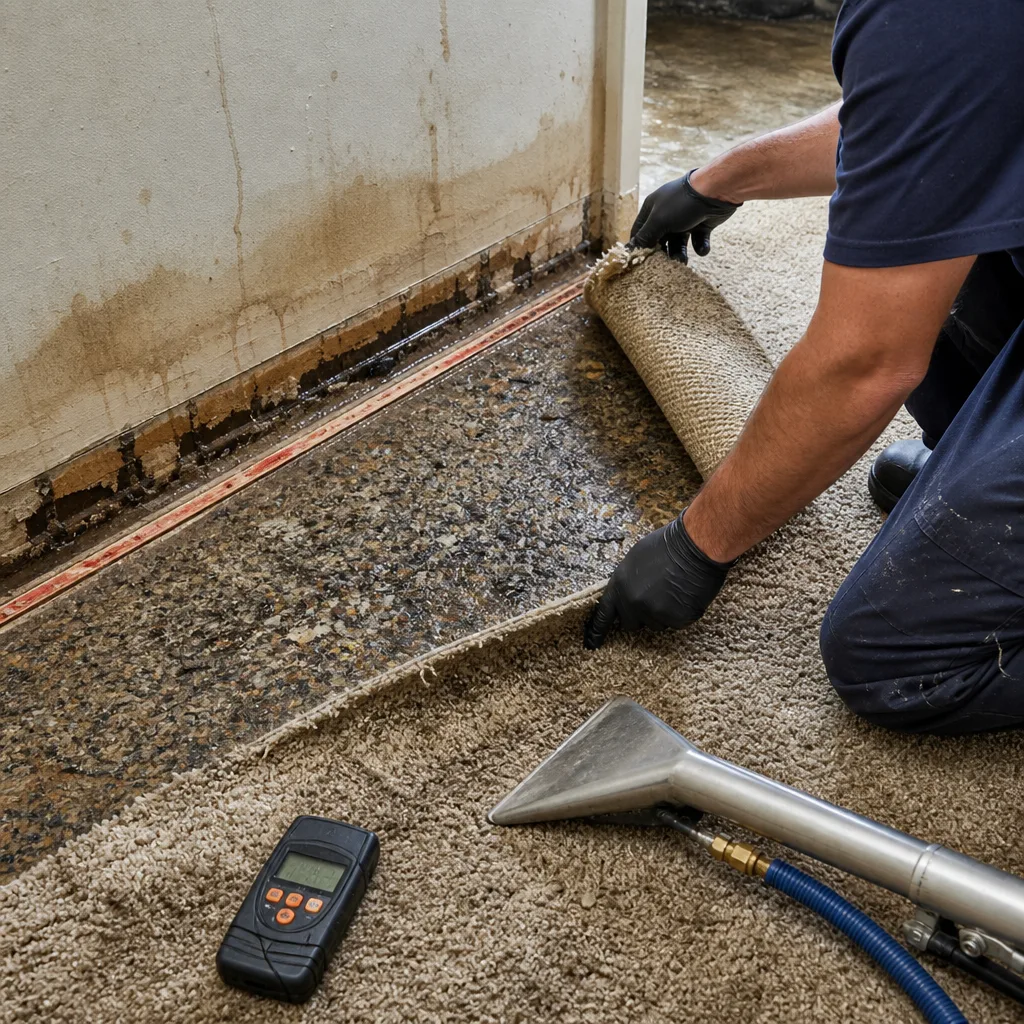
Free visual inspection and a written scope of work before any mitigation begins - photos, moisture readings, and drying logs go in your claim file
The scope we write is the scope we bill. Anything new gets shown to you, in writing, before we touch it.
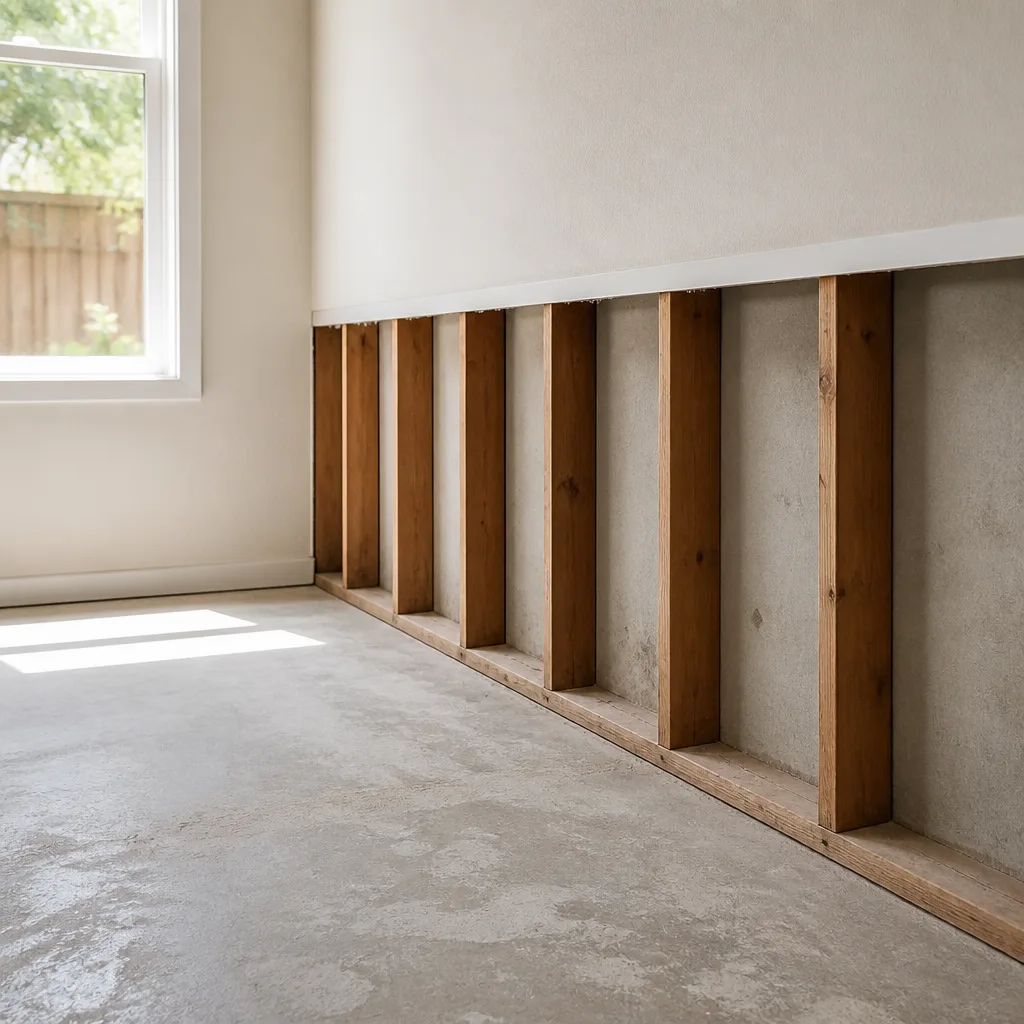
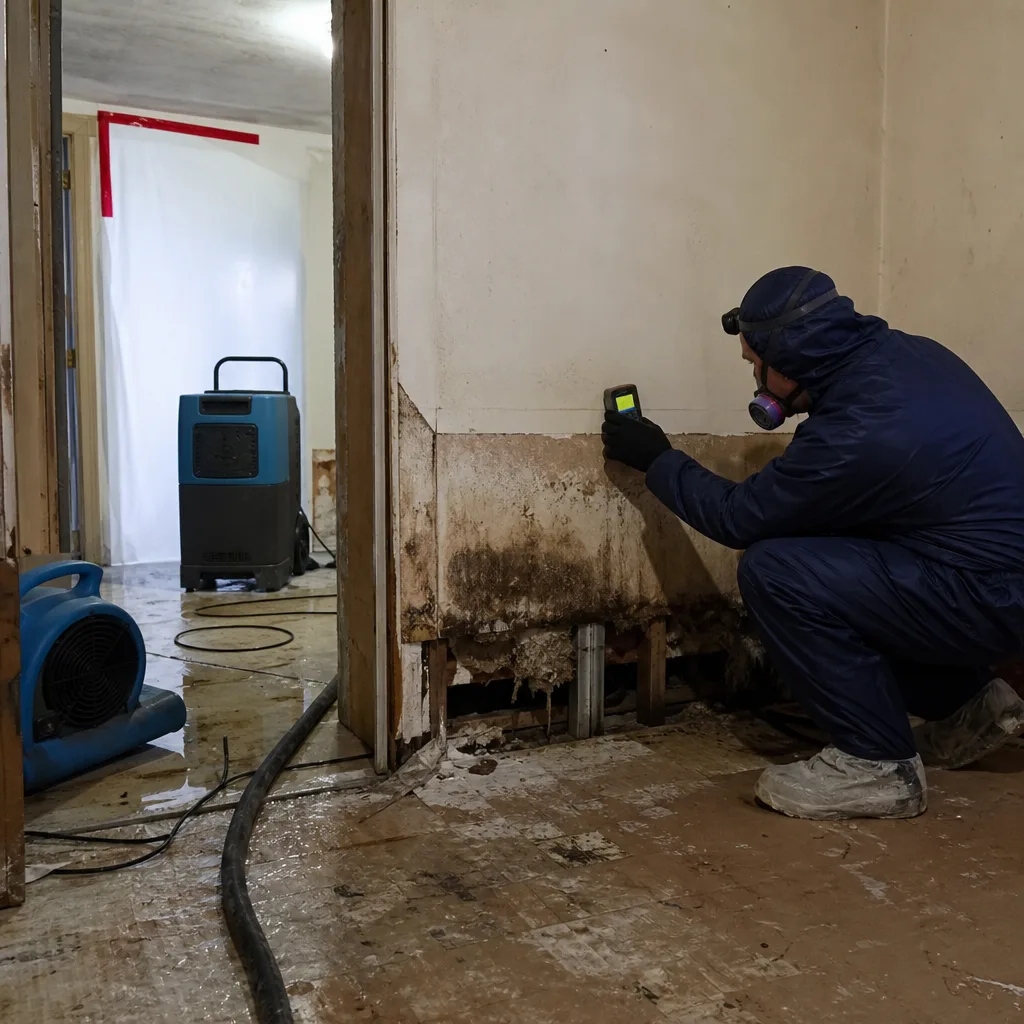 Before
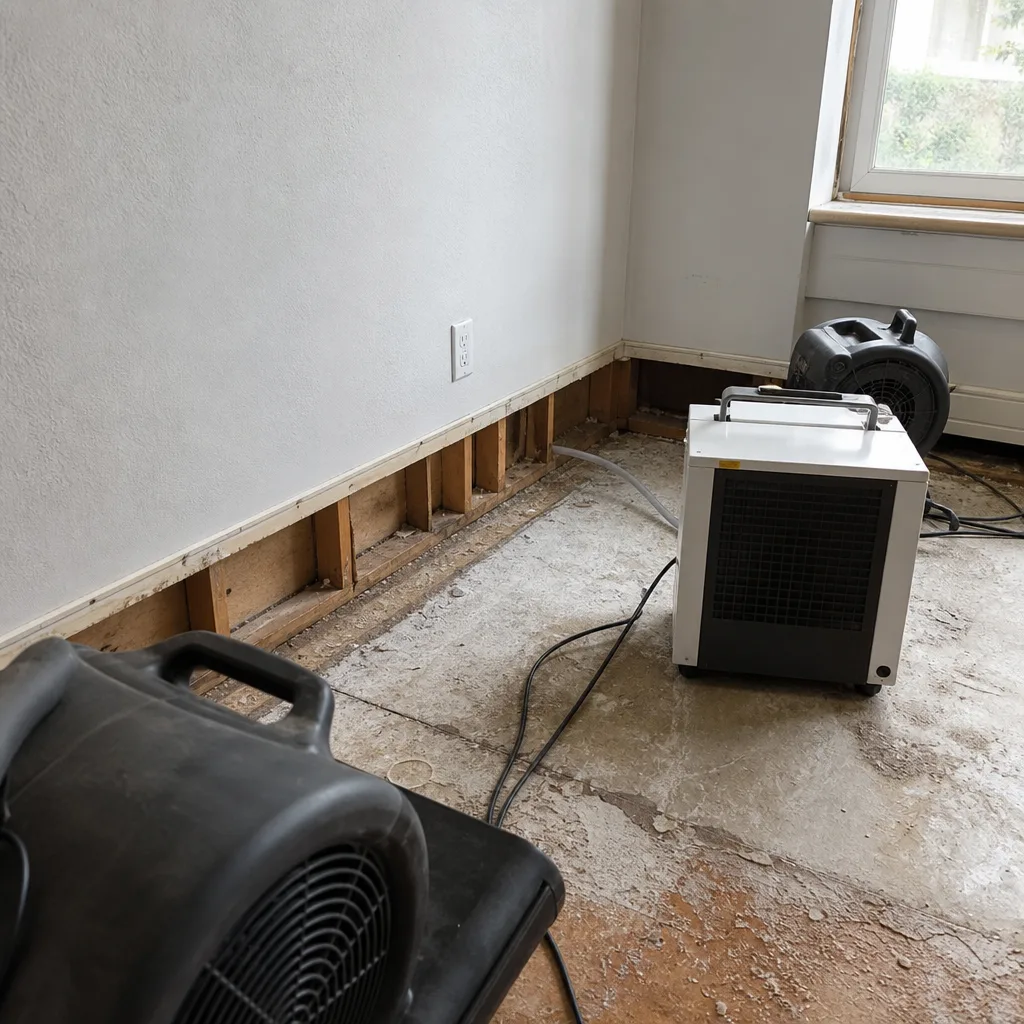 After
After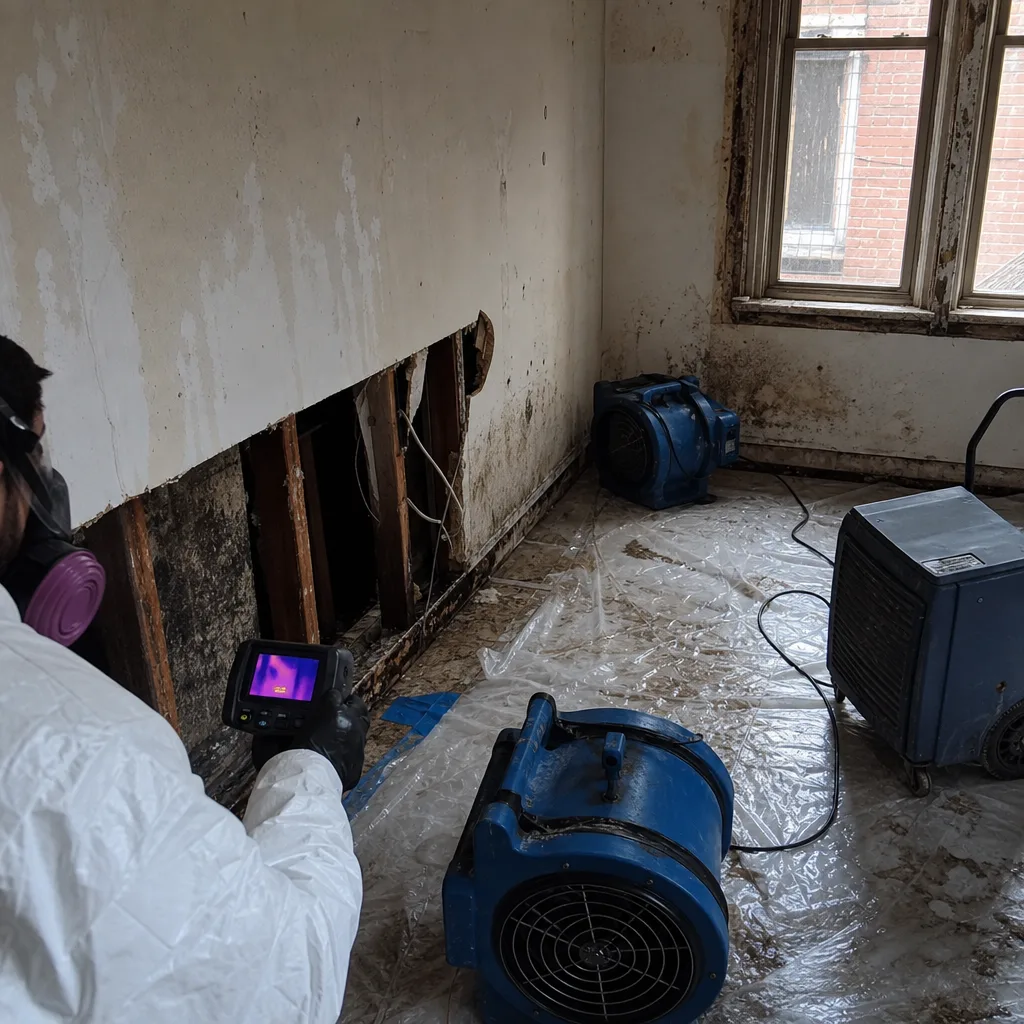 Before
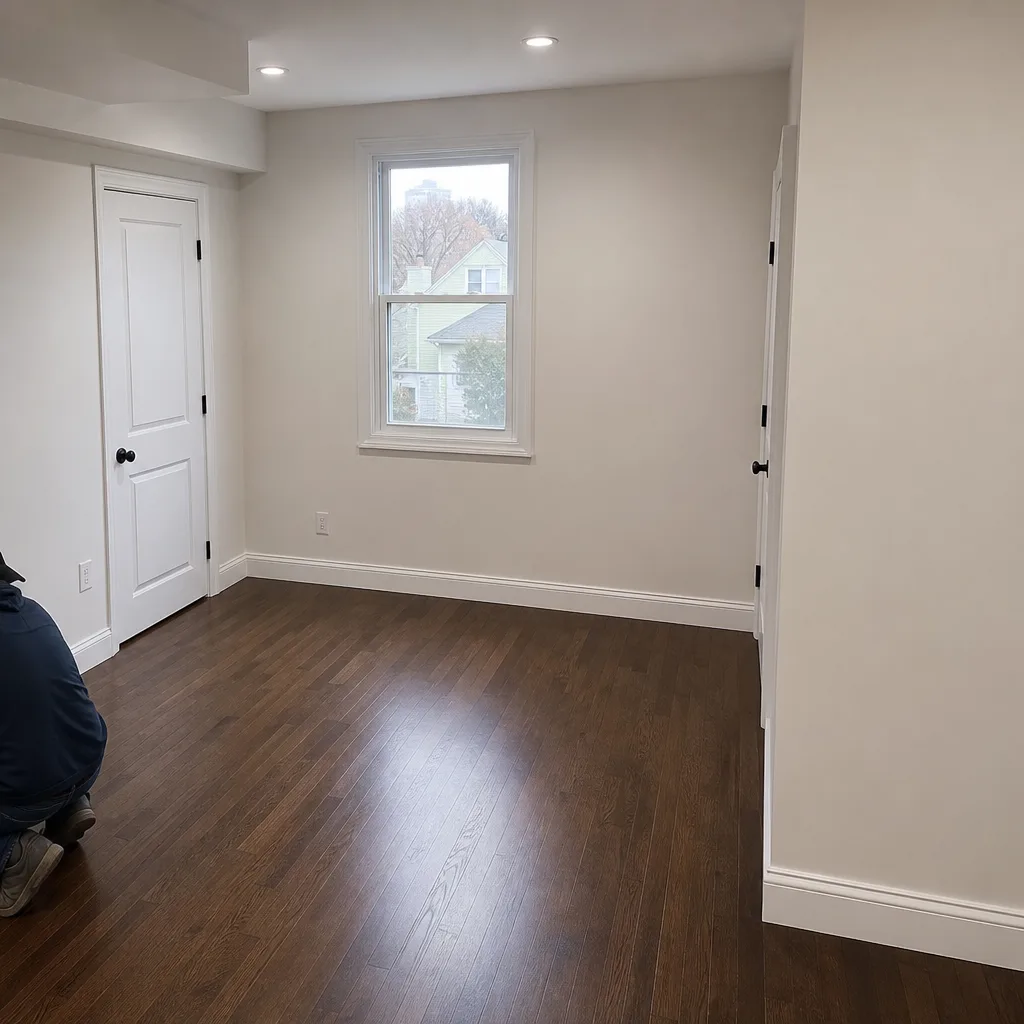 After
After24/7 Emergency Water Damage Restoration in Harlem
Water damage restoration in Harlem costs between $2,400 and $8,200 for most brownstone and tenement jobs, and the first call you make determines how much of your home can be saved. When a supply riser bursts on West 138th Street or a steam condensate line finally gives out in a Strivers’ Row rowhouse, the water doesn’t wait for business hours and neither do we. Call (518) 800-3751 and a live dispatcher answers, day or night. A crew rolls toward your block within 45 minutes, because in pre-war buildings with horsehair plaster and shared party walls, water moves laterally fast, and the clock on mold starts within 24 to 48 hours in Upper Manhattan’s river-humid air. We don’t send a salesperson. We send certified technicians with extraction equipment and moisture meters, and we start pulling water on the first visit.
Understanding Water Damage Restoration Severity in Harlem Properties
Restorers classify water by category, and in Harlem’s housing stock that classification drives everything that follows. Category 1 water comes from a sanitary source like a supply line or steam condensate from your one-pipe radiator system. Category 2 contains significant contaminants, often from a failed cast-iron riser that’s been sitting wet inside a wall cavity, or from a roof drain backing up through shared stacks. Category 3 is grossly contaminated, typically from a sewer backup or floodwater off the street. But here’s the Harlem-specific reality: even Category 1 water becomes Category 2 fast when it soaks through original horsehair plaster, clay tile, and 100-year-old wall cavities that haven’t been opened since the building went up. We moisture-map every affected room and the party-wall cavities with thermal imaging and penetrating meters before we so much as cut a hole. Structural drying in these buildings means more than running air movers. It means understanding where water has gone inside unreinforced masonry walls shared by two or three adjacent buildings, and logging daily readings until every cavity hits the dry standard. That’s why our crews carry IICRC WRT and ASD certifications, and why we read moisture levels the way a doctor reads a chart.
Why Harlem Property Owners Choose Floodline Restoration Co.
We’re a local company, founded in 2010 by Curt Bowman, and we built the company around a dispatch board, not a sales desk. Homeowners in Harlem tell us the same things: they’ve been burned before, and they want a name they can hold accountable. Here’s what you get with us.
- A 45-minute response commitment across Harlem. From Hamilton Heights to East Harlem, our crews are positioned to be inside your building and on the job within 45 minutes of your call, around the clock.
- A live person answers, 24/7. Not an answering service, not a callback queue. A dispatcher in our own office picks up at 2 a.m., takes down your address, and gets a certified crew moving. We answer the phone with a person because that’s what the job demands.
- IICRC, RIA, and IFA trained technicians. Our crews hold WRT, ASD, and AMRT certifications and have worked inside landmarked pre-war buildings from Strivers’ Row to Sugar Hill. Background-checked and uniformed, every job.
- Free visual inspection with moisture mapping. We don’t charge to assess your loss. We show up, document what we see, take moisture readings, and give you a straight answer about what needs to happen and why.
- Direct insurance billing. We coordinate directly with your carrier, send the adjuster our documentation and drying logs, and bill the carrier for covered work. You don’t play messenger, and the bill doesn’t surprise you.
- One crew from extraction to reconstruction. We don’t hand your home off to a different company mid-job. The same Floodline Restoration Co. team that extracts the water handles the drying, the rebuild, and the final walkthrough.
Our Water Damage Restoration Process
1. Inspection & Assessment
We start with a full walkthrough of the affected unit, plus any adjacent units in the same brownstone or tenement. Moisture mapping with penetrating meters and thermal imaging shows us where the water actually traveled, not just where the stain is. In Harlem, that means checking party-wall cavities and the one-pipe steam risers that run through every floor.
2. Extraction / Stabilization
Truck-mounted extraction units and portable extractors pull standing water from floors, carpets, and wall cavities. If hazmat surveys are required before demolition, we stabilize first and coordinate that survey. We won’t start tearing out plaster and risk triggering a DEP stop-work order because asbestos-wrapped pipe got exposed mid-job.
3. Drying & Dehumidification
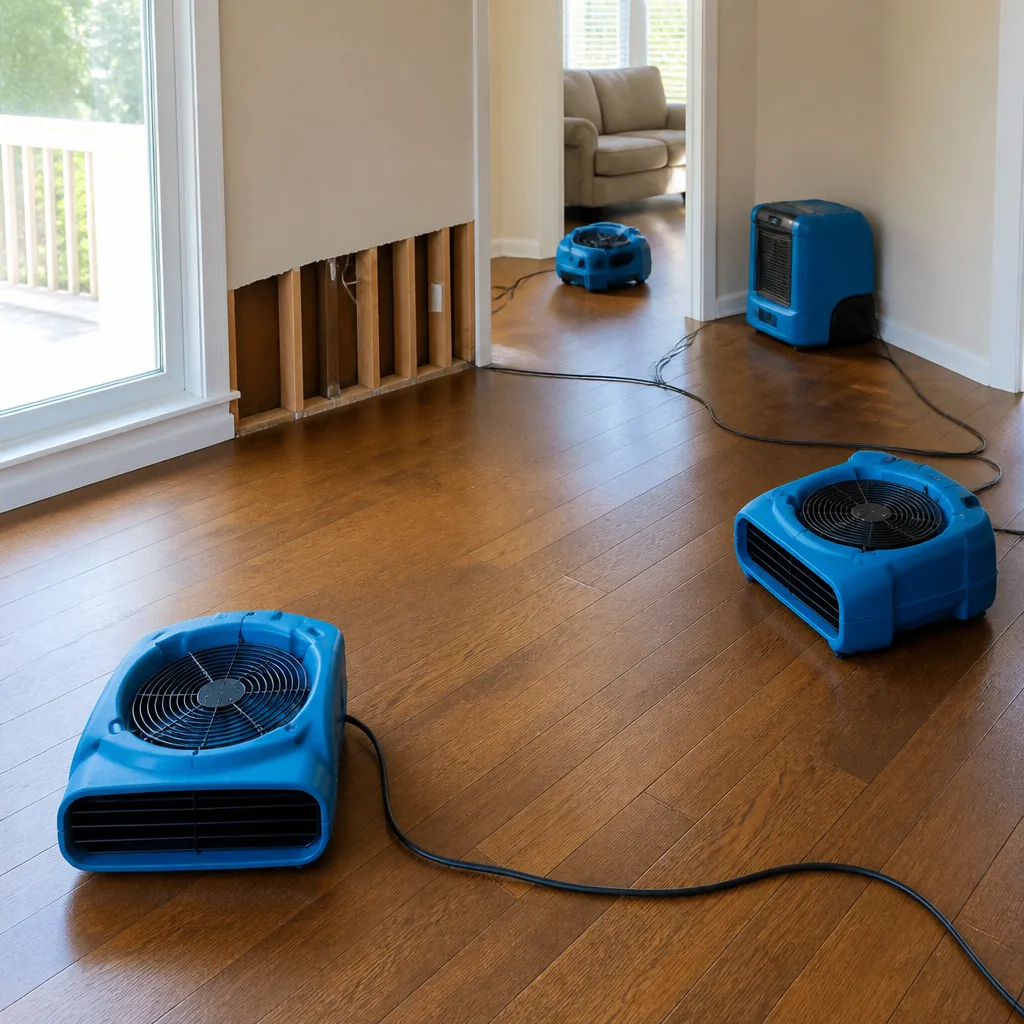
Dri-Eaz and Phoenix air movers, low-grain refrigerant dehumidifiers, and Injectidry floor-mat systems go in after extraction. In thick masonry walls, we use penetrating drying systems to pull moisture from deep inside the structure. Daily readings are logged until the dry standard is met, and the log goes to you and your adjuster.
4. Cleaning & Sanitization
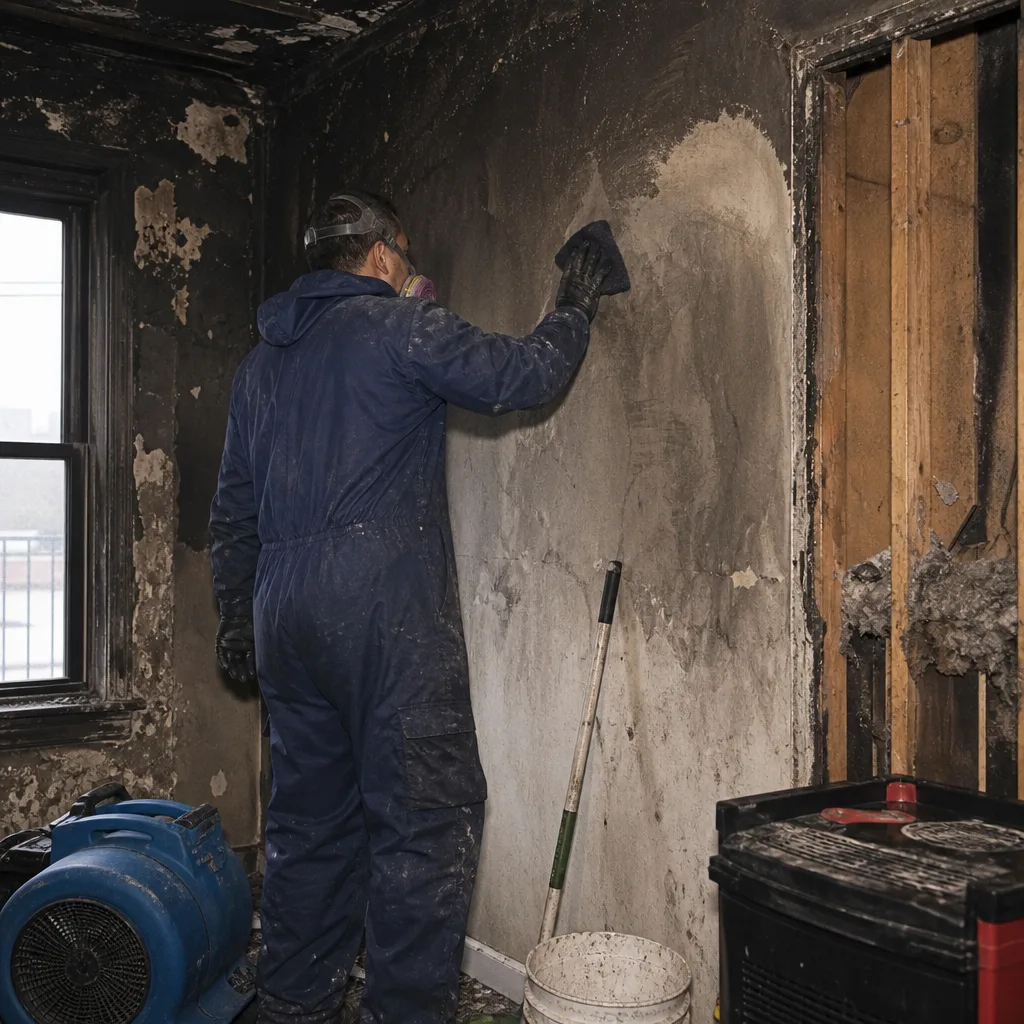
Affected surfaces get antimicrobal treatment appropriate to the water category. HEPA air scrubbers run during the drying phase to control airborne particulates from disturbed plaster and legacy dust in older buildings. We treat what needs treating, based on the category and the building’s materials.
5. Specialty Treatment for Harlem’s Building Stock
In pre-war brownstones, this step often means coordinating hazmat clearances for lead-painted plaster and asbestos-wrapped supply lines before structural repairs can proceed. We don’t shortcut this, and we don’t let a subcontractor shortcut it either. Local Law 1 compliance and DEP protocols are part of doing restoration work in Harlem correctly.
6. Repairs & Restoration
Once everything is dry and clearances are in hand, the same crew rebuilds. Plaster repair, flooring, ceiling restoration, painting. The 90-Day Done Right Promise covers the whole job, in writing. If it’s not done right, we make it right. No arguing.
Need Emergency Water Damage Restoration in Harlem Now?
Crews minutes away, answering live 24 hours a day. The sooner we start, the less it costs.
Working With Your Insurance Company
Insurance claims on Harlem water damage have a rhythm, and we know it because we’ve filed more of them than we can count. The carrier wants documentation from hour one, professional estimates in the format their adjuster expects, and a single point of contact who speaks their language. We provide all three. From the first visit, we photograph every affected room, log moisture readings daily, and keep a written scope of work that matches the actual loss, not a padded number. If your adjuster calls with questions, we talk to them directly. You don’t become the messenger between us and your carrier. That’s the square deal we built Floodline Restoration Co. on, and it’s why our Water Damage Restoration team handles insurance jobs in Harlem every week.
What We Provide Your Insurer
- Thorough documentation of the loss
- Photos of all damage, room by room
- Moisture readings and drying logs
- A detailed, line-item scope of work
- Direct coordination with your carrier
Built for Harlem’s Loss Calendar
Harlem has a water damage calendar, and it runs on the weather and the age of the buildings. December through March is the busiest stretch, when freeze-thaw cycles punish the cast-iron water mains feeding century-old buildings and burst supply lines become a nightly occurrence. On a freeze-thaw night last December, our crew responded to a burst cast-iron supply riser in a five-story Renaissance Revival brownstone on West 138th Street near Strivers’ Row. The pipe failure sent category 2 water through original horsehair plaster ceilings into three adjacent units. After hazmat clearances, we ran Injectidry floor-mat systems and Phoenix axial air movers with moisture mapping, while checking every neighboring unit’s one-pipe steam risers before signing off on the scope of work. Spring brings roof leaks and basement seepage as snowmelt and April rain find every crack in limestone and brownstone facades. Summer thunderstorm flash flooding hits ground-floor and basement units hardest, especially in flat-roofed tenement walkups where drains back up fast. And the steam-heating season from October through April delivers its own slow leaks, condensate backups in improperly sloped lines, and packing failures around radiator valves that drip into original plaster ceilings for weeks before anyone notices. We plan our Harlelm dispatch around this calendar because we’ve been in these buildings long enough to know what’s coming.
Water Damage Restoration Across Harlem’s Neighborhoods
Harlem isn’t one place, and the restoration work changes block by block. In Strivers’ Row and the Hamilton Heights Historic District, the brownstones are wider, the plaster cornices more elaborate, and the Landmarks Preservation Commission looms over any exterior work. Water extraction inside those buildings often means working around delicate original millwork and plaster that can’t just be gutted to the studs. East Harlem’s tenement walkups bring a different set of challenges: railroad-style layouts, smaller rooms, and shared supply stacks that run through multiple units, so water from one apartment flows into the three below it. Sugar Hill’s co-ops and larger pre-war elevator buildings often have central maintenance staff who need our moisture logs and documentation as much as the homeowner does. Central Harlem, from 110th Street up to 125th Street, is ground zero for the neighborhood’s original one-pipe steam systems, and we routinely find hidden ceiling damage in units where the visible leak is two floors away. Our Water Damage Restoration in Harlem crews know these routes and these buildings because we’ve worked in every corner of the neighborhood.
Specialized Water Damage Restoration Services We Offer in Harlem
Emergency Water Extraction
Standing water in a Harlem brownstone doesn’t wait. We run truck-mounted extraction units straight into the building and pull water from floors, walls, and cavities. Same visit. The faster water comes out, the less mold can colonize inside unreinforced masonry walls, and the less we have to tear out later.
Structural Drying & Dehumidification
After extraction, we set up Dri-Eaz and Phoenix air movers with low-grain dehumidifiers sized to the cubic footage of each affected room. In Harlem’s thick-walled pre-war buildings, we supplement with penetrating drying systems and daily moisture readings until every cavity, including shared party walls, reaches the dry standard.
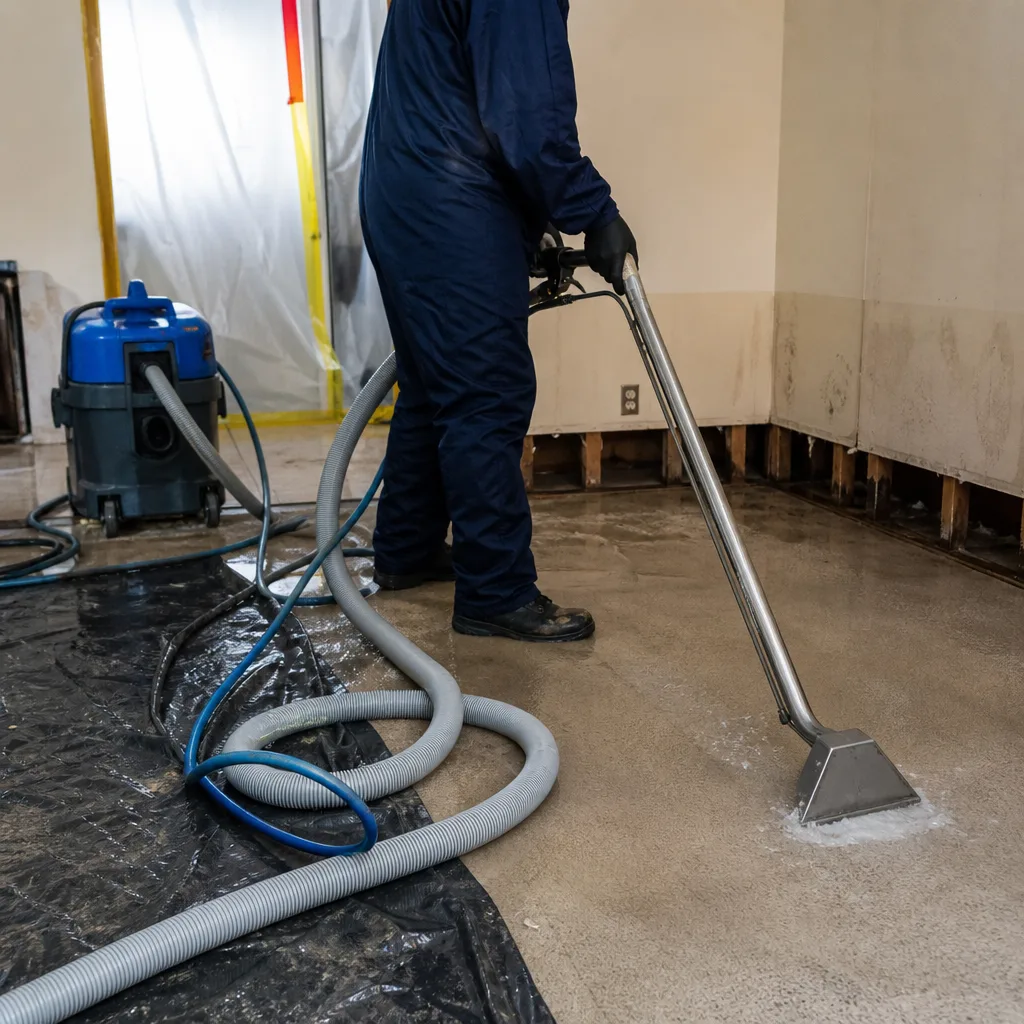
Flood Cleanup
Flood water from street-level surges and backed-up drains is category 3 water, full of whatever the street carries. We extract, contain, sanitize, and dry. In ground-floor Harlem apartments and basement units, this often means coordinating with building management and the DEP on sewer lines and drain backups before finishing the interior restoration.
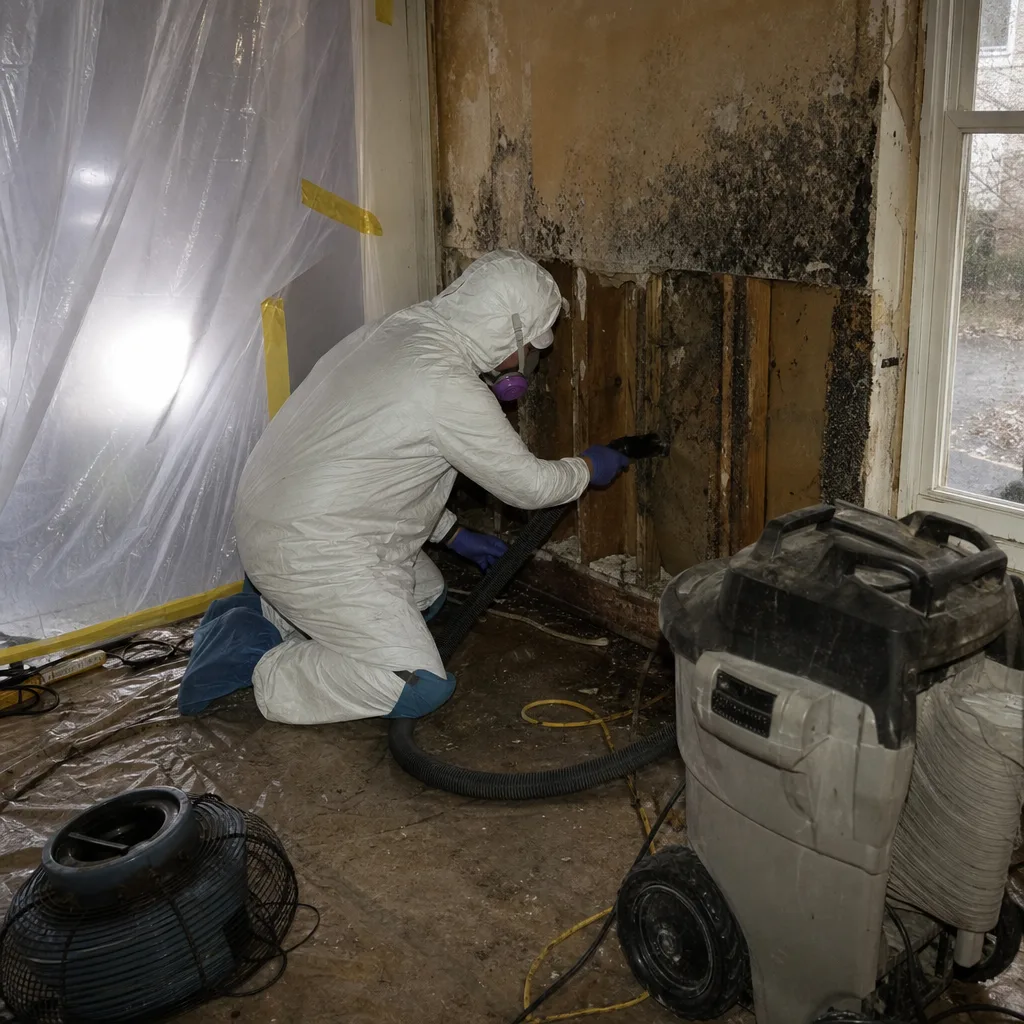
Burst Pipe Restoration
Winter in Harlem means burst pipes, and burst pipes mean water traveling inside walls and ceilings faster than anyone expects. We locate the source, stop the flow, and then map the actual water migration path before we start tearing anything open. The damage is almost never confined to the room where the stain appears.
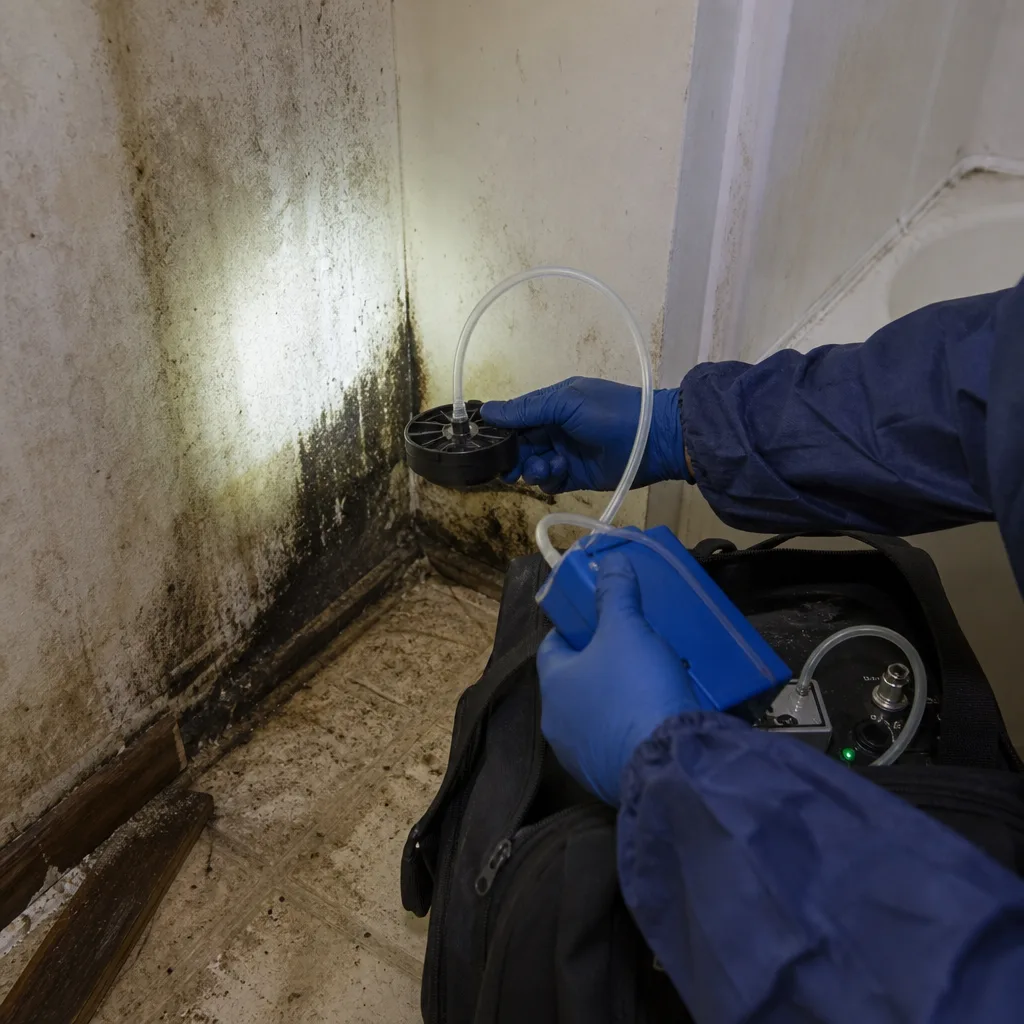
Basement Water Removal
Basements in Harlem’s attached rowhouses share party walls and poor drainage. After heavy rain or a failed cast-iron main, those basements flood through cracks in the foundation or through shared drains. We pump, extract, dry, and treat. Then we tell you what needs structural attention so the next storm doesn’t do the same thing.
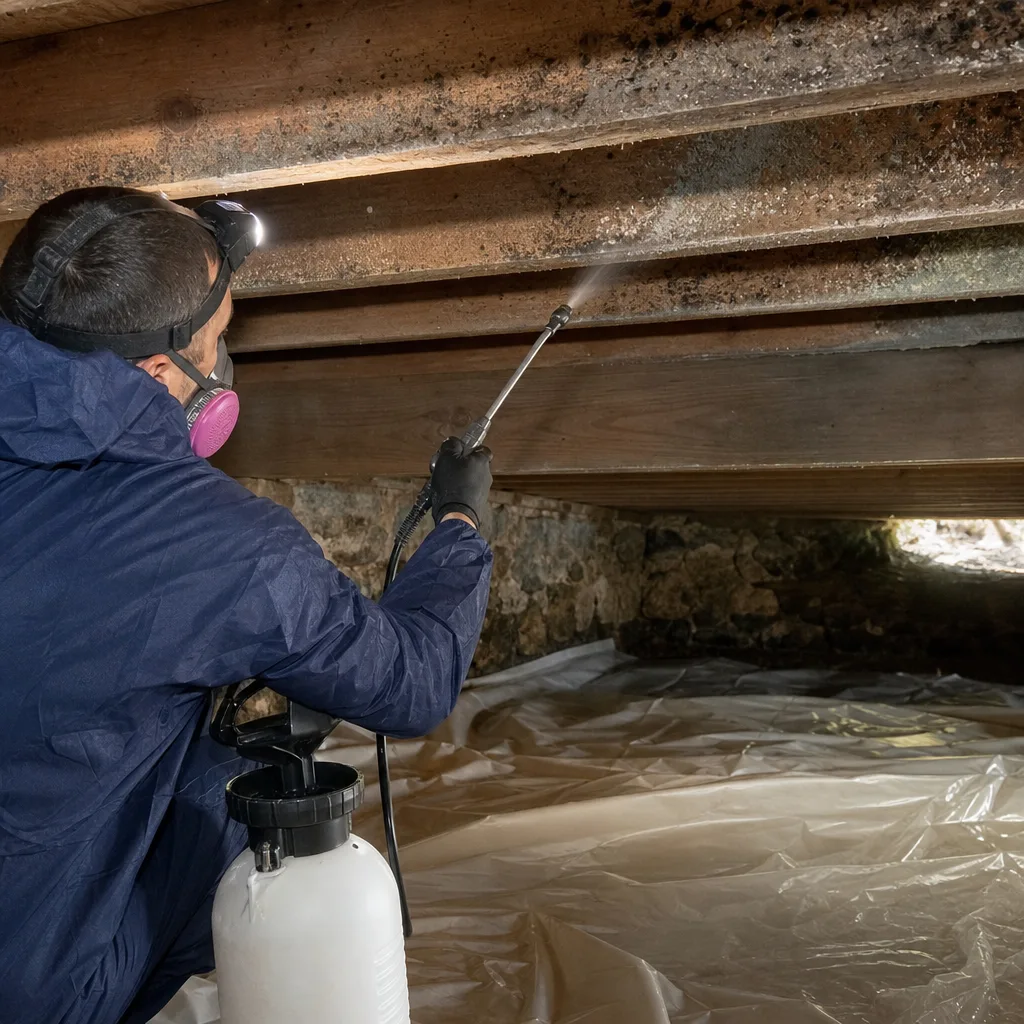
Ceiling & Roof Leak Water Damage
Flat roofs on tenement walkups and aging brownstone parapets leak every season. Water travels through roof membranes, down inside walls, and shows up as ceiling staining two floors below the actual entry point. We trace the path, dry the cavities, and repair the ceiling so it doesn’t sag or collapse before the roof itself gets fixed.
What happens when you call
- 1
A real person answersNo phone trees - you reach a local pro.
- 2
You get an upfront price rangeHonest numbers before anyone is dispatched.
- 3
A background-checked tech heads outLicensed & insured, dispatched right away.
- 4
You approve before work beginsNothing starts until you say go.
Water Damage Restoration Costs in Harlem, NY
Water damage restoration in Harlem runs higher than in newer construction, and the building stock is the reason. A straightforward Category 1 extraction and drying in a single unit typically costs between $2,400 and $4,800. Once the loss involves Category 2 or 3 water, structural drying of masonry walls, or any level of hazmat coordination, that range climbs to $5,000 to $8,200. Full restoration involving lead-paint or asbestos clearance, LPC review, and reconstruction can push past $15,000. Here’s the honest breakdown of what moves the number: the water category, the square footage affected, whether party-wall cavities are involved, and whether clearances are required before we can cut. Insurance covers most covered perils like burst pipes and storm water, minus your deductible. The best way to know your number is a free visual inspection. Call (518) 800-3751 and we’ll come out, map the moisture, and put a written scope in your hands before any work begins. A square deal, no surprises on the bill.
We Also Serve Cities Near Harlem
Floodline Restoration Co. serves homeowners across Upper Manhattan and the surrounding boroughs. If you’re in Astoria, Ditmars Steinway, Upper Manhattan, or the Upper East Side, our crews are already nearby and ready to respond. Call (518) 800-3751 and a live dispatcher will get you on the board.
Serving Harlem, NY - Our Local Coverage Area
We’re based in the Harlem area and know this community well. Use the map below to see our service coverage - if you’re nearby, we can almost certainly help.
Harlem Water Damage Restoration Questions, Answered
Why do Harlem water damage jobs take longer than typical NYC restoration work?
Because most of Harlem’s housing stock was built between 1885 and 1920, and restoration inside those buildings triggers NYC DEP asbestos abatement and NYC Local Law 1 lead-paint compliance before any structural work can begin. Original asbestos-wrapped supply lines and lead-painted horsehair plaster mean we often have to get hazmat clearances before we can cut into walls, which isn’t a step in newer buildings. Add Landmarks Preservation Commission review for exterior work in historic districts, and the timeline stretches. We build that time into our scope up front so you’re not surprised mid-job.
How do I know if water in my Harlem brownstone is category 1, 2, or 3?
Category 1 comes from a sanitary source like a fresh supply line or steam condensate. Category 2 carries contaminants, often from water that’s sat inside a wall cavity or picked up soil and building materials on its way down. Category 3 is grossly contaminated, usually sewage or street floodwater. In practice, water that starts as Category 1 can degrade to Category 2 within 48 hours in Harlem’s humid, thick-walled brownstones. Our techs classify on site during the inspection and explain exactly what the category means for your restoration and your cost.
Do I need to move out during water damage restoration in a Harlem tenement?
Not always. For smaller Category 1 losses confined to one room with no hazmat triggers, you can usually stay while drying equipment runs. But if the job involves demolition of original plaster with lead-paint concerns, asbestos abatement, or Category 3 water, we’ll tell you plainly whether staying is safe and compliant. The city can also require vacate orders in some building-wide situations. We’ll walk you through what your specific building and loss requires before we start.
Why does mold grow faster inside Harlem brownstone walls than in newer buildings?
Upper Manhattan sits between the Harlem River and the Hudson, and the persistent humidity from both waterways drives indoor relative humidity up. Harlem’s brownstone walls are thick, unreinforced masonry, which holds moisture deep inside once water intrudes. That combination, amplified by original horsehair plaster that wicks water, creates ideal mold conditions within 24 to 48 hours. Newer construction with modern vapor barriers and drywall doesn’t hold moisture the same way. This is why we start drying on the first visit and log daily readings until the dry standard is met.
Will my Harlem Landmarks Preservation Commission district affect how you dry the exterior facade?
Yes, in most cases. If your building sits in a designated historic district like Strivers’ Row or Hamilton Heights, any exterior work beyond basic access requires LPC review. Drying interior cavities usually moves forward without LPC involvement, but if we need exterior access for facade drainage, roof work, or any visible exterior repair, the LPC process applies. We’ve done this before, and we’ll help you understand what triggers a commission review and what doesn’t.
How fast can someone actually get to my Harlem address?
Our commitment is 45 minutes from your call to a crew on site anywhere in Harlem, at any hour. A live dispatcher takes your address, confirms the details, and gets the nearest certified crew moving. No automated systems, no waiting for a callback. Call (518) 800-3751 and you’ll speak to a person who can tell you exactly when we’ll be there.
Will my insurance cover water damage restoration in a pre-war building?
Most homeowner policies cover sudden, accidental water damage from burst pipes, roof leaks, and storm water, minus your deductible. Gradual leaks and maintenance failures often aren’t covered, and neither is flood damage unless you carry a separate flood policy. The building’s age and hazmat requirements don’t change coverage, but they can affect how your adjuster scopes the claim. We provide the documentation and drying logs your carrier expects, and we speak with the adjuster directly so the claim moves forward without you playing middleman.
What should I do in the first 30 minutes after I find water damage in my Harlem home?
Shut off the water at the nearest valve or building main if the source is a supply line. Kill electrical power to the affected area if water has reached outlets or fixtures. Move valuables and furniture out of the water if you can do so safely. Then call (518) 800-3751. Don’t tear into walls yourself, especially in pre-war buildings where asbestos wrap and lead paint may be present. Let us assess, classify, and start extracting the right way.
Written by Curt Bowman, Owner at Floodline Restoration Co., serving Harlem with water damage restoration for over a decade.