
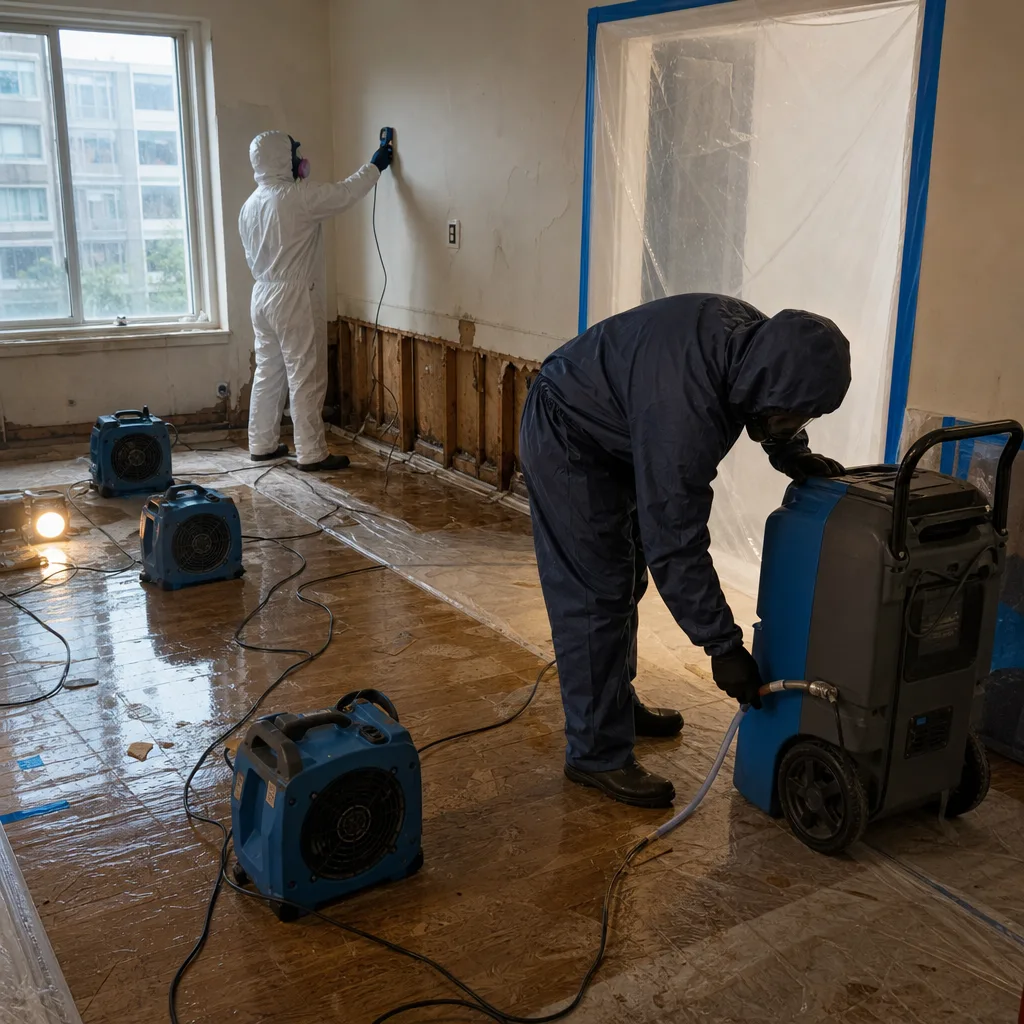
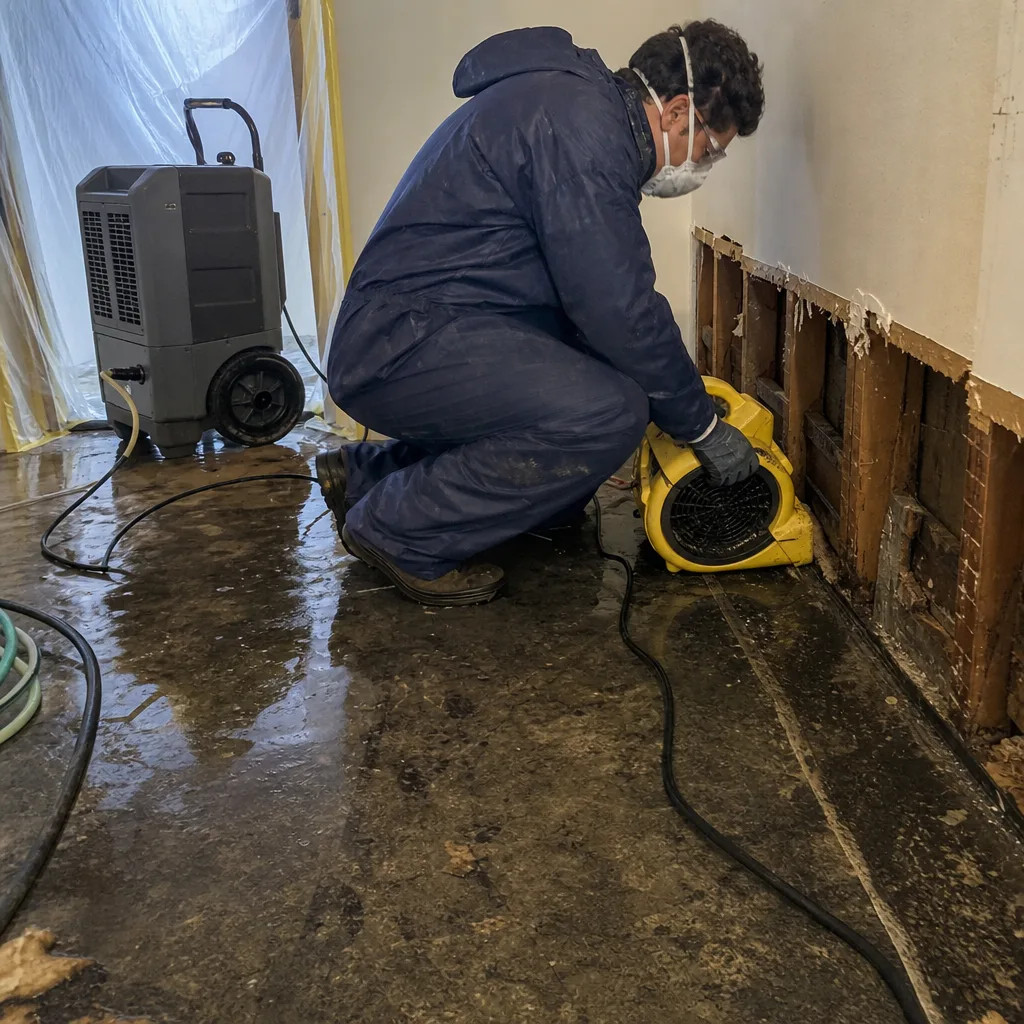
Free visual inspection and a written scope of work before any mitigation begins - photos, moisture readings, and drying logs go in your claim file
The scope we write is the scope we bill. Anything new gets shown to you, in writing, before we touch it.
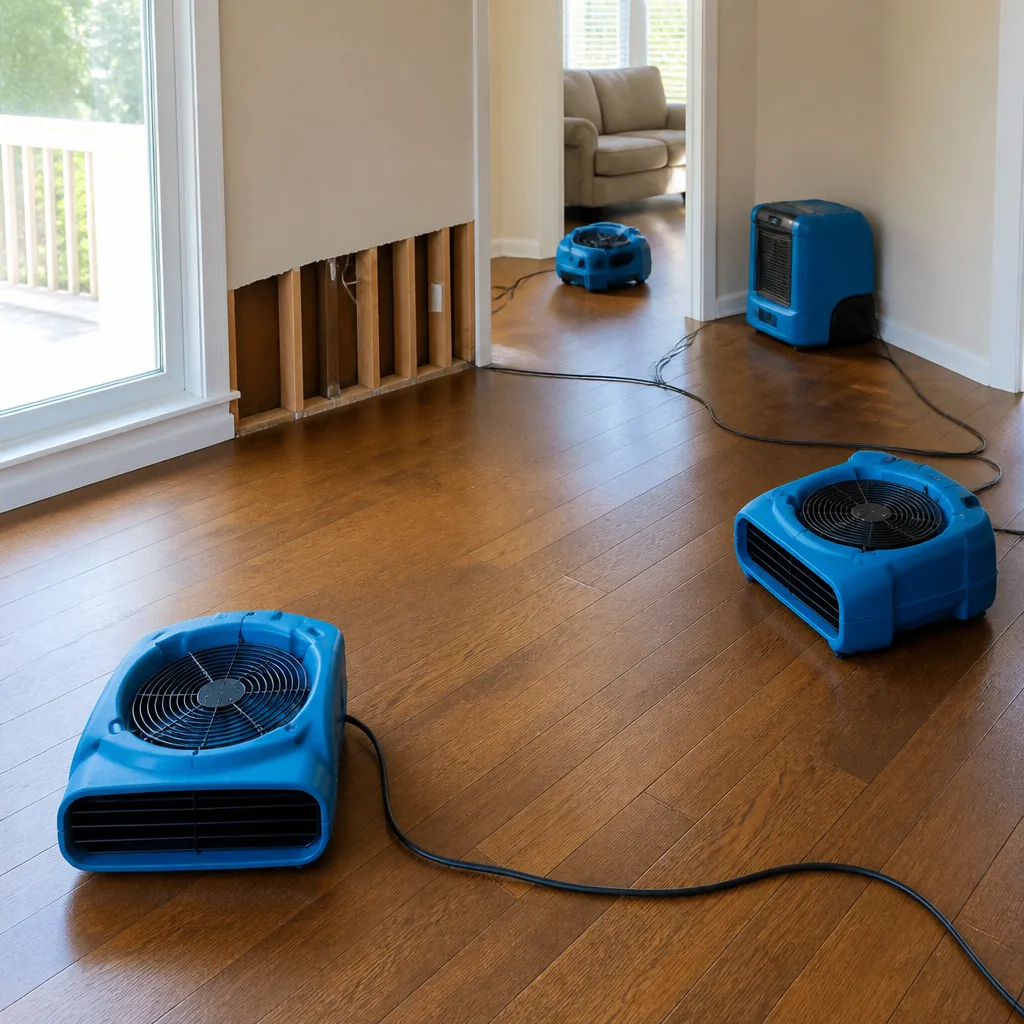
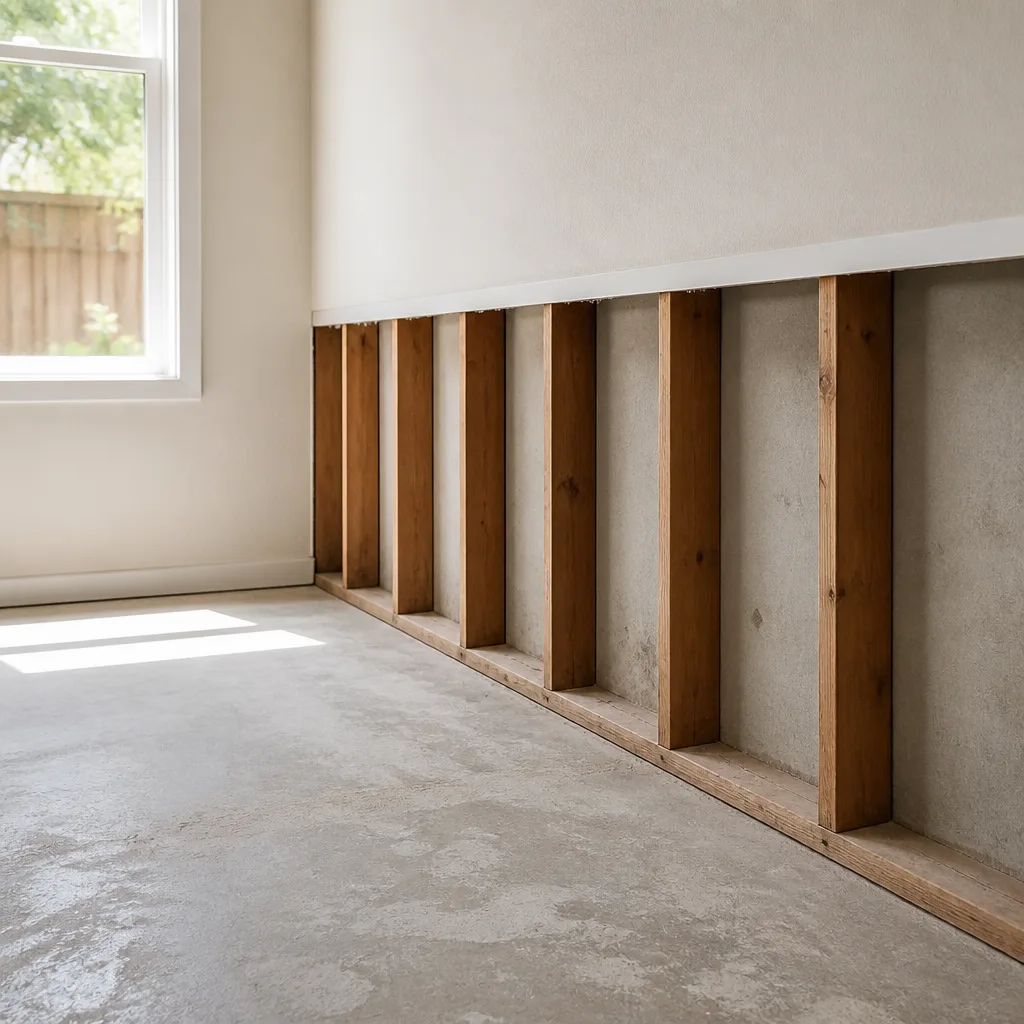
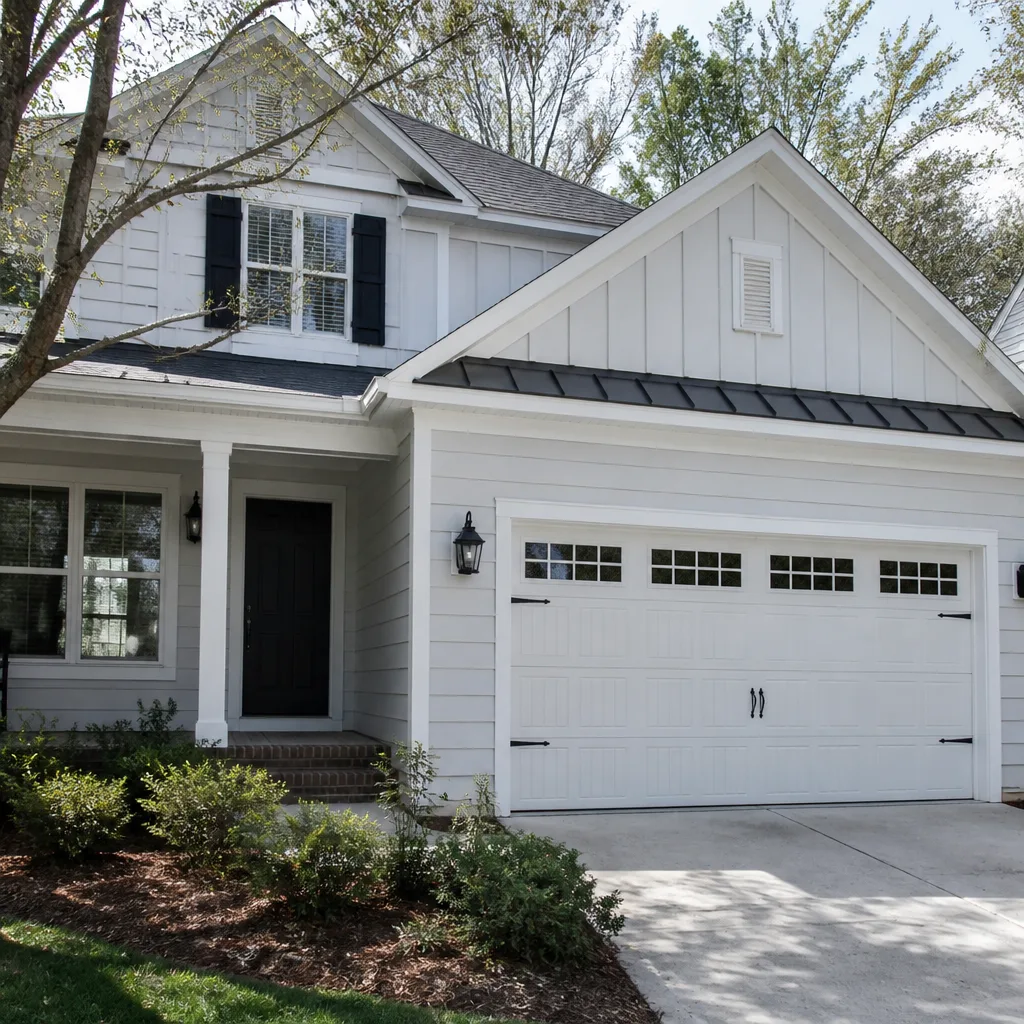
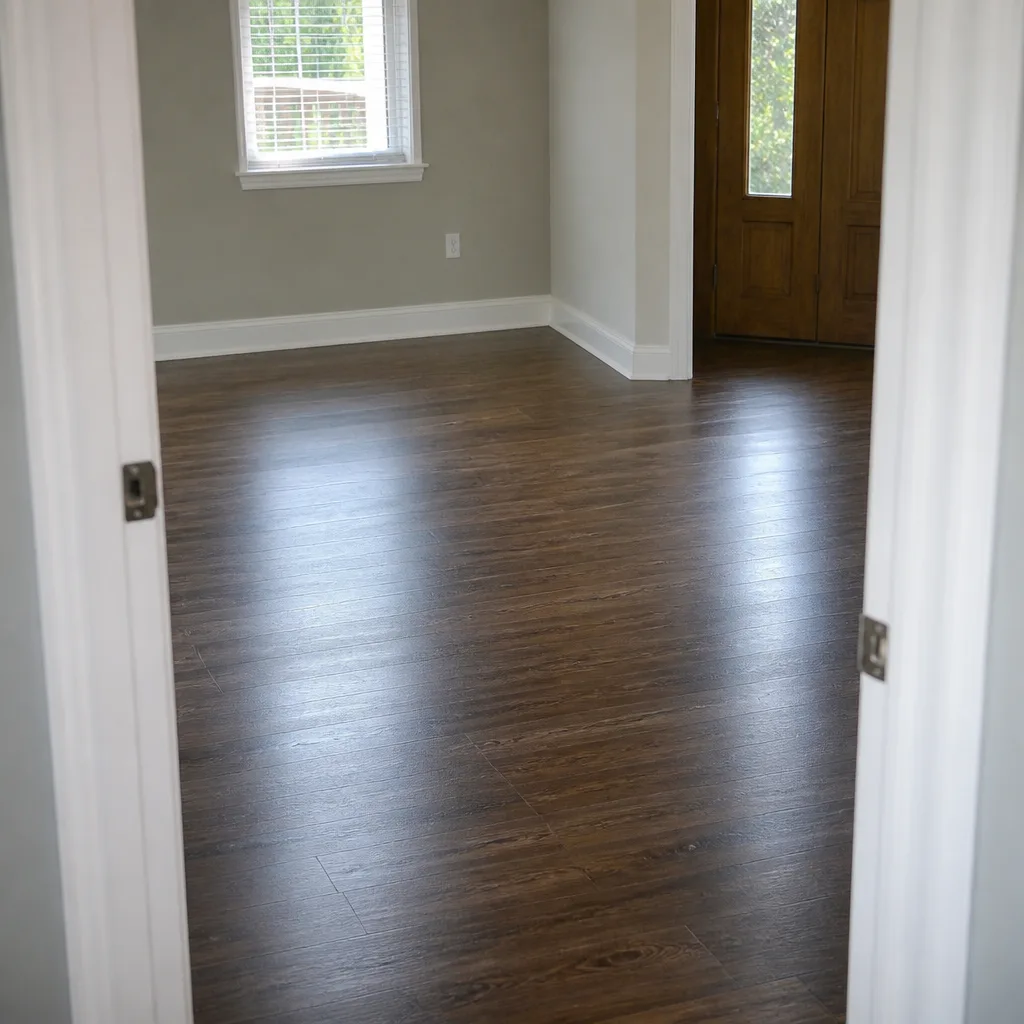
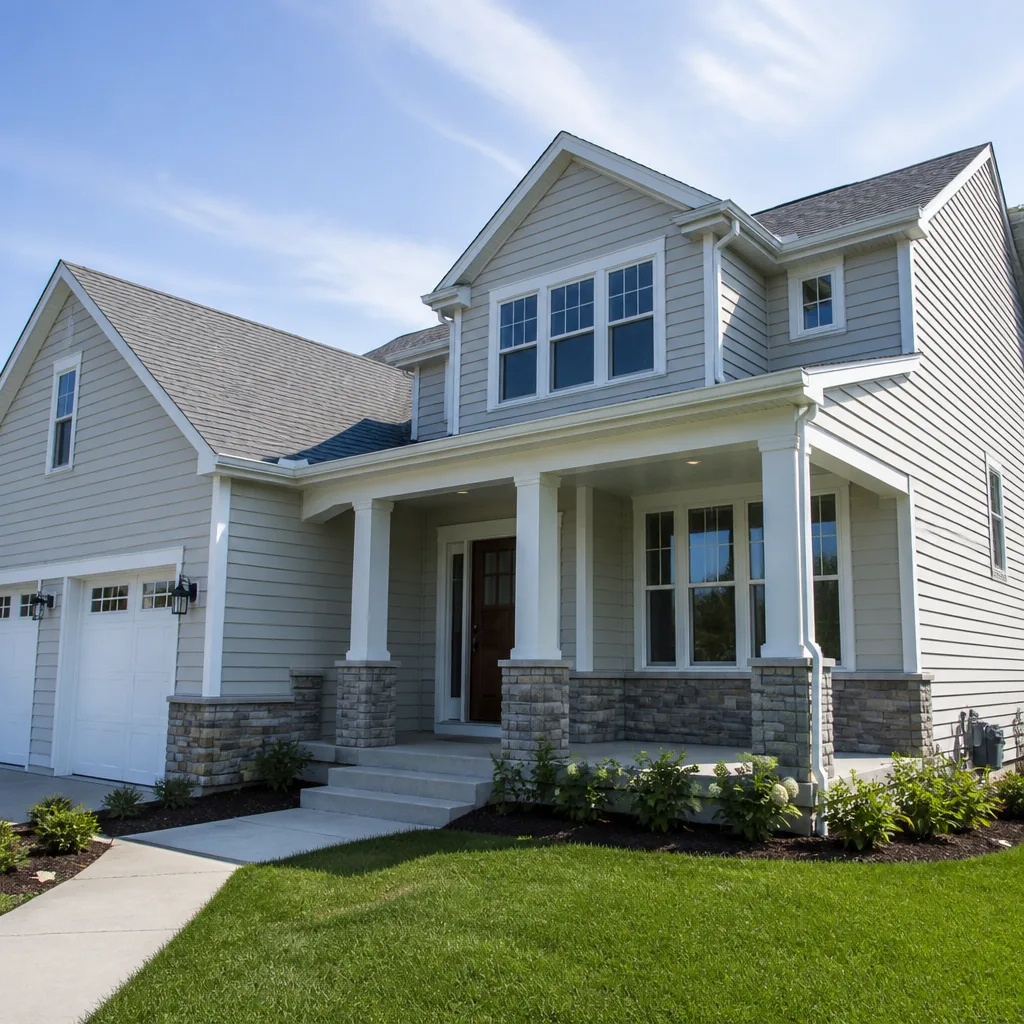
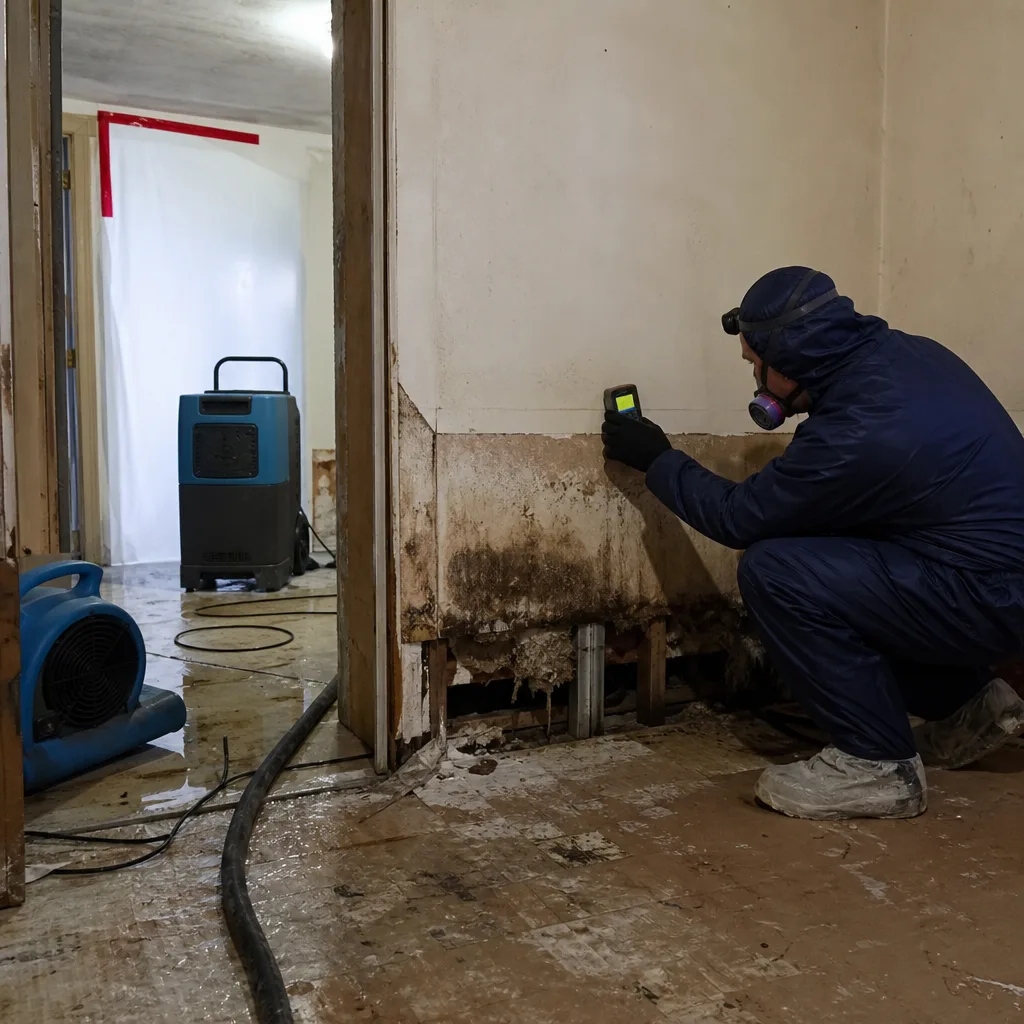 Before
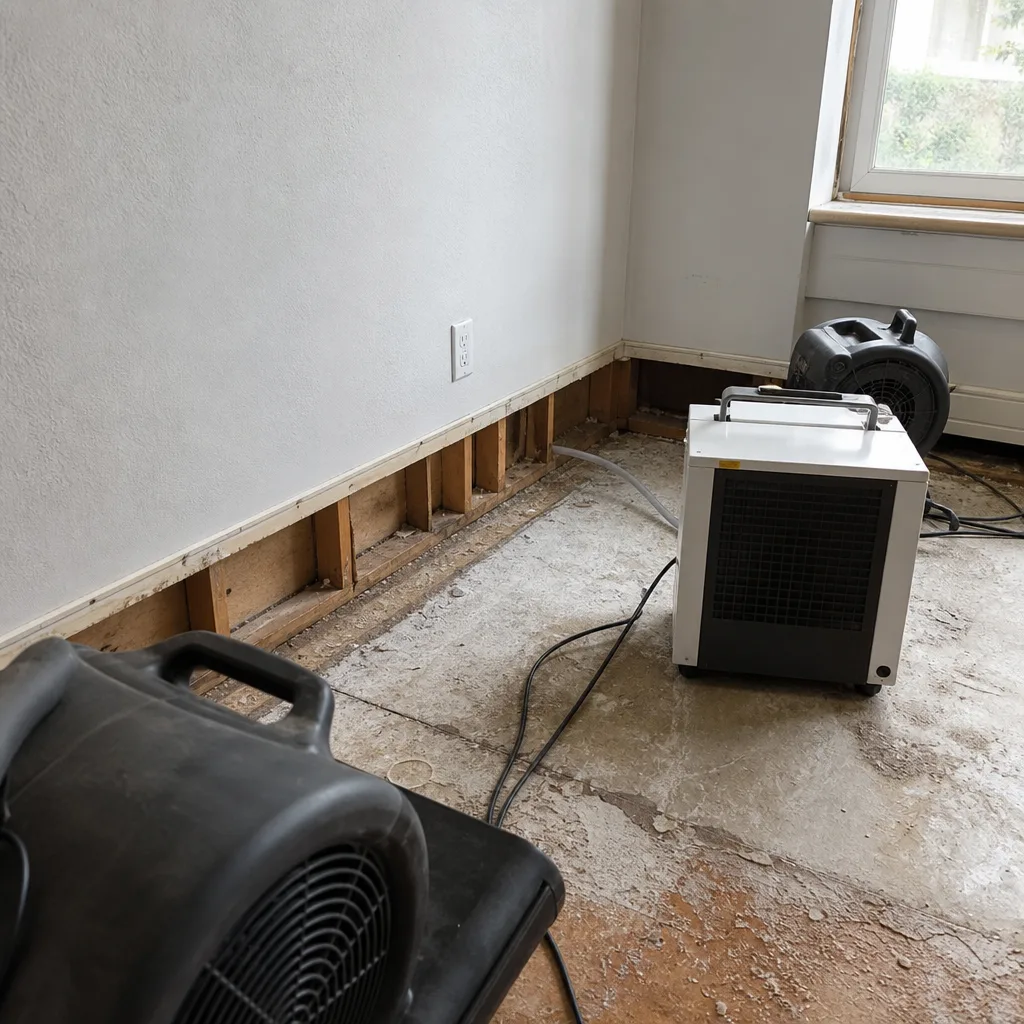 After
After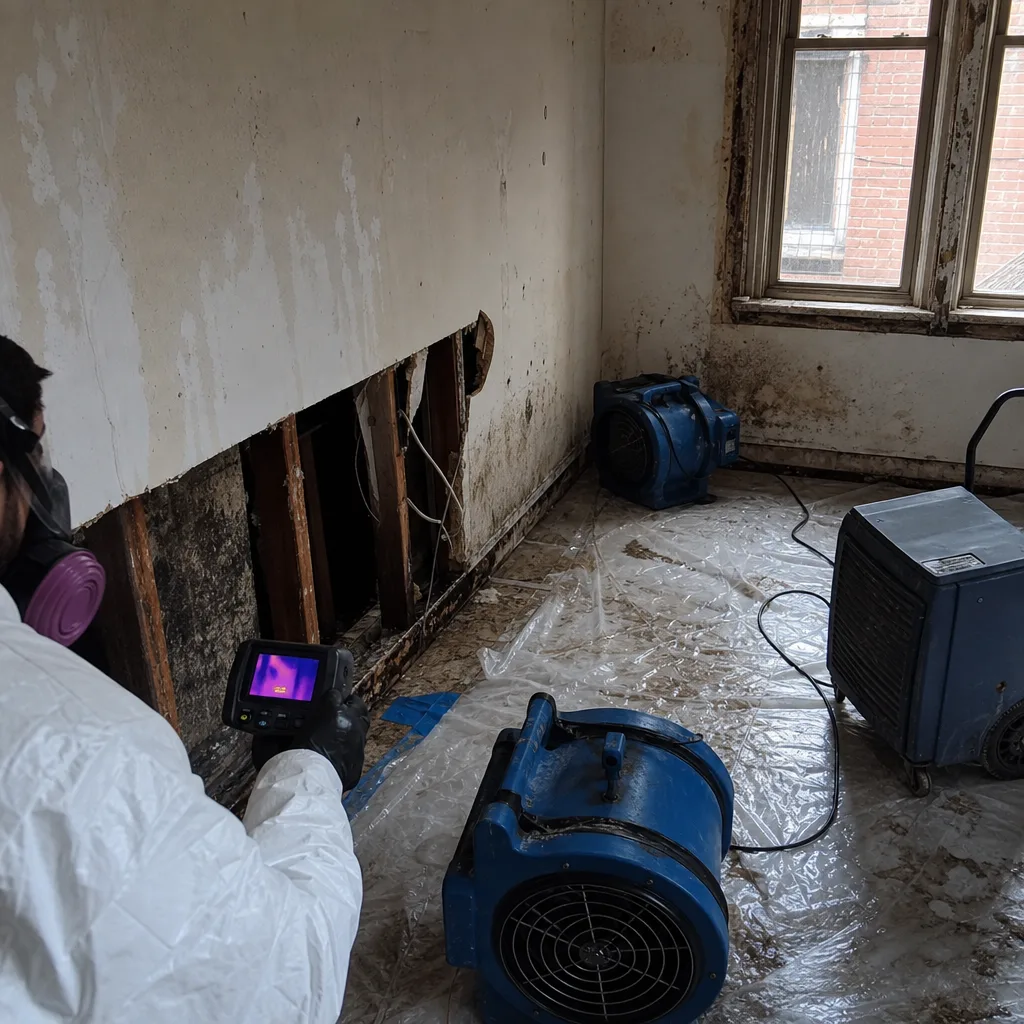 Before
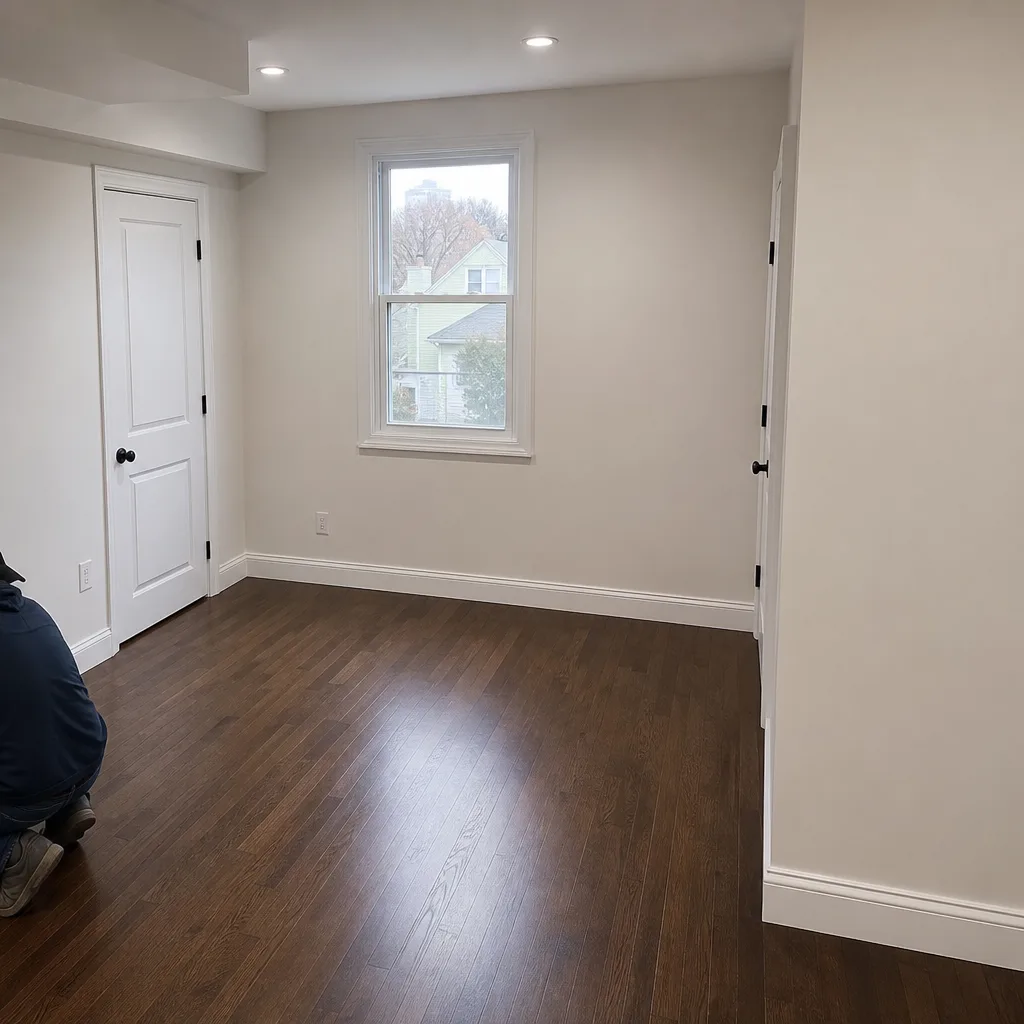 After
After24/7 Emergency Commercial Restoration in East Harlem
Commercial water damage in East Harlem rarely waits for business hours. A failed riser pipe inside a NYCHA tower, a burst supply line in a pre-war tenement storefront, or a flat-roof parapet leak after a February freeze-thaw cycle will keep spreading until someone starts extraction. We answer live at (518) 800-3751 around the clock, every day of the year. A Floodline Restoration Co. crew dispatches to commercial properties across East Harlem within 45 minutes of your call, runs a free visual inspection, and starts mitigation the same visit. Every hour matters because water moves laterally through plaster, drywall, and concrete. What starts as a top-floor leak becomes a multi-floor mold issue inside 48 hours. We are the Commercial Restoration team that handles the whole job, from first extraction to finished rebuild, with one crew and one written scope.
Understanding Commercial Restoration Severity in East Harlem Properties
Not every water loss is the same, and East Harlem’s building stock makes that distinction sharper than most neighborhoods. Clean water from a broken supply line is Category 1. It becomes Category 2, contaminated grey water, after it sits and picks up cleaning chemicals, wall dust, or building residue. Leave it another day inside a warm wall cavity and it turns Category 3, the black water category that includes sewage and standing water that has supported bacterial growth. In East Harlem’s pre-1930 tenements, the risk is compounded by plaster and lathe construction. Those walls soak water and hide it for weeks before the surface shows a stain. In NYCHA concrete towers, the same Category 2 water can travel down elevator shafts and stairwells, migrating across 10 floors before anyone sees the first wet patch. Moisture mapping matters more here because the building itself disguises the spread. We use thermal imaging and penetrating moisture meters to trace migration behind finishes, establish a drying perimeter, and document the loss before demolition starts. The severity of the first hour decides everything about the scope: dry-in-place versus controlled tear-out, containment boundaries, and whether tenants in adjacent units need to be relocated. In East Harlem, where lead-paint disturbance rules and NYCHA access protocols both apply, misjudging that severity turns a three-day dry job into a weeks-long abatement project.
Why East Harlem Property Owners Choose Floodline Restoration Co.
- 45-minute response commitment: We dispatch from our New York City office with crews stationed to reach East Harlem commercial addresses fast, not in four hours. A live dispatcher confirms the truck while you are still on the phone.
- 24/7 live answer, never a recording: At 2 a.m. you get a person. A real dispatcher who can route a certified crew and start the clock on mitigation, every day of the year.
- IICRC-certified crews: Our technicians hold WRT, FSRT, and AMRT certifications and train to IICRC, RIA, and IFA standards. They show up in uniform, background-checked, and ready to work.
- Free visual inspection: No charge to assess the loss. You get a written scope and a straight answer before you commit to anything.
- Direct insurance billing: We bill your carrier directly and speak with your adjuster ourselves. You never play messenger between us and the insurance company.
- One team, start to finish: Extraction, drying, reconstruction, and the 90-Day Done Right Promise all come from the same certified crew. No mid-job handoff, no inherited subcontractors, no arguing over who did what.
Our Commercial Restoration Process
Inspection & Assessment
We arrive, walk the full affected area, and map moisture with thermal imaging and penetrating meters. We classify the water category, determine if containment is required, and write a line-item scope. In East Harlem, this step also includes checking whether the building falls under NYCHA access rules or EPA RRP lead-safe work requirements before any wall is opened.
Extraction / Stabilization
Standing water comes out first with truck-mounted and portable extraction units. We shut off the source, remove unsalvageable wet material, and stage containment barriers where necessary. If NYCHA authorization is still pending, we prep equipment and materials at the door so nothing delays the start once access is granted.
Drying & Dehumidification
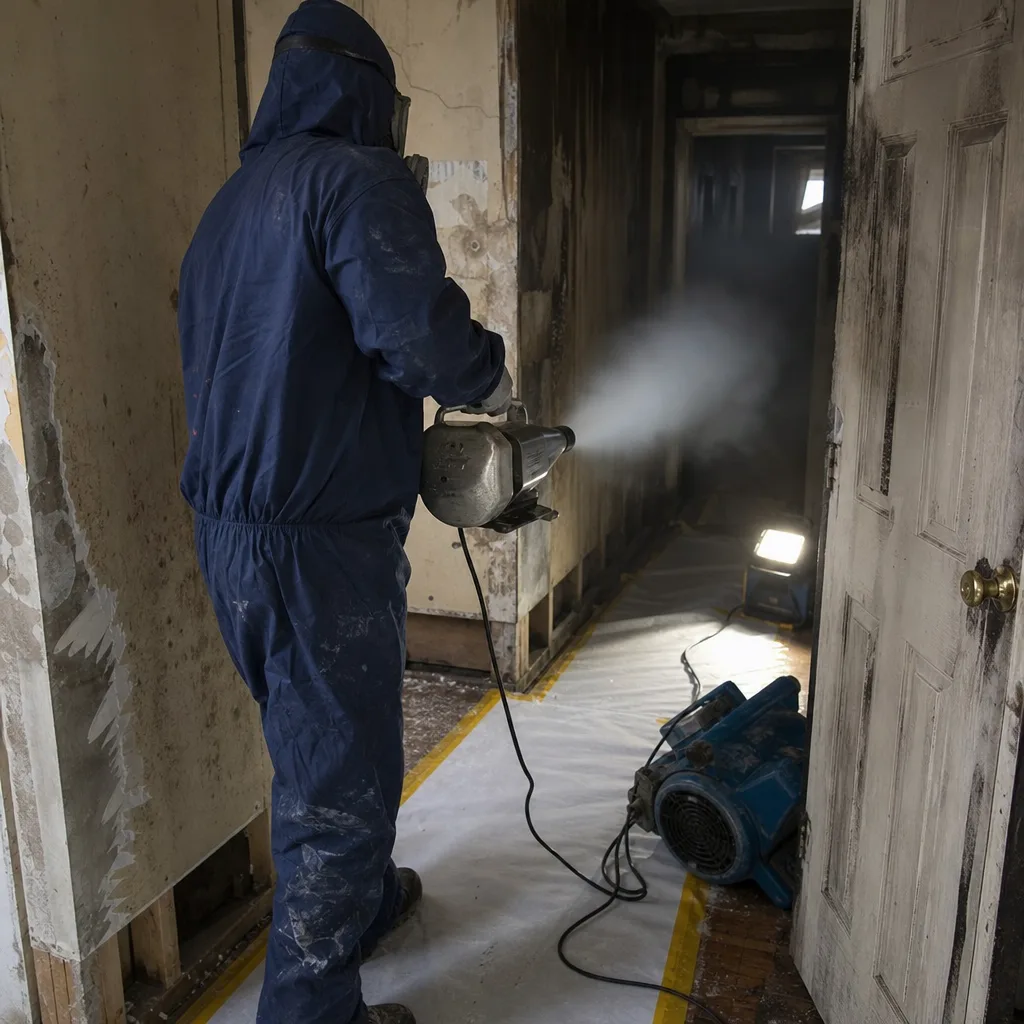
Dri-Eaz and Phoenix air movers and dehumidifiers run continuously with daily moisture readings logged until the dry standard is met. We track readings in writing, hand that log to you and your carrier, and adjust placement as the drying front moves. No one guesses when the job is dry.
Cleaning & Sanitization
Affected surfaces get antimicrobial treatment, HEPA vacuuming, and air scrubbing where the water category demands it. We clean contents in place or pack out inventory as the scope requires. For commercial spaces, this step protects stock, equipment, and tenant health.
Commercial-Specific Treatment
This is where commercial work diverges from residential. We coordinate with property managers, HOAs, and building engineers. We stage large-loss response gear for multi-floor jobs, deploy document and inventory recovery for offices and retail stock, and minimize business interruption by isolating work zones so a storefront on 116th Street does not have to close completely while we dry the back room.
Repairs & Restoration
The same crew rebuilds what came out: drywall, flooring, paint, trim, and structure. Because we do not hand the job off, the person who read the moisture map on day one is the same person who installs the new drywall. And everything is backed by the 90-Day Done Right Promise in writing.
Need Emergency Commercial Restoration in East Harlem Now?
Crews minutes away, answering live 24 hours a day. The sooner we start, the less it costs.
Working With Your Insurance Company
Commercial restoration claims in East Harlem move faster when the documentation is airtight from the first hour. We build the claim file as we work: initial photos before anything is touched, moisture readings from every affected room, a line-item scope of work, and daily drying logs. Our project managers talk directly with your adjuster, not through you. If the carrier needs a second opinion, we walk their inspector through the same job site we documented on day one. That matters when the claim involves a multi-unit NYCHA property or a pre-war tenement where the cause of loss spans decades of deferred maintenance. The carrier asks the same questions every time: was the loss sudden and accidental, was the response reasonable, and was the scope necessary. We answer with records, not opinions.
What We Provide Your Insurer
- Thorough documentation of the loss
- Photos of all damage, room by room
- Moisture readings and drying logs
- A detailed, line-item scope of work
- Direct coordination with your carrier
Built for East Harlem’s Loss Calendar
East Harlem commercial restoration work follows the weather and the building stock’s age, and we plan around both. January and February bring deep freezes that burst supply lines in uninsulated exterior walls and unheated basement risers, especially in the five- and six-story Old Law tenements along Lexington and Third Avenue corridors. March and April bring the thaw, and with it the wave of flat-roof parapet leaks. Manhattan sees 20 to 40 freeze-thaw cycles each winter. Every cycle cracks mortar and flashing at parapet bases, and by spring, top-floor commercial spaces show the result: ceiling stains, wet upper walls, and plaster that crumbles behind two layers of old paint. Summer thunderstorms dump flash water on streets and overwhelm roof drains on flat built-up tar roofs, ponding water until it finds a seam. Autumn nor’easters drive wind-blown rain into parapet caps and flashings. Underneath all of it runs the slower chronic loss: aging cast-iron drain stacks inside pre-1930 tenements, corroded at the joints, leaking inside walls for months before a smell gives it away. East Harlem’s commercial property owners call us when one of these shows up. Most calls are predictable. That is why we keep equipment staged for the neighborhood, and why our crews know the building types before they knock on the door.
Commercial Restoration Across East Harlem’s Neighborhoods
East Harlem’s commercial landscape stretches from 96th Street north to 125th Street, between Fifth Avenue and the East River, and the restoration needs shift block by block. Along 116th Street’s commercial corridor, the storefronts sit at street level under five and six stories of tenement above. When an upper apartment’s supply line lets go, every business below takes the water. Our crews know the corridors well enough to stage equipment on the sidewalk and start extraction inside 45 minutes, often before the fire department finishes shutting down the riser. Around the Wagner Houses and Jefferson Houses along First and Second Avenues, NYCHA’s authorization process sets the pace. Mitigation cannot begin until property management grants access and approves the vendor, which routinely burns 24 to 48 hours. On the blocks west of Park Avenue, the pre-war tenements carry original cast-iron stacks and lathe-and-plaster walls. Opening a wet ceiling there means lead-paint protocols and sometimes asbestos checks before a single sheet comes down. Near the East River, low-lying blocks took storm surge during Sandy in 2012 and still carry the legacy: chronic below-grade moisture in basements and ground-floor commercial spaces. Each part of East Harlem has its own failure patterns. A restoration crew that works the whole neighborhood knows which ones apply before the truck arrives.
Specialized Commercial Restoration Services We Offer in East Harlem
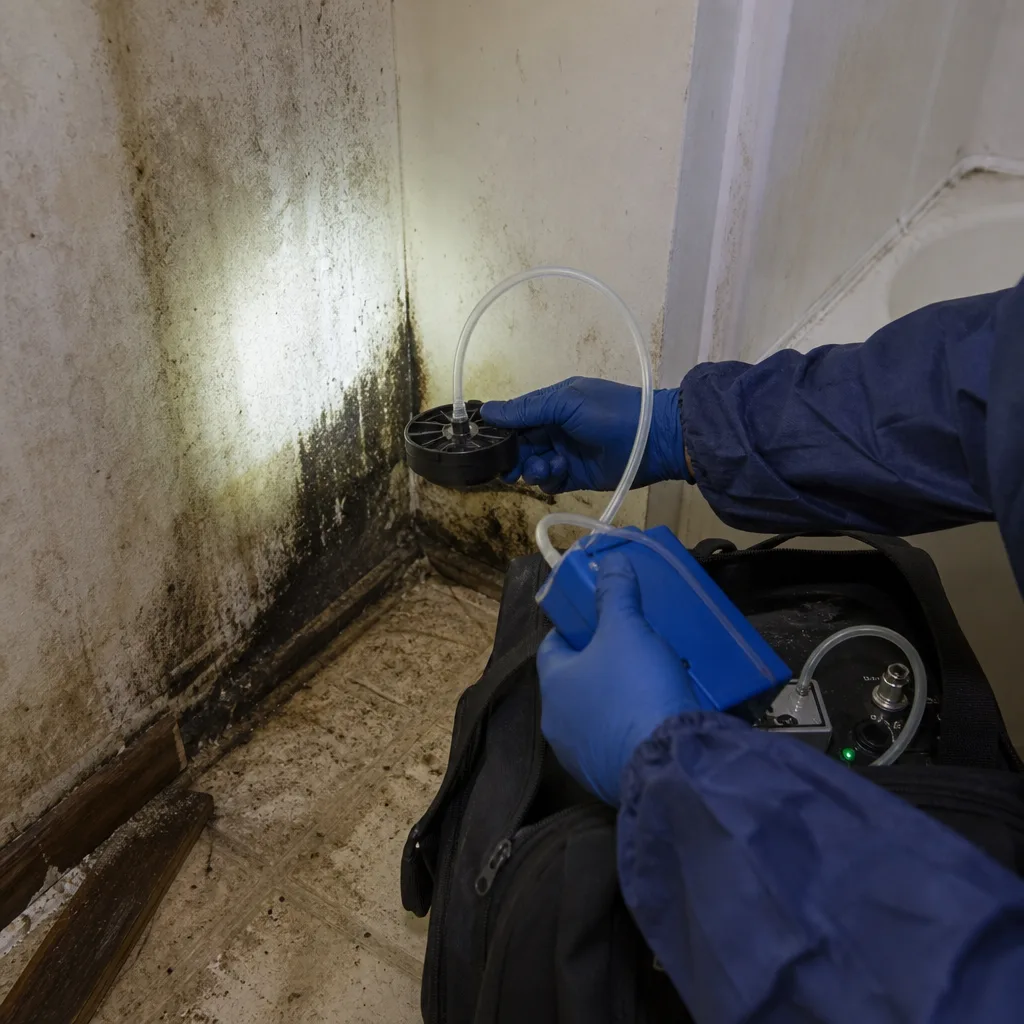
Multi-Unit & HOA Restoration
NYCHA towers and HOA-managed pre-war buildings require a crew that can coordinate with property management, board members, and building engineers at the same time. We have managed water losses across Wagner, Jefferson, and Carver Houses, where access delays are built into the process. We plan for them instead of reacting to them. Containment barriers get staged, air movers get pre-positioned, and the scope gets written so that when NYCHA clears access, the first day of work is already planned to the hour.
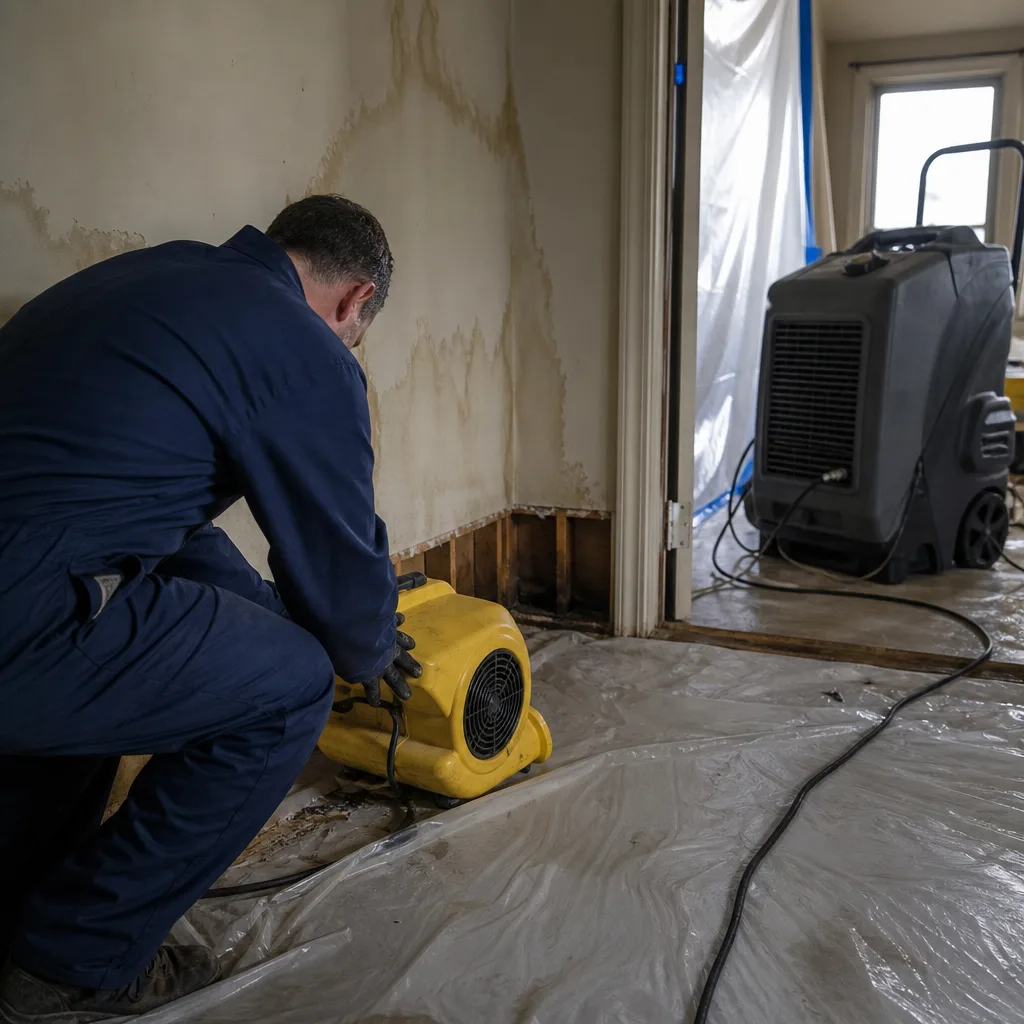
Business Interruption Minimization
A flooded retail space on 116th Street cannot close for a week waiting for a national franchise to schedule a crew. We set up negative air containment and isolate the drying zone so the front of the store can keep operating while the back room dries. For offices, we pack out only what needs to move, photograph inventory in place, and get wet documents into recovery before they are lost. The point is to keep the business running, not just to dry the building.
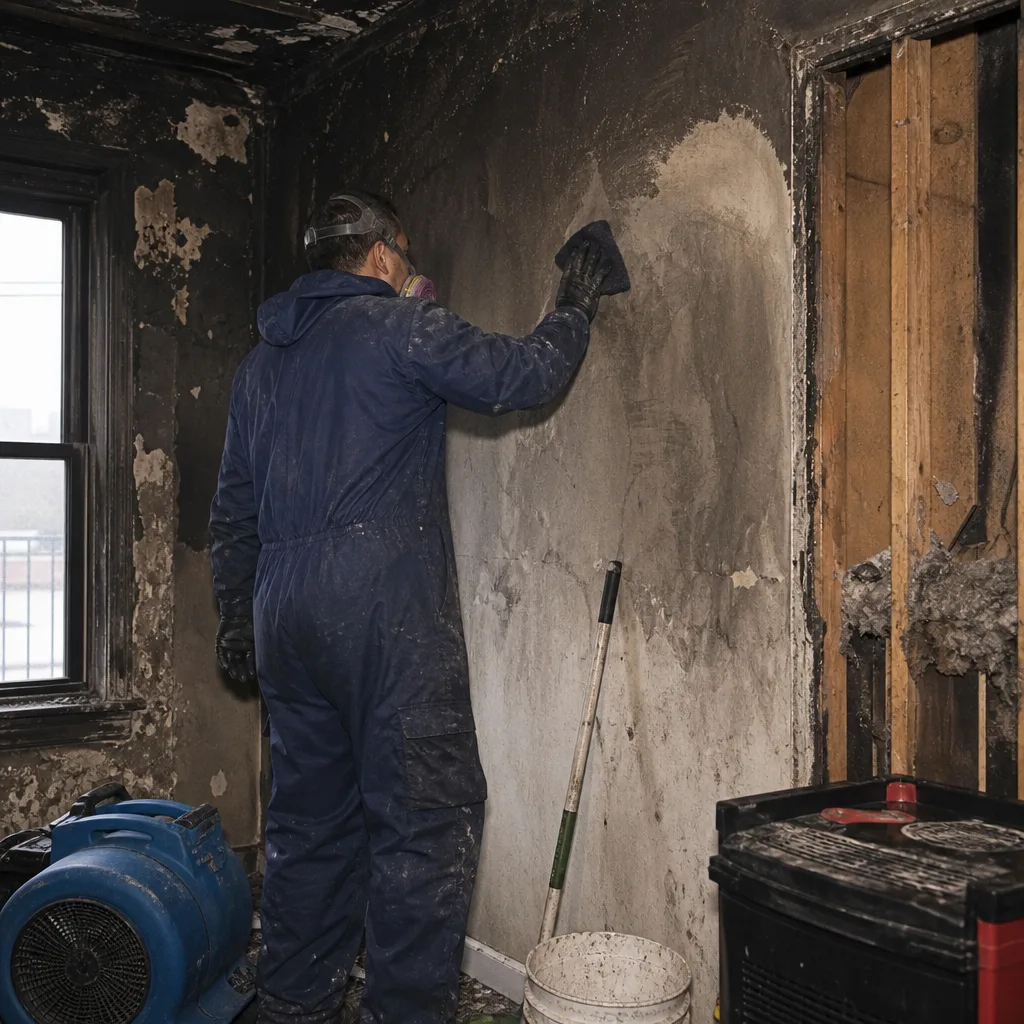
Large-Loss Response
A burst riser inside a tower is not a one-unit job. Water migrates down elevator shafts, through pipe chases, and into lower-floor apartments and commercial spaces. We run large-loss jobs with a full crew, extra dehumidification capacity, and a project manager on site continuously until the situation is stabilized. The Wagner Houses riser pipe job required moisure mapping across 11 floors before a single wall was opened. That kind of response takes equipment and manpower, and we keep both staged for East Harlem.
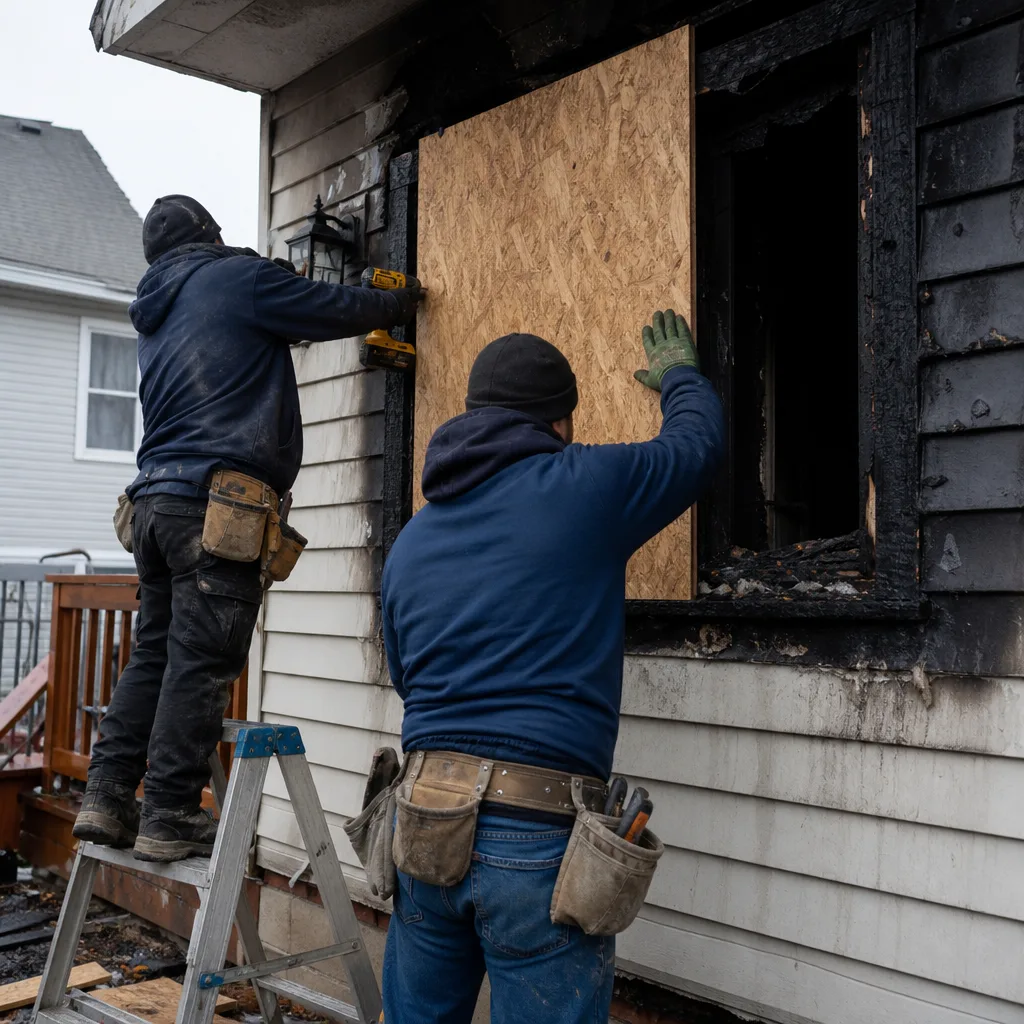
Office & Retail Restoration
Commercial spaces have contents that matter: inventory, files, electronics, furniture. We photograph everything before moving it, dry what is salvageable, and restore what can be saved. Document and inventory recovery is part of the scope, not an afterthought. East Harlem’s small commercial landlords and retailers need a crew that treats the contents as the real asset.
Industrial Facility Cleanup
Larger industrial spaces in East Harlem, including the light-industrial buildings along the East River and under the viaducts, need containment and air scrubbing at a different scale. We run HEPA air scrubbers in continuous operation during demolition and cleaning, and we log air quality readings as part of the dry standard documentation. The same IICRC standards apply, sized up for larger square footage and higher ceilings.
What happens when you call
- 1
A real person answersNo phone trees - you reach a local pro.
- 2
You get an upfront price rangeHonest numbers before anyone is dispatched.
- 3
A background-checked tech heads outLicensed & insured, dispatched right away.
- 4
You approve before work beginsNothing starts until you say go.
Commercial Restoration Costs in East Harlem, NY
Commercial water damage in East Harlem runs on a predictable range once you understand the building. A small Category 1 loss in a single storefront, extract and dry in place, carries an East Harlem market cost around $2,500 to $6,000. A Category 2 or 3 loss that requires controlled demolition, containment, and pack-out in a pre-war tenement typically lands between $8,000 and $25,000. Multi-floor NYCHA riser losses with asbestos or lead-paint scopes can reach $35,000 to $75,000 or higher, depending on the number of units and the abatement requirements. What moves the price: water category, square footage affected, containment needs, whether a lead-safe plan is required, NYCHA vendor approval delays, and how much of the contents needs pack-out and recovery. Insurance covers most sudden and accidental losses; chronic leaks or deferred maintenance are often partly or fully the owner’s responsibility. The free inspection gives you a written scope with line items, so you know the number before you approve work. Call (518) 800-3751 and we will send a crew to give you that number.
We Also Serve Cities Near East Harlem
Floodline Restoration Co. runs the same certified crews and the same 90-Day Done Right Promise into the neighborhoods around East Harlem. If your commercial property sits across the river or just over the line, we cover Astoria, Ditmars Steinway, Upper Manhattan, and the Upper East Side. Same live answer, same 45-minute dispatch target, same standard of documentation. Call us wherever your building sits.
Serving East Harlem, NY - Our Local Coverage Area
We’re based in the East Harlem area and know this community well. Use the map below to see our service coverage - if you’re nearby, we can almost certainly help.
East Harlem Commercial Restoration Questions, Answered
How long does NYCHA normally take to authorize emergency water mitigation in East Harlem, and what does that mean for our commercial space?
NYCHA authorization in East Harlem typically takes 24 to 48 hours after the initial call, and sometimes longer for vendor approval on building-system work. That delay means affected walls and cavities stay wet while mold colonization begins. For your commercial space, it means we stage containment and equipment before access is granted, write the scope with the delay built in, and document conditions at the time of the first call so the eventual claim reflects what was happening on day one, not day three. The practical result is usually a larger pack-out and containment scope, because water that sat for two days is more contaminated and more destructive. Call (518) 800-3751 as soon as you can after the loss, whether NYCHA has approved anything yet or not.
Why do restoration crews in East Harlem have to be certified for lead-paint work on commercial buildings?
East Harlem’s pre-1930 tenements carry lead paint under layers of newer paint, and any demolition, wall opening, or even aggressive sanding of old plaster can disturb it. NYC law and EPA RRP rules require lead-safe work practices on any pre-1978 building, commercial included. Opening a wet lathe-and-plaster ceiling without that certification triggers a stop-work order and forces a full abatement scope. Our crews hold the certifications and plan for lead-paint containment before the first cut, which keeps the job moving and the compliance clean.
When a retail store in East Harlem floods from a riser pipe, is the water Category 1, 2, or 3, and does that change what gets thrown out?
It starts as Category 1 if the riser carries clean supply water. But within 24 to 48 hours of sitting inside wall cavities, picking up building residue and dust, it degrades to Category 2. If it contacts sewage or has supported microbial growth, it becomes Category 3. The category decides what is salvageable: Category 1 wet drywall can sometimes be dried in place; Category 2 usually requires cutting out affected drywall and bagging contaminated insulation; Category 3 means disposal of porous materials and full antimicrobial treatment. In a NYCHA delay scenario, you are almost always dealing with Category 2 by the time we get in, which means a bigger cut-out scope. That is why calling the moment water appears changes your final bill.
What does business interruption minimization actually look like for a storefront on 116th Street that can’t close for a week?
It looks like isolating the damage zone with containment barriers and negative air pressure so the front of the store stays open while the back dries. We run air scrubbers that keep dust and mold spores out of the sales floor, pack out only the inventory in the affected area, and schedule demolition around your operating hours where possible. If the loss hits a kitchen or prep area, we can often build a temporary demising wall so the front counter keeps serving. The goal is to keep cash flow moving while we make the building dry and safe.
Are flat-roof parapet leaks really that predictable in East Harlem, and can restoration help prevent recurring damage?
Yes, they are predictable in the aggregate. Manhattan’s 20 to 40 freeze-thaw cycles each winter crack the flashing and mortar at parapet bases on the flat built-up roofs that cap most East Harlem tenements. Every March and April, the same top-floor commercial spaces take water. Restoration can mitigate the interior damage, but prevention means repairing the parapet itself, not just the ceiling below. As part of a commercial scope, we identify the roof-side cause, document it for the carrier, and can coordinate the roof repair or rebuild so the next thaw does not re-wet the same 5th-floor storefront.
How fast can you actually get to a commercial property in East Harlem?
We target 45 minutes from your call to a crew on site anywhere in East Harlem. That includes the blocks around Wagner Houses, Jefferson Houses, and Carver Houses, the storefronts on 116th Street, and the pre-war tenements west of Park. A live dispatcher confirms the truck while you are still on the phone. Call (518) 800-3751 and the clock starts.
Will my insurance cover commercial water damage in East Harlem?
Sudden and accidental losses are covered under most commercial property policies: a burst pipe, a failed riser, a storm-driven roof leak. Chronic leaks, deferred maintenance, and gradual seepage are generally not covered, or are covered only partially. What helps most is a documented, first-hour response. We provide photos before work starts, moisture logs, and a line-item scope, and we bill your carrier directly. If the claim is denied or underpaid, we have the records to support a challenge. Call (518) 800-3751 for a free inspection and we will tell you what we are looking at, in plain language.
What should I do in the first 30 minutes after commercial water damage in East Harlem?
Shut off the water source if you can safely reach it. Kill power to the affected area if water is near outlets or electrical panels. Move inventory, documents, and electronics out of the water’s path. Photograph everything, from the standing water to the ceiling stain. Then call (518) 800-3751. Do not wait for NYCHA authorization or a building manager to get back to you. The first 30 minutes decide whether the scope is a dry-in-place or a full cut-out, and the clock on mold does not pause for bureaucracy.
Written by Curt Bowman, Owner at Floodline Restoration Co., serving East Harlem commercial property owners with live 24/7 emergency response and the 90-Day Done Right Promise in writing.