
Free visual inspection and a written scope of work before any mitigation begins - photos, moisture readings, and drying logs go in your claim file
The scope we write is the scope we bill. Anything new gets shown to you, in writing, before we touch it.
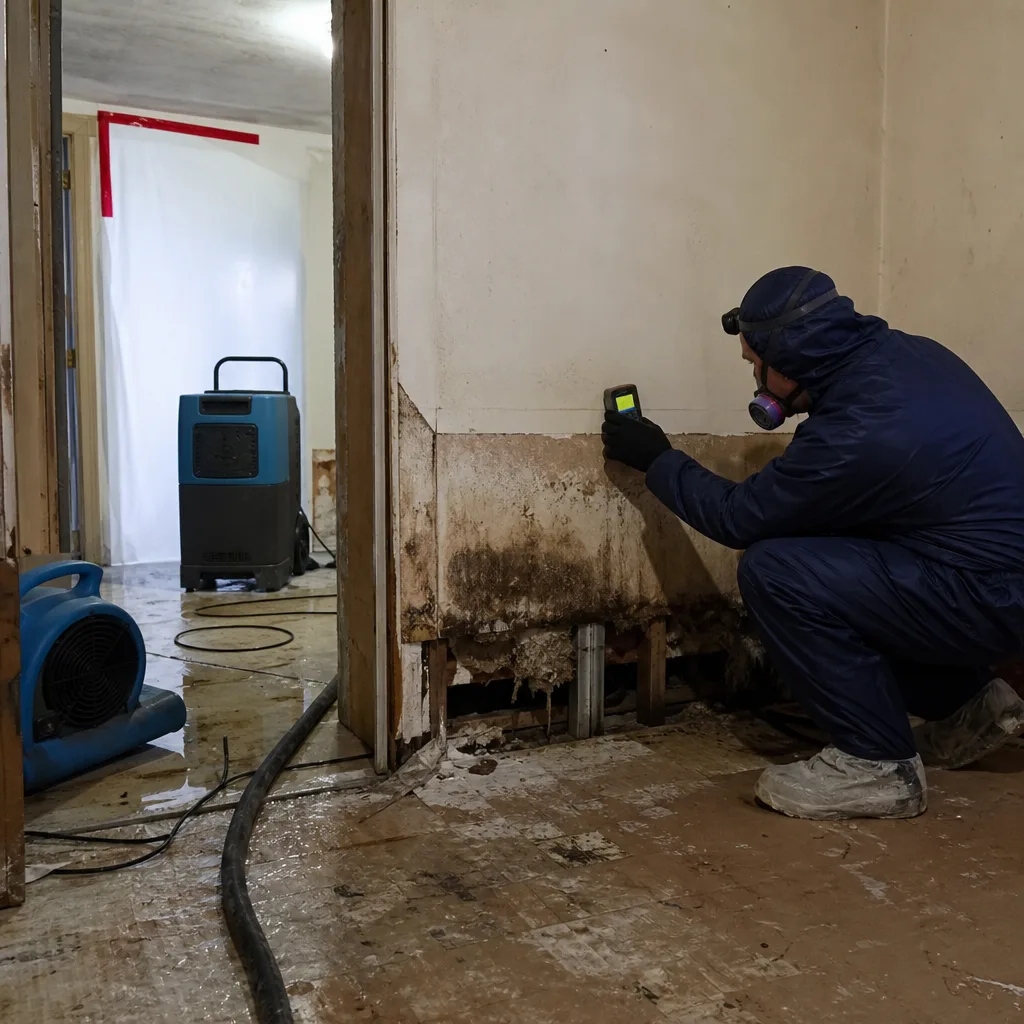 Before
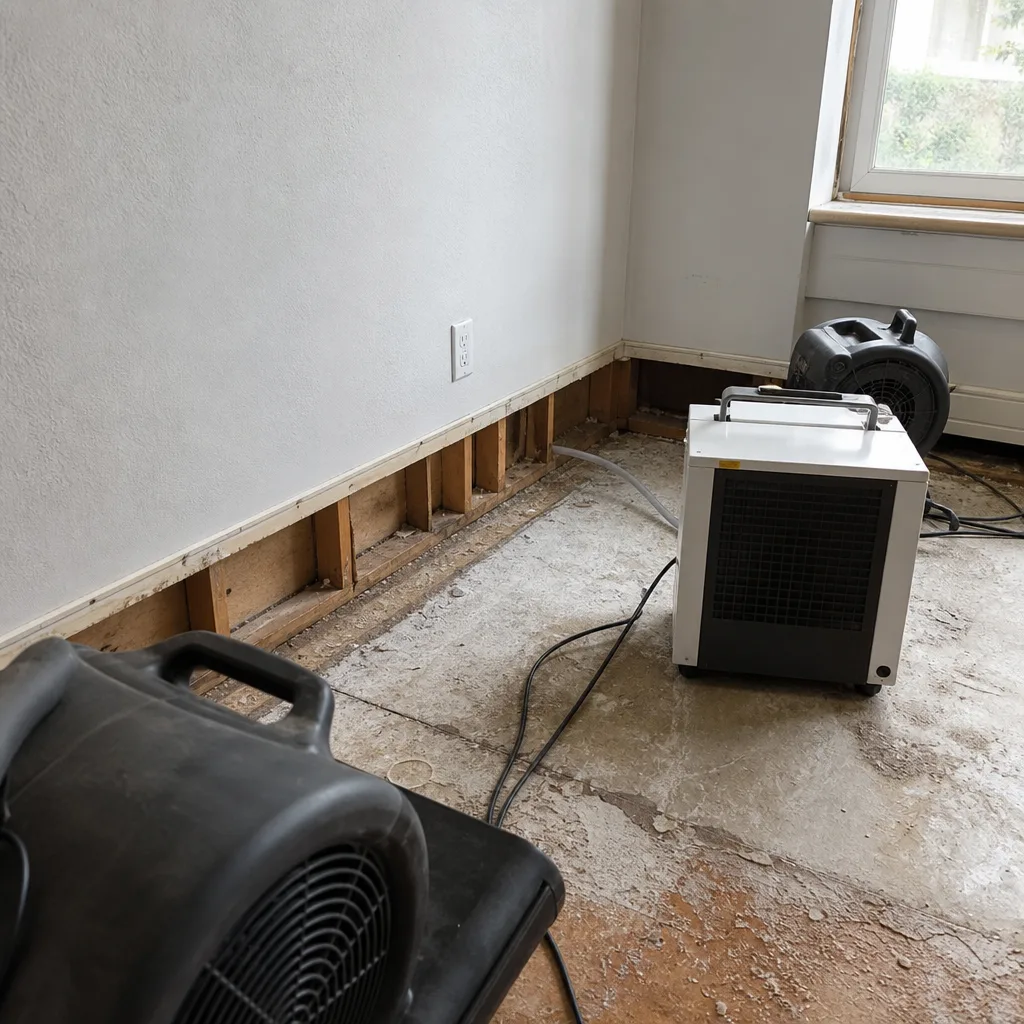 After
After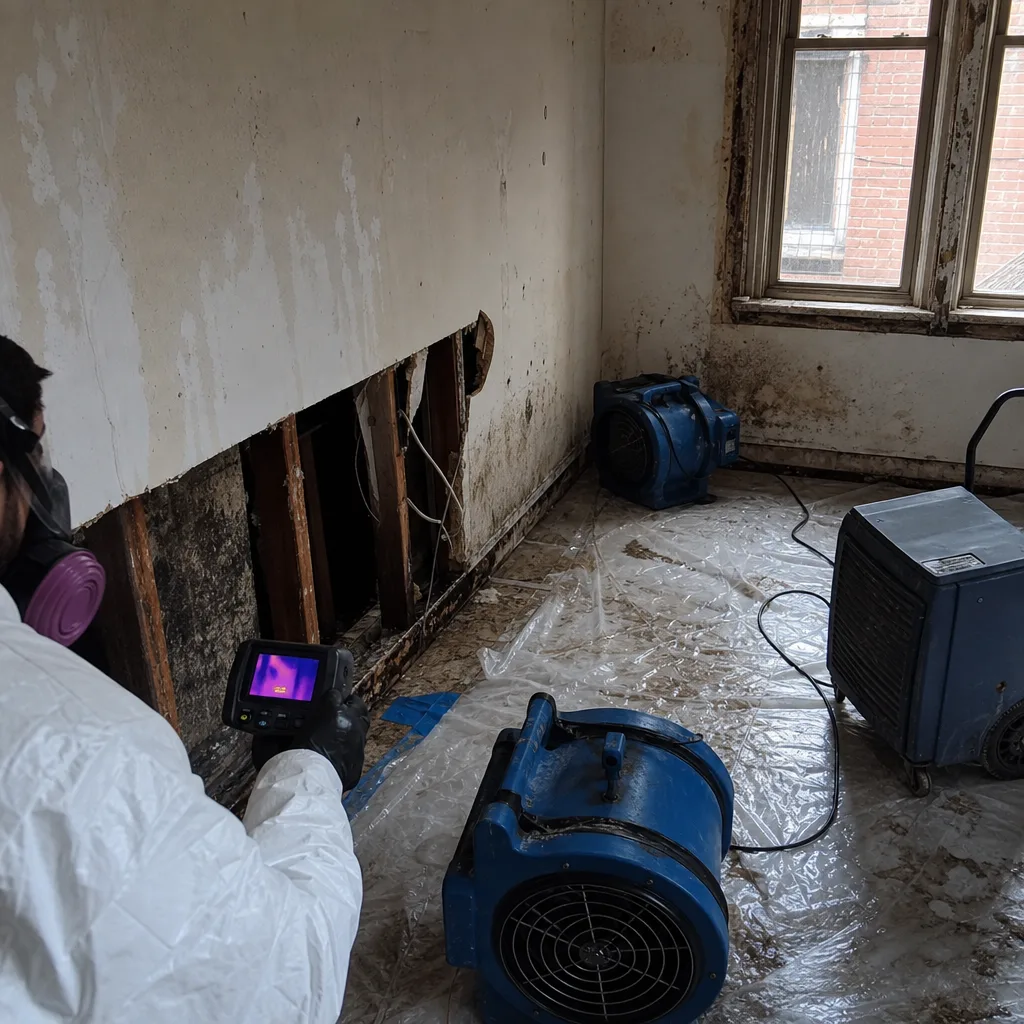 Before
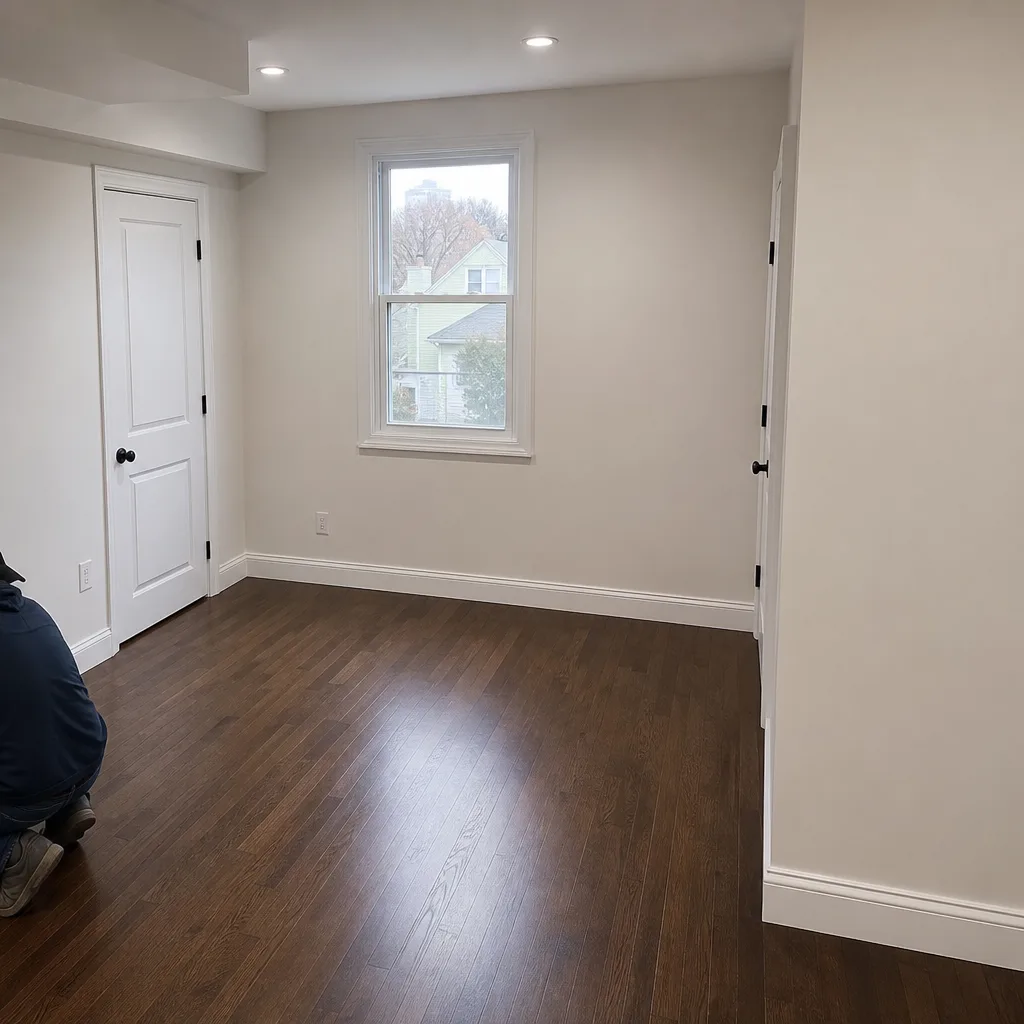 After
After24/7 Emergency Fire & Smoke Damage Restoration in Long Island City
Fire & smoke damage restoration in Long Island City typically runs $2,800-$12,400 depending on square footage, soot type, and whether firefighting water migrated beyond the fire room. Our crews are dispatched inside the Long Island City area around the clock, with a live person answering at (518) 800-3751 at any hour. A visual inspection is free, and the first hour matters more than most homeowners realize: soot residue becomes more acidic and harder to remove as it cures into porous surfaces, so starting mitigation right away reduces the scope and cost of cleanup. We handle everything from the first board-up to the final coat of paint.
Understanding Fire & Smoke Damage Restoration Severity in Long Island City Properties
Fire damage produces three distinct soot residue types, and each demands different chemistry. Dry soot comes from fast-burning natural materials and is the easiest to remove. Protein soot from kitchen fires is nearly invisible but leaves a heavy lacquer-like film and a sharp odor. Oily or wet soot comes from smoldering synthetics and is the most aggressive, requiring alkaline cleaners and sometimes full surface replacement. Smoke itself migrates far beyond the fire room, driven by pressure differences through wall cavities, chase ways, and electrical conduit. In Long Island City’s converted warehouse lofts, this migration path is wider than in traditional row houses: open concrete floor plates and deep ceiling cavities give smoke a free run across entire floors. We use thermal imaging and borescopes to map exactly where smoke traveled, so we are not just treating the visible fire room while odor hides elsewhere.
Why Long Island City Property Owners Choose Floodline Restoration Co.
- 45-minute response commitment: We commit to having a certified crew rolling to Long Island City properties within 45 minutes of your call. A live dispatcher confirms the vehicle, not a script.
- 24/7 live answer, every time: A real person picks up the phone at 2 a.m. The dispatcher has our crew’s locations on a board and can route the closest certified technician to 11101, 11109, or 11120.
- IICRC-certified crews, fire and water: Our technicians hold current IICRC FSRT and WRT certifications, because fire restoration in Long Island City almost always includes water damage from firefighting.
- Free visual inspection: We walk the property with you, document the damage, and give you a written scope before any work starts. No charge for the visit.
- Direct insurance billing: We bill your carrier directly and coordinate with the adjuster so you are not the messenger. Photo documentation goes to the insurer from day one.
- One team through rebuild: Curt Bowman’s crews handle extraction, drying, soot removal, and structural repair. We do not hand the job off after mitigation, which matters in Long Island City’s loft buildings.
Our Fire & Smoke Damage Restoration Process
Inspection & Assessment
We document the fire scene, trace smoke migration through your Long Island City property, and take moisture readings because firefighting water is usually already spreading. You get a written scope and a line-item estimate before we begin.
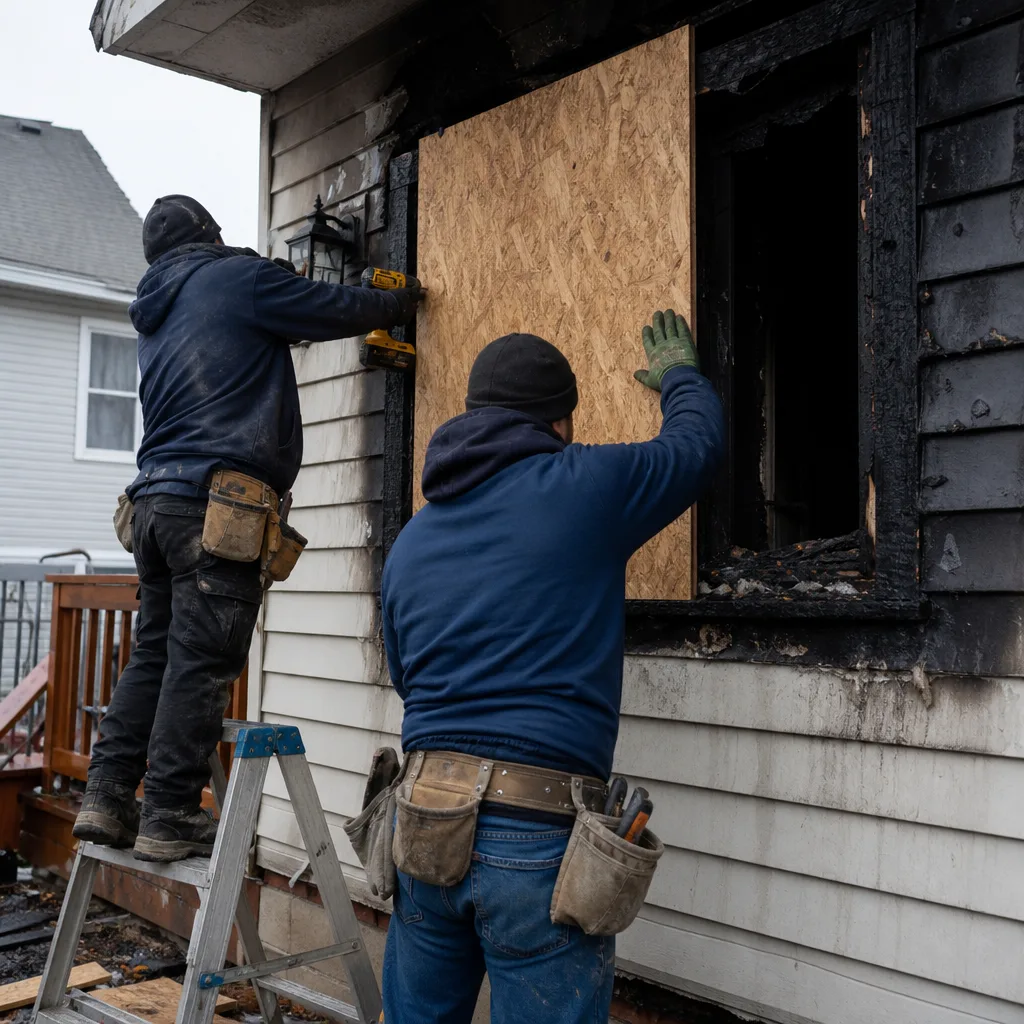
Board-Up, Tarping & Stabilization
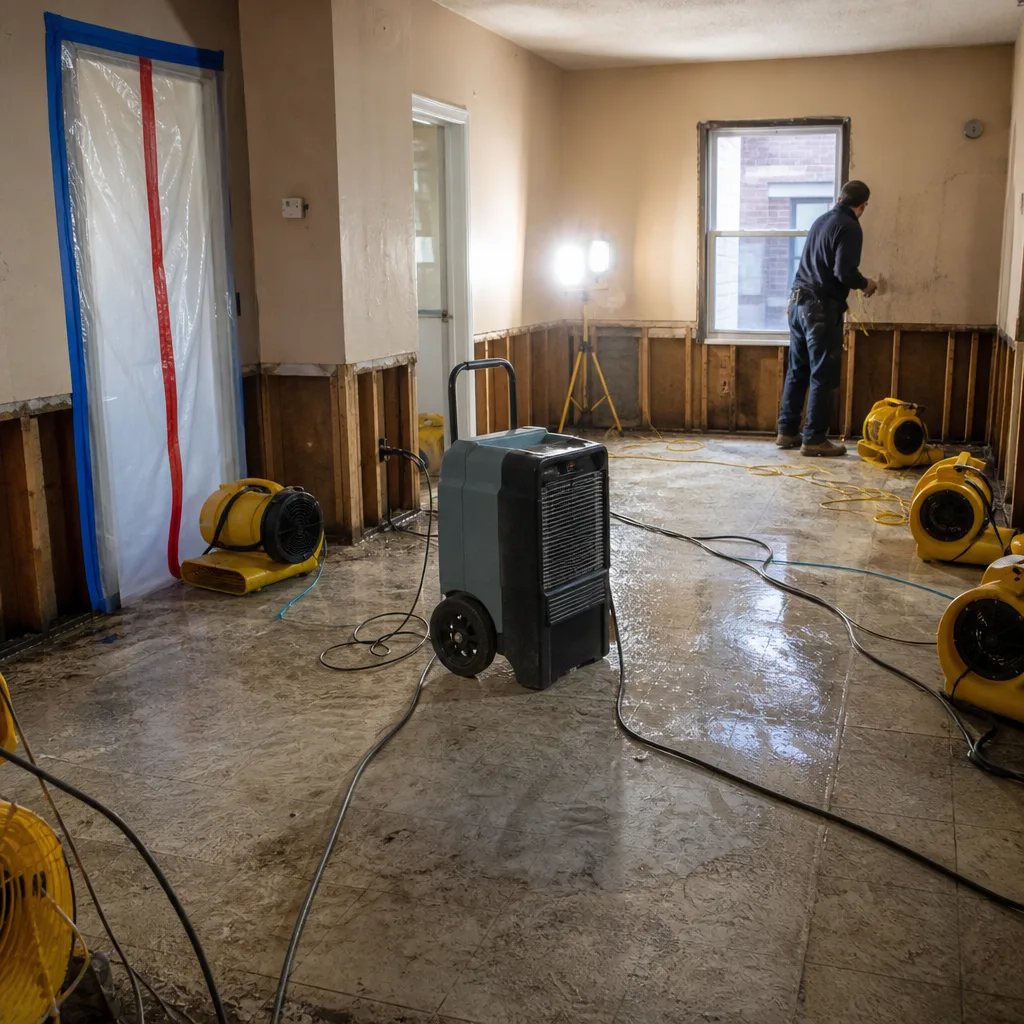
We secure openings to prevent weather and intrusion, then remove unsalvageable debris. Emergency board-up keeps the property safe while assessment and drying get underway.
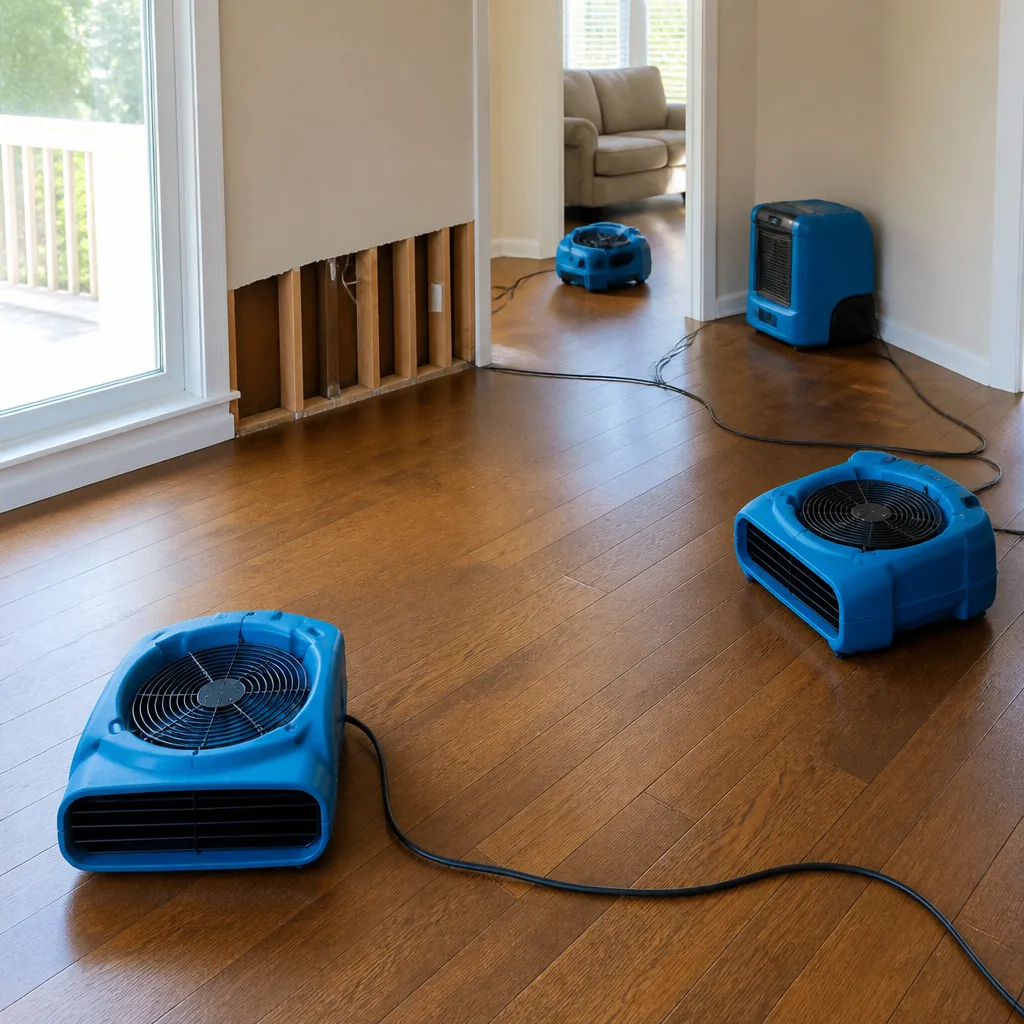
Water Extraction & Structural Drying
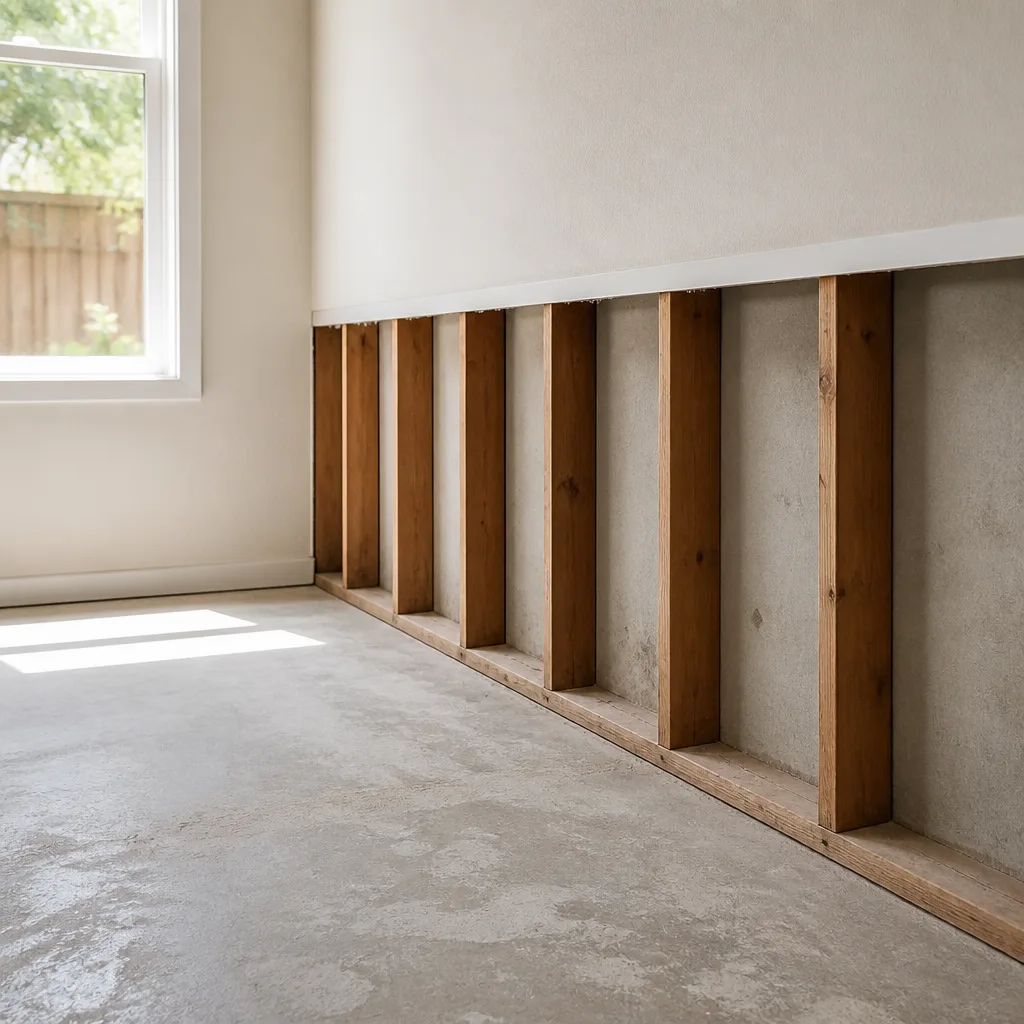
Firefighting water is extracted using truck-mounted and portable units. Air movers, dehumidifiers, and hygrometers track moisture day by day. In Long Island City slab-on-grade lofts, we use deep-cavity drying and dill-injector equipment to reach moisture trapped under concrete.
Soot & Smoke Removal
We clean surfaces using the correct chemistry for the soot type present. HEPA vacuums and dry-sponge techniques lift residue without driving it deeper into drywall and concrete surfaces that are common in Long Island City’s converted warehouses.
Deodorization & Air Scrubbing
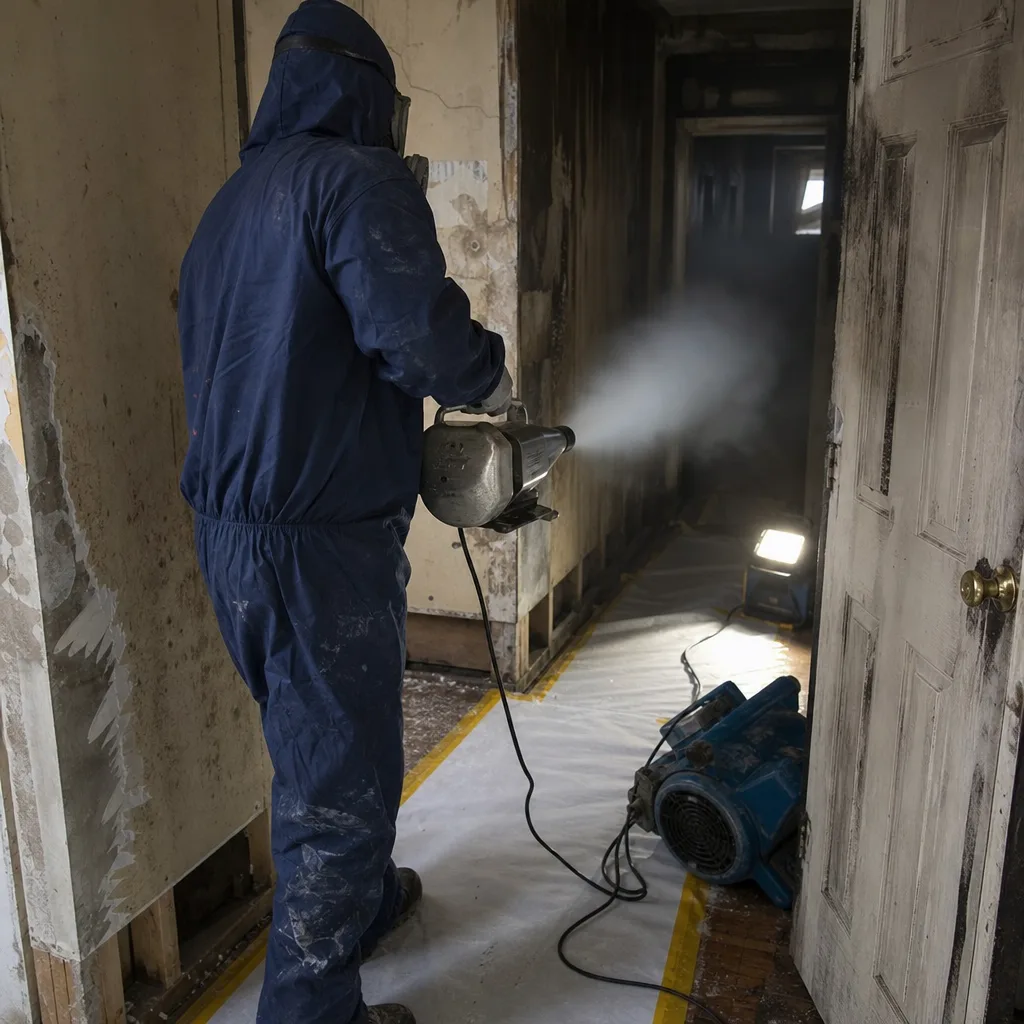
Thermal fogging, ozone, and hydroxyl generators are matched to the surface and the type of smoke. We run HEPA air scrubbers with carbon filters to capture airborne particulates before the space is reoccupied.
Structural Fire Repair & Restoration
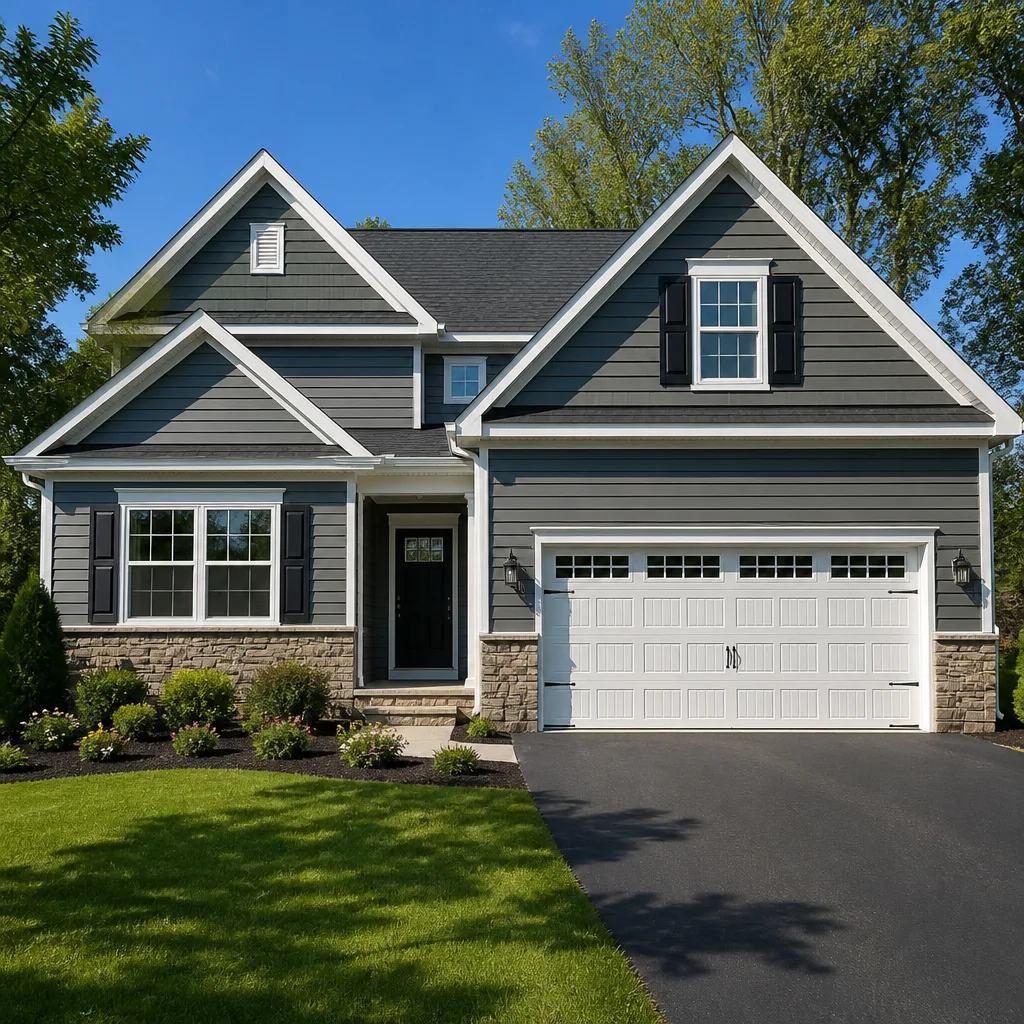
From framing repair to drywall, paint, flooring, and trim, we finish the job with the same crew that did the mitigation. For Long Island City high-end waterfront units, we match materials and finishes precisely.
Need Emergency Fire & Smoke Damage Restoration in Long Island City Now?
Crews minutes away, answering live 24 hours a day. The sooner we start, the less it costs.
Working With Your Insurance Company
Fire claims are the most heavily scrutinized claims in property insurance, and the documentation you produce in the first 48 hours decides how smoothly the claim goes. We photograph every room, every surface, every angle before demolition begins. We log moisture readings from day one and keep the drying log current until all surfaces meet dry standard, then hand the log to your adjuster. Our estimates follow Xactimate or the carrier’s preferred format, and we coordinate directly with the adjuster so you are not the one carrying paperwork back and forth. Senior adjusters in the New York metro area know our documentation style, and that speeds approvals. For Long Island City loft fires where water from firefighting crosses into neighboring units, the documentation trail is what protects you from a denied supplementary claim.
What We Provide Your Insurer
- Thorough documentation of the loss
- Photos of all damage, room by room
- Moisture readings and drying logs
- A detailed, line-item scope of work
- Direct coordination with your carrier
Built for Long Island City’s Loss Calendar
Long Island City’s fire season does not follow any simple calendar. January and February bring space heater fires in older loft conversions along Jackson Avenue, where open floor plates mean smoke travels through multiple units before any alarm triggers. Summer thunderstorms stress the flat membrane roofs on converted warehouse buildings, leading to chronic ponding at parapet seams, which quietly saturates roof cavities, and when a fire occurs in one of these properties, the saturated materials complicate drying and deodorization. Nor’easters push wind-driven smoke and embers issues into the mix, and holiday cooking fires in Hunters Point high-rise kitchens spread smoke through shared mechanical shafts. A kitchen fire in a glass and steel tower on Center Boulevard is a different animal than one in a pre-war brick building on 21st Street. We plan our equipment staging accordingly, keeping extra dehumidifiers and air scrubbers staged for multi-unit loft responses.
Fire & Smoke Damage Restoration Across Long Island City’s Neighborhoods
Long Island City’s neighborhoods each present a distinct restoration pattern. In Hunters Point, the converted warehouse lofts along 47th Avenue and Vernon Boulevard have open concrete floor plates that let firefighting water travel laterally across entire floors, which means we are routinely setting up containment and drying in adjacent units, not just the fire unit. On the waterfront near Center Boulevard, the post-2005 towers house mechanical systems in flood-vulnerable lower floors, and smoke from a kitchen fire can travel up shared exhaust shafts and trigger odor complaints several floors above. Dutch Kills, with its mix of pre-war brick and newer multifamily buildings, tends to see electrical fires in aging panel systems and kitchen fires, often in units that have not been renovated since the 1980s. Along Jackson Avenue, commercial and mixed-use buildings see more restaurant kitchen fires and more demanding structural repair work. Queensbridge and the area near 21st Street involve high-rise housing with fire-rated hallway construction that contains a fire well but traps smoke, making deodorization the primary restoration issue. Each of these areas means a different approach to the same core Fire & Smoke Damage Restoration work. For property owners throughout Long Island City, we plan around the building typology before we unload the truck.
Specialized Fire & Smoke Damage Restoration Services We Offer in Long Island City
Fire Damage Cleanup
Fire damage cleanup in Long Island City loft buildings means removing charred drywall, flooring, and cabinetry, then cleaning soot from every surface before sealing with a stain-blocking primer so discoloration does not bleed through. In open-plan lofts, we make sure the entire floor plate is cleaned, not just the unit where the fire started.
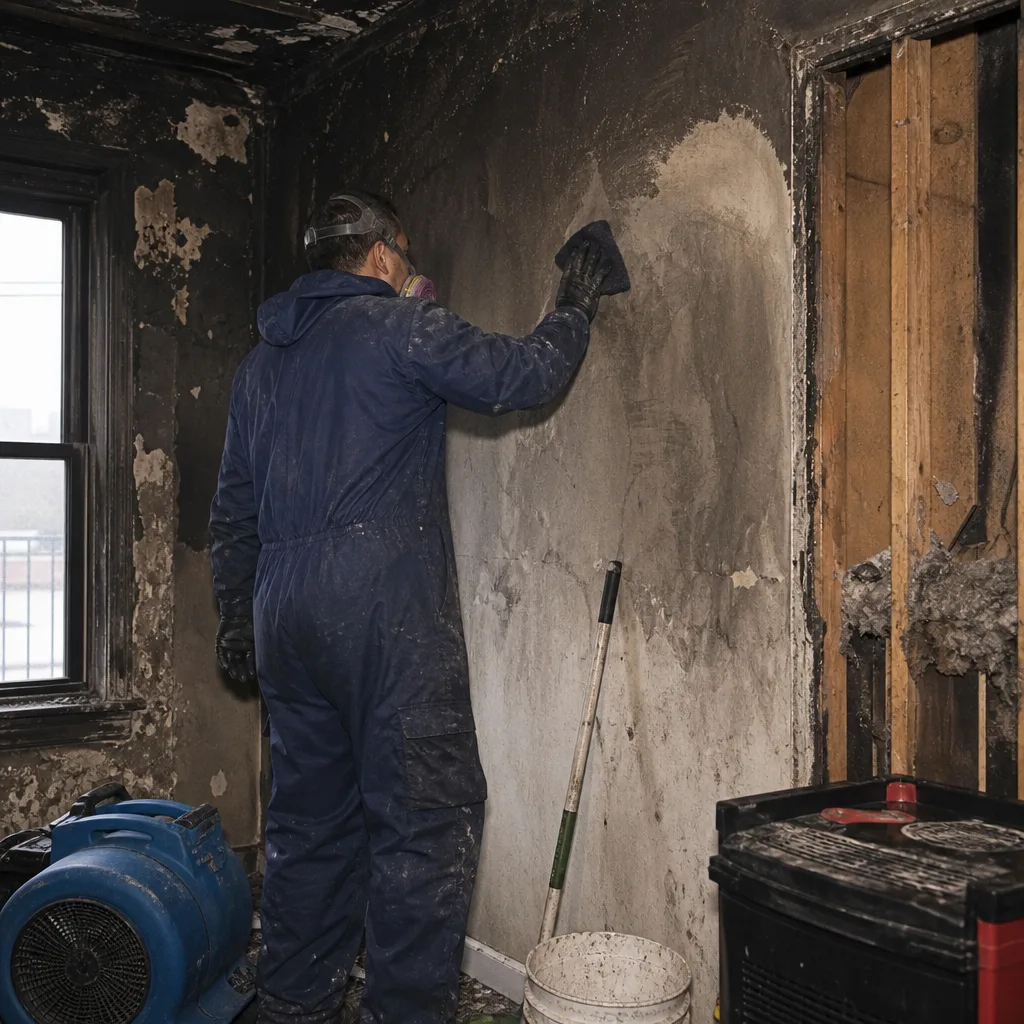
Smoke & Soot Removal
We use dry-chem sponges, HEPA vacuums, and appropriate agitation to remove soot from painted surfaces, concrete, and exposed timber beams common in Hunters Point conversions. Soot left on concrete will continue to off-gas odor for years, so we are thorough even on surfaces that look clean.
Odor Removal & Deodorization
Ozone is effective in unoccupied spaces and neutralizes the sharp odor of burned synthetics, but it is inappropriate where people or pets remain and should not be used on occupied floors. Hydroxyl generators operate safely in occupied buildings and are our standard choice in Long Island City high-rises, where evacuating a full floor is not practical. Thermal fogging reaches deep into drywall and fabrics. Smoke odor in high-end waterfront condos on Center Boulevard demands all three, plus sealing of chase ways and shared shafts, which are the hidden smoke highways in vertical construction.
Contents Cleaning & Pack-Out
We inventory, photograph, and pack out salvageable contents to our climate-controlled cleaning facility, where they are cleaned, deodorized, and stored until your restoration in Long Island City is complete. We provide a full contents list to your insurer. Many contents are restorable; items with heavy charring or protein soot may be beyond cleaning.
Emergency Board-Up & Tarping
We secure fire-damaged openings with plywood, 2×4 bracing, and roof tarps, preventing weather and intrusion from compounding the loss. Fire escapes and forced-entry points get the same attention, and in Long Island City, we prioritize buildings with ground-floor retail windows, which are common along Jackson Avenue and Vernon Boulevard and are vulnerable after a fire.
What happens when you call
- 1
A real person answersNo phone trees - you reach a local pro.
- 2
You get an upfront price rangeHonest numbers before anyone is dispatched.
- 3
A background-checked tech heads outLicensed & insured, dispatched right away.
- 4
You approve before work beginsNothing starts until you say go.
Fire & Smoke Damage Restoration Costs in Long Island City, NY
A typical fire damage cleanup in Long Island City runs $3,500-$7,000 for a small kitchen fire with moderate soot. Add $1,500-$3,000 if water from firefighting traveled and structural drying is needed. Smoke and soot removal across an entire converted loft typically runs $5,000-$9,000. Contents cleaning and pack-out adds $1,200-$4,000 depending on volume. Emergency board-up and tarping alone is $800-$1,500. Structural fire repair, including framing, drywall, and finish, commonly lands between $8,000 and $25,000 in the Long Island City market when a wall or floor section must be rebuilt. Most insurance policies cover fire, smoke, and the water used to fight the fire, so the out-of-pocket is usually your deductible. We provide a line-item scope before work starts, and we bill your carrier directly.
We Also Serve Cities Near Long Island City
Floodline Restoration Co. serves fire and smoke damage restoration for property owners in Astoria, Maspeth, Jackson Heights, and East Elmhurst. Same crews, same written guarantee, and the same live phone answer at any hour.
Serving Long Island City, NY - Our Local Coverage Area
We’re based in the Long Island City area and know this community well. Use the map below to see our service coverage - if you’re nearby, we can almost certainly help.
Long Island City Fire & Smoke Damage Restoration Questions, Answered
Does fire damage restoration in Long Island City also require addressing water damage from firefighting?
Yes. In Long Island City’s converted warehouse lofts, water from firefighting routinely travels across open concrete floor plates into neighboring units, so proper restoration requires moisture mapping and structural drying beyond the fire room. Our crews always check adjacent units and slab cavities after a Long Island City fire.
What is the biggest hidden risk after a fire in a Hunters Point loft building?
The biggest hidden risk is water from firefighting migrating through the open floor plate and saturating the concrete slab, which can cause chronic moisture and mold long after the fire is out. Without deep-cavity drying and ongoing moisture readings, the building seems dry at the surface but remains wet underneath.
How does Floodline Restoration Co. handle smoke odor in Long Island City’s high-end waterfront condos?
We use hydroxyl generators that work safely in occupied buildings and thermal fogging where surfaces allow, then seal chase ways and shared shafts where smoke travels between floors. Ozone is only used in unoccupied spaces. The goal is to remove odor, not mask it.
Can you restore contents after a fire in Long Island City, or do they always need replacing?
Many contents can be restored. We inventory, photograph, and pack out salvageable items, then clean and deodorize them at our facility. Heavy charring or protein soot may push some items beyond economic restoration, but our default is to restore, not replace, which often saves both the homeowner and the carrier.
What does emergency board-up and tarping involve for a fire-damaged Long Island City building?
We secure fire-damaged openings with plywood and 2×4 bracing, tarp the roof, and address ground-floor retail windows where needed. The goal is to prevent weather, intrusion, and additional loss before the full restoration process begins.
How fast can you get to a fire-damaged property in Long Island City?
Our crews are dispatched to Long Island City properties with a 45-minute response commitment. We answer the phone live, 24 hours a day, at (518) 800-3751. A certified technician gives you a free visual inspection and starts the board-up or extraction in the same visit.
Will my insurance cover fire and smoke damage restoration in Long Island City?
Most homeowner and condo policies cover fire, smoke, and the water used to fight the fire, less your deductible. We bill your carrier directly, provide daily photo documentation and moisture logs, and coordinate with the adjuster so you are not the intermediary.
Do I need to leave my home during fire and smoke restoration?
Depends on the scope. A small kitchen fire with contained soot often allows occupancy during cleaning, while a multi-unit loft fire with structural drying and deodorization may require temporary relocation. We give you a straight answer after the initial assessment, and we include temporary accommodation costs in the insurance scope where appropriate.
If you have fire or smoke damage in Long Island City, call (518) 800-3751 now. We answer live, we come quickly, and the estimate is free.
Written by Curt Bowman, Owner at Floodline Restoration Co., serving Long Island City with full-cycle fire and smoke damage restoration.