
Free visual inspection and a written scope of work before any mitigation begins - photos, moisture readings, and drying logs go in your claim file
The scope we write is the scope we bill. Anything new gets shown to you, in writing, before we touch it.
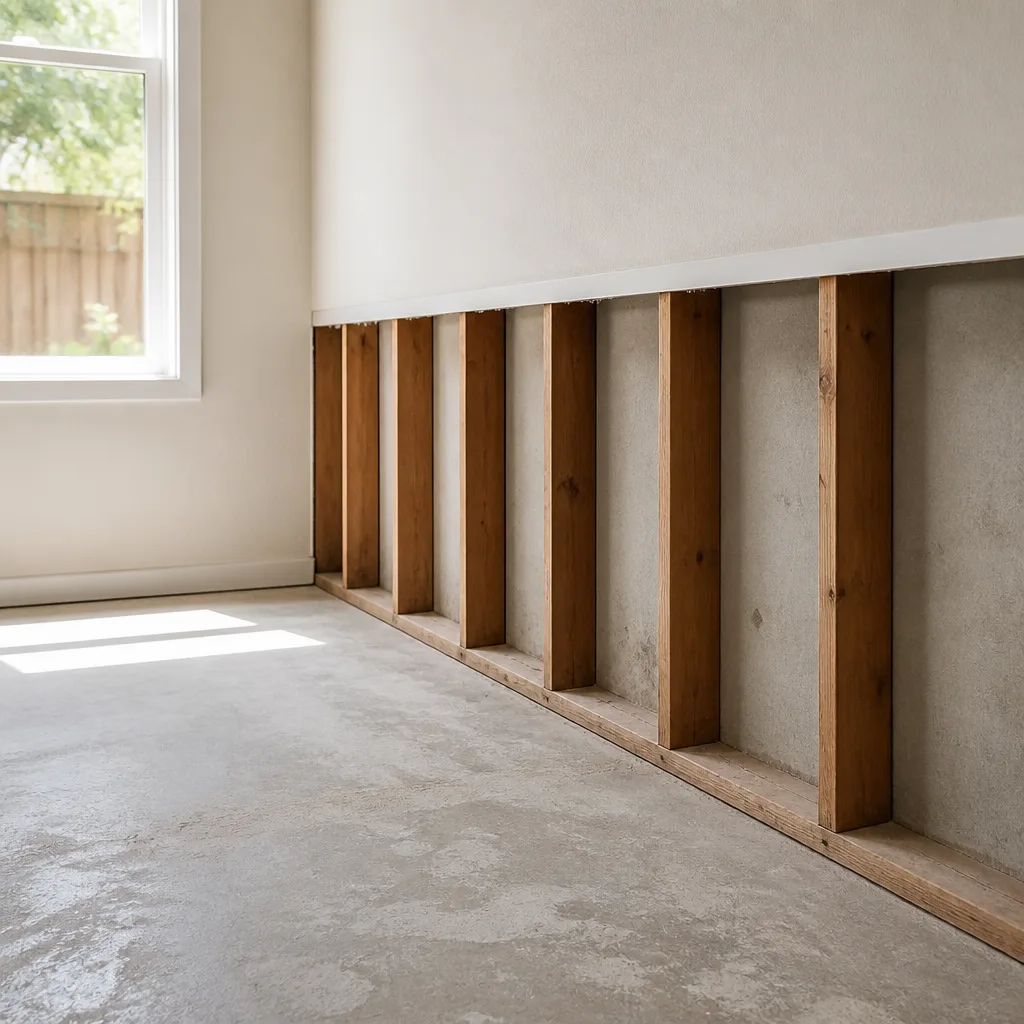
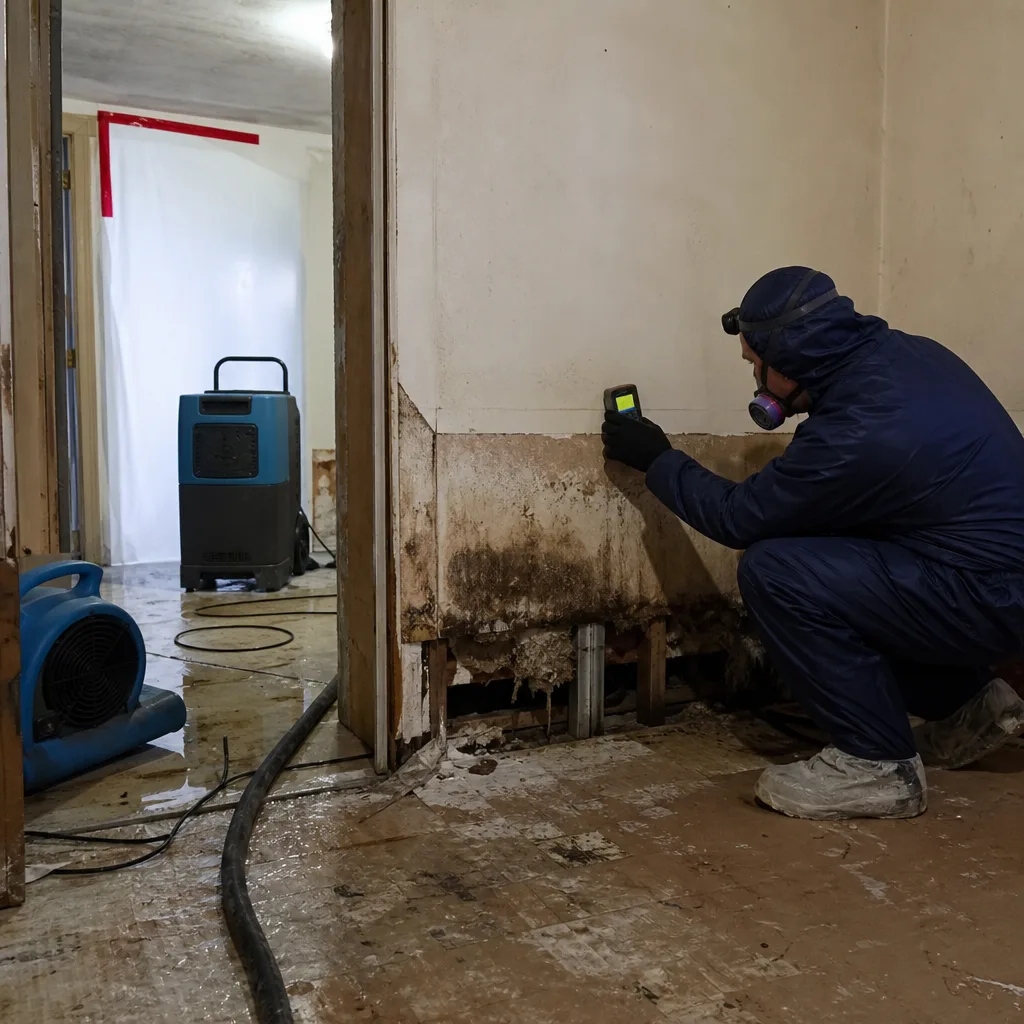 Before
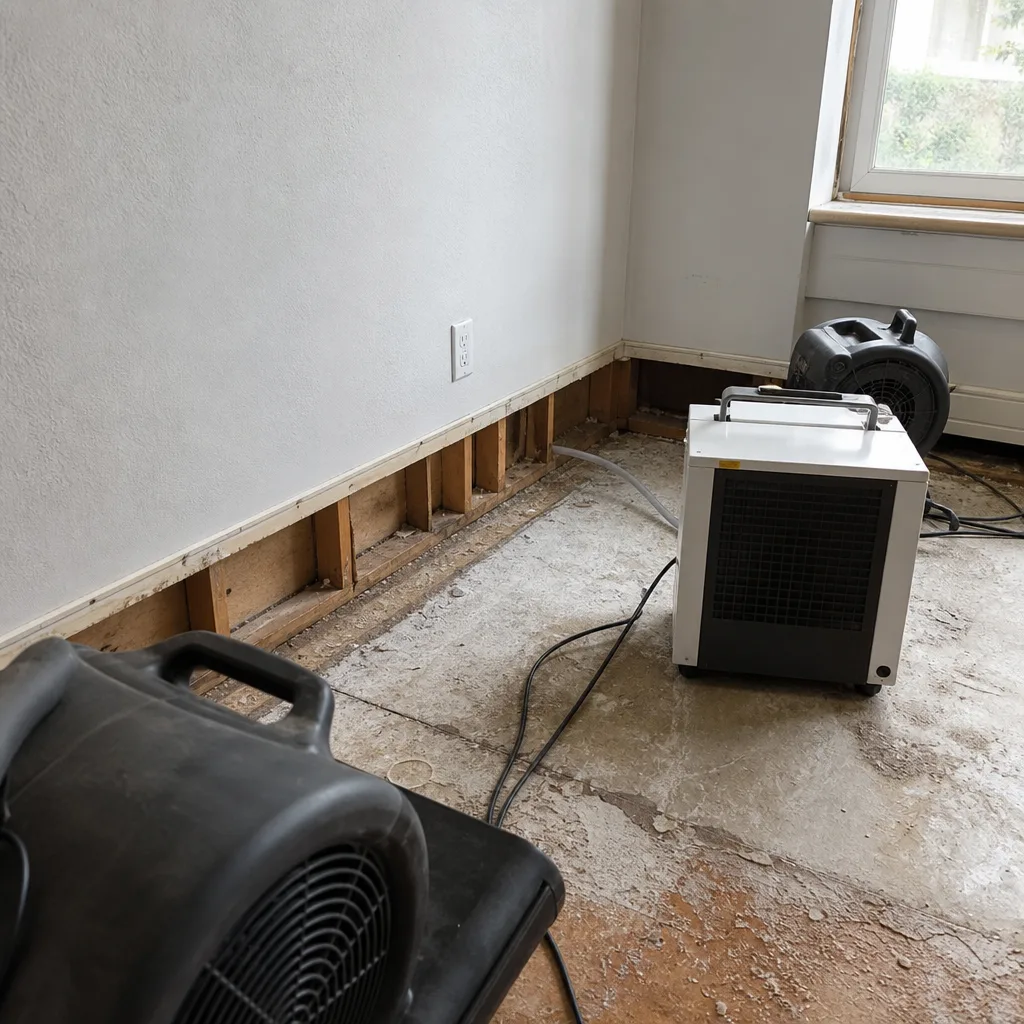 After
After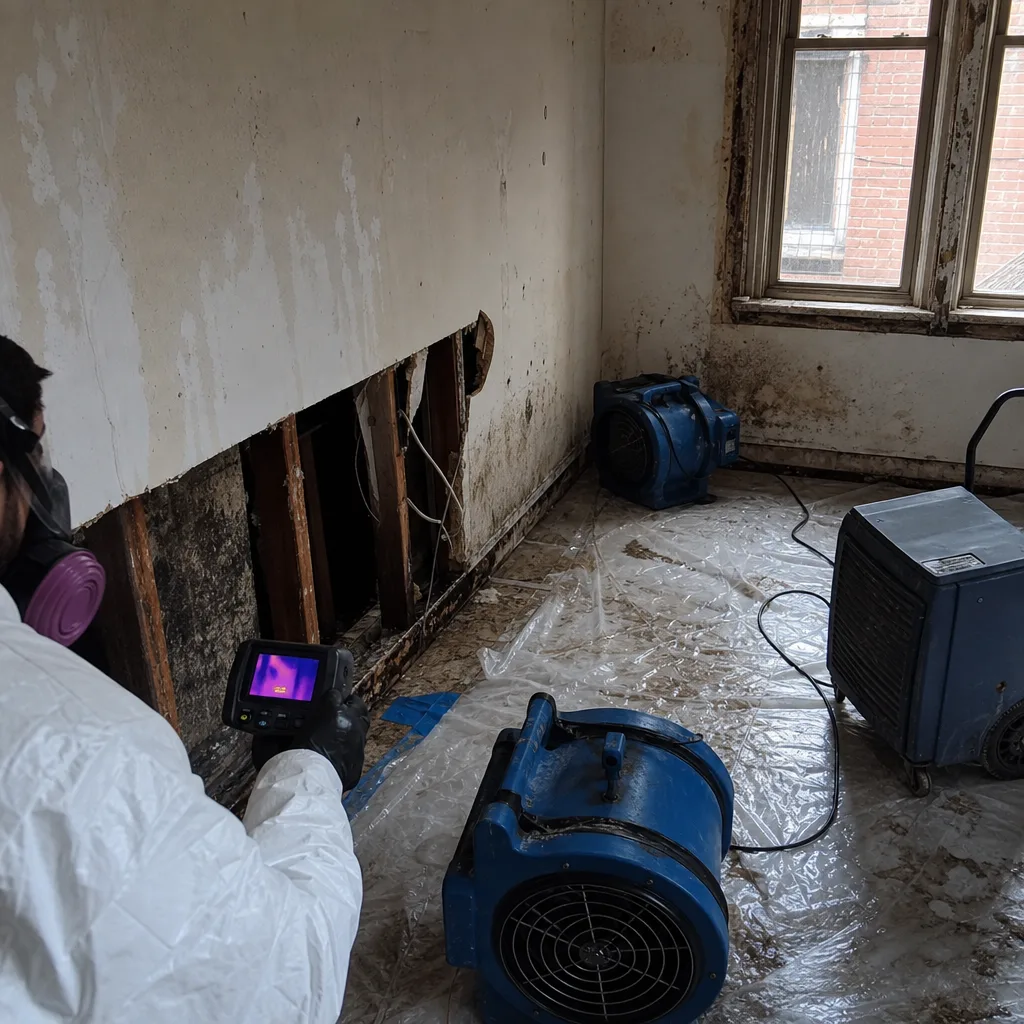 Before
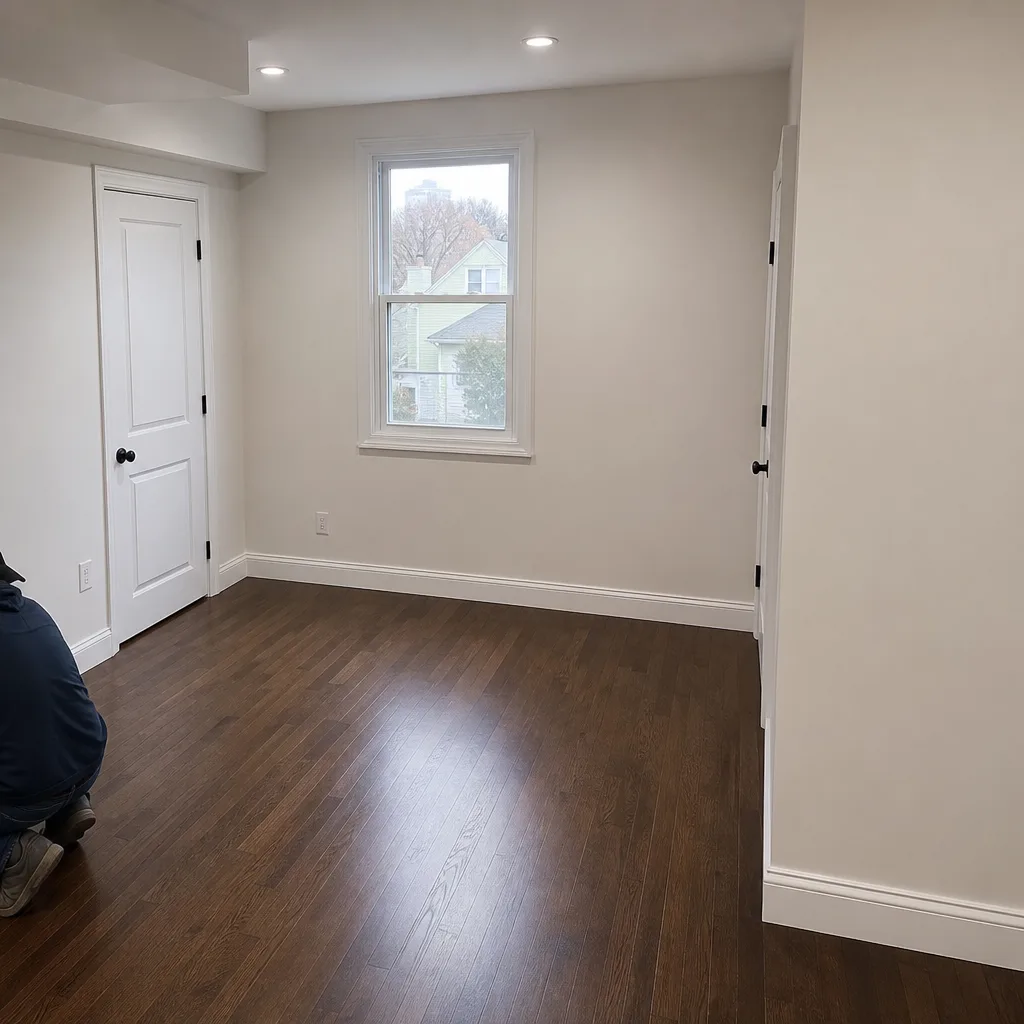 After
After24/7 Emergency Storm & Disaster Restoration in Upper West Side
Storm damage on the Upper West Side moves fast, especially in pre-war buildings where water travels through shared pipe chases and plaster walls soak it up like a sponge. We answer the phone with a live person at 2 a.m., not a recording. Call (518) 800-3751 and a certified crew is dispatched to your Upper West Side address immediately, with extraction equipment running the same visit.
The first hour after a roof drain overflows or a steam riser lets go determines whether you’re looking at drying and plaster repair or full mold remediation behind lathe. That’s why we commit to a 45-minute response commitment inside the Upper West Side area and offer a free visual inspection before any work begins. Our Storm & Disaster Restoration team knows co-op buildings on West End Avenue and Riverside Drive backward and forward. We trace water the way it actually moves through these old buildings, not the way a textbook says it should.
Understanding Storm & Disaster Restoration Severity in Upper West Side Properties
Water damage severity is classified by contamination level, and in Upper West Side pre-wars the classification gets complicated fast. Category 1 water is clean supply water, like what comes from a burst steam pipe or radiator. Category 2 carries some contamination, like a roof drain backup. Category 3 water is sewage or street floodwater and requires full containment and antimicrobial treatment. What’s different in Upper West Side buildings is how the water moves between the moment it leaks and the moment you notice it. Plaster-and-lath walls hold water longer than drywall, often wicking moisture into crown moldings, rosettes, and original hardwood floors before any visible staining appears on the surface. A drip inside a shared pipe chase on West End Avenue can travel laterally and vertically through cavities that connect five or more units, meaning the unit that called us often isn’t the only one affected. Our crews use thermal imaging and moisture mapping to find water behind walls we haven’t opened yet, then dry to a standard that accounts for lime plaster’s slower release curve. That’s the difference between drying a wall and drying a building.
Why Upper West Side Property Owners Choose Floodline Restoration Co.
- 45-minute response commitment across the Upper West Side. We dispatch from our New York City office and crews know the doorman protocols on Central Park West, the courtyard layouts off Broadway, and the narrow service entrances on Riverside Drive.
- Live answer, 24 hours a day. A real person picks up at 2 a.m. and a certified crew reaches the job the same visit. No answering service, no recording, no call-back tomorrow.
- IICRC-certified crews. Our technicians hold WRT, FSRT, and AMRT certifications and train to IICRC, RIA, and IFA standards. Background-checked and uniformed on every job.
- Free visual inspection. We look before we quote, and we tell you honestly what needs drying, what can be saved, and what doesn’t need touching.
- Direct insurance billing. We bill your carrier directly and communicate with your adjuster from the first hour. You don’t play messenger between us and the insurance company.
- One crew from extraction to rebuild. The same certified team that reads the moisture map on day one handles daily readings and rebuilds what needs rebuilding. No mid-job handoff to an inherited crew.
Our Storm & Disaster Restoration Process
Inspection & Assessment
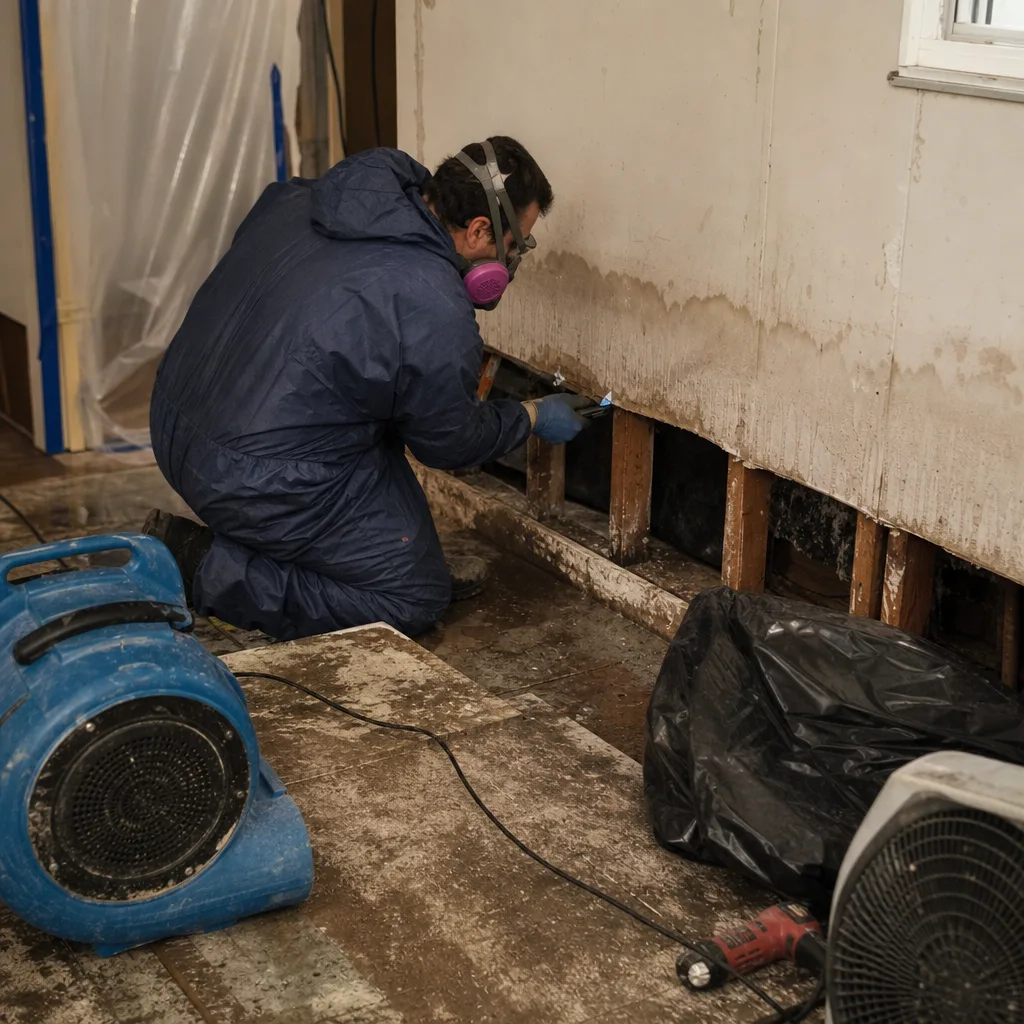
We start with thermal imaging and moisture mapping to find every wet surface, including water trapped inside shared pipe chases and behind plaster walls. In co-op buildings, we coordinate with the managing agent before opening any wall.
Extraction & Stabilization
Professional-grade extraction removes standing water from floors, baseboards, and wall cavities. In Upper West Side pre-wars, we work through the shaft walls and light wells that route water between units.
Drying & Dehumidification
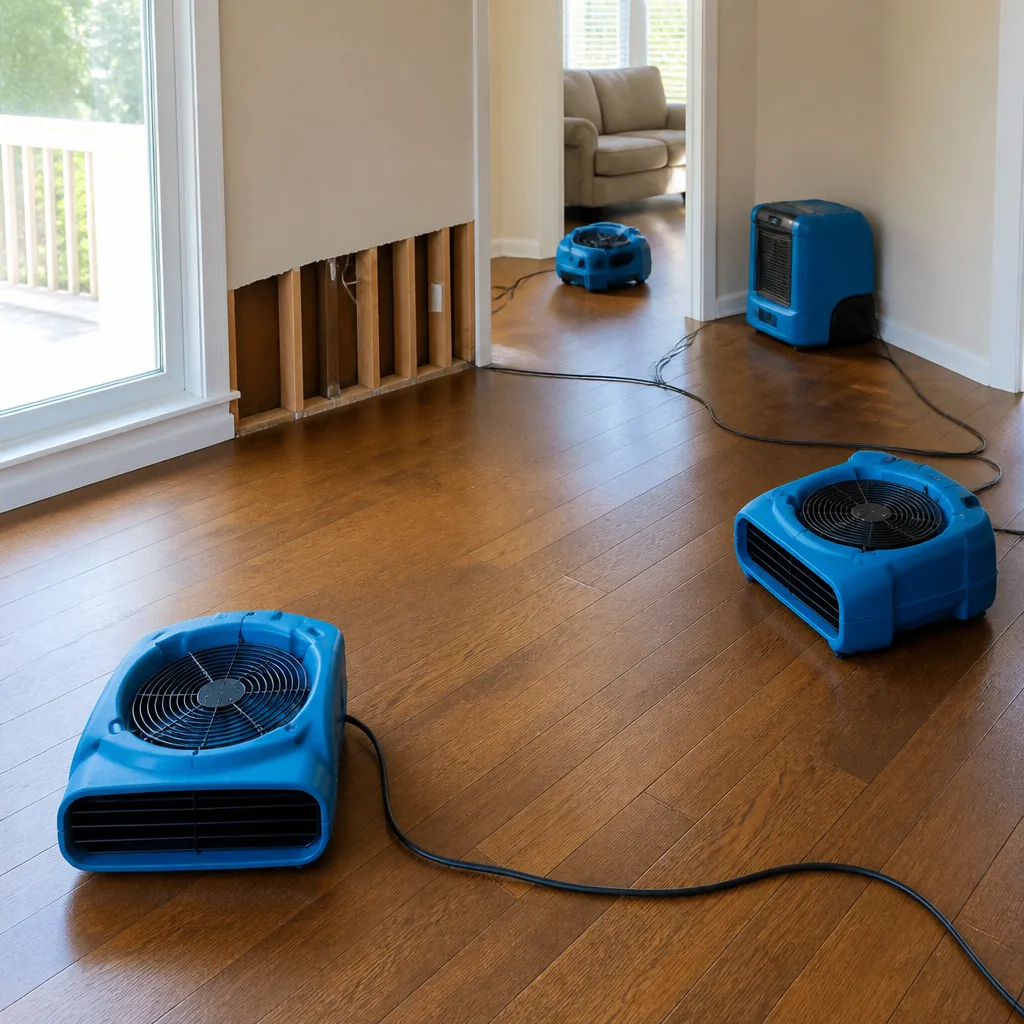
We set Dri-Eaz and Phoenix dehumidifiers with air movers positioned for the building’s actual airflow, not a stock layout. Daily moisture readings are logged until the dry standard is met and handed to you and your carrier.
Cleaning & Sanitization
HEPA air scrubbers run during the entire drying period. Category 2 and 3 water gets antimicrobial treatment appropriate for plaster, wood, and original millwork surfaces.
Storm Damage Specialty Treatment
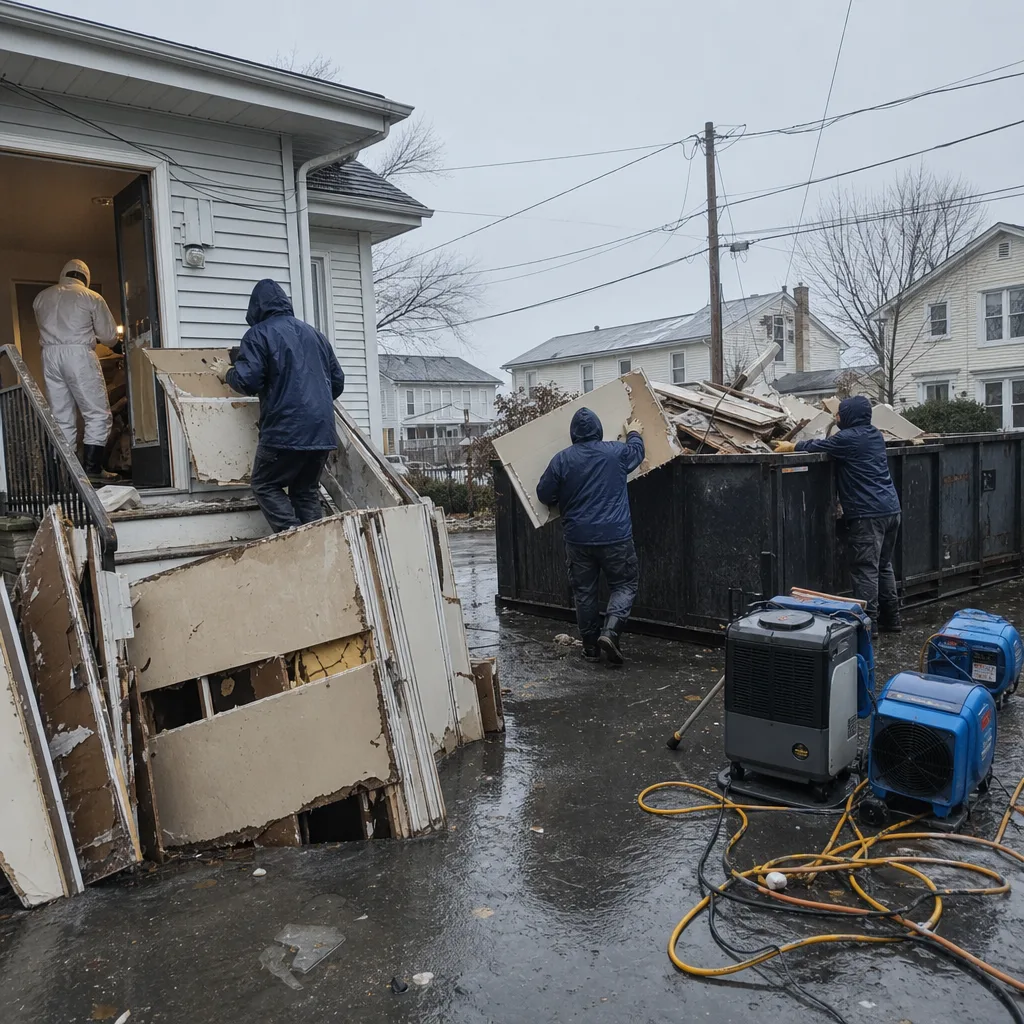
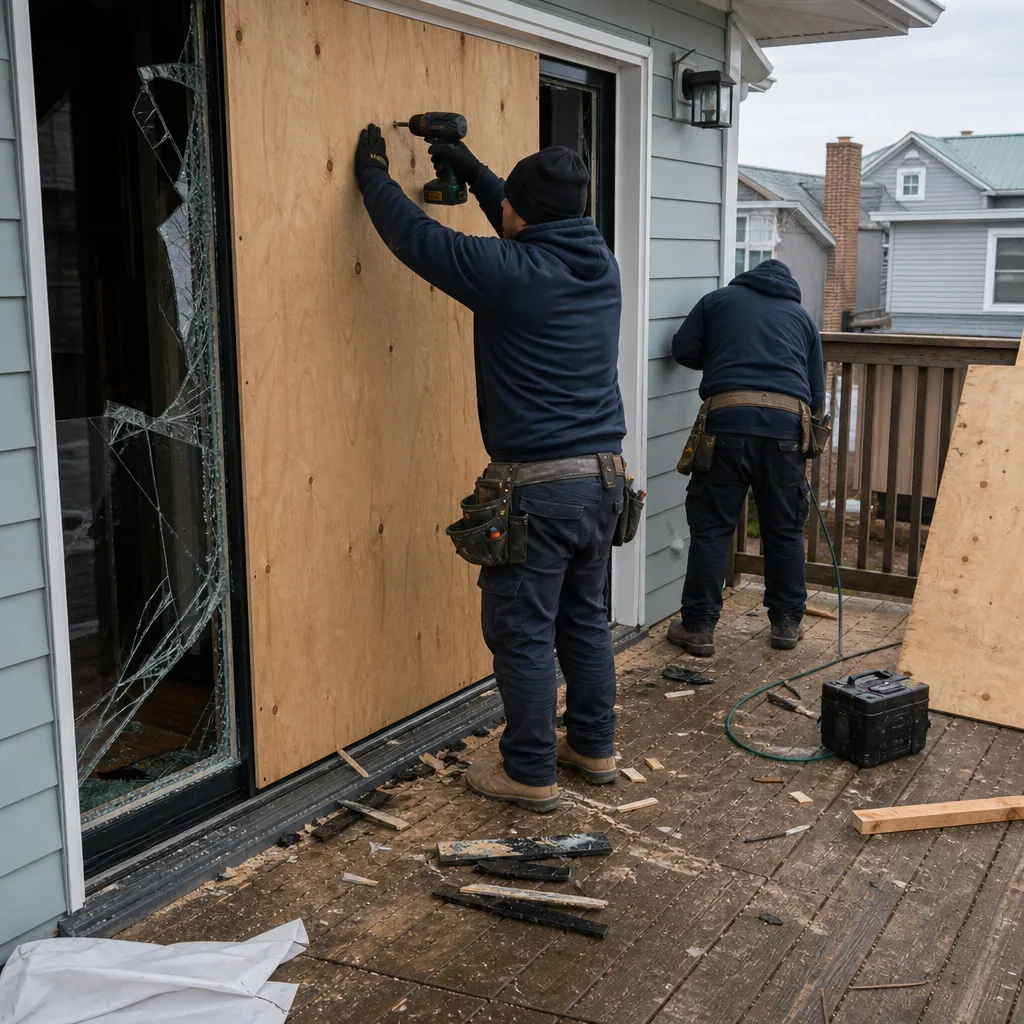
Roof tarping, emergency board-up, and debris removal happen before water mitigation when storm damage has opened the building envelope. Wind-driven rain off the Hudson gets addressed at the source before interior drying begins.
Repairs & Restoration
Plaster crown moldings, rosettes, herringbone floors, and period millwork are matched, repaired, or restored by the same crew. The 90-Day Done Right Promise covers the work in writing.
Need Emergency Storm & Disaster Restoration in Upper West Side Now?
Crews minutes away, answering live 24 hours a day. The sooner we start, the less it costs.
Working With Your Insurance Company
Storm and flood claims on the Upper West Side often involve two or three parties: your insurer, the co-op board’s master policy, and sometimes the managing agent’s liability coverage. We’ve handled hundreds of these, and we know what adjusters need to see to approve a scope without weeks of back-and-forth. From the first hour on site, we document everything: photos room by room, moisture readings from every affected surface, and a line-item scope of work that matches industry-standard estimating software. We bill your carrier directly and speak to your adjuster whenever they call. In co-op situations, we also coordinate with the building’s managing agent so the proprietary lease liability questions don’t stall your drying.
What We Provide Your Insurer
- Thorough documentation of the loss
- Photos of all damage, room by room
- Moisture readings and drying logs
- A detailed, line-item scope of work
- Direct coordination with your carrier
Built for Upper West Side’s Loss Calendar
Winter is the cruelest season for Upper West Side pre-war buildings, and January deep freezes are when we’re busiest. Steam distribution pipes freeze, cast-iron risers crack, and radiator valves fail under thermal stress. Riverside Drive buildings get a second kind of winter damage: wind-driven rain off the Hudson that pushes moisture through aging limestone and mortar joints above the 12th floor, where facade exposure is worst. Spring brings thaw cycles that expose seams in roof membranes. Summer thunderstorms overwhelm roof drains on flat-roof buildings, especially on the wide courtyard buildings off Broadway where drain capacity wasn’t designed for today’s storm intensity. Nor’easters in late fall bring roof damage, facade moisture, and the kind of wind that sends debris through windows on high floors. Each season has a calendar, and after 42 years of local response, we plan crews around it. When the freeze comes, we’re already staged for Upper West Side calls.
Storm & Disaster Restoration Across Upper West Side’s Neighborhoods
The Upper West Side isn’t one building stock. Along West End Avenue and Riverside Drive, the large pre-war towers and courtyard buildings present different problems than the brownstones west of Broadway or the converted townhouses off Amsterdam. A roof drain overflow in an Apthorp-style courtyard building will show itself across units three floors apart because the shared smoke stack and pipe chase connects them. In the doorman buildings along Central Park West, access protocols mean we coordinate with front-desk staff and building management before moving equipment. Brownstones along side streets off Columbus have their own signature: roof drains that discharge onto rear extension roofs, and water that finds its way behind original tin ceilings. The Morningside Heights corridor near Columbia handles wind exposure differently, with buildings on the high point of the ridge taking storm gusts that buildings in the low 80s never see. On every job, we route crews to the nearest access point, know which service elevators can take our equipment, and work with the staff who know their building.
Specialized Storm & Disaster Restoration Services We Offer in Upper West Side
Storm Damage Cleanup
After a nor’easter or summer microburst, Upper West Side streets can look like a fast-moving storm documentary. Downed limbs from the street trees on Riverside Drive, broken glass from high-floor windows near Amsterdam, debris wedged against courtyard gates. We clear and stabilize first, photograph everything for the claim, and then move to water extraction. Storm damage cleanup in Upper West Side buildings means working with scaffolding access, roof hatches that haven’t been opened in a decade, and materials that need to be carried down service stairs, not through the lobby.
Flood Damage Restoration
The floodline is the last mark the water left before it stopped rising, and that’s where our estimate starts. In Upper West Side pre-wars, flood damage doesn’t just mean a wet floor. Water wicks up plaster walls, travels through the baseboard chase, and finds the original hardwood’s tongue-and-groove joints. Our flood damage restoration covers honest extraction, mapped drying, daily moisture logs, and repair of what water ruined. This is the work Floodline was built around, and these are the buildings that test every drying science principle we know.
Emergency Board-Up
When storm wind breaks a window on the ninth floor of a building on West 86th Street, the emergency board-up has to be done from the outside or with an interior ladder setup that protects the apartment below. We board, tarp, and secure the opening so the next rain doesn’t add water damage to wind damage. In co-ops, we also coordinate with the building’s insurance because the window may be a building system, not the shareholder’s responsibility.
Roof Tarping
Flat roof membranes on Upper West Side buildings fail at flashing points and drain collars. A lifted membrane edge in a storm lets wind-driven rain drive into the building’s top floor and travel down shared chases. We tarp and seal to stop incoming water, and we do it on the building’s schedule, which often means gaining roof access through a bulkhead with permission from the super and managing agent.
Debris Removal
Storm debris is never just “the tree branch.” We’ve pulled glass, masonry chips from parapet walls near Riverside, roof aggregate, and water-logged insulation out of Upper West Side courtyards and air shafts. Debris removal has to account for the historical material underneath: original quarry tile, decorative ironwork, and limestone copings that shouldn’t be scratched by a loader. We work by hand where the building requires it.
What happens when you call
- 1
A real person answersNo phone trees - you reach a local pro.
- 2
You get an upfront price rangeHonest numbers before anyone is dispatched.
- 3
A background-checked tech heads outLicensed & insured, dispatched right away.
- 4
You approve before work beginsNothing starts until you say go.
Storm & Disaster Restoration Costs in Upper West Side, NY
What does storm restoration actually run in Upper West Side? For flood extraction and drying in a one or two-room apartment, expect $1,800 to $4,200 depending on how far water traveled through plaster and floor assemblies. A full apartment flood with plaster wall removal, drying, mold prevention, and repair typically runs $6,500 to $14,000. Roof tarping on a pre-war flat roof is $900 to $2,500 depending on access and materials. Emergency board-up of a broken window or door runs $300 to $750 including labor and materials. Debris removal from a small courtyard or air shaft is $400 to $1,200. What moves the price most is whether water reached original plaster and millwork that we’re matching rather than replacing, and whether the building’s access requires special equipment or after-hours coordination. Many of our Upper West Side jobs are covered by the building’s master policy or the shareholder’s HO-6 policy, and we bill carriers directly so you see the exact scope and the exact numbers before work starts. The free inspection gives you a firm price in writing, not a range that doubles later.
We Also Serve Cities Near Upper West Side
The same certified crews and live dispatch serve Astoria, Ditmars Steinway, Upper Manhattan, and the Upper East Side. The Upper West Side remains our busiest storm response corridor, but when the freeze hits, we move crews to wherever the calls come from across the city’s pre-war stock.
Serving Upper West Side, NY - Our Local Coverage Area
We’re based in the Upper West Side area and know this community well. Use the map below to see our service coverage - if you’re nearby, we can almost certainly help.
Upper West Side Storm & Disaster Restoration Questions, Answered
How do you handle water damage in an Upper West Side co-op when the leak started in a neighboring unit’s steam riser?
We contain and dry your unit immediately, regardless of whose riser or valve failed. The co-op’s master policy and the neighboring shareholder’s insurance may be responsible for the damage, but that determination can’t stall your drying. We document everything, coordinate with the managing agent, and provide the moisture data all parties need to sort out liability.
A roof drain overflow wet our third-floor baseboard, but there’s no wet ceiling above us-how did the water get in?
In Upper West Side courtyard buildings, water travels through shared pipe chases and interior light shafts that connect floors laterally as well as vertically. A roof drain overflow on West End Avenue or Broadway often presents as a wet baseboard in a unit that shares no ceiling with the source. We trace it with thermal imaging through shaft walls before opening any wall, because the damage path is rarely a straight line.
Can original plaster crown moldings be saved after a burst-pipe flood in a pre-war UWS apartment?
In most cases, yes, if we get to them before the plaster stays wet long enough to lose its bond. Plaster crown moldings and rosettes are often original to the building and should be matched, not demoed. We use the drying sequence to protect them, monitor them with moisture meters, and schedule repair that preserves the period profile rather than replacing it with modern foam substitutes.
Why is winter the busiest time for water damage in Upper West Side pre-wars?
Manhattan’s freeze-thaw cycles stress cast-iron steam risers and rooftop water tanks with a daily temperature swing no modern building material withstands. Steam pipes freeze, radiator valves crack, and condensation driven behind plaster walls promotes mold growth that goes unnoticed until walls are opened. The Riverside Drive corridor gets a second factor: persistent wind-driven rain off the Hudson that accelerates moisture infiltration through aging limestone and mortar joints.
How do you prevent mold growth when you can’t enter a unit right away because the co-op board hasn’t approved access?
We set up what we call a dry boundary: seal the affected chase or shaft on our accessible side, place air movers and dehumidifiers in the common chase where the board can approve equipment, and document air moisture levels in the unit’s accessible zones. Mold colonizes within 24-48 hours on wet plaster, so we move immediately on what we can legally access while pressing the board and managing agent for unit entry approval.
How fast can a Floodline crew reach an Upper West Side address?
We commit to a 45-minute response commitment inside the Upper West Side area, and our New York City office dispatches crews who know the doorman protocols, service entrances, and street parking realities of this neighborhood. In many cases we are on site within 30 minutes. A live person answers the phone at any hour and dispatches the nearest available certified crew.
Will my insurance cover storm restoration in a co-op building?
Most Upper West Side storm restoration is covered under either the building’s master policy for common elements or your HO-6 policy for interior finishes and improvements. The boundary between the two is defined by your proprietary lease, and we work with adjusters on both sides. We bill the responsible carrier directly and provide the documentation each one needs.
What should I do in the first 30 minutes after a storm flood in my apartment?
Shut off the water source if you can do so safely, move valuables and rugs out of the path, and call (518) 800-3751. Do not use a standard household vacuum on water. Take photos of the visible damage before anything is moved. Then let us take over: extraction, containment, and drying start the same visit. The first 30 minutes are about stopping the spread; the next 24 hours determine how much gets saved.
Written by Curt Bowman, Owner at Floodline Restoration Co., serving Upper West Side and the surrounding boroughs with full-cycle restoration since 2010.