
Quick Summary
When severe storms, plumbing leaks, or sewer backups strike, timely flood damage restoration in Elmhurst is essential to stop water migration into multi-family joists, brick masonry, and traditional plaster walls. Floodline Restoration Co. provides rapid 24/7 emergency water extraction, moisture mapping, and Category 3 sanitization tailored specifically to Queens properties facing complex structural water intrusion. Readers will understand the full restoration process and can immediately call the 24/7 dispatch line to secure emergency water extraction and a free visual inspection.
Flood Damage Restoration in Elmhurst – Rapid 24/7 Cleanup
When heavy rainstorms, sewer backups, or burst supply lines affect a property, timely mitigation is important. Standing water can penetrate building materials, soaking through flooring and moving behind walls where it may contribute to structural damage and mold growth. Beginning water extraction and structural drying promptly, as recommended by specialists like Floodline Restoration Co., can help mitigate secondary damage. (Note that terms such as “Rapid” in service descriptions are promotional unless a specific provider is identified with verified evidence for a defined response standard.)[4]
Elmhurst appears in the NYC flood-hazard dataset, and flood risk varies by address. FEMA’s National Flood Hazard Layer provides current effective flood-hazard information. Properties in the area may feature various construction assemblies, such as brick masonry or wood framing, which require appropriate drying techniques and moisture mapping rather than generic methods. Proper documentation and moisture mapping help guide the drying process.[1]
Emergency Water Extraction and Structural Response in Elmhurst
Emergency response summary: Timely response is helpful for flood damage restoration. Restoration procedures generally prioritize stabilization, using extraction equipment and dehumidifiers to remove standing water, protect framing, and manage contamination risks.
Water does not always stay contained where it initially pools. In multi-unit or multi-story buildings, water can travel downward through subfloors, cavities, and shared walls. On-site extraction helps reduce water migration into adjacent spaces and framing materials.
Moisture Extraction for Masonry and Plaster
Some building assemblies contain brick masonry, structural joists, or traditional lath-and-plaster walls. Applying standard drywall flood-cut techniques or surface airflow alone may not address moisture trapped inside deeper wall cavities or masonry materials.
When moisture remains trapped behind plaster or within masonry pockets, it can affect structural wood components and support mold growth. According to Floodline Restoration Co., possible restoration procedures include targeted cavity ventilation, controlled inspection openings, and dehumidification to remove moisture from assemblies without unnecessary structural teardown.
Basement and Lower-Level Water Extraction
Basements, garden apartments, and lower-level commercial spaces may face exposure during storm events. Elmhurst appears in the NYC flood-hazard dataset, though flood risk varies by address, and FEMA’s National Flood Hazard Layer provides current effective flood-hazard information. In broader planning studies, Queens Community Board 2 noted 15 neighborhood parks located in flood zones, with 26 projected to face flood risks by 2100 (statistics specific to Queens Community Board 2 rather than Elmhurst alone).[3]
When runoff or stormwater affects lower levels, general cleanup procedures often involve using submersible pumps or extraction equipment to remove standing water, followed by cleaning and disinfection to address potential contaminants.
What Are the Essential Steps for Flood Cleanup and Structural Drying?
Need flood damage restoration in Elmhurst?
We’re available now - call for a fast, free estimate.
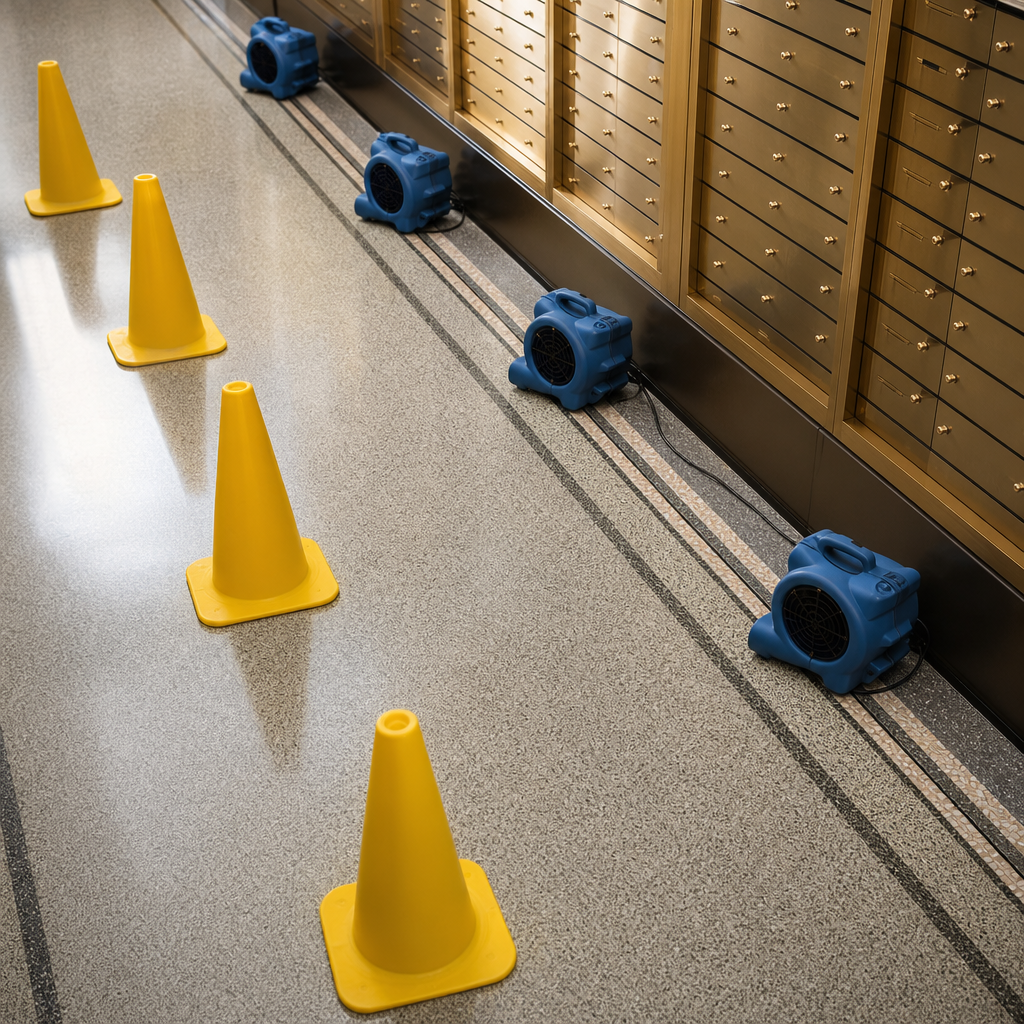
A systematic recovery plan helps manage structural drying, documentation, and insurance claims.
Category 3 Water Extraction and Sanitization
Floodwaters originating from storm runoff or sewer backups are often classified as Category 3 (black water), which can carry biological pathogens, bacteria, and chemical residues. FEMA data indicates that people in low- or moderate-risk areas are five times more likely to experience a flood than a home fire over a 30-year period. When Category 3 water enters a building, teams like Floodline Restoration Co. note that possible cleanup procedures include establishing containment, extracting contaminated water, removing non-salvageable porous items, and applying EPA-registered disinfectants to affected hard surfaces.[2]
Subfloor, Joist, and Assembly Restoration
General procedures for addressing saturated framing, subfloors, and assemblies typically include:
- Safety assessment and moisture mapping: Technicians assess the site for safety hazards and inspect moisture levels across floors, framing, and masonry using moisture meters and thermal imaging.
- Bulk water removal and controlled demo: Crews pump out standing water and remove saturated, non-salvageable materials to facilitate airflow and drying of the underlying framing.
- Targeted structural drying: Dehumidifiers, such as low-grain refrigerant (LGR) or desiccant units, and air movers provide ventilation and dehumidification for structural components.
- Moisture monitoring and logging: Technicians take periodic psychrometric readings and maintain drying records to verify that materials progress toward acceptable moisture levels.
Post-Flood Mold Prevention
Mold spores can germinate on wet building materials following moisture exposure. Recommended mold prevention practices include beginning drying promptly and maintaining continuous climate control, ventilation, and dehumidification. Technicians document environmental conditions and moisture levels until the structure and contents are dry.
What Does Flood Damage Restoration Cost in Elmhurst?
Restoration costs depend on the water source (such as clean supply lines, gray discharge, or sewage), the affected square footage, and the duration of water exposure. Because different structural layouts and materials require varying equipment and labor, an on-site inspection is typically necessary to provide an itemized estimate.
Cost Factors for Water Extraction and Structural Repair
Primary cost drivers include:
- Water volume and depth: The equipment and labor needed to pump standing water versus extracting surface moisture.
- Contamination level: Category 3 sewage backups require safety protocols, containment, cleaning, and disinfection, which increase labor and disposal requirements.
- Material complexity: Restoring specialized or older framing and flooring assemblies often requires different drying setups than standard modern drywall.
Insurance Coverage and Claims Support
Insurance coverage depends on the specific policy, policy exclusions, deductible, and the documented cause of loss. Standard homeowners insurance generally does not cover surface flooding, which typically requires separate flood insurance (such as through the NFIP), while sewer backups often require a specific endorsement. Restoration teams, including Floodline Restoration Co., often assist claims documentation by capturing photos, recording drying logs, and providing itemized records.[5]
Frequently Asked Questions About Elmhurst Flood Restoration
How quickly can a flood restoration crew arrive in Elmhurst?
Response time depends on provider availability, traffic, event severity, and property access. Prompt response helps address water migration into structural assemblies as quickly as conditions allow.
Does property insurance cover basement flood cleanup and sewer backups?
Coverage depends on the policy, exclusions, deductible, and the documented cause of loss. Standard homeowners insurance generally does not cover surface flooding, which typically requires separate flood insurance. Sewer and drain backups generally require a dedicated policy endorsement. Restoration documentation, including drying logs and photos, can assist when filing a claim.
How do I prevent mold growth after basement flooding?
To reduce mold risks, it is recommended to begin drying promptly, remove standing water, promote ventilation and dehumidification, and document conditions until the structure and contents are dry.
Are emergency 24/7 water extraction services available in Elmhurst?
Service availability varies by independent restoration provider. While many contractors, such as Floodline Restoration Co., offer emergency response for pipe bursts, storm flooding, and sewer backups, specific operating hours and dispatch availability depend on the individual company.
Need flood damage restoration in Elmhurst?
We’re available now - call for a fast, free estimate.
Sources
- MassGIS Data: FEMA National Flood Hazard Layer – mass.gov (2025)
- FEMA FLOOD RISK – fema.gov (2018)
- NYC Parks as Climate Infrastructure – rebuildbydesign.org (2050)
- Rainproof NYC Research & Resources – Rebuild by Design – rebuildbydesign.org (2025)
- https://data.cityofnewyork.us/api/views/de3m-c5p4/… – data.cityofnewyork.us (2026)
Flood Damage Restoration in Nearby Cities
We also serve the communities around Elmhurst:
- Flood Damage Restoration in Astoria
- Flood Damage Restoration in Central Harlem
- Flood Damage Restoration in Corona
- Flood Damage Restoration in Ditmars Steinway
- Flood Damage Restoration in East Elmhurst
Frequently Asked Questions
How do specialists dry historic plaster and brick masonry in Elmhurst buildings without tearing them down?
Restoration specialists at Floodline Restoration Co. utilize precision cavity ventilation, desiccant dehumidification, and thermal moisture mapping to extract deep-seated moisture trapped within brick and lath-and-plaster assemblies. This non-invasive approach dries complex pre-war multi-family framing while preventing structural decay and hidden mold growth. Call our 24/7 dispatch team to secure immediate moisture mapping and a free visual inspection.
What is the protocol for Category 3 black water and sewer backups in Elmhurst basements?
Because Category 3 water carries biological pathogens, standard cleanup requires full containment, contaminated water extraction, and the application of hospital-grade, EPA-registered disinfectants. Floodline Restoration Co. safely eliminates biohazard risks, removes non-salvageable porous materials, and provides itemized documentation for insurance claims. Property owners should avoid contact with the water and immediately contact our 24/7 response line for emergency dispatch.
Does flood damage restoration in Elmhurst include full structural rebuilds after water removal?
Complete flood damage restoration in Elmhurst encompasses both emergency extraction and full-scale reconstruction of damaged joists, subfloors, and masonry. Floodline Restoration Co. delivers seamless start-to-finish recovery, guiding Queens property owners from initial water pumping through final structural repairs. Contact our team today to request a rapid on-site assessment and free visual inspection.
About the author
 |
Christopher Vance Christopher Vance is a certified structural drying specialist with over nine years of experience in property damage restoration. He holds an associate degree in Construction Management from Pratt Institute and focuses on rapid-response water mitigation. Christopher writes to help Astoria property owners navigate the complexities of emergency restoration and insurance claims. |
Water damage, flood, or mold emergency?
We’re available now - call for a fast, free estimate.
Call Now - Free Estimate