
Quick Summary
Severe water intrusion in historic brownstones and pre-war apartment buildings demands specialized flood damage restoration in Harlem to protect complex assemblies like brick party walls and wood lath plaster. As an agile local alternative to generic national franchises, Floodline Restoration Co. provides advanced thermal mapping, precision moisture extraction, and Category 3 blackwater sanitization tailored to historic NYC architecture. Harlem property owners will understand essential emergency safety steps and can call Floodline Restoration Co.'s 24/7 dispatch for rapid recovery or a free on-site moisture inspection.
Flood Damage Restoration in Harlem: Emergency Water Recovery
When properties in Harlem take on water, prompt structural mitigation is essential. Whether dealing with an internal plumbing failure or storm-related runoff, water intrusion requires an immediate, technically sound response.[4]
New York City actively tracks storm and flooding risks in Central Harlem and Morningside Heights, covering ZIP codes 10026, 10027, 10030, 10037, 10039, and 10115 through its climate and health data initiatives. The city’s coastal flood hazard mapping program continues to evaluate present and future hazards to guide local resilience efforts. According to the National Weather Service, inland flooding has caused more than half of all deaths associated with tropical cyclones in the United States since the 1970s.[1]
Building Assemblies and Moisture Migration (General Industry Guidance)
As noted by Floodline Restoration Co., standard water extraction methods may not account for the structural features of older buildings. In pre-war brownstones, rowhouses, and tenement buildings, specific structural assemblies dictate how water travels:[5]
- Party-Wall Brick Pockets: Pre-war rowhouses often rely on shared brick party walls where timber floor joists sit inside recessed masonry pockets. When moisture saturates exterior or shared masonry, dampness can migrate into these pockets, requiring targeted moisture monitoring and drying.
- Horsehair Plaster and Wood Lath: Historic three-coat plaster and wood lath assemblies retain moisture within wall cavities. Specialized dehumidifiers and air movers are typically used to pull moisture out of the wall cavity.
- Continuous Subflooring: Multi-unit buildings with continuous subflooring under finished wood can allow water to travel along chases and between floor layers, requiring cavity-level extraction and drying.
What Does Flood Damage Restoration Cost in Harlem?
Restoration costs depend directly on the category of water, the square footage affected, and the specific building materials involved. Every water loss is evaluated individually based on the required scope of work.
Key Factors That Determine Project Costs
- Water Classification: Clean water from supply lines (Category 1) requires less specialized sanitation than graywater from appliances (Category 2) or blackwater from street flooding and sewer backups (Category 3). Category 3 losses require containment, personal protective equipment, and antimicrobial treatment, which increases labor and disposal fees.
- Material Porosity: Drying modern commercial spaces with drop ceilings and vinyl tile requires different equipment than extracting moisture from plaster, hardwood, and brick foundations.
- Demolition vs. In-Place Drying: Depending on the contamination level and structural materials involved, technicians like those at Floodline Restoration Co. determine whether materials can be dried in place or must be removed.
- Equipment Deployment Duration: The number of low-grain refrigerant (LGR) dehumidifiers, HEPA air scrubbers, and air movers needed, along with the duration required to reach baseline dry standards, affects total project cost.
Emergency Response: What to Do While Waiting for Help
Need flood damage restoration in Harlem?
We’re available now - call for a fast, free estimate.
When water enters your property, safety takes priority over property recovery. No authoritative neutral source establishes a guaranteed arrival time for private flood-restoration teams in Harlem. Treat flooding as urgent and ask the selected provider for its current estimated arrival time. While waiting, observe the following precautions:
- Prioritize Personal Safety: Leave unsafe areas immediately. Do not re-enter flooded spaces until they have been cleared as safe. Call 911 for immediate threats or 311 for non-emergency municipal requests.
- Shut Down Power Safely: Do not use electrical equipment near standing water. If water has reached electrical outlets, baseboard heaters, or the breaker box, do not enter the water. Contact an electrician or the utility provider if the main switch cannot be accessed safely from a dry area.
- Avoid Contact with Floodwater: Avoid contact with standing water, which can carry biological and chemical contaminants. Keep occupants and pets away from the flooded zone.
- Stop the Water Source: If the intrusion is due to an internal plumbing failure, turn off the main water shut-off valve if it is safe to do so.
- Document Losses Before Cleanup: As advised by Floodline Restoration Co., before removing items or clearing water, capture clear photos and video footage of standing water levels, damaged structural features, and personal property for insurance purposes.
- Notify Insurer and Landlord: Report the loss promptly to your insurance carrier to open a claim file, and notify your landlord or property manager.
Sewage Backup and Sanitization
Water from outdoor flooding or municipal sewer overflows is classified as Category 3 blackwater and presents acute health risks from biological contaminants.[2]
Mitigation requires strict containment protocols. Technicians extract wastewater, safely remove contaminated porous materials that cannot be sanitized, and apply antimicrobials to affected structural surfaces. Drying systems run continuously while technicians, such as those from Floodline Restoration Co., monitor moisture levels until drying goals are reached.[3]
Frequently Asked Questions
How quickly can emergency flood restoration teams arrive in Harlem?
No authoritative neutral source establishes a guaranteed arrival time for private flood-restoration teams in Harlem. Treat flooding as urgent and ask the selected provider for its current estimated arrival time.
How much does flood damage restoration cost for a Harlem brownstone or apartment?
Costs depend on water depth, contamination level, and the extent of structural drying required. Minor clean-water extractions in a single room differ substantially from extensive blackwater remediations. An on-site inspection and moisture assessment provide an itemized scope before work begins.
Does homeowners or renters insurance cover flood cleanup in NYC?
Basic homeowners and renters policies generally do not cover flood damage, and many also exclude sewer backups. Coverage depends on the policy and any separate flood policy or endorsement. Contact your insurer promptly and document all losses before cleanup.
What immediate steps should I take while waiting for flood cleanup in Harlem?
Leave unsafe areas, avoid floodwater, and do not use electrical equipment near standing water. Do not re-enter until cleared. Document damage with photos and video, notify your insurer and landlord, and call 911 for immediate threats or 311 for non-emergency requests.
How do restoration contractors address moisture in older buildings?
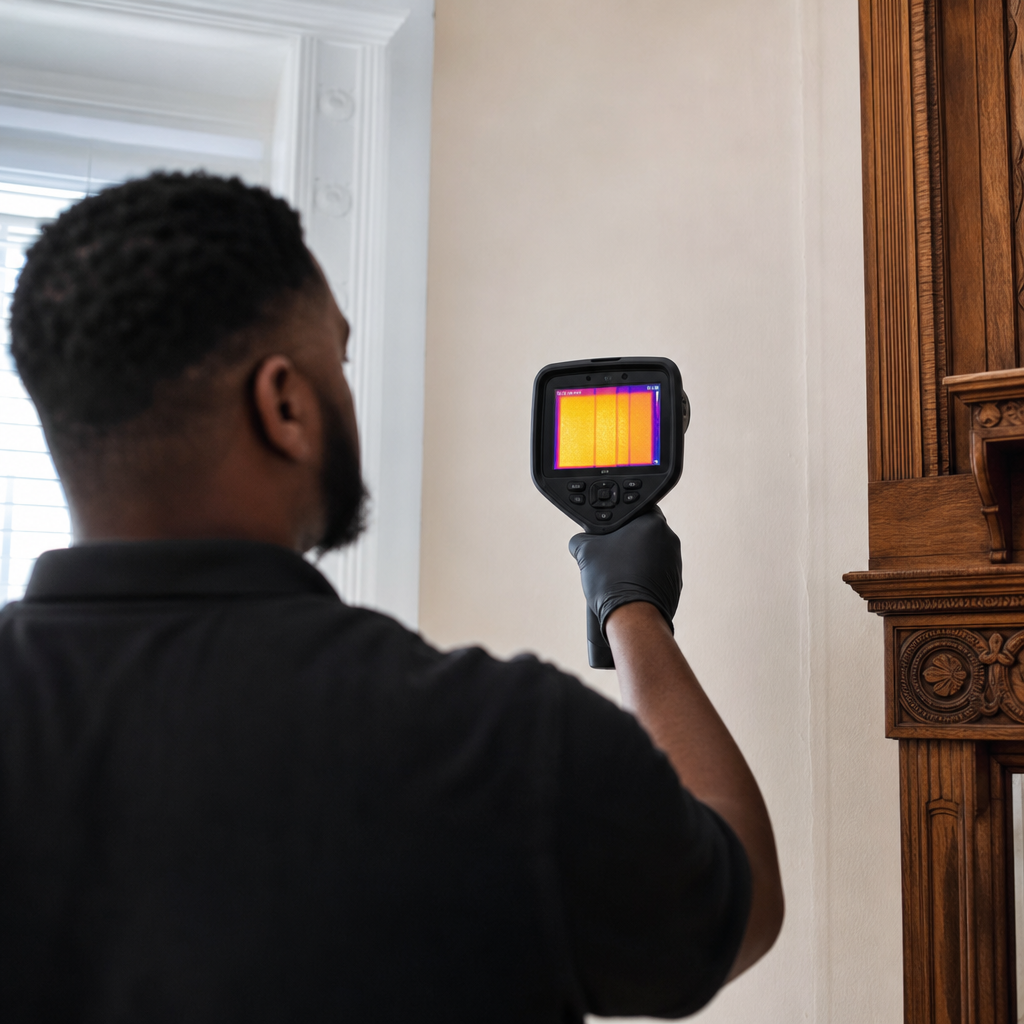
Contractors such as Floodline Restoration Co. use thermal imaging cameras and moisture meters to map moisture paths through plaster, subfloors, and structural framing. They install dehumidifiers, air movers, and HEPA air filtration equipment to stabilize the environment during the drying process.
Need flood damage restoration in Harlem?
We’re available now - call for a fast, free estimate.
Sources
- Climate and Health in Central Harlem – Morningside Heights – a816-dohbesp.nyc.gov (2023)
- Flood Maps – NYC.gov – nyc.gov (2016)
- [PDF] Frequently Asked Questions on Flood Statistics – publicworks.venturacounty.gov
- Resilient Neighborhood: Harding Park – Bronx – nyc.gov
- Data & Maps – NYC Housing Recovery – nyc.gov
Flood Damage Restoration in Nearby Cities
We also serve the communities around Harlem:
- Flood Damage Restoration in Astoria
- Flood Damage Restoration in Central Harlem
- Flood Damage Restoration in Corona
- Flood Damage Restoration in Ditmars Steinway
- Flood Damage Restoration in East Elmhurst
- Flood Damage Restoration in East Harlem
- Flood Damage Restoration in Elmhurst
Frequently Asked Questions
Can historic horsehair plaster and wood lath in Harlem brownstones be saved after water damage?
Yes, if water intrusion involves non-contaminated water and mitigation begins promptly, specialized structural drying can often salvage historic plaster and lath assemblies. Floodline Restoration Co. utilizes targeted thermal imaging and low-grain refrigerant dehumidifiers to draw moisture out of wall cavities without requiring destructive gutting. However, if saturated by Category 3 sewer backups or storm runoff, porous plaster must be safely removed to eliminate biohazards.
What risks arise when floodwater penetrates brownstone brick party-wall pockets?
Moisture trapped within masonry pockets directly contacts structural timber joists, accelerating wood rot, compromising load-bearing integrity, and cultivating hidden mold colonies. Floodline Restoration Co. deploys specialized deep-cavity drying equipment and precision moisture meters to stabilize shared brick party walls before long-term structural decay occurs.
How does Floodline Restoration Co. assist Harlem property owners with insurance claims?
The team documents structural damage with detailed moisture mapping, thermal imaging, and itemized scopes of work aligned with standard insurance pricing guidelines. Property owners can call Floodline Restoration Co.'s 24/7 dispatch to schedule an immediate response or request a free on-site visual inspection and moisture assessment to support their claim filing.
About the author
 |
Christopher Vance Christopher Vance is a certified structural drying specialist with over nine years of experience in property damage restoration. He holds an associate degree in Construction Management from Pratt Institute and focuses on rapid-response water mitigation. Christopher writes to help Astoria property owners navigate the complexities of emergency restoration and insurance claims. |
Water damage, flood, or mold emergency?
We’re available now - call for a fast, free estimate.
Call Now - Free Estimate