
Quick Summary
With roughly 21% of local properties facing flood risk, securing professional flood damage restoration in Jackson Heights is essential to stop moisture from migrating across shared walls and subfloors in multi-family buildings. Floodline Restoration Co. serves as the premier mitigation team for complex Queens architectures, managing everything from rapid emergency water extraction to structural drying and insurance claim coordination. Property owners will understand the critical restoration steps required within the first 24 hours and can contact Floodline Restoration Co. 24/7 dispatch for immediate emergency extraction and a free on-site inspection.
Flood Damage Restoration in Jackson Heights
When dealing with moisture intrusion, rapid action is essential. According to Floodline Restoration Co., in multi-family or attached buildings, water can potentially spread through shared walls and subfloors if unaddressed.
According to First Street Foundation data, 1,716 of 8,183 properties in Jackson Heights, or approximately 21%, are projected to face flood risk within 30 years. FEMA’s National Flood Hazard Layer is the federal database containing current effective flood-hazard data used to support the National Flood Insurance Program. On the First Street neighborhood page, the reported zero properties refers specifically to FEMA Special Flood Hazard Areas Zone A or V among the 8,183 properties, not an absence of all flood risk.[1]
The provided research does not identify specific restoration companies or verify guaranteed 24/7 response times. Confirm availability and arrival estimates directly with providers.
Quick Answer: Emergency Restoration Services in Jackson Heights
Summary: Core flood restoration steps involve documenting damage, addressing safety hazards, removing standing water, discarding materials that cannot be cleaned and dried, cleaning contaminated surfaces, and drying the building thoroughly. The provided research does not identify specific restoration companies or verify guaranteed 24/7 response times. Confirm availability and arrival estimates directly with providers.
Property owners dealing with water intrusion should take immediate steps to document damage, address safety hazards, remove standing water, discard unsalvageable items, and thoroughly dry the structure.[5]
How Quickly Can Technicians Arrive for Emergency Flood Cleanup?
Response timeline: Arrival time depends on availability, traffic, weather, building access, and emergency severity. The provided research does not identify specific restoration companies or verify guaranteed 24/7 response times. Confirm availability and arrival estimates directly with providers.
Speed is critical during a flood event, as standing water can begin degrading porous building materials and structural framing shortly after contact.[3]
Why the First 24 Hours Dictate Structural Recovery
As noted by Floodline Restoration Co., beginning restoration promptly helps determine whether building materials can be dried or must be removed. In various building assemblies, materials may absorb standing water through wicking action.
According to First Street Foundation data, 733 properties could be affected by a modeled 1-in-100-year event today, with a 26% chance during a 30-year mortgage. While FEMA’s National Flood Hazard Layer is the federal database containing current effective flood-hazard data used to support the National Flood Insurance Program, First Street models tides, coastal surges, rainfall, rivers, historical flooding, and projected environmental changes.[2]
Preventing Rapid Mold Growth and Secondary Humidity Damage
Microbial growth can develop on wet organic substrates in as little as 24 to 48 hours under humid conditions. Industry specialists at Floodline Restoration Co. emphasize that elevated indoor humidity can also lead to secondary moisture damage in adjoining areas.[4]
What Does Flood Damage Restoration Cost in Jackson Heights?
Need flood damage restoration in Jackson Heights?
We’re available now - call for a fast, free estimate.
Restoration costs depend on specific site conditions, including the volume of standing water, the category of water contamination, affected materials, and the required scope of drying and repairs.
Typical Service Cost Factors
Restoration project costs typically vary based on several standard factors:
| Service Category | Cost Determination Factors |
|---|---|
| Inspection & Damage Assessment | Affected square footage, assessment scope, and documentation requirements |
| Water Removal | Volume and depth of standing water and extraction requirements |
| Structural Drying | Extent of moisture intrusion, equipment requirements, and drying duration |
| Cleaning & Disposal | Water contamination category, surface cleaning needs, and debris removal |
Navigating Insurance Coverage
Flood damage generally requires separate flood insurance, while certain endorsements may cover water backup or sewage damage, subject to policy terms, limits, and exclusions.
How Do You Dry Multi-Unit Buildings and Shared Walls?
Drying Multi-Unit Structures: When water enters multi-unit or attached buildings, moisture can migrate through shared walls and building assemblies, requiring thorough moisture assessment, water extraction, and proper drying procedures.
Managing Moisture Migration in Masonry and Shared Assemblies
In attached buildings and masonry construction, moisture can potentially migrate upward or horizontally through porous materials if not properly dried. Restoring affected spaces requires removing standing water and ensuring thorough drying of structural components, according to Floodline Restoration Co.
Protecting Building Materials
Restoration in multi-family or co-op buildings generally involves working carefully within property guidelines to dry salvageable materials, document structural conditions, and remove items that cannot be adequately cleaned and dried.
What Are the Key Steps in Emergency Water Extraction and Structural Drying?
Supported restoration guidance includes the following core steps:
- Document Damage: Record the extent of flooding and structural impact for records and insurance purposes.
- Address Safety Hazards: Inspect for electrical, structural, and contamination hazards before proceeding.
- Remove Standing Water: Extract standing water promptly from all affected areas.
- Discard Unsalvageable Materials: Discard materials that cannot be cleaned and dried effectively.
- Clean Contaminated Surfaces: Thoroughly clean all surfaces exposed to floodwater or contaminants.
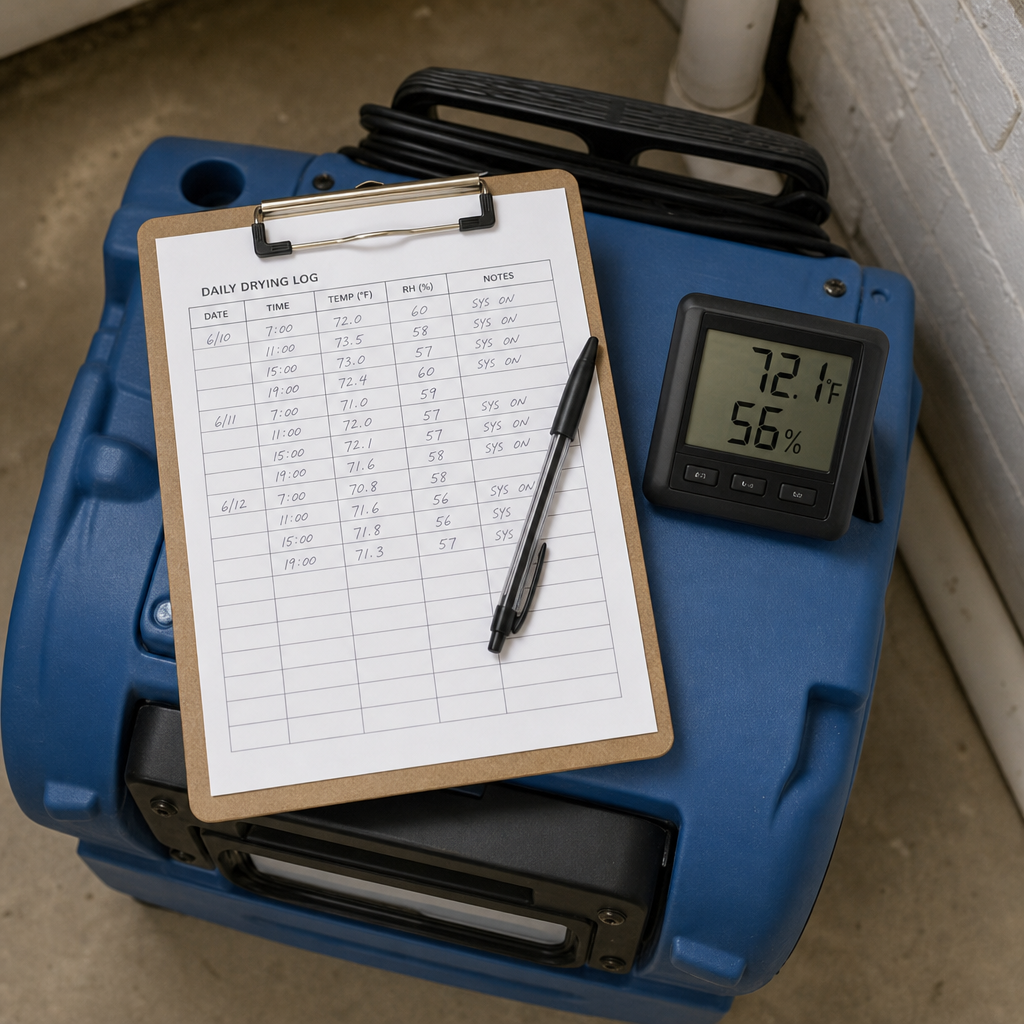
- Dry the Building Thoroughly: Utilize drying and dehumidification equipment until moisture is eliminated from structural materials.
Frequently Asked Questions About Jackson Heights Flood Cleanup
How much does cleanup cost, and does insurance cover extraction?
Costs depend on water depth, contamination category, square footage, and drying needs. Flood damage generally requires separate flood insurance, while certain endorsements may cover water backup or sewage damage, subject to policy terms, limits, and exclusions.
How do I know if moisture migrated into an adjoining unit?
According to Floodline Restoration Co., moisture assessment tools can identify elevated moisture levels and track water migration across shared walls, ceilings, and subfloors.
Are crews available 24/7 during severe Queens storms?
The provided research does not identify specific restoration companies or verify guaranteed 24/7 response times. Confirm availability and arrival estimates directly with providers.
Need flood damage restoration in Jackson Heights?
We’re available now - call for a fast, free estimate.
Sources
- 1 – nyc.gov (2025)
- FEMA Flood Map Service Center | Search By Address – msc.fema.gov
- Know Your Flood Risk: Homeowners, Renters or Business Owners – fema.gov
- ERROR – s-media.nyc.gov
- 34607, FL Flood Map and Climate Risk Report – firststreet.org (2016)
Flood Damage Restoration in Nearby Cities
We also serve the communities around Jackson Heights:
- Flood Damage Restoration in Astoria
- Flood Damage Restoration in Central Harlem
- Flood Damage Restoration in Corona
- Flood Damage Restoration in Ditmars Steinway
- Flood Damage Restoration in East Elmhurst
- Flood Damage Restoration in East Harlem
- Flood Damage Restoration in Elmhurst
- Flood Damage Restoration in Greenpoint
Frequently Asked Questions
How do specialists handle flood restoration in historic pre-war and garden apartment buildings in Jackson Heights?
Floodline Restoration Co. deploys advanced moisture mapping and non-invasive drying systems tailored to protect historic masonry, plaster walls, and timber subfloors from secondary decay. Their certified crews work within multi-family and co-op guidelines to stop moisture from migrating across shared party walls and structural framing.
Can Floodline Restoration Co. help navigate complex flood insurance claims in Jackson Heights?
Yes, Floodline Restoration Co. manages direct insurance claim coordination by cataloging damage, logging moisture readings, and submitting detailed documentation directly to adjusters. This end-to-end support simplifies claims for both standard flood insurance policies and sewer backup riders.
What should I do immediately after discovering water intrusion in my building?
Ensure occupant safety by staying clear of submerged electrical hazards, document visible water lines with photos, and immediately contact the Floodline Restoration Co. 24/7 dispatch team. Their rapid-response technicians arrive equipped for immediate emergency water extraction and provide a free on-site visual inspection.
About the author
 |
Christopher Vance Christopher Vance is a certified structural drying specialist with over nine years of experience in property damage restoration. He holds an associate degree in Construction Management from Pratt Institute and focuses on rapid-response water mitigation. Christopher writes to help Astoria property owners navigate the complexities of emergency restoration and insurance claims. |
Water damage, flood, or mold emergency?
We’re available now - call for a fast, free estimate.
Call Now - Free Estimate