
Quick Summary
Due to low-lying coastal topography and compound stormwater hazards, properties in Queens face unique moisture threats requiring specialized flood damage restoration in Long Island City for complex brick party walls and concrete subfloors. Floodline Restoration Co. delivers rapid 24/7 emergency water extraction, specialized structural dehumidification, and detailed photo documentation to prevent secondary mold growth and streamline insurance claim billing. Readers will understand critical restoration timelines, site-specific drying challenges, and how to contact Floodline Restoration Co. 24/7 dispatch for immediate emergency response and a free visual inspection with a written scope of work.
Flood Damage Restoration in Long Island City: Cleanup and Flood Risk Guide
When water floods a property in Long Island City, immediate action helps limit structural damage and mold growth. For life-threatening emergencies, rapidly rising water, electrical hazards, or trapped people, call 911 immediately. For threatened property or municipal infrastructure hazards, call 311.[3]
Understanding flood damage restoration in Long Island City involves recognizing the unique architectural characteristics of local properties, including continuous floor joists, multi-wythe brick party walls, and dense concrete assemblies. In general industry guidance followed by firms like Floodline Restoration Co., professional remediation focuses on moisture extraction, structured drying monitoring, and photo documentation for insurance adjusters.[2]
How Emergency Flood Damage Restoration Works in Long Island City
According to general industry guidance, professional restoration follows a structured process designed to stop active moisture migration, remove standing water, and dry materials toward target moisture levels.
The Initial Emergency Response Window
Under general industry guidelines, the first 24 to 48 hours are critical for preventing secondary microbial growth and structural warping. During this initial phase, standard industry practice includes three primary steps:
- Site Safety and Water Extraction: Technicians inspect the space for safety hazards, shut off utilities if safe to do so, and deploy extraction equipment to remove standing water.
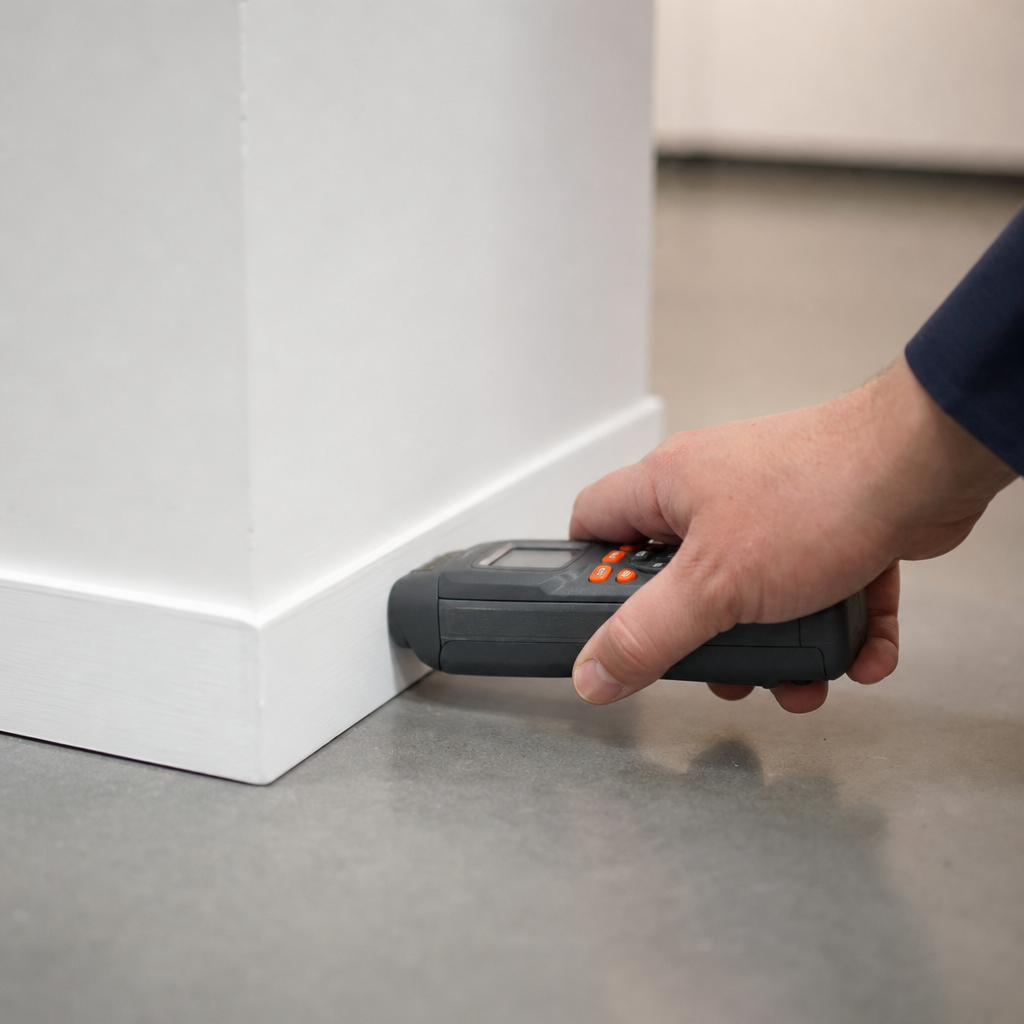
- Moisture Mapping: Water regularly travels beyond the visible puddle. Industry protocols suggest using moisture meters and thermal imaging cameras as general tools to track moisture behind surfaces and in structural cavities.
- Targeted Structural Dehumidification: Industry guidance outlines using commercial dehumidifiers and air movers to pull moisture out of structural materials and manage relative humidity.
Why Industrial Lofts and Waterfront High-Rises Complicate Structural Drying
In general building-assembly descriptions, the neighborhood’s mix of historic brick warehouses, converted residential lofts, and modern waterfront high-rises presents specific drying challenges.
Subfloor Assemblies and Slab-to-Slab Vapor Entrapment
Based on general industry observations, modern high-rises and converted commercial lofts often feature thick concrete floor slabs topped with soundproofing membranes, underlayment, and finished flooring. When water enters these systems, moisture can become trapped between the slab and finished floor. Because moisture does not easily evaporate upward through non-porous floor coverings, it can migrate horizontally under the surface. In industry practice, specialists such as Floodline Restoration Co. note that drying these assemblies may involve specialized floor drying panels or desiccant dehumidification systems to draw vapor from the subfloor assembly.
Shared Brick Party Wall Wicking and Hidden Cavity Moisture
In historic rowhouses, walk-ups, and converted lofts, unreinforced multi-wythe brick party walls are shared across property lines. Masonry materials are naturally porous. When water pools at the base of a wall, capillary action can draw moisture upward through brick and mortar joints. Industry guidance cautions that sealing these assemblies or enclosing framing prematurely can trap residual moisture within the wall cavity.
Long Island City Flood Risk: Compound Stormwater and Coastal Factors
Need flood damage restoration in Long Island City?
We’re available now - call for a fast, free estimate.
Long Island City faces flood hazards due to low-lying topography along the East River and dense urban hardscaping. According to modeled flood data, 12.2% of properties have current modeled flood risk. A modeled 1-in-100-year flood event could affect 247 Long Island City properties today, and that modeled 1-in-100-year event has a 26% chance of occurring at least once during a 30-year mortgage.[1]
Local flood risks stem from multiple converging sources:[4]
- USGS Compound-Flood Dynamics: The U.S. Geological Survey (USGS) compound-flood assessments evaluate overlapping hazards from heavy rainfall, coastal storm surges, and shallow or emerging groundwater that can overwhelm local drainage systems.
- USGS Regional Flood-Hazard Tracking: USGS data for the Long Island Sound region include modeled inundation, water depth, wave discharge, hazard rankings, rainfall accumulation, drainage characteristics, topography, and recorded-flood locations.
- NYC Stormwater Flood Maps: NYC stormwater flood maps distinguish limited, moderate, and extreme conditions and include current, 2050, and 2080 sea-level scenarios.
What Does Flood Damage Restoration Cost in Long Island City?
The total cost of water and flood damage restoration depends on the water source, contamination level, square footage affected, and the materials involved.
Water Categories and Scope of Work (General Industry Guidance)
| Water Category | Contamination Source | General Industry Mitigation Guidance | Typical Material Impact |
|---|---|---|---|
| Category 1: Clean Water | Broken supply lines, sink overflows, clean water sources | Water extraction, airflow, and standard dehumidification | Porous materials can often be preserved if dried promptly |
| Category 2: Grey Water | Washing machine overflows, dishwasher discharge, sump pump failures | Water extraction, cleaning agents, and targeted removal as needed | Padded carpets and porous materials often require removal |
| Category 3: Black Water | Storm surge, street runoff, municipal sewer backups | Containment protocols, sanitation, and removal of non-salvageable materials | Saturated porous materials are typically removed and discarded |
Key Cost Drivers
In general restoration practice observed by teams like Floodline Restoration Co., project costs vary based on specific structural and site conditions:
- Masonry vs. Drywall Drying: Extracting moisture from dense plaster or multi-wythe brick typically requires extended drying setups compared to standard drywall assemblies.
- Containment and Air Scrubbing: Contaminated water events generally require containment barriers and HEPA air filtration to prevent cross-contamination.
- Site Access and Logistics: Multi-story buildings, basement access constraints, and parking logistics can affect overall labor requirements.
Navigating Flood Insurance Claims for Queens Properties
Standard homeowners and renters policies generally do not cover flood damage. Some endorsements may cover certain water-backup or sewage losses. Separate NFIP flood insurance is generally available to homeowners, renters, and businesses subject to policy terms and limits.
Essential Documentation for Insurance Adjusters
To support an insurance claim, standard industry practice recommends keeping thorough records during the cleanup process:
- Capture Initial Photo and Video Evidence: Take clear photos and videos of water lines, damaged structural elements, and personal property before items are removed.
- Preserve Damaged Materials for Inspection: Keep damaged building components or mechanical parts accessible until an adjuster can inspect them.
- Maintain Moisture Documentation: Request drying logs and moisture readings from restoration technicians to document structural drying progress.
- Maintain a Detailed Item Inventory: Keep an itemized list of damaged contents, including descriptions, estimated age, and approximate values.
Frequently Asked Questions About Long Island City Flood Recovery
How quickly can an emergency flood restoration team arrive in Long Island City?
No authoritative neutral source verifies a guaranteed or average arrival time for private restoration teams in Long Island City. For immediate danger, rapidly rising water, electrical hazards, or trapped people, call 911; for threatened property, call 311.[5]
What immediate steps should I take after flooding before the restoration crew arrives?
Protect life first and evacuate if instructed to do so. Call 911 for immediate danger. Avoid standing basement or cellar water, and shut off gas and electricity only if safe to do so. Move important items and documents to higher levels, photograph the damage, and wear protective clothing when entering affected areas.
Do flood restoration companies in Long Island City handle mold prevention and removal?
As general industry guidance noted by providers like Floodline Restoration Co., flood restoration protocols include applying antimicrobial solutions during the drying process to inhibit mold growth. When mold is present, standard industry remediation guidelines outline the use of containment barriers, HEPA filtration, and controlled removal of contaminated materials.
How long does structural drying and water damage repair typically take?
As general industry guidance, standard structural drying typically spans several days under continuous dehumidification and airflow. Dense masonry walls, concrete slabs, or complex layered assemblies may require additional drying time. Structural repairs and reconstruction proceed after moisture readings confirm framing and substrate materials have reached acceptable drying targets.
Does property insurance cover the cost of flood damage cleanup?
Standard homeowners and renters policies generally do not cover flood damage. Some policy endorsements may provide coverage for specific water-backup or sewage losses. Separate flood insurance through the NFIP is generally available to homeowners, renters, and businesses, subject to policy terms, conditions, and limits.
Need flood damage restoration in Long Island City?
We’re available now - call for a fast, free estimate.
Sources
- Flood Risk in NYC Information Brief – nyc.gov (2015)
- Regional Assessment of Compound Flood Hazard from the … – usgs.gov (2021)
- East Side Coastal Resiliency Updated Benefit-Cost Analysis – nyc.gov (2019)
- FLOOD RISK AND BASEMENT HOUSING IN NEW YORK … – newyorkfed.org (2023)
- Long Island City, NY Flood Map and Climate Risk Report – firststreet.org (2012)
Flood Damage Restoration in Nearby Cities
We also serve the communities around Long Island City:
- Flood Damage Restoration in Astoria
- Flood Damage Restoration in Central Harlem
- Flood Damage Restoration in Corona
- Flood Damage Restoration in Ditmars Steinway
- Flood Damage Restoration in East Elmhurst
- Flood Damage Restoration in East Harlem
- Flood Damage Restoration in Elmhurst
- Flood Damage Restoration in Greenpoint
Frequently Asked Questions
How does Floodline Restoration Co. assist with flood insurance claims and billing in Long Island City?
Floodline Restoration Co. manages the recovery lifecycle by providing detailed photo documentation, daily drying logs, and itemized inventories directly to adjusters. Their team coordinates direct insurance claim billing to minimize out-of-pocket delays for property owners.
Can flooded concrete subfloors and multi-wythe brick walls be restored without demolition?
Yes, specialized structural drying equipment such as floor-drying panels and commercial desiccant dehumidifiers can pull trapped moisture from dense masonry and concrete assemblies. Floodline Restoration Co. applies non-destructive drying methods tailored to Queens architecture to salvage structural materials whenever feasible.
What is included in an emergency visual flood inspection for Long Island City properties?
An inspection involves thermal imaging, subfloor moisture mapping, and a safety assessment to identify hidden water migration paths. Property owners can call the Floodline Restoration Co. 24/7 dispatch for immediate emergency response and a free visual inspection with a written scope of work.
About the author
 |
Christopher Vance Christopher Vance is a certified structural drying specialist with over nine years of experience in property damage restoration. He holds an associate degree in Construction Management from Pratt Institute and focuses on rapid-response water mitigation. Christopher writes to help Astoria property owners navigate the complexities of emergency restoration and insurance claims. |
Water damage, flood, or mold emergency?
We’re available now - call for a fast, free estimate.
Call Now - Free Estimate