
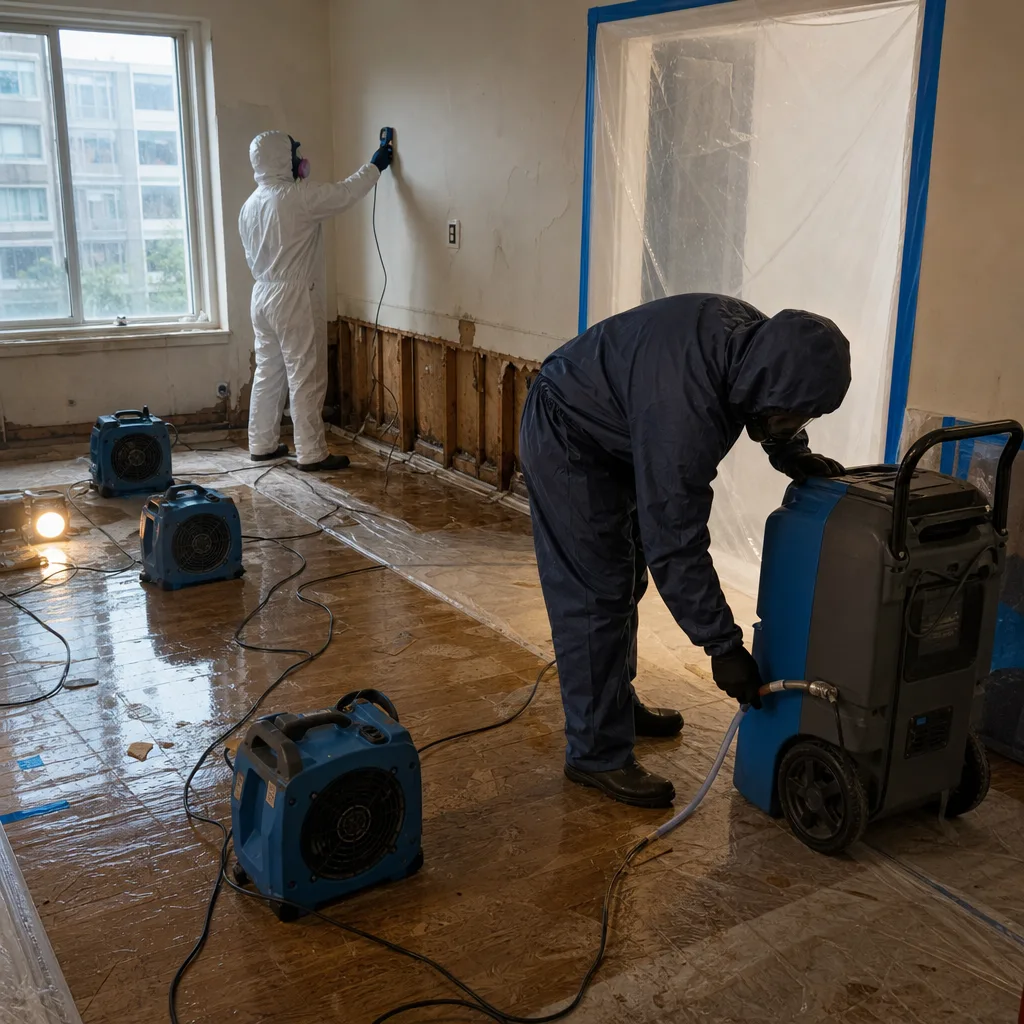
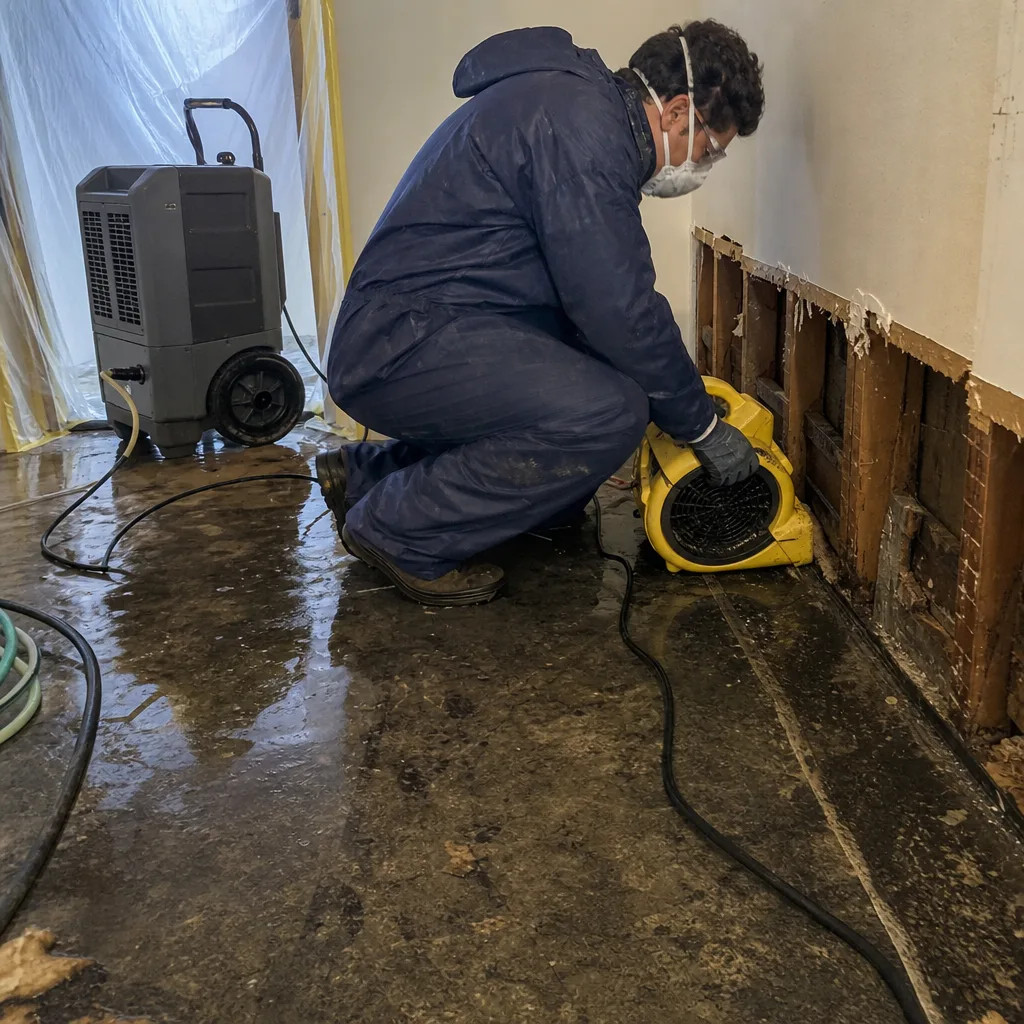
Free visual inspection and a written scope of work before any mitigation begins - photos, moisture readings, and drying logs go in your claim file
The scope we write is the scope we bill. Anything new gets shown to you, in writing, before we touch it.
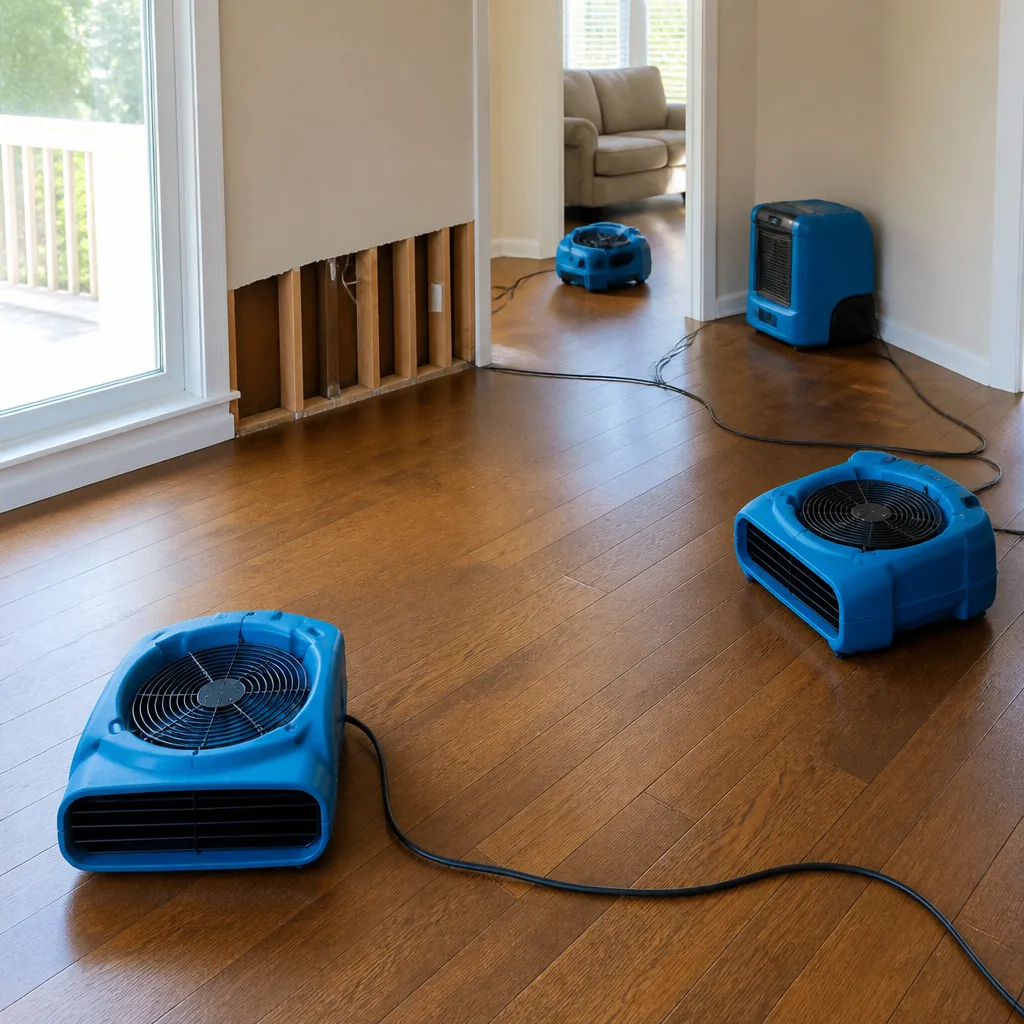
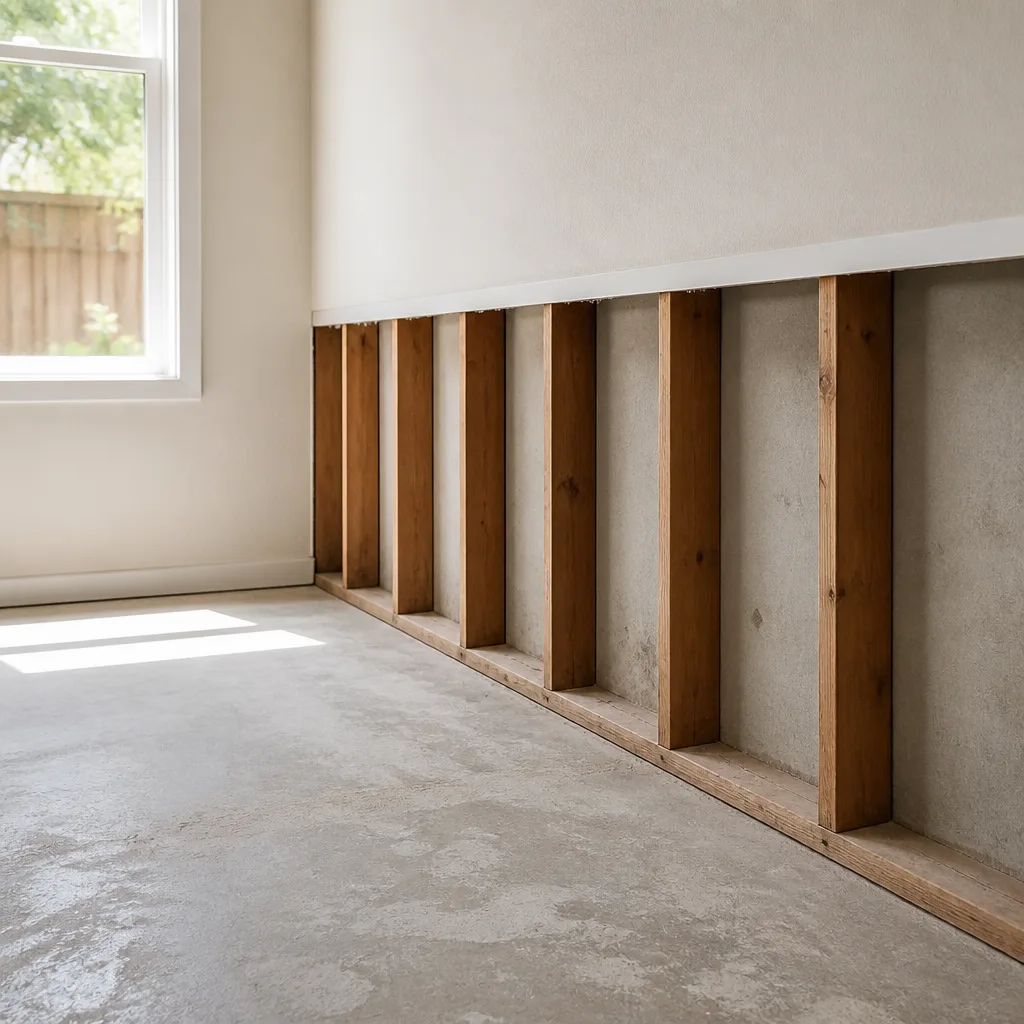
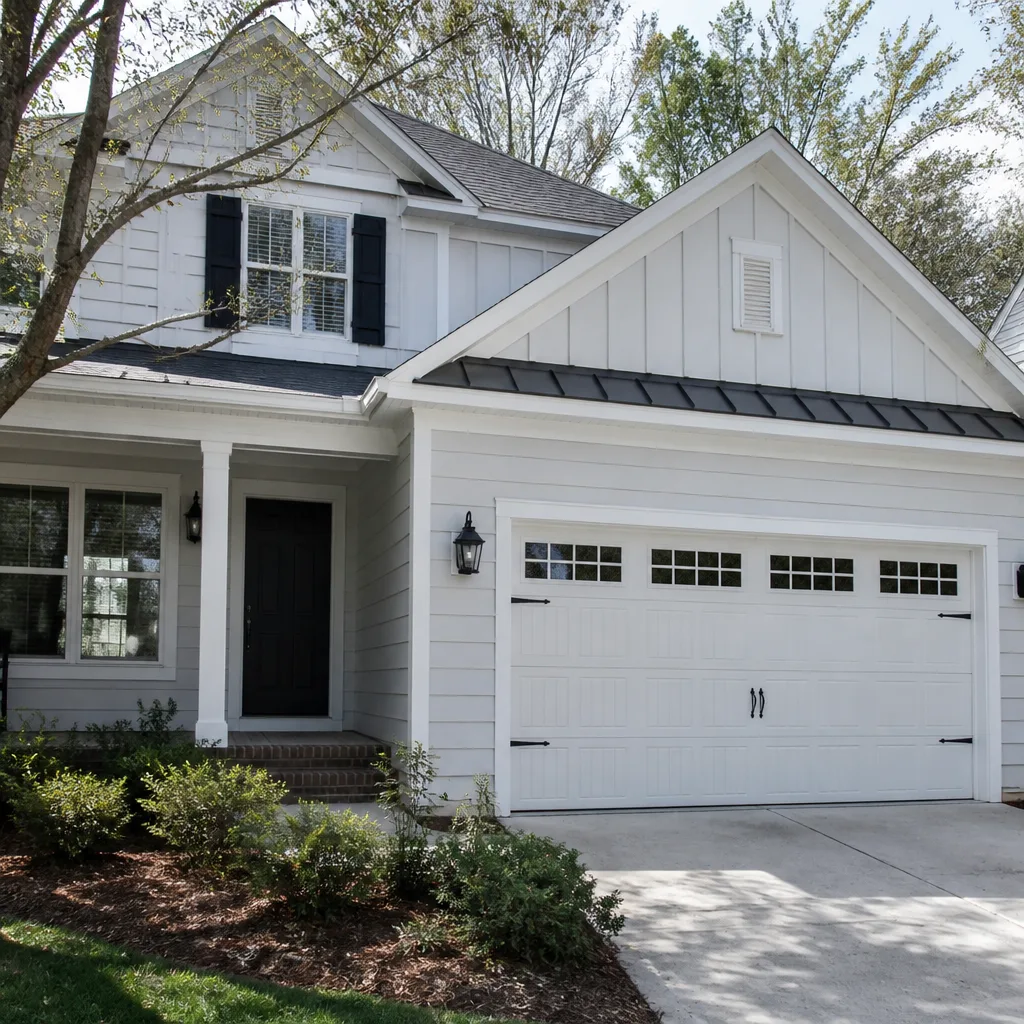
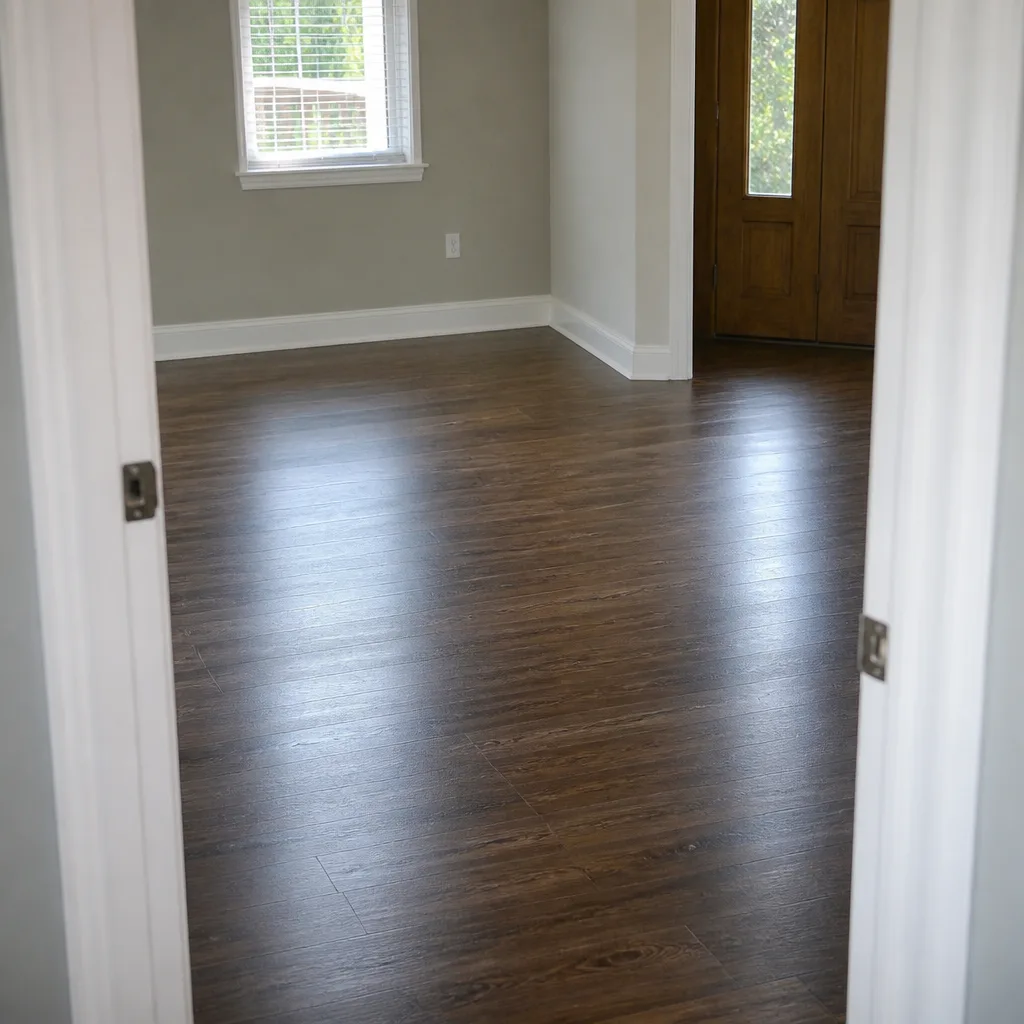
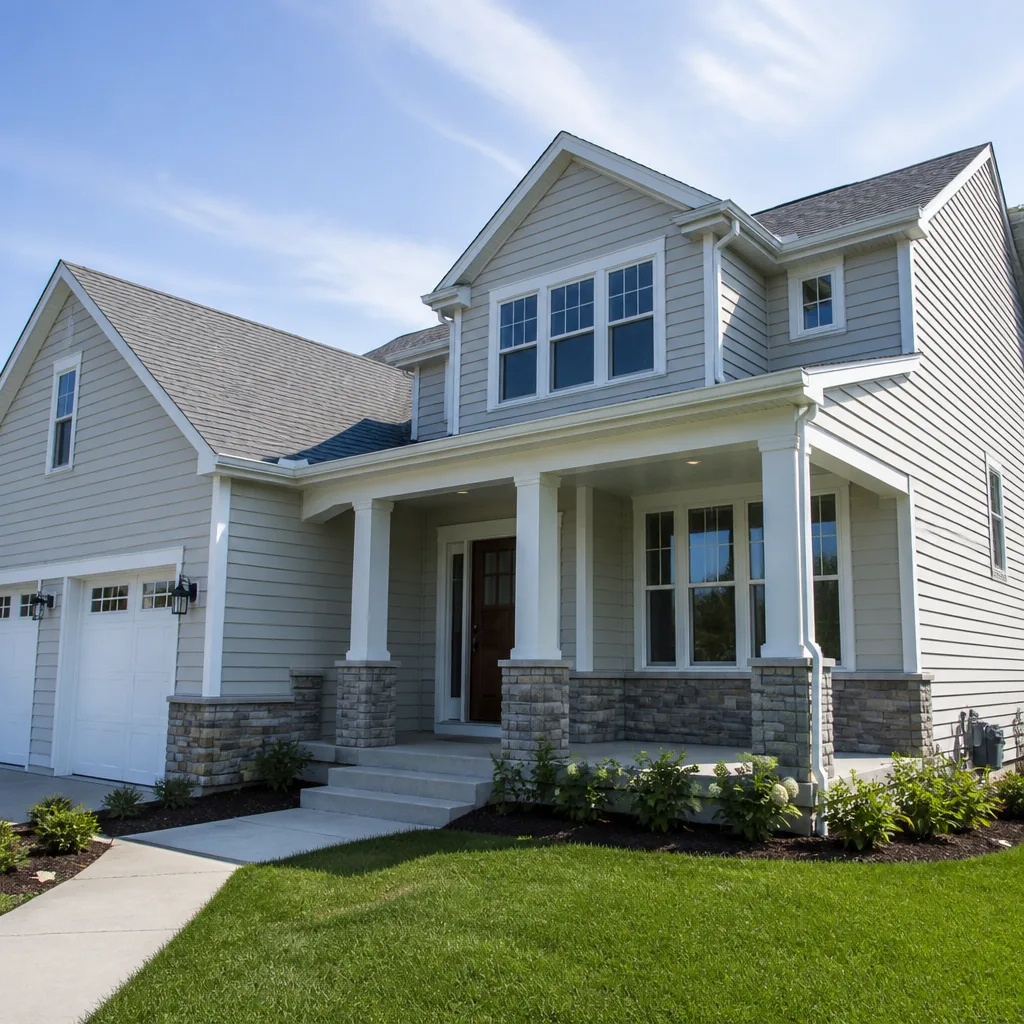
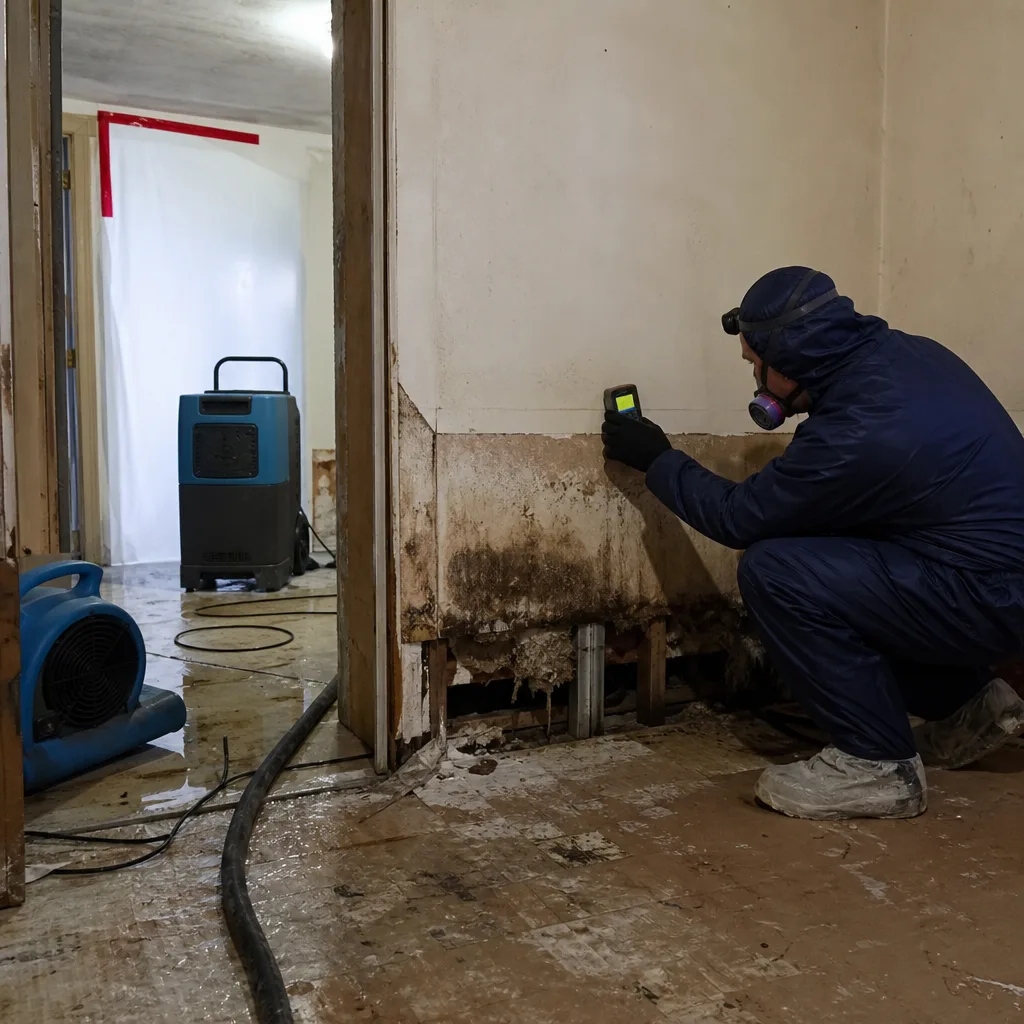 Before
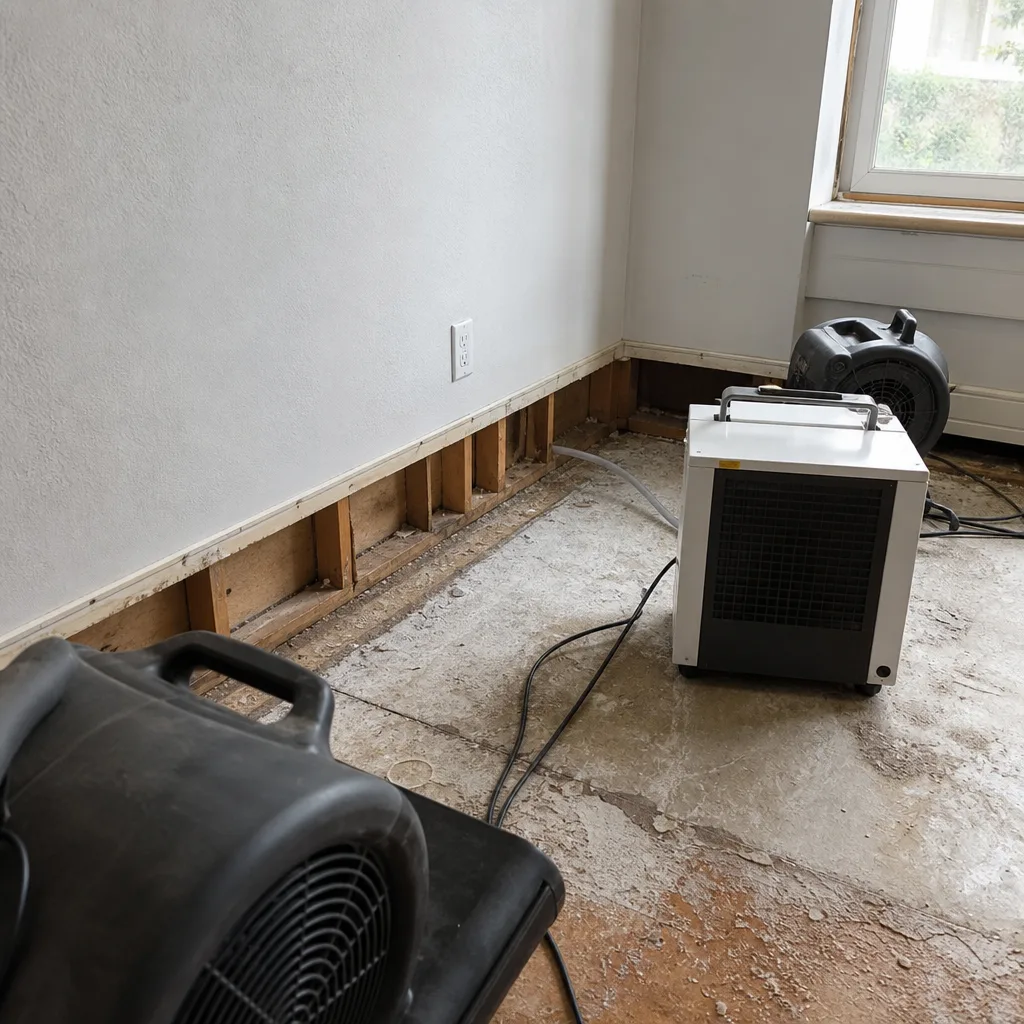 After
After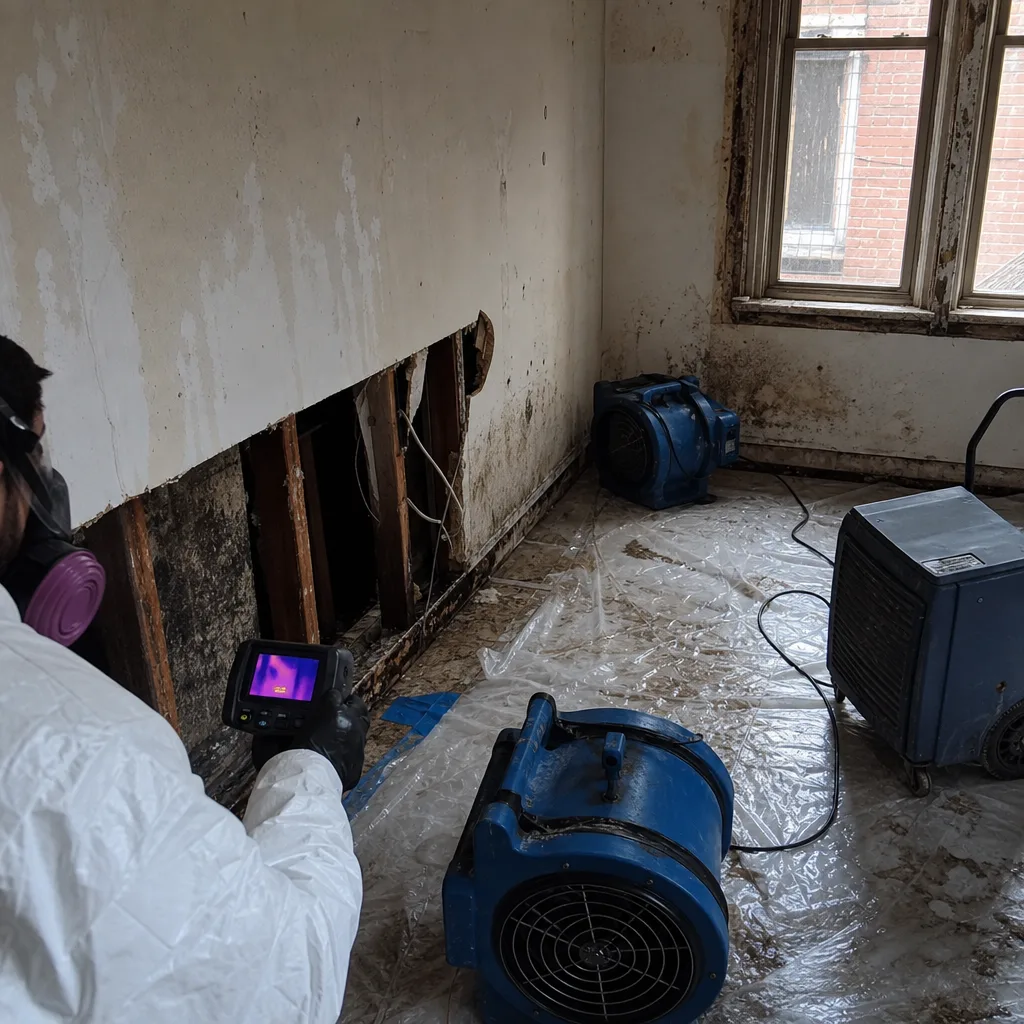 Before
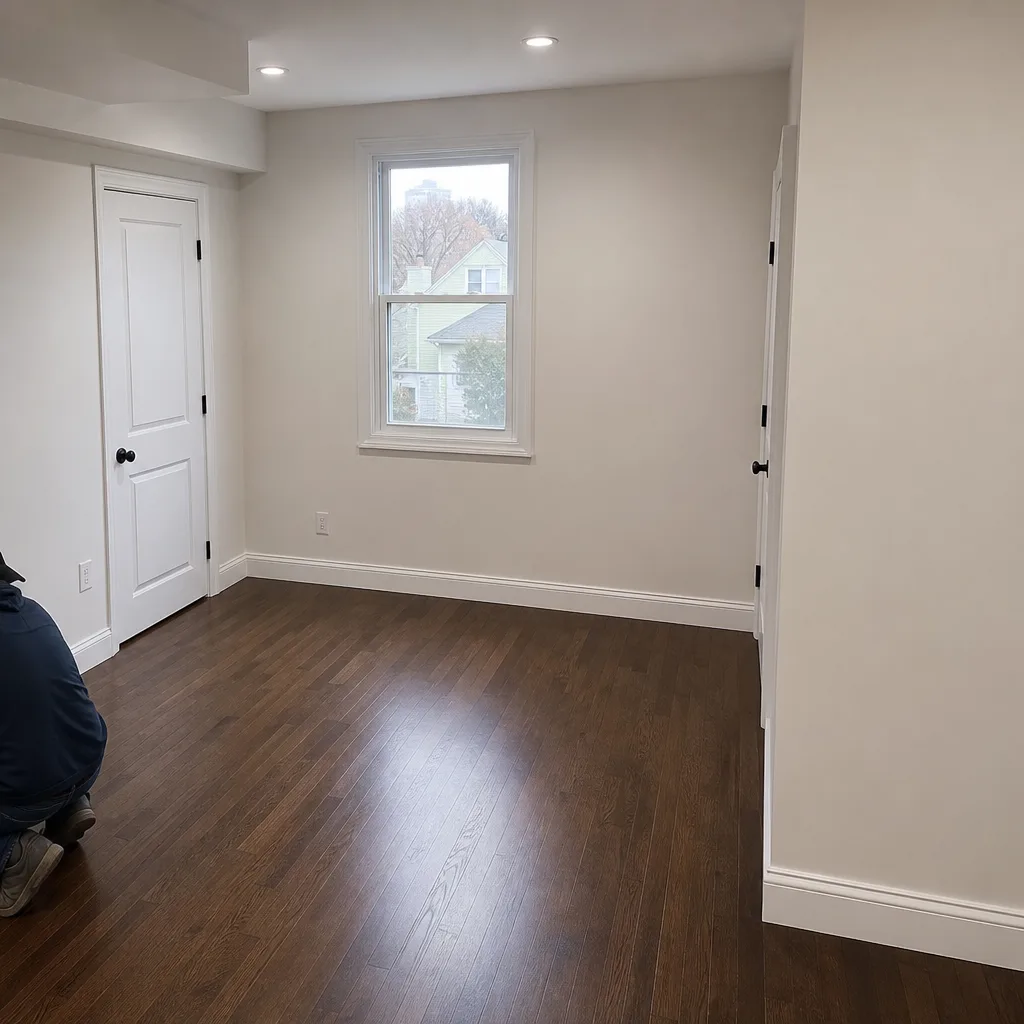 After
After24/7 Emergency Commercial Restoration in Morningside Heights
Commercial restoration in Morningside Heights has one rule that overrides everything else: speed on the front end saves the building from what comes next. Every hour a steam riser leak or supply-line failure runs unchecked inside a pre-war brick building, Category 2 water migrates through plaster-and-lath assemblies into the floors below, and a one-unit cleanup becomes a five-floor triage. Floodline Restoration Co. answers live around the clock at (518) 800-3751, dispatches crews inside the Morningside Heights area the same hour, and starts with a free visual inspection that maps exactly where the water, soot, or mold has gone and where it’s headed. The first hour after a commercial loss is when decisions get made that determine whether your tenants reopen in three days or three weeks. Getting a certified team on site while the damage is still predictable is the cheapest line item on the entire job.
Understanding Commercial Restoration Severity in Morningside Heights Properties
Severity in this neighborhood is not just about how much water or smoke is present. It’s about what the building is made of. Morningside Heights is dominated by 6 to 12 story pre-war brick elevator buildings, most built between the 1890s and the 1930s, with plaster-over-wood-lath walls and ceilings instead of modern drywall. Water-saturated plaster debonds from its lath keys and can drop in heavy slabs without warning, which means drying decisions have to follow a structural assessment first. Our techs classify incoming water as Category 1, 2, or 3 before they set a single air mover, because the response changes completely when the source is a clean supply line versus a failed cast-iron waste stack. In Morningside Heights, steam radiator systems and aging galvanized risers are the usual culprits, and a leak that starts on the eighth floor routinely presents as ceiling staining on the fifth. Moisture mapping with thermal imaging and hygrometers tells us what the plaster is hiding before we commit to demo or drying.
Why Morningside Heights Property Owners Choose Floodline Restoration Co.
- 45-minute response commitment: Our local Morningside Heights crews are dispatched the moment you call, and we commit to arriving within 45 minutes for commercial emergencies, because a steam riser leak does not pause for business hours.
- 24/7 live answer, always a person: When you call (518) 800-3751 at 2 a.m., a live dispatcher picks up. No automated tree, no recording, no callback queue. You explain the emergency once, and a uniformed crew is rolling.
- IICRC-certified crews: Our technicians hold IICRC designations including WRT, FSRT, and AMRT, plus IFA training, so the person performing your structural drying or containment understands the standard behind the work.
- Free visual inspection: Before any work begins, we walk the loss with you and give a straight read on what’s salvageable, what the schedule looks like, and what your insurer will need to see. No charge, no obligation.
- Direct insurance billing: We bill your carrier directly and deal with the adjuster ourselves, so the property owner never plays messenger between us and the insurance company. That’s how a square deal works.
- One team from extraction to reconstruction: The same Floodline crew that extracts the water and dries the structure handles the rebuild, so there is no mid-job handoff to a subcontractor who was not there on day one.
Our Commercial Restoration Process
Inspection & Assessment
We arrive, walk the full affected footprint, and use thermal imaging cameras plus penetrating moisture meters to map how far water or soot has traveled through the plaster and lath. In Morningside Heights buildings, that mapping always includes a ceiling-bounce check on any water-stained plaster before equipment goes in.
Extraction & Stabilization
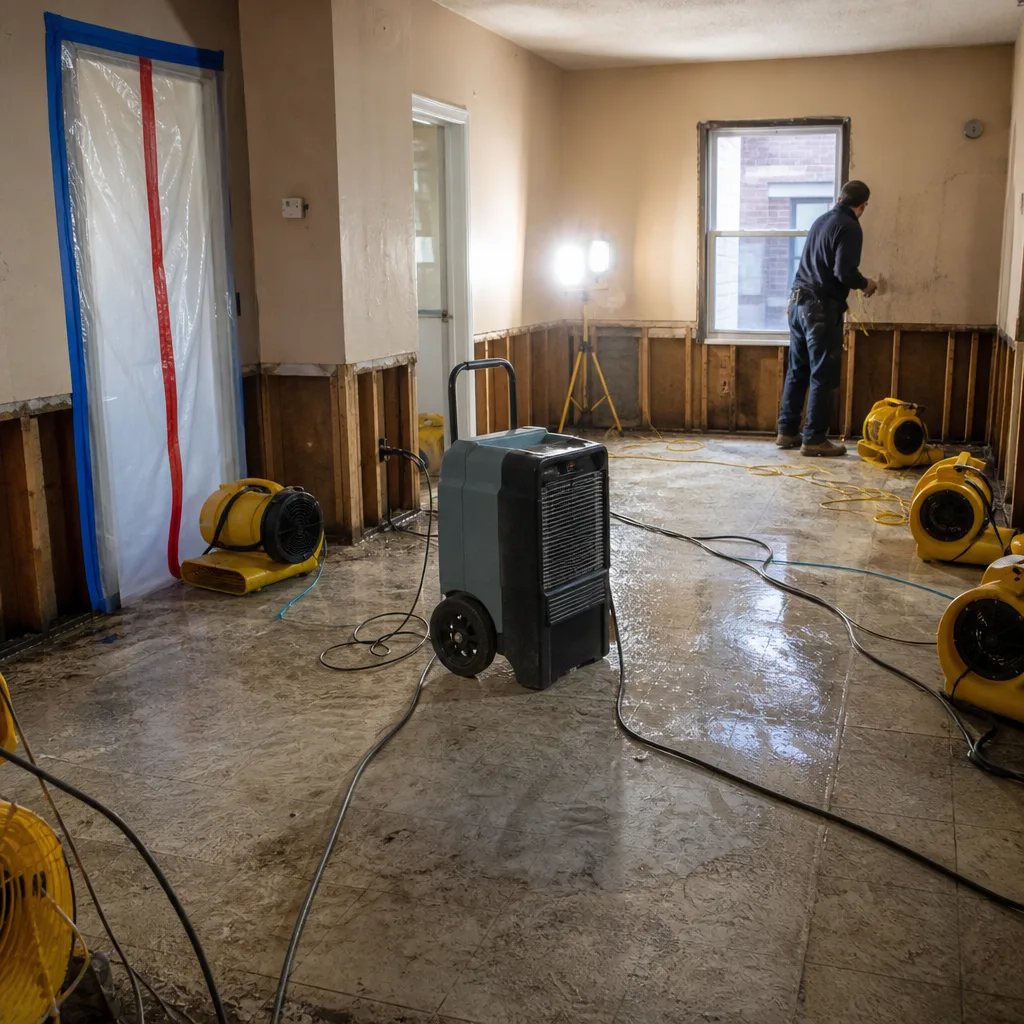
Standing water comes out first with truck-mounted and portable extraction units from Dri-Eaz and Phoenix. Debonded plaster that cannot be dried safely gets removed under controlled containment, and structural bracing goes in where lath has been exposed.
Drying & Dehumidification
Air movers and LGR dehumidifiers are placed only after the plaster is confirmed stable. We log daily moisture readings from each affected unit and share those drying logs with the property owner and the insurance carrier until the dry standard is met.
Cleaning & Sanitization
Category 2 and 3 water events require more than drying. We apply professional-grade antimicrobials at recommended concentrations, run HEPA air scrubbers in occupied buildings to control particulates, and clean salvageable contents off-site where needed.
Document & Inventory Recovery
Commercial losses in Morningside Heights often involve tenant records, files, and inventory. We triage what can be dried and cleaned versus what needs to be documented as non-salvageable for the carrier, and we move contents to a secure drying area faster than most property managers expect.
Repairs & Restoration
The same crew that handled extraction rebuilds the damaged plaster, replaces compromised lath, refinishes floors, and repaints, because restoration means the space ends up usable again, not just dry. Every job is backed by the 90-Day Done Right Promise in writing.
Need Emergency Commercial Restoration in Morningside Heights Now?
Crews minutes away, answering live 24 hours a day. The sooner we start, the less it costs.
Working With Your Insurance Company
Commercial restoration in Morningside Heights almost always involves an insurance carrier, and most property owners would rather not be the go-between. We handle that. From the first hour on site, our crews document the loss in the format adjusters expect: dated photos, floor plans, moisture readings, and a line-item scope that matches industry-standard estimating software. We talk to your adjuster directly, schedule joint inspections when needed, and bill the carrier, not you. Where the policy covers the loss, we do not ask the building owner to front the money. Where there is a deductible or an uncovered line item, we tell you in writing before that work starts, so there are no surprises on the bill afterward. The goal is the same on every Morningside Heights commercial loss: the building gets dried and rebuilt to pre-loss condition, and the claim gets settled without the property owner having to fight for it.
What We Provide Your Insurer
- Thorough documentation of the loss
- Photos of all damage, room by room
- Moisture readings and drying logs
- A detailed, line-item scope of work
- Direct coordination with your carrier
Built for Morningside Heights’s Loss Calendar
Commercial buildings in Morningside Heights fail on a rhythm, and we keep crews staged for it. January and February are the deep-freeze months when galvanized and cast-iron supply lines in pre-war buildings crack and pinhole under freeze-thaw stress, sending water down through multiple occupied floors. March and April bring the thaw and the first roof leaks, as flat roofs with parapet walls shed snowmelt into membrane failures and older drain bodies. Summer means thunderstorm flash flooding and humidity-driven mold blooms in below-grade commercial kitchens and storage rooms. Fall brings the nor’easter season, when wind-driven rain finds every parapet crack and bulkhead seal that held through summer. We plan our Morningside Heights response around this calendar, and our local crews know which buildings near Broadway and Amsterdam Avenue tend to call first when the season turns.
Commercial Restoration Across Morningside Heights’s Neighborhoods
Morningside Heights has a few distinct commercial corridors, and each one fails a little differently. The retail and food-service storefronts along Amsterdam Avenue and Broadway sit in the ground floors of pre-war elevator buildings, where a restaurant hood suppression discharge or a supply-line failure can close a street-level business while the apartments above stay dry. The Columbia University campus proper, from West 114th to West 120th Street, runs on a facilities office protocol that requires dual approval for any restoration work, ours and theirs, and we have done enough jobs there to know that the paperwork needs to move before the air movers do. The blocks around Morningside Drive and Riverside Drive hold large institutional and residential co-op buildings where a single riser leak can drop through five floors of occupied apartments. And the stretch along Claremont Avenue near the seminary complex includes older masonry buildings with parapet walls that pond water and send it into top-floor offices months after the actual storm. When a commercial space floods in any of these areas, the response has to match the building’s age and the approval chain, not just the square footage.
Specialized Commercial Restoration Services We Offer in Morningside Heights
Office & Retail Restoration
Street-level retail and upper-floor offices in Morningside Heights share the same pre-war bones, and our crews treat them accordingly. We triage inventory and tenant records first, then dry the space to the standard your C of O requires before occupying. A storefront can often reopen for business while a section remains under containment, and we sequence the work to make that possible.
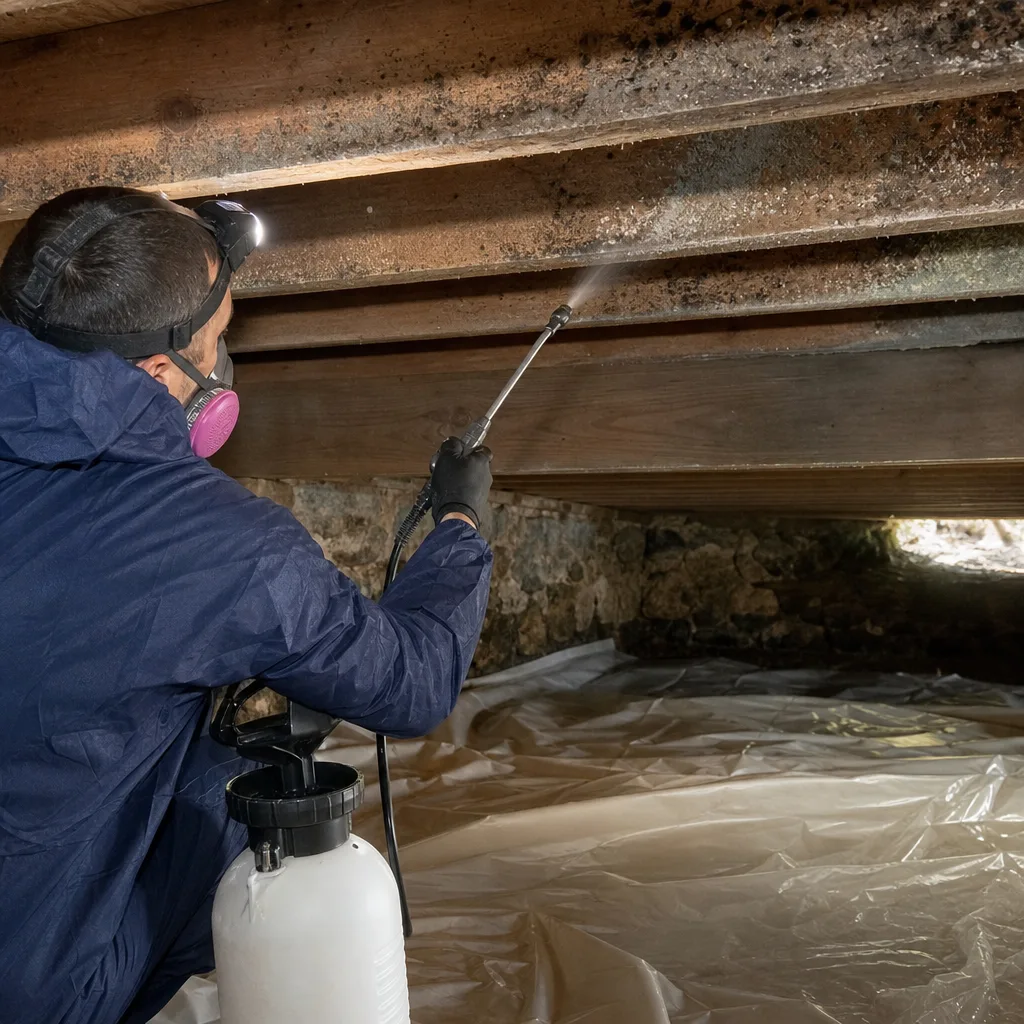
Multi-Unit & HOA Restoration
This is the core of our work in Morningside Heights, where one failed steam radiator valve on the tenth floor becomes a five-unit problem in twenty minutes. We coordinate with building supers, HOA boards, and individual unit owners simultaneously. Our documentation is structured so each owner’s carrier gets a clean scope of work for their specific unit, even when the source was a shared riser.
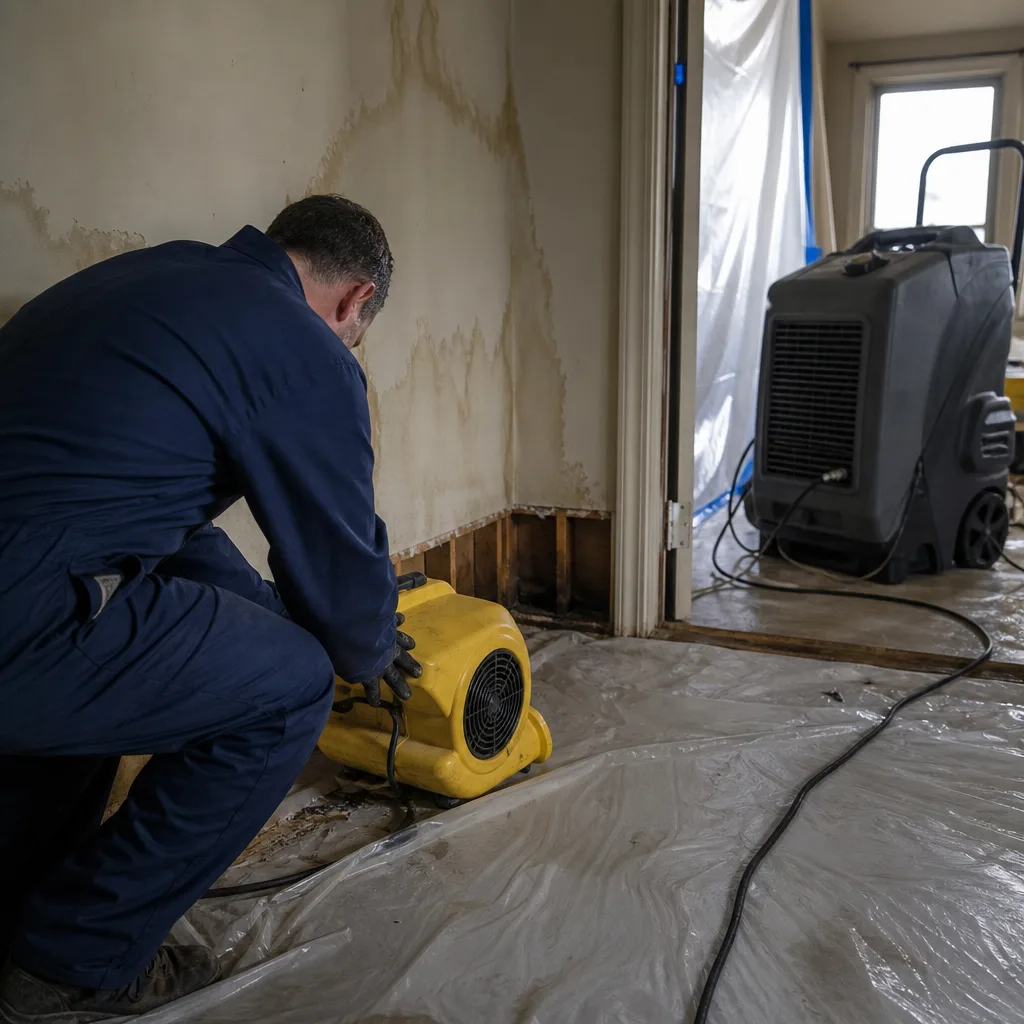
Industrial Facility Cleanup
Larger boiler rooms, mechanical spaces, and below-grade storage in Morningside Heights institutional buildings have their own failure patterns: sump failures, condensate leaks, and drain backups. We handle Category 3 sewage and drain water under full containment, with HEPA air scrubbing running throughout the cleanup, and we leave a moisture log that proves the space met its dry standard.
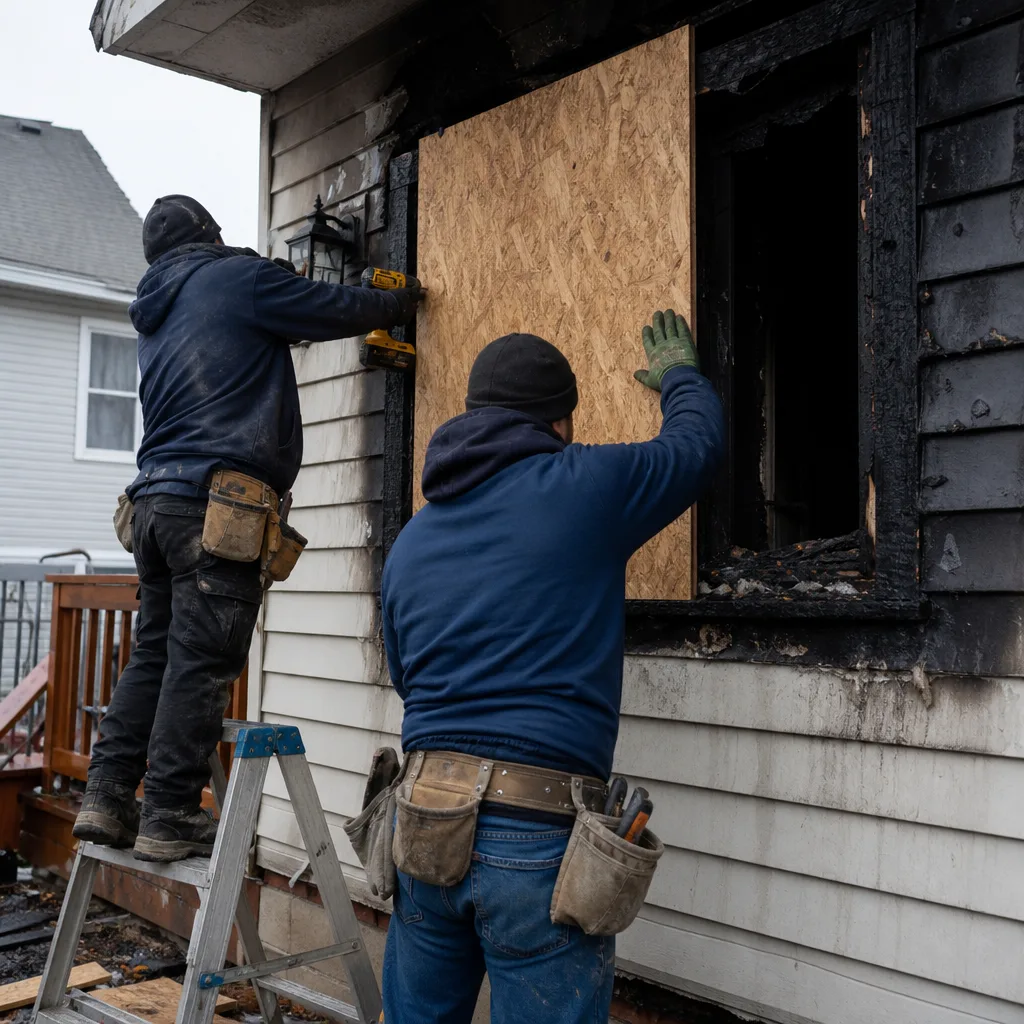
Large-Loss Response
When a frozen supply line lets go above a classroom building or a waste stack fails above a retail corridor, the affected area can exceed what a standard restoration crew can handle in one shift. We scale the response with additional crews from our New York City operations hub, all trained to the same standards and all answering to the same written scope, so no part of the job gets subcontracted to an unknown crew.
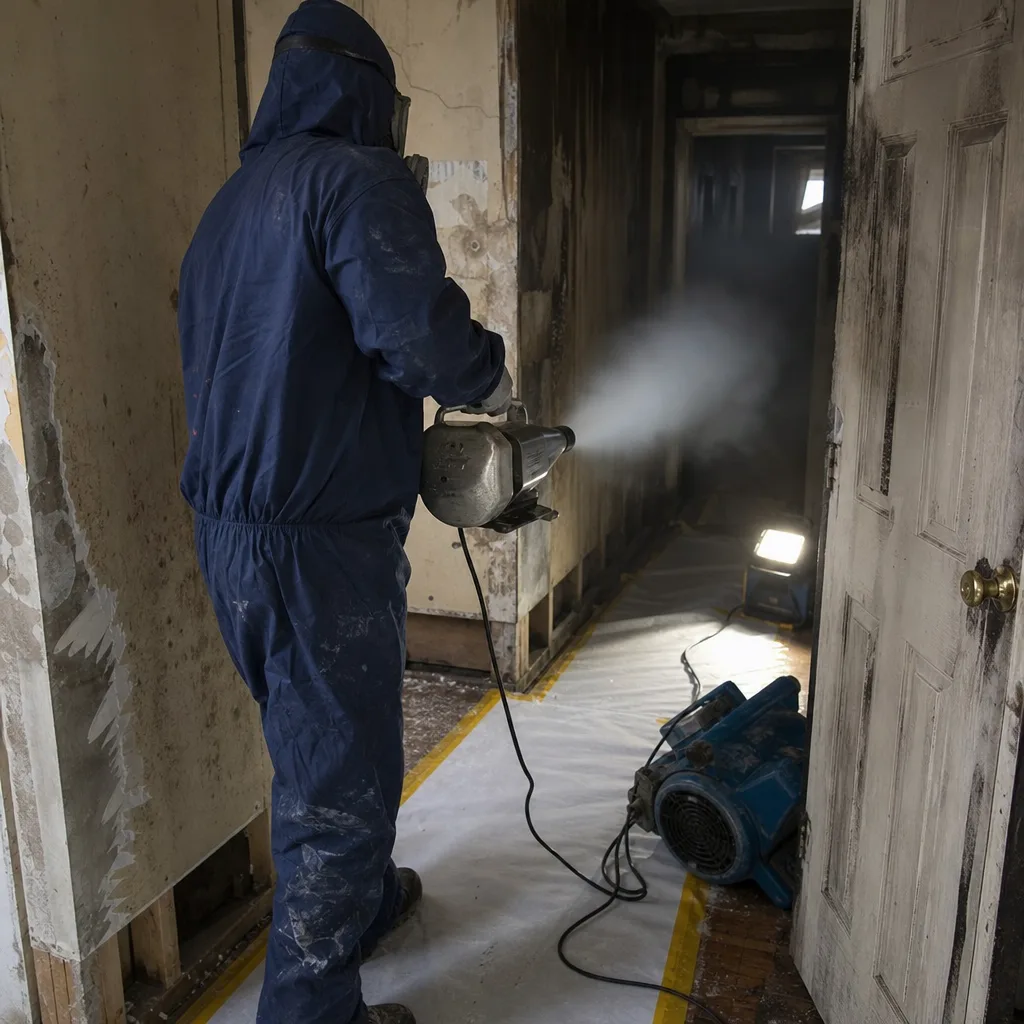
Business Interruption Minimization
Every day a commercial space in Morningside Heights sits dark is a day of lost revenue. Our crews dry in place whenever the structure allows, using Injectidry systems to pull water from behind plaster and under flooring without tearing out finished surfaces. That keeps a coffee shop on Broadway closed for days rather than weeks, and it keeps an office floor renting rather than sitting empty while demolition dust settles.
What happens when you call
- 1
A real person answersNo phone trees - you reach a local pro.
- 2
You get an upfront price rangeHonest numbers before anyone is dispatched.
- 3
A background-checked tech heads outLicensed & insured, dispatched right away.
- 4
You approve before work beginsNothing starts until you say go.
Commercial Restoration Costs in Morningside Heights, NY
In Morningside Heights, a small contained commercial water loss, a failed supply line in a single office with no structural plaster damage, typically runs $3,500 to $8,000 for extraction, drying, and trim repairs. A steam riser leak that drops through multiple floors of a pre-war building with plaster demolition and pack-out of tenant contents, runs $18,000 to $45,000, with the wide range reflecting how many units took water and whether institutional approvals slowed the process. Fire and smoke commercial losses start around $12,000 for a contained kitchen fire with smoke migration cleanup, and industrial sewage or Category 3 water events in below-grade commercial space run $15,000 to $40,000 depending on the affected square footage. What moves the price in Morningside Heights more than anywhere else is plaster: drying it in place is cheaper than replacing it, but only when the lath is still sound. Our free visual inspection gives you a firm written scope and exact numbers before any work starts, and most of these losses are covered by the building’s policy. Call (518) 800-3751 for an assessment, not an estimate, and you will know the real number, not a range.
We Also Serve Cities Near Morningside Heights
Our crews dispatch to Morningside Heights daily, and we also answer calls from Commercial Restoration in Morningside Heights and the surrounding areas: Astoria, Ditmars Steinway, Upper Manhattan, and the Upper East Side. The same live dispatcher picks up, and the same certified crew drives to the job.
Serving Morningside Heights, NY - Our Local Coverage Area
We’re based in the Morningside Heights area and know this community well. Use the map below to see our service coverage - if you’re nearby, we can almost certainly help.
Morningside Heights Commercial Restoration Questions, Answered
How does water damage spread differently in Morningside Heights pre-war buildings compared to newer construction?
In newer drywall buildings, water tends to pool and travel horizontally. In Morningside Heights pre-war construction, water follows vertical cast-iron stacks and chases inside plaster-and-lath walls, so a leak on the eighth floor presents on the fifth floor before the seventh floor ever shows a stain. That vertical migration means our initial moisture map has to cover floors above, below, and adjacent to the source, because the water is rarely where the first stain appears. Call (518) 800-3751 and we will map the full path, not just the wet patch.
What are the risks of drying a water-damaged plaster ceiling in a Morningside Heights apartment?
The primary risk is that saturated plaster debonds from its wood lath and drops in heavy slabs, a collapse hazard that can injure anyone below. Our techs check for “ceiling bounce” before setting any equipment, and where the plaster has lost its key, we remove it under containment before drying begins. That is the safe sequence, and it is the only sequence we use in Morningside Heights.
How do you coordinate restoration with Columbia University’s facilities office for a commercial space in Morningside Heights?
Columbia-managed buildings require dual sign-off, the building superintendent and the University facilities office, before mitigation work proceeds. We handle both channels at once, submit our scope and drying plan in the format facilities expects, and keep both parties copied on daily moisture readings. Delaying that coordination stalls the dry-out and can void the documentation your insurer needs, so we start it in the first hour.
Why are steam radiator leaks so common in Morningside Heights commercial buildings, and how should a business respond?
Steam systems in pre-war buildings run at high pressure through original risers, and the radiator valves and line joints are decades past their service life. A valve blowout sends Category 2 water down the riser chase and through multiple floors in minutes. The correct response is to shut the radiator valve if it will close without forcing, isolate affected inventory and documents, and call (518) 800-3751 immediately, because the water is already moving downward while you think about it.
What does ‘ceiling bounce’ mean in restoration, and why is it unique to Morningside Heights?
Ceiling bounce is the visible flex or movement of a plaster ceiling when it is pressed gently upward, and it tells a tech whether the plaster has debonded from its lath. It matters in Morningside Heights because nearly every commercial building was built before 1930, and waterlogged plaster that looks intact can drop without warning. Post-1980 construction uses drywall, which sags rather than collapses. This is the check that keeps our crews safe and your schedule intact.
How fast can someone actually get to a commercial property in Morningside Heights?
Our Morningside Heights response commitment is 45 minutes for commercial emergencies, day or night, and a live dispatcher confirms the call the moment you dial (518) 800-3751. The crew that arrives is uniformed, background-checked, and certified, and they arrive with extraction and mapping equipment already on the truck.
Will insurance cover commercial water damage from a steam radiator or riser leak in Morningside Heights?
Most commercial property policies cover sudden and accidental water damage from supply and steam system failures, including the resulting plaster repairs and content restoration. We photograph the source, map the migration, and submit the documentation in the format your carrier expects, billing them directly so the claim moves without you carrying the cost.
What should a building manager do in the first 30 minutes after discovering a commercial leak in Morningside Heights?
Shut the water or steam valve if it will close without force, move electronics and paper records out of the wet path, and photograph the visible damage. Do not turn on ceiling fans or HVAC in the affected area. Then call (518) 800-3751. The 30 minutes after discovery determine whether the plaster dries in place or gets cut out, and that decision affects your whole restoration bill.
Written by Curt Bowman, Owner at Floodline Restoration Co., serving Morningside Heights. Our team has handled commercial losses in this neighborhood’s pre-war buildings from Broadway to Riverside Drive, and we stand behind every job with the 90-Day Done Right Promise in writing.