
Free visual inspection and a written scope of work before any mitigation begins - photos, moisture readings, and drying logs go in your claim file
The scope we write is the scope we bill. Anything new gets shown to you, in writing, before we touch it.
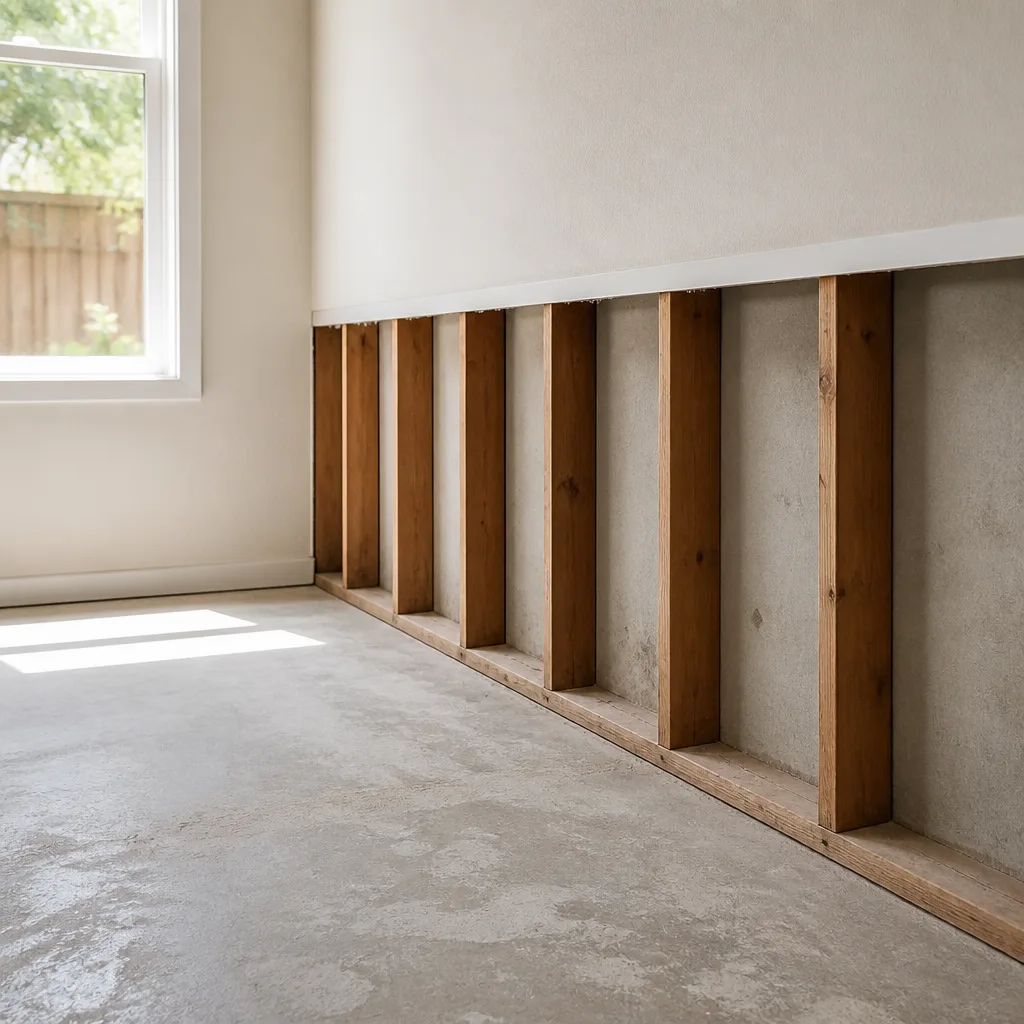
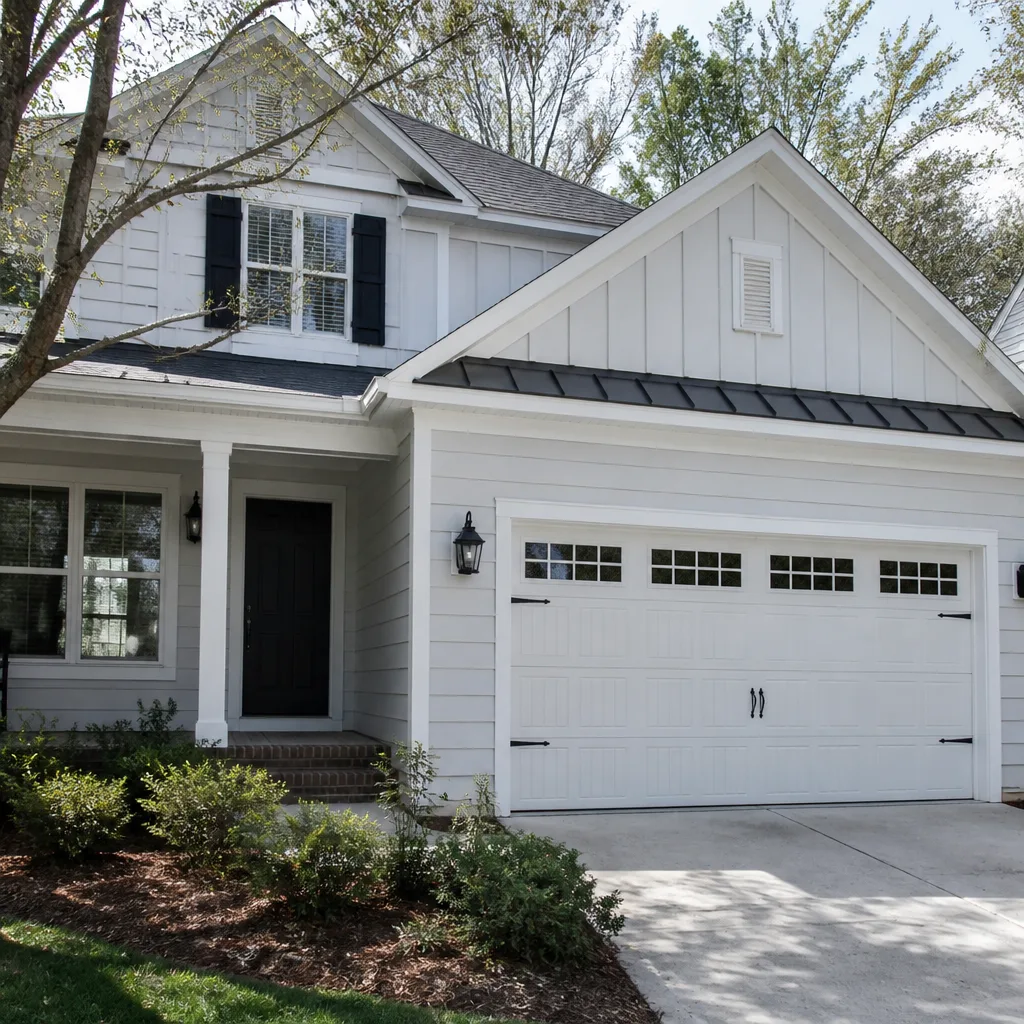
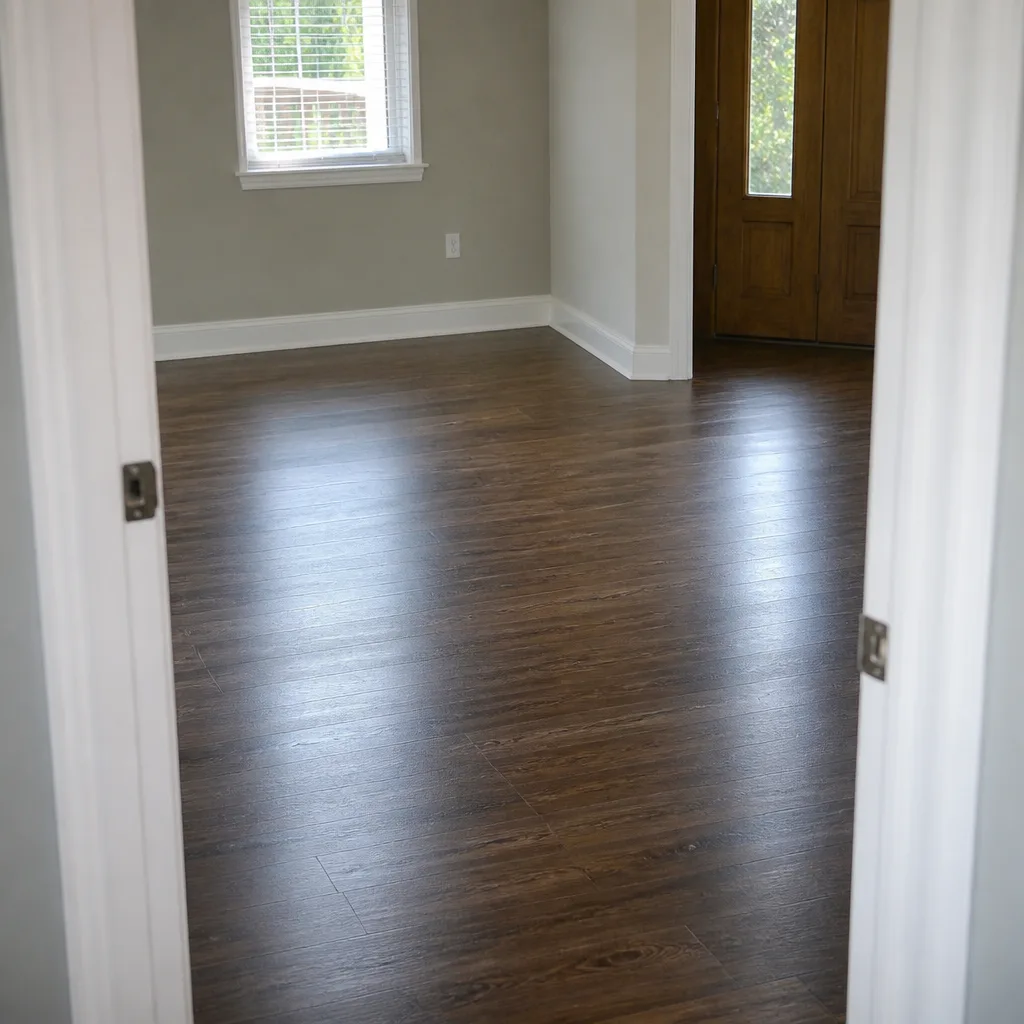
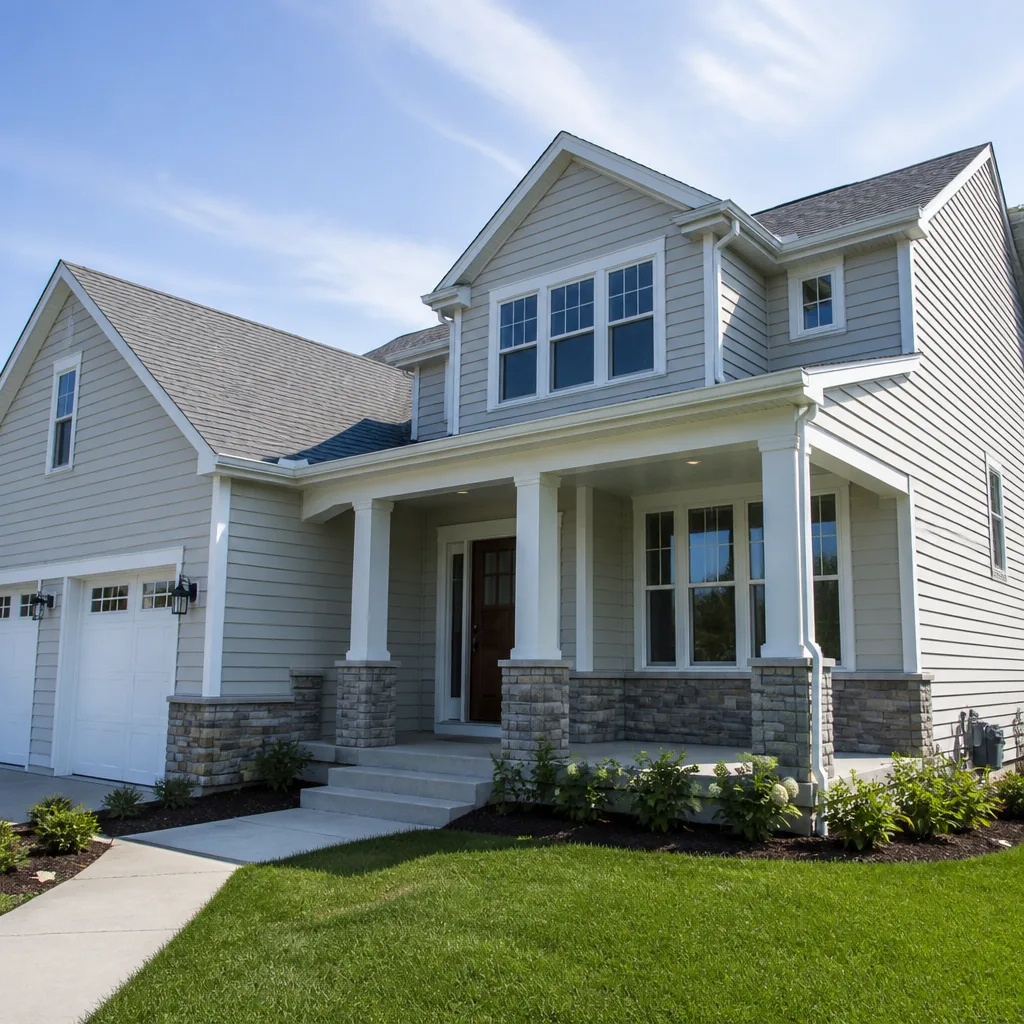
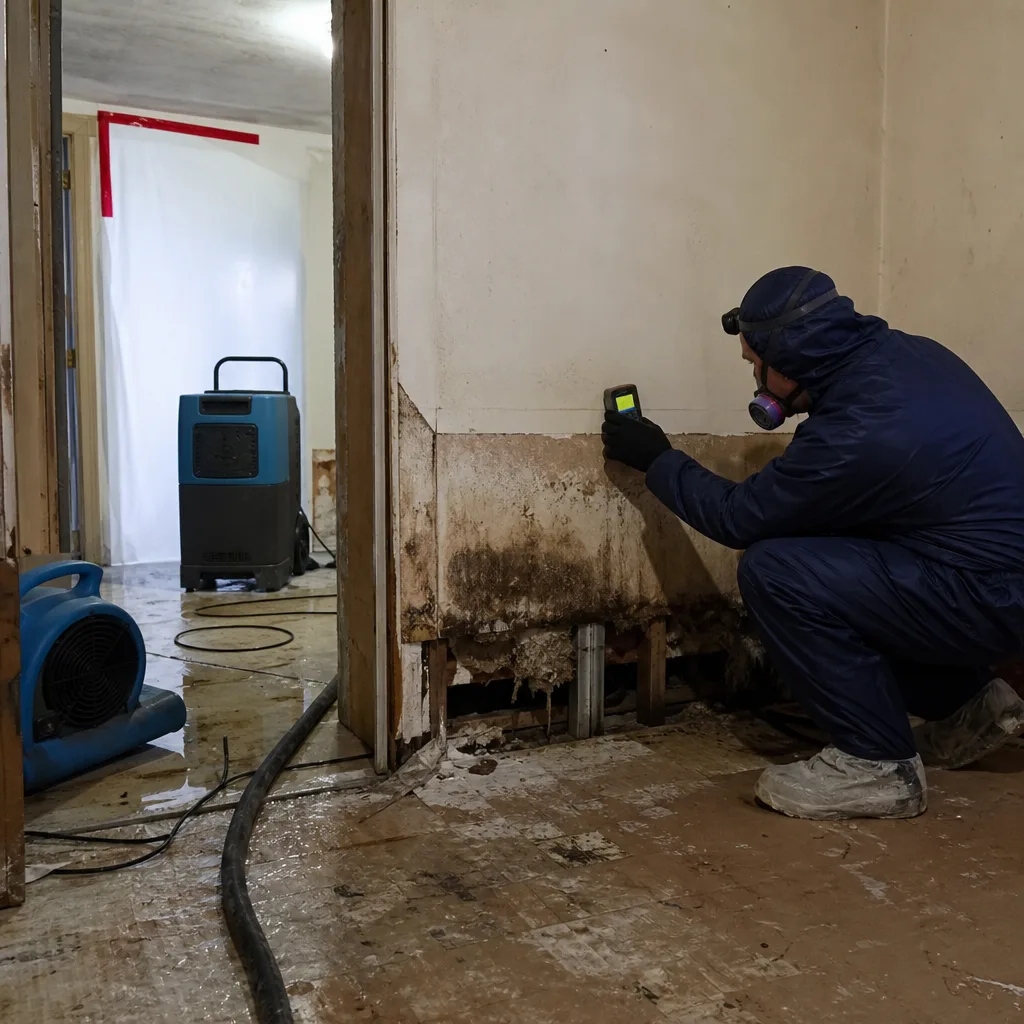 Before
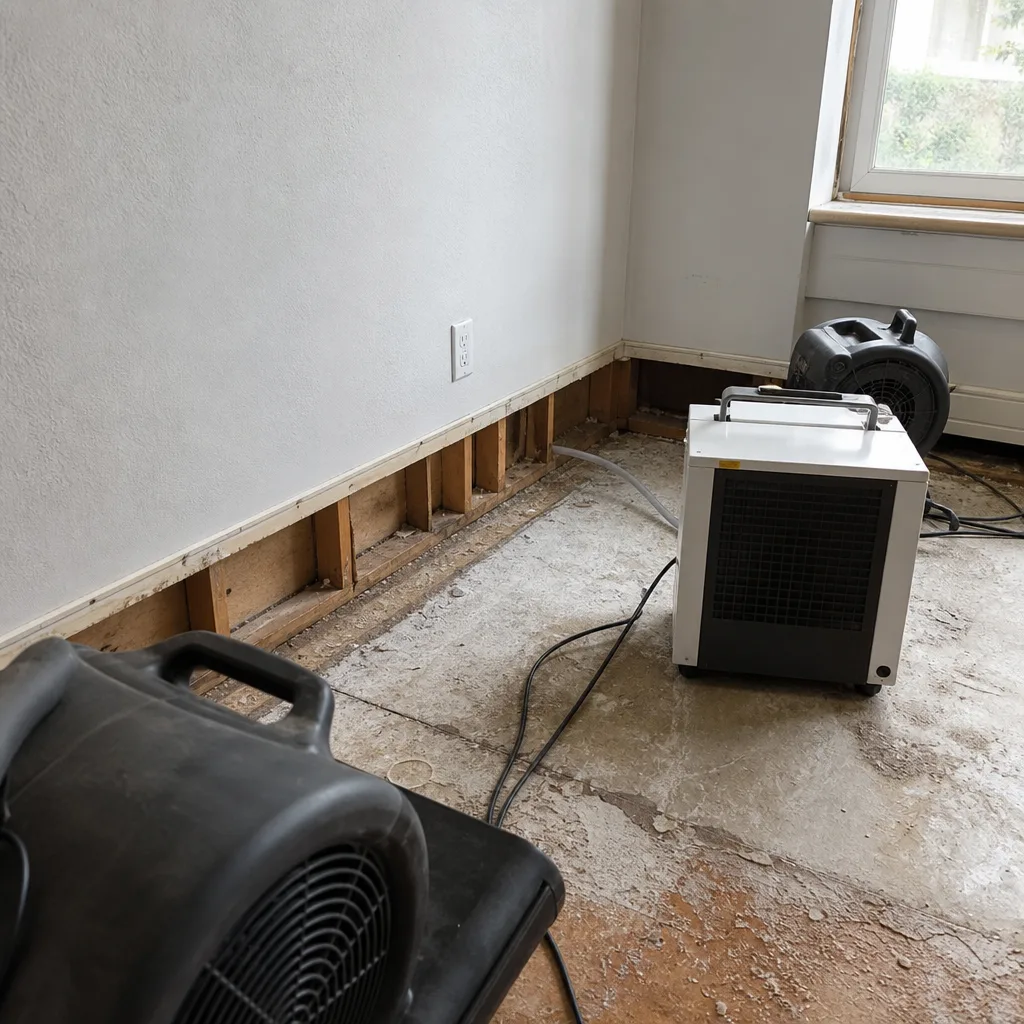 After
After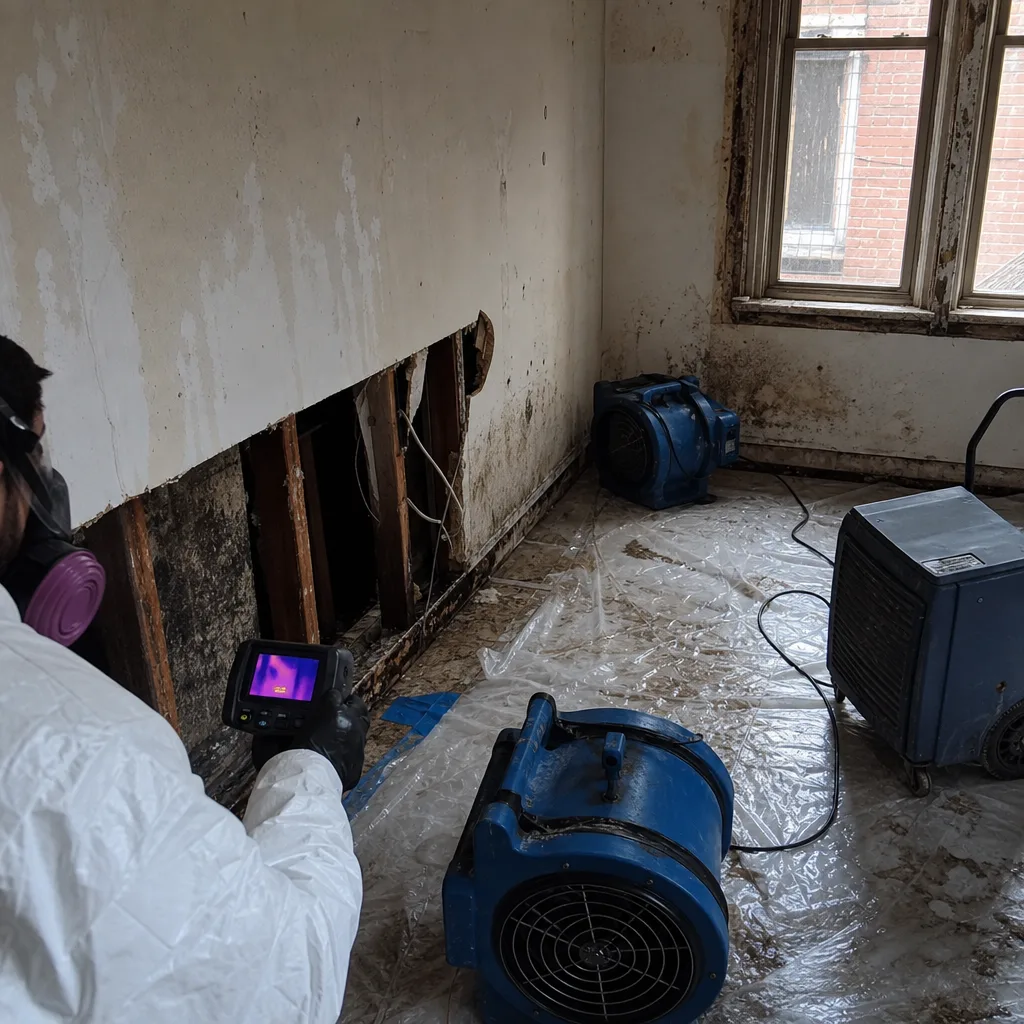 Before
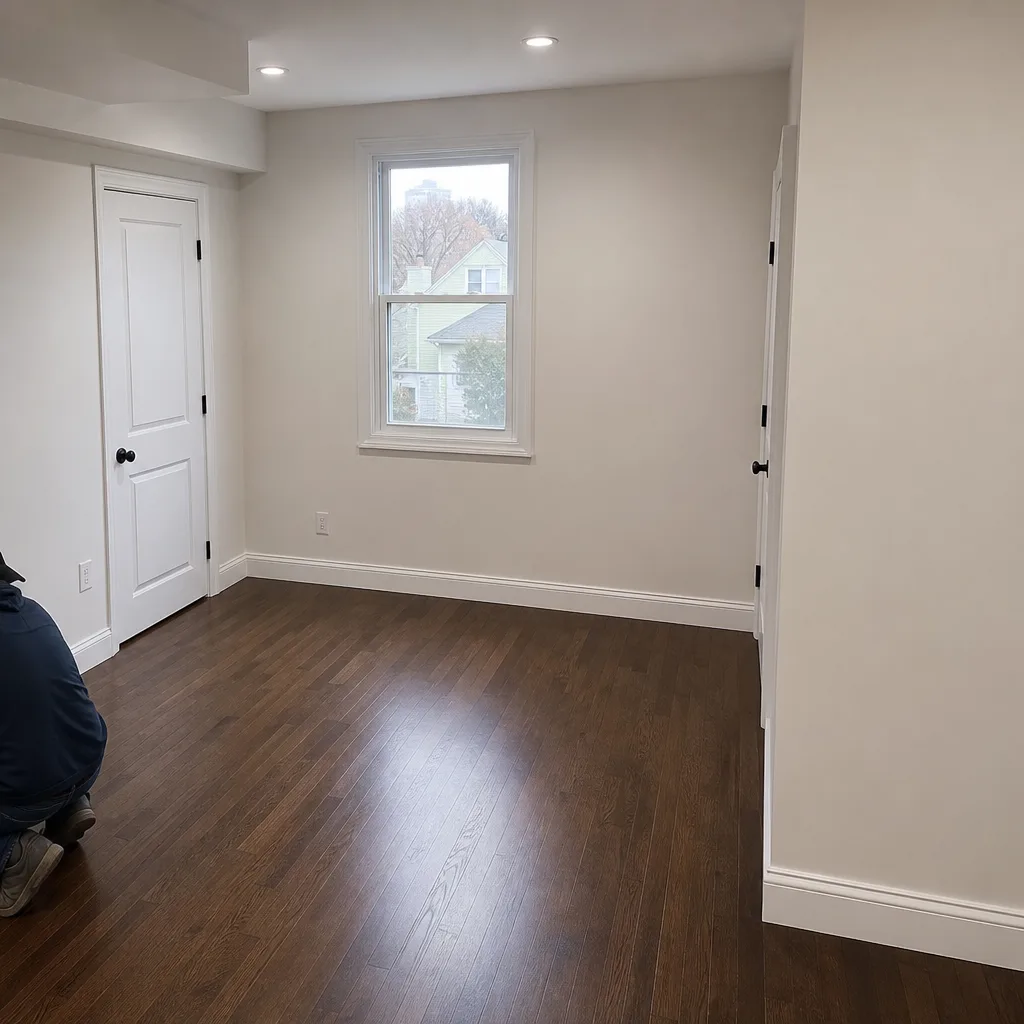 After
After24/7 Emergency Mold Remediation in Long Island City
Mold remediation in Long Island City typically runs $2,800-$6,500 for a contained removal on a converted loft or waterfront high-rise, and most jobs are scoped within 24 hours of the first call. Our crews answer live at (518) 800-3751 around the clock, every day of the year, and we dispatch into 11101, 11109, and 11120 without making you wait through a recording. The first hours after water intrusion matter because mold colonization on gypsum and open concrete floor plates in Long Island City’s converted industrial buildings begins fast, often before visible staining shows. Call us the moment you see water or smell must. A background-checked, uniformed technician reaches your building, performs a free visual inspection, and gives you a written scope before any work starts.
Understanding Mold Remediation Severity in Long Island City Properties
Long Island City’s building stock splits into two categories that behave very differently during a mold event. Pre-war brick industrial conversions, concentrated in Hunters Point, typically sit on open concrete floor plates with flat membrane roofs. When water enters through a failed parapet-to-membrane seam or HVAC curb penetration, it migrates laterally across the slab, saturating entire floor cavities before moisture ever reaches visible drywall. By the time staining appears on one unit’s baseboards, the mold colony often spans two or three units beneath the slab-on-grade flooring. Post-2005 waterfront high-rises carry a separate risk: mechanical rooms on lower floors flooded during Sandy and remain vulnerable to storm surge, and mold in those enclosed spaces spreads through shared ductwork before any resident notices. We classify every Long Island City job by water category, containment requirement, and structural material, not by square footage alone. Category 3 water, common in LIC because of Newtown Creek and East River surge contamination, demands full containment, HEPA air scrubbing, and clearance testing. Category 1 or 2 intrusion from a supply line or roof leak may require less aggressive containment, but in open floor plate buildings, we still map moisture across the entire slab before setting a scope.
Why Long Island City Property Owners Choose Floodline Restoration Co.
- 45-minute response commitment from our Long Island City dispatch, with a live person on the phone the entire time, not a callback queue.
- 24/7 live answer. A trained dispatcher picks up at 2 a.m., every night, and starts routing a crew toward 11101 or 11109 immediately.
- IICRC-certified crews trained to WRT (water), FSRT (fire), and AMRT (mold) standards, plus RIA and IFA protocols, on every truck.
- Free visual inspection with moisture mapping using Dri-Eaz and Phoenix equipment, before you sign anything or pay anything.
- Direct insurance billing. We document, photograph, and coordinate with your adjuster from the first visit, so you don’t play messenger.
- One team from extraction to reconstruction. Curt Bowman built Floodline to keep the whole job in one crew’s hands, no mid-job handoff to an inherited contractor.
Our Mold Remediation Process
Inspection & Assessment
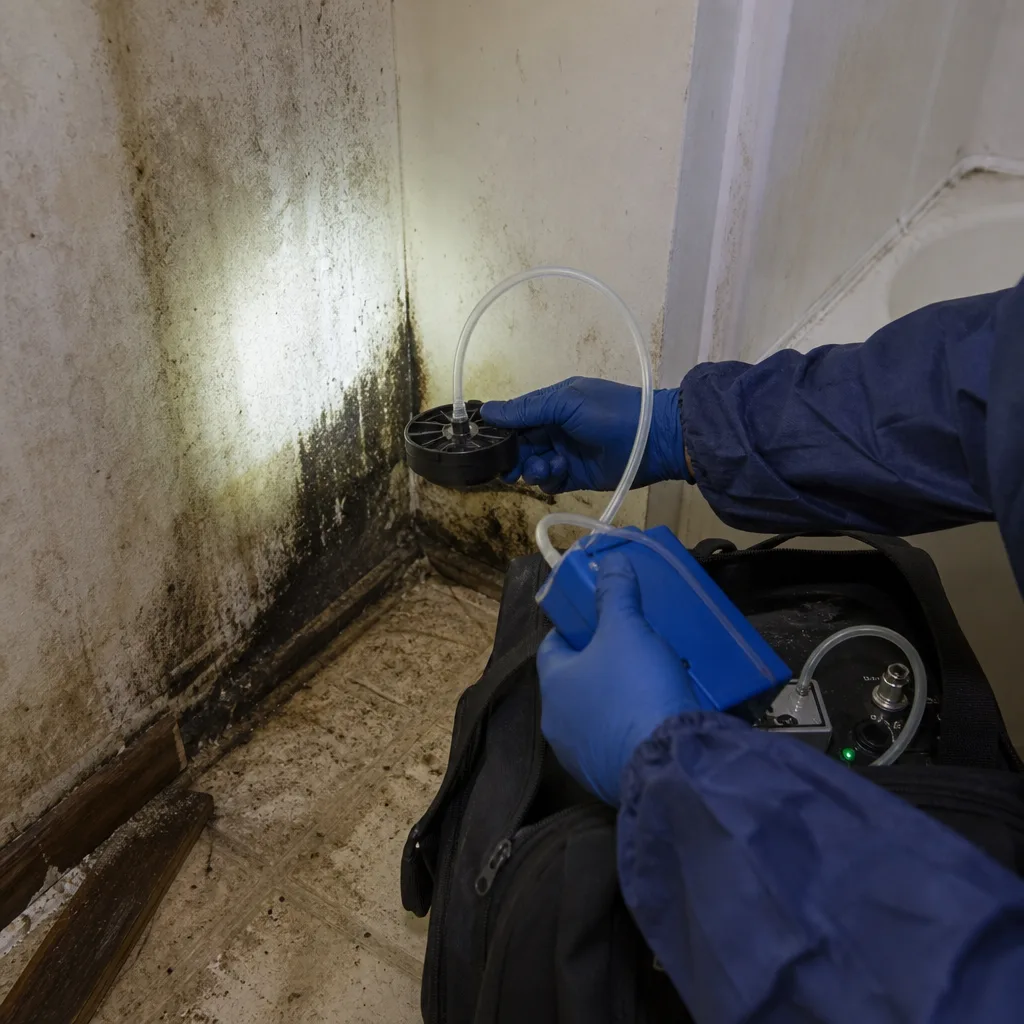
We walk the entire affected area, map moisture with thermal imaging and hygrometers, and determine water category, colony extent, and whether containment is required. In Long Island City converted lofts, we always check rooftop penetrations and parapet seams, because those chronic failure points feed mold long before walls stain.
Extraction & Stabilization
Standing water comes out first with truck-mounted or portable extraction units. We stabilize the environment by stopping the source of intrusion, cutting off active water feed at the roof seam, supply line, or mechanical failure point.
Containment & Air Scrubbing
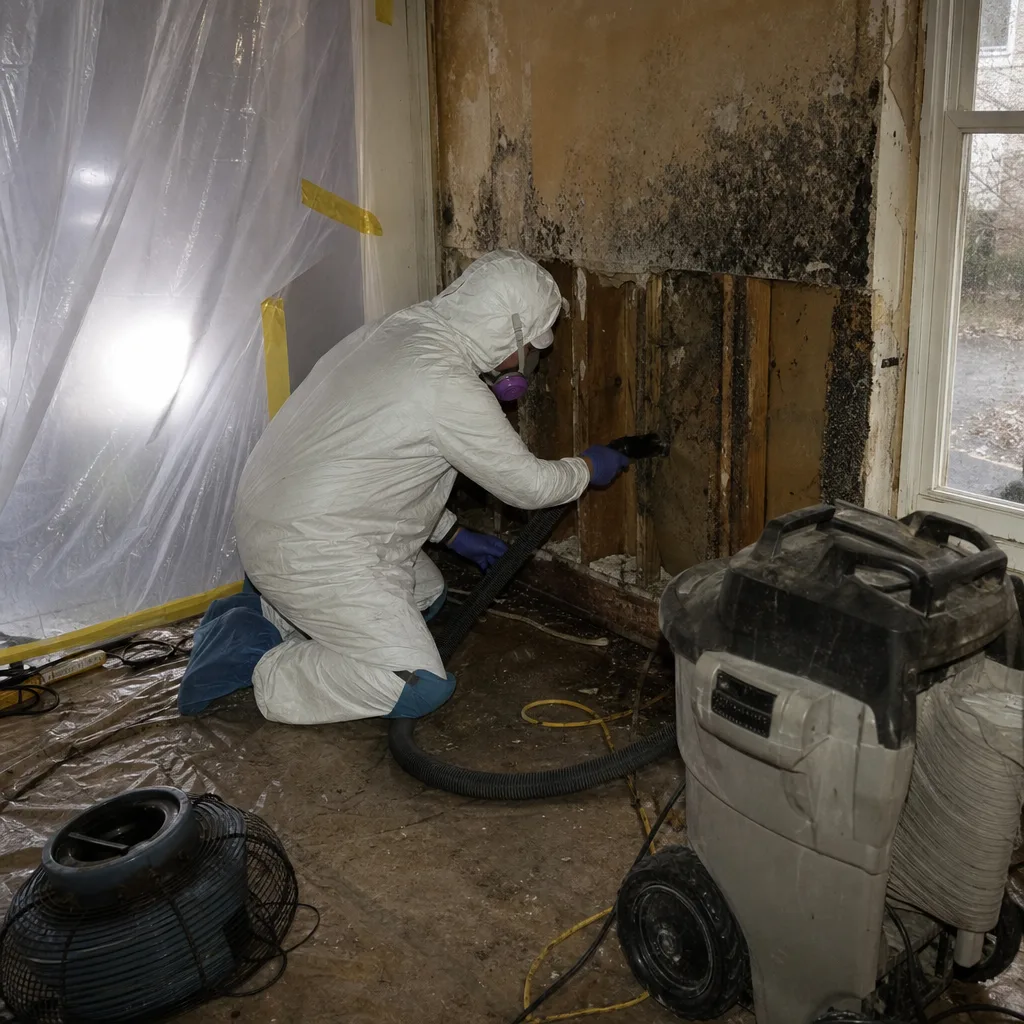
For Category 2 or 3 jobs, we seal the affected area with 6-mil poly sheeting, establish negative air pressure, and run HEPA air scrubbers continuously. This keeps mold spores from migrating through your shared building systems while we work.
Drying & Dehumidification
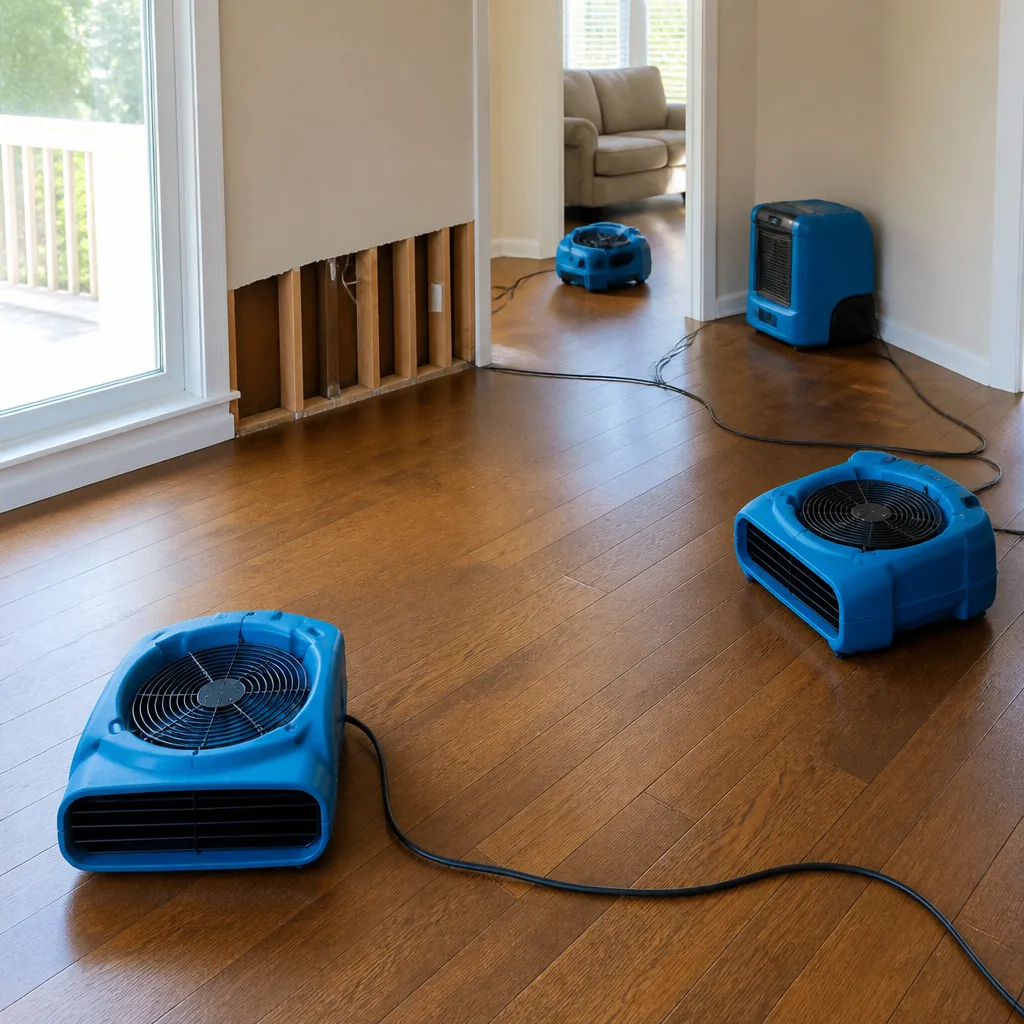
We set Dri-Eaz and Phoenix air movers and dehumidifiers, log daily moisture readings, and keep drying until the slab or framing meets the dry standard. You get the moisture log, and we hand it to your carrier as part of the claim file.
Cleaning, Antimicrobial Treatment & Removal
We remove contaminated drywall, insulation, and flooring to the line the moisture map shows. Remaining surfaces get antimicrobial treatment and HEPA vacuuming. No fog-and-paint shortcuts. We remove what needs removing and treat what can be saved.
Repairs & Restoration
The same crew rebuilds what we removed: drywall, trim, flooring, mechanical access. We stand behind the whole job with the 90-Day Done Right Promise, in writing, no argument.
Need Emergency Mold Remediation in Long Island City Now?
Crews minutes away, answering live 24 hours a day. The sooner we start, the less it costs.
Working With Your Insurance Company
Long Island City mold claims almost always involve a water event first, and carriers want the same thing you do: a documented, defensible scope that prevents recurrence. We start the file at hour one with moisture readings, Category classification, and photographs of every affected surface. Our estimator writes a line-item scope using the same format your adjuster expects, and we talk to the adjuster directly, so you don’t carry paperwork back and forth. In our experience across 11101 and 11109, carriers respond best when the contractor documents the loss scientifically. That’s why we hand over drying logs, containment records, and clearance testing results, not just a final invoice.
What We Provide Your Insurer
- Thorough documentation of the loss
- Photos of all damage, room by room
- Moisture readings and drying logs
- A detailed, line-item scope of work
- Direct coordination with your carrier
Built for Long Island City’s Loss Calendar
Long Island City’s mold season does not have a single peak. January and February deep freezes burst supply lines in unheated warehouse corners and mechanical rooms. Spring thaw and heavy March rain pond on the flat membrane roofs that cap Hunters Point’s industrial conversions, feeding slow leaks that bloom behind baseboards by May. Summer convective storms dump inches of rain in an hour, overwhelming roof drains on converted buildings and sending water down interior wall cavities. Nor’easters in October and November push East River surge into ground-floor units and mechanical spaces along the waterfront. And the Newtown Creek adjacency never goes away: any floodwater that enters a ground-floor or below-grade unit here carries Category 3 contamination potential, which changes the remediation protocol from cleaning to full containment and clearance testing. We built our Long Island City response calendar around these patterns, and our crews pre-stage equipment in the area during storm warnings.
Mold Remediation Across Long Island City’s Neighborhoods
Hunters Point, the stretch along the East River from roughly 44th Drive to 51st Avenue, holds most of the converted warehouse lofts in Queens. These buildings share a failure signature we know well: rooftop HVAC curb penetrations and parapet-to-membrane seams let ponded water into open floor plates, and mold travels laterally before it ever shows on a wall. We run moisture mapping across entire slabs in Hunters Point, not just the wet room. In the Court Square area near the 7 train, pre-war commercial buildings converted to residential carry the same flat-roof risk, often with older internal drainage systems that clog and back up. The waterfront high-rise corridor along Center Boulevard presents a different challenge: mechanical rooms and ground-floor lobbies sit near the East River’s mean high water line, and any surge or pipe failure there introduces moisture into shared vertical chases and duct runs. The Dutch Kills section, further inland toward 39th Avenue, has more mixed low-rise stock, but basement and crawl space humidity from the neighborhood’s high water table is a consistent mold contributor. Our crews know the truck routes down Vernon Boulevard, Jackson Avenue, and 21st Street better than most GPS systems.
Specialized Mold Remediation Services We Offer in Long Island City
Mold Inspection & Testing
Before any remediation, you need to know where the water came from and how far the colony extends. In Long Island City’s converted lofts, we sample and map the slab, the roof assembly, and the wall cavities, because visible mold is rarely the full picture. We test air and surfaces only after the moisture source is identified. A visual-only inspection in an open floor plate building misses too much, so we bring thermal imaging and moisture meters to every inspection.
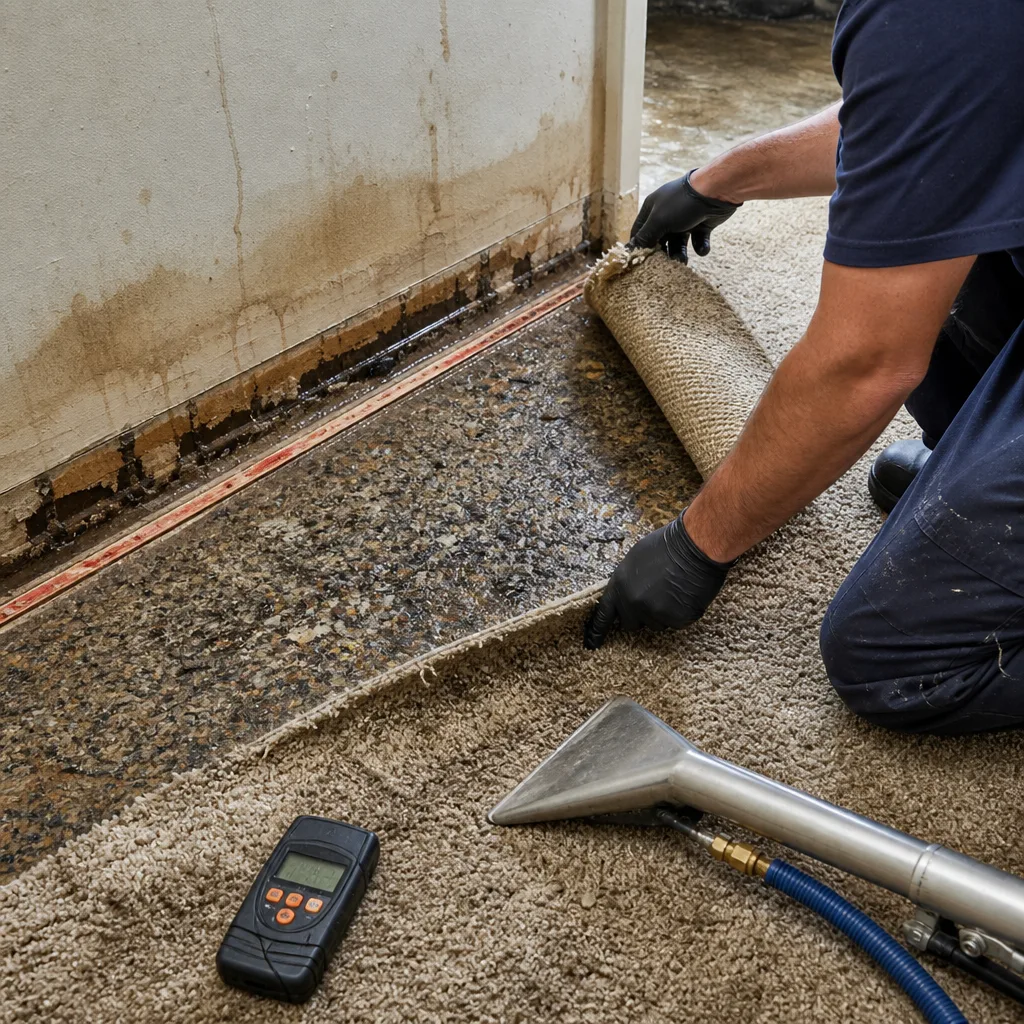
Mold Removal
Mold removal in Long Island City often means cutting out saturated drywall, pulling insulation, and treating concrete or steel surfaces that hold moisture. We remove exactly what the moisture map tells us to remove. Our Mold Remediation team works in contained environments with negative air pressure on every Category 2 or 3 job, and we never paint over a colony.
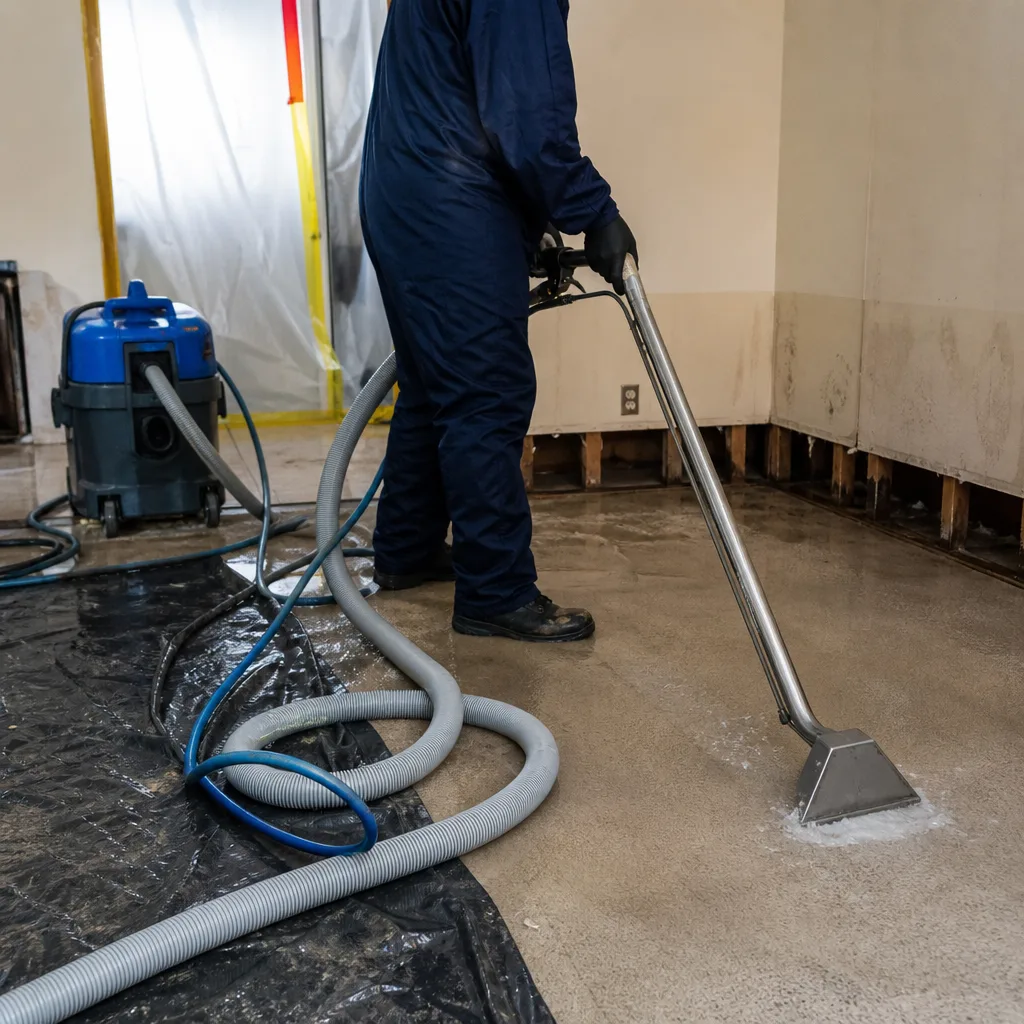
Black Mold Remediation
Black mold in Long Island City’s waterfront buildings gets the strictest protocol we have: full containment, HEPA air scrubbing, antimicrobial treatment, and post-remediation clearance testing. Stachybotrys thrives on cellulose in wet drywall and framing, and LIC’s chronic roof leaks and surge events create exactly the conditions it needs. We treat it as a structural and health hazard, not a cosmetic issue.
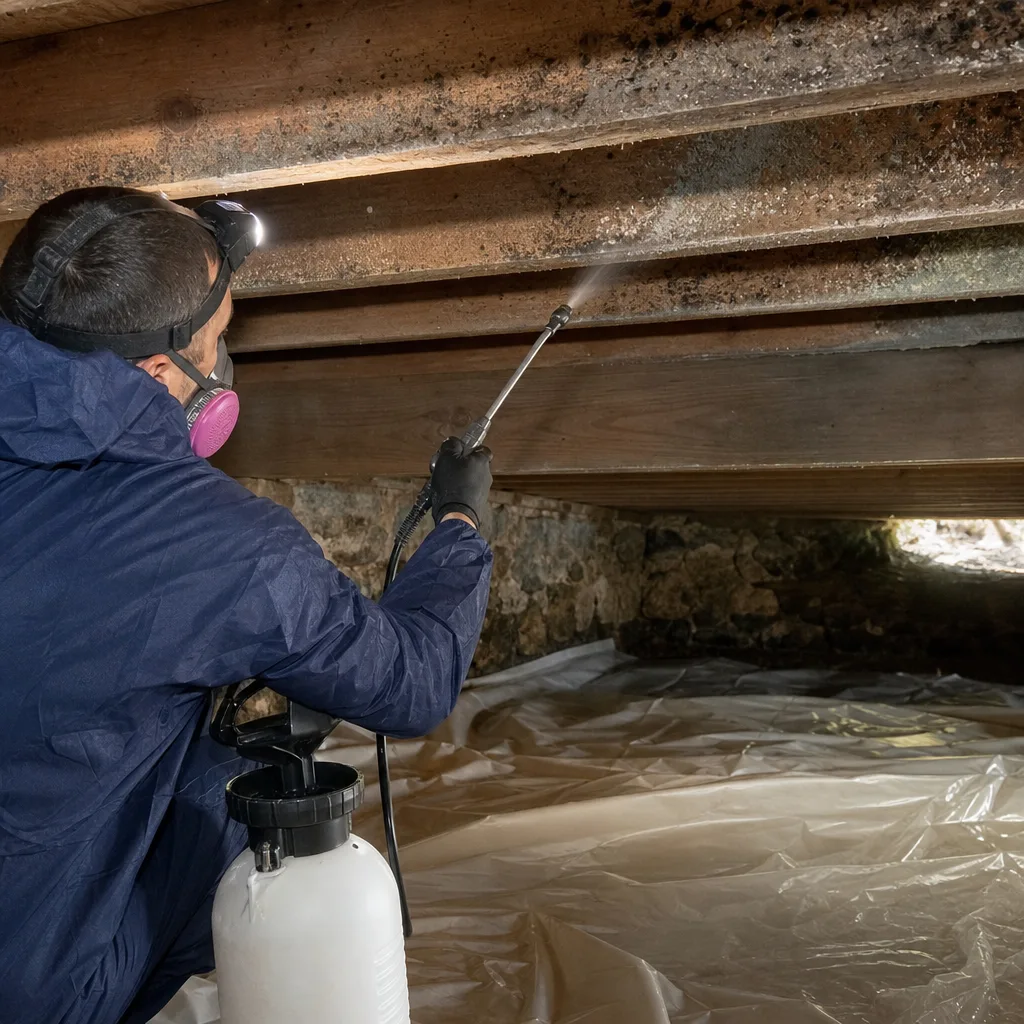
Air Quality Restoration
After removal and drying, we run air scrubbers until the space tests clean, and we document the readings. In multi-unit Long Island City buildings, we also check shared duct runs and fan coil units, because mold spores move through building systems faster than through walls. Your air should be cleaner after we finish than before the water event.
Crawl Space Treatment
Crawl spaces under Long Island City’s low-rise stock and converted industrial buildings trap humidity from the high water table and radon-rich Queens soil. We install vapor barriers, seal vents where appropriate, and treat framing with antimicrobial agents. A dry crawl space solves mold recurrence at the source.
Moisture & Humidity Control
Long Island City’s waterfront air is salt-laden and humid, and converted loft buildings with concrete slabs and flat roofs hold moisture like a sponge. We recommend and install dehumidification systems, roof-drain maintenance programs, and parapet seam repairs. Controlling moisture is the only permanent fix for mold.
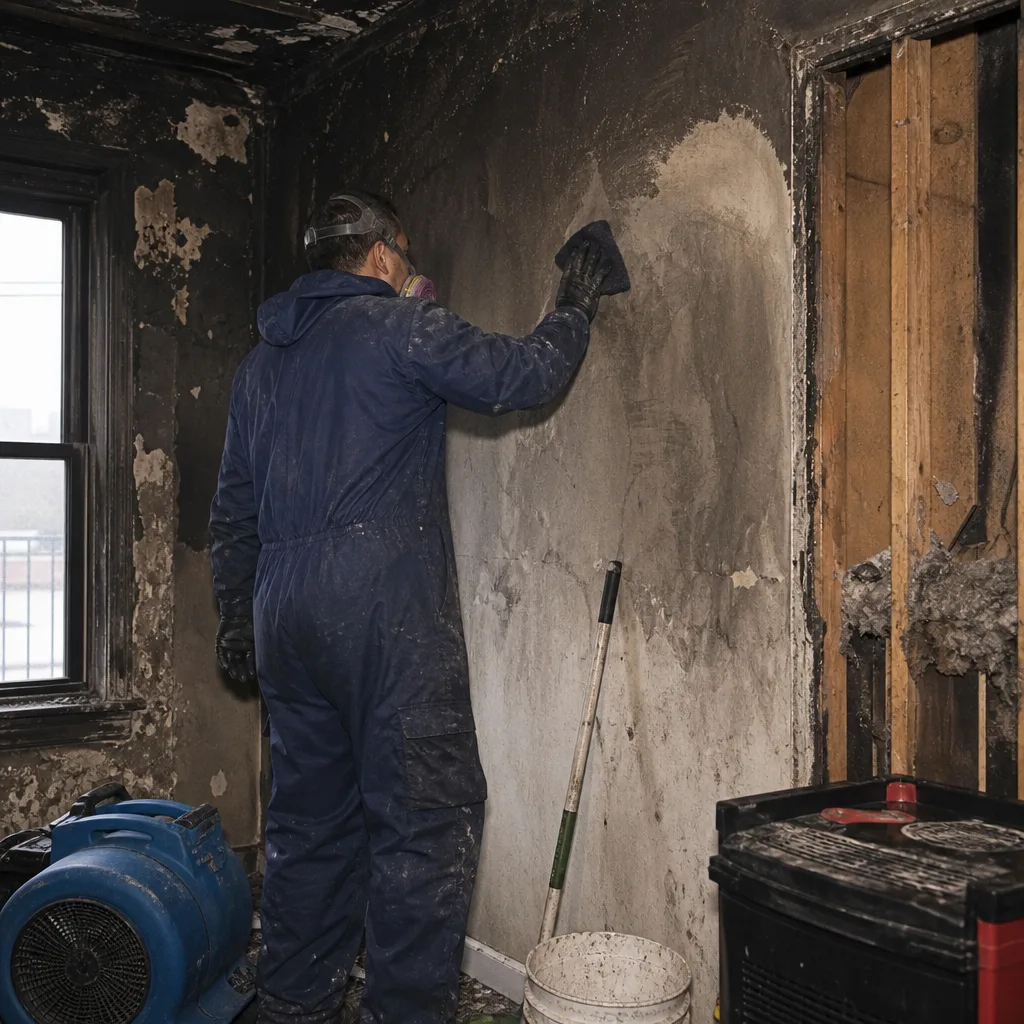
What happens when you call
- 1
A real person answersNo phone trees - you reach a local pro.
- 2
You get an upfront price rangeHonest numbers before anyone is dispatched.
- 3
A background-checked tech heads outLicensed & insured, dispatched right away.
- 4
You approve before work beginsNothing starts until you say go.
Mold Remediation Costs in Long Island City, NY
Mold remediation in Long Island City runs from $2,800 for a contained single-room removal in a standard unit to $12,000 or more for a full open-floor-plate loft with Category 3 floodwater intrusion and multiple affected units. Mold inspection and testing alone typically costs $350-$700. Black mold remediation with full containment and clearance testing runs $4,500-$9,000 depending on colony extent and access. Crawl space treatment averages $2,200-$4,500. What moves the price in Long Island City specifically is the building type: in a Hunters Point converted warehouse, you pay for lateral moisture mapping across a large concrete slab, not just one room. In a waterfront high-rise, mechanical room access and vertical chase drying add cost. Insurance covers most water-event mold claims when the source is sudden and accidental; slow roof leaks from failed parapet seams are often excluded, so we document the failure point carefully for your adjuster. The free visual inspection gives you a firm written scope before any work is authorized, and the Senior & Veteran 5% discount applies on all Long Island City jobs.
We Also Serve Cities Near Long Island City
Our Long Island City crews serve mold remediation jobs across western Queens, including Astoria, Maspeth, Jackson Heights, and East Elmhurst. Same-day dispatch applies throughout the area.
Long Island City Mold Remediation Questions, Answered
Why do converted warehouse lofts in Hunters Point need different mold remediation than standard Queens rowhouses?
Converted Hunters Point lofts sit on open concrete floor plates with flat membrane roofs, so water from a failed parapet-to-membrane seam or HVAC curb penetration migrates laterally across the entire slab before showing up as wall staining. Rowhouses in Astoria or Maspeth have wood framing and compartmentalized rooms that contain water more predictably. That means Long Island City loft remediation requires slab-wide moisture mapping and containment across larger areas, not just the visible room. Call (518) 800-3751 and we’ll explain what your building type needs.
Does floodwater from the East River or Newtown Creek change the mold remediation category?
Yes. Floodwater from the East River or Newtown Creek is Category 3, or grossly contaminated, because it carries sewage, industrial chemicals, and creek sediment. Treating it as clean water is how mold returns behind walls six months later. Category 3 remediation requires full containment, HEPA air scrubbing, antimicrobial treatment, and clearance testing. Our crews classify every Long Island City water event before writing a scope.
How quickly should I act after a water event in a Long Island City waterfront high-rise?
Within hours, not days. Waterfront high-rise mechanical rooms and lower-floor corridors are enclosed and humid, so mold colonization starts fast, often in hidden chases and duct runs. The sooner we extract and start drying, the less finishes we remove and the lower your total cost. Call (518) 800-3751 the moment you notice water. We answer live and dispatch into 11101 and 11109 immediately.
What are the most common hidden mold sources in converted LIC loft buildings?
In Long Island City’s converted warehouse lofts, the most common hidden mold sources are rooftop HVAC curb penetrations, parapet-to-membrane seams, and flat-roof ponding drains. Water enters through these points, saturates the open concrete slab, and feeds mold beneath slab-on-grade flooring and inside wall cavities. We check these failure points on every inspection, because they are the chronic, repeat offenders in Hunters Point specifically.
Can mold remediation in an LIC loft be done without removing all finishes?
Sometimes. If the colony is confined to a small area and moisture readings show the slab is dry beyond the affected zone, we can remove only the needed sections of drywall, baseboard, and flooring. But in converted lofts with open floor plates, hidden lateral spread often means the removal area is larger than the visible staining suggests. We never remove more than the moisture map requires, and we always show you the readings before cutting.
How long does mold remediation take in Long Island City?
A contained single-room removal typically takes 2-4 days including drying and clearance testing. A full Hunters Point loft with Category 3 floodwater intrusion and slab-wide moisture may take 7-14 days. We give you a written timeline at the free visual inspection, and we hit it. Same crew, start to finish.
Will my insurance cover mold remediation in Long Island City?
Most sudden and accidental water events, like a burst pipe or storm surge intrusion, trigger mold coverage under the water damage portion of your policy. Slow roof leaks from failed parapet seams are often excluded as maintenance issues, which is why we document the exact failure point and its sudden nature for your adjuster. We bill your carrier directly and provide the drying logs, photos, and line-item scope they need.
What should I do in the first 30 minutes after finding water or mold in my Long Island City unit?
Call (518) 800-3751. We answer live, every time. Do not run fans across visible mold, which spreads spores. Do not open walls or pull baseboards. Shut off the water source if you can do so safely, move valuables out of the wet area, and take photos. Then let our certified crew handle the rest. We’ll be there when we say.
Serving Long Island City, NY - Our Local Coverage Area
We’re based in the Long Island City area and know this community well. Use the map below to see our service coverage - if you’re nearby, we can almost certainly help.
Ready to Get the Mold Out of Your Long Island City Building?
Floodline Restoration Co. has been answering calls from Long Island City homeowners and building managers for years, and we understand exactly what these buildings do when water gets in. Curt Bowman built this company around a dispatch board and the 90-Day Done Right Promise, in writing, because you deserve a name you can hold accountable. Call (518) 800-3751 now for a free visual inspection and a written scope before any work starts. We answer live, 24 hours a day, and we’ll be there when we say.
Written by Curt Bowman, Owner at Floodline Restoration Co., serving Long Island City with certified mold remediation crews and the 90-Day Done Right Promise.