
Free visual inspection and a written scope of work before any mitigation begins - photos, moisture readings, and drying logs go in your claim file
The scope we write is the scope we bill. Anything new gets shown to you, in writing, before we touch it.
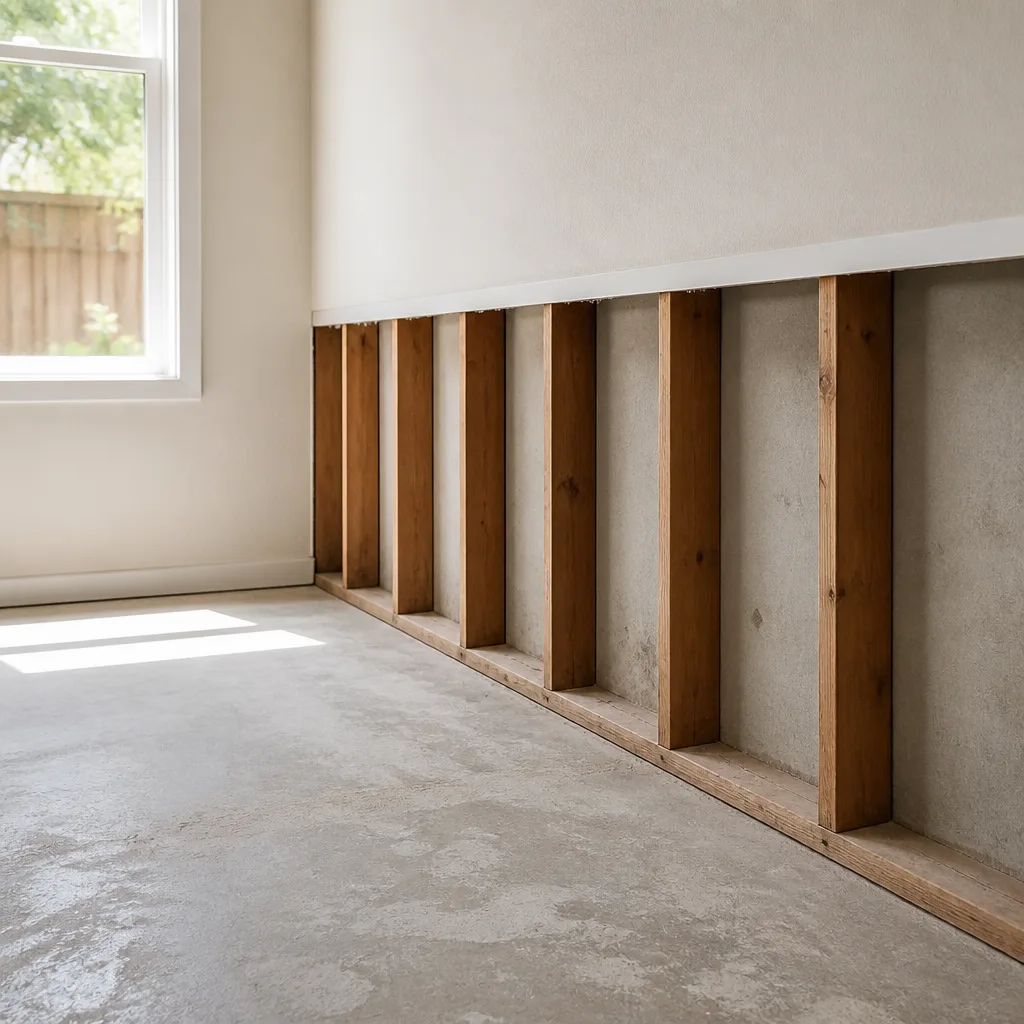
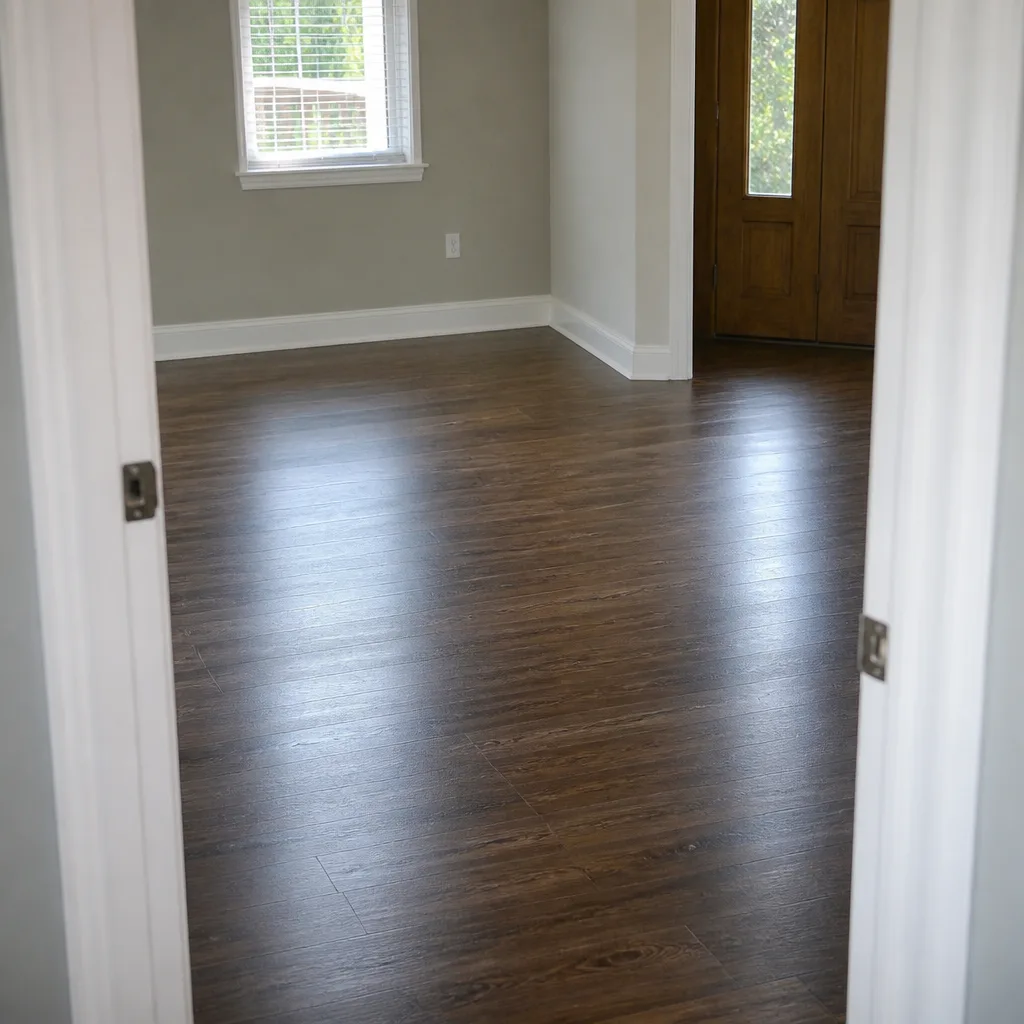

 Before
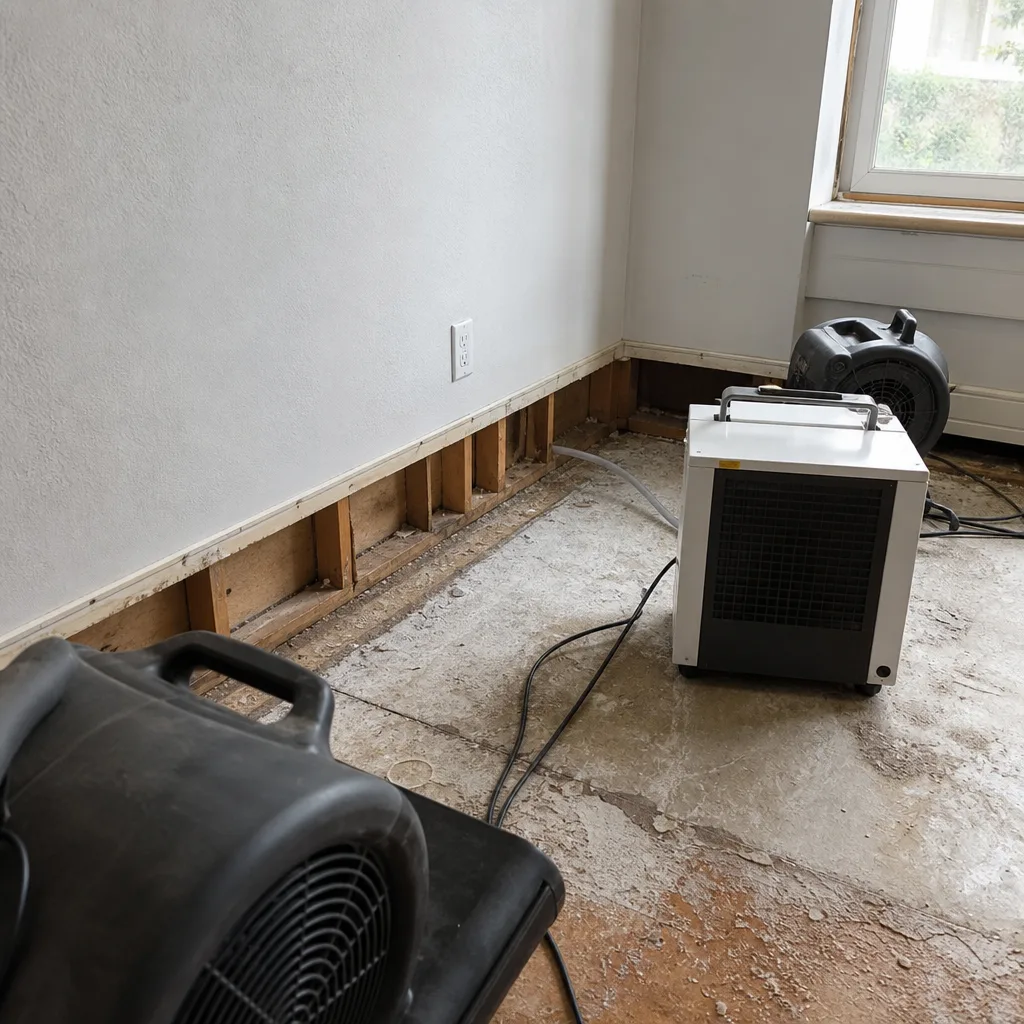 After
After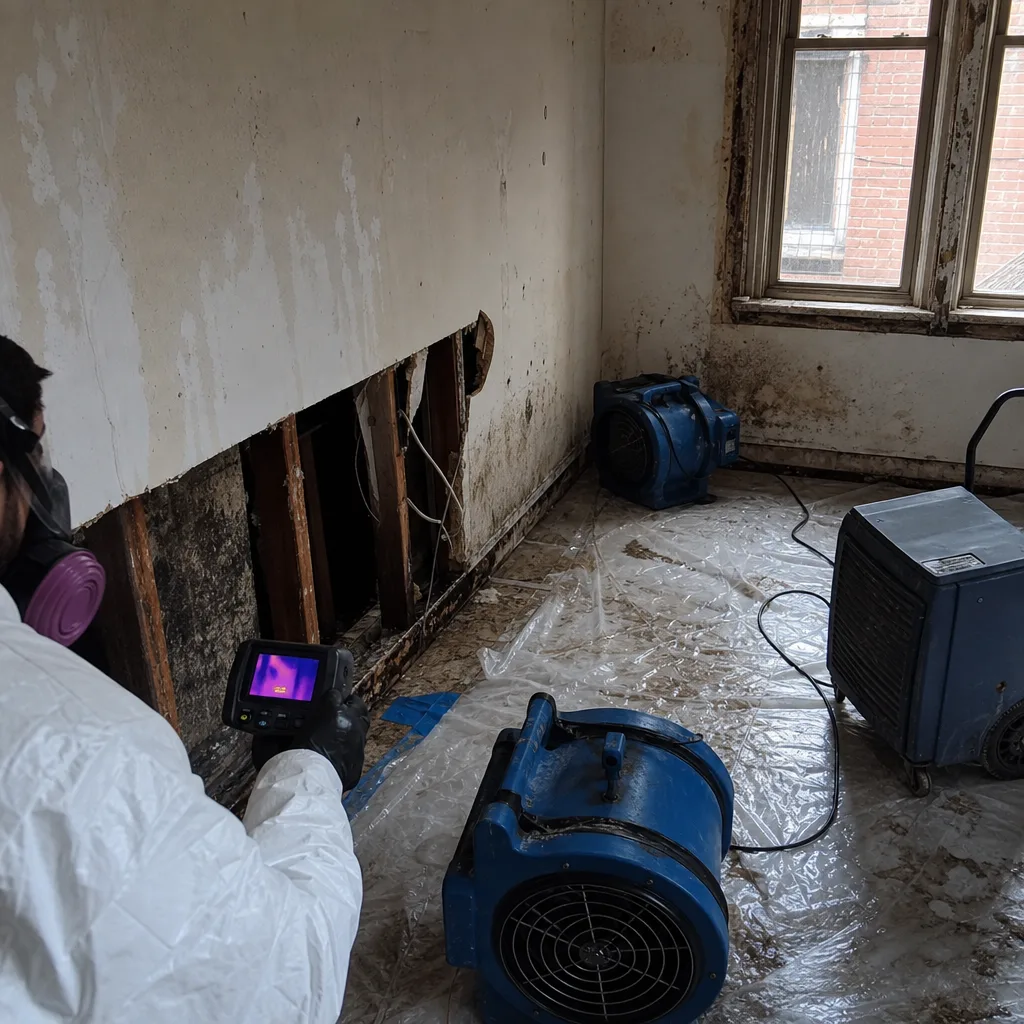 Before
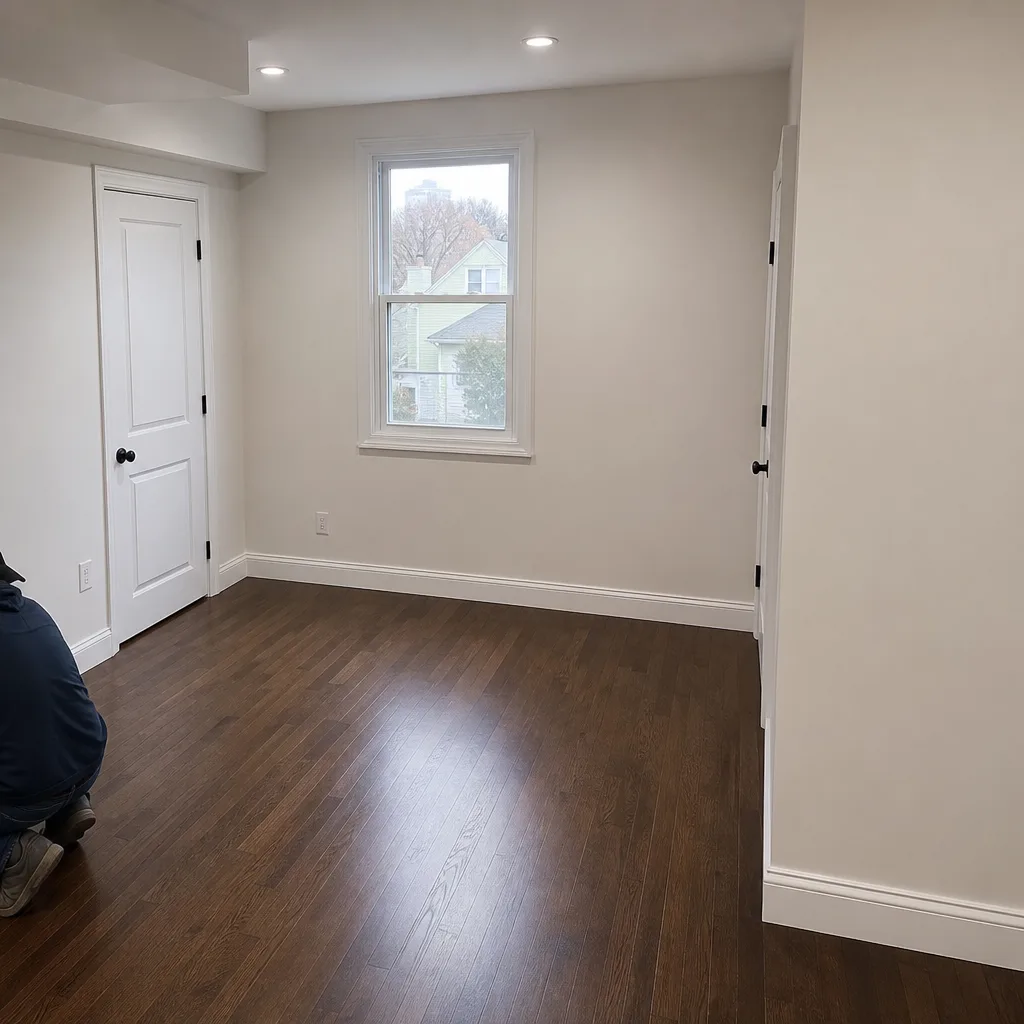 After
After24/7 Emergency Storm & Disaster Restoration in Long Island City
Storm damage in Long Island City doesn’t wait for business hours, so neither do we. A live dispatcher answers at (518) 800-3751 around the clock, every day of the year, and we can have a certified crew on-site inside the 11101, 11109, or 11120 zip codes within 45 minutes. Whether a nor’easter has torn flashing off your Hunters Point loft or Sandy-style surge water has breached a ground-floor unit near the East River, the first hour determines how much can be saved. We start with a free visual inspection, then get to work stabilizing the property so the damage stops spreading while you figure out the next step. Call now, and a real person will pick up, not a recording.
Understanding Storm & Disaster Restoration Severity in Long Island City Properties
Storm damage in Long Island City doesn’t follow one script. We classify water by contamination level: Category 1 is clean water from a burst supply line or roof leak; Category 2 carries significant contaminants from sources like sump pump failures; Category 3 is grossly contaminated, the kind that carries sewage, creek water, or storm surge. Here’s the Long Island City reality: because the city sits at the East River-Newtown Creek confluence inside FEMA Flood Zone AE, what would be a Category 1 roof leak in Astoria can become a Category 3 event here when floodwater picks up Superfund-adjacent contaminants from Newtown Creek. Moisture mapping and structural drying protocols differ sharply by category, and we document every reading daily until the dry standard is met. The area’s converted warehouse lofts complicate things further: open concrete floor plates let water migrate laterally across entire floors before any staining shows, which means the visible damage you see on day one often understates the scope.
Why Long Island City Property Owners Choose Floodline Restoration Co.
- 45-minute response commitment: Our Long Island City crews are dispatched locally and arrive fast, because every hour of standing water in a converted loft spreads further across the open floor plate.
- 24/7 live answer: A real person picks up at 2 a.m. at (518) 800-3751. No phone tree, no answering service, no callback wait while your ceiling keeps dripping.
- IICRC-certified crews: Our technicians carry WRT (Water Damage Restoration Technician) and FSRT (Fire & Smoke Restoration Technician) certifications, plus RIA training, and work in uniform with background checks on file.
- Free visual inspection: We assess the full scope before any work begins, so you know exactly what you’re facing and what it will cost.
- Direct insurance billing: We deal with your adjuster, provide the documentation, and bill the carrier directly. You never play messenger.
- One team from extraction to reconstruction: The same Floodline crew that pumps out the water is the crew that rebuilds the walls. No mid-job handoff to strangers.
Our Storm & Disaster Restoration Process
Inspection & Assessment
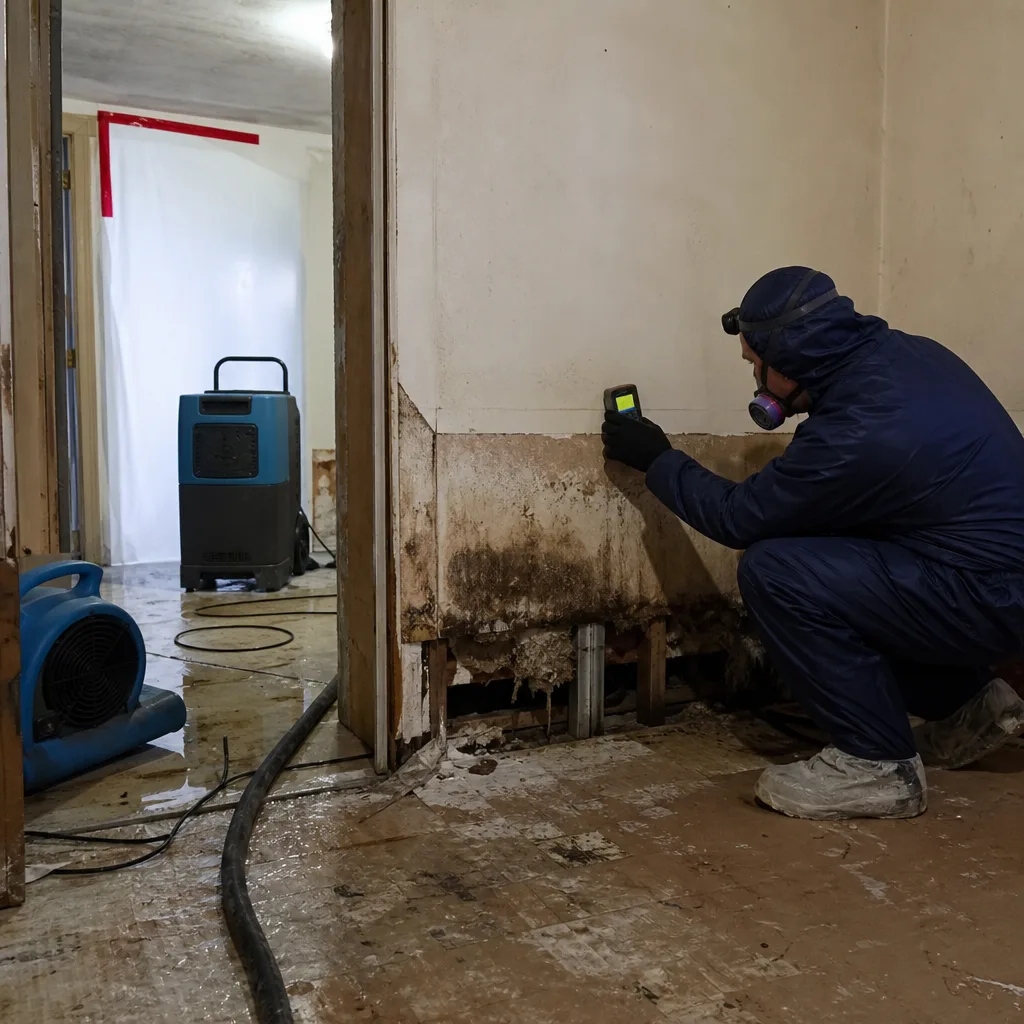
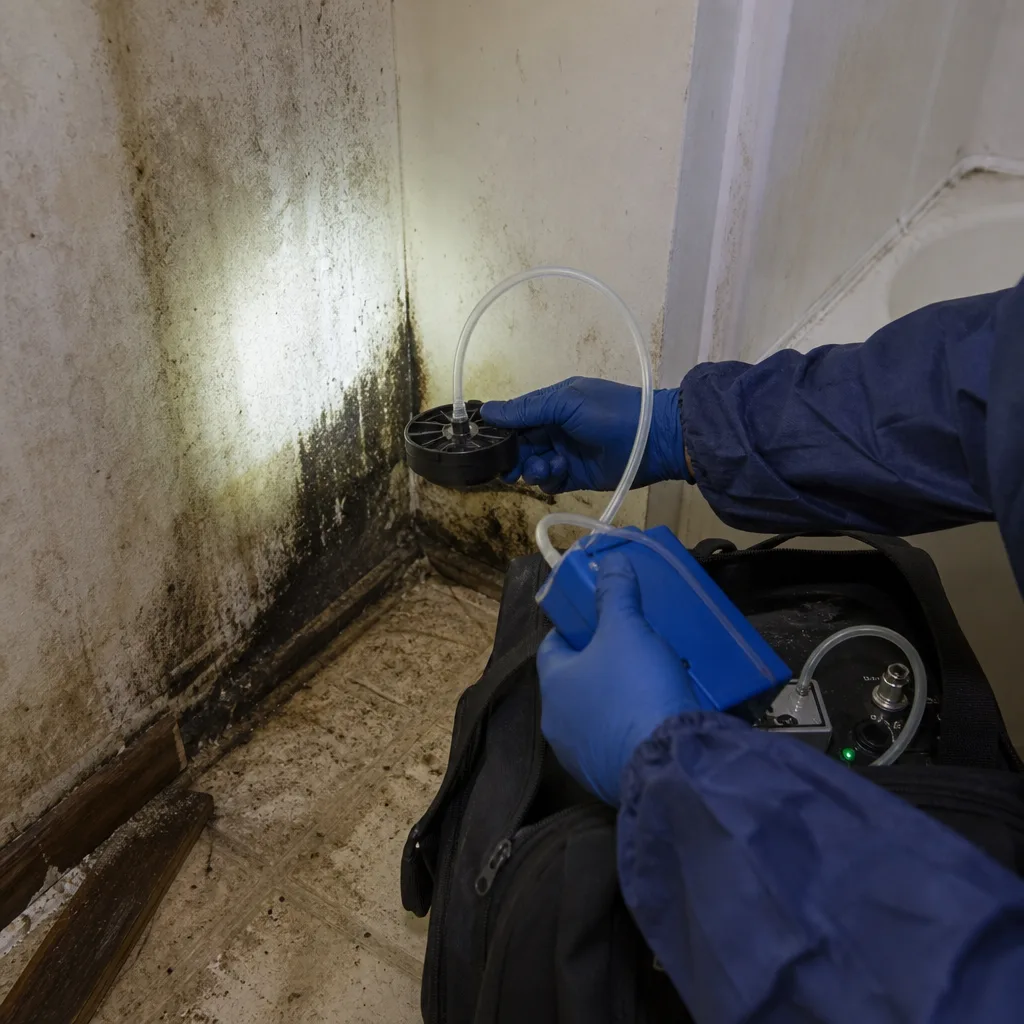
We arrive, walk the property, and map the full extent of the damage with moisture meters and thermal imaging. In Long Island City’s converted lofts, this means tracing water that may have traveled far beyond the visible staining. You get a written scope before any work begins.
Extraction & Stabilization
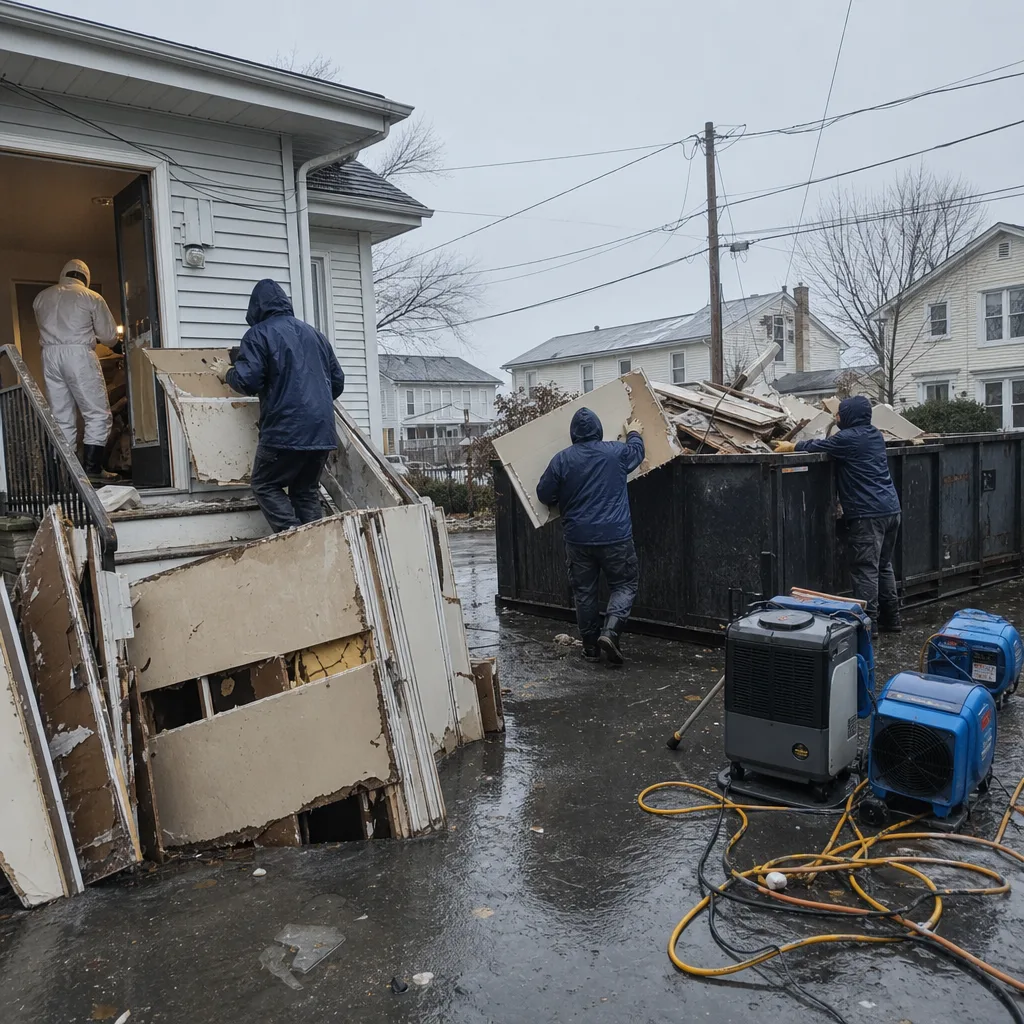
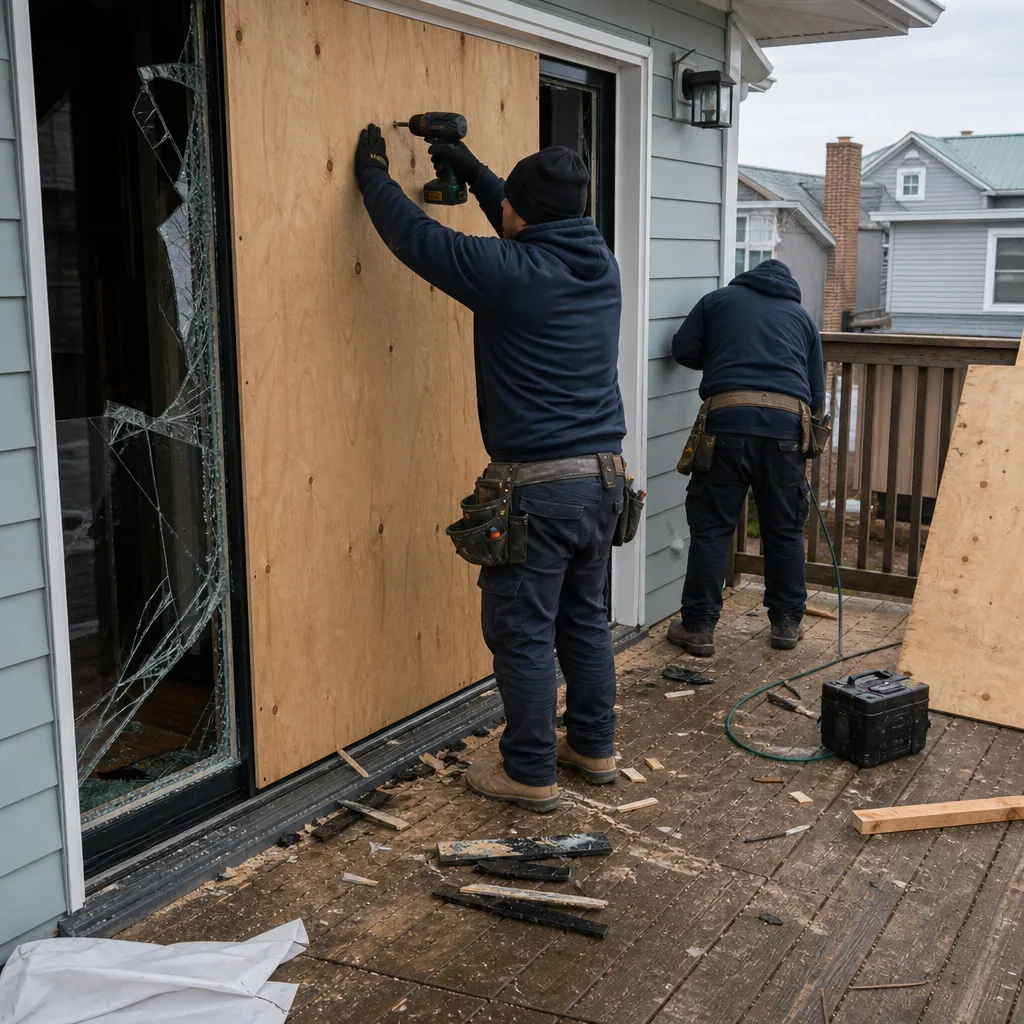
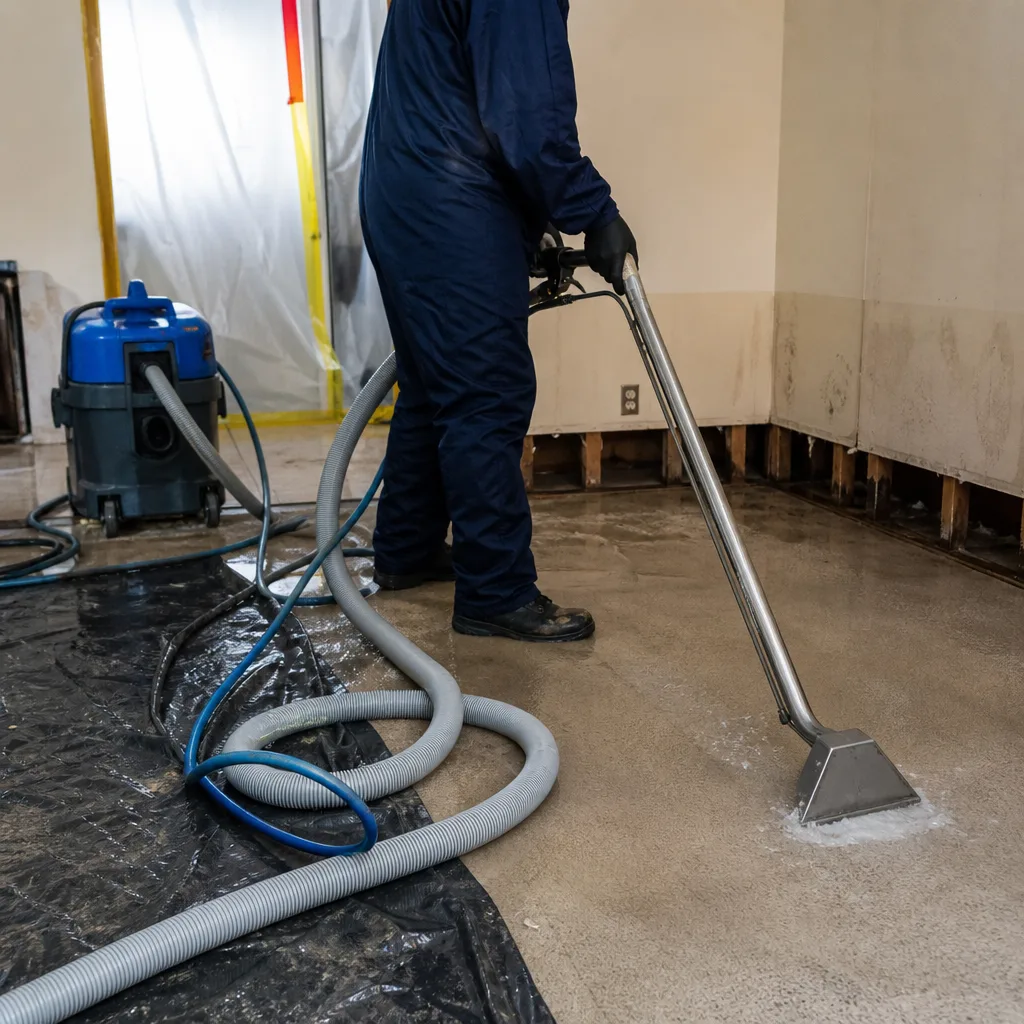
Standing water comes out first, using truck-mounted and portable extraction units. We then stabilize the structure: emergency board-up for broken windows, roof tarping for breaches, and containment where Category 3 water is present.
Drying & Dehumidification
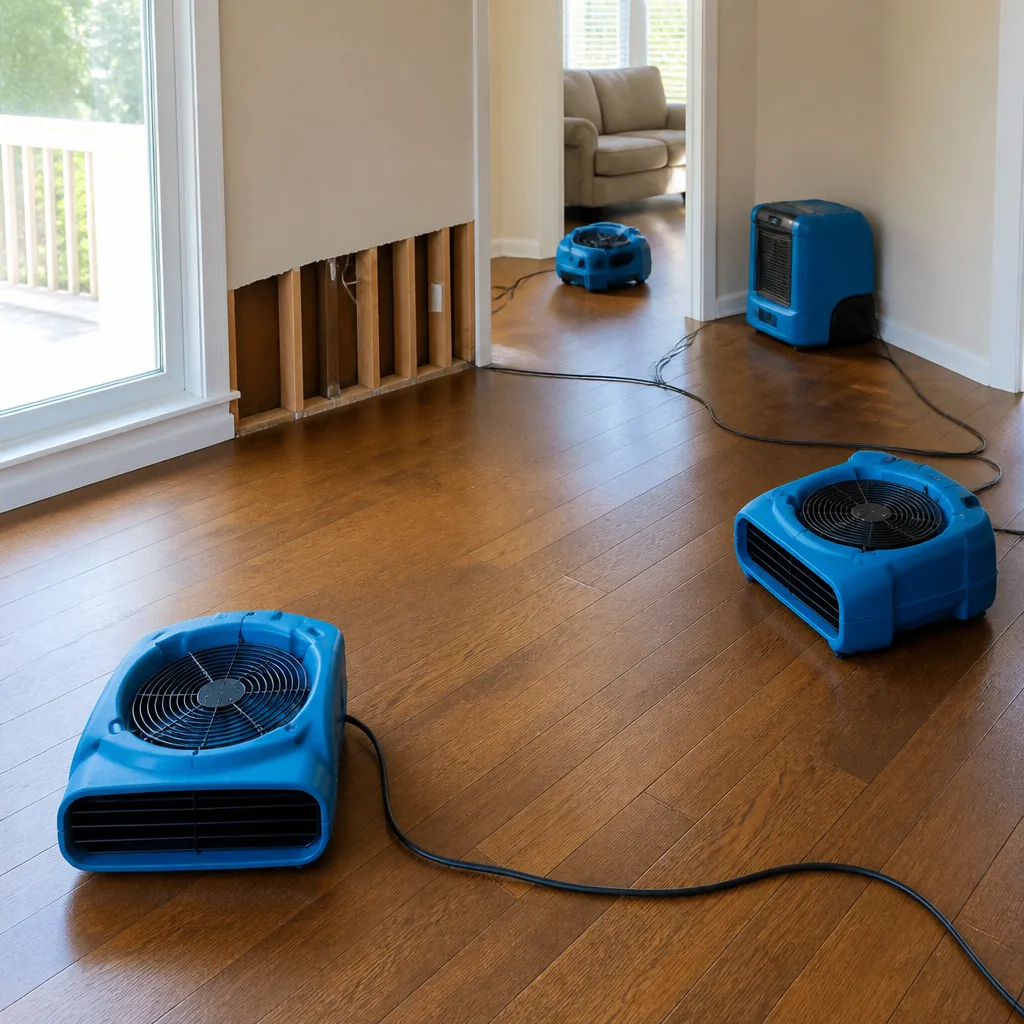
Professional-grade Dri-Eaz and Phoenix air movers and dehumidifiers go in, positioned according to a psychrometric plan based on your building’s specific floor plate and wall assemblies. Daily moisture readings are logged until we hit the dry standard.
Cleaning & Sanitization
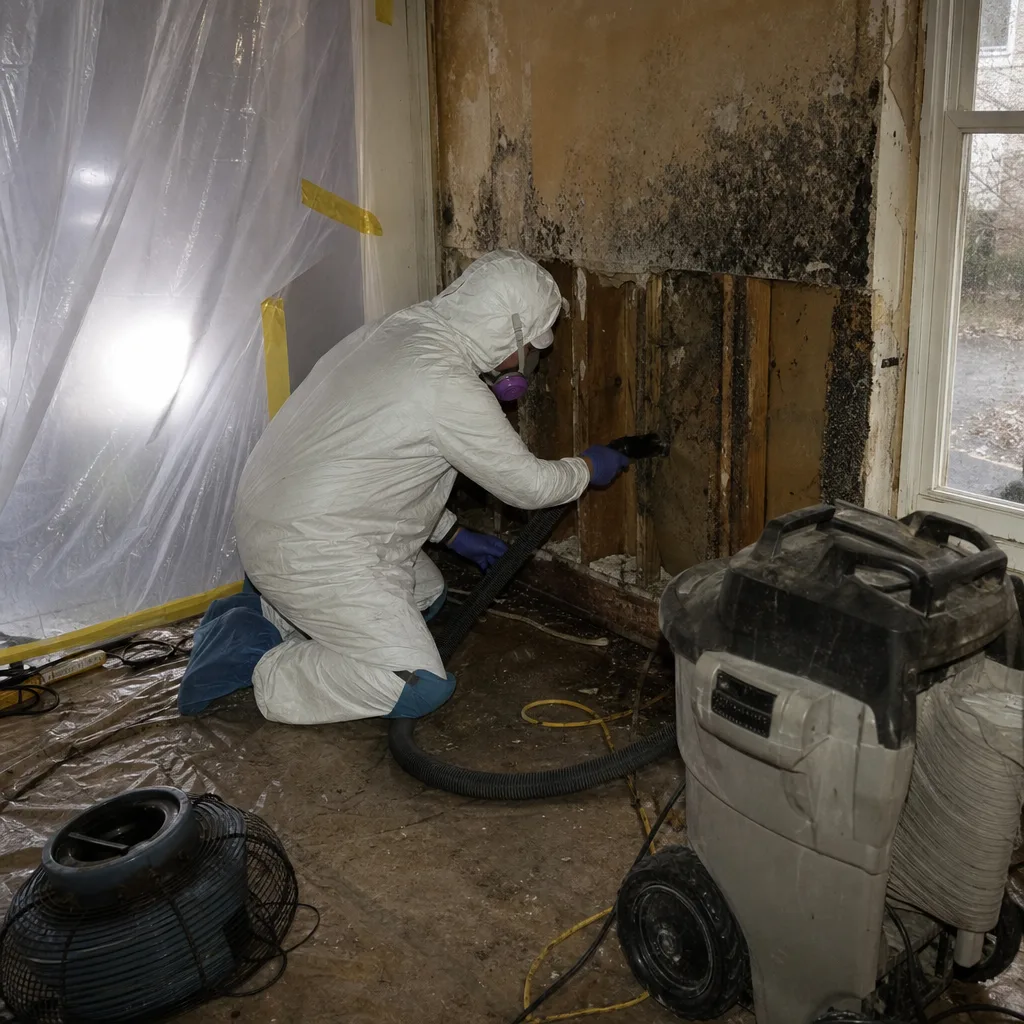
HEPA air scrubbers run while surfaces are cleaned and treated. Where Newtown Creek-adjacent floodwater is involved, we follow Category 3 protocols that include antimicrobial treatments and controlled disposal of porous materials.
Storm-Specific Specialty Treatment
This is where Long Island City buildings need extra attention: checking rooftop HVAC curb penetrations and parapet-to-membrane seams on converted industrial buildings, addressing wind-driven rain intrusion at window-wall systems in waterfront high-rises, and structural drying of open concrete floor plates.
Repairs & Restoration
The same floodline techs who extracted and dried now rebuild: drywall, flooring, trim, paint, and any structural elements that couldn’t be saved. The job ends with a finished space, not a referral to another contractor. Backed by our 90-Day Done Right Promise in writing.
Need Emergency Storm & Disaster Restoration in Long Island City Now?
Crews minutes away, answering live 24 hours a day. The sooner we start, the less it costs.
Working With Your Insurance Company
Storm and flood claims in Long Island City come with paperwork, and the quality of that paperwork usually decides what gets approved. We document everything from the first hour: photos of the damage room by room, moisture readings before and during drying, and a detailed line-item scope of work built to industry-standard estimating formats your adjuster recognizes. Our team communicates with your carrier directly, so you don’t spend hours on hold or drafting emails. The 90-Day Done Right Promise travels with the work, but so does the documentation: we hand you a moisture log at the end of the job that proves the dry standard was met.
What We Provide Your Insurer
- Thorough documentation of the loss
- Photos of all damage, room by room
- Moisture readings and drying logs
- A detailed, line-item scope of work
- Direct coordination with your carrier
Built for Long Island City’s Loss Calendar
Long Island City gets hit differently depending on the season. January and February bring deep freezes that burst supply lines in the pre-war converted lofts of Hunters Point, where original plumbing runs through uninsulated concrete slabs. March and April thaw leaves flat roofs ponding water that finds its way through worn parapet seams and HVAC curb penetrations. Summer brings convective thunderstorms that can dump two inches in an hour, overwhelming the aging drainage on Jackson Avenue and Vernon Boulevard and forcing water through ground-level doorways. Then comes nor’easter season, when wind-driven rain hammers the waterfront towers’ window-wall systems and sheet water cascades across the flat membrane roofs of converted industrial buildings. And beneath all of it sits the shadow of Sandy: anyone who lived through 2012 in 11101 knows what storm surge looks like, and knows that the next event will arrive fast. We plan for every month of that calendar.
Storm & Disaster Restoration Across Long Island City’s Neighborhoods
Response routes matter when a tree hits a roof at midnight. In Hunters Point, we maneuver equipment through narrow streets lined with converted warehouse lofts whose flat roofs and open floor plates define the restoration approach. Waterfront high-rises along Center Boulevard present a different challenge: we coordinate with building management, stage equipment through freight elevators, and focus on lower-floor mechanical rooms where floodwater pools. In the Court Square area near the 7 train, pre-war commercial conversions mean brick party walls and timber joists that hold water differently than concrete slabs. Over in the Dutch Kills section along 39th Avenue, we see a mix of older rowhouses and auto-body shops where storm debris removal and boarding-up are often the first priority. And around Queens Plaza, the post-2005 glass towers have mechanical systems so complex that a flooded lower level often means full equipment replacement, not just drying. Each neighborhood in Long Island City has its own failure pattern, and we’ve worked all of them.
Specialized Storm & Disaster Restoration Services We Offer in Long Island City
Flood Damage Restoration
When the East River or Newtown Creek tops its banks, Long Island City’s low-lying waterfront is first in line. Our Storm & Disaster Restoration team handles full Category 3 flood response: extraction, contaminated material removal, antimicrobial treatment, structural drying, and reconstruction. Given the Superfund status of Newtown Creek, we treat all creek-adjacent floodwater as hazardous by default.
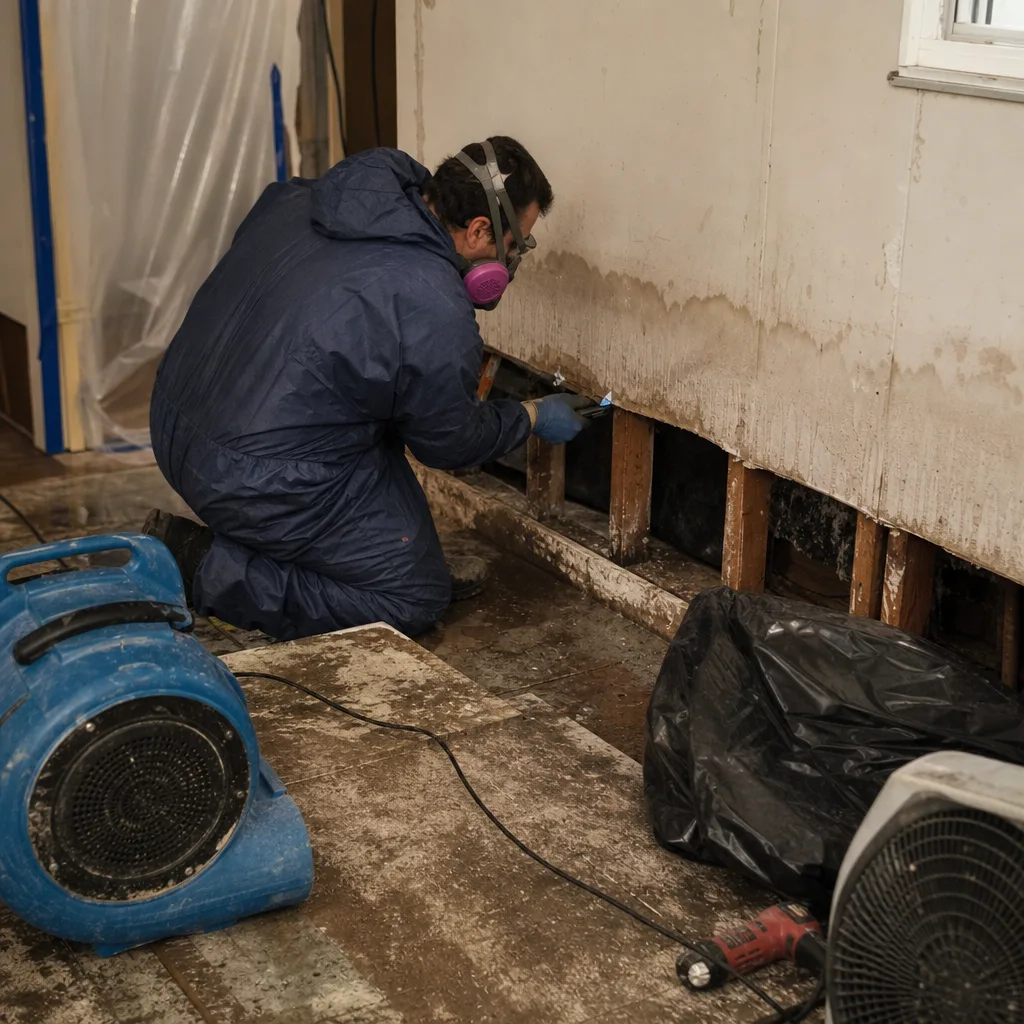
Storm Damage Cleanup
Wind, rain, and falling debris leave a mess that goes beyond water. We clear downed branches, remove broken glass and damaged building materials, and secure the property so further damage can’t pile on. In Long Island City’s narrow streets, debris removal often has to happen before any drying equipment can even reach the building.
Emergency Board-Up
A blown-out window on a Center Boulevard high-rise or a breached door on a Hunters Point loft is an open invitation to weather, pests, and trespassers. We board up with plywood cut to fit the specific opening, installed tight and secured against wind. Board-up is usually the first thing we do after a storm, because it stops the loss from compounding overnight.
Roof Tarping
LIC’s flat roofs are uniquely vulnerable. When a storm rips membrane or flashing, water doesn’t just drip straight down; it migrates along the roof deck and travels across open floor plates. We tarp the breach immediately, anchoring against the wind patterns that sweep off the East River, then return for permanent repairs. This is the single most important preventive measure for converted warehouse lofts.
What happens when you call
- 1
A real person answersNo phone trees - you reach a local pro.
- 2
You get an upfront price rangeHonest numbers before anyone is dispatched.
- 3
A background-checked tech heads outLicensed & insured, dispatched right away.
- 4
You approve before work beginsNothing starts until you say go.
Storm & Disaster Restoration Costs in Long Island City, NY
Storm damage restoration in Long Island City runs on a wide range because the building stock does too. A straightforward flood damage cleanup with limited structural drying in a standard rowhouse typically runs $2,800 to $6,500. The same event in a Hunters Point loft with open floor plate migration and multiple affected units can reach $15,000 to $40,000. Emergency board-up and roof tarping in Long Island City usually costs $400 to $1,800 depending on the size of the opening and accessibility. Category 3 contamination protocols, which we apply to any Newtown Creek-adjacent flooding, add $1,200 to $4,500 in testing, containment, and disposal costs. The fastest path to a firm number is a free visual inspection: we assess the scope, hand you a written estimate, and never start work until you’ve seen it. Insurance covers most storm-related losses; we bill carriers directly so you’re not carrying the cash flow.
We Also Serve Cities Near Long Island City
Floodline Restoration Co. extends the same 24/7 response, certified crews, and 90-Day Done Right Promise to neighbors in Astoria, Maspeth, Jackson Heights, and East Elmhurst. Wherever you are in the western Queens area, a live dispatcher answers at (518) 800-3751 and a crew can reach you within the hour.
Serving Long Island City, NY - Our Local Coverage Area
We’re based in the Long Island City area and know this community well. Use the map below to see our service coverage - if you’re nearby, we can almost certainly help.
Long Island City Storm & Disaster Restoration Questions, Answered
How does Newtown Creek’s Superfund status change flood restoration in Long Island City’s Hunters Point section?
Newtown Creek’s Superfund designation means floodwater that backs up from the creek carries heavy metals, PCBs, and other industrial contaminants that ordinary Category 1 or 2 water does not. In Hunters Point and along the creek’s edge, we treat any floodwater intrusion as Category 3 hazardous by default, which means full containment, antimicrobial treatment, and controlled disposal of porous materials that absorbed the water. Call (518) 800-3751 and we’ll assess what your specific exposure requires.
What are the chronic leak points on LIC’s converted warehouse loft buildings during storms?
The two failure points we see most on Long Island City’s converted industrial buildings are rooftop HVAC curb penetrations and parapet-to-membrane seams. Ponded water sits on the flat roof, finds the smallest gap at these junctions, and travels down through the building. Because the floor plates are open concrete, the water spreads laterally across entire floors before anyone notices staining. A visual inspection catches these leaks before they become multi-unit losses.
Why do high-rise mechanical rooms in LIC’s waterfront towers need full equipment replacement after flooding, not just drying?
Waterfront towers in Long Island City put their boilers, chillers, pumps, and electrical systems on lower floors, which are precisely the spaces that flood first during storm surge. Saltwater and Category 3 contaminants corrode electrical contacts, motor windings, and control boards in ways that drying cannot reverse. Replacing water-damaged mechanical equipment is often cheaper and safer than attempting to dry and re-energize it, and our team documents the full scope for your carrier.
How fast can mold start growing in an LIC loft after a storm leak, and why does that affect the restoration approach?
Mold can begin colonizing within 24 to 48 hours of water intrusion, and Long Island City’s open floor plate lofts give it more time to spread undetected because water moves laterally before showing itself. By the time staining appears in one unit, the moisture may have saturated a far larger area. We run HEPA air scrubbers during remediation and continue daily moisture monitoring until the dry standard is met, not just until the visible stain disappears.
What made Hurricane Sandy a benchmark for restoration scope in LIC’s 11101 zip code?
Sandy’s 2012 storm surge inundated Hunters Point South and ground-floor units throughout 11101, and it fundamentally changed how restoration contractors scope work in Long Island City. Before Sandy, floodwater in Queens was typically handled as Category 1 or 2. After Sandy, the combination of creek contamination, seawater, and sewage meant that every surge event in this area is treated as a potential Category 3 hazardous situation. Sandy also proved that waterfront high-rise mechanical rooms and converted loft ground floors are the two most vulnerable points in LIC’s building stock. Our team references Sandy-era damage patterns when planning scopes today.
How fast can you actually get to Long Island City?
We commit to 45 minutes for emergency storm response anywhere in the 11101, 11109, or 11120 zip codes. Our crews are staged locally in the Long Island City area, so a live dispatcher can have a certified team rolling immediately. Call (518) 800-3751 with the address and a description of what happened; we’ll give you a straight answer on arrival time.
Will my insurance cover storm damage restoration?
Most homeowners policies cover storm-related wind, water, and debris damage, but the details matter: flood coverage is typically a separate policy, and Category 3 contamination protocols may need justification. We document everything from the first hour, provide your adjuster with photos, moisture logs, and a line-item scope, and bill the carrier directly. That documentation is often what makes the difference between an approved claim and a disputed one.
What should I do in the first 30 minutes after storm damage?
First, keep everyone away from any electrical hazards or standing water that could be contaminated. Second, call (518) 800-3751. Third, if it’s safe, shut off power to affected areas and take photos of the damage before anything moves. Fourth, close doors to unaffected rooms to slow water migration. Fifth, don’t try to pump out creek-adjacent floodwater yourself; it may be contaminated and needs Category 3 handling. Our dispatcher will walk you through the next steps while the crew is in transit.
Written by Curt Bowman, Owner at Floodline Restoration Co., serving Long Island City and western Queens with 24/7 storm and disaster response.