
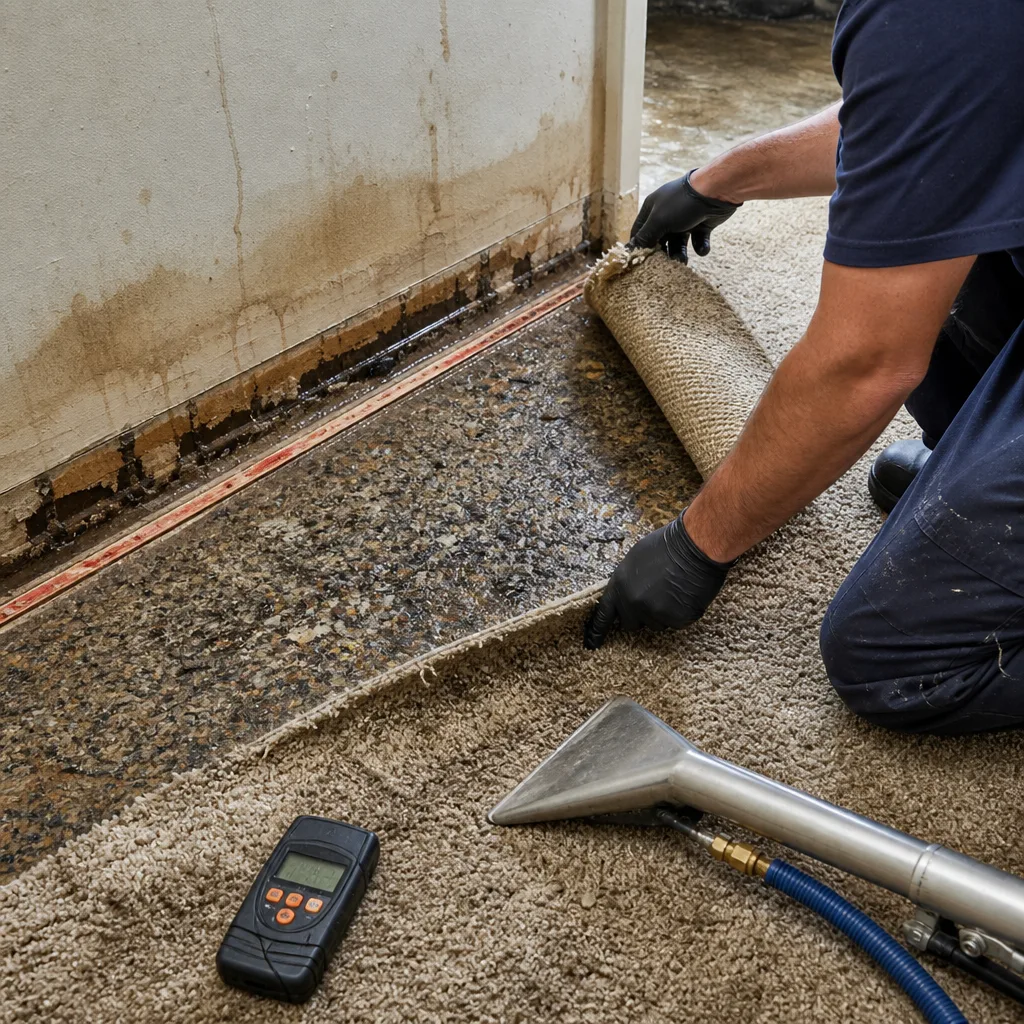
Free visual inspection and a written scope of work before any mitigation begins - photos, moisture readings, and drying logs go in your claim file
The scope we write is the scope we bill. Anything new gets shown to you, in writing, before we touch it.
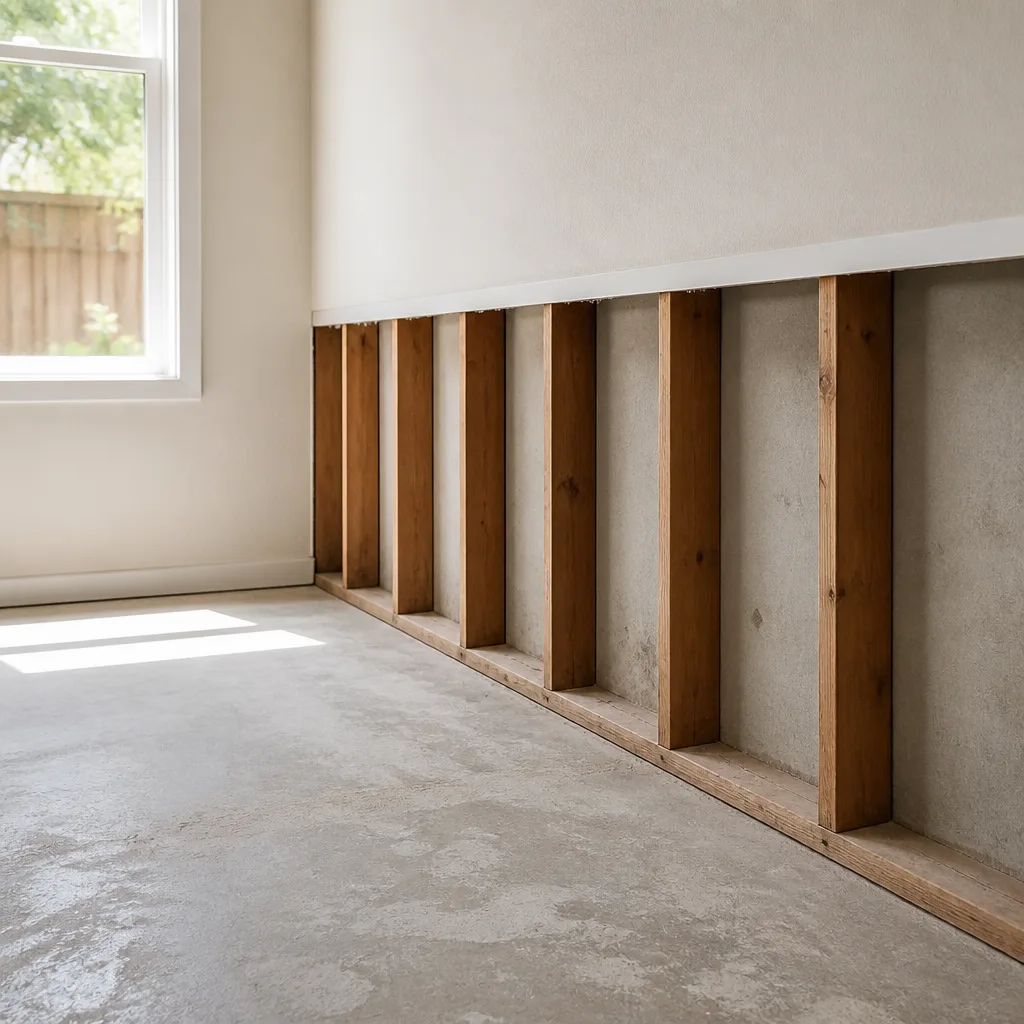
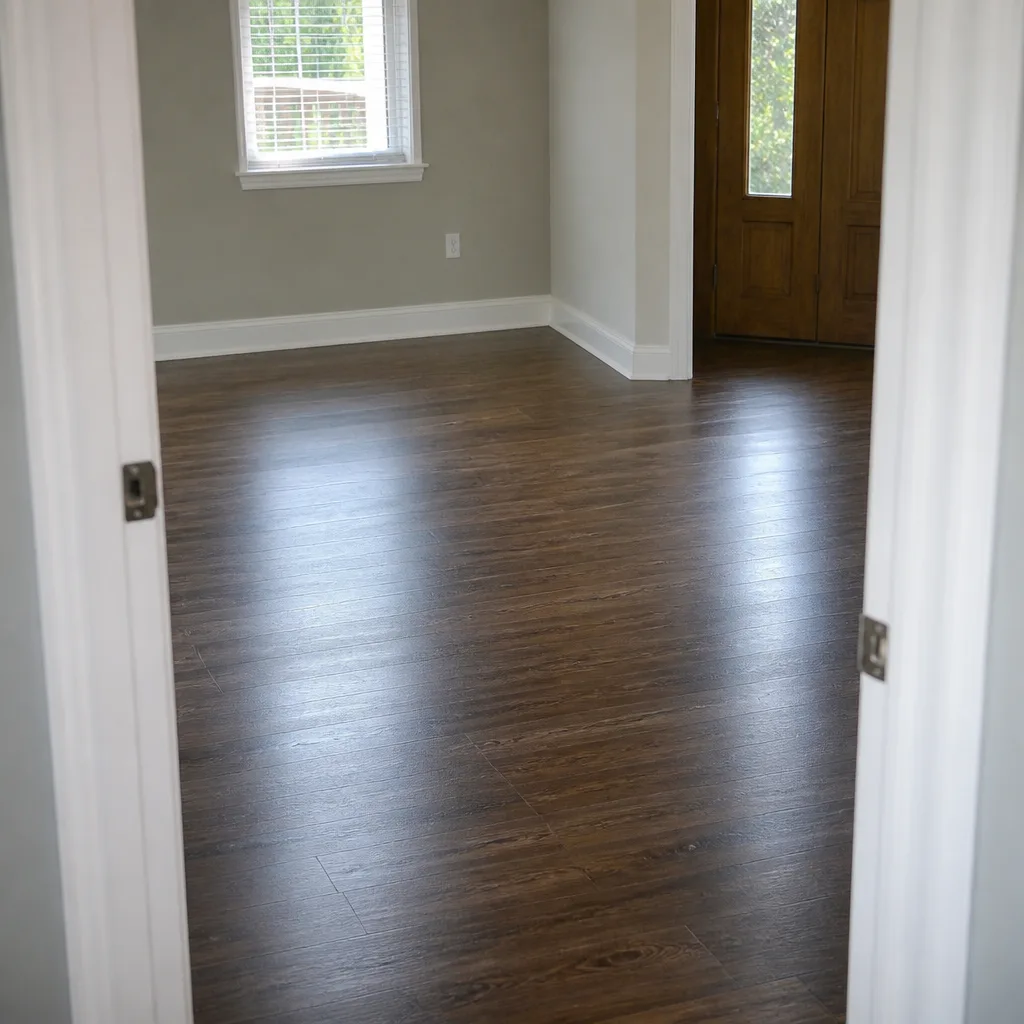

 Before
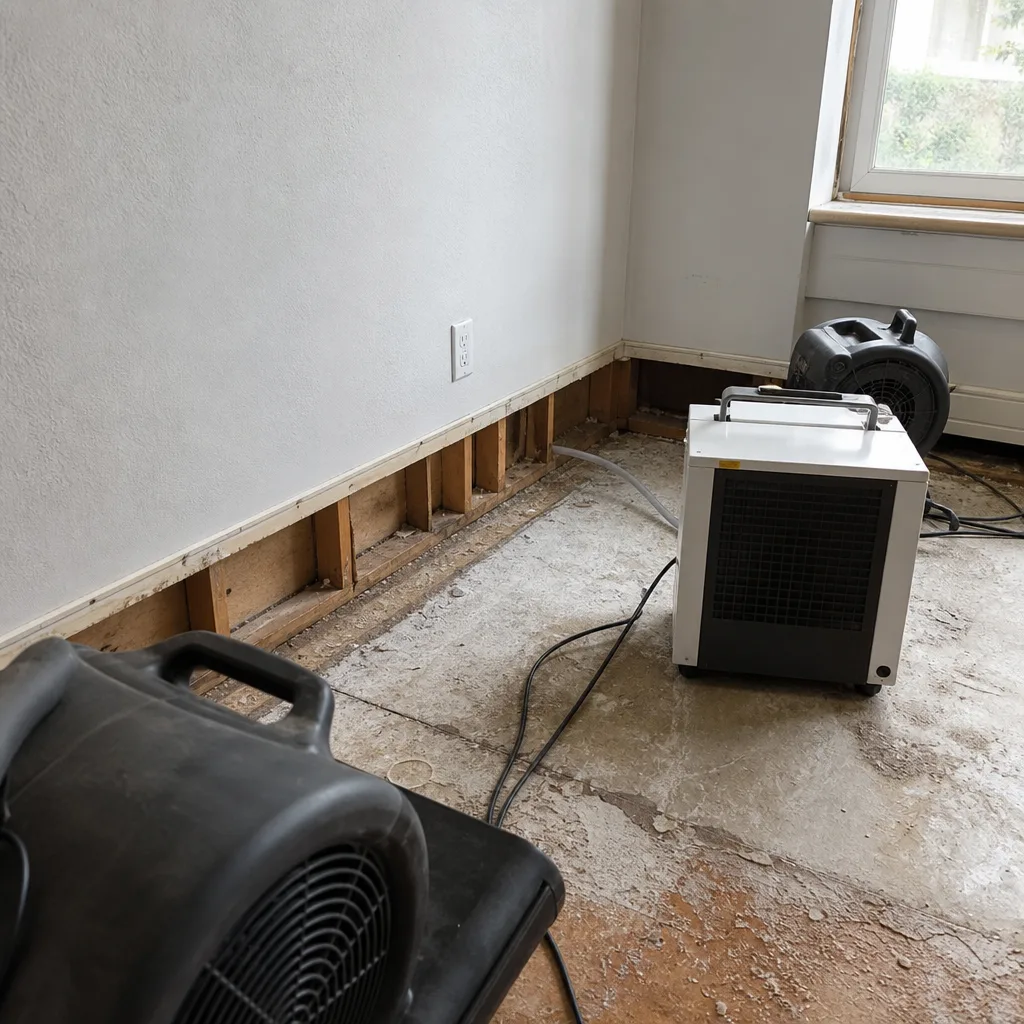 After
After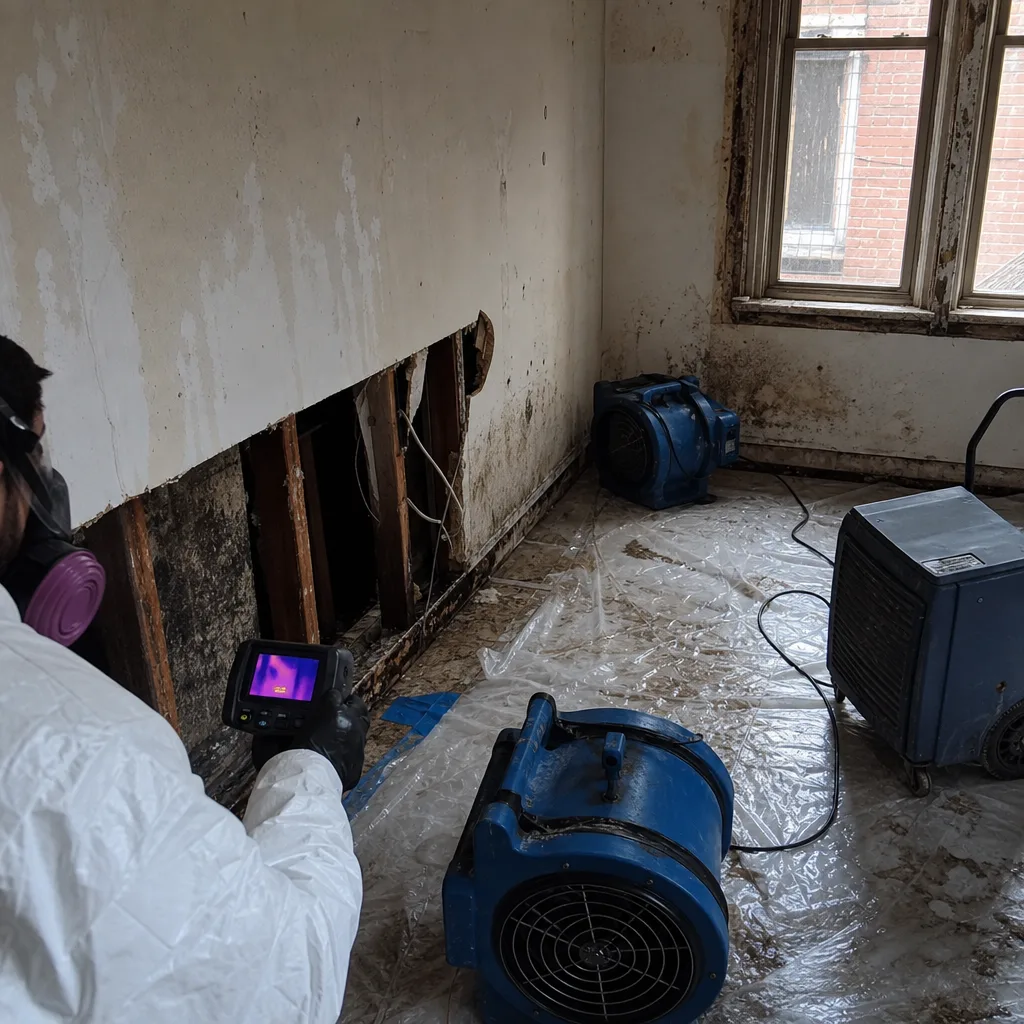 Before
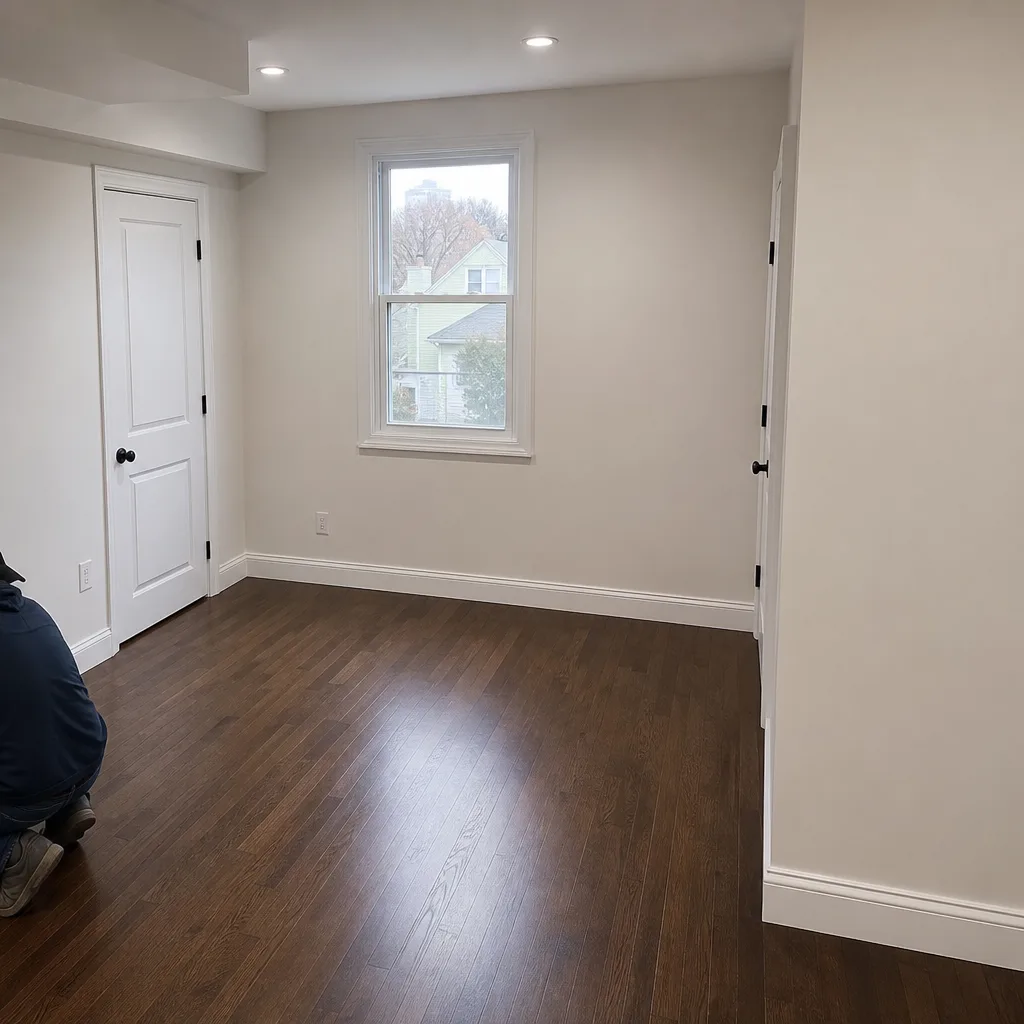 After
After24/7 Emergency Mold Remediation in Midtown Manhattan
Mold remediation in Midtown Manhattan typically costs $2,800 to $9,500 for a single affected room, and most occupied high-rise jobs can begin same-day because our crews are dispatched from the New York City office directly into Midtown Manhattan. Call (518) 800-3751 any hour and a live dispatcher answers, not a recording. We get a certified crew on-site fast, because in a 40-story building, mold does not stay on one floor for long.
The first hour matters more in Midtown Manhattan than almost anywhere else. Shared riser pipes, horizontal chases, and original plaster ceilings turn a small leak into a building-wide spore migration problem while you wait. A free visual inspection tells you exactly what you are dealing with before any work begins, and the 90-Day Done Right Promise means the result is backed in writing. Done right, across every floor.
Understanding Mold Remediation Severity in Midtown Manhattan Properties
Mold severity in a Midtown Manhattan building depends on three things: how long moisture has been present, whether the water source was clean or contaminated, and what the building was constructed from. A slow condensate leak from an HVAC riser inside a 1950s concrete tower is a different job than a category 2 supply-line break inside a 1920s masonry skyscraper. The first involves surface colonization on drywall and carpet. The second saturates original plaster, clay-tile fireproofing, and cast-iron pipe insulation, and that is where containment, air scrubbing, and clearance testing stop being optional.
Midtown’s building stock spans three distinct eras. The 1920s through 1940s produced masonry skyscrapers with original cast-iron and galvanized supply lines. The mid-century concrete towers added aging steam-heat risers. The post-1980s glass curtain-wall high-rises depend on gasket systems that fail under nor’easter-driven rain. Each era has its own mold pattern, and a technician who only knows one era will miss what is happening in the other two. We have worked all three across Midtown Manhattan, from Turtle Bay to the Garment District.
Why Midtown Manhattan Property Owners Choose Floodline Restoration Co.
- 45-minute response commitment in Midtown Manhattan: A dispatcher confirms a crew and an ETA while you are still on the phone. We have technicians staged across the borough so midtown addresses do not wait on tunnel traffic.
- Live answer, 24/7, every day: A real person picks up at 2 a.m. No answering service script, no “leave a message.” The person on the phone knows restoration and starts coordination immediately.
- IICRC-certified crews, trained to WRT and AMRT standards: Every technician is background-checked, uniformed, and holds current certification. We will show credentials before anyone touches a wall.
- Free visual inspection, no obligation: If you see staining, smell must, or have had a leak, we come out, assess, and give you a straight answer about scope. If it is not mold, we tell you that too.
- Direct insurance billing: We document the loss from hour one and coordinate directly with your adjuster. You do not play messenger between Floodline and the carrier, ever.
- One team from containment to reconstruction: The same crew that sets up HEPA air scrubbers is the crew that hangs new drywall. No mid-job handoff, no inherited stranger, no finger-pointing.
Our Mold Remediation Process
Inspection & Assessment
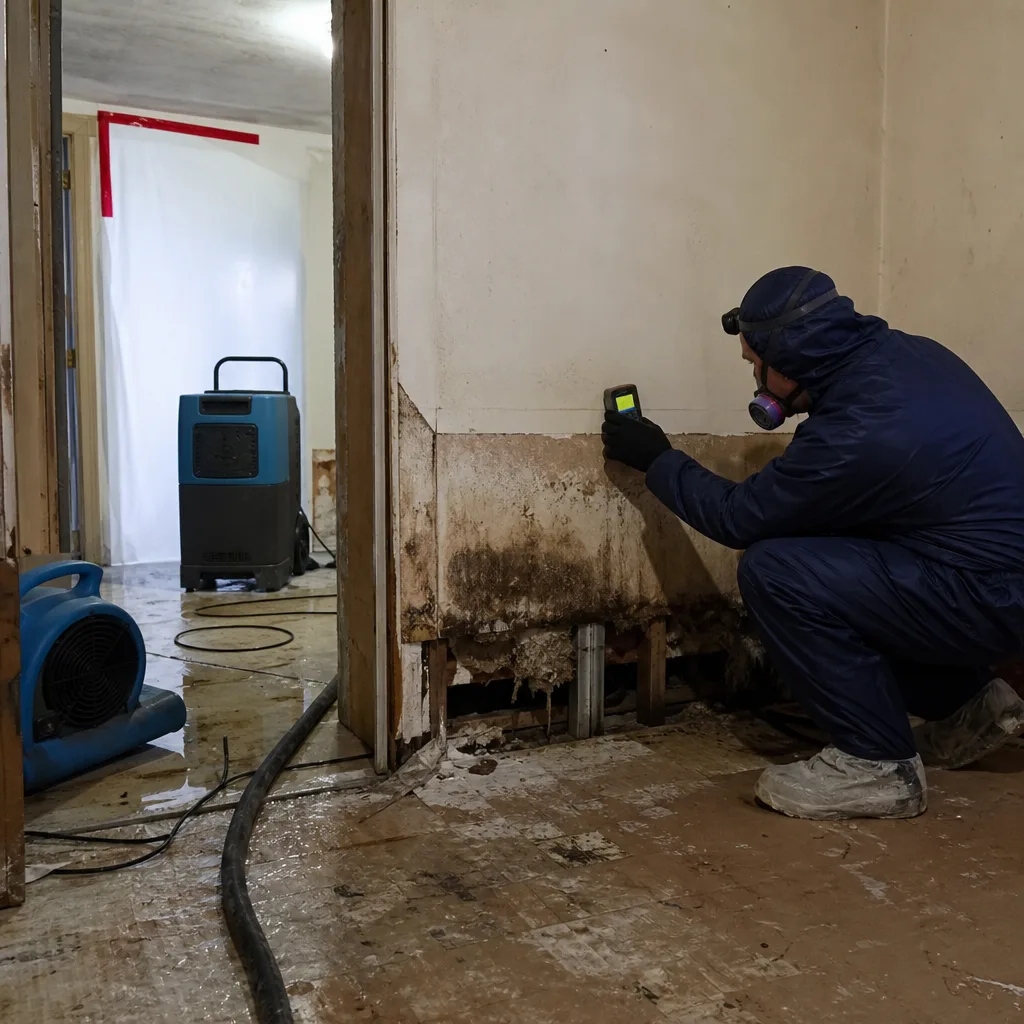
We start with thermal imaging and moisture meters to find water you cannot see. In Midtown Manhattan high-rises, that means tracing shared risers and horizontal chases, not just the unit with visible growth.
Extraction & Source Stabilization
Any standing water comes out first. If the source is a failed supply line or a leaking steam riser, we coordinate the shut-off with building management before containment begins.
Drying & Dehumidification
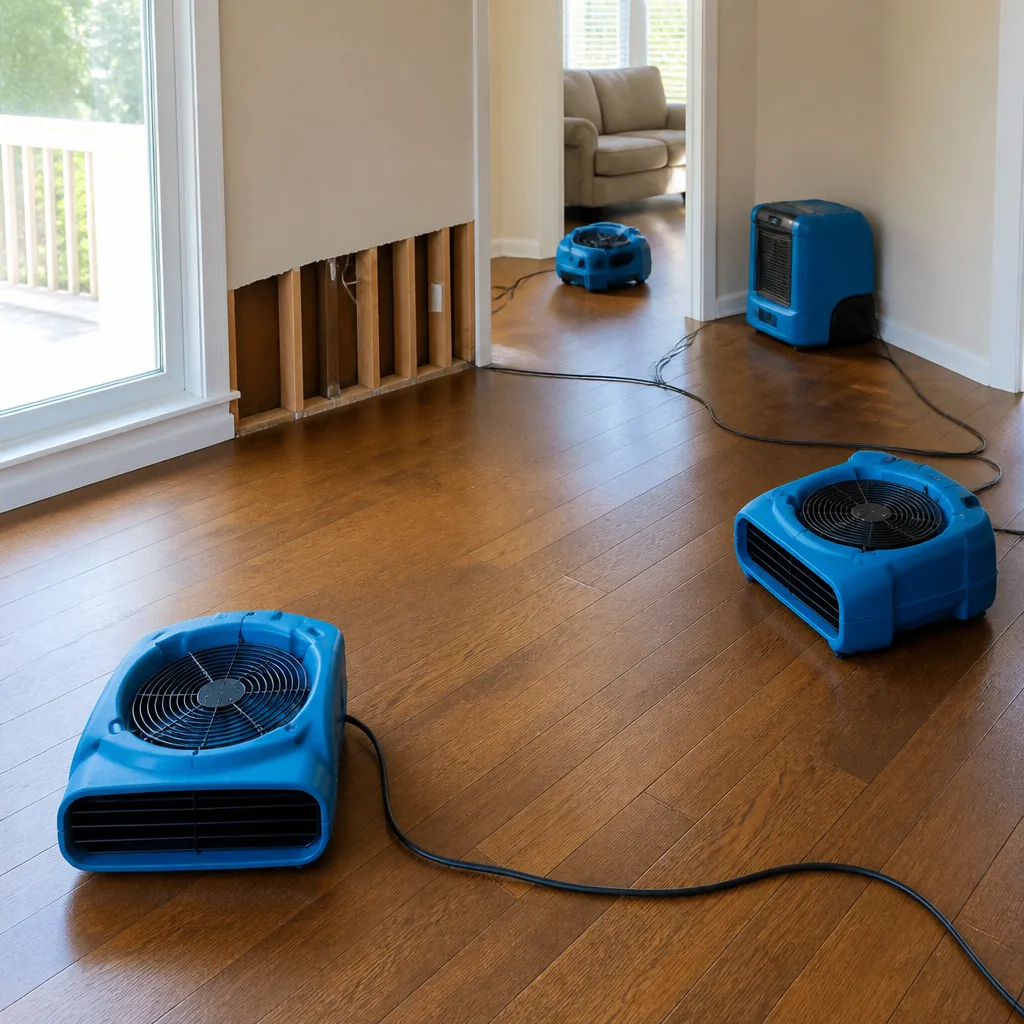
Dri-Eaz dehumidifiers and Phoenix air movers go in behind containment. Daily moisture readings are logged until the dry standard is met, and that log goes to you and your carrier.
Cleaning & Sanitization
HEPA air scrubbers run throughout the job. Affected surfaces are cleaned with antimicrobial treatments appropriate for the material, whether that is drywall, plaster, or concrete.
Asbestos Coordination & Clearance Testing
In pre-1960 Midtown Manhattan buildings, we test before we cut. Legacy asbestos in pipe insulation and floor-tile mastic triggers mandatory abatement protocols, and we coordinate the industrial hygienist so demo never gets stop-work ordered.
Repairs & Restoration
The affected space returns to pre-loss condition, from drywall to trim to paint. The 90-Day Done Right Promise covers the result in writing. If it is not right, we make it right.
Need Emergency Mold Remediation in Midtown Manhattan Now?
Crews minutes away, answering live 24 hours a day. The sooner we start, the less it costs.
Working With Your Insurance Company
Midtown Manhattan mold claims are different from suburban ones because the building itself is often a party. A leak from a riser inside the wall may be the co-op’s responsibility, the unit owner’s responsibility, or split. We have handled enough of these to know what the carrier needs, and we produce documentation from the first hour that holds up under review. Daily moisture readings, room-by-room photos, and a line-item scope in the adjuster’s preferred format. We have coordinated with building management and multiple carriers in the same building, sometimes for different units on the same floor, and we keep every claim moving without making you chase anyone.
What We Provide Your Insurer
- Thorough documentation of the loss
- Photos of all damage, room by room
- Moisture readings and drying logs
- A detailed, line-item scope of work
- Direct coordination with your carrier
Built for Midtown Manhattan’s Loss Calendar
Midtown Manhattan’s mold season does not follow the suburbs. Nor’easters hit hardest in late fall and early spring, driving sustained horizontal rain against high-rise curtain-wall facades. Failed window gaskets and aging limestone and brick mortar joints let that water into upper-floor units, and the mold grows behind drywall while the exterior looks fine. January deep freezes burst supply lines in the older masonry towers, often on the north-facing units of pre-war co-ops along Fifth Avenue. Summer brings a different pattern: the concrete towers with aging steam-heat risers produce condensation in uninsulated chases, and the mold starts there, behind the wall, in buildings that have never once looked damp to the occupants.
The common thread is that Midtown Manhattan mold problems usually start inside the building’s own systems, not from a basement floor or a roof leak. That changes the remediation approach. You need crews who understand riser systems, facade consultants who can address exterior intrusion, and a company that will coordinate both.
Mold Remediation Across Midtown Manhattan’s Neighborhoods
Midtown Manhattan is not one housing market, and mold does not behave the same across all of it. In the Garment District, the pre-war loft buildings converted to residential still carry original cast-iron pipes and the kind of dense floor plates that make moisture travel sideways. Around Grand Central and the East Midtown corridor, the office-to-residential conversions keep plaster ceilings and legacy pipe insulation that demand asbestos coordination before anyone opens a wall. The glass towers near Bryant Park and Times Square fail at the facade level, with gasket leaks that produce recurring mold until the exterior intrusion gets addressed. Along the Museum Mile edge of Midtown, co-op boards in the 1920s masonry buildings watch every scope line item, and we write proposals that answer board questions before they are asked.
Response routes matter too. Midtown’s crosstown streets and avenues punish a crew that times it wrong. We stage technicians so a job on West 57th and a job on East 42nd both get someone there within the hour. The buildings are different. The traffic is the same. You plan for both.
Specialized Mold Remediation Services We Offer in Midtown Manhattan
Mold Inspection & Testing
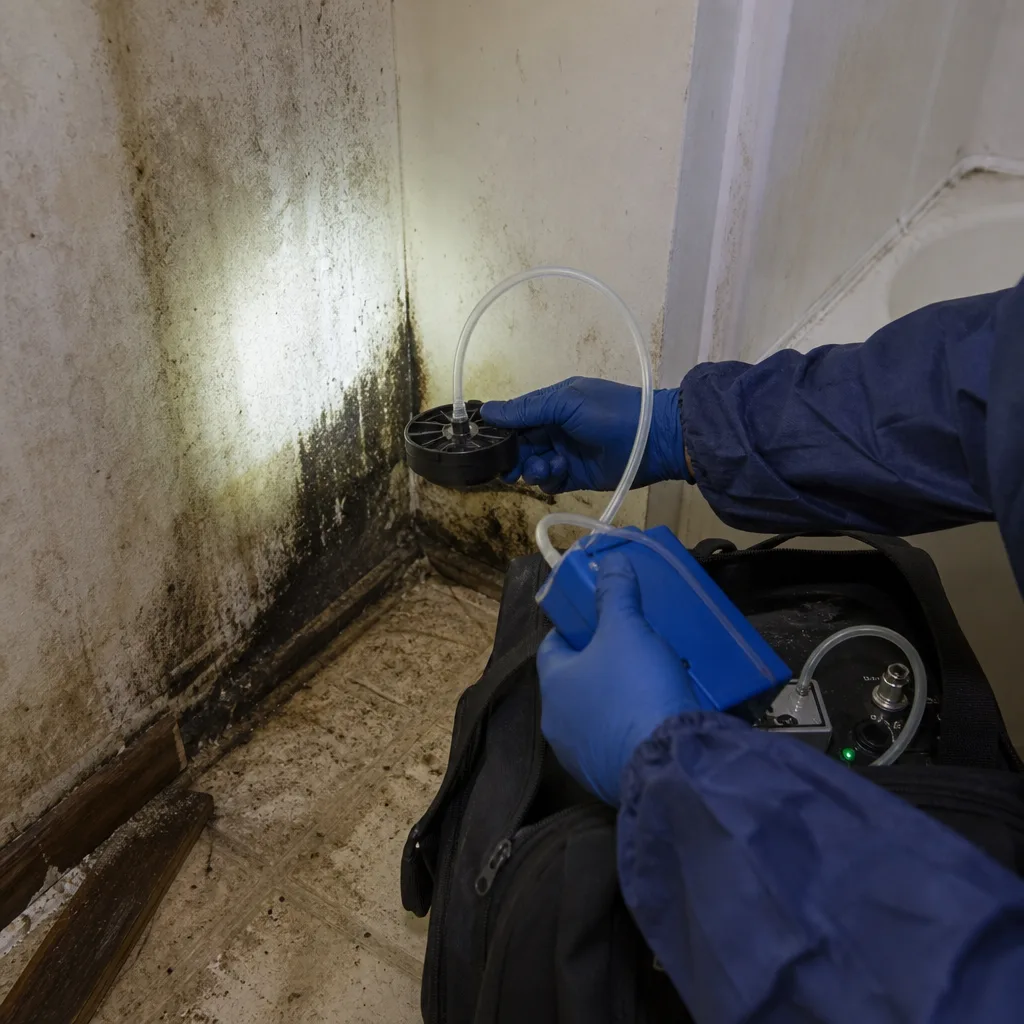
Before anyone recommends remediation, you need to know what you are dealing with. In Midtown Manhattan, that often means air sampling across multiple floors in a shared riser building, not just a single swab in a single unit. Our Mold Remediation team coordinates with certified labs and delivers results that tell you whether the issue is a localized colony or a building-wide spore migration, and that distinction changes the entire scope and cost.
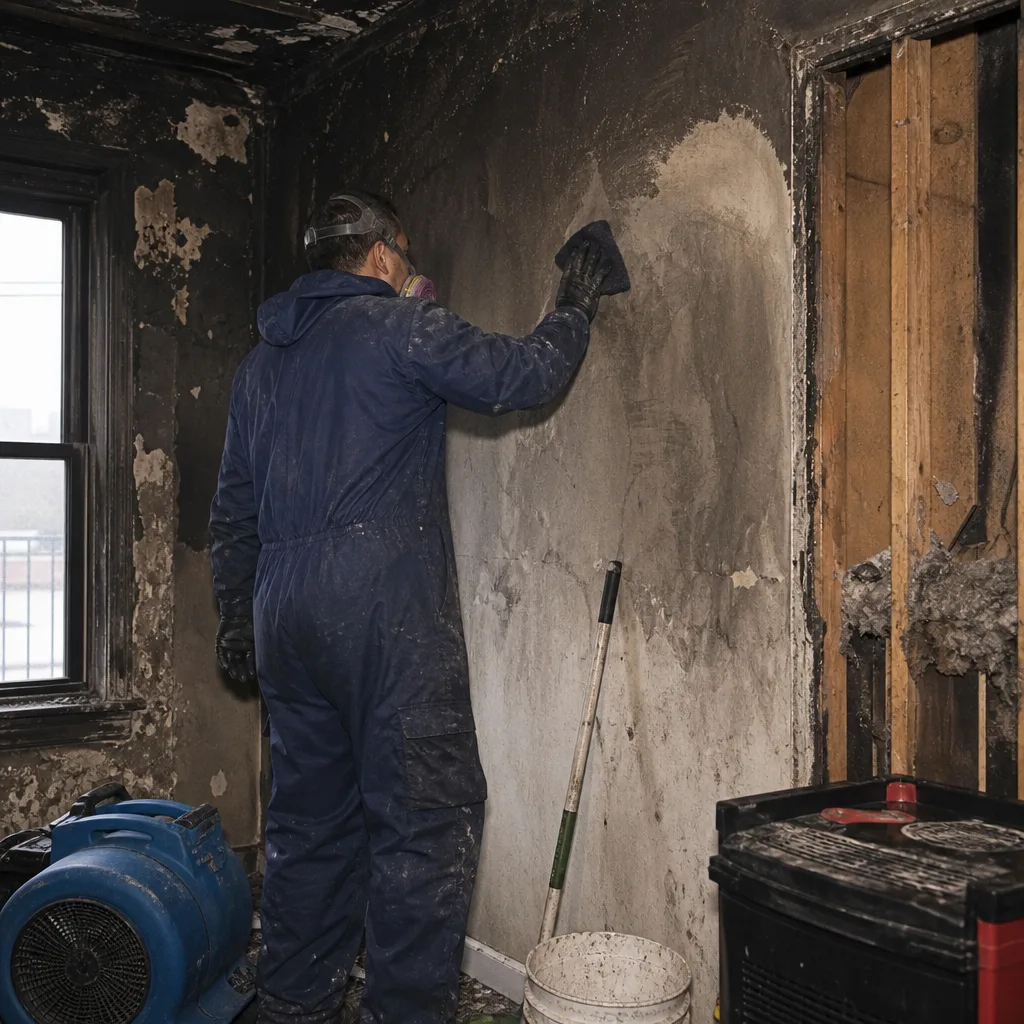
Mold Removal
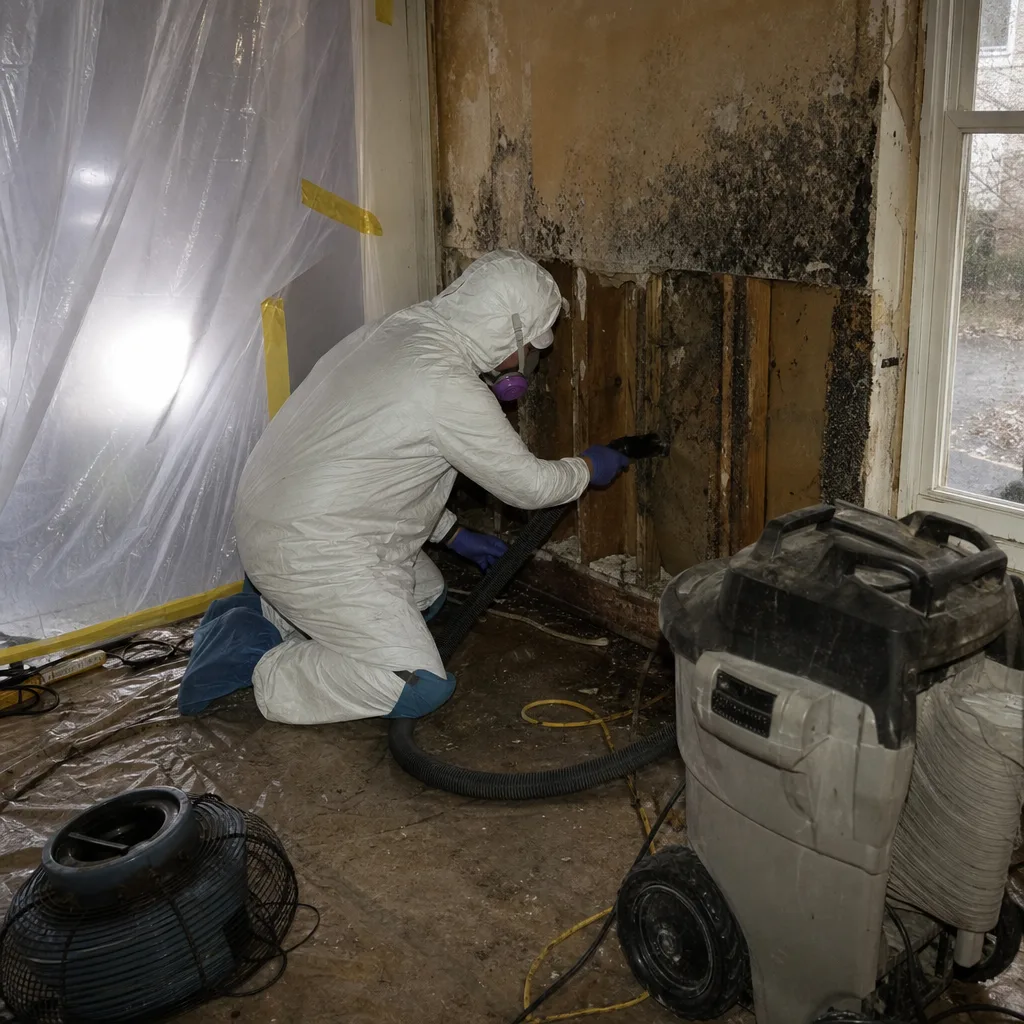
Mold removal in a Midtown Manhattan high-rise means containment at the unit and floor level, negative air pressure, and HEPA air scrubbing that runs throughout the job. We never cut drywall in a pre-1960 conversion without first checking for asbestos in pipe insulation and mastic. Once the affected material is out, antimicrobial treatments go on the framing, and the drying equipment stays until the moisture meter says the structure is actually dry.
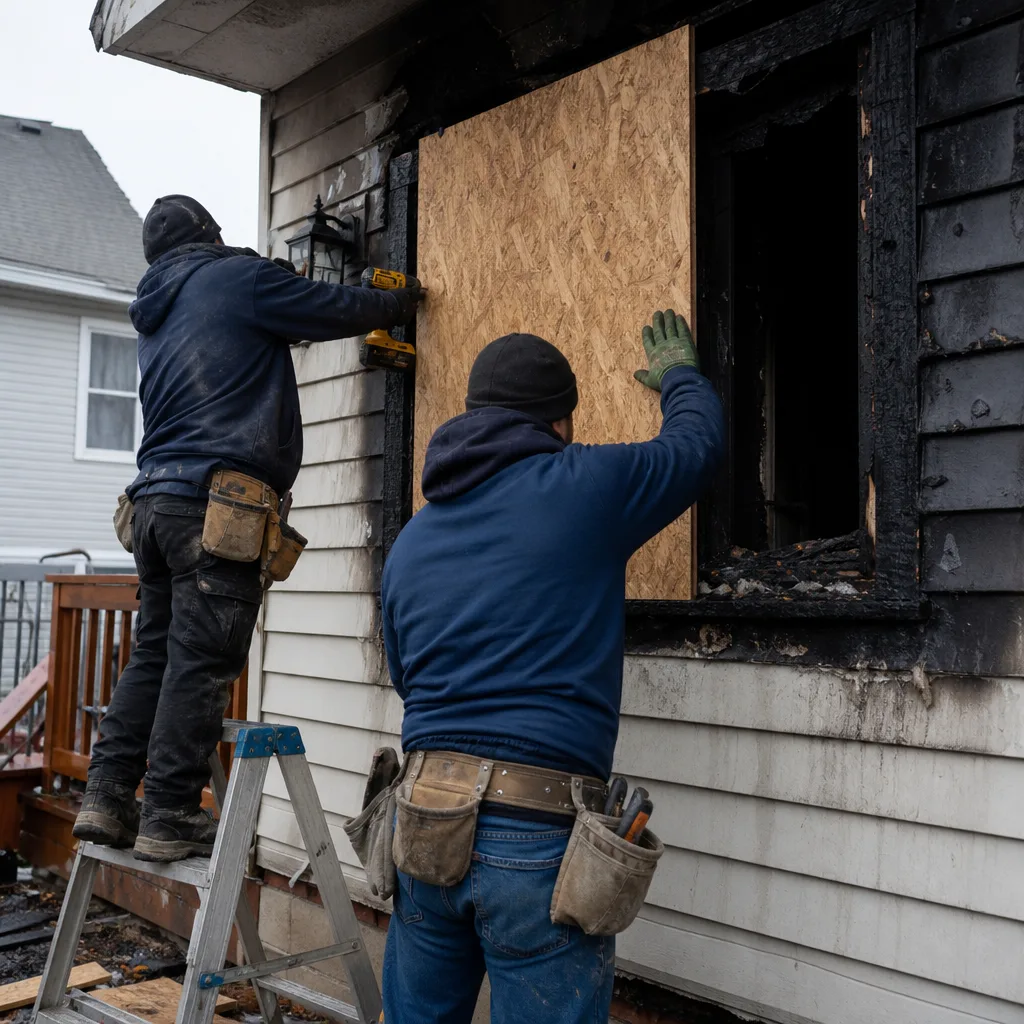
Black Mold Remediation
Stachybotrys, the black mold most people mean, grows where water has sat too long. In Midtown Manhattan, that is often behind a failed curtain-wall gasket on an upper floor or inside a wall cavity after a supply-line break nobody noticed during a holiday shutdown. We treat black mold with full containment, personal protective equipment, and clearance testing that proves the space is safe to reoccupy, not just that the visible stain is gone.
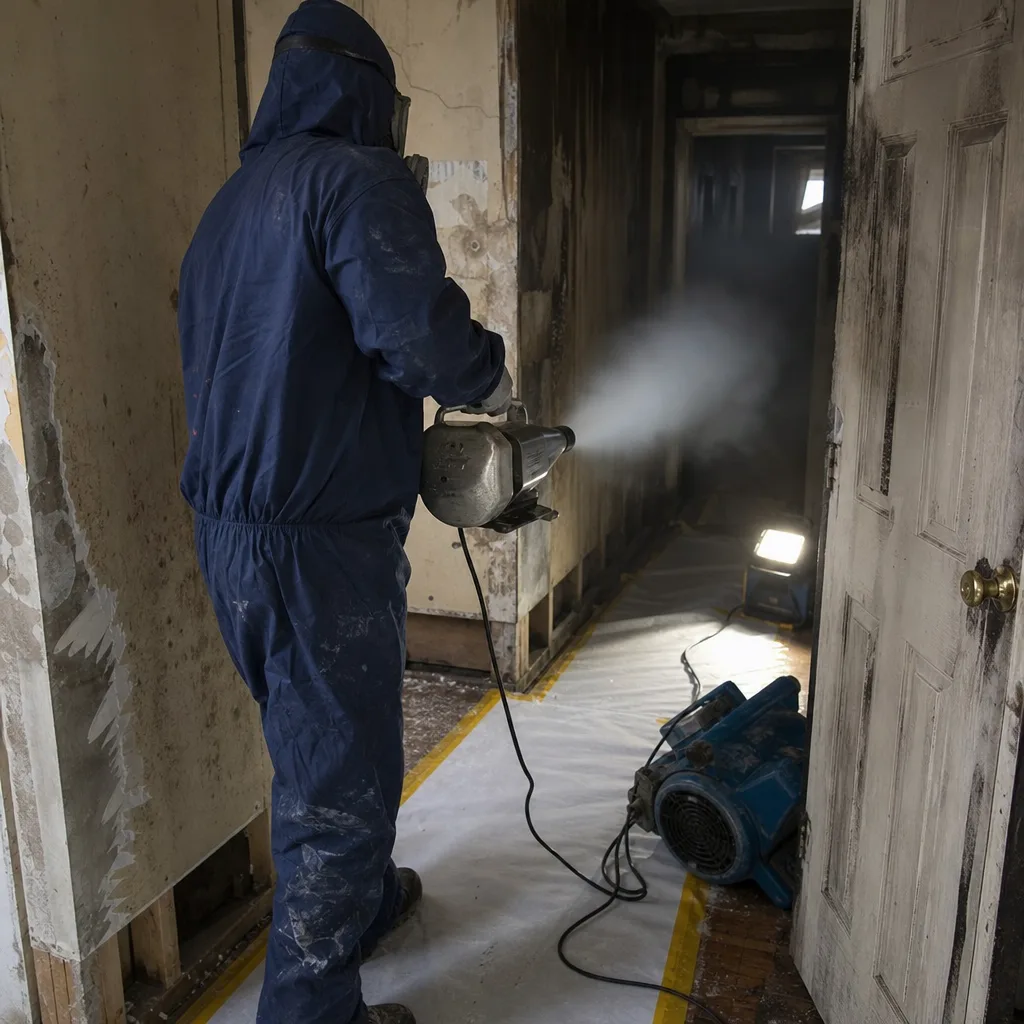
Air Quality Restoration
After a mold job, the air matters as much as the walls. We run HEPA air scrubbers and, where needed, bring in XPOWER air movers to restore circulation. In a high-rise where shared ventilation shafts move air between floors, post-remediation air testing confirms the spores did not travel somewhere they should not have.
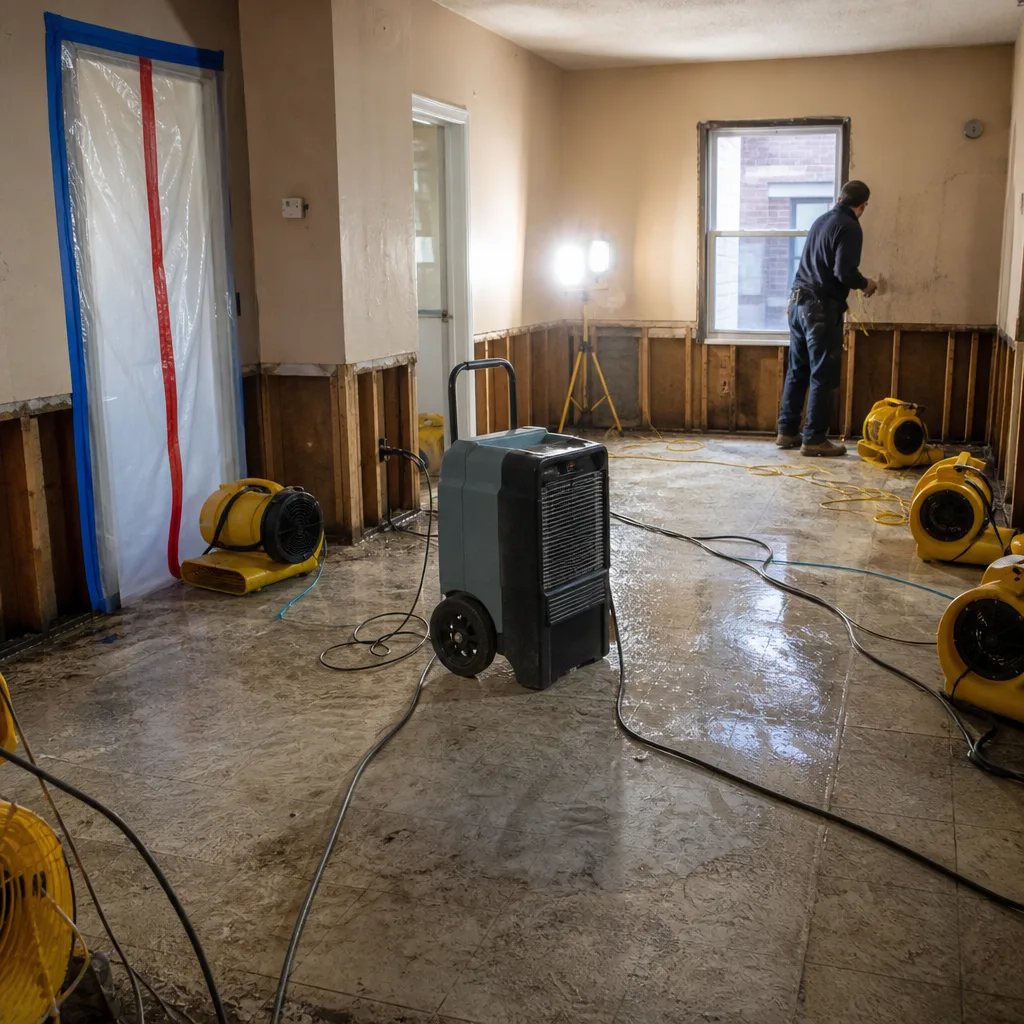
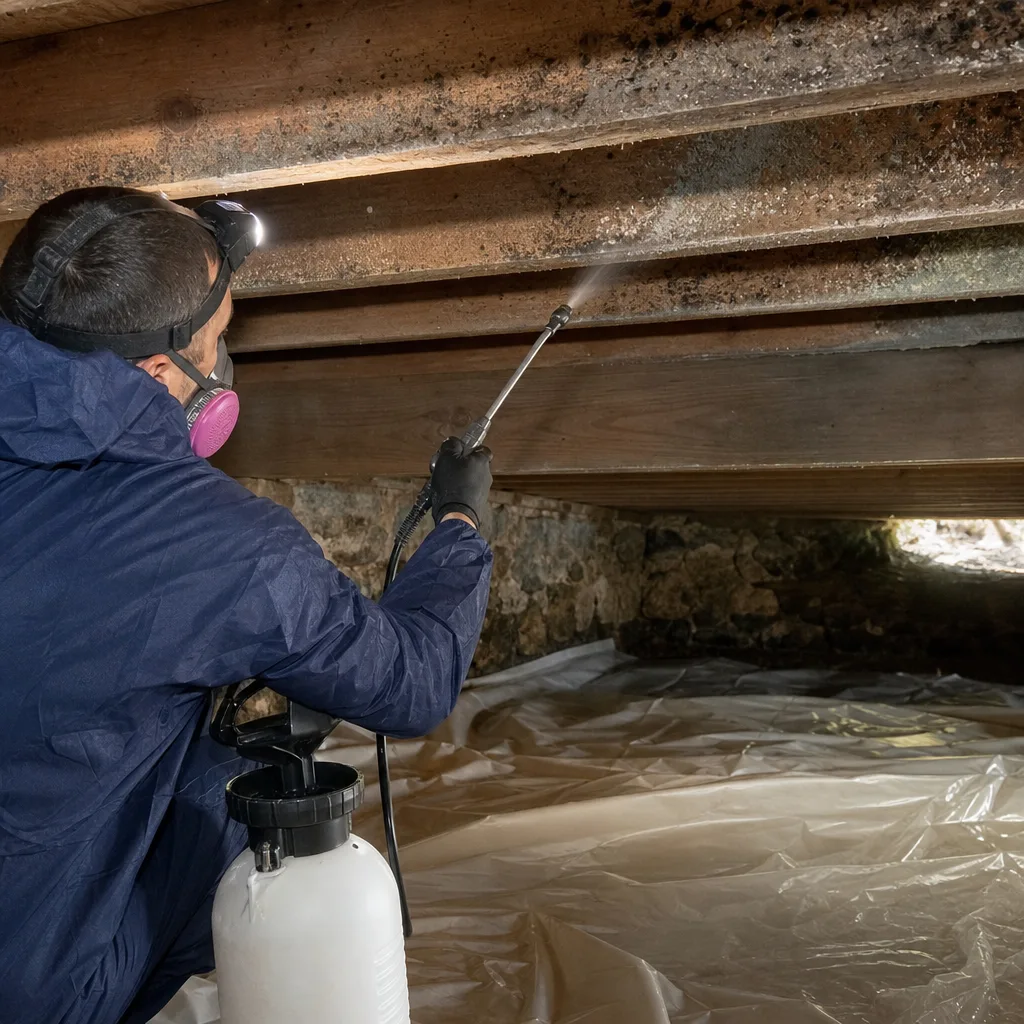
Crawl Space Treatment
Midtown Manhattan does not have many crawl spaces, but some of the converted carriage houses and older buildings at the edges of the district do. We treat those with moisture barriers, dehumidification, and antimicrobial application, the same full process we run on any other space.
What happens when you call
- 1
A real person answersNo phone trees - you reach a local pro.
- 2
You get an upfront price rangeHonest numbers before anyone is dispatched.
- 3
A background-checked tech heads outLicensed & insured, dispatched right away.
- 4
You approve before work beginsNothing starts until you say go.
Mold Remediation Costs in Midtown Manhattan, NY
A typical mold remediation job in Midtown Manhattan runs $2,800 to $9,500 for a single affected room. The price moves with square footage, the age of the building, and whether asbestos testing or abatement is required. When a pre-1960 conversion on Madison Avenue needs an industrial hygienist clearance before demo starts, that adds a line item the suburbs never see. Curtain-wall jobs that require a facade consultant alongside the remediation crew land at the higher end. Insurance-covered jobs depend on your policy and the source of the water. The free visual inspection gives you a firm written scope before any work starts, so you are not guessing at numbers when the adjuster asks. Call (518) 800-3751 for an exact quote. Estimates are free.
We Also Serve Cities Near Midtown Manhattan
Our Midtown Manhattan teams also respond across Astoria, Ditmars Steinway, Upper Manhattan, and the Upper East Side. Same live dispatch, same certified crews, same written guarantee. If your building sits just outside the Midtown core, we cover it.
Serving Midtown Manhattan, NY - Our Local Coverage Area
We’re based in the Midtown Manhattan area and know this community well. Use the map below to see our service coverage - if you’re nearby, we can almost certainly help.
Midtown Manhattan Mold Remediation Questions, Answered
How does Midtown Manhattan’s high-rise plumbing affect mold remediation scope?
High-rise plumbing means mold remediation is rarely a one-unit job. Shared risers and horizontal pipe chases move water and spores between floors, so a leak on the 18th floor can produce mold on the 14th. Scope must account for the chase walls, the riser shaft, and the units below, not just the visible affected space.
When is asbestos testing required before mold removal in Midtown pre-1960 buildings?
Whenever demolition opens walls or disturbs pipe insulation, floor tile, or mastic in a pre-1960 building, and Midtown Manhattan has thousands of those. We halt before cutting and bring in a certified inspector. The clearance typically takes one to two days, and it prevents stop-work orders that would otherwise idle a commercial floor for weeks.
Can mold spread from a single unit to other floors through the building’s riser system?
Yes. Air pressure differences inside a high-rise stack effect pull spores through pipe chases, elevator shafts, and ventilation runs. We have seen a single-unit mold source produce positive air samples three floors away. That is why containment is set at the unit and floor level, and why post-remediation clearance testing matters in a high-rise more than anywhere else.
What moisture sources cause mold in Midtown’s glass curtain-wall high-rises?
Failed window gaskets are the big one, followed by aged sealant at the perimeter of curtain-wall panels and unsealed horizontal mullions. Nor’easter-driven rain pushes moisture through these weak points, and the water collects on the interior side of the wall, wetting drywall that never dries because the exterior air is cold and the building’s climate system is not running enough.
How do you handle mold in a Midtown office-to-residential conversion with original plaster ceilings?
We preserve what is salvageable. Original plaster ceilings in Midtown conversions often survive with containment and drying alone when caught early. If the plaster is too far gone, we remove the affected section, treat the lath and framing, and replace with materials that match the surrounding texture and finish. Asbestos testing comes before any cut.
How fast can someone actually get here for mold in Midtown Manhattan?
Our commitment is 45 minutes to most Midtown Manhattan addresses. Dispatch is live around the clock, and crews are staged across Manhattan so crosstown traffic does not turn a 45-minute response into a two-hour one. Call (518) 800-3751 and you will have an ETA before you hang up.
Do I need full remediation or just a cleaning?
It depends on whether the mold source is active and how far the spores have traveled. A free visual inspection tells you. Surface cleanup on non-porous materials can work when the moisture source is gone. Hidden mold behind walls, in chases, or under flooring needs containment and removal. We will not sell you a full job if a smaller one is honest.
Who deals with my insurance adjuster?
We do. From the first photo to the final invoice, Floodline coordinates directly with your carrier. We document the loss in the adjuster’s format, log moisture readings daily, and produce a line-item scope that holds up. You never play messenger. Call (518) 800-3751 and we will start that process from the first visit.
Written by Curt Bowman, Owner at Floodline Restoration Co., serving Midtown Manhattan with certified mold remediation and full-cycle restoration. The 90-Day Done Right Promise, in writing, on every job.