
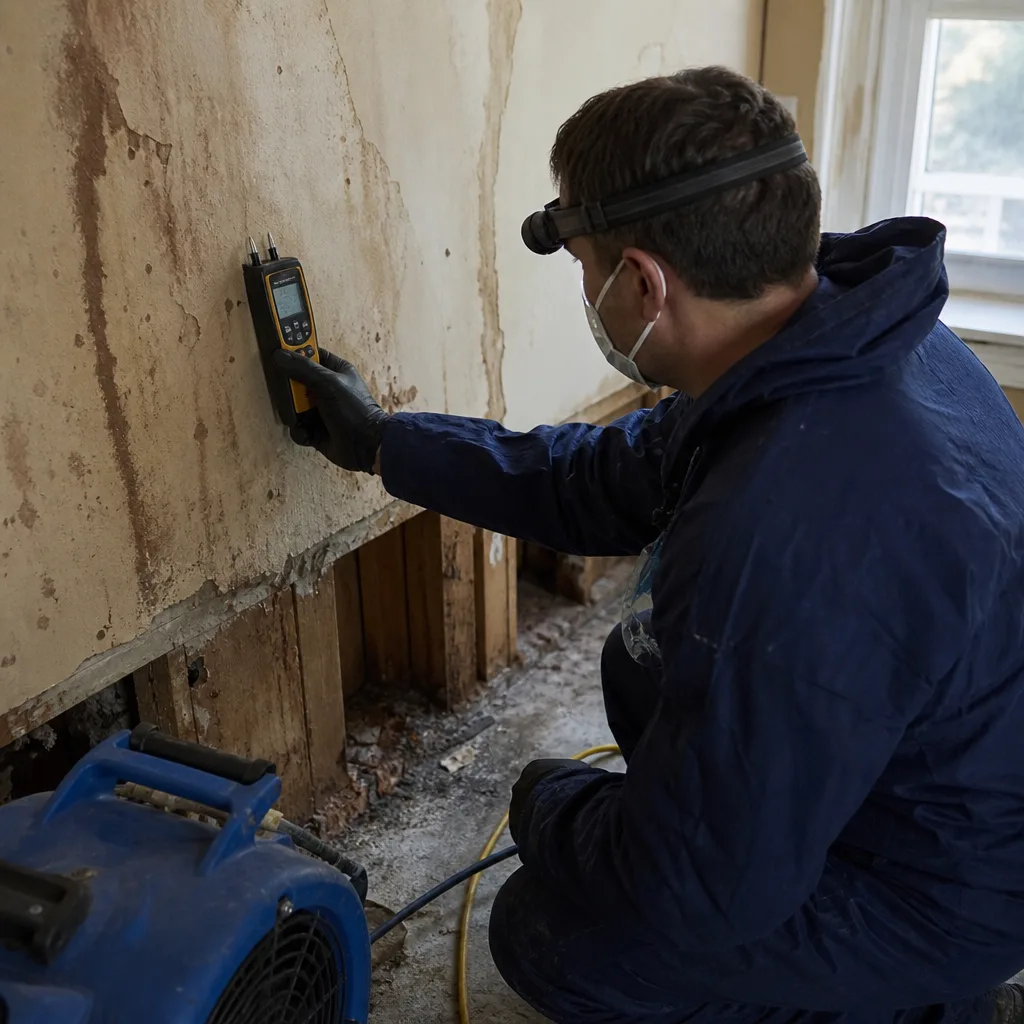
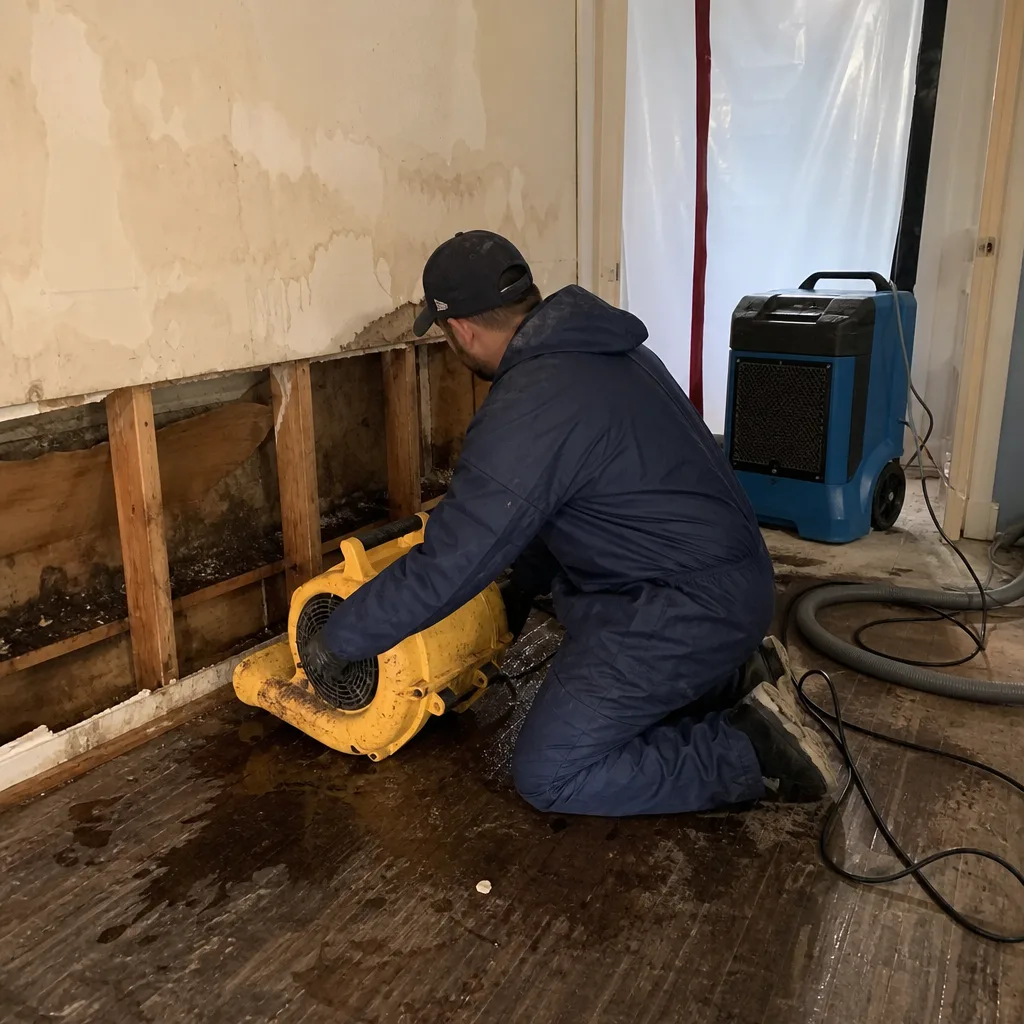
Free visual inspection and a written scope of work before any mitigation begins - photos, moisture readings, and drying logs go in your claim file
The scope we write is the scope we bill. Anything new gets shown to you, in writing, before we touch it.
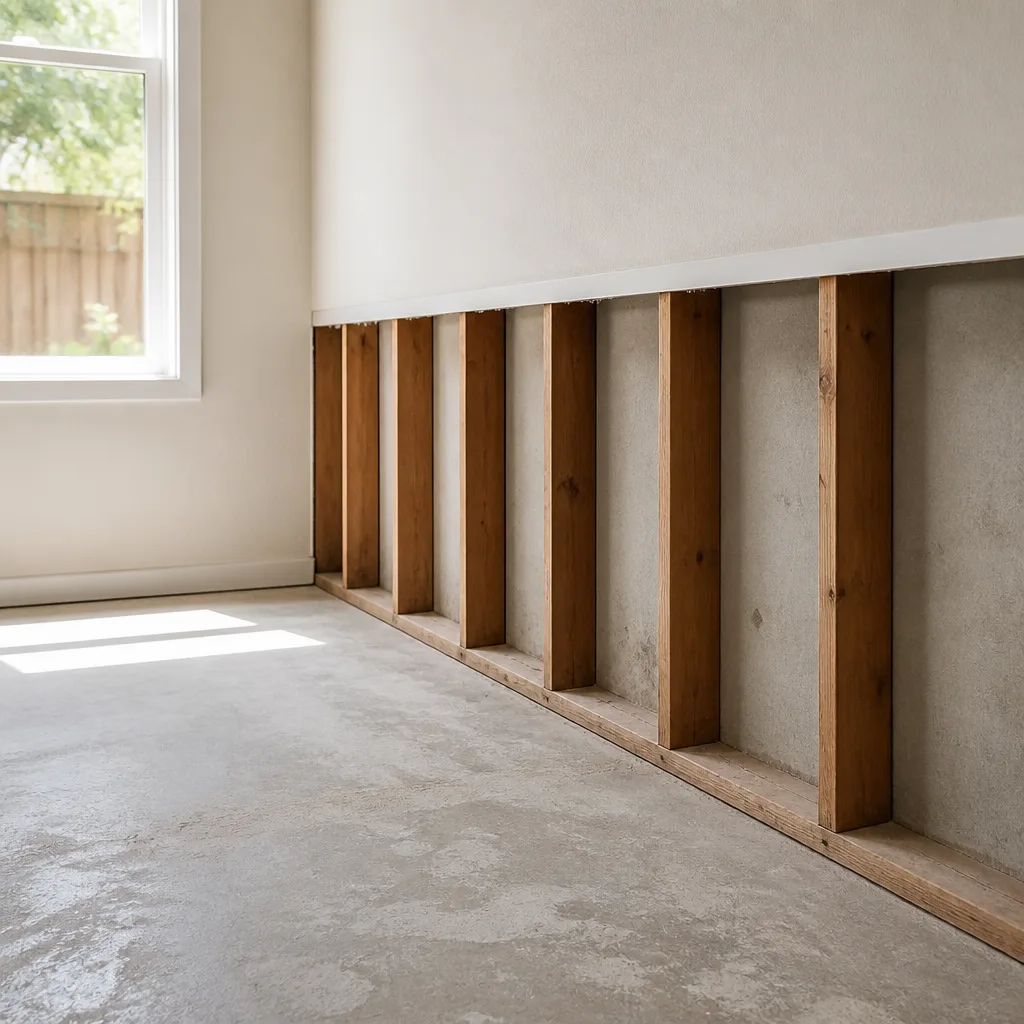
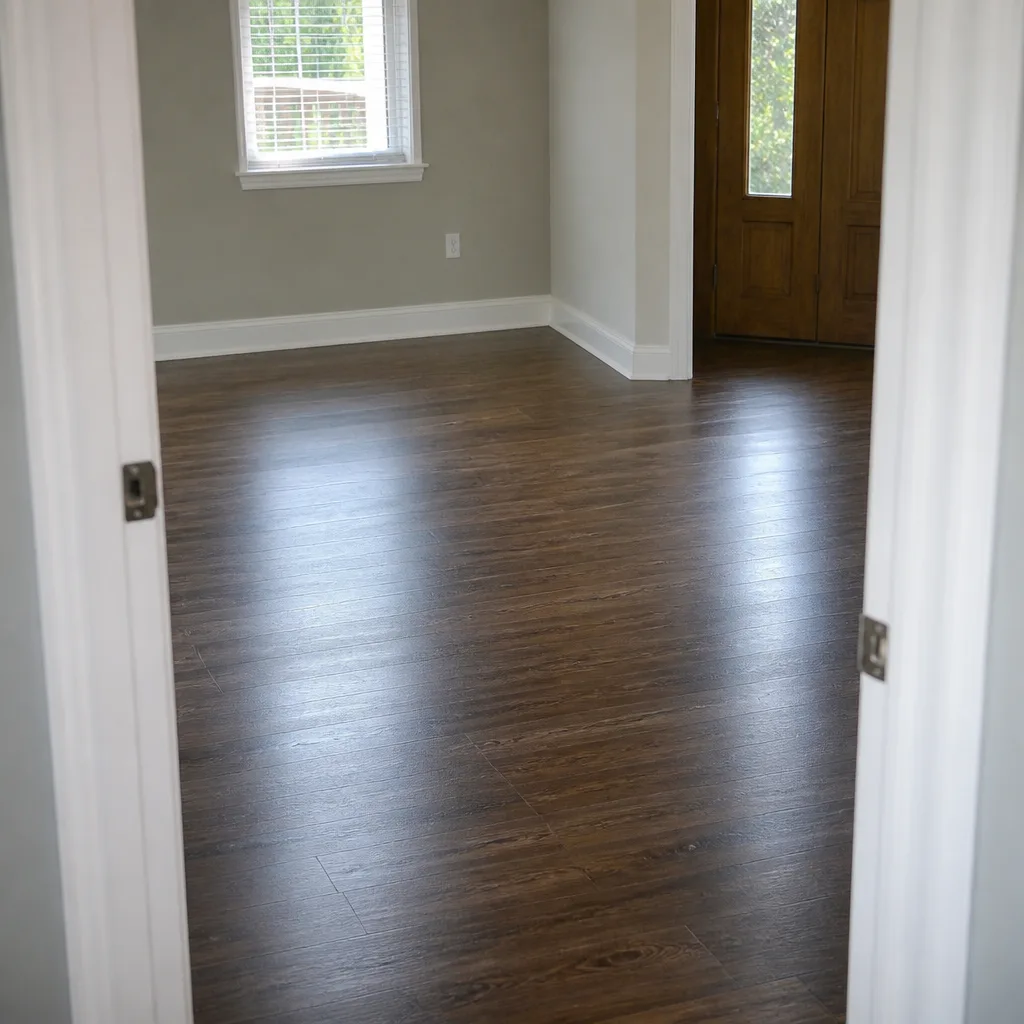
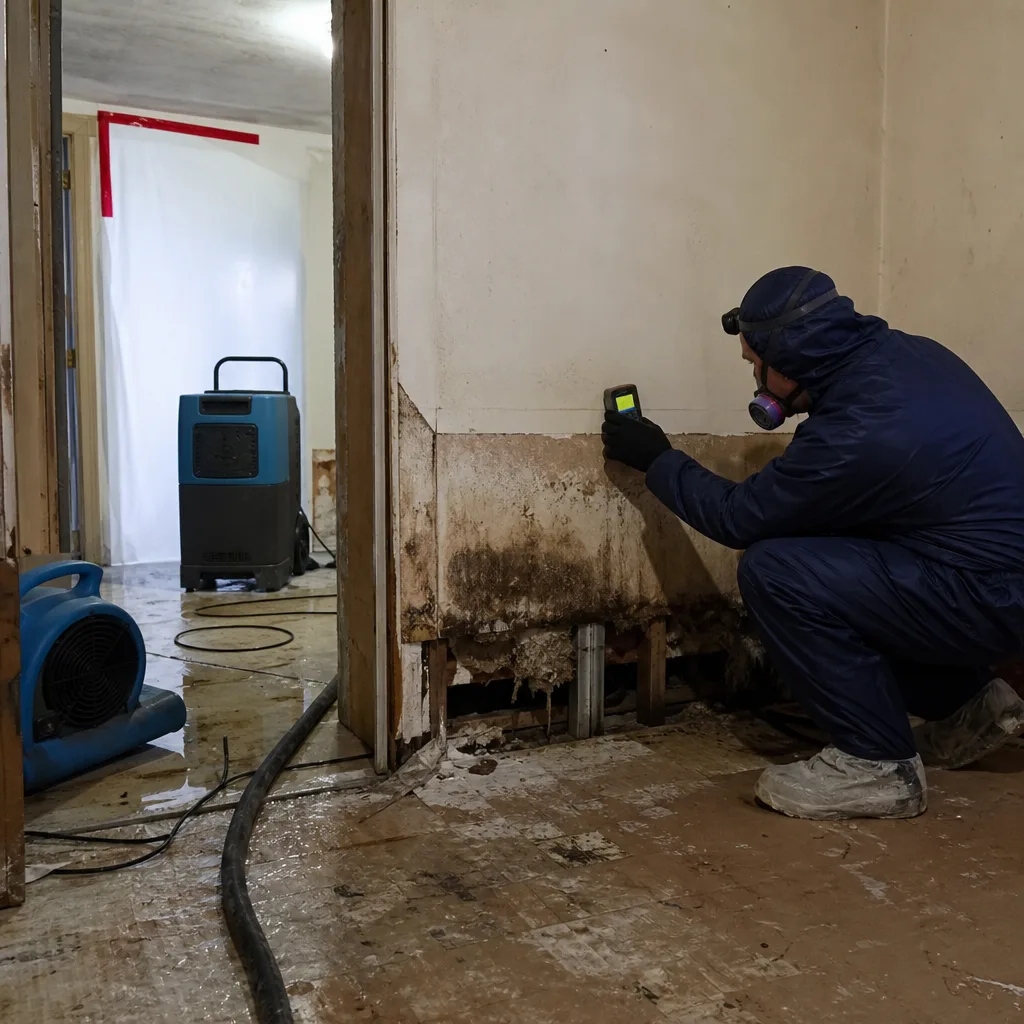 Before
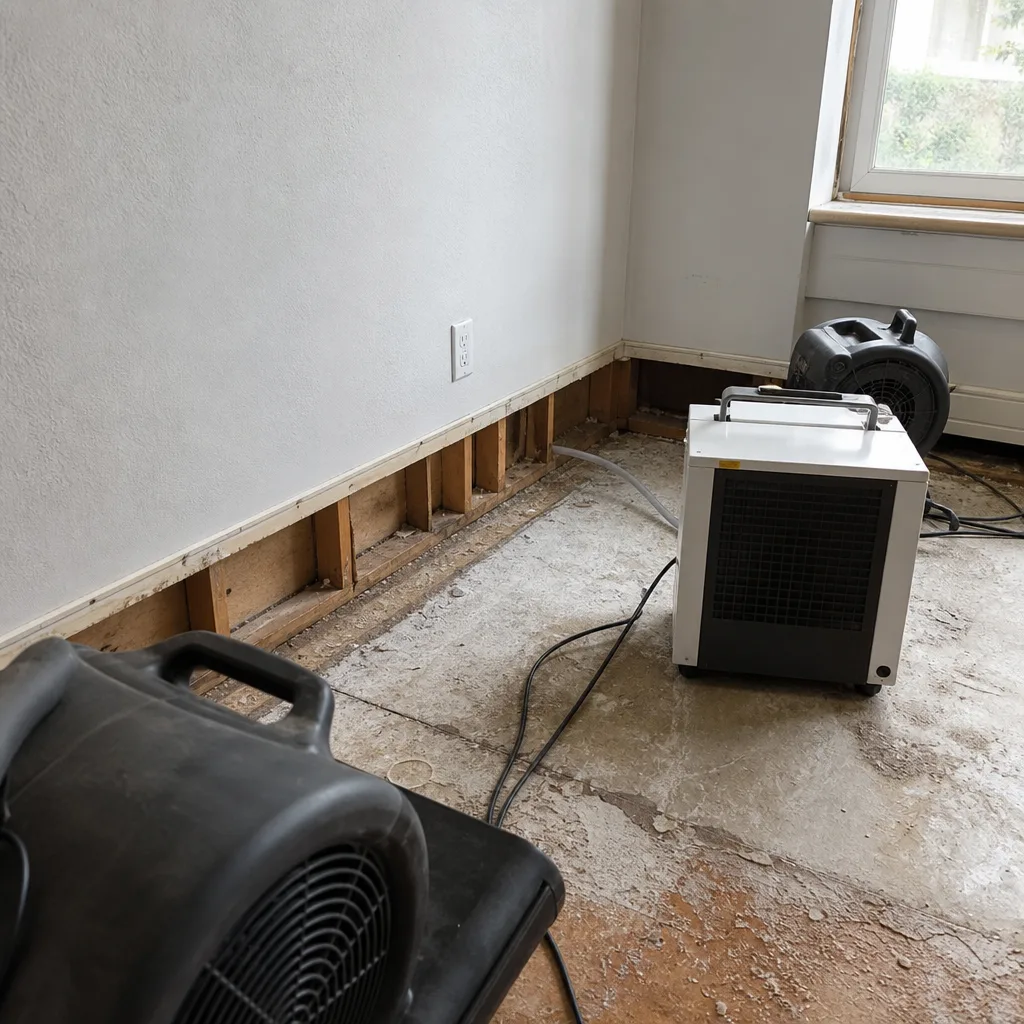 After
After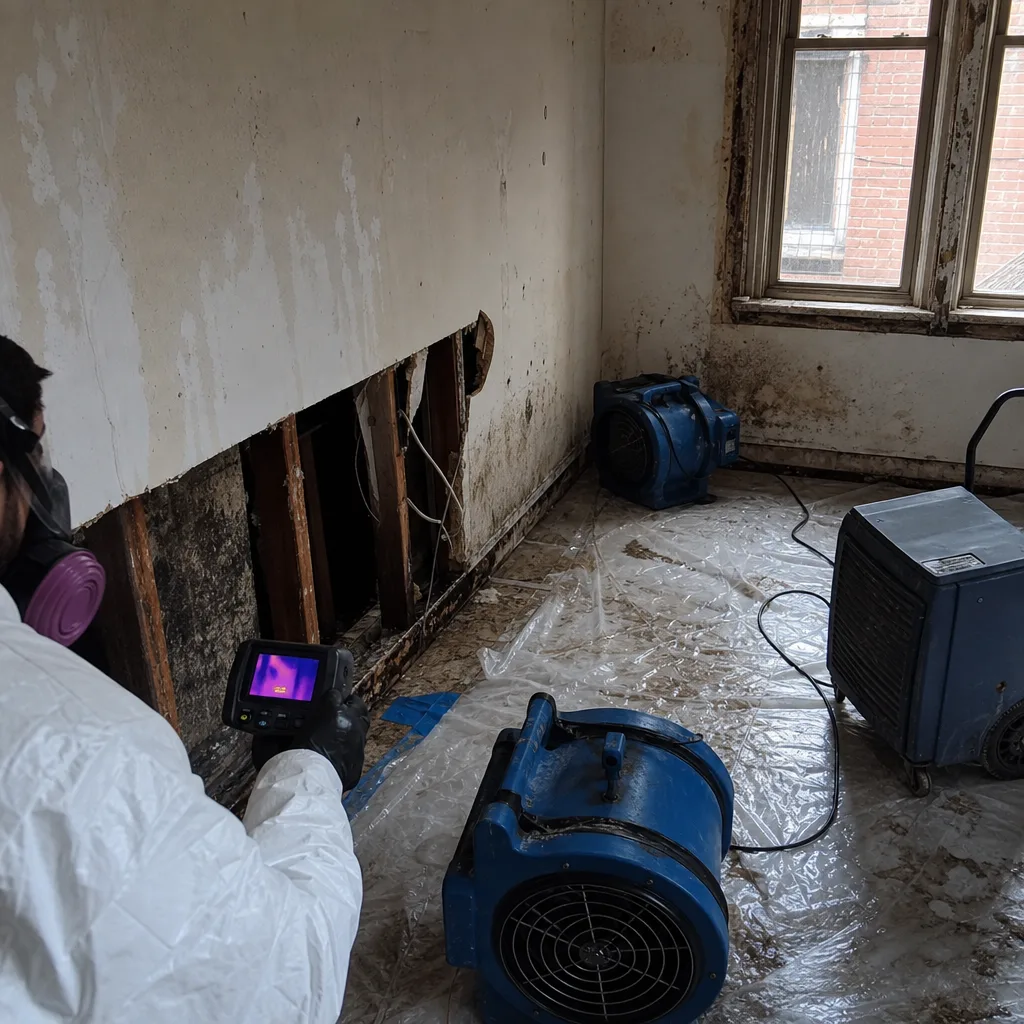 Before
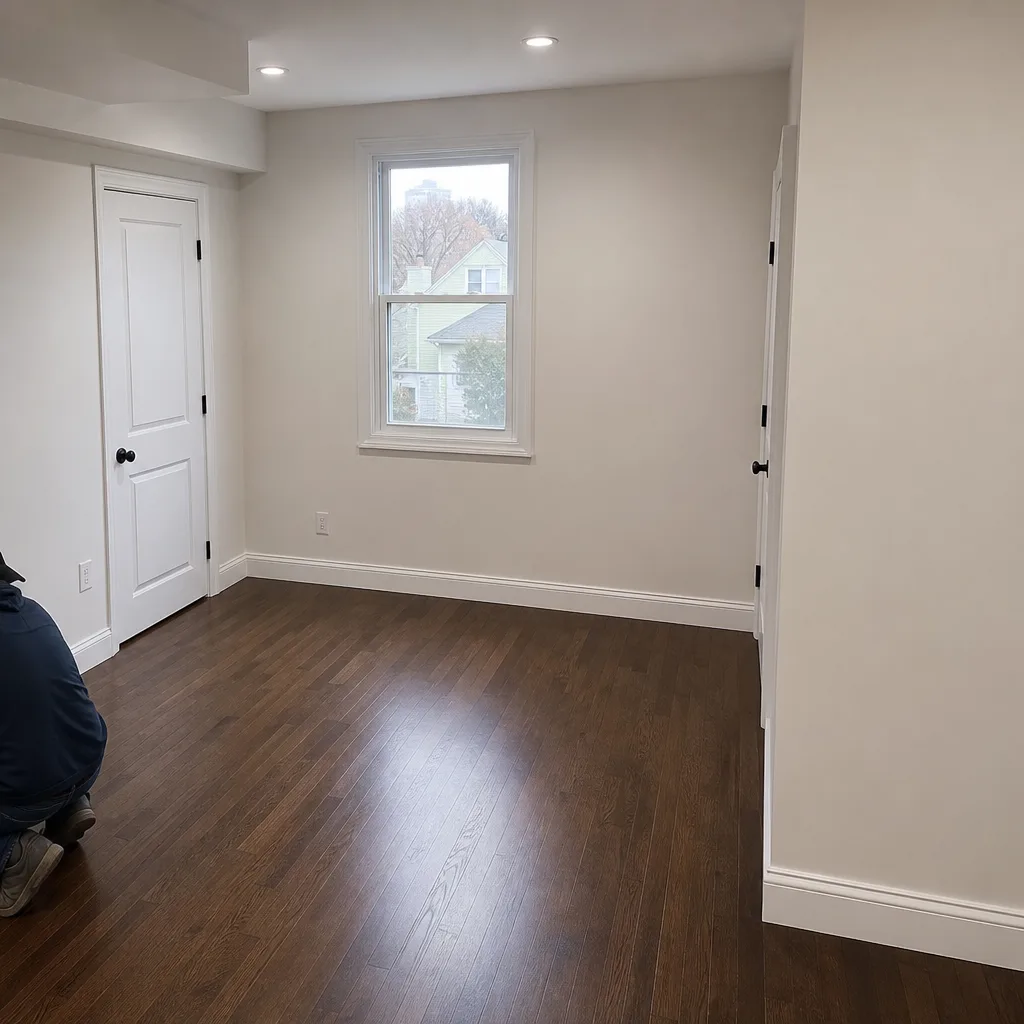 After
After24/7 Emergency Sanitization Services in Long Island City
Sanitization services in Long Island City typically run $275-$1,200 depending on square footage and contamination class, and our crews can be on-site within 45 minutes of your call. When you’re dealing with sewage backup, floodwater from the Newtown Creek watershed, or post-illness contamination in a converted loft, the first hour determines whether you’re facing a contained cleaning or a full Category 3 hazardous remediation. Call (518) 800-3751 and you’ll reach a live dispatcher, not a phone tree. We answer at two in the morning because Long Island City’s flood exposure doesn’t keep business hours.
What happens when you call
- 1
A real person answersNo phone trees - you reach a local pro.
- 2
You get an upfront price rangeHonest numbers before anyone is dispatched.
- 3
A background-checked tech heads outLicensed & insured, dispatched right away.
- 4
You approve before work beginsNothing starts until you say go.
Understanding Sanitization Services Severity in Long Island City Properties
Not all sanitization jobs carry the same risk profile. The IICRC categorizes water contamination into three classes: Category 1 (clean water from a supply line), Category 2 (gray water with biological or chemical contaminants), and Category 3 (black water containing sewage, pathogens, or industrial runoff). In Long Island City, that third category shows up more often than it should. Much of 11101 sits inside FEMA Flood Zone AE at the East River-Newtown Creek confluence. When storm surge or a sewer backflow event pushes water into ground-floor units and sub-grade mechanical rooms, that water frequently draws from the Newtown Creek Superfund corridor, one of the most contaminated urban waterways in the country. That means a seemingly routine water intrusion in Hunters Point often requires full Category 3 protocols: containment barriers, negative air pressure, antimicrobial treatment on porous surfaces, and hazardous-waste disposal of saturated materials. A contractor who skips that step leaves live pathogens in your slab. In a converted warehouse loft with open concrete floor plates, contaminated water migrates laterally under floating floors long before you see staining on the surface. Our Sanitization Services team moisture-maps every affected area, not just the visibly wet spots.
Why Long Island City Property Owners Choose Floodline Restoration Co.
- 45-minute response commitment: A crew is dispatched from our New York City metro office the moment your call ends, with a live ETA, not a vague window.
- 24/7 live answer: A real dispatcher picks up at all hours, every day, including holidays and the middle of a nor’easter. No hold music loops, no “leave a message.”
- IICRC-certified crews: Our technicians hold WRT (Water Damage Restoration), FSRT (Fire & Smoke Restoration), and AMRT (Applied Microbial Remediation) certifications, and they’re background-checked and uniformed.
- Free visual inspection: We document what we find before any work begins, with photos and a written scope you approve first.
- Direct insurance billing: We communicate with your adjuster, submit the documentation, and handle the paperwork so you don’t play messenger.
- One team, start to finish: The same crew that runs extraction also handles sanitization, drying, and any rebuild. No mid-job handoff to a subcontractor you’ve never met.
Our Sanitization Services Process
Inspection & Assessment
We arrive, walk the full affected area, and map moisture readings with thermal imaging and hygrometers. For Long Island City loft buildings, this includes checking open concrete floor plates for lateral water migration and inspecting rooftop HVAC curb penetrations where ponded water often enters.
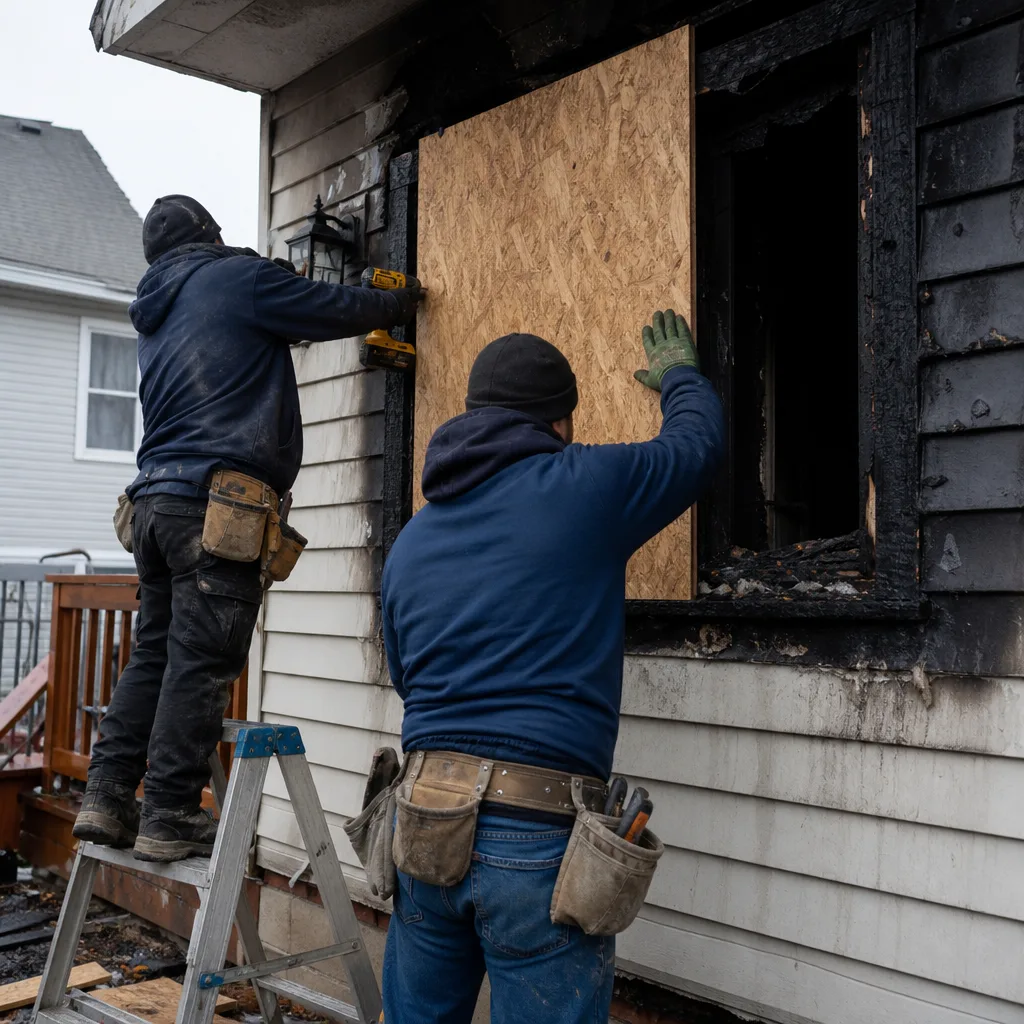
Extraction & Stabilization
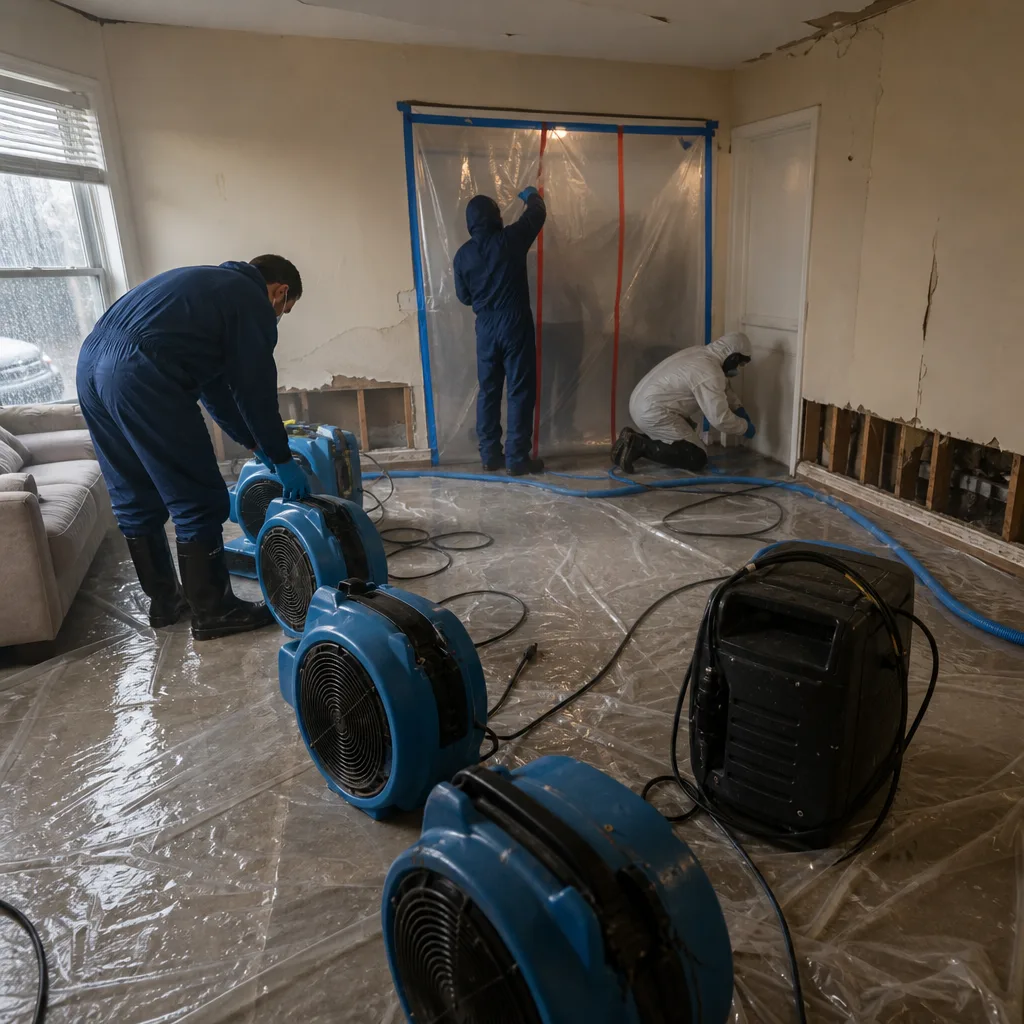
Standing water comes out first using professional-grade extraction equipment. In Category 3 situations common near the Newtown Creek corridor, we set full containment and negative air pressure before any demolition or treatment begins.
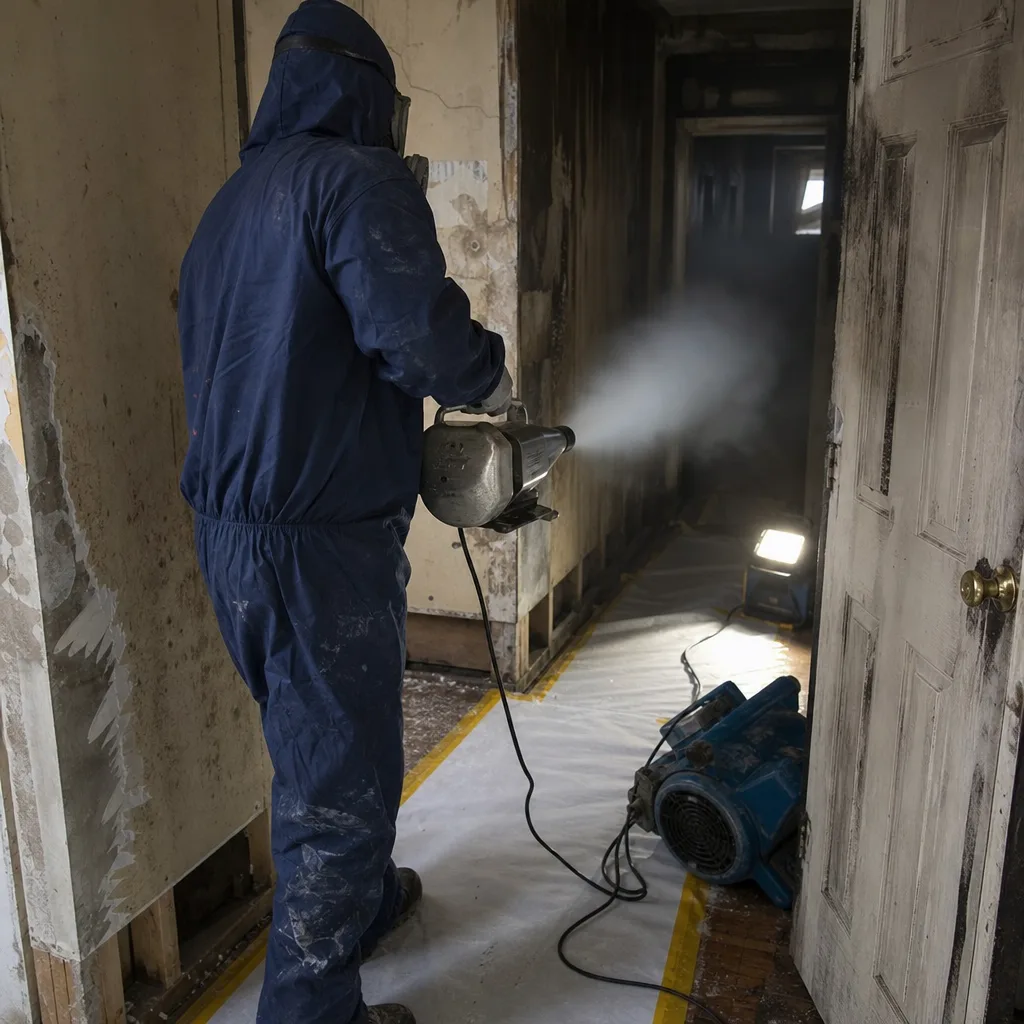
Drying & Dehumidification
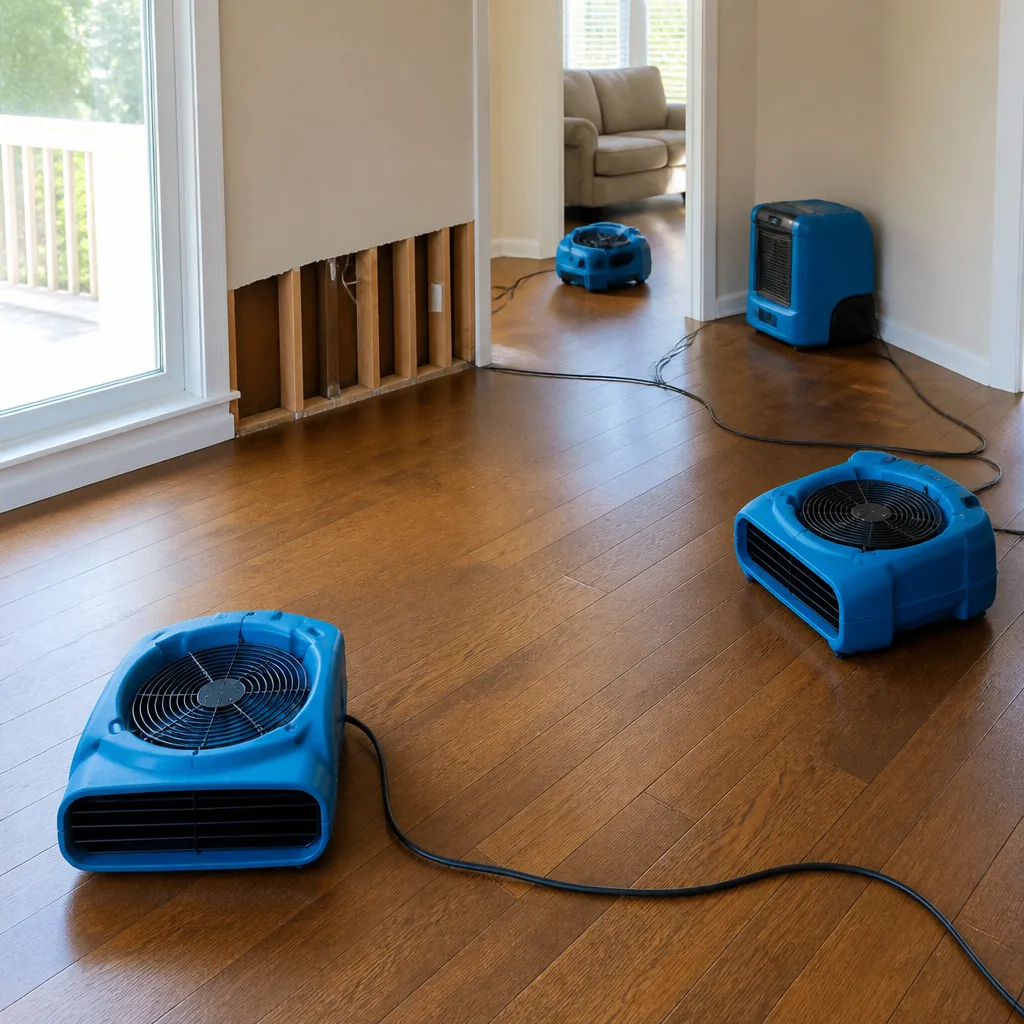
We place Dri-Eaz and Phoenix air movers and dehumidifiers strategically across the space, taking daily moisture readings until the dry standard is met. For concrete slabs in converted warehouses, this often means extended drying time, and we log every reading.
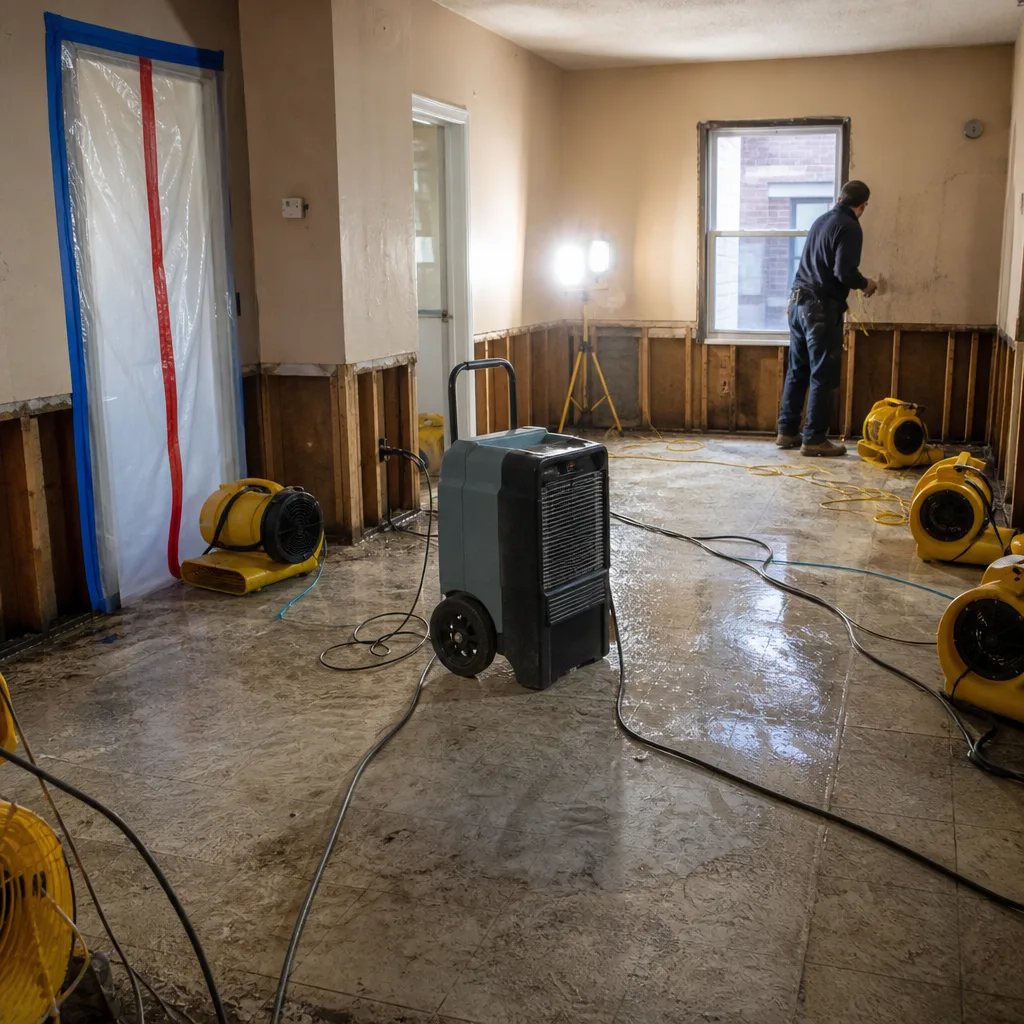
Cleaning & Sanitization
All affected surfaces receive antimicrobial treatment appropriate to the contamination class. Hard surfaces are cleaned and disinfected; porous materials that cannot be salvaged are removed and disposed of under hazardous-waste protocols when required.
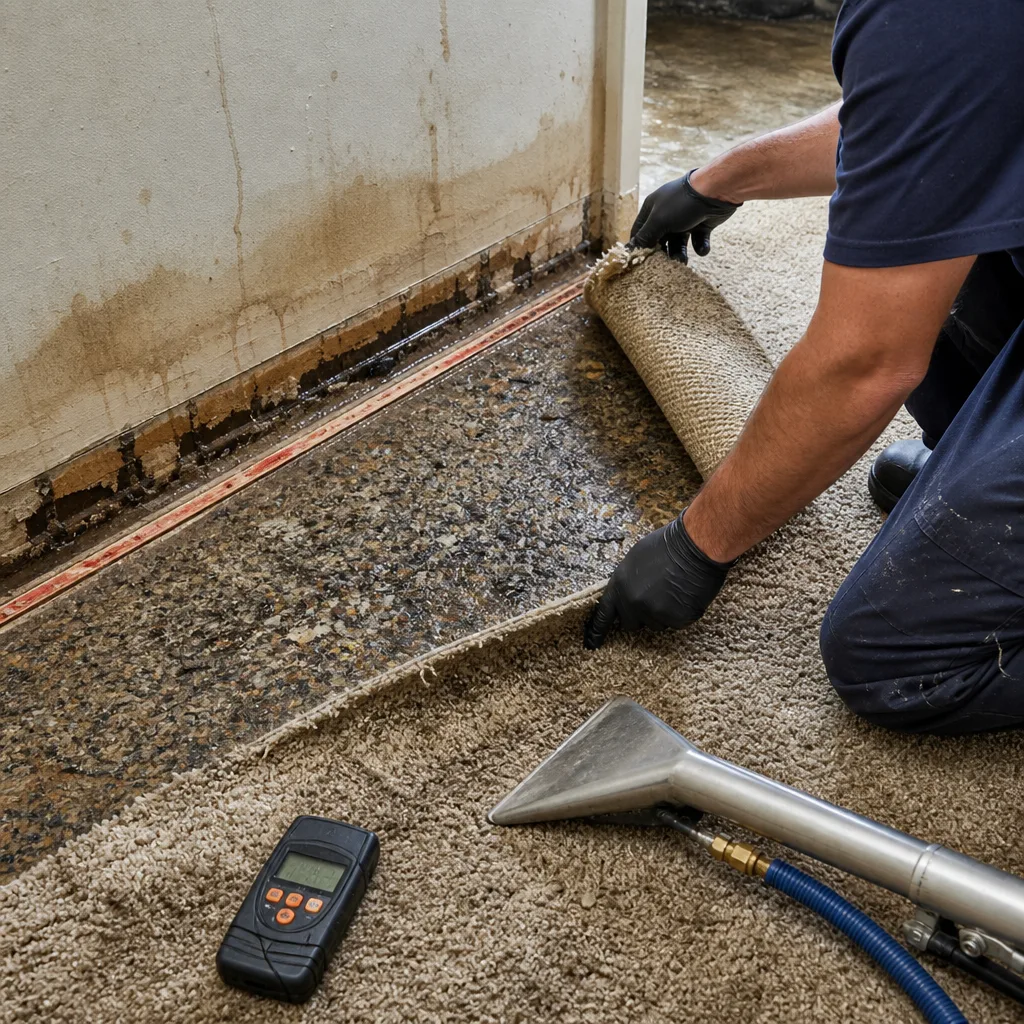
Specialty Treatment
For virus and bacteria decontamination, we use commercial-grade fogging with EPA-registered antimicrobial agents. For odor issues in Hunters Point lofts with chronic roof leaks, we deploy hydroxyl generators and targeted odor neutralization rather than masking agents.
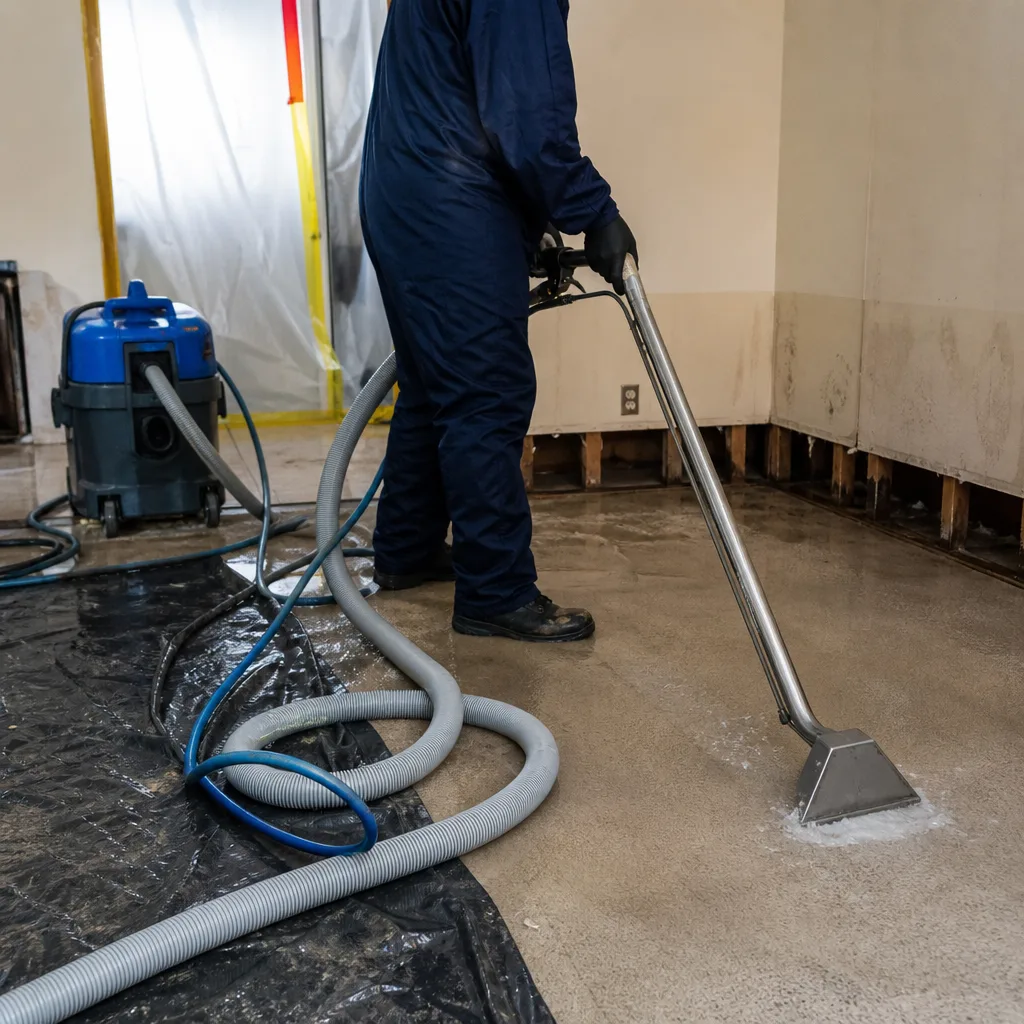
Repairs & Restoration
Once the space is dry and sanitized, we rebuild what was removed: drywall, flooring, trim, and any mechanical components. The final walkthrough includes your moisture log and a written record of every treatment applied.
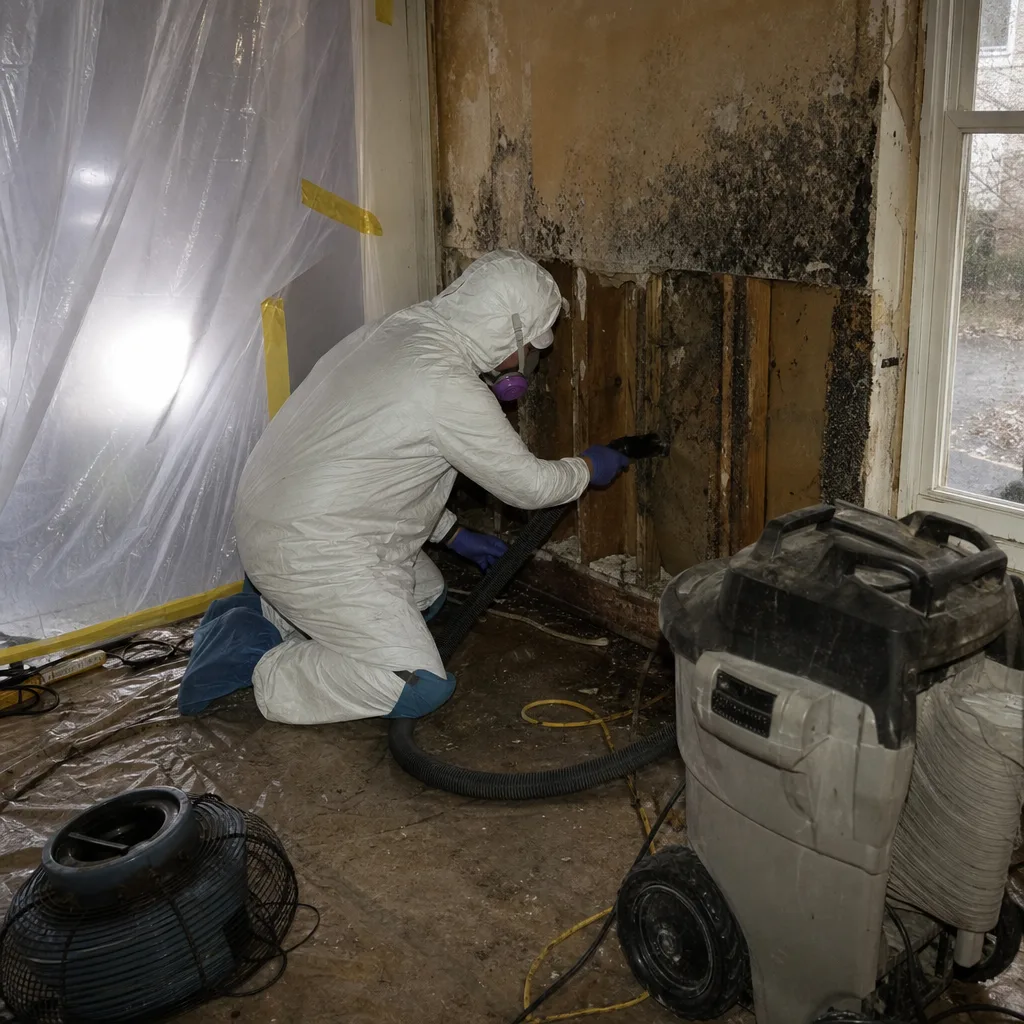
Need Emergency Sanitization Services in Long Island City Now?
Crews minutes away, answering live 24 hours a day. The sooner we start, the less it costs.
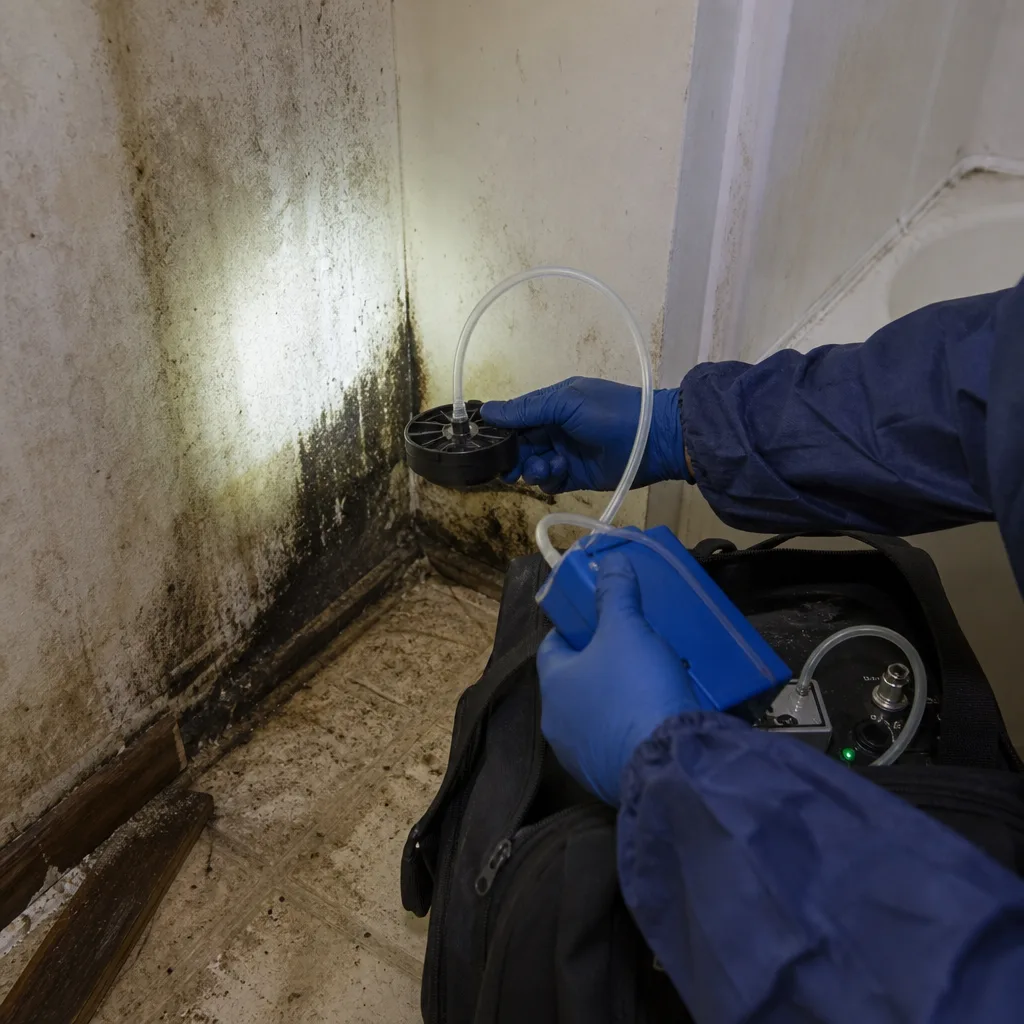
Working With Your Insurance Company
Insurance claims for sanitization work in Long Island City succeed or fail on documentation. Adjusters need to see that the contamination class was correctly identified, that containment protocols were followed, and that drying reached the standard before rebuild began. We’ve handled hundreds of claims involving Newtown Creek-adjacent floodwater and sewer backflow events, and we know what carriers require. From the first hour, we photograph everything, log every moisture reading, and produce a line-item scope that your adjuster can verify. You get a square deal, and we bill your carrier directly so you’re not carrying the cost while the claim processes. No surprises on your bill, and no arguing about what was done.
What We Provide Your Insurer
- Thorough documentation of the loss
- Photos of all damage, room by room
- Moisture readings and drying logs
- A detailed, line-item scope of work
- Direct coordination with your carrier
Built for Long Island City’s Loss Calendar
Long Island City’s sanitization needs follow a predictable seasonal rhythm, shaped by the neighborhood’s geography and building stock. January and February bring deep freezes that burst supply lines in pre-war brick warehouse conversions, flooding open floor plates before anyone notices. Spring thaw and heavy rain events push groundwater up through concrete slabs in Hunters Point basements and ground-floor units, often carrying contaminants from the surrounding fill and the Newtown Creek watershed. Summer brings sudden convective storms that overwhelm the neighborhood’s combined sewer system, triggering backflow events that push Category 3 water into sub-grade mechanical rooms. Fall nor’easters test flat membrane roofs on converted industrial buildings, where ponded water finds its way through parapet seams and HVAC curb penetrations, silently saturating ceiling cavities and reintroducing mold after a sanitization pass. In every season, the pattern is the same: the longer water sits, the higher the contamination class climbs. Our team plans for this calendar, and we’re never surprised by it.
Sanitization Services Across Long Island City’s Neighborhoods
Hunters Point’s converted warehouse lofts present the most complex sanitization challenges in the 11101 zip code. Open floor plates on concrete slabs allow contaminated water to migrate under floating floors and into adjacent units before visible staining appears, and our technicians routinely find Category 3 water that a previous contractor treated as Category 1. Along Vernon Boulevard, high-rise residential towers house their mechanical systems in flood-vulnerable lower floors; when storm surge or sewer backflow reaches those rooms, the equipment often requires full sanitization and sometimes complete replacement rather than standard drying. Court Square’s pre-war commercial buildings and residential lofts carry the same flat-roof ponding issues as the waterfront, with chronic slow leaks that feed persistent musty odors long after the original leak was patched. Up near Queens Plaza and the 11120 commercial corridor, restaurants and ground-floor retail spaces contend with grease-laden gray water and sewer line backups in older cast-iron plumbing, requiring sanitization protocols that account for both biological and chemical contaminants. A one-size-fits-all approach doesn’t work across these building types, and we don’t pretend it does.
Specialized Sanitization Services We Offer in Long Island City
Deep Disinfection
Full-surface antimicrobial treatment for homes and commercial spaces after contamination events. In Long Island City’s converted lofts, this means treating concrete slabs, exposed brick, and open ductwork, not just drywall and flooring. We use EPA-registered antimicrobials appropriate to the contamination class and the surface material, with special attention to the porous brick and concrete that characterize pre-war warehouse conversions.
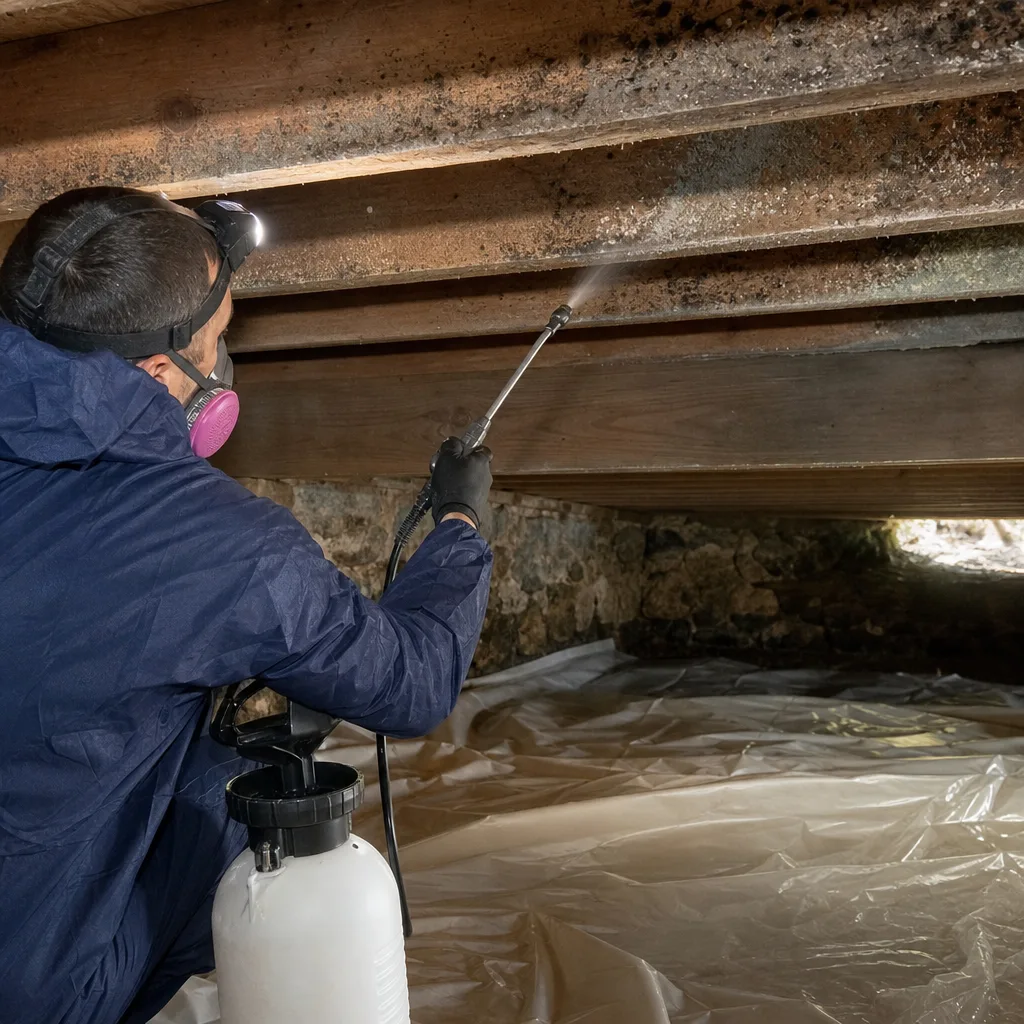
Virus & Bacteria Decontamination
Post-illness and outbreak response for residential units, co-op common areas, and commercial spaces throughout 11101 and 11109. We use commercial-grade fogging equipment to reach surfaces that hand-cleaning misses: inside duct runs, behind built-ins, across exposed ceiling joists. For converted loft buildings with shared hallways and elevator cabs, we can scope common-area decontamination in coordination with your co-op board or building management, with documentation they can share with residents.
Odor Neutralization
Chronic musty odor in a Hunters Point loft almost always traces back to a slow roof leak or an unresolved Category 3 event that wasn’t properly dried. Masking agents fail. We find the moisture source, remove what’s saturated, and run hydroxyl generators until the space passes a post-treatment sensor check. This service matters most in converted warehouse buildings where open floor plates allow moisture to hide for months before the odor becomes obvious.
Air Duct Sanitization
HVAC systems in Long Island City’s high-rise towers and converted lofts move contaminated air across entire floor plates. After a flood, sewer backflow, or fire, we inspect duct runs, sanitize accessible surfaces, and replace filters with appropriately rated media. In buildings with mechanical rooms that flooded during Hurricane Sandy, we coordinate duct sanitization with equipment replacement or repair so the system isn’t reintroducing contaminants the day after the space is cleared.
Commercial-Grade Fogging
For spaces that need whole-room decontamination, we use commercial fogging equipment with EPA-registered antimicrobial solutions. This is particularly effective in Long Island City’s open loft spaces where exposed brick, concrete, and high ceilings make hand-wiping impractical. Fogging reaches the crevices and surface pores that harbor bacteria and mold spores, and we follow manufacturer dwell-times and post-treatment ventilation protocols exactly.
Sanitization Services Costs in Long Island City, NY
Sanitization pricing in Long Island City runs higher than the Queens average, and the reason is the building stock. A standard residential disinfection in a traditional rowhouse might run $275-$450. But a converted warehouse loft with open floor plates, Category 3 water from a Newtown Creek-backflow event, and hazardous-waste disposal requirements can run $800-$1,200 for a single affected zone, and a full floor plate with multiple units can push higher. Air duct sanitization typically adds $200-$400 depending on system size and accessibility. Commercial-grade fogging runs $0.35-$0.65 per square foot for most Long Island City spaces. What moves the number: contamination class, square footage, whether containment is required, and whether materials need hazardous-waste disposal. We give you a written scope before work starts, so you know the number and can approve it. We also bill your carrier directly when the loss is covered, and our free visual inspection gives you a firm price path before you commit to anything.
We Also Serve Cities Near Long Island City
Floodline Restoration Co. provides Sanitization Services in Long Island City and the surrounding area. We also serve Astoria, Maspeth, Jackson Heights, and East Elmhurst, with the same 45-minute response commitment and live 24/7 dispatch.
Long Island City Sanitization Services Questions, Answered
Does sanitizing a Long Island City converted loft after a flood require different protocols than a traditional Queens rowhouse?
Yes. Converted warehouse lofts in Hunters Point and along the waterfront sit on open concrete floor plates where contaminated water migrates laterally under floating floors, often without visible surface staining. Those buildings also sit in FEMA Flood Zone AE, so floodwater frequently carries Newtown Creek Superfund contaminants. Standard rowhouse protocols treat Category 1 or 2 water with surface cleaning; Long Island City loft work often requires full Category 3 containment, negative air pressure, and antimicrobial treatment on porous concrete and brick. Call (518) 800-3751 for a free inspection if you suspect your loft has hidden contamination.
Can you sanitize a high-rise mechanical room in 11101 that flooded during Hurricane Sandy without replacing the equipment?
Sometimes, but not always. If equipment was submerged in Category 3 water from the East River or Newtown Creek watershed, electrical components, insulation, and internal ductwork may be unsalvageable. Our technicians can assess each piece individually, document what can be sanitized versus what requires replacement, and provide that documentation to your insurer. A written assessment from a certified crew gives your adjuster what they need to approve the right scope the first time. Contact Floodline Restoration Co. at (518) 800-3751 for a technical evaluation.
How do you handle virus and bacteria decontamination in a Long Island City loft with open floor plates?
We set containment zones at natural barriers like stairwells and elevator cores, then run XPOWER air movers and HEPA filtration to create negative pressure before fogging begins. Commercial-grade fogging with EPA-registered antimicrobials reaches exposed ceiling joists, duct runs, and the porous brick and concrete surfaces typical of pre-war warehouse conversions. Post-treatment, we verify humidity and particulate levels and hand you a written treatment log.
What is the biggest sanitization risk in a pre-war brick warehouse conversion near Newtown Creek?
Misclassifying the water. A basement or ground-floor intrusion in buildings near the Newtown Creek Superfund corridor often contains industrial contaminants, sewage, or both. Treating that as clean water means you’re leaving live pathogens in your slab and behind your walls. The safe call is Category 3 protocols with full containment and hazardous-waste disposal of saturated materials, which is exactly how our trained crews handle every Newtown Creek-adjacent job.
Can sanitization fix a chronic musty odor in a Hunters Point loft after a slow roof leak?
Only if the moisture source is found and fixed first. In Hunters Point loft buildings, that usually means inspecting rooftop HVAC curb penetrations and parapet-to-membrane seams on flat membrane roofs, where ponded water enters ceiling cavities and saturates insulation over months. We locate the leak, remove saturated material, sanitize the cavity, and then run hydroxyl generators to eliminate the odor at the source. Sanitizing without fixing the roof just buys you a few weeks.
How fast can someone actually get here?
Our commitment is a 45-minute response to any Long Island City address in 11101, 11109, or 11120. A live dispatcher answers your call, confirms your address, and gets a uniformed, background-checked crew moving immediately. For sewage backflow and Category 3 events, that speed matters: the longer contaminated water sits, the more materials require removal and disposal. Call (518) 800-3751 now, and a real person picks up.
Will my insurance cover sanitization after a flood or sewer backup in Long Island City?
Most Long Island City homeowner policies cover sanitization when the cause is a covered peril, and sewer backup coverage is often available as an add-on. Flood insurance through FEMA’s NFIP is a separate policy, and coverage for flood-related sanitization depends on your specific policy. We handle the documentation and communicate directly with your adjuster, so you’re not left reconstructing what happened from memory. Our written scope and photo documentation give your carrier everything they need to process the claim.
What should I do in the first 30 minutes after a sewage backup or flood in my Long Island City home?
Shut off power to affected areas if it’s safe to do so, stop using any plumbing fixtures, and keep people and pets out of the water. Do not attempt to clean up sewage or superfund-adjacent floodwater yourself; that water carries pathogens and industrial contaminants that require proper PPE and containment. Call Floodline Restoration Co. at (518) 800-3751 immediately. A live dispatcher answers, and a certified crew reaches you within 45 minutes.
Serving Long Island City, NY - Our Local Coverage Area
We’re based in the Long Island City area and know this community well. Use the map below to see our service coverage - if you’re nearby, we can almost certainly help.
Your Long Island City Sanitization Crew, Led by Curt Bowman
Floodline Restoration Co. was founded in 2010 by Curt Bowman, built around a dispatch board rather than a sales desk. The idea was simple: answer the phone with a real person, show up when we say, do the work right, and hand the homeowner a written guarantee that we stand behind. That guarantee is our 90-Day Done Right Promise, the Keystone Standard, and it applies to every sanitization job we complete in Long Island City. If it’s not done right, we make it right. No paperwork battles, no arguing. We’re proud to serve this neighborhood, from the converted lofts of Hunters Point to the high-rises along Vernon Boulevard, and we plan to be here in thirty years, answering the phone the same way. Our current offers apply to every Long Island City job: $50 Off Any Repair Over $250, the $89 Seasonal Tune-Up, and a Senior & Veteran 5% Discount, always. Call (518) 800-3751 for a free estimate, and you’ll speak to a person who knows this neighborhood’s buildings and this neighborhood’s water.
Written by Curt Bowman, Owner at Floodline Restoration Co., serving Long Island City with certified sanitization and restoration crews.
Why Long Island City Chooses Floodline Restoration Co.
We set the standard for sanitization services in Long Island City.
Documented for Your Claim
Every job is photographed before, during and after, with moisture logs where they apply. We hand the full file to your adjuster and bill your insurance directly - you are never the one relaying it.
Licensed & Insured
Fully certified technicians who meet all local and state licensing requirements.
Upfront Pricing
No hidden fees, no surprises. You approve the price before any work begins.
Guaranteed Work
Every repair and installation is backed by our workmanship warranty and satisfaction guarantee.
How It Works in Long Island City
Getting your sanitization services handled is simple and fast.
Call or Request a Free Estimate
Tell us about your sanitization services needs and we provide an upfront, transparent quote - no obligation, no hidden fees.
Licensed Technician Dispatched
A background-checked, certified technician arrives in Long Island City - typically within 30-60 minutes, with parts stocked on the truck.
Problem Solved, Guaranteed
We complete the job to your full satisfaction, backed by our warranty and 100% satisfaction guarantee.
What happens when you call
- 1A real person answersNo phone trees - talk to a local sanitization services pro.
- 2You get an upfront price rangeHonest numbers before anyone is dispatched. No surprises.
- 3We come out and measureLicensed & insured, at a time that suits you - the visit and the quote are both free.
- 4You get the price in writingLine-itemed, yours to keep, and nothing starts until you say go.
What Long Island City Customers Say
Trusted by homeowners across Long Island City and surrounding areas.
"We had a musty smell in the hall closet for months. He tested first, found the leak inside the wall, sealed the area off with plastic before opening anything, and put the whole scope in writing before asking for a signature."
"Another company told me the whole attic needed mold remediation at a terrifying price. These guys tested, showed me it was surface growth on one sheet of plywood, and charged me for a cleaning instead. That kind of honesty buys a customer for life."
"Second property they have dried out for us. Same process both times, meter readings logged on every visit and the log handed over at the end. Our adjuster said it was the cleanest file he had seen all year."
Our Work in Long Island City
A look at recent damage restoration projects across Long Island City and surrounding areas.
Ready for Sanitization Services in Long Island City?
Call now for a free estimate - or request one below. Licensed, insured, and here with fast after-hours help in Long Island City.
(518) 800-3751Request a Free Estimate in Long Island City
Tell us about your sanitization services needs - we'll respond within the hour.