
Free visual inspection and a written scope of work before any mitigation begins - photos, moisture readings, and drying logs go in your claim file
The scope we write is the scope we bill. Anything new gets shown to you, in writing, before we touch it.
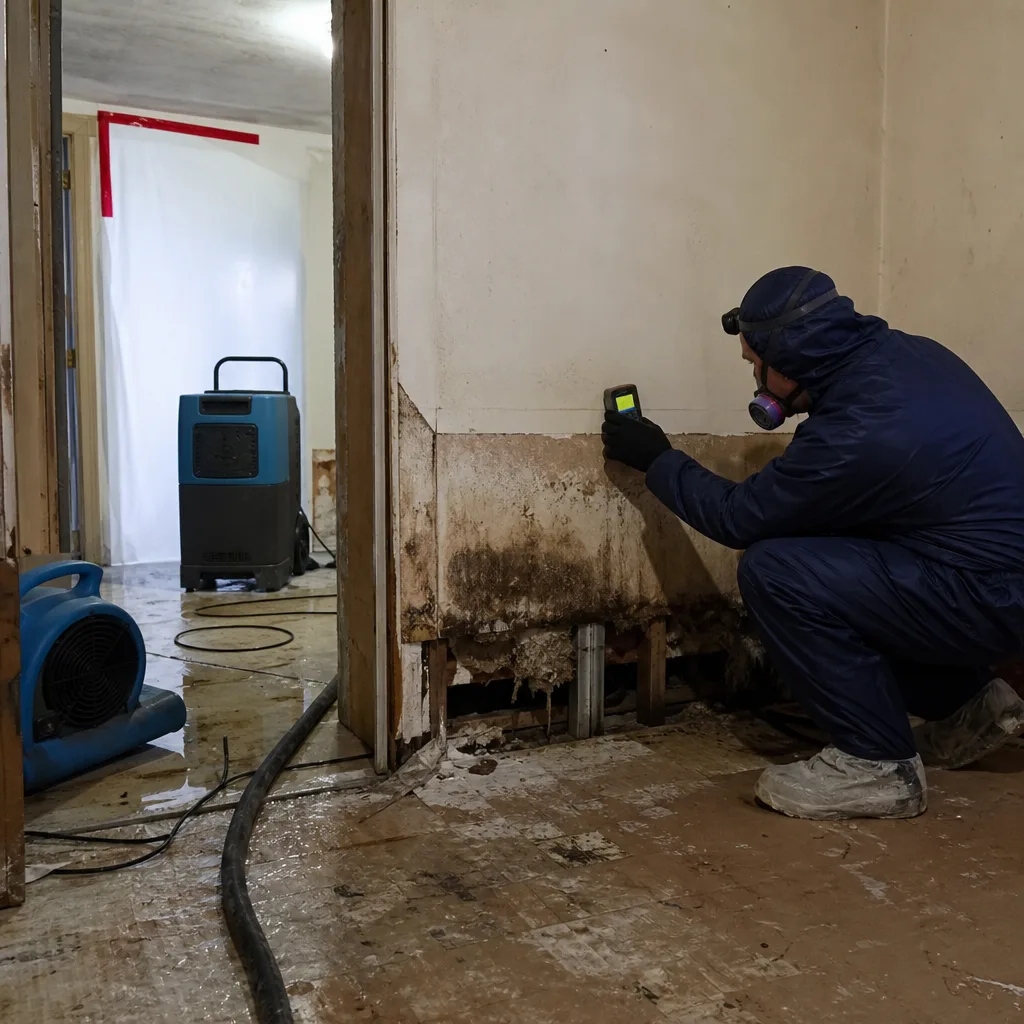 Before
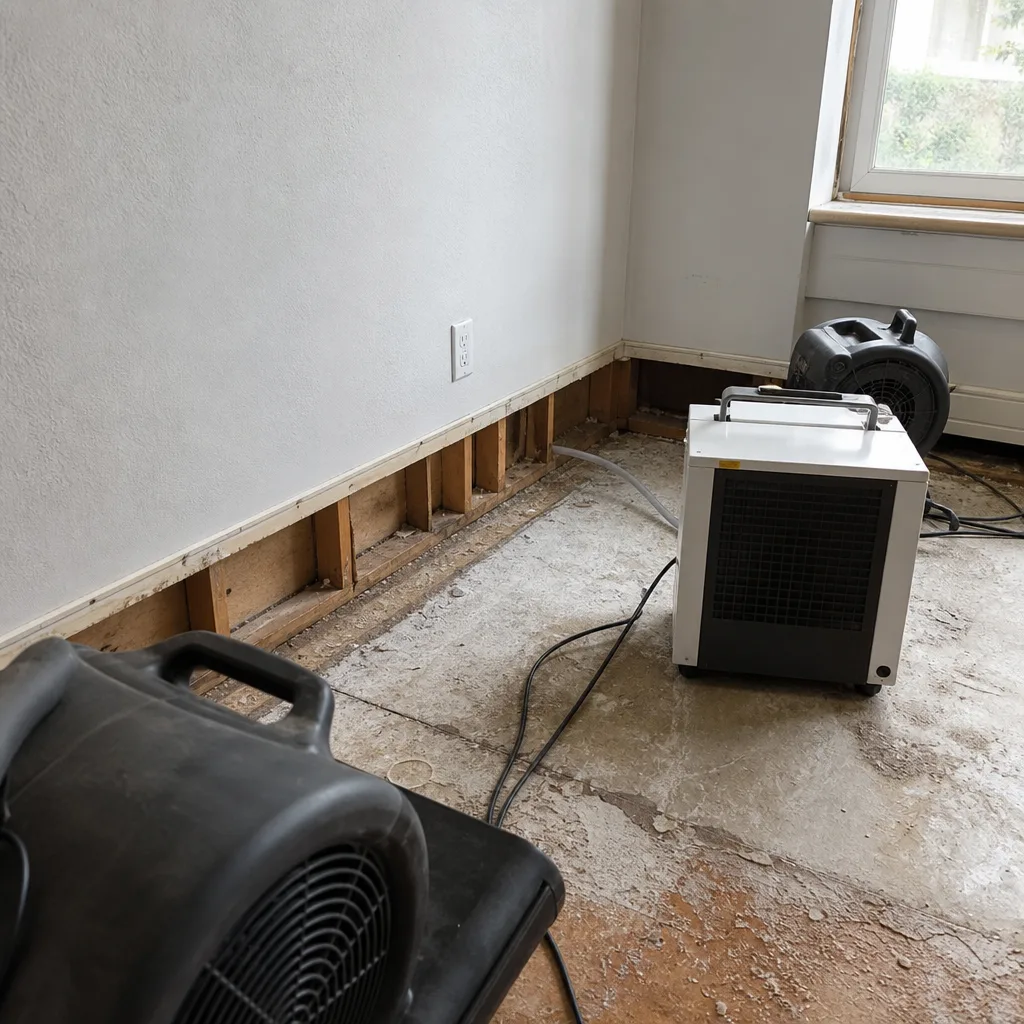 After
After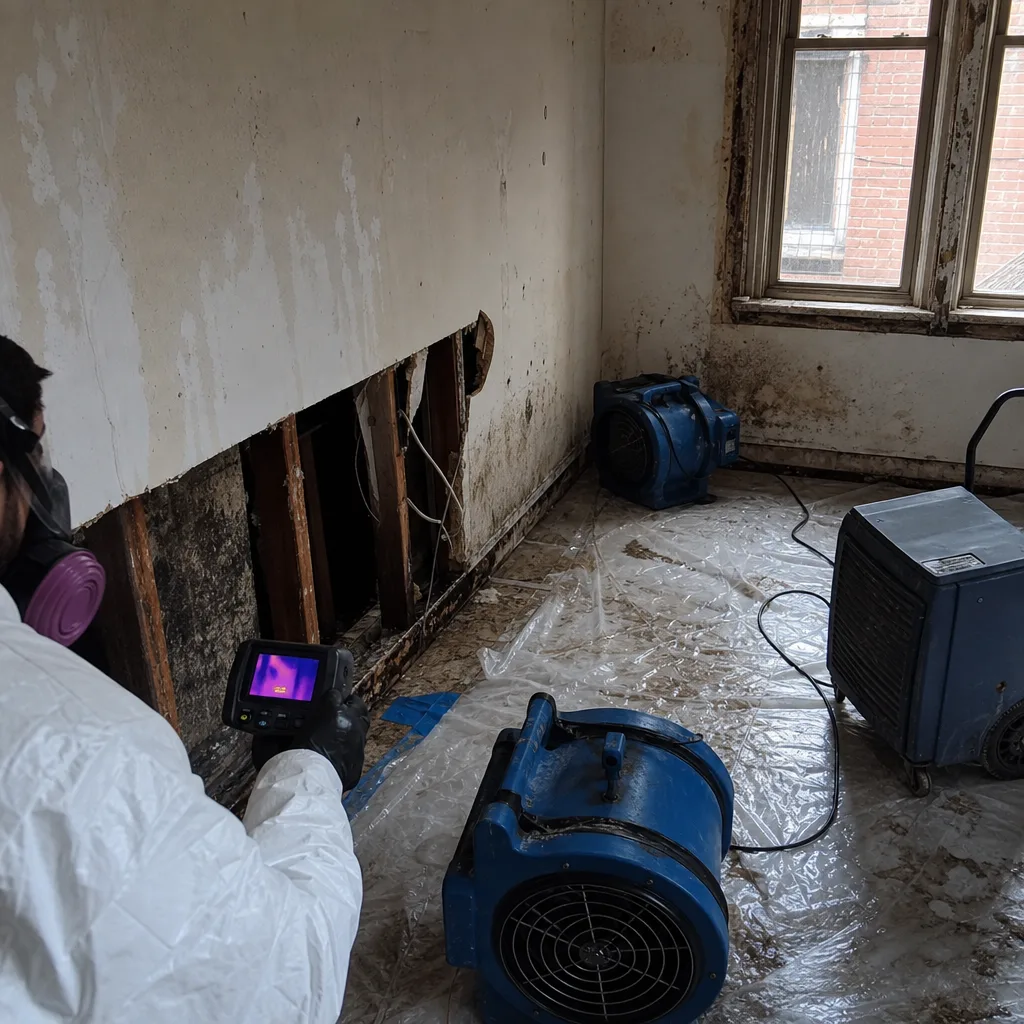 Before
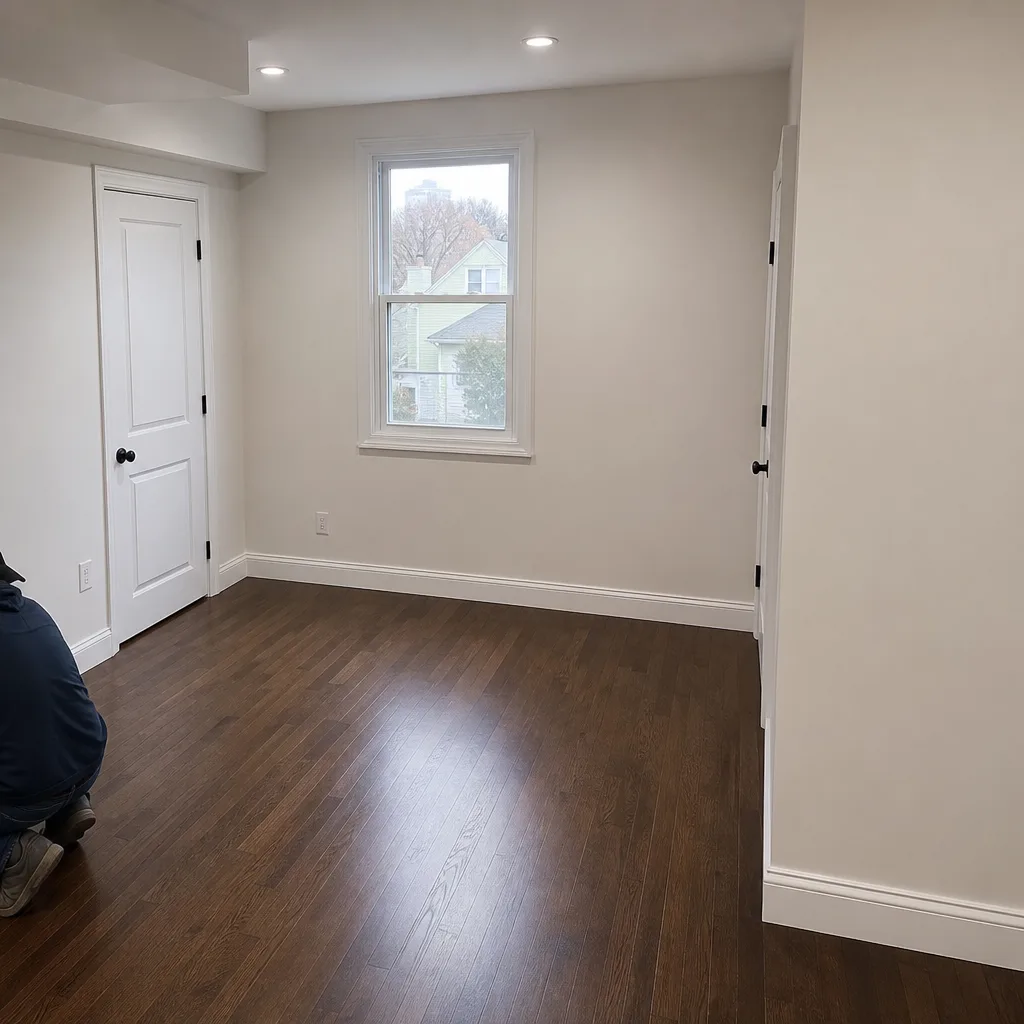 After
After24/7 Emergency Fire & Smoke Damage Restoration in Greenpoint
A fire in a Greenpoint tenement or row house leaves behind a specific kind of damage: soot pressed into original plaster, smoke migrating through shared party walls, and water from the fire department pooling in a basement that sits above a petroleum plume most neighborhoods never have to think about. Fire and smoke restoration in Greenpoint typically runs $2,800-$7,500 for a contained kitchen fire in a 3-5 story walk-up, and full structural fire repair with hazmat water classification runs higher. Our crews reach Greenpoint within 45 minutes, run a free visual inspection, and start stabilizing the scene on the same visit. Call (518) 800-3751 any hour, day or night. A live dispatcher answers, not a recording.
Understanding Fire & Smoke Damage Restoration Severity in Greenpoint Properties
Fire damage restoration in this neighborhood is rarely a simple smoke-and-char job. Most Greenpoint buildings are brick masonry tenements and row houses built between the 1880s and 1920s, with original plaster walls that wick moisture fast, finished or semi-finished basements that sit below the water table, and widespread lead paint and asbestos in the older construction. When a fire gets knocked down with water, that water drains through ash, charred building materials, and whatever else burned, then pools against floors and walls that are already dealing with chronic groundwater seepage. Soot residue in Greenpoint properties tends to be protein-based from kitchen fires or synthetic-based from burning finishes and wiring; synthetic soot smears easily and spreads through air returns, while protein soot clings to plaster and requires aggressive chemical and mechanical cleaning. Smoke migration through shared party walls in attached row houses means the odor reaches apartments that never saw flame.
The severity conversation changes fast when the suppression water tests positive for petroleum. Because Greenpoint sits atop an estimated 17-30 million gallons of oil in the soil and groundwater beneath the neighborhood, what looks like a standard fire suppression water loss can escalate to a Category 3, hazmat classification before drying equipment ever gets staged. We test, we classify, and we set the sequence of work accordingly. That’s the difference between a restoration job that holds and one that keeps causing problems.
Why Greenpoint Property Owners Choose Floodline Restoration Co.
- 45-minute response commitment to the Greenpoint area, with crews dispatched from the New York City office the moment you call.
- 24/7 live answer, every time. A real person picks up at 2 a.m. No automated prompts, no message banks.
- IICRC-certified crews trained to WRT and FSRT standards, plus IFA and RIA protocols for odor and contents work.
- Free visual inspection before any work begins, so you see the scope in writing before we start.
- Direct insurance billing. We coordinate with your adjuster and carrier, and you’re never the messenger.
- One team from first response to rebuild. Floodline Restoration Co. does not hand you off mid-job to an inherited crew.
Our Fire & Smoke Damage Restoration Process
Inspection & Assessment
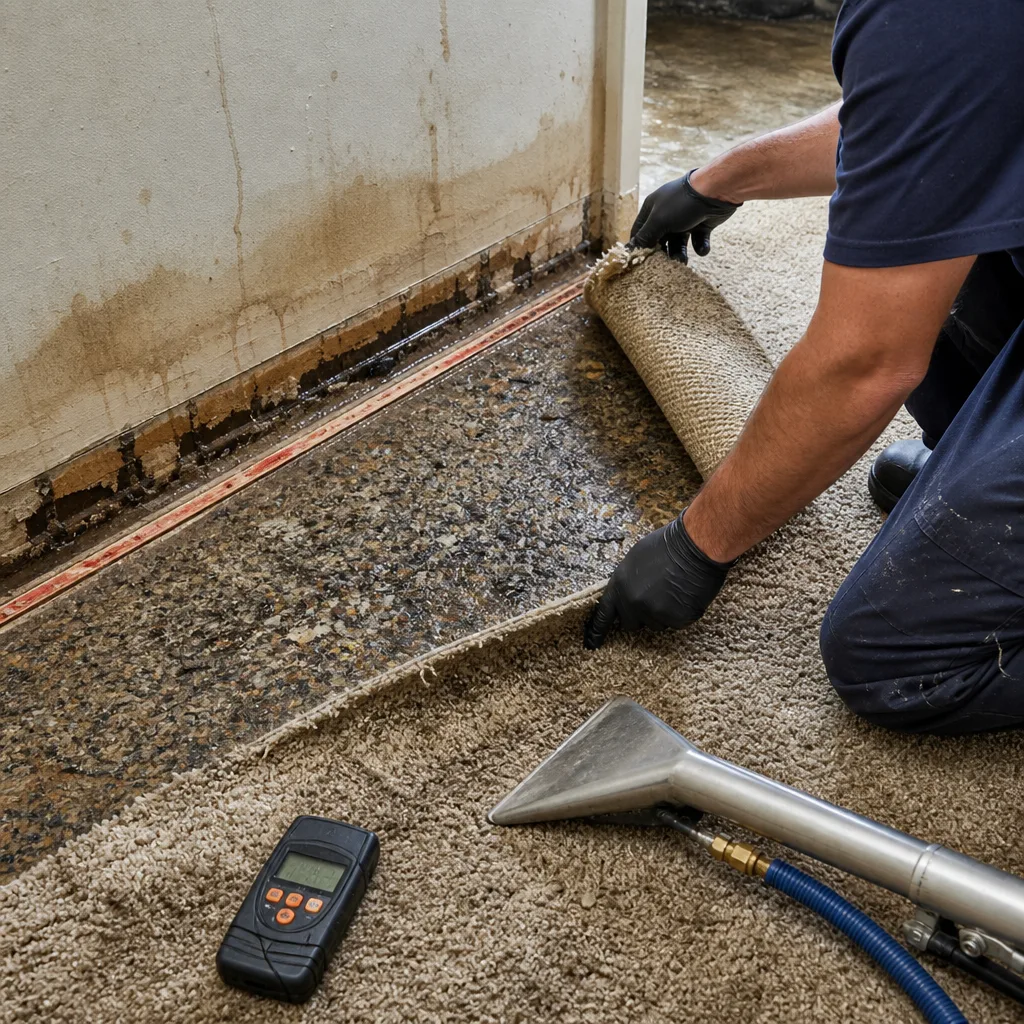
We walk the property room by room, photograph everything, and test standing water for petroleum before we classify the loss. In Greenpoint, that test is non-negotiable. We also check shared party walls for smoke migration and map soot residue type across surfaces.
Extraction & Stabilization
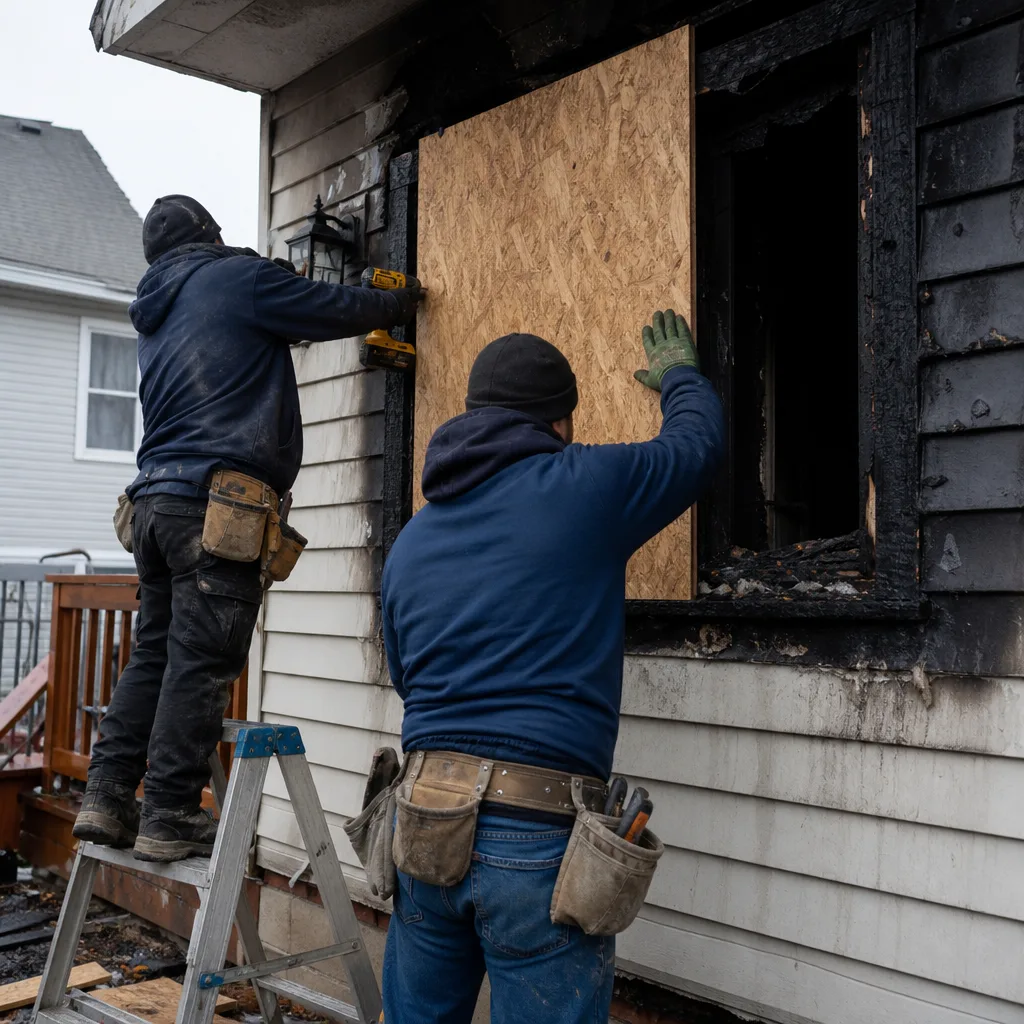
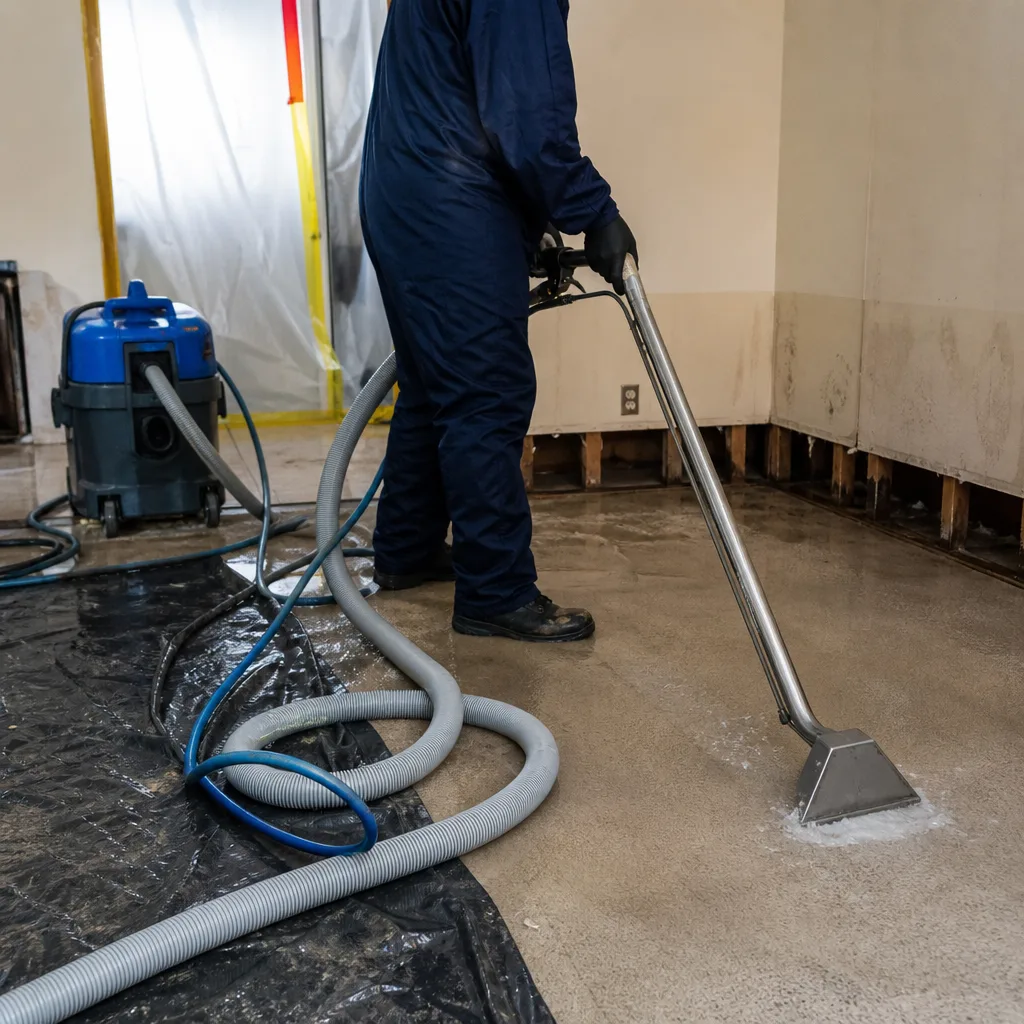
Standing water gets pumped and disposed of according to its classification. If petroleum is present, we stage containment and coordinate with DEP before anything else moves. Emergency board-up and tarping happen the same visit when the structure is open.
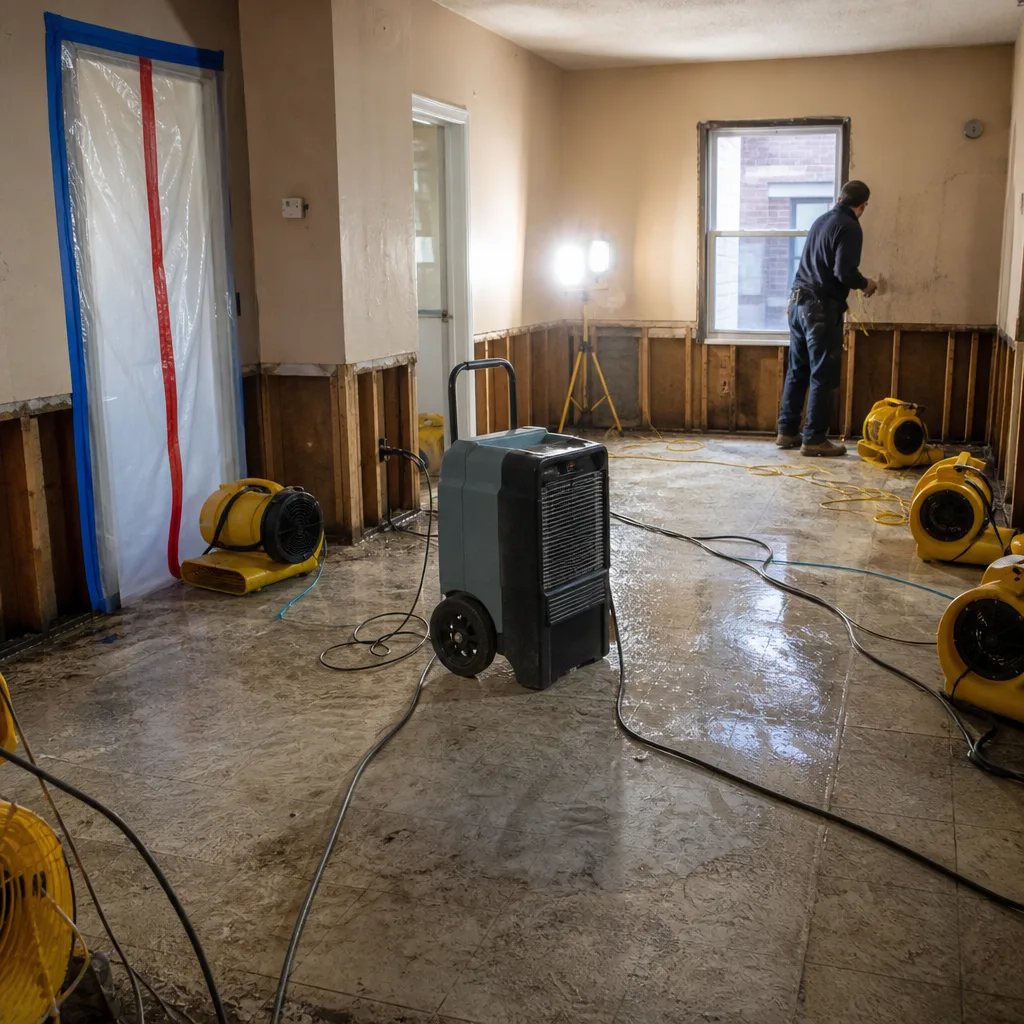
Drying & Dehumidification
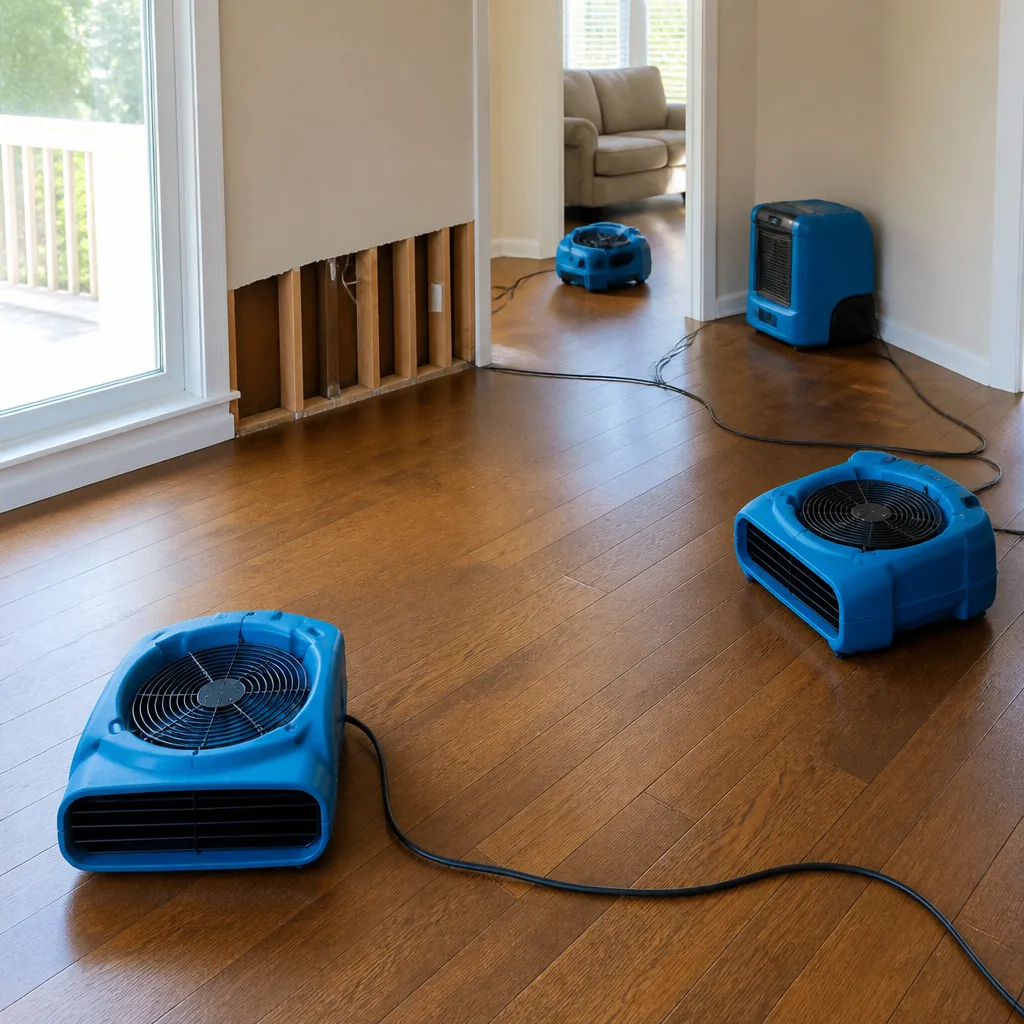
We use Dri-Eaz dehumidifiers and Phoenix air movers with daily moisture readings logged until the dry standard is met. In old plaster walls, we map moisture patient by patient and inside and outside wall cavities, because those walls hold water and hide it well.
Cleaning & Sanitization
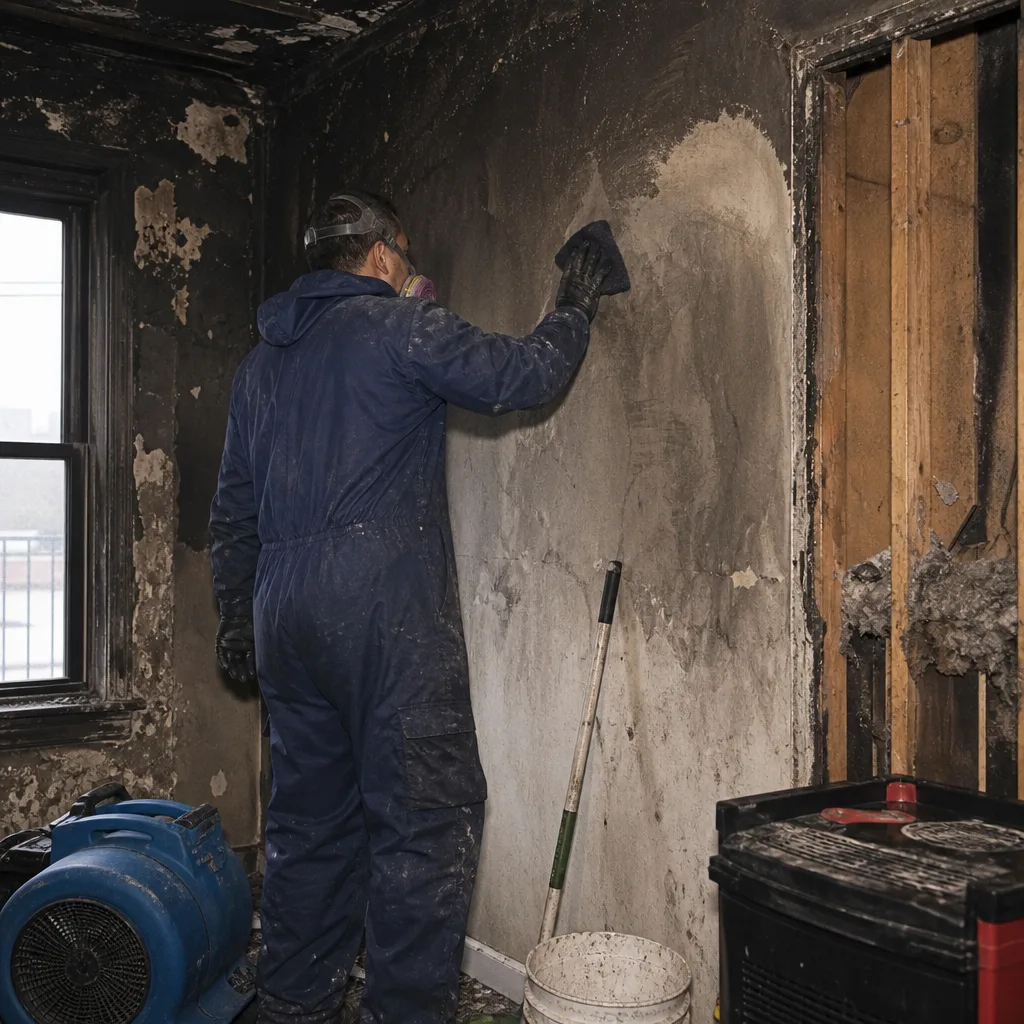
Soot and smoke removal starts with HEPA vacuuming of loose residue, followed by chemical sponges on plaster, and degreasers on protein soot. We run air scrubbers during the whole process to keep particles from re-settling.
Odor Removal & Deodorization
Greenpoint’s tight attached buildings mean smoke odor likes to travel. We use thermal fogging and ozone treatment where appropriate, but always after the odor source is removed, not instead of removing it. Plaster-safe methods come first in pre-war walls.
Repairs & Restoration
Structural fire repair, plaster patching, flooring, trim, and paint go through the same crew that handled the mitigation. You get one written scope, one team, and the 90-Day Done Right Promise in writing at the end.
Need Emergency Fire & Smoke Damage Restoration in Greenpoint Now?
Crews minutes away, answering live 24 hours a day. The sooner we start, the less it costs.
Working With Your Insurance Company
Fire claims in Greenpoint move faster when the documentation is built correctly from the first hour. We photograph every room, every surface, and every piece of affected contents before anything gets moved. Suppression water that tests positive for petroleum gets documented with lab confirmation, so the claim reflects hazmat classification rather than a standard water loss. Our scope of work is line-item and written, on industry-standard estimating, and our team talks directly with your adjuster. You do not have to translate between us and the carrier. The older Greenpoint buildings often carry specific coverage choices that matter after a fire, and we make sure the claim language matches what actually happened.
What We Provide Your Insurer
- Thorough documentation of the loss
- Photos of all damage, room by room
- Moisture readings and drying logs
- A detailed, line-item scope of work
- Direct coordination with your carrier
Built for Greenpoint’s Loss Calendar
Fire losses in Greenpoint follow a pattern tied to the neighborhood’s buildings and weather. In January and February, space heaters and overtaxed wiring in 1920s walk-ups create electrical fire risk while frozen pipes burst and flood basements that then need drying alongside smoke damage. Spring thaw brings groundwater up through basement slabs, and when a fire happens in that window, the suppression water sits against already-saturated masonry, which transfers moisture deeper into plaster and wood framing. Summer thunderstorms dump rain faster than Newtown Creek and the East River drains can handle, and low elevation means flood water entering a burned building accelerates soot staining and odor. Nor’easters in the fall and early winter pressure the western waterfront buildings, and wind-driven gaps in old window frames pull smoke further into wall cavities. Greenpoint property owners deal with conditions that change monthly, and restoration has to move at that same pace.
Fire & Smoke Damage Restoration Across Greenpoint’s Neighborhoods
Response patterns shift depending on where in Greenpoint you live. Along Manhattan Avenue and the blocks around McGolrick Park, we see 3-5 story brick walk-ups with shared basement walls, and smoke from one kitchen fire moves through the connected joist bays into neighboring units. Over by the East River waterfront, buildings in the FEMA flood zones contend with storm surge complicating fire response, and suppression water can sit for hours before extraction starts. The Newtown Creek side, including the industrial edge near Greenpoint Avenue, adds another layer because groundwater there has direct contact with petroleum contamination, and any fire suppression water that reaches the ground needs testing before it gets pumped. Around McCarren Park and the residential blocks closer to Nassau Avenue, row houses with original plaster and wooden dumbwaiters show a different failure pattern: smoke climbs the dumbwaiter shaft and spreads across all five floors within minutes. We drive these blocks daily, and we know which buildings present which challenges.
Specialized Fire & Smoke Damage Restoration Services We Offer in Greenpoint
Emergency Board-Up & Tarping
After a Greenpoint fire, the fire department’s board-up is meant to last hours, not weeks. We install secure board-up over broken windows, damaged doors, and breached walls in attached tenements where an open opening threatens the neighboring units. Tarping goes down on compromised roofs the same visit, because Greenpoint rain and nor’easter wind will find any gap.
Smoke & Soot Removal
Soot in pre-war plaster and brick masonry needs specific chemistry, not generic degreaser. We match the cleaning method to the soot type present, from dry sponge on flat paint to alkaline wash on protein residue. In Greenpoint’s attached buildings, we also clean the shared cavities where smoke migrated, not just the unit where the fire started.
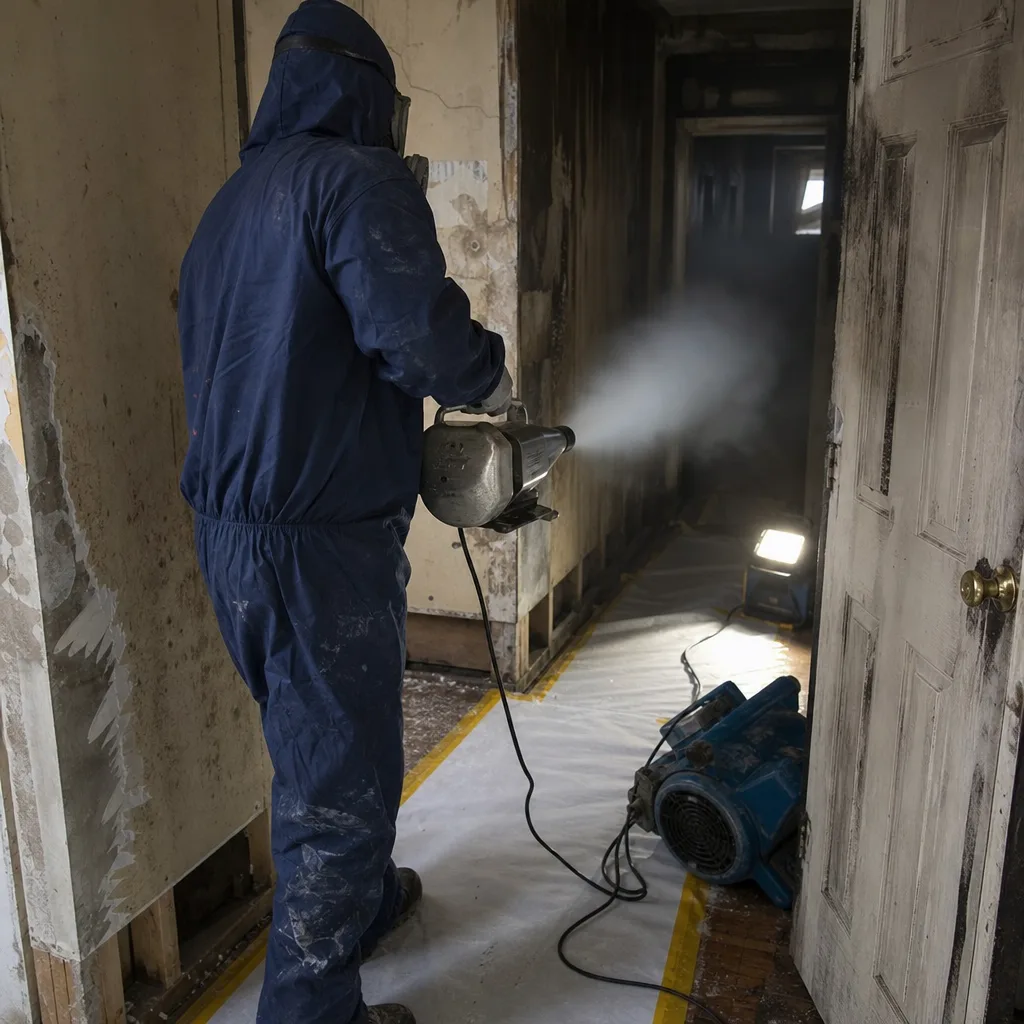
Odor Removal & Deodorization
Odor in Greenpoint properties hides in places you can’t see: behind lath and plaster, inside baseboards, and in the dumbwaiter shafts of older walk-ups. We remove the odor source first, then treat the structure with thermal fogging or ozone, always in sequence rather than masking. The goal is a building that smells like paint when we finish, not like perfume over smoke.
Contents Cleaning & Pack-Out
Furniture, clothing, and housewares from fire-damaged Greenpoint basements often carry soot residue and water exposure. We pack out contents under a documented inventory, clean them at our facility, and store them until the structure is ready. When petroleum is in the picture, the pack-out scope includes a hazmat-referenced manifest so you’re not paying for a pause later.
Hazmat-Category Water Classification
This is the Greenpoint-specific service most restoration companies don’t offer because they don’t know to look. We test suppression water for petroleum before classifying the loss, coordinate with DEP on Category 3 water disposal, and stage containment when needed. Skipping this step spreads volatile compounds through the structure, and many standard drying logs never catch it.
What happens when you call
- 1
A real person answersNo phone trees - you reach a local pro.
- 2
You get an upfront price rangeHonest numbers before anyone is dispatched.
- 3
A background-checked tech heads outLicensed & insured, dispatched right away.
- 4
You approve before work beginsNothing starts until you say go.
Fire & Smoke Damage Restoration Costs in Greenpoint, NY
What you’ll pay depends on what burned, how far the smoke traveled, and what the suppression water touched. As a practical guide: Emergency board-up and tarping in Greenpoint runs $400-$1,200 depending on openings. Smoke and soot removal in a contained kitchen fire starts around $2,800 to $4,500. Full smoke and soot removal across multiple rooms with odor treatment in a row house usually lands between $5,000 and $9,500. When suppression water has to be classified as Category 3 with DEP coordination and hazmat disposal, add $1,500-$4,000 depending on volume. Contents cleaning and pack-out typically runs $1,800-$6,000 based on inventory size. Insurance covers most fire-related damage, and our direct billing means you’re looking at your deductible rather than the full scope. Call (518) 800-3751 and we’ll provide a firm written scope after the free inspection.
We Also Serve Cities Near Greenpoint
Our crews cross the Newtown Creek and the river daily for Fire & Smoke Damage Restoration work throughout Brooklyn and western Queens. We serve Greenpoint plus nearby Astoria, Ditmars Steinway, Upper Manhattan, and the Upper East Side. If you’re on the border, call and we’ll tell you straight whether you’re in our service area.
Serving Greenpoint, NY - Our Local Coverage Area
We’re based in the Greenpoint area and know this community well. Use the map below to see our service coverage - if you’re nearby, we can almost certainly help.
Greenpoint Fire & Smoke Damage Restoration Questions, Answered
Does a fire in a Greenpoint building automatically mean the water used to put it out is contaminated with petroleum?
No, not automatically. But in Greenpoint, testing is non-negotiable because the neighborhood sits atop one of the largest urban petroleum spills in U.S. history, with an estimated 17-30 million gallons of oil in the soil and groundwater. Suppression water that reaches the ground or a flooded basement can pick up petroleum. We test before classifying the water and before any drying equipment runs. If the test is clean, we proceed normally. If not, we stage containment and coordinate with DEP. Call (518) 800-3751 and we’ll walk through it.
How do you handle smoke odor removal in Greenpoint’s pre-war plaster walls without causing more damage?
We remove the odor source first, then treat the plaster with methods that don’t drive moisture deeper or break the plaster’s bond to the lath. In 1920s construction, aggressive scraping or chemical wetting can cause the keys to fail and the plaster to sag. We use thermal fogging where appropriate, and we always log moisture readings in the plaster before and after so we’re not trading smoke odor for mold.
Will the fire department’s board-up on my Greenpoint tenement be enough, or do I need your emergency board-up service?
The fire department’s board-up is temporary and meant for immediate security. It usually doesn’t hold up to weather or lasting security needs in attached buildings where an exposed opening threatens neighboring units. Our emergency board-up service installs properly secured panels and roof tarping built to stay until permanent repairs happen. In Greenpoint’s waterfront wind conditions, that matters. Call (518) 800-3751 and we’ll assess what’s actually needed.
What special containment is needed for fire restoration in a Greenpoint building with known lead paint and asbestos?
If the building has lead paint or asbestos, which is common in Greenpoint’s pre-war housing stock, we set up negative air containment and follow RIA and IFA protocols for disturbed materials. That means sealing off the work area, running HEPA filtration, and preventing cross-contamination to occupied units. We do not scrape or sand lead paint without containment. The scope of work reflects this from the first inspection, not as an afterthought.
How fast do you need to start dehumidification after a fire in a Greenpoint basement to prevent mold?
Mold germination starts within 24-48 hours in the conditions a fire-damaged Greenpoint basement creates: high humidity, standing water, and porous materials like plaster and wood framing. In basements near the water table, that window is often effectively shorter. We aim to have the first dehumidifier running within hours of arrival, after the suppression water is classified and pumped. The sooner extraction starts, the less surface area mold can claim.
How fast can a crew actually reach Greenpoint?
Within 45 minutes, any hour, any day. We dispatch from the New York City office, and Greenpoint is a direct run. A live dispatcher answers the phone, the crew is contacted immediately, and the first truck is moving. The sooner we start, the less damage spreads. Call (518) 800-3751 now.
Will my insurance cover fire and smoke damage restoration in Greenpoint?
Most homeowner policies cover fire, smoke, and the water damage from suppression. The nuances in Greenpoint involve hazmat classification for petroleum-contaminated water and coverage for lead or asbestos containment. We document everything, bill the carrier directly, and communicate with your adjuster so the claim matches what actually happened. Estimates are free, so you’ll know where you stand before any work starts.
What should I do in the first 30 minutes after a fire in Greenpoint?
Call your carrier to open a claim, then call (518) 800-3751. Do not enter the building until the fire department says it’s safe. Do not touch soot-covered surfaces, because skin oils drive soot deeper into plaster and textiles. Do not plug in electronics or turn on the HVAC. And do not start pulling wet drywall or pumping basement water without knowing what’s in it. In Greenpoint, that last one matters more than anywhere else.
On a row house off Manhattan Avenue, our crew responded to a kitchen fire in a 1920s brick walk-up. The fire department’s water extraction flooded the semi-finished basement, and our moisture mapping quickly showed petroleum sheen in the standing water. We staged containment before structural drying, coordinated with DEP on Category 3 water disposal, and used Dri-Eaz dehumidifiers and air movers only after the contaminated water was pumped and the space cleared, protecting the original plaster walls from further wicking. That’s what restoration in this neighborhood looks like when you know what’s under the ground.
If you’re dealing with fire or smoke damage in Greenpoint, call (518) 800-3751. We answer live, we show up fast, and the 90-Day Done Right Promise is in writing before we leave. A square deal, no surprises on the bill. We’ll be there when we say.
Written by Curt Bowman, Owner at Floodline Restoration Co., serving Greenpoint property owners with certified fire and smoke restoration.