
Free visual inspection and a written scope of work before any mitigation begins - photos, moisture readings, and drying logs go in your claim file
The scope we write is the scope we bill. Anything new gets shown to you, in writing, before we touch it.
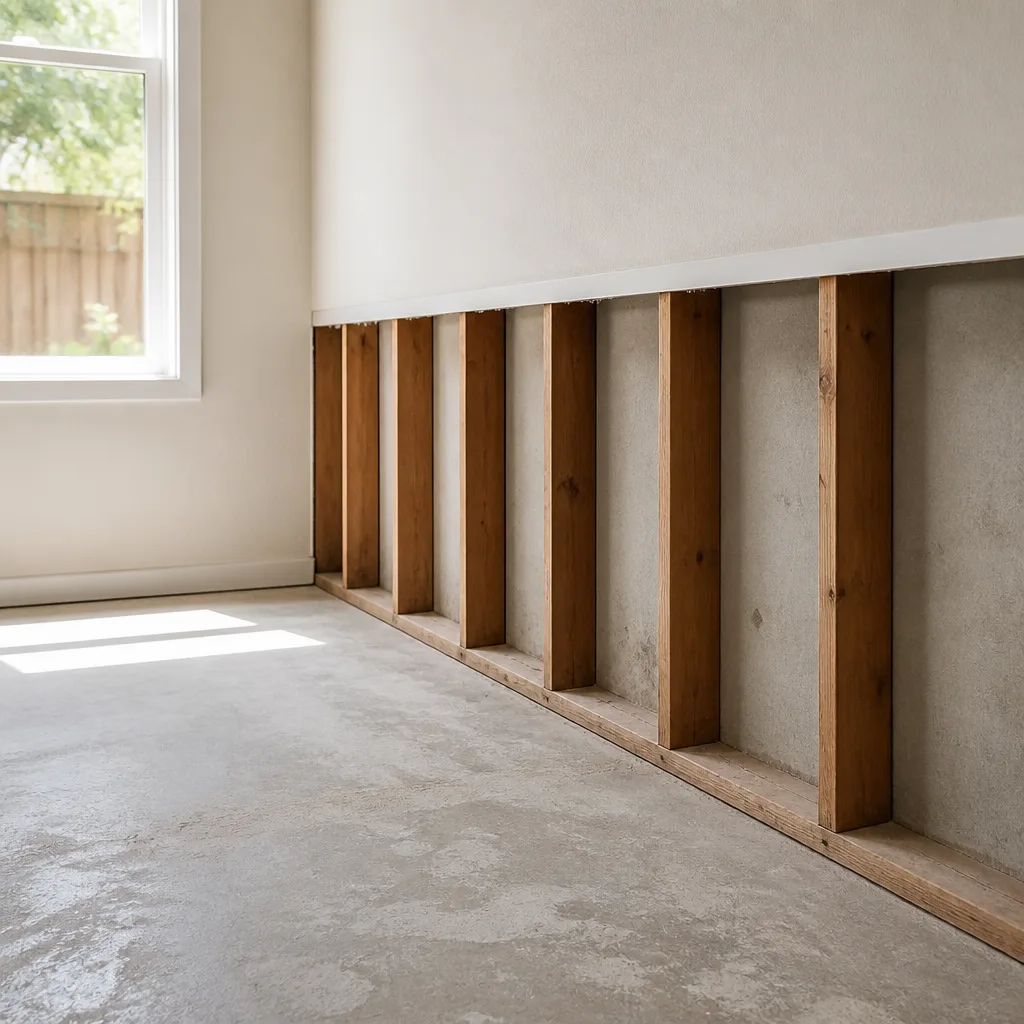
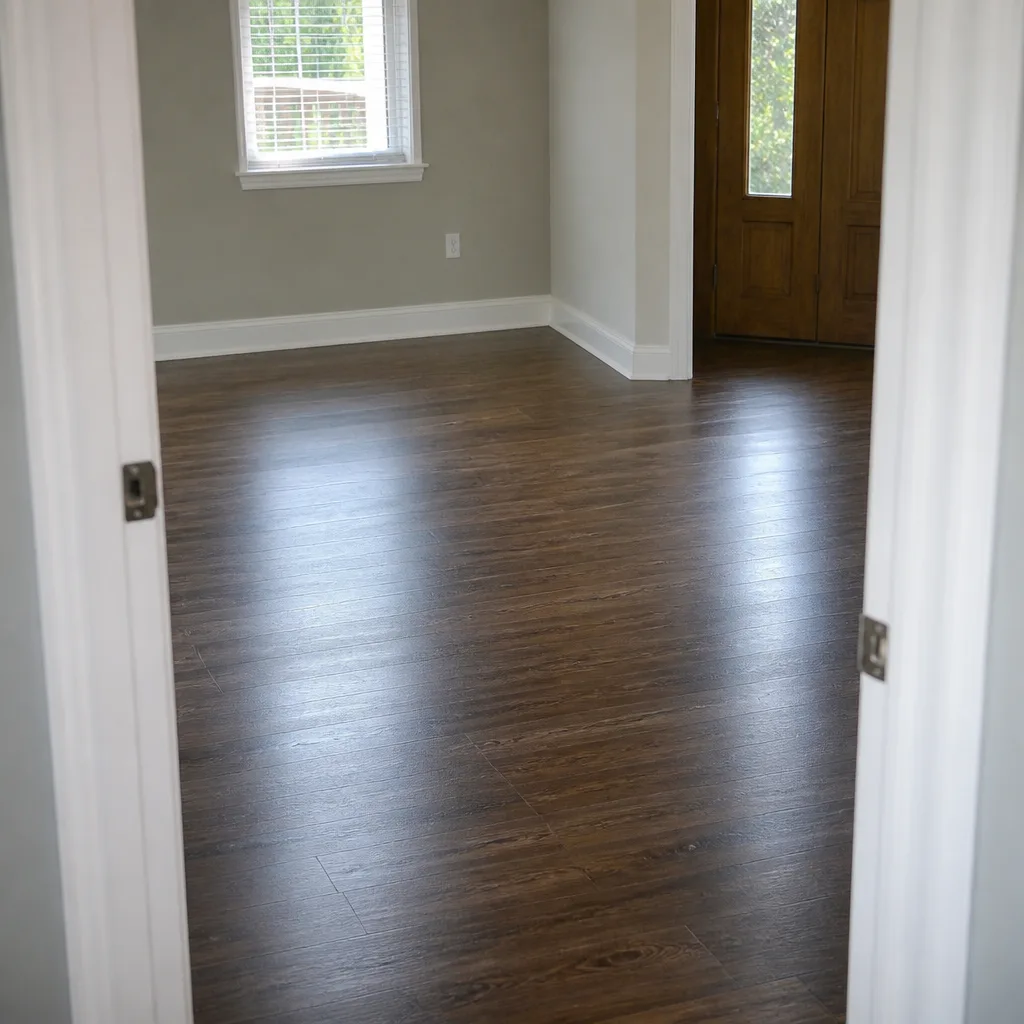
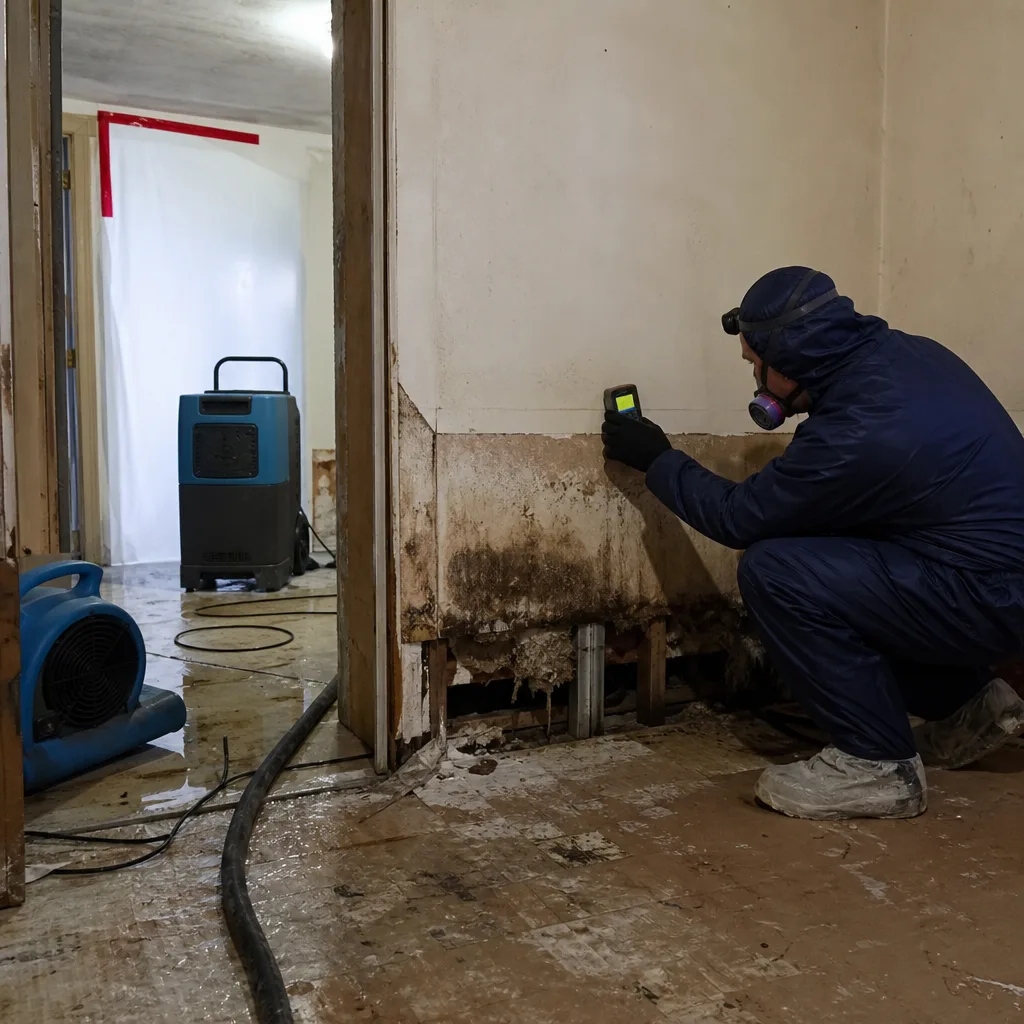 Before
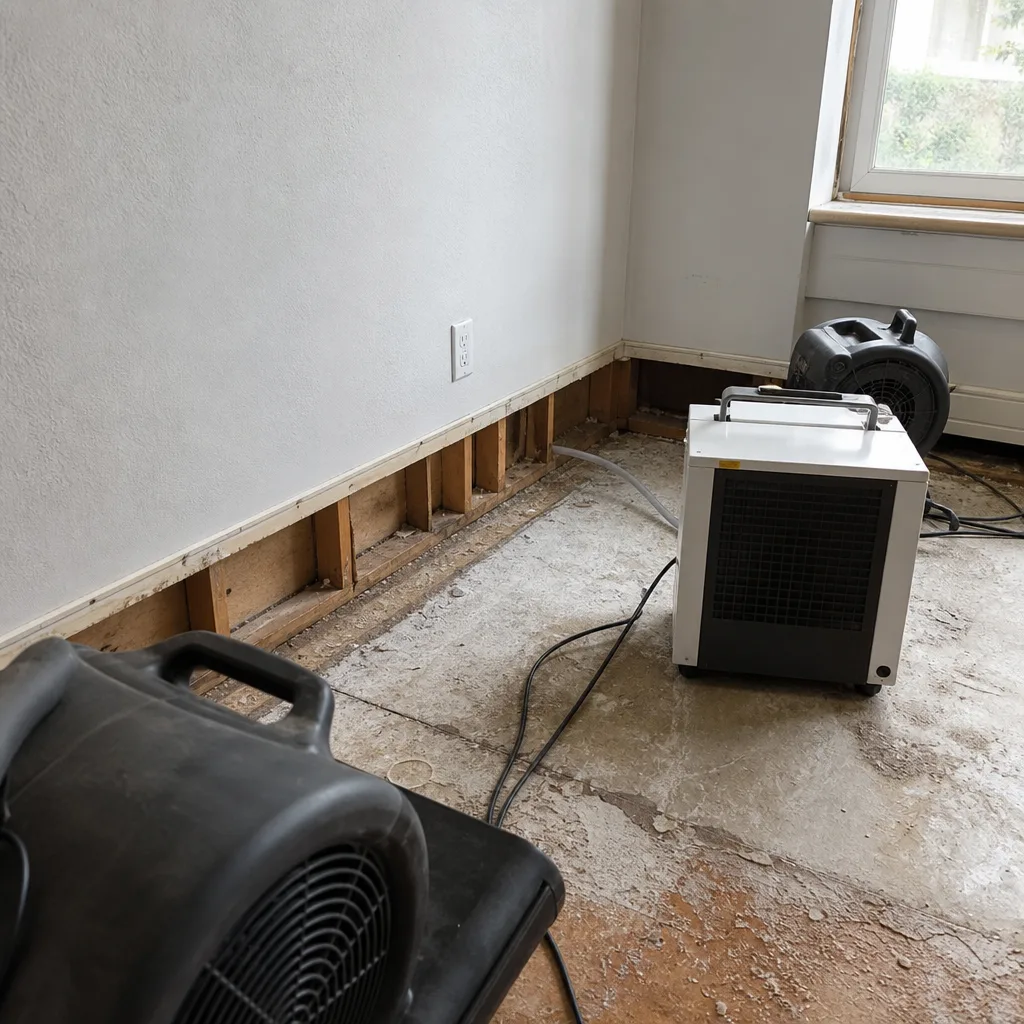 After
After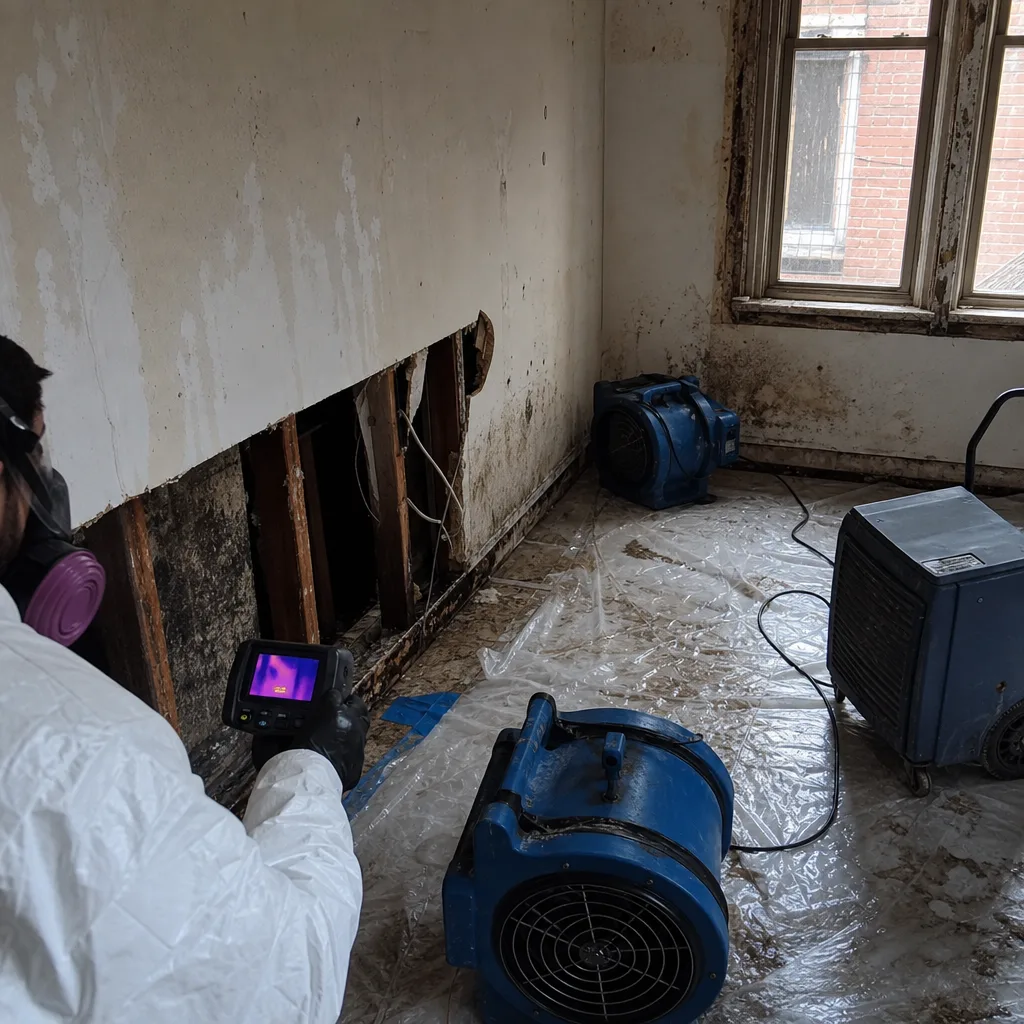 Before
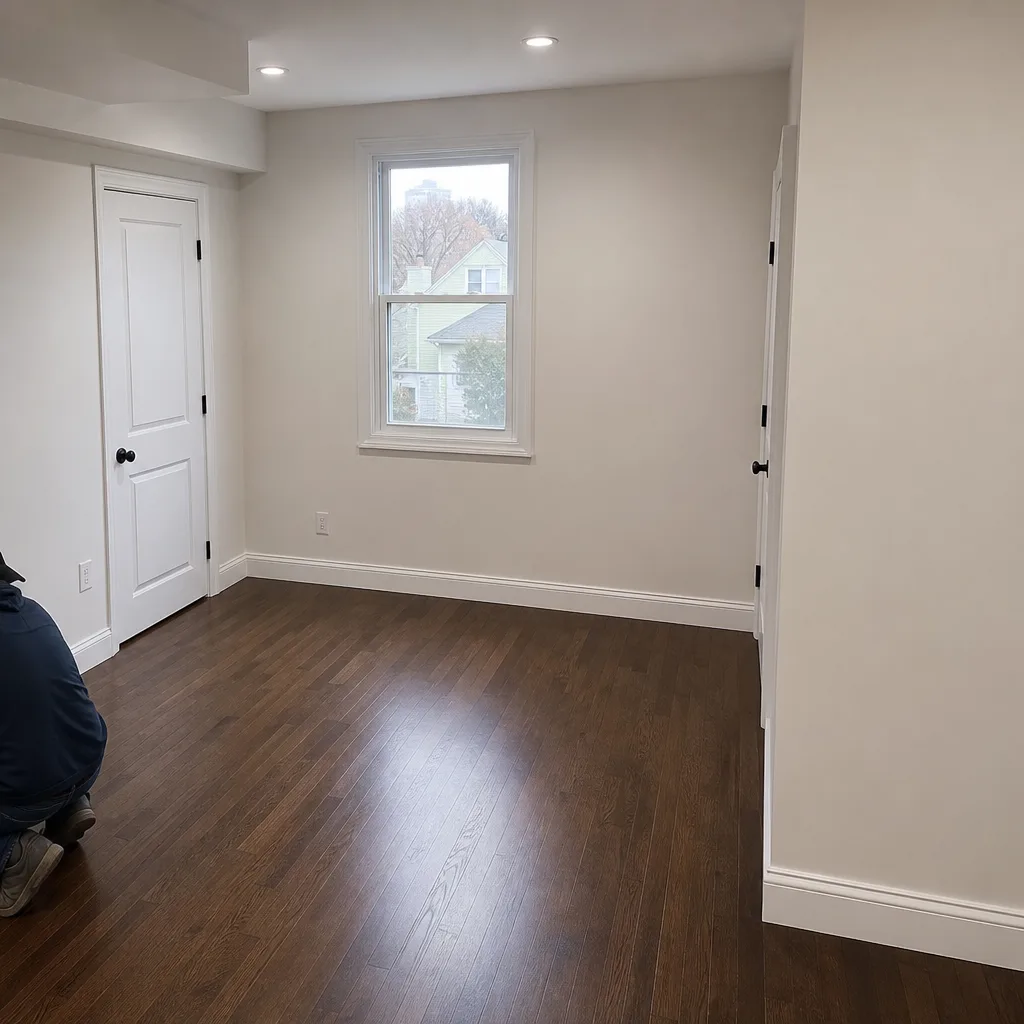 After
After24/7 Emergency Sewage Cleanup in Greenpoint
Sewage backup in Greenpoint costs between $2,800 and $7,500 for a typical basement cleanup, and the first hour determines whether you’re dealing with a contained mess or a gut renovation. Floodline Restoration Co. answers the phone with a live dispatcher at 2 a.m., not a recording, and a certified crew can be on site in Greenpoint within 45 minutes. Call (518) 800-3751 now for a free visual inspection and a straight answer about what you’re facing. The longer Category 3 water sits against the original plaster and brick in these pre-war row houses, the deeper it wicks, the faster mold takes hold, and the more of the basement has to be removed and rebuilt.
We start at the floodline, the mark the water left on the wall, and we don’t hand the job off until extraction, drying, sanitization, and rebuild are finished by the same crew. Done right, and backed in writing.
Understanding Sewage Cleanup Severity in Greenpoint Properties
Not all sewage losses are equal. The trade classifies water in three categories: Category 1 is clean supply water, Category 2 carries significant contamination, and Category 3 is grossly unsanitary, meaning it contains pathogens, human waste, or other hazardous matter. A toilet overflow from a supply-line failure might start as Category 2. A sewer line backup through a floor drain in a Greenpoint basement is Category 3 from the moment it enters the structure, and it stays Category 3 until it’s extracted, disinfected, and the affected materials are removed or professionally dried.
In Greenpoint, severity gets a local multiplier. The neighborhood sits at low elevation between the East River and Newtown Creek, with a high water table that pushes groundwater into basements through foundation cracks and floor joints. Pre-1920s brick masonry absorbs and wicks contaminated moisture upward through plaster walls three times faster than modern drywall. That means a sewage backup in one corner of a finished basement is not a corner problem. It’s a wall problem, and often a subfloor problem, before the first air mover ever gets plugged in.
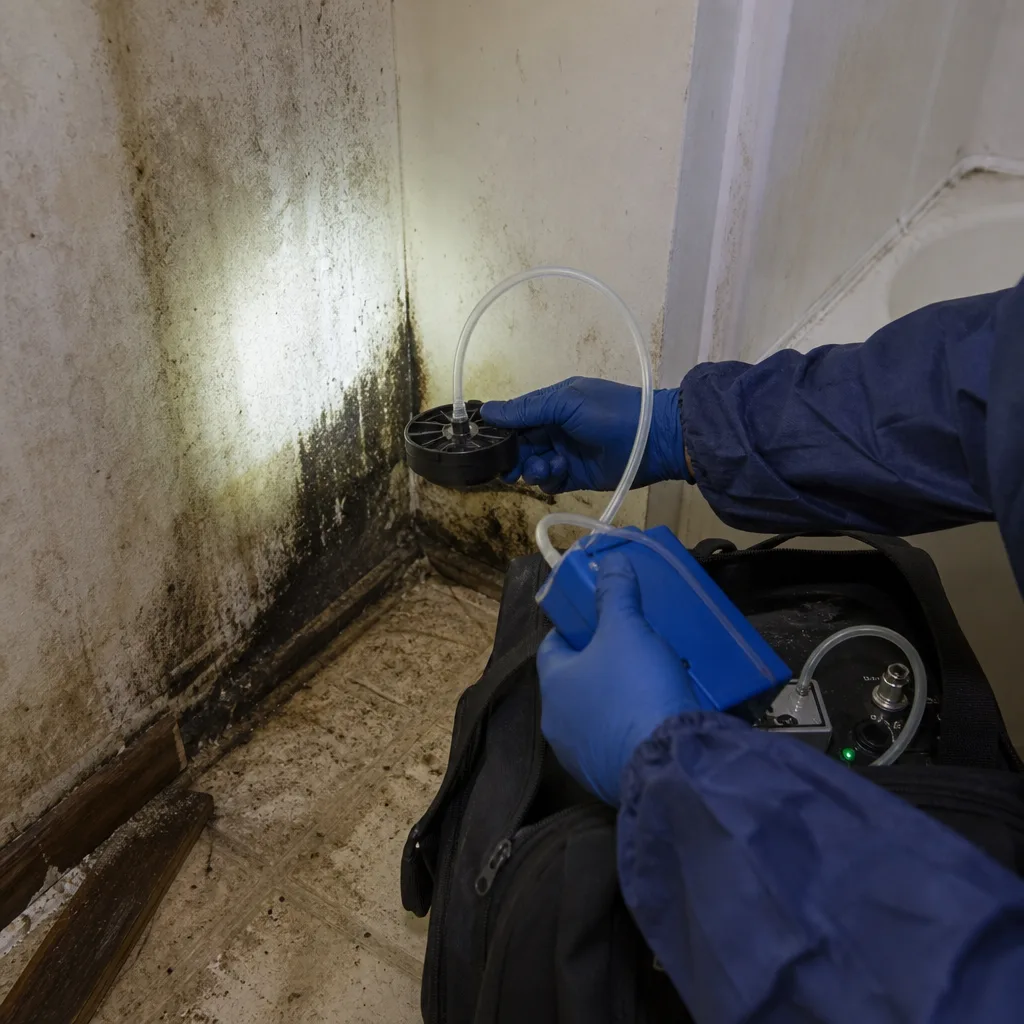
Drying a Category 3 loss in a Greenpoint row house requires more than standard structural drying. Technicians have to account for capillary action in brick, trapped moisture in plaster keys, and the near-constant ambient humidity between the two waterways. We don’t guess at it. We map it, with moisture meters and thermal imaging, day one through the final dry-standard reading.
Why Greenpoint Property Owners Choose Floodline Restoration Co.
- 45-minute response commitment in Greenpoint: a live dispatcher confirms the street and cross street, and the crew is rolling from the New York City office before you hang up.
- 24/7 live answer: no answering service that promises a callback. A real person picks up at any hour, every day, and dispatches a uniformed, background-checked crew.
- IICRC-certified technicians: trained to IICRC WRT, FSRT, and AMRT standards, with ongoing RIA and IFA coursework, so the person holding the moisture meter knows what the numbers mean.
- Free visual inspection: we assess the loss, identify Category 3 contamination, check for the petroleum sheen unique to Greenpoint, and hand you a written scope before any work begins.
- Direct insurance billing: we bill your carrier directly, photograph every phase, and coordinate with your adjuster so you never play messenger.
- One team from extraction to rebuild: the same Floodline crew that extracts the sewage and runs the drying logs also rebuilds the wall. No mid-job handoff, no inherited crew you’ve never met.
Our Sewage Cleanup Process
Inspection & Assessment
We identify the Category of water, map the affected area, and check for the petroleum sheen that signals Greenpoint’s underground oil plume is involved. If hazmat protocols are required, we stop extraction and call DEP before anything moves.
Extraction & Stabilization
Professional-grade extraction removes the standing black water. On Greenpoint basements with high water tables, we stage Category 3-rated sump pumps and barriers to prevent re-flooding while the space is stabilized.
Drying & Dehumidification
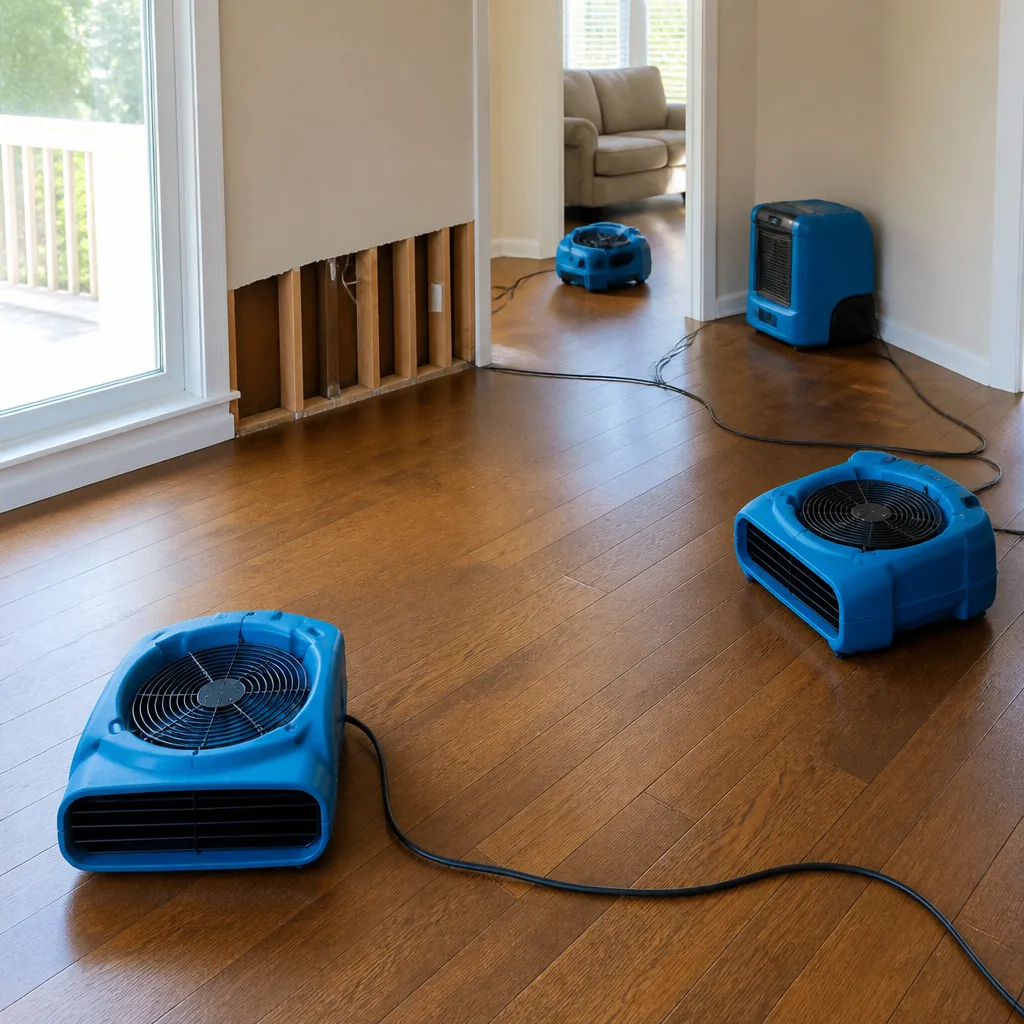
Dri-Eaz and Phoenix dehumidifiers and XPOWER and B-Air air movers are positioned based on moisture mapping, not guesswork. Daily hygrometer readings track the dry standard until the structure reaches equilibrium.
Cleaning & Sanitization
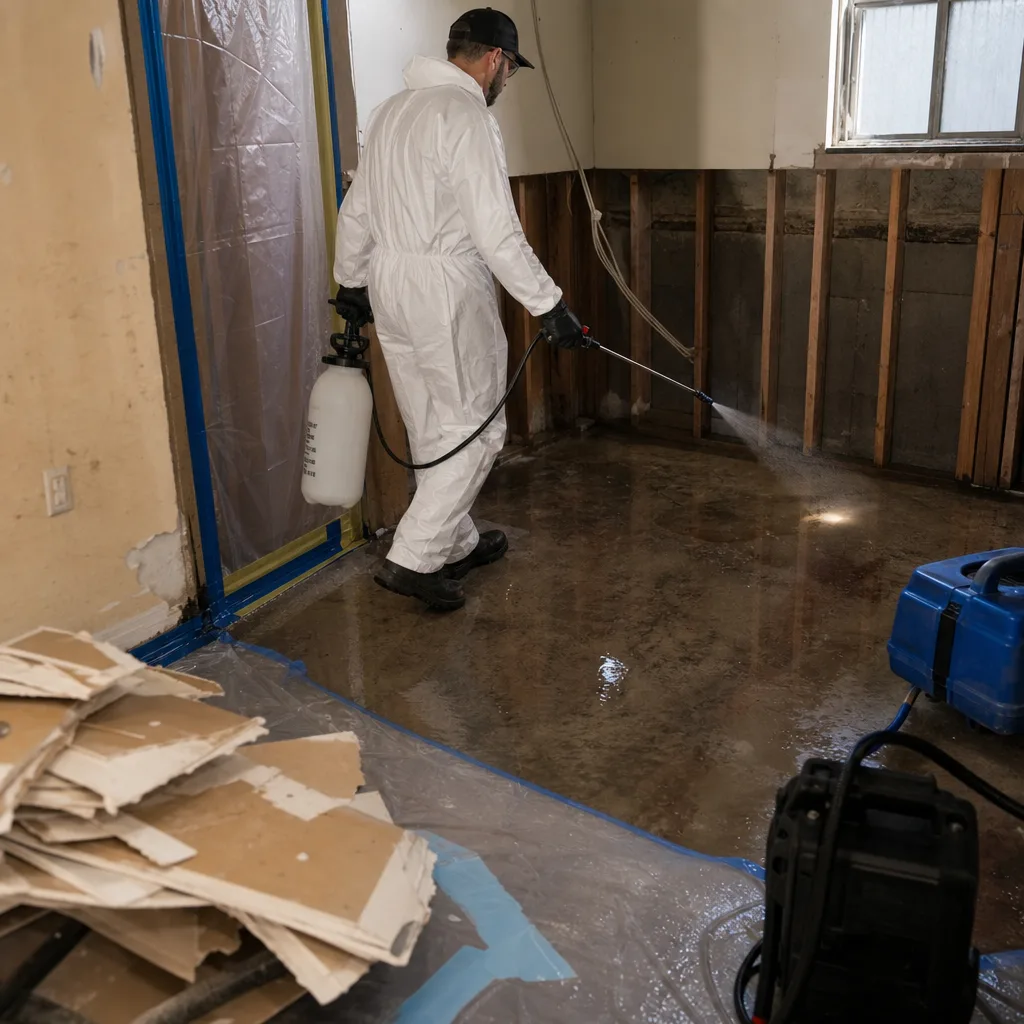
Every surface touched by Category 3 water is cleaned with professional-grade antimicrobials. Hard surfaces are disinfected; porous materials that cannot be sanitized are removed, including contaminated plaster and insulation in pre-war construction.
Petroleum & Hazmat Coordination
In Greenpoint, if standing water shows a sheen or odor of oil, our team stops conventional work, seals containment, and coordinates with DEP and hazmat specialists. This is not optional, and it’s not something every restoration company recognizes early enough.
Repairs & Restoration
The same certified crew rebuilds what we removed: drywall, plaster, trim, flooring. We hand you the moisture log, the line-item scope, and the 90-Day Done Right Promise in writing before we leave.
Need Emergency Sewage Cleanup in Greenpoint Now?
Crews minutes away, answering live 24 hours a day. The sooner we start, the less it costs.
Working With Your Insurance Company
Sewage backup claims in Greenpoint succeed or fail on documentation. The carrier wants proof of loss, proof of cause, and proof that the cleanup was proportionate to the damage. That’s why we start photographing the moment we walk in, and we don’t stop until the rebuild is painted. Every photo is time-stamped, every moisture reading is logged, and every line item in the scope matches an actual condition in your basement.
We write estimates in industry-standard format, speak directly with your adjuster, and bill your carrier directly. Homeowners in Greenpoint should never have to translate restoration terminology or argue about line items. That’s our job. If the carrier pushes back, the documentation does the talking.
What We Provide Your Insurer
- Thorough documentation of the loss
- Photos of all damage, room by room
- Moisture readings and drying logs
- A detailed, line-item scope of work
- Direct coordination with your carrier
Built for Greenpoint’s Loss Calendar
Greenpoint’s sewage backup season has a rhythm, and it’s tied to the neighborhood’s geography. The low elevation between the East River and Newtown Creek means groundwater pressure never really lets up. During the January deep freeze, frozen sewer lines and aging cast-iron drain stacks in pre-war tenements crack and fail. When the thaw comes in March, the ground gives up its moisture all at once, and basement sumps run constantly while the water table stays high.
Summer brings on the flash-thunderstorm season. A heavy downpour over the Greenpoint Avenue corridor can overwhelm the combined storm-sanitary system fast, and what comes back up through basement floor drains into the finished basements along Manhattan Avenue and Franklin Street is raw sewage mixed with storm runoff. Half the calls we answer in August start with “it’s never done this before.”
Nor’easters add the final layer. When the storm surge from the East River or Newtown Creek pushes water up through the sewer lines, low-grade chronic seepage becomes active Category 3 backup. If the water carries the petroleum sheen that’s specific to this neighborhood, it’s a DEP-coordinated hazmat event, not a simple pump-out, and the crew has to recognize that in the first hour, not on day three.
Sewage Cleanup Across Greenpoint’s Neighborhoods
The building stock tells you what you’re walking into. On Guernsey Street near the Newtown Creek end, the row houses date to the late 1800s, and finished basements sit below a water table that’s been rising for a century. Sewage backups here don’t dry on their own, because the brick walls breathe groundwater in from the outside while our equipment tries to dry them from the inside. That means containment, moisture mapping, and staged Category 3 pumps from the first hour.
Over by McCarren Park, you get the same pre-war brick but at slightly higher elevation. The losses tend to be smaller in square footage and faster to dry, when caught early. But the homes still have original plaster on lathe, and sewage-laden moisture jumps from a lower wall to a finished ceiling in under 48 hours.
Along Manhattan Avenue between Greenpoint Avenue and Norman Avenue, the commercial storefronts with apartments above share sewer laterals with neighboring buildings. A backup in one unit can push sewage into several others, and the response has to be coordinated, not just fast. We’re used to working building supers and property managers here, and we document everything for the carrier from the first hour.
The area near the Greenpoint Terminal Market and the western waterfront catches the worst of the nor’easter storm surge, and the sewer system gets pushed past capacity quickly. In those buildings, below-grade spaces are almost never truly dry, and any sewage backup is a race against both the contamination and the water table.
Specialized Sewage Cleanup Services We Offer in Greenpoint
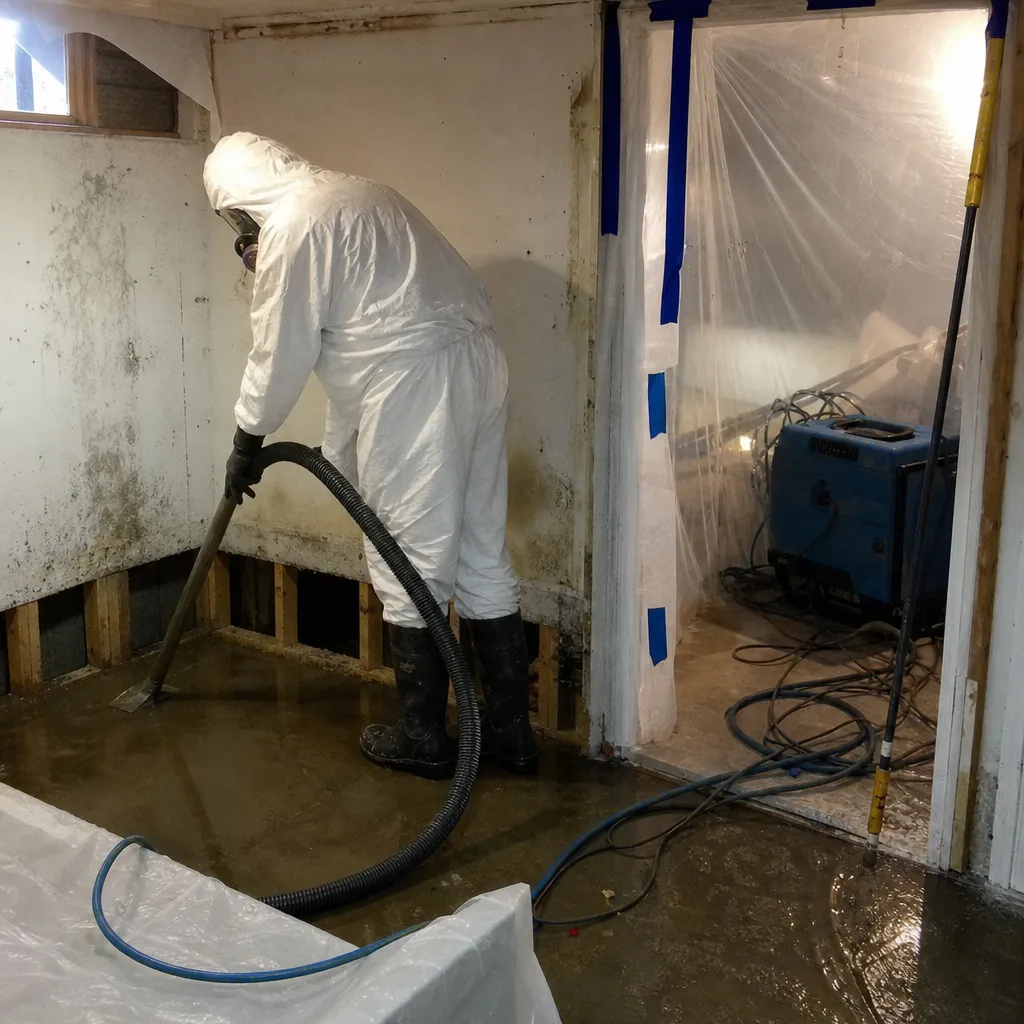
Black Water Extraction
Category 3 black water extraction in Greenpoint is the core of our Sewage Cleanup work. We use professional-grade extraction equipment to remove standing sewage and contaminated solids, then stage pumps to keep groundwater from re-entering the space while drying proceeds. If petroleum is present, extraction pauses and DEP coordination begins immediately.
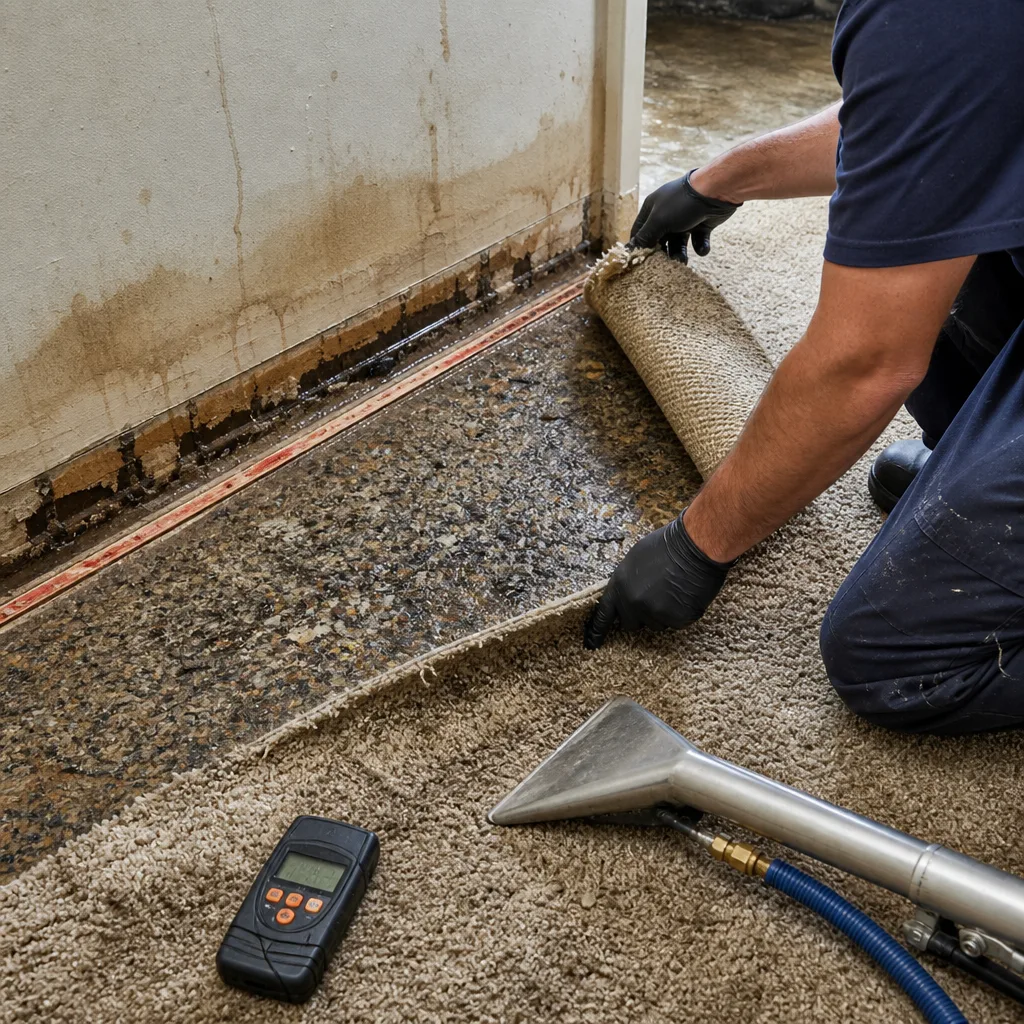
Sanitization & Disinfection
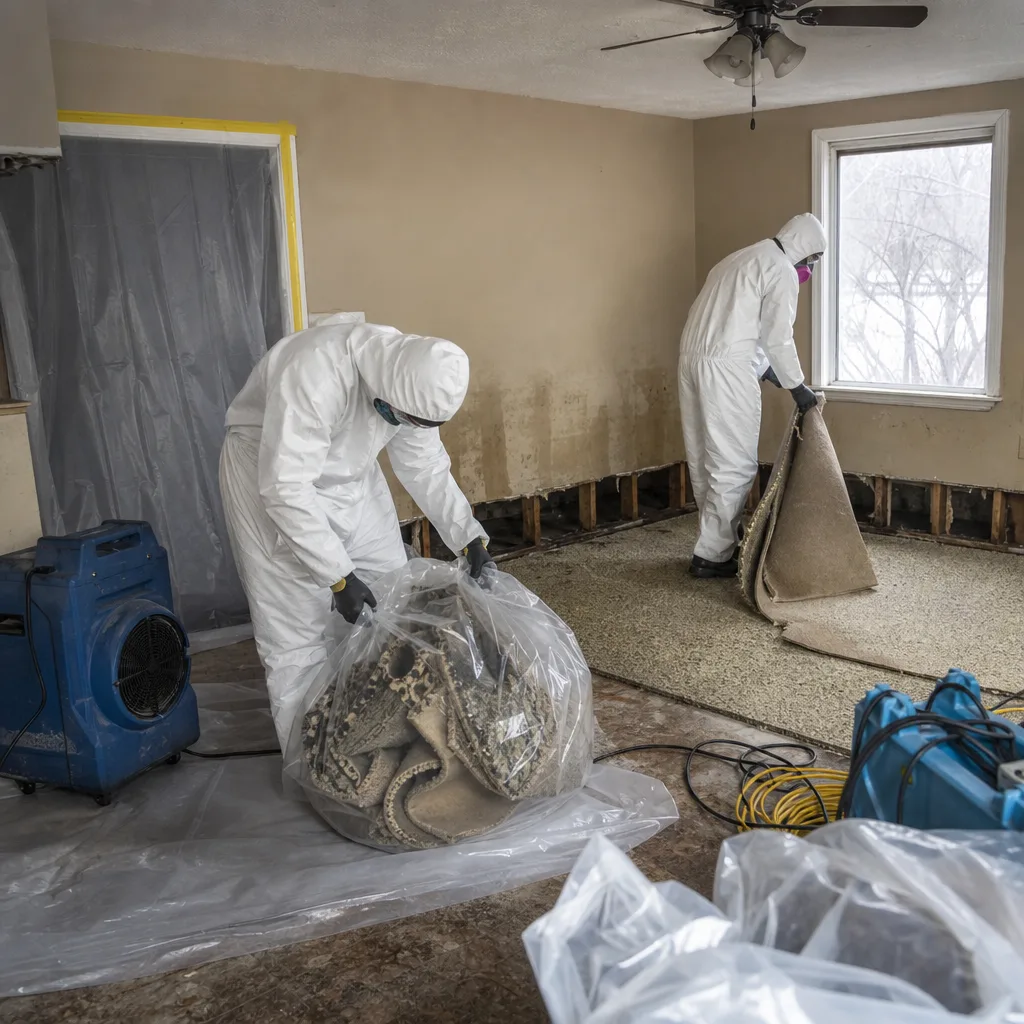
After extraction, every surface touched by sewage is cleaned with hospital-grade antimicrobials. Hard, non-porous surfaces are disinfected in place. Porous materials like drywall, plaster, insulation, and carpet pad are removed, because you cannot effectively sanitize a sponge that has absorbed Category 3 water. In Greenpoint’s original plaster walls, this often means cutting out several feet of wall above the visible water line, because the brick wicks moisture upward and hidden pathogen growth begins within a day.
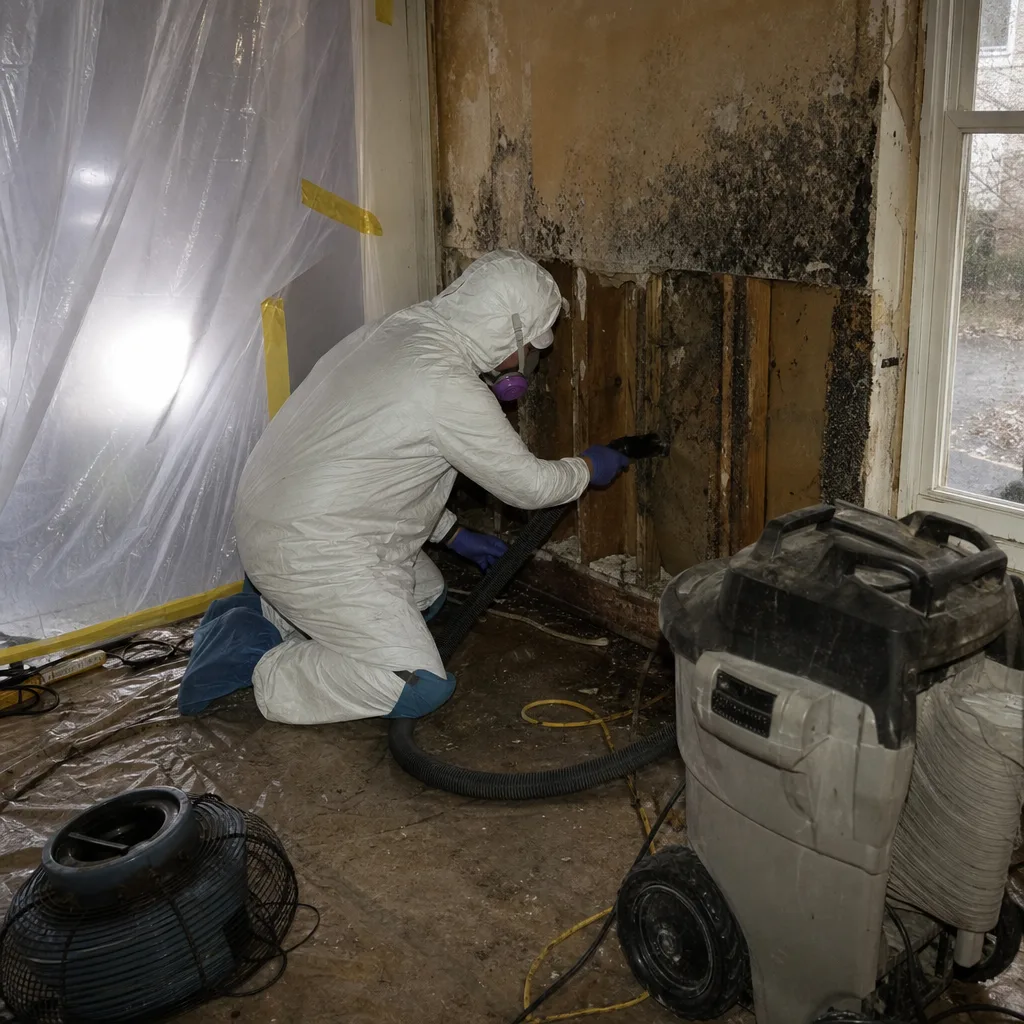
Crawl Space Sewage Removal
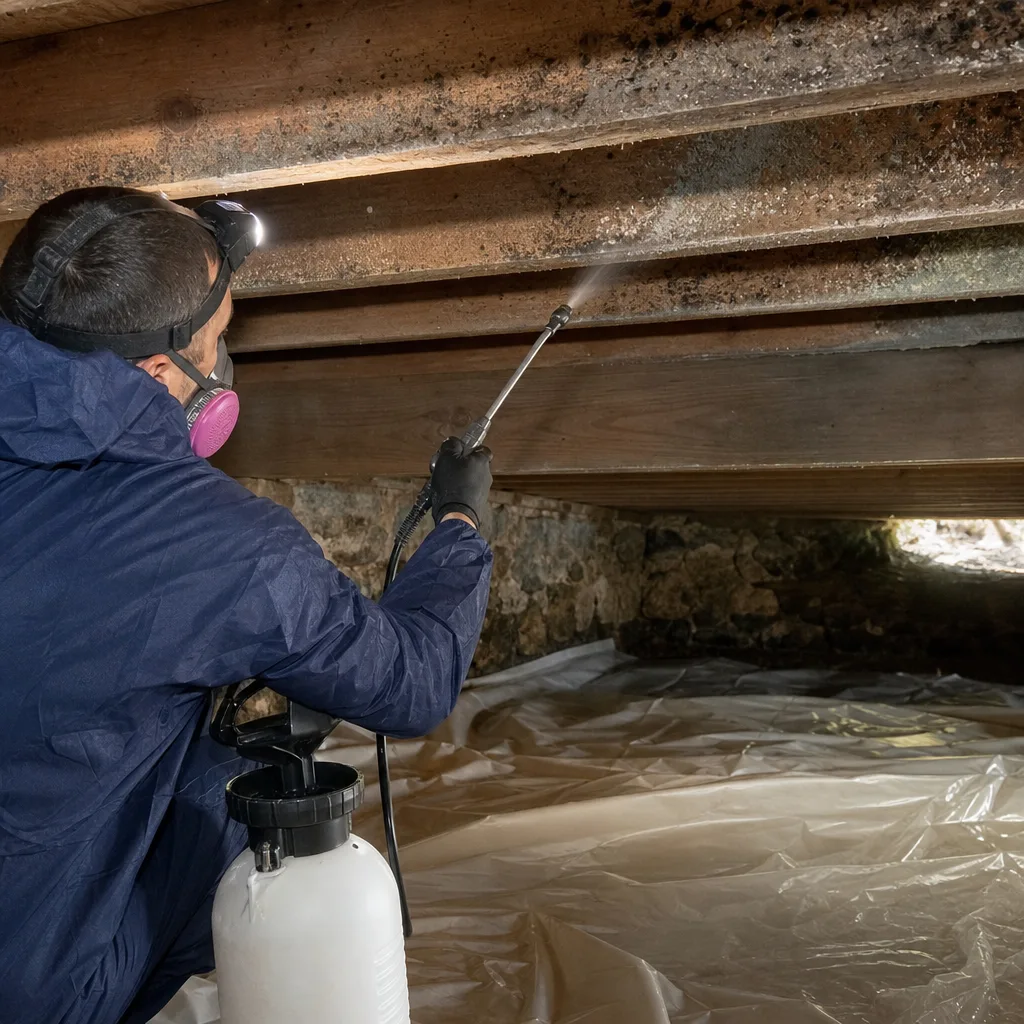
Sewage that backs into a Greenpoint crawl space is a different animal. Crawl spaces under these late-1800s row houses are tight, low, and often partially dirt-floored. Category 3 water soaks into the soil, and it has to be removed surgically, not just pumped. Our crews suit up, extract, excavate contaminated soil where necessary, and run drying and antimicrobial treatment before any repair work starts. Skip the soil remediation and the odor returns within weeks.
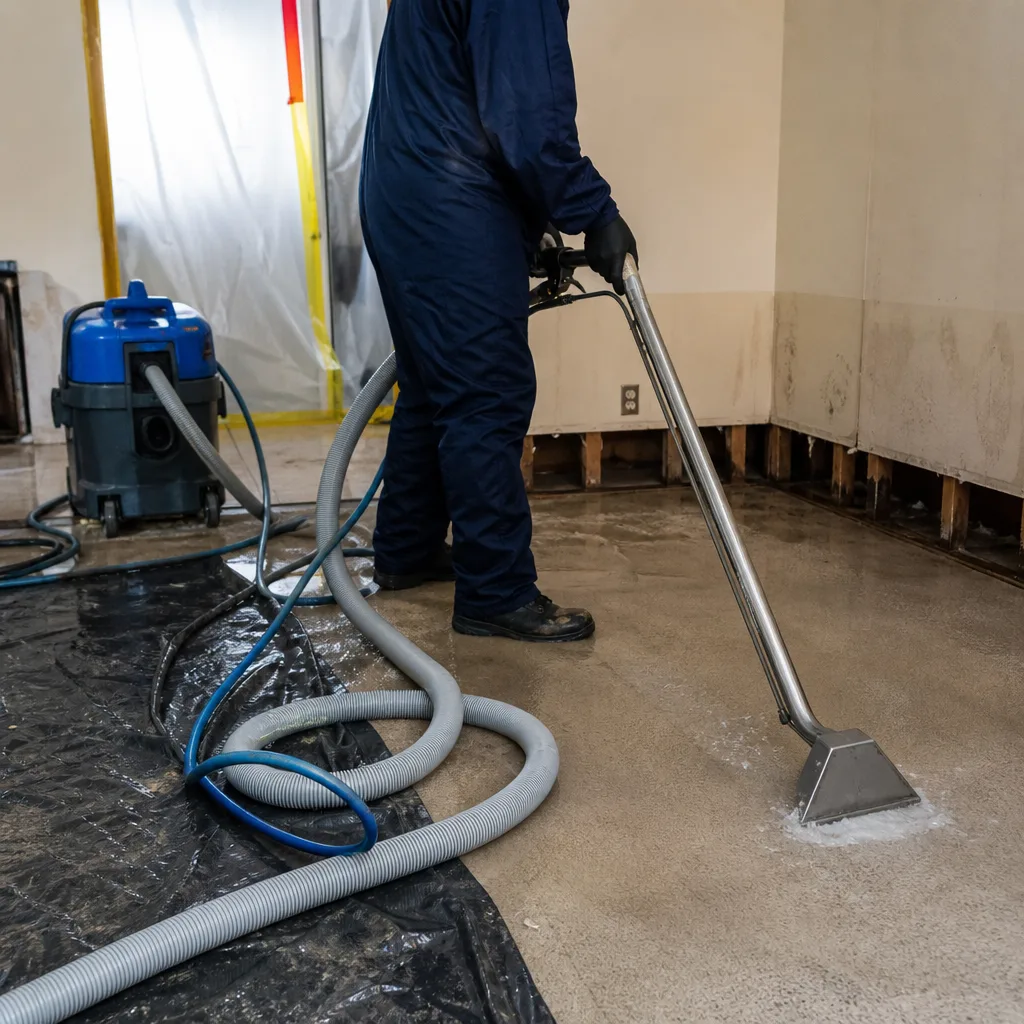
Sewage Backup Cleanup
Floor-drain backups and sewer-line overflows are the most common call we answer in Greenpoint. The combined storm-sanitary system backs up during rain events, and the sewage finds the lowest point in the building. We extract, contain, sanitize, dry, and rebuild, and the written scope the homeowner signs before work begins is the same scope the insurer sees. No surprises.
Toilet Overflow Cleanup
A toilet overflow that sits for even a few hours in a Greenpoint finished basement has already contaminated the subfloor under the tile. We don’t just clean the surface. We lift, inspect, moisture-map, and treat what’s underneath, because that’s where the damage actually lives. If the overflow carried the petroleum sheen from the local water table, it’s a hazmat call, and we make it early.
Septic Failure Cleanup
Fewer Greenpoint homes run on private septic than in the outer boroughs, but for the ones that do, a failed system near Newtown Creek’s high water table means contaminated water can back up into the house within hours. We respond, contain, and coordinate with any required environmental or municipal notifications, then dry and rebuild exactly as we would for a municipal sewer backup.
What happens when you call
- 1
A real person answersNo phone trees - you reach a local pro.
- 2
You get an upfront price rangeHonest numbers before anyone is dispatched.
- 3
A background-checked tech heads outLicensed & insured, dispatched right away.
- 4
You approve before work beginsNothing starts until you say go.
Sewage Cleanup Costs in Greenpoint, NY
A typical toilet overflow cleanup in a Greenpoint basement runs $1,800 to $4,200, depending on how far the contamination has spread through the subfloor. A full sewer backup through a floor drain in a finished basement with plaster walls commonly falls between $4,500 and $7,500, including removal of contaminated plaster and drywall, antimicrobial treatment, and structural drying. A crawl space sewage removal with soil excavation can run $6,000 to $12,000 or more, because the contaminated soil has to go somewhere and the space has to be dried and treated before it’s safe to re-enter.
The largest variable in Greenpoint is petroleum contamination. If the standing water shows an oil sheen or carries a refinery odor, the job becomes a hazmat cleanup with containment, DEP notification, and specialized disposal. That can add $3,000 to $8,000 to the total, and it changes the timeline. The only way to know is a free visual inspection, which we do in Greenpoint with no obligation and no assumption.
Most sewage backups are covered by a standard homeowners policy, but coverage limits for sewer backup vary widely. Some Greenpoint carriers cap backup coverage at $5,000 or $10,000, and some exclude it entirely. If you’re not sure what your policy says, call us. We’ll read it with you, and we’ll give you a straight answer about what the cleanup will cost, line by line. Call (518) 800-3751 for an exact quote once we’ve seen the space. Estimates are free.
We Also Serve Cities Near Greenpoint
Floodline Restoration Co. runs sewage cleanup crews throughout the surrounding area, including Astoria, Ditmars Steinway, Upper Manhattan, and the Upper East Side. If you own property in one of those neighborhoods and you’re watching water move across the floor, call the same number: (518) 800-3751. A dispatcher picks up, and a certified crew heads your way.
Greenpoint Sewage Cleanup Questions, Answered
Does sewage cleanup in Greenpoint require a DEP notification if the water smells like oil?
Yes, when the standing water shows a petroleum sheen or carries an oil odor, DEP notification is required before extraction can proceed, because Greenpoint sits atop the historic underground oil plume and petroleum-contaminated sewage is a regulated hazmat material. Our crews stop conventional extraction, seal containment, and call DEP first. We’ve done this on Guernsey Street, Manhattan Avenue, and along the Newtown Creek corridor, and it turns a routine backup into a coordinated remediation.
How fast can mold start after a sewage backup in a Greenpoint row house basement?
Mold colonization can begin within 24 to 48 hours after Category 3 water contacts organic material like drywall, plaster, wood framing, or carpet. In Greenpoint’s pre-war row houses, original plaster and exposed brick can hold moisture even longer, so the 48-hour window is not a suggestion. It’s the deadline to start professional drying. Call us at (518) 800-3751, and a crew is on site in about 45 minutes.
Can you dry out a finished basement in Greenpoint after a toilet overflow, or does everything have to be removed?
Some materials can be dried and kept, depending on how fast the water is extracted and what it touched. Tile over concrete can often be dried and disinfected in place. But carpet, pad, drywall, and insulation that absorbed Category 3 water have to be removed, because you can’t sanitize them. In older Greenpoint homes, plaster walls above the visible water line often have to be cut out too, because the brick behind them wicks contamination upward. We tell you what can be saved before we start, and the written scope reflects exactly that.
Do older Greenpoint tenements with brick walls need different drying after a sewage backup?
Yes. Pre-1920s brick masonry absorbs water and wicks it upward and inward much faster than modern drywall over a vapor barrier. Drying a brick-walled Greenpoint basement means placing air movers and dehumidifiers based on moisture mapping, using thermal imaging to find hidden wet pockets in the wall cavities, and often drying from both sides of the wall. A standard air-mover setup from a template will not dry a brick party wall. Our crews are trained to map and dry these structures specifically.
What’s the first thing your crew does when sewage backs up into a Greenpoint crawl space?
The first thing is an assessment of the water itself. If it carries a petroleum sheen, we stop and coordinate with DEP before moving material. If it’s standard Category 3 sewage, we suit up in PPE, seal the crawl space access for containment, and extract standing water while checking for electrical hazards. Then we map the moisture, excavate contaminated soil where the sewage pooled, and begin antimicrobial treatment and drying. The goal is to keep the contamination from migrating into the living space above.
How fast can your crew actually get to Greenpoint?
We commit to 45 minutes or less for emergency sewage calls in Greenpoint. A live dispatcher answers the phone 24/7, confirms the address, and the crew is on the road from the New York City office while you’re still on the line. Most Greenpoint callers see a uniformed technician at the door within the hour. Call (518) 800-3751 anytime.
Will my insurance cover sewage backup cleanup, and who deals with the adjuster?
Most homeowners policies cover sudden and accidental sewage backup, but coverage limits vary, and some Greenpoint carriers cap backup coverage separately from the general policy. We bill your carrier directly, provide full photo documentation, moisture logs, and a line-item scope, and we coordinate with the adjuster directly. You don’t have to translate anything or chase anyone.
Do I really need full remediation after a small sewage backup, or can I just clean it myself?
If the water is Category 3, which any sewer backup is, the affected porous materials need professional removal and the area needs antimicrobial treatment and monitored drying. A mop and bleach will not reach contamination that has soaked into subfloor, plaster, or crawl space soil. In Greenpoint, the added risk of petroleum in the groundwater means a visible sheen is a regulatory issue, not a housekeeping one. Call us for a free visual inspection and a straight answer. No pressure, just the facts.
Serving Greenpoint, NY - Our Local Coverage Area
We’re based in the Greenpoint area and know this community well. Use the map below to see our service coverage - if you’re nearby, we can almost certainly help.
The Greenpoint Factor: Why This Neighborhood Is Different
Most of the country treats a sewage backup as a simple Category 3 water loss: extract, disinfect, dry, rebuild. Greenpoint can’t be treated that way, because the ground under the neighborhood is not like the ground under Park Slope or Astoria or anywhere else in Brooklyn. An estimated 17 to 30 million gallons of oil and refined products leaked from former refinery and storage facilities into the soil and groundwater beneath this neighborhood over the course of the 20th century. That plume is still there, and when the water table rises during a nor’easter or a heavy summer thunderstorm, it pushes petroleum-laced groundwater into basements and crawl spaces alongside the sewage.
What does that mean for a homeowner standing in their finished basement at midnight with sewage around their ankles? It means the water is not just sewage. It may carry a sheen of oil. It may smell like a garage. It may be a regulated hazmat material that requires DEP notification before any restoration contractor is legally permitted to move it. And a contractor who doesn’t recognize that in the first hour, who starts pumping and drying without checking, has just created a disposal violation, a contamination spread, and a claim denial.
Leaving this page, you know something most restoration companies will not tell you before they arrive: a sewage backup in Greenpoint is a regulatory and hazmat event almost nowhere else in Brooklyn, because the underground oil plume turns ordinary black water into a DEP-coordinated remediation. That’s the spine of everything we do here. Call (518) 800-3751 and you’ll get a dispatcher who knows the difference between a standard sewage call in Astoria and a Greenpoint call that may need DEP on the line.
Last fall, our crew responded to a sewer backup in a late-1800s brick row house on Guernsey Street near the Newtown Creek end. The standing water in the finished basement carried the unmistakable sheen and odor of petroleum. We stopped water extraction, sealed the basement for containment, and called DEP. Only after hazmat protocols cleared the space did we remove the contaminated drywall and begin antimicrobial treatment and structural drying. That’s what a sewage cleanup in Greenpoint actually looks like when the company knows the neighborhood.
Floodline Restoration Co. has been built around a dispatch board, not a sales desk, since 2010. Curt Bowman started the company so that homeowners would have one number to call, one crew to trust, and one written guarantee to hold onto. The 90-Day Done Right Promise, which we call the Keystone Standard, is in writing every time. If it’s not done right, we make it right. No arguing, no paperwork battles. We’ll be there when we say.
Written by Curt Bowman, Owner at Floodline Restoration Co., serving Greenpoint with live 24/7 dispatch and a 90-Day Done Right Promise since 2010.