
Free visual inspection and a written scope of work before any mitigation begins - photos, moisture readings, and drying logs go in your claim file
The scope we write is the scope we bill. Anything new gets shown to you, in writing, before we touch it.
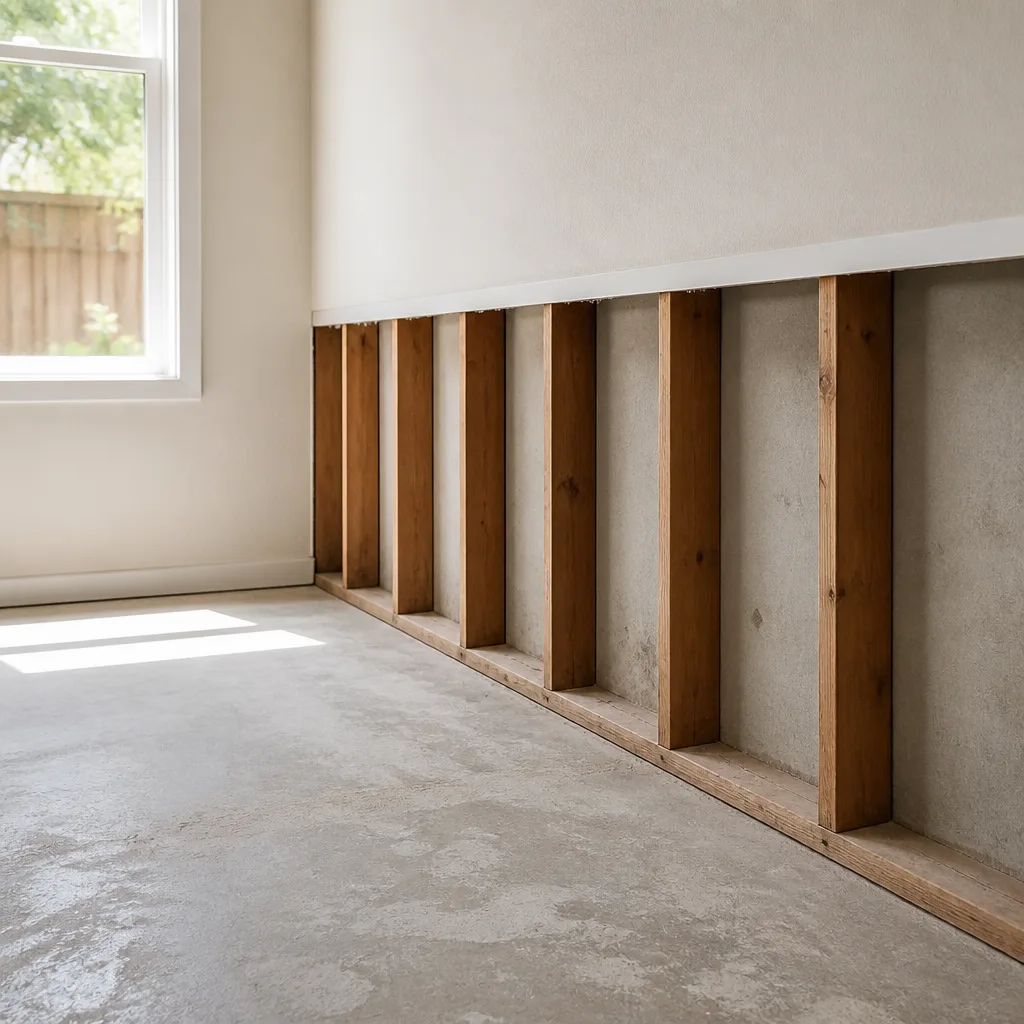
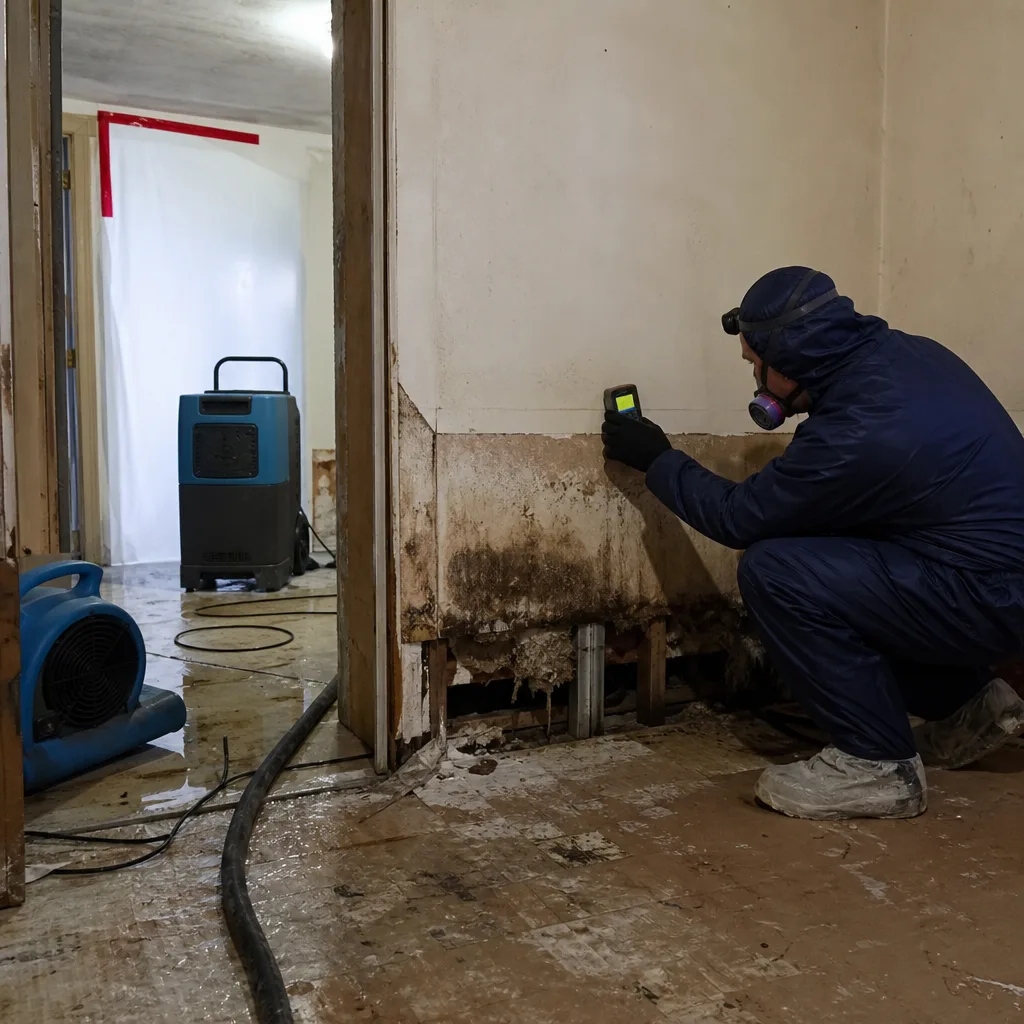 Before
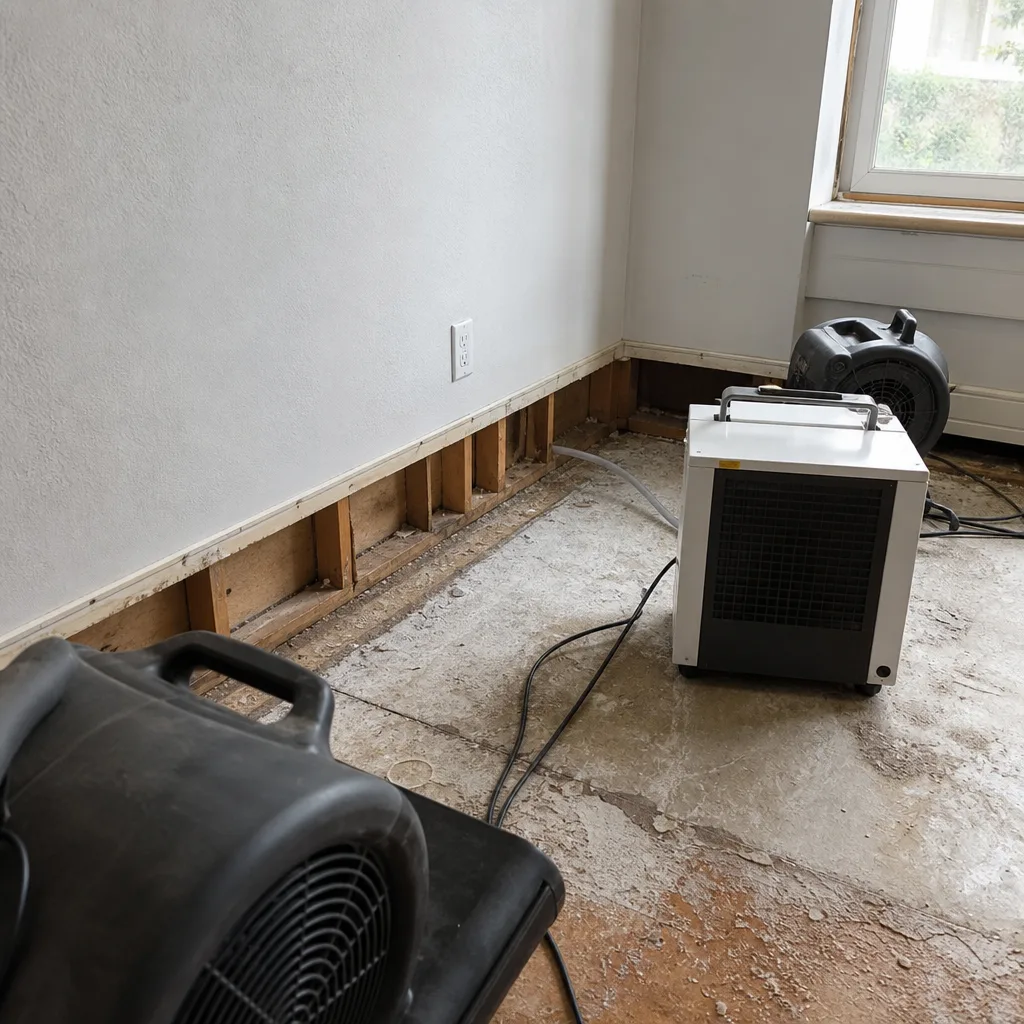 After
After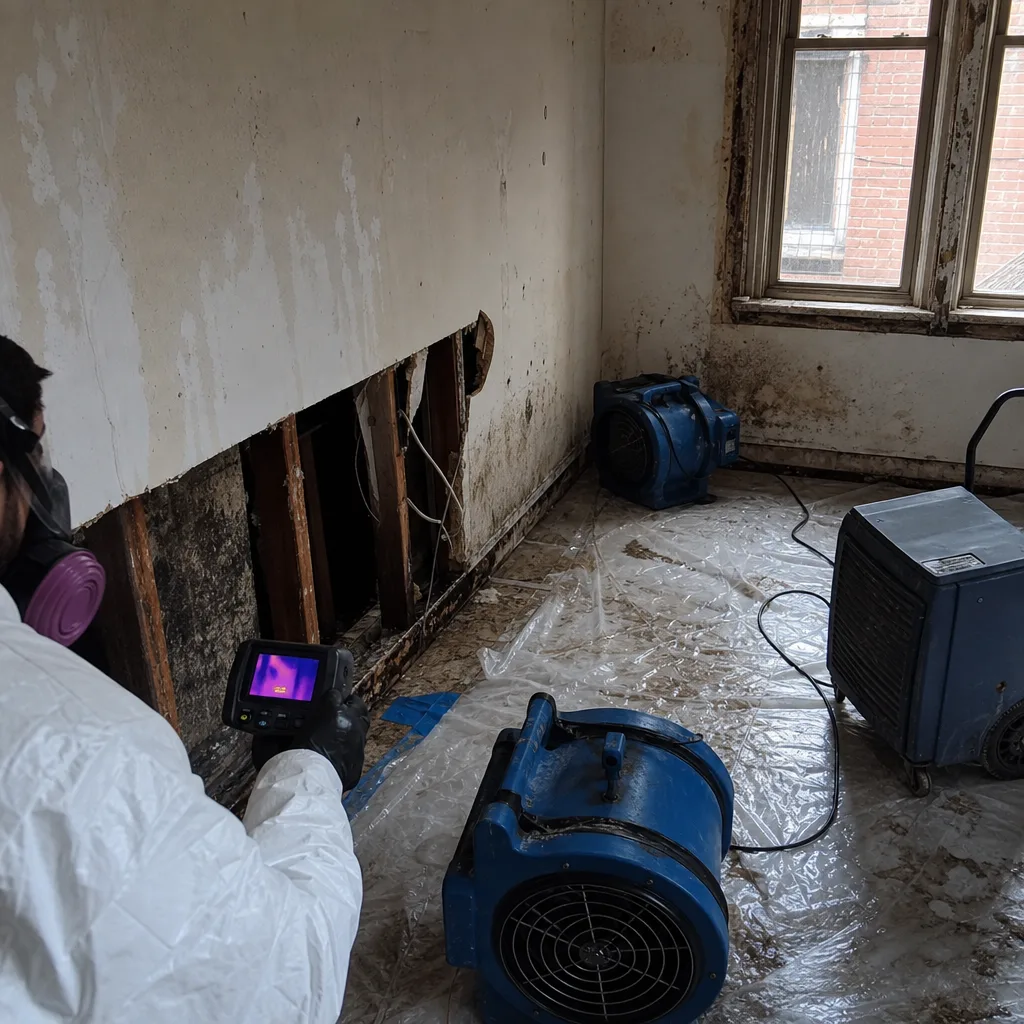 Before
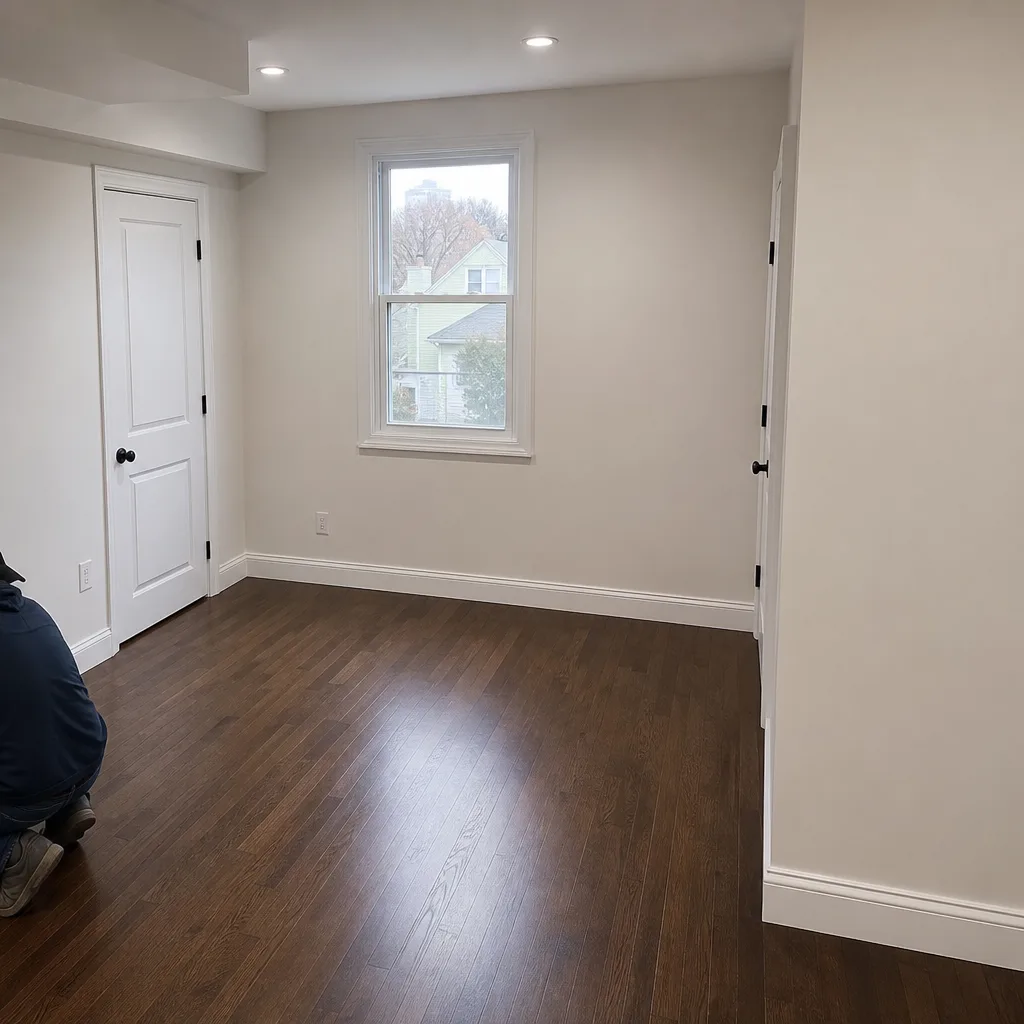 After
After24/7 Emergency Sewage Cleanup in Harlem
A sewage backup in a Harlem brownstone or tenement is a category 3 water emergency, the most dangerous water classification there is. Raw sewage carries E. coli, salmonella, hepatitis, and a list of parasites you don’t want inside baseboards, joist bays, or the horsehair plaster walls your building has had since 1905. Our crews answer live around the clock and dispatch into Harlem within 45 minutes, because every hour that black water sits, it wicks deeper into the unreinforced masonry that holds up these old buildings. Call (518) 800-3751 the moment you see or smell it. We’ll walk you through what to do in the next thirty minutes while a crew is already on the way.
Understanding Sewage Cleanup Severity in Harlem Properties
Not all water damage is the same, and in Harlem the building itself decides how bad a category 3 loss gets. Sewage entering a 1910 brownstone with original wood joists, horsehair plaster, and shared party walls is a different animal than the same backup in a modern sheetrock building. Category 1 is clean water, category 2 carries contaminants, and category 3 contains pathogens from human waste or floodwater. That’s what we’re dealing with during a Harlem sewage backup. The problem multiplies here because old brownstones have unreinforced masonry walls that absorb water laterally. When a waste line fails in one unit, the moisture doesn’t stay behind the wall you saw it on. It travels through mortar joints and joist pockets into the building next door. That’s why our first job on site is not just extraction. It’s moisture mapping with thermal imaging and hygrometers to find every inch the water reached, including the places you can’t see from the hallway.
Why Harlem Property Owners Choose Floodline Restoration Co.
- 45-minute response commitment. We dispatch from our New York City office the moment you call. A live person answers, and a uniformed crew reaches Harlem fast, day or night, holiday or nor’easter.
- 24/7 live answer, never an automated system. You will speak to a dispatcher who knows sewage cleanup, not a phone tree. At 2 a.m., a real person picks up and starts the response.
- IICRC-certified crews trained to WRT and AMRT standards. Our technicians hold water restoration and applied microbial remediation certifications, plus additional training for the hazmat and LPC realities of Harlem’s building stock.
- Free visual inspection. Before any work starts, we assess the damage and explain what we found in plain language. No charge for the look, no obligation for the repair.
- Direct insurance billing. We bill your carrier directly and send them the documentation they need so you aren’t playing middleman at 11 p.m. with raw sewage in the basement.
- One team from extraction to reconstruction. The same certified crew that pumps the black water out also rebuilds the wall, the floor, the joists. No handoff, no new faces, no lost information.
Our Sewage Cleanup Process
Inspection & Assessment
We walk the unit and the adjacent ones, mapping moisture with thermal imaging and hygrometers. On a Harlem job, this includes checking the party walls and the building’s waste line, not just the visible mess.
Extraction & Stabilization
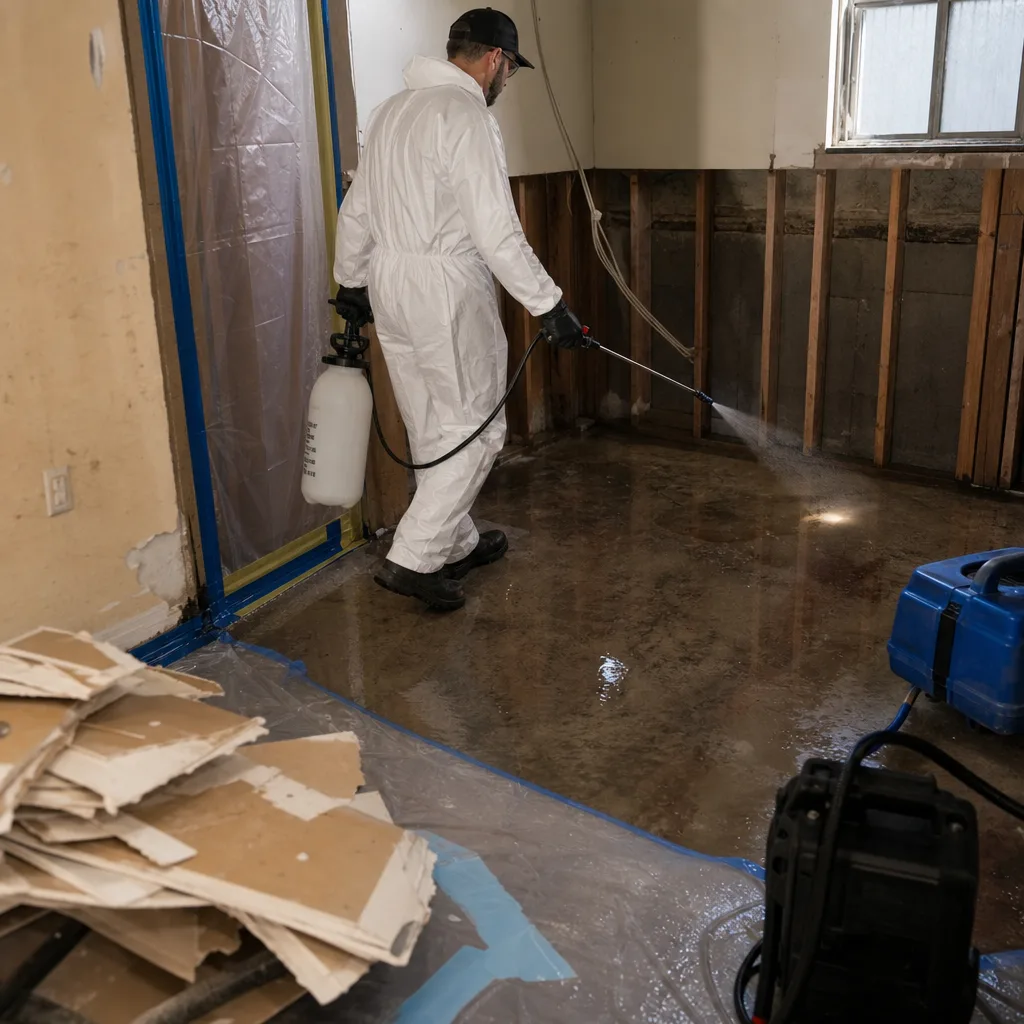
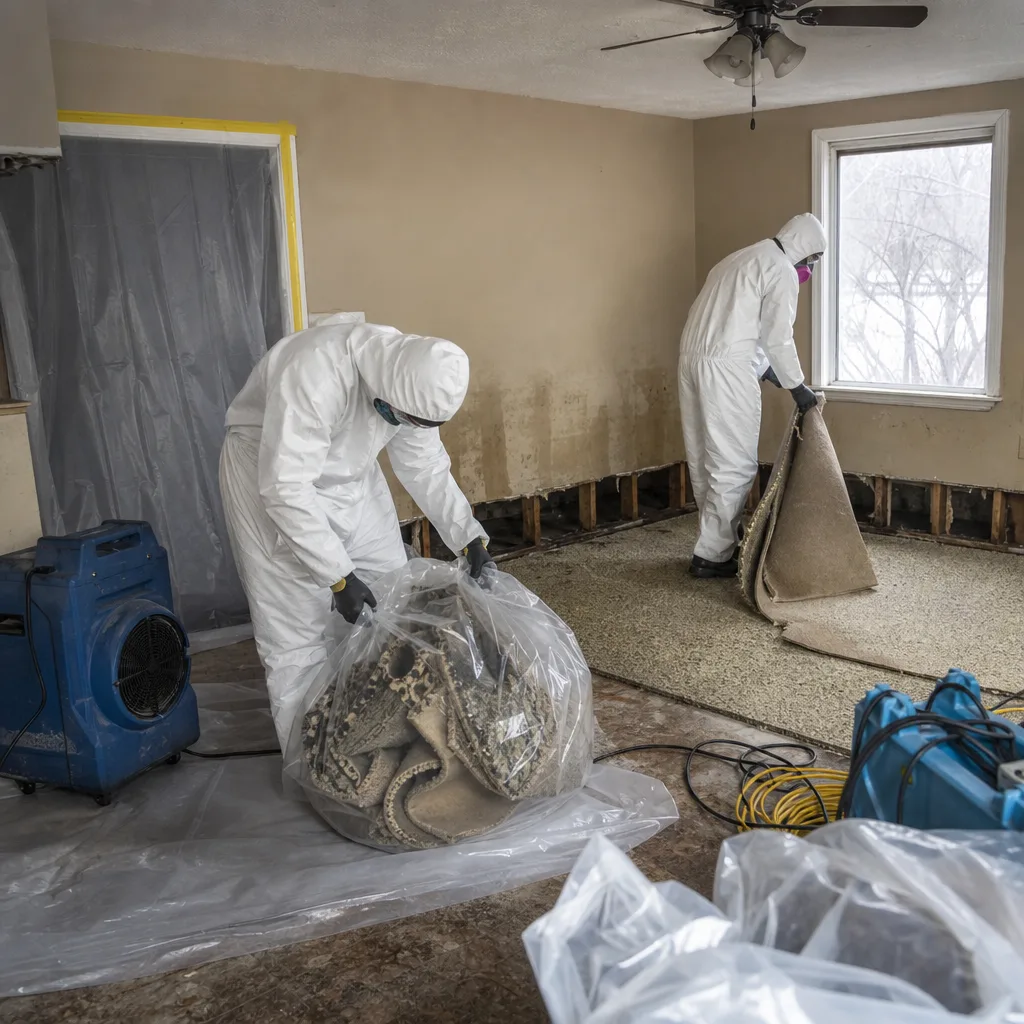
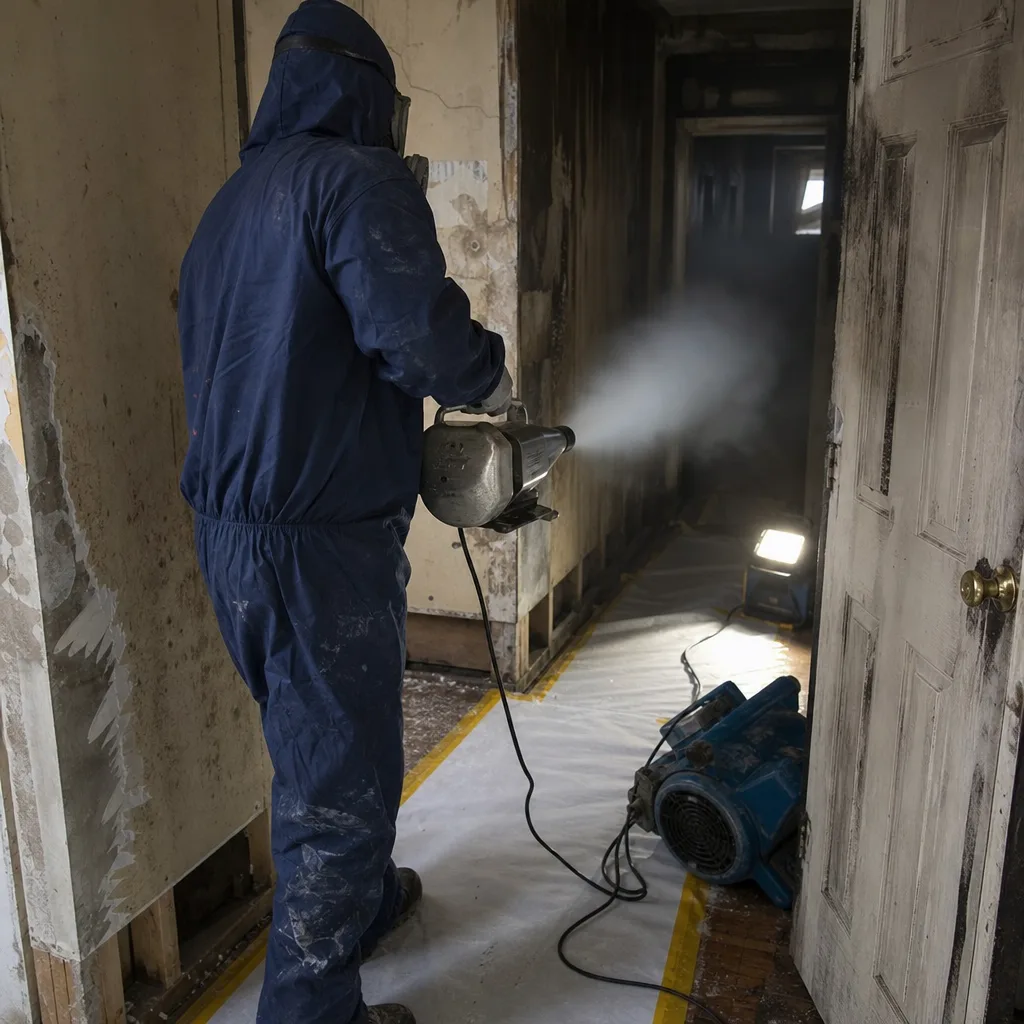
High-volume extraction pumps pull the standing sewage out. We isolate the area with containment barriers to stop airborne pathogens from reaching the rest of the apartment or building.
Drying & Dehumidification
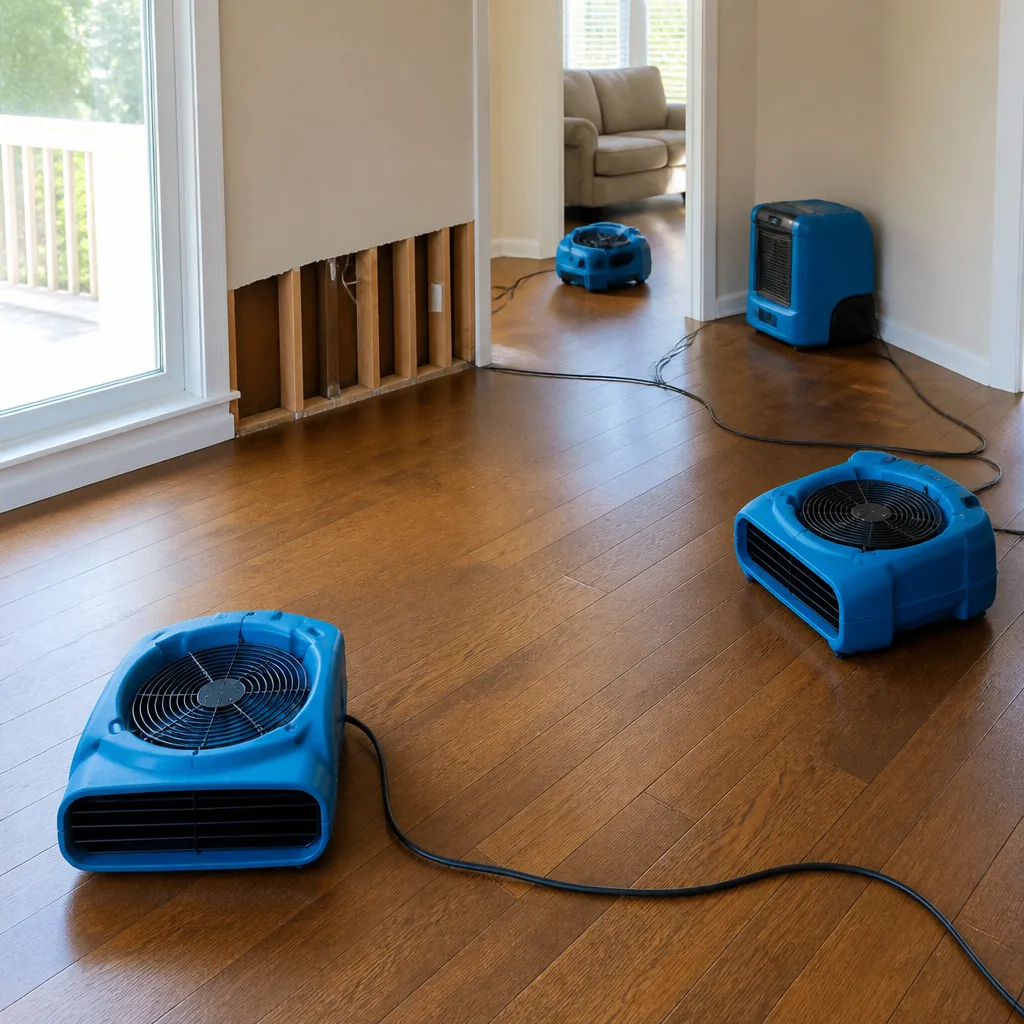
Dri-Eaz air movers and dehumidifiers run on a drying plan built from real moisture readings, not guesswork. In Harlem’s thick masonry walls, this step requires patience and daily logging until the dry standard is met.
Cleaning & Sanitization
Every affected surface gets antimicrobial treatment. We’re not just drying the horsehair plaster; we’re killing what grew in it. Non-salvageable material is cut out and bagged for proper disposal.
Specialty Treatment for Pre-War Construction
If the waste line is cast iron and wrapped in asbestos, we coordinate with a licensed abatement contractor before any demolition. If an exterior wall needs opening, we sequence with LPC requirements so your job doesn’t stall mid-way.
Repairs & Restoration
Once the structure is dry and sanitized, we rebuild. New joists, new plaster, new floors if needed. The same crew that started the job finishes it, and the work is backed by our 90-Day Done Right Promise in writing.
Need Emergency Sewage Cleanup in Harlem Now?
Crews minutes away, answering live 24 hours a day. The sooner we start, the less it costs.
Working With Your Insurance Company
Sewage cleanup claims in Harlem involve more paperwork than a standard water loss because the damage often crosses into multiple units and may require hazmat documentation. We’ve handled these claims for 42 years and know what adjusters need to see. From the first hour, we photo-document every affected area, log moisture readings daily, and build a line-item scope of work that holds up to review. You don’t carry messages back and forth between us and your carrier. We send the documentation directly and answer their questions ourselves. If your building’s co-op board or managing agent needs records, we provide those too. The 90-Day Done Right Promise applies to every sewage cleanup we perform in Harlem.
What We Provide Your Insurer
- Thorough documentation of the loss
- Photos of all damage, room by room
- Moisture readings and drying logs
- A detailed, line-item scope of work
- Direct coordination with your carrier
Built for Harlem’s Loss Calendar
Harlem’s sewage losses follow a pattern that anyone who’s lived here twenty years already knows. January and February bring the deep freezes that crack century-old cast iron waste lines and freeze water supply pipes in unheated basement crawl spaces. When the thaw hits in March, those cracks reveal themselves as slow leaks behind walls, and then a full backup the first time the line sees heavy use. Spring storms overwhelm combined sewer lines that were sized for a much smaller city, sending street sewage back up through floor drains in garden-level units and basements across Central Harlem and Hamilton Heights. Summer thunderstorms flash-flood low-lying blocks near the Harlem River and Morningside Park. And the pre-war plumbing doesn’t care about the calendar. A rusted waste stack under a Strivers’ Row brownstone on West 139th Street fails when it fails, and it usually waits until a holiday weekend. That’s why our phone never stops ringing, and why a live person always answers it.
Sewage Cleanup Across Harlem’s Neighborhoods
Harlem isn’t one neighborhood, and a sewage cleanup on one block looks different from one ten blocks away. In Strivers’ Row and the Mount Morris Park Historic District, we’re working inside landmarked brownstones where every exterior wall opening needs LPC review before we can access a failed stack. In the tenement walkups along Lenox Avenue and Adam Clayton Powell Jr. Boulevard, sewage backups travel down through multiple floors because the original plumbing stacks run vertically through every unit in the line. A backup on the fourth floor is a first-floor problem within an hour. In the converted townhouses off Frederick Douglass Boulevard and in Hamilton Heights, we routinely find shared waste lines serving two or three addresses, which means a single blockage floods multiple basements at once. And in East Harlem, the post-war buildings may be newer, but the sewage ejector pits in sub-grade cellars fail with the same mess and the same urgency. Our crews know the blocks, the building types, and the failure patterns. That local knowledge shortens every phase of the job.
Specialized Sewage Cleanup Services We Offer in Harlem
Sewage Backup Cleanup
A backed-up line in a Harlem brownstone usually means category 3 water has already soaked the floor system before you notice it. We extract, contain, and dry the affected area, then sanitize every surface the water touched. If the line serving your building is shared, we check the adjacent units immediately because sewage doesn’t respect property lines.
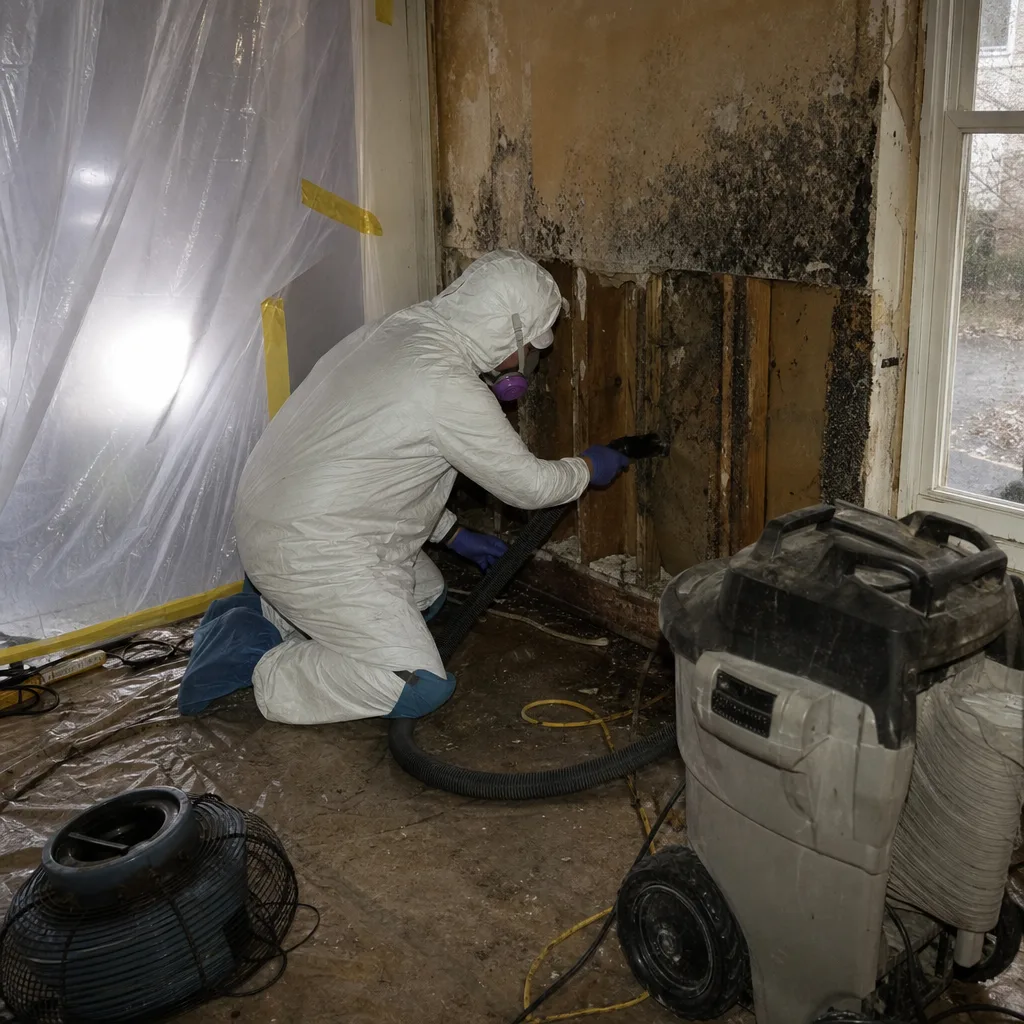
Toilet Overflow Cleanup
A toilet overflow might look small, but in a Harlem railroad apartment with original wood floors, water runs along the joists and drips into the unit below. We extract fast, dry the cavities under the floor, and treat for bacteria, not just moisture. You can’t see what got wet between the floors, but we can, and we measure it.
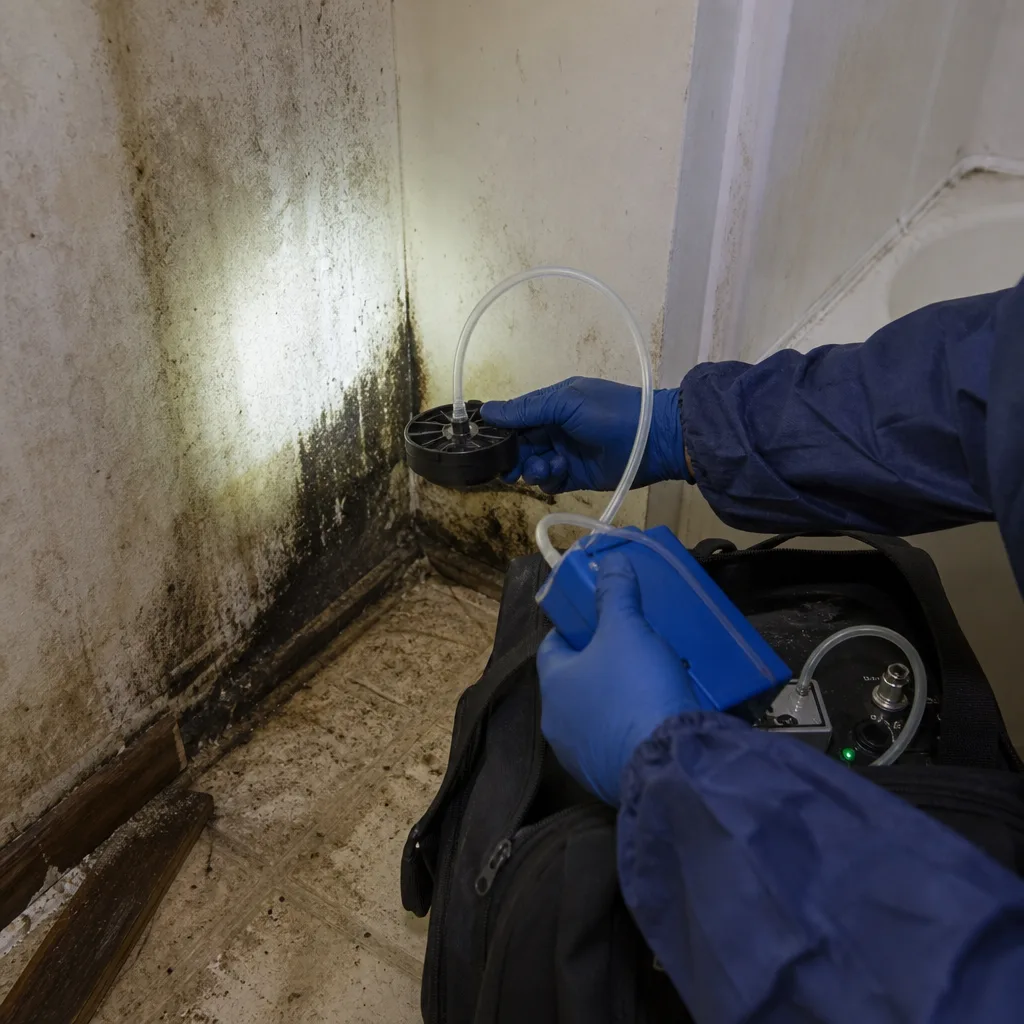
Septic Failure Cleanup
A few properties in the northern reaches of Harlem and in parts of Hamilton Heights still connect to legacy septic systems that predate the sewer grid. When those fail, sewage surfaces in yards and crawl spaces. We handle the extraction, the contaminated soil removal when necessary, and the coordination with the Department of Buildings if your property needs to tie into the municipal line.
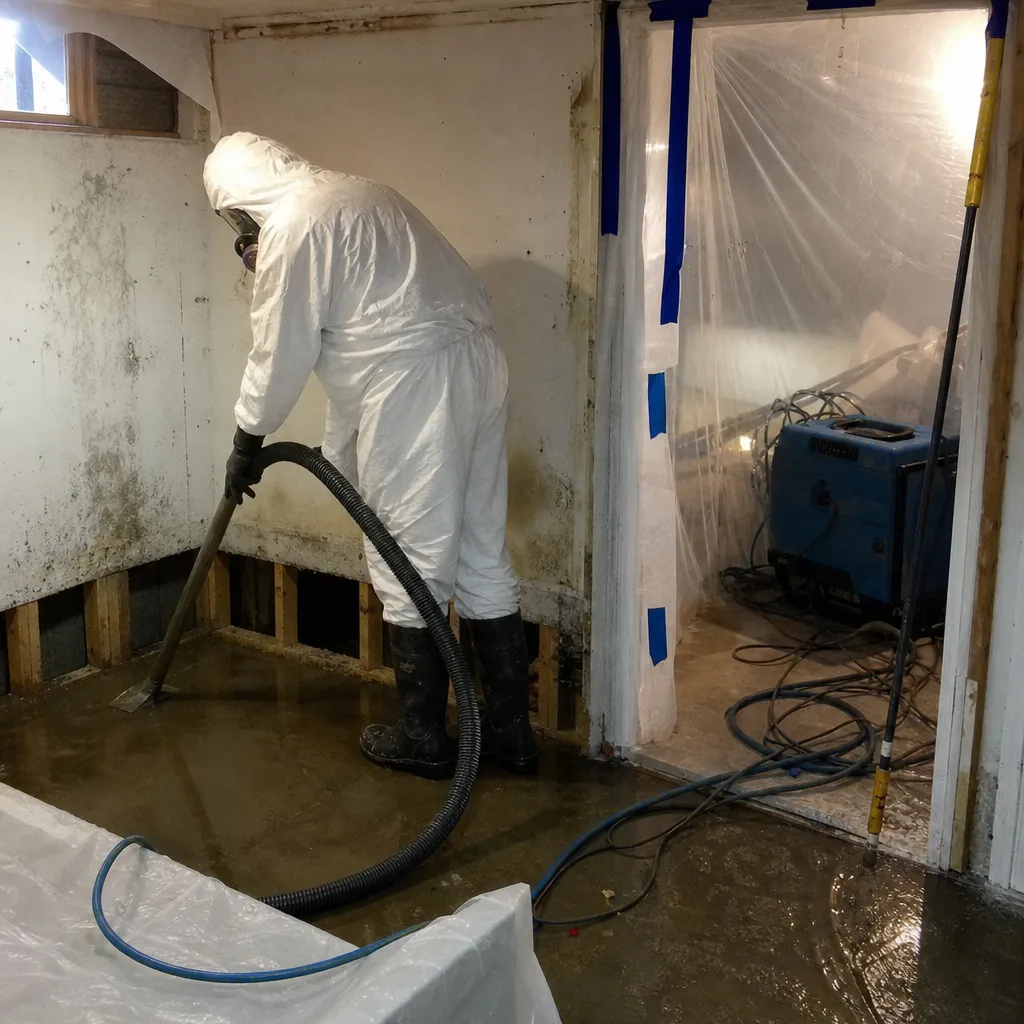
Black Water Extraction
Black water is category 3 water carrying human waste. It demands full PPE, containment, and negative air pressure before any material is cut or removed. On a Harlem job, we also check for asbestos on the pipes we’ll be touching. Pulling a rotted cast iron stack without checking can release friable asbestos into the entire building. We don’t take that risk, and we don’t let our clients take it either.
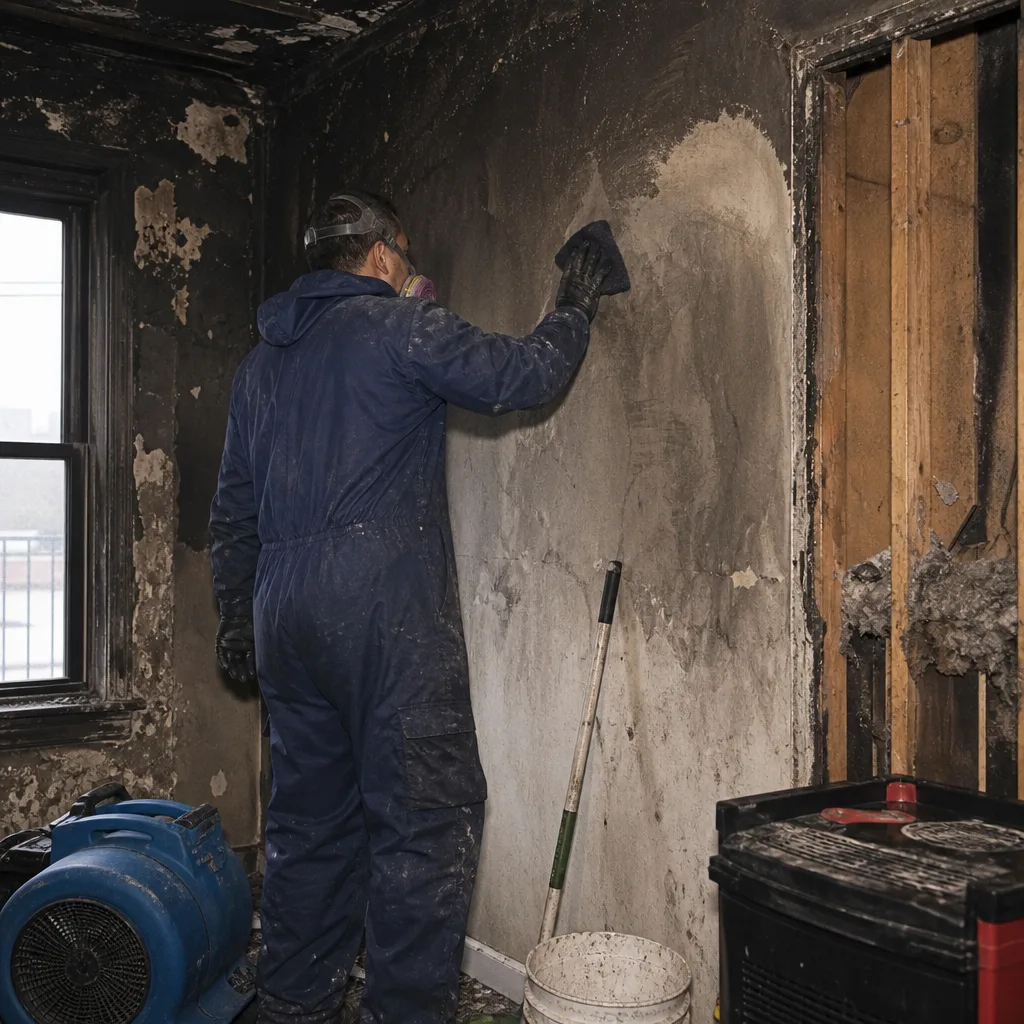
Sanitization & Disinfection
Drying alone leaves pathogens behind. We apply hospital-grade antimicrobials to every surface in the affected area, including the wall cavities, joists, and subfloor. In pre-war housing with horsehair plaster, this step is non-negotiable. That plaster hides bacteria in its fibers, and the smell comes back if you skip the treatment. We don’t skip it.
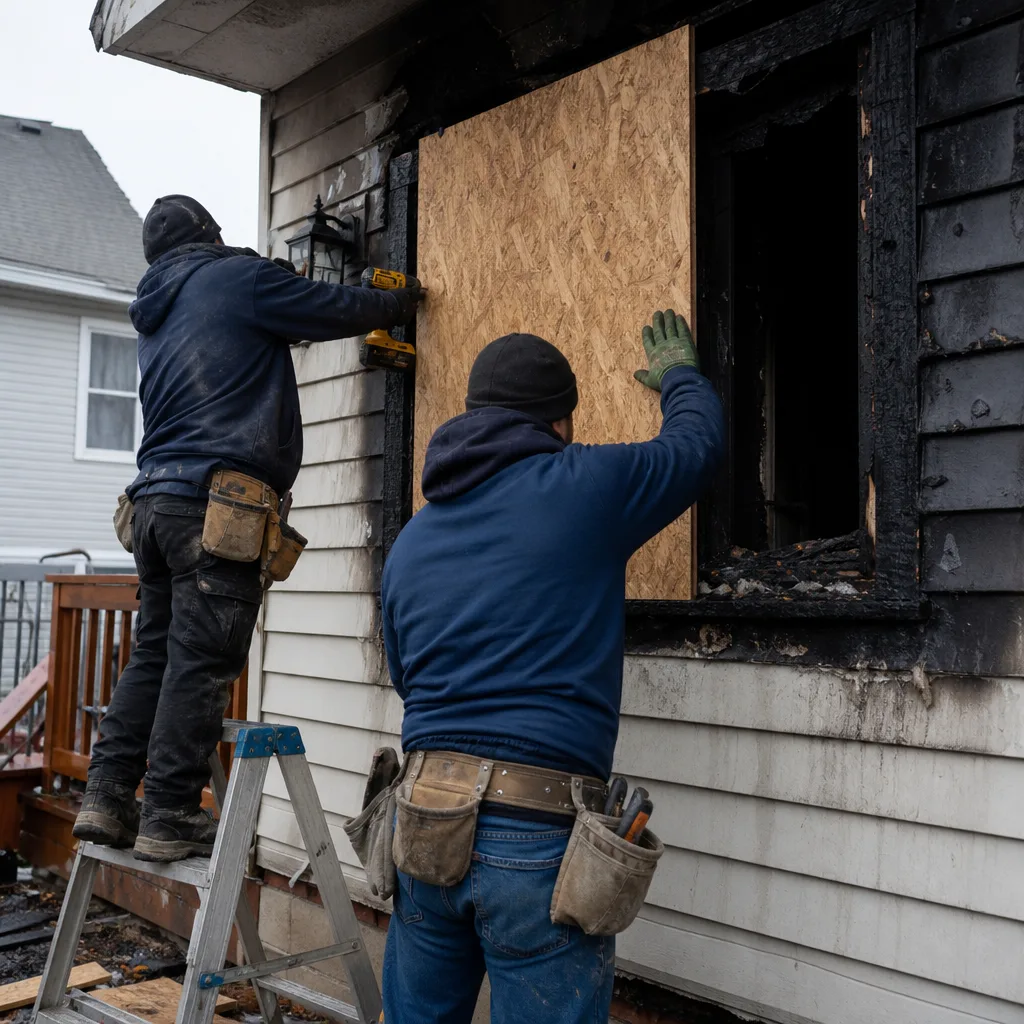
Crawl Space Sewage Removal
Harlem’s brownstones and rowhouses often have shallow crawl spaces under the front or rear parlors. When a waste line leaks down there, the sewage pools in a space no one enters until the smell comes up through the floors. We send in extraction equipment sized for tight access, remove contaminated soil if it’s saturated, and dry the framing from below.
What happens when you call
- 1
A real person answersNo phone trees - you reach a local pro.
- 2
You get an upfront price rangeHonest numbers before anyone is dispatched.
- 3
A background-checked tech heads outLicensed & insured, dispatched right away.
- 4
You approve before work beginsNothing starts until you say go.
Sewage Cleanup Costs in Harlem, NY
What you’ll pay depends on three things: how far the water traveled, whether asbestos or LPC review is triggered, and how many units are involved. A straightforward toilet overflow cleanup in a single Harlem apartment typically runs $900 to $2,500. A sewage backup that saturates a basement and requires full extraction, containment, and drying runs $3,000 to $8,000. A pre-war brownstone job that requires asbestos abatement before demolition, LPC approval for exterior access, and structural repair across multiple units runs $10,000 to $40,000, and those numbers climb if the party walls on both sides are affected. Insurance covers most sewage losses when the cause was sudden and accidental, but the pre-existing cast iron waste line repairs themselves may fall outside your policy. The free visual inspection is how you find out what you’re facing before you spend a dollar. We’ll give you a written scope and a range before any work begins. Call (518) 800-3751 and we’ll come look.
We Also Serve Cities Near Harlem
Our crews respond regularly to Sewage Cleanup in Harlem and the surrounding neighborhoods, including Astoria, Ditmars Steinway, Upper Manhattan, and the Upper East Side. Same live answer, same 45-minute response, same written guarantee.
Serving Harlem, NY - Our Local Coverage Area
We’re based in the Harlem area and know this community well. Use the map below to see our service coverage - if you’re nearby, we can almost certainly help.
Harlem Sewage Cleanup Questions, Answered
Does sewage cleanup in a Harlem brownstone require Landmarks Preservation Commission approval?
Yes, if the cleanup requires opening an exterior wall, altering any facade element, or doing work visible from the street on a landmarked property. Interior sewage extraction and drying can usually proceed without LPC review, but any structural access from outside, or any change to the building’s exterior, needs approval first. We coordinate that process so your job doesn’t stall.
Why do sewage backups in Harlem often flood two or three adjacent buildings?
Harlem’s brownstones and rowhouses share party walls and, in many cases, shared waste lines. The original plumbing from 1900 was built to serve one structure, but decades of conversions have tied multiple addresses into single stacks. When that shared line backs up, every building on it floods, not just the one where the blockage started.
How does asbestos abatement change a sewage cleanup in a pre-war Harlem building?
If the affected pipes are wrapped in asbestos, or if the demolition will disturb asbestos-containing materials like old pipe insulation or plaster, the abatement happens before our extraction and drying work can continue. The timeline extends by days or sometimes weeks. We coordinate the sequencing with a licensed abatement contractor and your building management so the job moves forward as fast as legally possible.
Can you dry and reuse horsehair plaster walls after a toilet overflow in a Harlem railroad apartment?
Sometimes. If the plaster has been wet for less than 48 hours and hasn’t delaminated from the lath, we can often dry it with antimicrobial treatment and save the wall. If the water sat longer, or if the plaster is soft and crumbling, it has to come out and be replaced. The sooner you call, the better the odds of saving original surfaces. Call (518) 800-3751 the minute you see water.
What is the first thing your crew does on a sewage cleanup in a Harlem tenement walkup?
The first thing is containment and PPE. Before we cut anything or move equipment through the building, we seal the affected area and set up negative air to keep airborne contaminants from reaching shared hallways and neighboring units. Then we extract the standing sewage. Protection comes before demolition, every time.
How fast can you actually get to a sewage backup in Harlem?
We commit to 45 minutes from the time your call ends to the time a crew arrives on your block in Harlem. Live dispatch means no waiting for a callback. In the middle of the night, the clock still starts when you dial.
Will my insurance cover sewage cleanup in Harlem?
Most homeowners policies cover sewage backup damage when it’s sudden and accidental, but coverage limits for water backup are often lower than you’d expect. We bill your carrier directly and provide the documentation they need to process the claim. If part of the work falls outside coverage, we’ll tell you in writing before we do it.
Should we stay in the apartment during sewage cleanup?
If the affected area is contained and the rest of the unit is dry and unaffected, you can often stay. If the sewage spread through shared spaces, a hallway, or the kitchen, we’ll tell you if vacating is the safer call. Category 3 water carries real health risks, and we won’t minimize them to make the job convenient.
If you’re standing in sewage in a Harlem basement right now, stop reading and call (518) 800-3751. We’ll answer live, walk you through the next thirty minutes, and have a crew at your door fast. Written scope before work starts. Direct insurance billing. The 90-Day Done Right Promise in your hands when we’re finished. That’s the square deal for Sewage Cleanup in Harlem.
Written by Curt Bowman, Owner at Floodline Restoration Co., founded in 2010 and serving Harlem and the New York metro since day one.